Promoting Pistachio Consumption


Increasing Marketing Efforts Ahead of the Billion Pound Pistachio Crop

By Patrick Cavanaugh, with the AgInformation Network

American Pistachio Growers are mounting a full court press to market the big crop.

And the APG Marketing team is aware that more families are preparing meals at home due to COVID pandemic so they organized five interact webinars with famous chefs for food writers and other influential people. All webinars featured famous chefs.

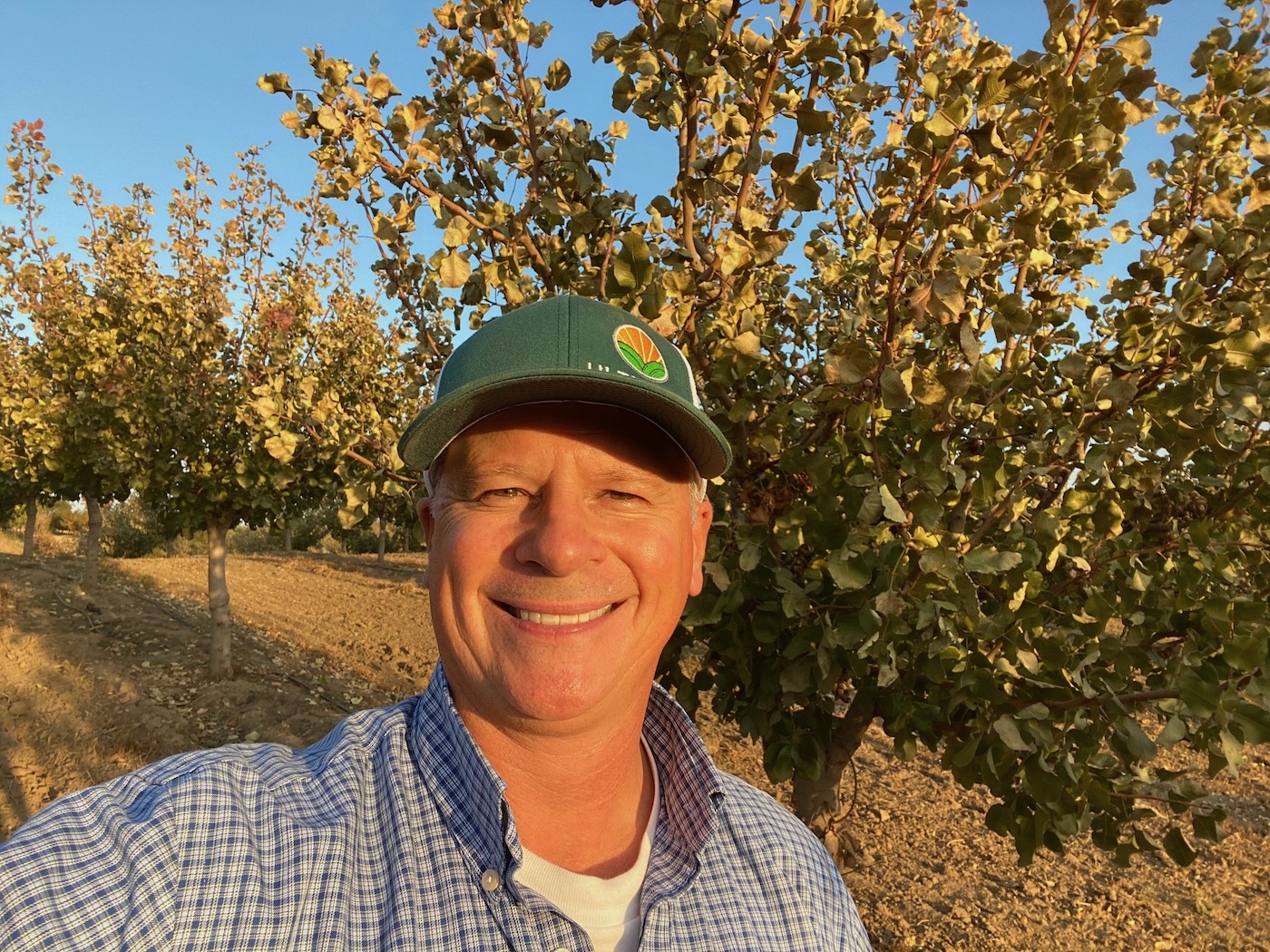
Rick Kreps is a new pistachio grower in Eastern Madera County, and he was featured in a video with Chef Wolfgang Puck for audiences in Germany and the US.

“I think they got excited about having someone as excited as I am to have the first crop actually come in after all six years of labor and blood, sweat, and tears to get to market, and then have someone like Wolfgang Puck taking your product and turning it into something special that everyone loves to eat,” said Kreps.

“It’s exciting to drum up some excitement and get more people cooking with pistachios,” said Kreps. “You know, pistachios have been used for centuries in Mediterranean cuisine, but for the most part, it was just kind of a luxury snack in the U S and now that we’ve got production this year, hopefully we’re going to get a billion pounds, we want to let the public know that there’s enough nuts to go out and eat. And it’s not just a luxury nut item, but a healthy snack.”

“Pistachios should be not an alternative, but probably your go-to snack and ingredient item. And especially the fact that we know pistachios have the complete proteins, or it is the most complete protein of any nut. I think people feel a lot better about not only eating a snack, that’s delicious, but also very good for you,” Kreps’s said.
2020-11-17T14:15:04-08:00November 17th, 2020|

Important Cotton Grower Webinars Scheduled

U.S. Cotton Trust Protocol Announces NEW DATES for Regional Grower webinars

Growers should join to learn how they can benefit and how collectively this will help increase demand for U.S. cotton globally.  

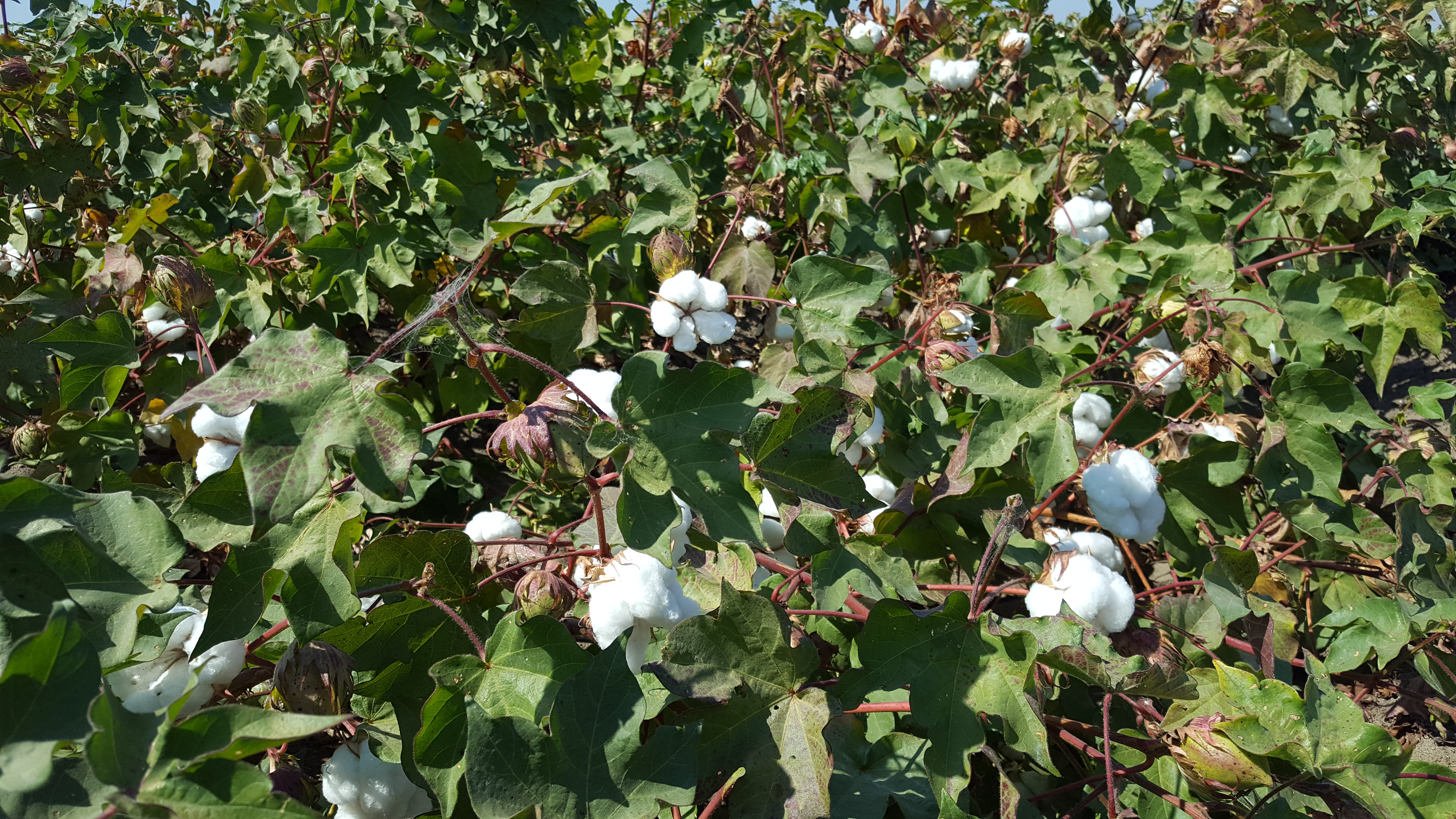
The U.S. Cotton Trust Protocol, which aims to give brands and retails the critical assurances that they need to source U.S. cotton, has announced a new slate of regional-focused webinars from November 9th through the end of 2020. These additional webinars were added following strong demand during the September and October sessions. Grower enrollment is now open to all U.S. cotton growers.

Starting November 5th, growers who have not yet had the opportunity will get to learn about the benefits of the U.S. Cotton Trust Protocol and ask questions with our team. While the sessions are divided by region, interested growers are free to join any session that fits in their schedule. Participants can enroll at https://trustuscotton.org/enrollment-webinar-live-sessions/.

“There’s more scrutiny on the global cotton supply chain than ever before. At the U.S. Cotton Trust Protocol, we aim to raise demand for U.S. cotton as a sustainably-grown fiber and meet the needs of brands and retailers as they work to lower their impact on the environment,” said Gary Adams, President of the U.S. Cotton Trust Protocol. “Joining the Trust Protocol will also provide producers with data that will help them to improve their growing practices.”

A recent study from the U.S. Cotton Trust Protocol and the Economist Intelligence Unit found that 60% of fashion, apparel, and textile business leaders said implementing sustainability measures was a main strategic objective for their organization. The top sustainability measure businesses are implementing is establishing a sustainability strategy with measurable targets, which 58% of respondents said they were doing. In second, 53% said they were working on collecting data from across the business and in the supply chain to measure performance.

The next slate of webinar sessions will begin on November 9th – growers can access the full schedule of webinars here.

For those interested in enrolling, please visit: TrustUSCotton.org


2020-11-09T14:17:43-08:00November 9th, 2020|

Tim York is Cal Leafy Greens New CEO

California Leafy Greens Marketing Agreement Announces Tim York As New CEO

Tim York was named as the new Chief Executive Officer of the California Leafy Greens Marketing Agreement (LGMA) during today’s Board of Directors meeting.   York will replace Scott Horsfall who is retiring in early 2021.

“Tim has been an influential presence when it comes to advancing continuous improvement in  food safety in the produce industry,” says Dan Sutton, Chair of the LGMA. “He is a staunch advocate for protecting consumers and public health and we are fortunate to have Tim to guide LGMA into this new era.”

York was formerly the President of Markon Cooperative, a produce procurement operation with members throughout North America and Canada. Throughout his tenure as a produce industry leader, he has held several prominent positions including serving as chair of the Alliance for Food and Farming, the Produce Marketing Association Board and twice as the chair of the Center for Produce Safety.  He continues to serve on the Board of the Center for Produce Safety as well Co-Chair of the Produce Traceability Initiative.

York also represented the buyer community on the Romaine Task Force in 2019 serving on the Steering Committee as well as Chair of the Traceability Sub-Committee.

York has been honored with numerous awards including The Packer’s Foodservice Achievement Award and Produce Marketer of the Year, the Perishable Pundit’s Single Step Award, and the Produce Marketing Association’s Bryan Silbermann Collaboration Award. He was also the recipient of the LGMA’s Golden Checkmark award in 2009.

“Food safety is both a priority and a passion for me,” says York. “I look forward to focusing on food safety on a full-time basis, to serving the industry and consumers as well as working collaboratively with our industry partners to advance goals and objectives that protect public health.”

The Board of Directors also recognized Scott Horsfall, who has been CEO of the LGMA since it was established in 2007.  “The Board thanks Scott for his foundational leadership and excellent work over the past 13 years,” Sutton says.

“This job has been both rewarding and heartbreaking,” said Horsfall.  “While we have accomplished a great deal, food safety and protecting public health must be a continuing process with a continuing commitment to do better every day,” he says. “I respect this industry immensely and under the leadership of Tim, the farmers that make up the LGMA and our dedicated staff, I’m confident this industry will work diligently to advance continuous improvement.”

York will begin his work with the LGMA on December 1.

2020-11-05T11:48:38-08:00November 5th, 2020|

Cotton Acreage Declines Due To Poor Prices

Cotton Acreage Continues to Decline

By Tim Hammerich, with the Ag Information Network

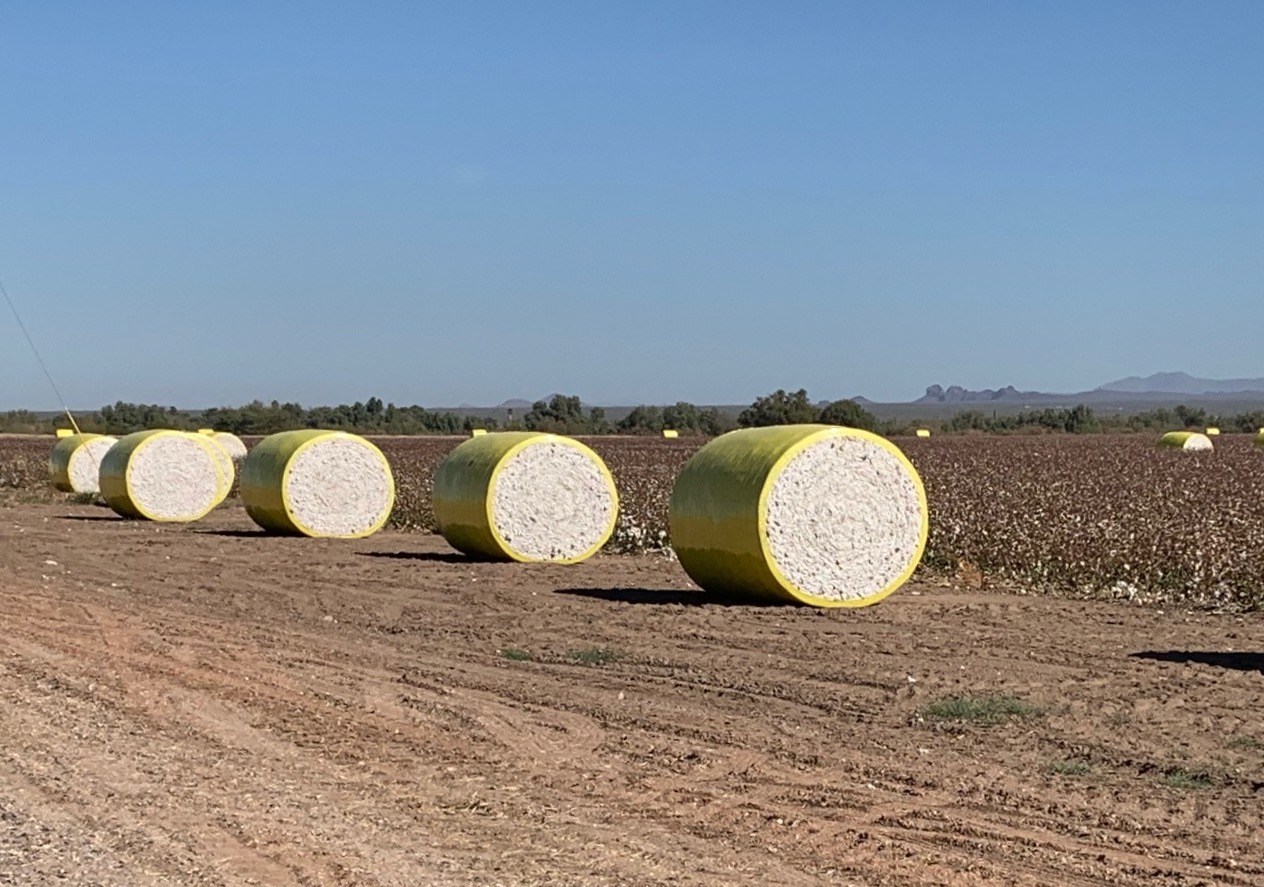
Good news and bad news on the cotton crop this year. The good news is that yields per acre are expected to be a record high, but the cotton acres and total production are down sharply, noted  USDA Deputy Chief Economist Cindy Nickerson.

“We have production forecast at 17 million 480 pound bales, which is down just a 10th of a percent from last month, but down a little greater from 2019: 14.4%. And this is due to significantly fewer acres, both planted and harvested, with the harvested acres projected down 23%,” said Nickerson.

But, Nickerson says, there’s good news: record high yields.

“Yields are still expected to average a record high at 909 pounds per harvested acre, just down slightly from the expected yield last month. And we know that all cotton harvested areas forecast at 9 million acres, no change from last month, but down 22.5% year over year,” she said.

California, which at one time had planted over 1 million acres of cotton, continues to see a decline in cotton acreage down 28% from the previous year to just over 187,000 acres. Poor prices and limited water availability are largely to blame.

2020-11-02T10:04:00-08:00November 2nd, 2020|

Western Growers Has New Innovation VP

Western Growers Hires Walt Duflock as
Vice President, Innovation


Increasing its industry-leading efforts to quicken the pace of technology solutions for the fresh produce industry, Western Growers has added Walt Duflock as Vice President, Innovation. In this role, Duflock will be singularly focused on accelerating agtech for Western Growers (WG) member companies, including expanding the footprint of the Western Growers Center for Innovation & Technology (WGCIT), a premier agtech incubator located in Salinas, Calif.


“The need for innovative technology in our members’ fields and facilities has never been more urgent,” said WG President and CEO Dave Puglia. “Walt Duflock has guided many technology entrepreneurs and brings a demonstrated ability to propel growth in the agriculture technology sector. I am thrilled that Walt will now join WGCIT Director Dennis Donohue, who is driving tangible progress on key agtech initiatives such as automation and food safety enhancement. Together, Walt and Dennis will further strengthen our ability to drive rapid commercialization of the technologies our members need to thrive into the next generation.”

Duflock brings over 25 years of experience in the agriculture and technology sectors, with an emphasis on startup development. In addition to his involvement in his fifth-generation family ranch in Monterey County, Duflock has dedicated his career to building programs and strategies at high-growth Silicon Valley startups, including eBay, MerchantCircle (now Reply) and APTARE (now Veritas). In his most recent role, Duflock served as Executive Innovation Leader for SVG Ventures THRIVE.

“I am excited to be joining the WG team and look forward to working with farmers and startups to increase the speed and scale of solutions, especially for food safety and labor automation,” said Duflock. “My decades of experience in agriculture and working with Silicon Valley startups, along with building a successful agtech accelerator, give me the right set of skills to lead WG’s innovation initiative.”

Duflock earned a B.S. degree in Business from Cal Poly San Luis Obispo and a law degree from Santa Clara University. He is active in his local community and serves on several volunteer boards, including the Los Gatos United Soccer League and Rancho Cielo, which aims to transform the lives of at-risk youth. In 2019, Duflock launched SAGE, a 501(c)(6) that focuses on sustainable ag and energy and vibrant rural economies.

2020-10-29T14:06:49-07:00October 29th, 2020|

Smoke Taint May Impact 2020 Vintage


2020 Winegrape Vintage May be Impacted by Smoke Taint

By Tim Hammerich with the AgInformation Network

As the 2020 grape finishes up , so do concerns about how smoke-tainted grapes might impact wine quality. Growers are getting samples tested, but labs are inundated.

“The backlog at labs are now like around anything from 5-30 days, depending on what lab you’re sending it to,” said  Dr. Anita Oberholster a cooperative extension specialist in enology.

She says many of the results are falling into a grey area which can really limit a grower’s options.

“What sometimes happens is because there’s this huge gray area a winery would say: Okay, I will accept your fruit. However, if the wine ends up being impacted, I will pay you only this percentage of the value of your fruit. Or I will send you the fruit back and you need to pay me for my processing costs,” said Oberholster.

That grey area is due to the fact that there are not industry standards for how much of these compounds are tolerable in the fruit. In some cases growers have insurance that can help recoup some of their costs.

“If you have a higher end contract, some insurance contracts will give you some money for decrease in quality. So if it gets rejected down the line, you can potentially still put a claim in, but it really depends on your specific insurance,” Oberholster said.

2020-10-21T12:51:52-07:00October 21st, 2020|

New Reporting Obligations For COVID-10

Employer’s New Notice and Reporting Obligations for COVID-19 Workplace Exposure


Written by The Saqui Law Group and Jorge Lopez Espindola


In response to the Coronavirus Pandemic, the California Legislature passed Assembly Bill (“AB”) 685, requiring employers to notify every employee of potential COVID-19 exposure at the workplace. Governor Newsom signed AB 685 into law and it will go into effect on January 1, 2021. AB 685 will bring the following changes to employers in California:

Expand Cal/OSHA’s Power to Issue Stop Work Orders
AB 685 expands Cal/OSHA’s authority to issue Stop Work Orders for workplaces that pose risk of an “imminent hazard” in relation to COVID-19. This “imminent hazard” is a hazard that threatens immediate and serious physical harm. This allows Cal/OSHA to prohibit entry into a section of a business or place of employment where there is an imminent risk of COVID-19 exposure and requires the immediate area where the imminent hazard exists to be prohibited. Violation of this law order is considered a criminal offense.

Employers Must Notify Employees of COVID-19 Exposures
AB 685 establishes a comprehensive notice procedure that employers must follow, within one (1) business day, when they receive notice of potential exposure to COVID-19:

  1. Provide written notice in a manner typically used to communicate to all employees, employers of subcontracted employees, and employee-representatives (e.g., unions), where they may have been exposed to the virus. Employers may send a letter, email, or text message, but only if employees anticipate receiving communication from the employer in this manner. The notification must be in writing and a phone call will not satisfy this requirement. Also, written communication should be in English, and the language understood by the majority of the employees;
  2. Provide written notice to all employees and employee representatives regarding COVID-19 related benefits that employees may receive, including paid sick leave, workers’ compensation, and anti-retaliation protections;
  3. Notify all employees regarding the Company’s disinfection protocols and safety plan to eliminate any further exposures;
  4. Notify California’s Department of Public Health if there are sufficient COVID-19 positive cases that meet the definition of a COVID-19 outbreak.

Fast-Tracks Cal/OSHA’s Citation Procedure
Normally, when Cal/OSHA intends to issue a serious citation, they give an employer some notice of the imminent citation to allow the employer to defend itself before the issuance of the formal citation. AB 685 disperses with the employer’s opportunity to defend itself before the formal issuance of a COVID-19 related-serious citation. Therefore, if Cal/OSHA issues a serious citation, employers should closely monitor the statute of limitations to respond to the citation in a timely manner. Employers should also contact counsel to evaluate the citation since penalties can be shocking.

COUNSEL TO MANAGEMENT
Employers should have a COVID-19 preparedness plan. Employers should develop a plan NOW on how to comply with AB 685—January 1st is looming near. If you have any questions about how this new law will affect your company, contact the experts at The Saqui Law Group.


2020-10-20T11:02:43-07:00October 20th, 2020|

Dairy Markets Prove Resilient

Consumers Turning to Comfort Food Has Helped

By Tim Hammerich with the Ag Information Network

It’s been a volatile year for most agricultural commodities, but dairy might have experienced it most intensely. Prices started the year very strong, but were hit hard in the spring as the pandemic spread. Since that time though, they have recovered.

UC Davis Agricultural Economist Dr. Dan Sumner,  said cheese has led the way. “One of the issues is cheese markets have boomed and other markets haven’t. We’ve shifted from people consuming their cheese on a cheeseburger they grabbed at the fast food place to now consuming their cheese in their grilled cheese sandwich they eat at home. Or the macaroni and cheese as we went all back to comfort food in the spring,” explained Sumner.

“These kinds of volatilities are partly because of the shutdown and the milk market, even though there were some videos showing people dumping milk, that was not particularly common. It was terrible. It’s emotional for me and everybody else who cares about the milk market,” said Sumner.

“You hate to see milk poured out. But it was a headline because it was rare. And I do think that was a temporary thing; it got settled pretty quickly. And the dairy industry has really been remarkably resilient. And the marketing side of the industry just did a great job.”

Dr. Sumner applauded the dairy producers and marketers for their resilience during this difficult time as they’ve had to pivot from food service to accommodate consumers eating at home.

2020-10-08T11:07:19-07:00October 8th, 2020|

NO on Proposition 15 Campaign – CALL FOR ACTION

If Passed, It Would be the Largest Tax Hike in California’s History

The largest tax hike in California’s history is on the ballot, and if passed would create $12.5 billion in new taxes, the largest tax hike in our state’s history.  

It is known as Proposition 15, and it would eliminate the 1% cap on property taxes for businesses throughout the state, including agricultural processing facilities such as tree nut hullers and processors.  In addition, it would trigger annual reassessments for agricultural fixtures, such as irrigation systems, solar installations on farms and processors, barns, and even permanent crop trees and vines.  

In a year like 2020, it is difficult to fathom we are facing something like Proposition 15.  For tree nut growers, hullers and processors, the time to take a stand is right now!  We need your help!  We need every member to contribute!

Therefore, we are respectfully asking each of our members to send us a check for $500 to $1,000 to help specifically on this effort.  We have raised over $35,000 to date towards our goal of $50,000!

We want to thank members that have stepped up to help so far, like Central California Almond Growers Association, Horizon Nut, Superior Almond Hulling, JSS Almonds, River Oak Orchards, Gold River Orchards, Cortina Hulling and Shelling, Kern Pareil, Inc, Alldrin Farms, and Andersen & Sons Shelling.  I also want to thank our Associate members like Fresno Rack and Shelving, Boer Commodities, Daniel C. Salas Harvesting and North Valley Ag Services for helping as well.  Lastly, we want to thank individuals and farms like AJ Carvalho & Sons, Pretzer Farms, Barton Ranches, Bill and Dan Prosperi, Clausen Almonds, David Munro and Donald Milburn for their efforts too!

Please fill out the attached form and make the check payable to Alliance of California’s Farmers and Ranchers and mail it back to our office at 1785 N. Fine Avenue, Fresno, California, 93727.  If you should have any questions, please call our office at (559)455-9272.

2020-10-07T12:54:28-07:00October 7th, 2020|

The Late Jim Gray of CropLife is Honored

CropLife America honors the late Jim Gray with the Lifetime Achievement Award

During the recent CropLife America 2020 Annual Meeting, the Industry Task Force II on 2,4-D Research Data’s own Jim Gray was honored with receiving the Lifetime Achievement Award, in memoriam. This award recognizes someone who has dedicated their life to successfully defending the pesticide industry with passion and professionalism.

“Jim was a great friend and resource to the agricultural community.” said Task Force member Everett Mealman, “It is wonderful to have his many contributions honored with the CropLife America Lifetime Achievement Award.”

Jim served as the Executive Director of the Industry Task Force II on 2,4-D Research Data for 12 years, from 2007 until the moment of his passing in November 2019. He was considered the heart and soul of the Task Force, bringing sharp wit, a broad smile, and an inexhaustible knowledge of all things 2,4-D. His extraordinary ability to connect with those around him and introduce people who share a common interest in agriculture and a love for the land was felt throughout his travels from Europe to North America to Asia.

While it is a great honor, it comes as no surprise that the late Jim Gray is celebrated as a dedicated individual who worked tirelessly on behalf of agriculture in America and around the world. Jim was an exceptionally well-respected member of the agribusiness community across the United States. Throughout his decades-long career he received many awards and accolades such as the North Star Award from the Western Agricultural Chemical Association in 1994, the Outstanding Supporter Award from the Missouri Corn Growers’ Association in 2003, and the Agriculture Ambassador Award from CropLife America in 2016, among others.

2020-10-06T10:16:59-07:00October 6th, 2020|
Go to Top