Gerawan Worker Votes to Be Counted in Fresno

Historic Day Following Five Years of Vote Count Suppression

News Release Edited By Patrick Cavanaugh

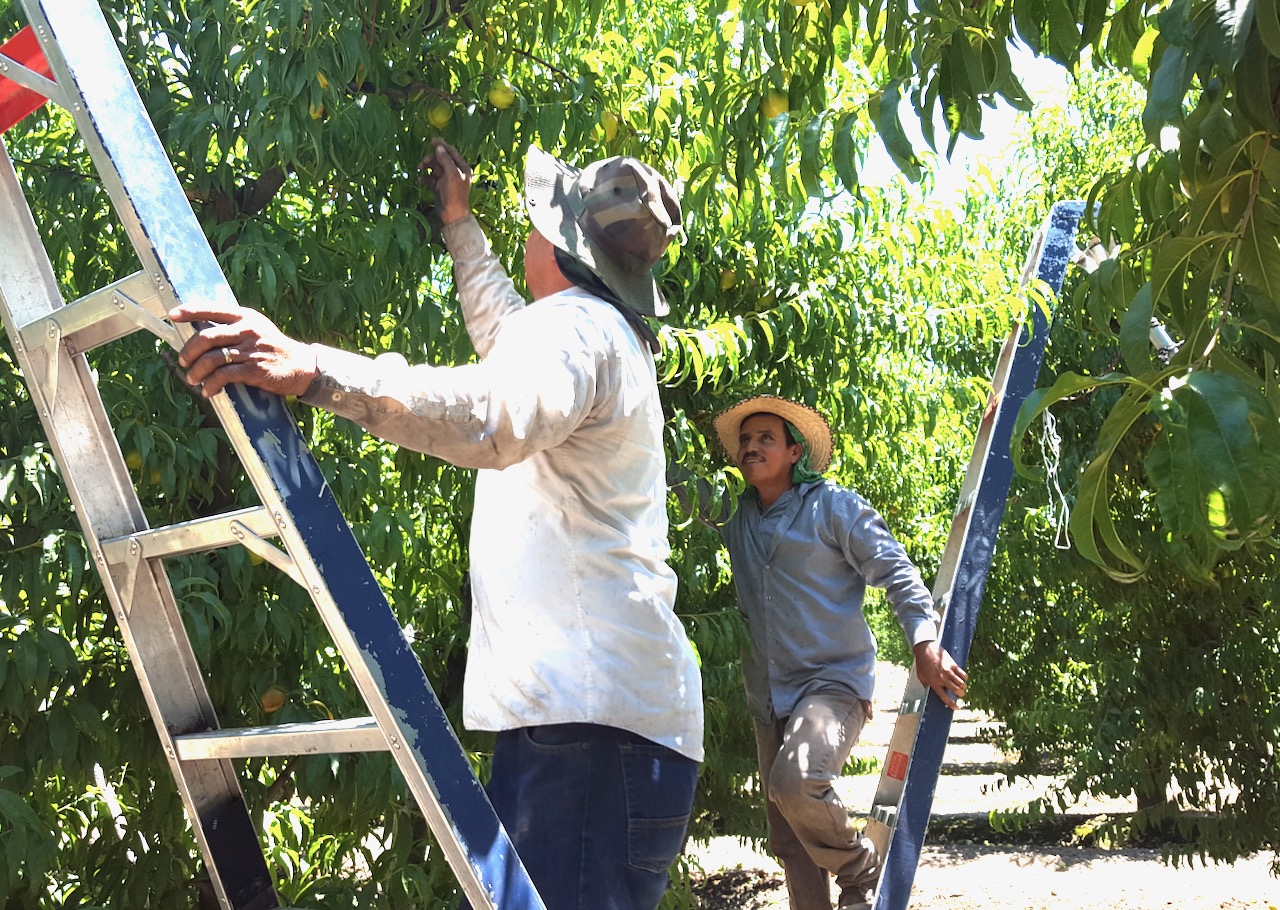
Today, the Agricultural Labor Relations Board announced that it will count the votes of Gerawan Farms workers after five years of illegally refusing to tally the ballots.

Supreme Court

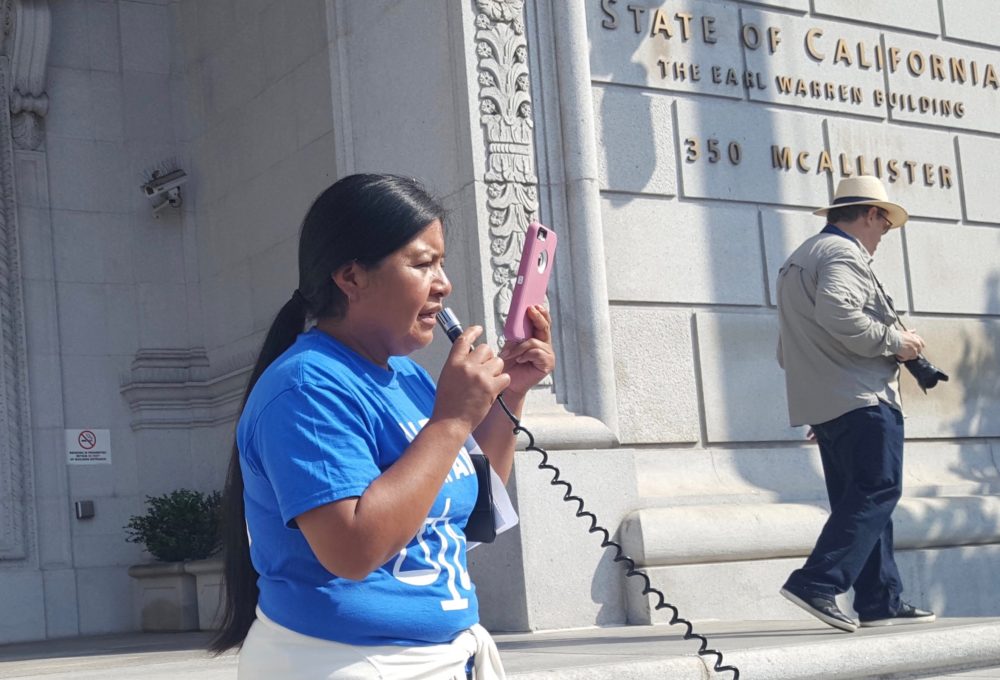
Silvia Lopez, Gerawan farm worker spokesperson

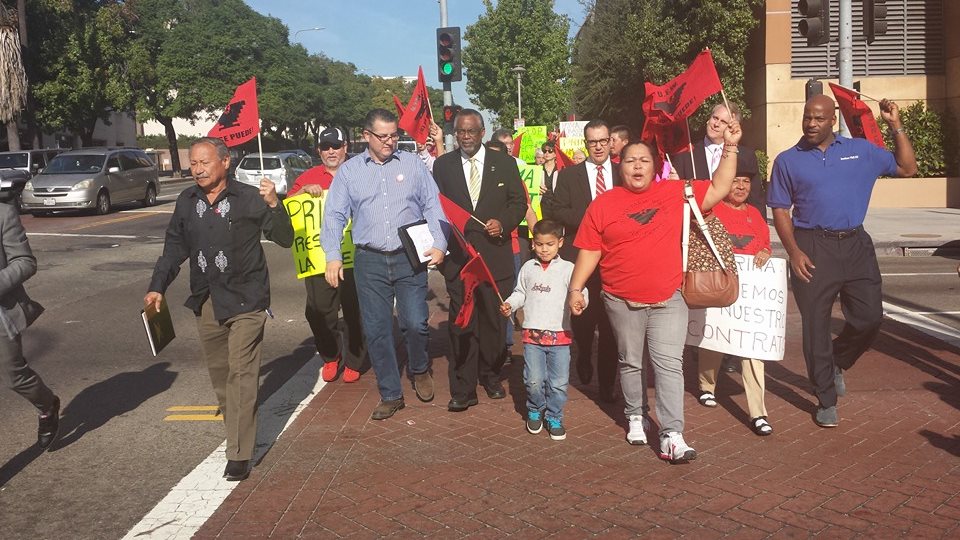
Determined to avoid having union dues taken from their wages by a union that had abandoned the workers for almost two decades, Silvia Lopez and the Gerawan Farms employees courageously organized themselves in opposition to forced union membership. In November of 2013, thousands of Gerawan Farms employees voted on whether or not they would be represented by the United Farm Workers (UFW) in the largest worker election in ALRB history.

For five long years, the ALRB has suppressed the vote by refusing to count the ballots while the workers fought to vindicate their civil rights.   The Fifth District Court of Appeal in Fresno ruled in May that the suppression of the vote violated the workers’ statutory and Constitutional rights, and ordered the votes counted. Only after a dismissal of all appeals by the California Supreme Court did the government finally agree to count the ballots.

At 8:30 am on September 18, 2018, the ballots will be removed from the ALRB safe for inspection by the parties, and transportation to Fresno.

The ballots will be counted at 2550 Mariposa Mall, Room 1036 in Fresno at approximately 10:00 am. This tally represents a victory for farmworker rights over a union and a government agency that has tried to silence them.
2018-09-17T17:56:17-07:00September 17th, 2018|

A Different Perspective on the Immigration Controversy

Mexico Has a Responsibility Regarding Immigration, Expert Says

By Mikenzi Meyers, Associate Editor

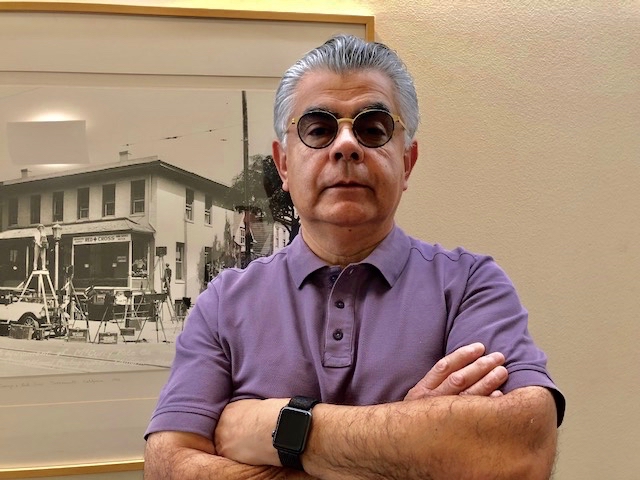
With immigration becoming a hot-button issue within the political arena, those in agriculture have a deeper insight into this controversial topic. Arnoldo Torres, of the National Institute for Latino Policies out of Sacramento and partner with the public policy consulting firm Torres & Torres, has long been a leading voice for immigration within the ag sector—while realizing both countries (America and Mexico) need to do their part.

immigration reform

Arnoldo Torres

“Mexico has a responsibility to its people. The Central American countries have a responsibility. We’ve got to make sure that those countries are doing what they have to do to keep people from having to go elsewhere to make a living and to live,” Torres explained.

He knows this from personal experience, when his grandfather made a move to America from Mexico, with no opportunity to go back.

“They realized that if they had gone back, there was never going to be a life for them back home,” he said.

Torres further added that the desire for immigrant workers purely correlates with their unique work ethic.

“There’s that saying that necessity is the mother of invention. Well, necessity is the mother of work. I mean, we work to address a necessity.”

2018-09-14T16:25:21-07:00September 14th, 2018|

CA Supreme Court Rejects ALRB’s Effort to Avoid Counting Gerawan Farm Votes

California Fresh Fruit Association Applauds CA Supreme Court Order To Count Votes

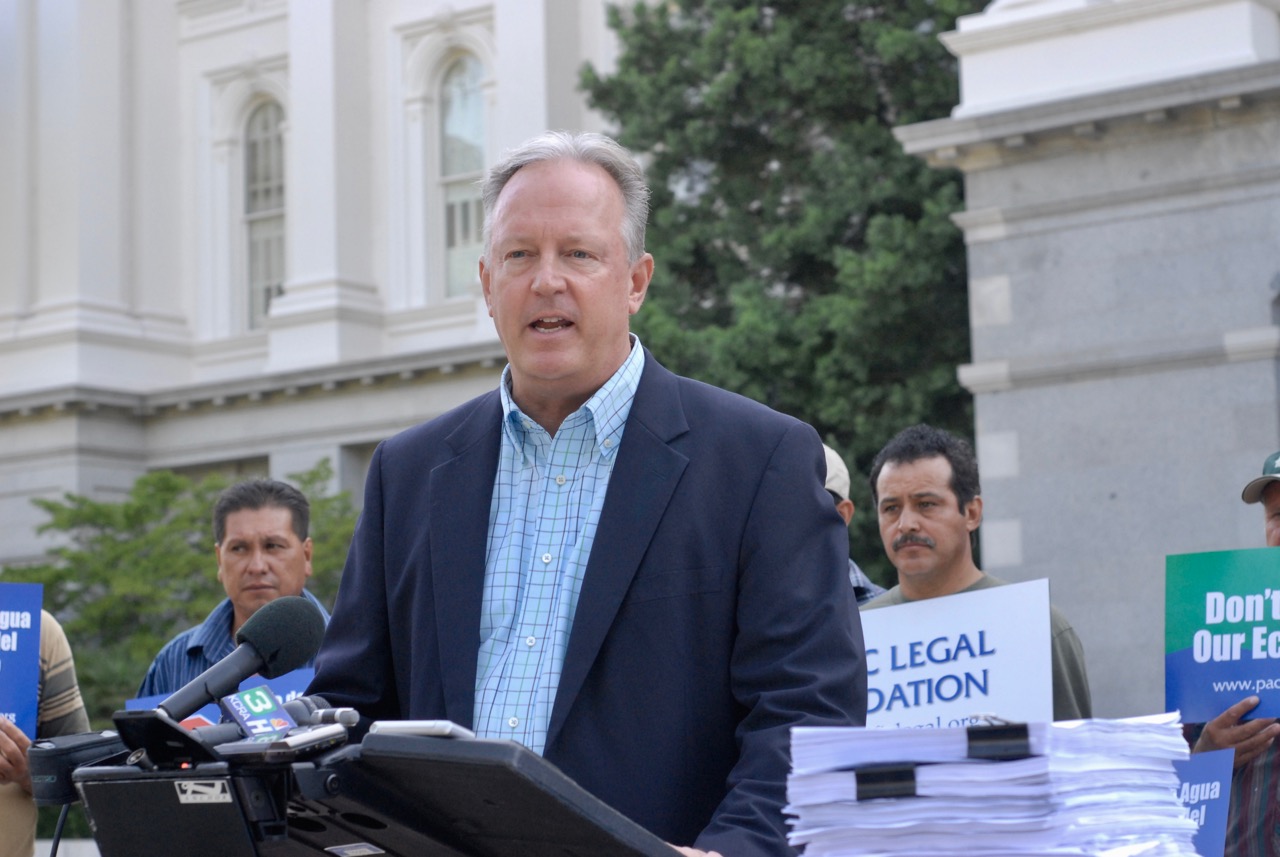
George Radanovich, President of the California Fresh Fruit Association, applauded the recent decision by the California Supreme Court, upholding the earlier decision by the 5th District Court of Appeals ordering the California Agricultural Labor Relations Board (ALRB) to count the employee ballots cast in their 2013 decertification election.

George Radanovich

Radanovich stated, “Today we welcomed this long overdue decision. We are pleased and encouraged by the recent decision by the California Supreme Court, which affirms that the most important opinion in this entire matter, the prerogative of the employees will be heard.”

Gerawan employees voted in a decertification election in November of 2013 to decide whether or not to decertify from the United Farm Workers Union. Despite the fact the ALRB ordered and oversaw the decertification election, they impounded the ballots, denying recognition and acceptance of their decision.

Radanovich continued, “Today’s court action would not have occurred without the determined effort of Gerawan Farming, Inc., the Gerawan family, and in particular, company President Dan Gerawan for defending his company and his employee’s right to choose. This fight has been long and arduous, but

2018-09-13T16:44:54-07:00September 13th, 2018|

Does UFW Cause Farm Closures?

Legal Explanation of Anecdotal Farm Closure Reports

By Laurie Greene, Founding Editor

Scores of farms in California have gone out of businesses over the last four decades, and many suspect that UFW pressure was to blame for farm closures. But there is no definitive reported evidence that this has happened.

“There are no specific facts that you can cite or any empirical evidence you will find that growers who closed down their businesses did so because of the UFW,” responded Robert Roy, president/general counsel for the Camarillo-based Ventura County Agricultural Association, when asked about such verbal reports.

Roy explained that it is not illegal for a business to claim it shut down, such as a farm closure, due to a union, according to a recent Supreme Court of the United States decision.

“But people just don’t talk about that in general,” he clarified.

“Generally, if someone’s been under a UFW or other union contract for a number of years, you see the cost of that contract makes them very noncompetitive with other non-union employers, both in-state and in other states,” Roy said. “In the past, UFW contracts had considerably more costly items in their employment packages, usually starting with higher wages, plus [non-wage] costs such as paid vacation, paid holidays, a union pension plan, and a union medical plan. So cumulatively, as the years go by, these costs are a pretty heavy hit for a lot of these employers.”

“Such costs are probably the only thing you can look to determine whether a farm went out of business because of the union,” he explained. “Of course, this is anecdotal evidence because you are not going to find people out there who will tell you directly they went out of work specifically to avoid the union.”

food safetyRoy said the public would not encounter those types of situations in which a business owner will assert the UFW caused their farm closure.

“I would think if a business had to stop operating,” Roy said, “maybe the owner of the business might put out a statement that explains what caused the farm closure. But we did not see that either.”

“When I first came here to Ventura County as a young attorney back in 1977,” Roy recalled, “there were somewhere between 30 to 40 UFW contracts in this area. Now there is only one—Muranaka Farms,” the largest U.S. grower and shipper of bunched green onions, according to their website. I think they have a very small workforce of perhaps 50 people here in Moorpark, California. I believe the rest of their operation is in Mexico, but I do not know if that operation is covered under the UFW contract.”

Roy continued, “Then last year, you had the closure of all of the strawberry operations for Dole Food Co. They shut down all of their strawberry operations in Ventura, Santa Maria and Watsonville. At one time, they had a very large UFW contract with over 1500 workers since the mid-1990s.”

“It is a tough deal for a union to convince workers to pay three percent of their wages in dues,” Roy said, “for many of the benefits that farmers now provide. I think farmers have basically caught up with many of the provisions covered in these UFW contracts. So, selling the union to the workers is a much more difficult proposition, especially when they have to pay three percent of their wages.”


Ventura County Agricultural Association is a business trade association that concentrates on providing services to agricultural employers, packing sheds, and labor contractors in Ventura and Santa Barbara Counties since 1970. The organization’s services include training, dealing with union matters such as grievances and arbitrations,  representing members in administrative and court proceedings, and creating handbooks and policies. The Association keeps its members up-to-date on any federal, state or local laws that affect their operations.


Resources

Guild, Todd. (Updated 2017, July). Dole Berry Co. to close doors,” Register Pajaronian.

Mohan, Geoffrey, (2017, Sept. 3). Pulling back from strawberry market, Dole Food Co. to lay off 402 workers in Northern California,” Los Angeles Times.

2018-09-05T17:00:01-07:00September 5th, 2018|

2017 Fresno County Crop Report Totals $7 Billion

Fresno County’s Ag Value Increases Significantly in 2017 Crop and Livestock Report


The Fresno County Department of Agriculture’s 2017 Crop and Livestock Report (Crop Report) was presented to the Fresno County Board of Supervisors Tuesday. Overall, the 2017 agricultural production value in Fresno County totaled $7.028 billion, showing a 13.58 percent increase from 2016’s $6.18 billion.

“Once again, Fresno County farmers and ranchers have produced an agricultural bounty for the world,” stated Fresno County Agricultural Commissioner Les Wright. “While much of this food and fiber goes towards feeding and supplying our nation, the Fresno County Department of Agriculture also issued 18,604 phytosanitary certificates for 133 commodities destined for 97 countries around the globe in 2017.”

“This Crop Report is comprised of nearly 400 commodities, of which 73 crops exceed $1 million in value,” Commissioner Wright continued. “Crop values may vary year-to-year based on production, markets and weather conditions, but our farmers and ranchers, their employees and all those who support their efforts work tirelessly year-around to bring in the harvest.”

With the great diversity of crops in Fresno County and the many variables in agriculture, it’s a given that some crops will be up in value while others are down. Increases were seen in a majority of the Crop Report segments, including field crops, seed crops, fruit and nut crops, livestock and poultry, livestock and poultry products, apiary products and pollination services, and industrial crops. Decreases were seen in vegetables and nursery. Surface water supplies were significantly better in 2017, although many Westside federal water contractors received much of that good news too late to benefit them with additional annual plantings.

Fresno County’s Top 10 Crops in 2017 (Source: 2017 Fresno County Agricultural Crop and Livestock Report)

Too often, the Crop Report gets summarized down to just a single overall number, but it yields a significant amount of information, such as the ability to examine changes and trends in crop acreage and yields. Amounts in the report reflect the gross income values only (income before expenses) and not the net return to producers.

“The San Joaquin Valley is the food capital of the World, and Fresno County is the region’s heart,” said Fresno County Farm Bureau (FCFB) CEO Ryan Jacobsen. “Daily, millions of food servings unceremoniously originate within our backyard, the result of generations of families and agricultural infrastructure that has been built to furnish an unbelievably productive, wholesome and affordable food supply.”

“The annual Crop Reports are more than numbers,” Jacobsen continued. “They provide the industry, the public and policymakers, regardless of the overall number, the opportunity to salute local agriculture and give thanks for the food and fiber, jobs and economic benefits, agriculture provides Fresno County.”

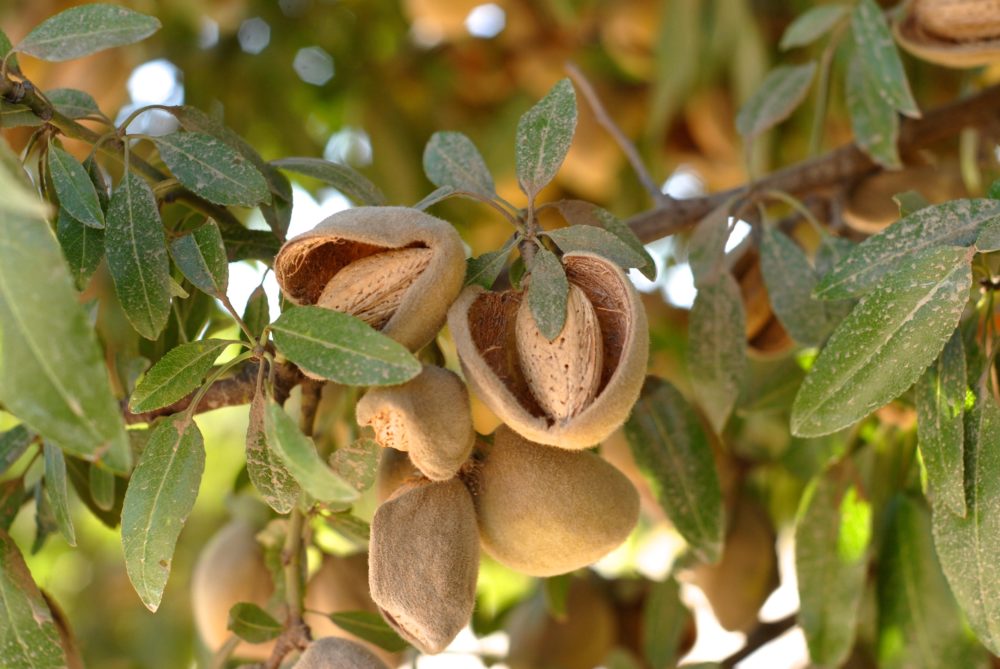
One popular component of the report is the review of the county’s “Top 10 Crops” that offers a quick glimpse of the diversity of products grown here. In 2017, these crops accounted for three-fourths of the report’s value. Almonds continue to lead the way as Fresno County’s only billion-dollar crop in 2017, representing 17.4 percent of the total gross value of the Crop Report. Added to this year’s list was mandarins at number six. Dropping out of the “Top 10 Crops” was garlic.

This year’s Crop Report was a salute to the Fresno-Kings Cattlemen’s Association. The organization is one of 38 affiliates of the California Cattlemen’s Association, a non-profit trade association that represents ranchers and beef producers in legislative and regulatory affairs.

2021-05-12T11:17:09-07:00August 21st, 2018|

Radanovich: President Trump Needs to Enact Immigration Reform

Congress Will Not and Cannot Do it Alone, Radanovich Says

By Hannah Young, Associate Editor

The future does not seem bright for California farmers who are desperately searching for labors to harvest crops. California Ag Today spoke with George Radanovich, president of the California Fresh Fruit Association and former U.S Congressman, about the need for immigration reform.

George Radanovich

Radanovich spent 16 years in Washington, D.C, and from his experience is not convinced that Congress alone will make immigration reform right for California farmers.

“I think that we need to get to President Trump and suggest that he intervene by direct talks with Mexico and create a system that will not leave our farmers high and dry,” Radanovich said.

In order to assure that farmers have enough labor for harvest, immigrants should be allowed to stay in the country as long as they are working during the time the government is implementing a new system, affirming border control, and e-verifying immigrants, Radanovich explained.

However, getting a system of this type will be tough to get past Congress due to a large portion feeling that every farmer worker is probably illegal and needs to go back to Mexico or any other foreign country.

“They don’t get it because they don’t live here, most of them, so they don’t understand how the system works,” Radanovich concluded.

2018-08-17T16:37:35-07:00August 17th, 2018|

Labor Seminar in Bakersfield On Developing Trends

Many Big Labor Topics to be discussed 

By Patrick Cavanaugh, Editor

The Redd Group is offering a labor seminar for owners, operators, HR team members, farm labor contractors and administrators on Aug. 22nd from 8 a.m.to 4 p.m. at Hodel’s Country Dining in Bakersfield.

“We’re going to discuss hot topics in agriculture, oil, and transportation, such as I-9 audits—what to do when ICE show us up and the onerous wage and hour traps,” said Jesse Rojas, with the Redd Group. “We will focus on all that red tape, and burdensome regulations that businesses in California deal with every day.”

The keynote speaker will be former Assemblywoman Shannon Grove, who also owns Continental Labor & Staffing.

Registration required. For more information and to register for the workshop, call Jesse Rojas at 844-946-7333 or email jesse@reddgroup.org.

2018-08-16T15:06:06-07:00August 16th, 2018|

Agriculture Struggles Unnecessarily, According to Steve Forbes

Forbes Chairman Has Suggestions to Help

By Jessica Theisman, Associate Editor

Water and labor are major agricultural issues in California. California Ag Today recently spoke with Steve Forbes, chairman and editor in chief of Forbes Media, about the topics.

“I think that the more people are realizing the enormous opportunities of technology in agriculture. They think that it is going to get better and better in the future,” Forbes said.Everything from reservoirs to desalination plants should be modeled after Israel. They have been building desalination plants because Israel is in a desert where they have been getting rainfall.

Steve Forbes

“This is a very sophisticated use of water in agriculture where they are a real global power,” Forbes said.

Today, Israel uses 10 percent less water as a whole, not per capita, than they did 70 years ago despite the economy being 60 times larger.

Forbes thinks labor is also an issue.

“We are hurting ourselves, our food production, not just in agriculture but construction as well,” he said.

Forbes said we should recycle the programs that we once had, programs where returning people come in for specific time periods for specific jobs. This would help prevent the illegal immigrant problem because workers know they can come back.

On another note, he discussed the current trade war that the U.S. is in with China.

“If you hear 10 percent tariff on aluminum, that’s a 10 percent sales tax; put it that way and people’s eyes go up and they get it right away,” Forbes said.

Putting sales taxes on American consumers, agriculture, farmers, and businesses is not the best way to resolve very real trade abuses.

“Everyone knows from the disaster and the depression of the 1930s what trade wars can lead to,” Forbes said.

Forbes also explained that GMOs greatly benefit producers and should not be attacked as harmful to consumers.

“GMOs have been studied fairly well, and they are making food more plentiful. It makes food a safer in terms that you don’t have to use as many pesticides,” he said. “GMOs make a better use of water, and there is a lot less loss to diseases and insects. We are using human ingenuity to make the human condition better.”

2021-05-12T11:05:10-07:00August 13th, 2018|

UFW Breaks Law on Public Hearing But Will Appeal ALRB Ruling

Pick Justice Video Evidence Proves UFW Wrongdoing

By Laurie Greene, Founding Editor

Jesse Rojas, the spokesperson for Pick Justice, summarized the July 24, ALRB decision in favor of the Gerawan farm workers as “amazing.” The ALRB ruled the UFW broke the law and violated the rights of Gerawan farm workers on September 9, 2015, at a public hearing conducted by the ALRB in a hotel in Fresno.

At the 2015 public hearing, Nancy Oropeza, a UFW organizer, instructed hotel security to ban Gerawan Pick Justice employees from attending—in violation of their protected concerted activity. ALRB Administrative Law Judge Mark R. Soble (ALJ) issued the decision that the UFW violated the Agriculture Labor Relations Act by temporarily excluding a group of pro-decertification, anti-UFW farm workers of Gerawan at the recent hearing based on witness interviews and, more importantly, a video that captured everything.

“As you know, with these legal matters,” Rojas explained, “the UFW unfortunately still has the right to appeal it, even though a remedy has been issued. The remedy includes posting notices, just like typical unfair labor practices, to let employees know the UFW broke the law and that it is not supposed to happen again.”

“Ultimately, the ALRB—an unelected, governor-appointed board—has the authority to make the ultimate decision to uphold the ALJ’s full decision, to change it, or to deny it,” Rojas remarked.

“What is a bit disturbing, especially if you compare other cases where the ALRB is very strong against a company or a grower for violating employees’ rights,” he continued, “is the three ALRB members in Sacramento did not want the UFW to advertise the Judge’s remedial message that the UFW broke the law on the UFW’s La Campesina Radio Network. Furthermore, the ALRB did not uphold the ALJ’s recommendation to retrain their organizers so this does not happen again.”

“But because Judge Sobel publicly claimed that the video was a very persuasive piece of evidence,” said Rojas, “the ALRB still upheld that the UFW violated the law. So, the ALRB toned down the severity of the issue and basically just gave [the UFW] a slap on the hand. But we are hopeful that eventually, even if the UFW appeals, this will get remedied and the employees at Gerawan will know that the UFW broke the law and that they have the right to attend a public government hearing.”

Pick Justice is an organization that advocates for 99 percent of the farm workers in the state of California to protect both their freedom to choose their own labor representation as well as their constitutional rights. Pick Justice has supported the Gerawan farm workers in their ongoing legal attempt to mandate the courts to force the ALRB to count their votes from a 2013 election to decertify the UFW as their labor representative.

2018-08-09T16:05:45-07:00August 9th, 2018|

Pick Justice Stands By Courageous Gerawan Farm Employees

Pick Justice’s Jesse Rojas and Gerawan Employees Will Never Give Up

By Laurie Greene, Founding Editor

For nearly five full years, Gerawan Farming Inc. employees have fought a legal battle for the State of California to count their votes cast in the November 2013 election to decertify the United Farm Workers (UFW) as their bargaining representative. According to Jesse Rojas, a farm worker rights activist and spokesperson for Pick Justice, “Anything the UFW does, the California Agricultural Labor Relations Board (ALRB) is right next to them; and anything the ALRB does, the UFW is right next to them. They are one single entity for the most part; they are a partnership.”

Rojas said the ALRB and UFW filed an appeal to the state Supreme Court this week of the Fifth District Court of Appeal decision to count the votes. “We would not be surprised if the state Supreme Court accepts the appeal because Governor Brown appointees and friendly judges would always be likely to take the case, said Rojas.

“This is where the UFW and the ALRB have failed to mention to the public the fact that we are just asking for the votes to be counted,” Rojas explained. “We are not saying, ‘Certify the results.’ We are not saying, ‘Once you open them and count them, let that be the final choice.’”

“We are saying, ‘You can still litigate it,’ Rojas continued. “‘You can still appeal it. You can still destroy [the ballots] if you want but count them. So why are you so afraid to simply count them?’

Gerawan Employees

Gerawan Farm Workers Protest against UFW at California Supreme Court.

‘This is the perfect question for the UFW, the ALRB, and our California legislators: Why are you so afraid? Employees deserve to know what the choice was, even if you choose to destroy [the ballots] afterward,” Rojas said.

Rojas explained how Governor Brown appointed people to the ALRB who are UFW sympathizers or people who have worked for the UFW.

“It is not only corrupt, it is also very sad and unfair to see over the last years how many companies and jobs have been lost. How many employees and families have been affected? I am not talking just about Gerawan Farming Inc. workers. We can go on and on in McFarland, Delano, Bakersfield, Salinas and Santa Maria for similar examples of how the ALRB has failed to protect farm workers.”

“Launching Pick Justice was great because it started with thousands of Gerawan farm employees who have been very courageous and have not given up,” Rojas explained. “Pick Justice expanded when other workers started reaching out to us from different companies, perhaps dealing with different issues. For example, we have a lot of workers from the Monterey and Salinas area that have been under a UFW contract for decades, but the UFW fails to protect them.”

“The UFW neglects its members by not reporting certain things to them, by segregating those employees who are unhappy with [the UFW] as well as keeping them away from information or meetings,” Rojas said. “Also, by being on the side of the employer—whatever the employer wants to force upon the workers, even if it’s not in their best interests—and forcing it down their throats.”

“After I reached out to Silvia Lopez, we started to meet over the following months. Many of the workers reached out to me. I have spoken to them on my phone. I’ve gone to their houses. I know their spouses. I know their children. I’ve eaten with them, and that’s where I became even more passionate. I said, ‘Look, you guys are the face of this. Your courage is what makes this effort great over so many years; you just don’t give up. You know what you want, and you know what is right.’ ”

Jesse Rojas, spokesperson for PickJustice.com

“All I have to do,” Rojas continued, “is help you with communication media using techniques that I know, which is so simple. Social media, digital marketing, things that I grew up with and that I’m very good at. Pick Justice is not about me; it’s about them. If they weren’t still fighting, if they weren’t as strong and courageous as they are, we would not have Pick Justice today.”

“In this fight, we’ve gone up against almost all odds. We are going against the state government. We are going against a three- to four-decade-old system, with views, opinions, and decades-long teachings of the UFW and its leaders—its idols, per se—who have parks, schools, and streets named after them.”

“We’ve been attacked, and we continue to be attacked. But we know what we’re doing is right, and we have the numbers. If I didn’t have thousands of workers standing behind me, I wouldn’t be able to do this.”

Rojas said the Gerawan farm workers absolutely knew if they kept fighting, they would be vindicated.

“They did not give up; they are so motivated. And now, we’re in a waiting game for the most of accounting, but the stakes are high.”

Silvia Lopez

Silvia Lopez, Gerawan Employee

“Think about Silvia Lopez,” he said. “You don’t think she’s going to be attacked by the UFW after attending Ivanka Trump’s recent Central Valley event? You don’t think I’m going to be attacked? I’ll give you an example. When Silvia met Tim Donnelly, a 2014 gubernatorial candidate who cared about her story, the UFW circulated a flyer of that picture and called her a racist towards all employees. Why? Because she’s searching for help for farm workers.”

“The UFW is weak; they represent less than one percent of the farm workers. California has an estimated average of 800,000 farm workers in the state—could be more, could be less,” Rojas said. “Current UFW membership fluctuates around 5,000 active members—less than one percent of farm workers. So for them to continue to be quoted as ‘the champions for farm workers and for Latino workers’ is absolutely wrong.”

“Specifically, their words and their actions do not go with one another,” he continued, “including their stance on immigration. If people simply looked up some of the legislation opposed by the UFW, they would see that the UFW is actually not for immigration. It is ironic and hypocritical to keep quoting and portraying the current UFW leadership as pro-employee and pro-Latino.”

“I know I will never give up and I know that thousands of workers behind me will never give up.”

2018-07-26T19:45:07-07:00July 26th, 2018|
Go to Top