Nisei Farmers League and African American Farmers of Calif in Sacramento TODAY to Oppose AB 1066

Nisei Farmers League and African American Farmers of California Discuss Disastrous AB 1066 in Sacramento Today


EDITOR’S NOTE: SEE TEDX TALK VIDEO BELOW OF WILL SCOTT, JR., PRESIDENT OF AFRICAN AMERICAN FARMERS OF CALIFORNIA.


TODAY, Manuel Cunha Jr., president of the Nisei Farmers League and Will Scott, Jr., president of the African American Farmers of California are meeting in Sacramento with members of the California Assembly to explain the disastrous consequences of AB 1066, referred to as Agricultural workers: wages, hours, and working conditions, on small and minority farmers.

African American Farmers of California logo


The effects of this legislation, particularly the Phase-In Overtime for Agricultural Workers Act of 2016,  will be detrimental not only to the farmworker who counts on the extra hours, but to the farmer who, with the increasing costs of regulations and the lack of water, will be forced to cut back on crops and their workforce, according to their joint press release.


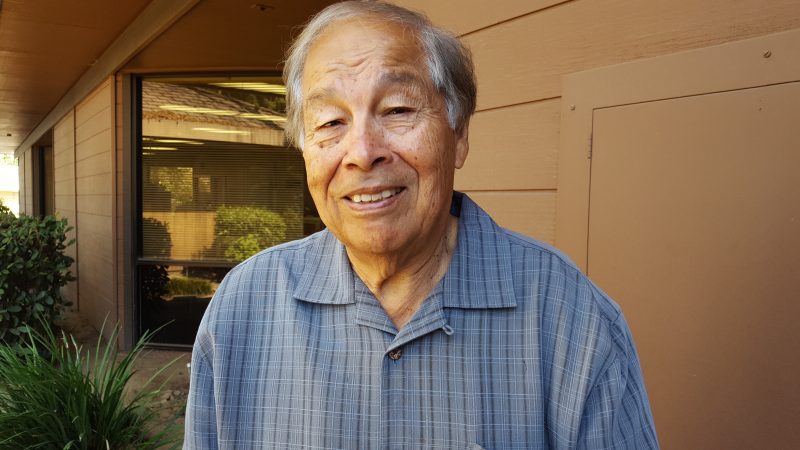
Manuel Cunha, Jr.

Manuel Cunha, Jr., president, Nisei Farmers League

“The small and minority farmer will be adversely affected by this ill-conceived legislation,” said Manuel Cunha Jr. “The small farmer works hand in hand with their workforce in the fields and [is] in a better position —with direct input from the workers—to determine schedules rather than politicians in Sacramento looking for a soundbite,” he explained. “Without meeting with our small and minority farmers and farmworkers, these politicians pass legislation that will cost our workforce money, our farmers crops, and the residents of California the fresh fruits and vegetables they enjoy everyday.”


Both Manuel Cunha Jr. and Will Scott believe the Legislators need to consider the small and minority farmers when casting their votes. “We are confident that after we meet with the Assembly members,” said Will Scott, Jr., they will understand how harmful this legislation is to our farmers and farmworkers. It is our hope that by educating the members, they will understand the importance of this bill and vote No on AB 1066.”


Nisei Farmers League

The League continues to inform grower members about ever changing regulations and policies providing legal assistance for labor and workplace related issues. Our leadership and staff maintains a close working relationship with local, state and federal agencies and legislators to assure grower interests are adequately understood and defended.

The NFL also collaborates with other grower and agricultural organizations in both California and other states to help provide a powerful, unified voice for the agricultural commNisei Farmers League logounity.

Grower members are kept informed through meetings, seminars, newsletters and special bulletins.

Strength, clear focus and growers looking out for growers and farm workers… that is what the Nisei Farmers League is all about.

African American Farmers of California


The Fresno-based African American Farmers of California organization has doubled its membership since it opened a 16-acre demonstration farm in Fresno County, which serves as a testing area where new farmers can get hands-on experience growing a variety of produce.

View Will Scott, Jr. present a TEDx Fruitvale Talk (Uploaded on Oct 20, 2011) Here.


One of Scott Family Farms primary goals is to reintroduce Southern specialty crops, part of the traditional African American diet, into black communities, to help stop the obesity and diabetes epidemics. Crops include: black-eyed peas, crowder peas, purple hull peas, field peas, collard greens, turnip greens, mustard, corn, tomatoes, okra and sweet potatoes.

2016-08-29T10:27:40-07:00August 29th, 2016|

Ryan Metzler Juggles Many Farm Operations

Ryan Metzler Juggles Farm Operations—Large and Small


By Patrick Cavanaugh, Farm News Director


Ryan Metzler grew up as a fourth generation California farmer, as his dad and uncle had a fairly big farming operation producing tree fruit and winegrapes in the Fresno area throughout the 1970s and 1980s. Eventually, Ryan’s dad spun off on his own, enabling Ryan to work with his dad for many years.


Today, Metzler is a graduate of Fresno State, lives in Fresno, and as vice-president of Capital Agricultural Property Services—the property management division of Prudential Ag Investments—he manages many farm operations in the West. “Most of our clients are large investment groups,” said Metzler, “so these clients will typically look at large agricultural properties as an investment.”


As these investment companies typically know little about farming, Metzler explained, “our role is to not only make recommendations about what to plant, but also how to diversify, how many acres, how to process, and who gets to buy the fruit. So we end up growing fruits, nuts and vegetables and just about anything that is consumed,” he said.


“My charge is the western region of the U.S., but we manage farms in the Midwest and the East,” Metzler said. “It does give me opportunities to be involved with a lot of different commodities, but I have to say that growing winegrapes is probably my favorite.”


Managing many properties takes a very strong team. “I work directly with some managers and then we hire a secondary layer of management to do the tractor work and the day to day operations. We have both the economic responsibility, but also the practical farming responsibility to maintain these properties because they do change over time.”

California Cabernet Winegrapes


Metzler also farms 200 acres of winegrapes and tree fruit in the Fresno/ Sanger area. “What I find the most interesting, is that I get to be a small grower and deal with small grower issues, and I also get to be a large grower and deal with large grower issues. And I love to marry up those two challenges because it gives me a great perspective on decision making. Sometimes you have to make a strategy choice and other times you have to make a tactical choice, and I find that mix to be really rewarding,” said Metzler.


Metzler summed up farming as “an absolute thrill. I wake up everyday and pinch myself to be lucky enough to do something like this for a living.”

2016-08-26T12:05:07-07:00August 26th, 2016|

City of Mendota Recovers from Drought

Mendota Resilience and Pride

By Emily McKay Johnson, Associate Editor


For many small San Joaquin Valley cities that have relied on agriculture to support their local economies, the four-year drought in California has dramatically increased unemployment and decreased business revenue. Mendota, a city west of Fresno, hit hard with a 45% unemployment rate, has constructively made calculated adjustments by residents and farmers to recover to its pre-drought economic level, according to Robert Silva, mayor of this resilient city.mendota logo


“As we have been going through the drought the last four years,” Silva   explained, “Mendota [nicknamed Cantaloupe Center of the World] has been in the spotlight for its high unemployment, and a lot of our farmers are having a rough time. We have had a lot of bad publicity.”


“In the laMendota Muralst year or so we have weathered all this,” he stated, “and things are positive now. Our farmers are really understanding how to use every drop of water. We have a lot of new business coming into the community. We have a housing boom that continues to grow, so things are definitely on the rise and we’re standing very proud.”


“A few years ago, high unemployment forced many people to move away, suddenly creating school classrooms with very few students; however, that has changed too,” said Silva. “Student enrollment is growing and we have added on another school. It is very positive in Mendota; the doom and gloom of a few years ago has gone. Really, it’s gone.”


“Financially we’re in good shape and businesses are prospering,” Silva summarized. “It’s good for our city, good for our citizens, and good for business.”

2016-08-24T16:13:22-07:00August 24th, 2016|

Like Mother, Like Son: Passion for Grape Growing

Mother-Son Team Share Passion for Grape Growing


By Lauren Dutra, Associate Editor


Diane Laub and Jared Allred, Fresno County mother and son grape growers, shared their passion for grape growing and some insight on their raisin and winegrape operations. “We have mostly Thompson Seedless,” Allred began, “which has been made into raisins for the last couple of years. Sometimes we send them to the winery if the price is right. We also have about 75 acres of overhead trellis dried-on-the-vine (DOV) Fiesta grapes that we use for raisins every year.”


With the harvest season behind them, Allred summarized, “in the first week of August, we went through and cut all the canes on the DOV grapes. The raisins started drying on the vine for a few weeks, and then we sent a mechanical harvester through.”


The mother and son team also farm 85 acres of French Colombard. “We used to have 40 acres of Syrah,” Allred added, “but we took [the variety] out this last year because the price hasn’t been good and the vineyard was not in very good shape.”


SJV grapevines Aug/Sept

“In years past, we used to send all of our Thompson’s Seedless to the wineries,” Allred explained, “but the price hasn’t been good the past three years, so we’ve been making it into raisins. This year, the only thing we have going to the winery is our French Colombard.”


Allred also commented, “The crop this year looks pretty good, actually as good—if not better than—last year. ‘Not a lot of powdery mildew except on the Fiestas, which are always prone to a little bit of mildew.”


Diane Laub, Allred’s mother, explained her role on the family’s farm. “I mainly oversee everything on the farm and also do all the office work. That is what I was brought up doing. I still do all my own work: irrigate, parts runner—you name it.”


Laub is the daughter of the late Don Laub, a well-known and respected leader in agriculture and in the Easton community where he farmed. For 50 years, Don Laub was active with the Fresno County Farm Bureau and served as president from 1986-1988. In 1996, he received the Distinguished Service Award from the Sacramento-based California Farm Bureau Federation. He also served on boards of many other agriculture organizations, including Ag One Foundation at Fresno State and California Association of Winegrape Growers.


Following in her father’s footsteps, Diane Laub explained her passion for the business, “It’s just something that I love to do. I don’t know what I’d do without it. You know, it’s my job; it’s my life,” she said.

2021-05-12T11:00:50-07:00August 23rd, 2016|

CULTIVATING COMMON GROUND: Economic Analysis of Drought on California Agriculture

Editor’s note: We thank Aubrey Bettencourt for her contribution to California Ag Today’s CULTIVATING COMMON GROUND commenting on the report, “Economic Analysis of the 2016 Drought for California Agriculture,” released this week. Lead UC Davis author Josué Medellín-Azuara’s response can be read below. 


By Aubrey Bettencourt, executive director, California Water Alliance (CalWA)


Josué Medellín-Azuara, Duncan MacEwan, Richard E. Howitt, Daniel A. Sumner and Jay R. Lund of the UC Davis Center for Watershed Sciences, ERA Economics and the UC Agricultural Issues Center reported their views on the economic impact of California’s continuing drought on agriculture this week. The study, “Economic Analysis of the 2016 Drought For California Agriculture,” proved to be uncommonly riddled with errors, questionable metrics and inaccuracies; it’s a continuation of a disturbing recent trend.

CA Water Alliance logo


The authors claim that about 78,800 acres of land might be idled due to the drought, but a quick Google search shows a single water district that had more than 200,000 acres of fallowed land in 2016. There are more than a hundred other water districts throughout the state, and most are reporting idled acreage.


In another irrigation district in Yuba County, more than 100 agricultural users have been cut off entirely, leaving their nearly-mature crops and fruit and nut trees without water.   [North Yuba Water District (NYWD)]


This year the federal and state water projects announced they would provide agriculture with 55% of their water. Two months ago, they reduced the estimate to 5% south of the Delta, and they are struggling to even deliver that amount.


Across the state, water prices have increased dramatically, whether pumped from the ground or bought on the faltering water-exchange market. Water that costs less than $250 per acre foot in 2012 now costs up to $750 or more.


It doesn’t take a doctoral or economic degree to understand that when the price of water goes up, the cost to produce food also goes up. Farmers may be getting more money for the produce they grow, but they are watching their bottom line shrink because it costs more to grow it. Even water from their wells isn’t free; pumping takes energy, and energy costs money too.


Adding to rapidly increasing costs are the new minimum wage, capped work hours, and hundreds of regulatory mandates from the 80+ local, state, and federal agencies that oversee every aspect of California farming and bury farmers in paperwork and red tape. Compliance takes time away from growing food, and it costs money.


Take a look at rice farmers. Growing rice today is a losing proposition. After the labor, cost of rice plants, fuel, fertilizing, care, harvesting, drying and milling, growers pay substantially more to grow rice than they can charge for their crop. Many have converted rice paddies to other uses, and some sell their water or take money from federal agencies and conservation groups to create wildlife habitat in order to simply stay afloat. Some are selling off their land to developers, a lose-lose decision affecting everyone.


On main street, consumers are another group taking a second, alarmed look at their grocery, water and sewage bills. All are rising far faster than inflation. Whether you are talking about the price of fruit, bread and eggs or the cost of taking a shower, all have been increasing over the past five years because of the drought.


To really understand what’s happening, take a drive out of the city and into the countryside where your food is grown. Stop at a roadside produce stand or park your car and strike up a conversation with some ranchers and farmers in a small town cafe.


After you hear their stories, you may realize that almonds and pistachios are not as labor intensive as strawberries, tomatoes, cucumbers, grapes, beef, lamb or many others out of the nearly 450 crops grown in California. Some crops are thirstier than others, too. This doesn’t diminish the value of these fruits, nuts, vegetables, and proteins. The value of water is what it provides us: in this case, safe, local, and hopefully affordable food.


But commonsense interviews and case studies of actual operations — once the heart of any competent agricultural economic study — are virtually missing from the report’s statistical models built on university computers, research hypotheses and tables of statistics.


The drought has hurt California farmers, and it is hurting Californians wherever they live. Gross income may be up, but net profits are down, and the rate of decline hasn’t hit bottom yet. 


Aubrey Bettencourt is the executive director of the California Water Alliance (CalWA), a leading educational voice and authority on California water. CalWA advocates for the water needs of California families, cities, businesses, farmers and the environment.


Editor’s note: California Ag today thanks Josué Medellín-Azuara, senior researcher, UC Davis Center for Watershed Sciences, and lead author of “Economic Analysis of the 2016 Drought For California Agriculture,” published this week, for his response to several claims made by Aubrey Bettencourt (above).

UC Davis Center for Watershed Sciences
Josué Medellín-Azuara told California Ag Today, “I will not go over debating the comments which I very much welcome and respect, but I would like to provide some thoughts instead.”


1)  “Through remote sensing,” Medellín-Azuara said, “we estimated summer idle land in Westlands by the end of the irrigation season to have been 170K acres in 2011 and just above 270K acres in 2014,” based on NASA data. The difference can be explained by some drought effects and other conditions, according to Medellín-Azuara, “so idled land differences should be taken with a grain of salt. As a point of interest, most of the fallow land we estimated was on the Westside of the south San Joaquin Valley.”


2) In addition, Medellín-Azuara clarified, “My understanding is that there is a cost issue and a cutoff issue. We estimated about 150 TAF (Thousand Acre-Feet) of [water] shortage in the Sacramento Valley in our study. At current conditions for North Yuba Water District (NYWD) agriculture is no more than 3 TAF from my reading of the attached document. I am not saying the cutoffs are not hard for the more than a hundred users, but [I] also want to put numbers into perspective.”


3) “From what I’ve heard and read,” Medellín-Azuara stated, “the timing [of] more than quantity of the projected releases is unfortunate. One of the things we highly encourage in this and past reports is easing of low environmental impact water transfers among users.”
2021-05-12T11:05:48-07:00August 22nd, 2016|

UC Davis Researchers Point to Government as Culprit for Fallow Land

Government Policies—not Drought—Blamed for Fallow Land


By Patrick Cavanaugh

“Neither snow nor rain nor heat nor gloom of night stays these couriers from the swift completion of their appointed”¹ water deliveries.

Not even drought can be blamed for land fallowing due to lack of water deliveries to Central Valley federal water users.


Jason Peltier, manager of the Federal water district, San Luis and Delta-Mendota Water Authority, said, a UC Davis study released this week, “Economic Analysis of the 2016 Drought For California Agriculture,” has confirmed that failed government water policiesnot a lack of rainfall and snow pack—are responsible for the widespread water shortages and the fallowing of more than 300,000 acres of land in the federal water districts on the Westside of Fresno and Kings Counties.

San Luis & Delta-Mendota Water Authority

“It raises this question,” Peltier asked, “When do we get honest and start talking about the regulatory drought—the man-made drought, the policy-induced drought, the policy-directed drought? We can’t even have an honest conversation about that.”


“That our opponents want to deflect and obscure that whole conversation is telling,” he continued, “because we have a tremendous story of adverse economic impact as a result of failed policies. When they tried to protect the fish, they took our water away and they made the supply unreliable. ‘Just a huge failure and they don’t want to address it; they don’t want to deal with it. The same agencies are fixated with their false confidence or their false certainty, their false precision, in terms of how to help the fish.”


Peltier explained the regulators failed to deliver all of the 5% allocation [née water delivery reduced by 95%] to growers california drought fallow landin the federal water districts south of the Delta. “It’s nonsense,” he reiterated, that part of the insufficient 5% was never delivered this season. “It’s avoidance of the reality that the regulators have constricted the heck out of the water projects and made it so—even in wet years, and like this year, a normal to wet year—we’ve got huge amounts of land out of production,” Peltier said, adding that almond growers in the federal water districts are not getting a late, post-harvest irrigation, which can hurt next year’s production.


¹Inscription on the James Farley Post Office in New York City

2021-05-12T11:05:49-07:00August 19th, 2016|

UC Davis Foundation Plant Services Serves the Ag Industry

UC Davis Foundation Plant Services, Critical Service to the Ag Industry


By Brian German, Associate Editor


UC Davis is home to Foundation Plant Services (FPS), a plant repository the world relies on for plant importation and quarantine, disease testing, virus elimination, and DNA identification services for a variety of plants and rootstocks. FPS also coordinates the release of UC-patented horticultural varieties and provides an essential link between researchers, nurseries and producers.


“Established at UC Davis in 1958, FPS has grown from a small kind-of-mom-and-pop scientific effort sourcing out cherry and grapevine cuttings that have been screened for virus to nurseries so that they could make better plants for growers,” said Deborah Golino, director of FPS since 1994. “FPS has grown to the point where it is a self-supporting center. We owe a lot to the growers and nursery industry that have supported us over these years,” she said.

UC Davis Foundation Plant Services


Today FPS employs about 35 people on “soft money,” including scientists in the lab and people in the green houses, as well as propagators, and field workers. About 250 acres of various plantings—largely grapes of course—plus programs with strawberries and sweet potatoes that are mostly run in green houses,” noted Golino.


“All other programs circle around getting correctly identified, valuable commercial plant materials (cultivars). Many times, great people save varieties, and screening them for virus and making sure that commercial nurseries have that virus screened materials, so they can make plants for farmers that have the added productivity and sustainability that comes with clean material,” explained Golino.


FPS advances clean material in the lab by cutting out a meristem shoot tip and grow a plant from that. “Let’s say we have a valuable Chardonnay that came in from France. It’s a new clone and it has a couple of viruses in it. In a process that takes about a year, we take a micro-shoot tip culture and regenerate a plant,” Golino said. “For reasons that aren’t really fully understood, regenerating that plant from the tiny .5 millimeter piece gets rid of viruses. That’s our therapy, but what we give to most nurseries and growers who buy material from us is that little plant grown up in the field, and we might have hundreds or even thousand of cuttings of some root stocks.”


“The most common route for advancing a clean plant cultivar is by nurseries coming in to buy several hundred cuttings,” Golino explained, “and plant them in a field. Those plantings grow big mother plants from which they harvest more cuttings to be grown and eventually sold to growers. It’s a multi-year generational process.”


“We have over 900 cultivars of grapes and over 5,000 accessions because we have multiple clones of Chardonnay and Pinot Noir,” Golino said. “All of that material is improved by the technology we have used, technology that has been developed by other UC researchers to conduct DNA identification to ensure accuracy, which is part of the FPS mission.”

Clean Plant Network


“That material is held as a trust to improve our agricultural offerings to growers of fruit trees and other crops,” Golino said. “Even though much of the material is not produced by UC growers and might even be produced by a Cornell or a Michigan breeder, it is still important to our agriculture here in California and across the country since the 2008 Farm Bill was passed. I think we owe Congressman Sam Farr (CA -20) a tribute for that. Since then, there has been money for the National Clean Plant Network with USDA’s Animal and Plant Inspection Service (APHIS) and they have funded about 20 clean plant centers around the country.”


“FPS certainly provides the highest level of screening in the world,” Golino stated, “and I think we might be the biggest too. In this modern world where margins are so thin, the universities are so tight for money for research and especially for teaching, and they have so many challenges taking care of those things, the experiment station does not have much money for service work, like the work that is done at FPS.”


“FPS conducts its work for industry, and that isn’t really directly relative to the university’s mission which has to be strictly accommodated. That is why California grape and fruit tree nurseries have assessed themselves to fund our programs since the mid 1980s,” said Golino. “And then we have the clean plant money on top of that, and our grape nurseries actually pay user fees on the plant material they make from our material. That keeps the doors open and keeps us doing world class work,” Golino said.

2021-05-12T11:05:49-07:00August 18th, 2016|

Air Resources Board to Rein In Cow Flatulence

Public Enemy #1: Cow Flatulence


By Patrick Cavanaugh, Farm News Director


While not a popular or sexy topic of discussion, flatulence is a very natural activity. Who amongst us hasn’t occasionally burped, belched, or otherwise passed a little gas? When guilty of passing waste gases such as hydrogen, carbon dioxide, methane and other trace gases due to the microbial breakdown of foods during digestion, we may say, “Excuse me.”


California CattleBut for dairy cows and other cattle, manners do not suffice; the California Air Resources Board (ARB) has a low tolerance for such naturally occurring and climate-altering gaseousness. The ARB is planning to mandate a 25% reduction in burps and other windy waftage from dairy cows and other cattle, as well as through improved manure management.


Anja Raudabaugh, CEO of the Modesto-based Western United Dairymen (WUD), said, “The ARB wants to regulate cow emissions, even though the ARB’s Short-Lived Climate Pollutant (SLCP) reduction strategy acknowledges that there’s no known way to achieve this reduction. The ARB thinks they have ultimate authority, even over what the legislature has given them: two Senate Bills—SB 32 and SB 1383—to limit the emissions from dairy cows and other cattle.”


“We have a social media campaign addressing the legislative advocacy components,” Raudabaugh explained, “to make the legislatures aware that this authority has not been given to ARB by the legislature, and to bring that into perspective.” Raudabaugh said while SB 32 is not that popular because it calls for raising taxes, SB 1383 is worrisome, “because if anybody wanted to achieve something of a win for the legislature this year with respect to greenhouse gas emissions, this is the only bill left,” she said.


WUD Cattle Flatulence Social Media FB

Cattle Flatulence Social Media (Source: Western United Dairymen Facebook)

Raudabaugh said that in order for the ARB to achieve their mandated 75% reduction in total dairy methane emissions, they are proposing that 600 dairy digesters be put on the methane grid by 2030. According to the ARB’s own analysis that could cost as much as several billion dollars—more than $2 million, on average, for each of California’s remaining 1,400 family dairy farms.


“That is not only expensive, but digesters do not work for every dairy. They can be an option for some, but because of their expense and the reality that not everyone ‘dairies’ the same way, digesters cannot be a mandated solution,” noted Raudabaugh. “All dairy personnel and other interested Californians should contact your state legislature and urge them to veto both bills and not allow the ARB more powers than they actually have.”

2021-05-12T11:17:12-07:00August 17th, 2016|

Temperance Flat Dam Offers Many Important Benefits

Temperance Flat Dam Feasibility Studies Underway

By Laurie Greene, Editor

The San Joaquin Valley Weather Infrastructure Authority (SJVWIA), a Joint Power of Authority composed of many San Joaquin Valley cities, counties and water agencies, is charged with the goals of ensuring completion of the Temperance Flat Dam feasibility studies and preparing the necessary bond funding application to get the structure built.

Stephen Worthley, president of the SJVWIA and member of the Tulare County Board of Supervisors said, “The big step for us is going to be the preparation of the application, which has to go to the Water Commission in a little less than one year’s time. So the important focus is to bring together a plan, present it in a way that will make sense to the Commission so they see this project as we envision it—a transformative project for the irrigation waters and the communities of the Central Valley.”

Worthley said when Temperance Flat is built it will be a monumental event. “It would be the first water infrastructure to be built in California in 50 years. It is unique because it will triple the storage capacity of Millerton Lake behind Friant Dam and it will have the unique ability to send water both north and south if needed.”

“This is why the feasibility study done by the Bureau of Reclamation was so important. They came back with the finding of feasibility and that’s what has to happen,” noted Worthley.
“In order to get the funding from Proposition 1, we’re going to have to demonstrate that this project is feasible and it is; and Friant Dam that will be in front of the Temperance Flat dam is just uniquely situated to provide water going north, either in a channel of the San Joaquin River, which may be able to be recaptured and returned south, or along the existing canal, which runs from the Madera Canal, which runs north.

Currently, most water flowing through Friant Dam moves southward through the Friant-Kern Canal.

“And with the extra water that will be provided by Temperance Flat dam is will enable us to major projects throughout the San Joaquin Valley, which is really critical,” said Worthley. “At the end of the day, I think the recharge is going to be as important, if not more so, than the storage and when you look at the feasibility study that was done by the Bureau of Reclamation, that was just purely on storage. They weren’t even considering recharge, so recharge is a whole new addition to that.”

“There are many opportunities of recharge that will be necessary to maintain agricultural pursuit in the San Joaquin Valley because with the Sustainable Groundwater Act, otherwise, without new water, you’re going to see many areas that rely entirely on pumping, are going to have to curtail their operations, either by fallowing the land or farming in a different fashion where they get by with less water,” said Worthley.

“With the drought and severe environmental restrictions, our valley surface water has been critically restricted. That happens two ways. One, of course, is that most of these, well, really all of our communities have their origin in and their continued existence in agriculture so agriculture production is critical to these communities even existing and continuing to exist, but beyond that is the direct need. That’s an indirect benefit, but the direct benefit is that these communities that rely upon Friant water for their potable water supplies, this is going to be a reliable water supply because right now they don’t have reliability,” said Worthley.

2016-08-18T09:30:50-07:00August 16th, 2016|

American Pecan Council Begins with Nominations

NOMINATIONS TO THE AMERICAN PECAN COUNCIL TO BEGIN SOON

UPDATE:  September 1, 2016. The U.S. Department of Agriculture’s (USDA) Agricultural Marketing Service (AMS) is seeking nominations of 15 growers and shellers (handlers) to serve on the American Pecan Council.  Members of the council will be appointed by the Secretary of Agriculture to administer the federal marketing order with oversight by AMS.

Nomination forms are available on online at https://www.ams.usda.gov/rules-regulations/moa/986-pecans or by contacting AMS at (863) 324-3375.

Completed nomination forms must be received by AMS no later than Sept. 6, 2016.

Forms may be submitted by mail to USDA, AMS, Marketing Order and Agreement Division, 1124 First Street South, Winter Haven, Fla. 33880 or email Jennie.Varela@ams.usda.gov.


The Final Rule for the Federal Marketing Order for Pecans was published in the Federal Register on Thursday, August 4, 2016. Posted by the , the historic event culminated a three year grassroots effort of pecan stakeholders who collaborated with USDA to write and support the order that is now federal law. This action initiates the process of nominating, selecting, and seating of the administrative body of the FMO, the American Pecan Council. A likely schedule over the next few weeks is as follows:

Week of August 8

  • OMB approves Nomination Forms
  • Call for Nomination Press Release; nomination forms mailed to Shellers and Growers, electronic versions available to download

Week of August 22

  • Deadline for Nominations to be returned to USDA

Week of August 29

  • USDA to mail ballots to growers and shellers to vote on Nominees

Week of September 19

  • Deadline for Ballots to be returned to USDA
  • Deadline for background statements (Nominator should seek to gather this document from the Nominees as soon as someone agrees to be nominated.) Only those with completed background statements can be sent forward on the selection order to the Secretary.

Month of October

  • Selection Press Release for the new Council
  • Conference call with USDA Staff and new Council Members (1/2 day) for FMO Orientation
  • Council meets in person

UPDATES WILL BE POSTED TO THE APB WEBSITE AS THEY BECOME AVAILABLE

FAQ about the Nomination Process:

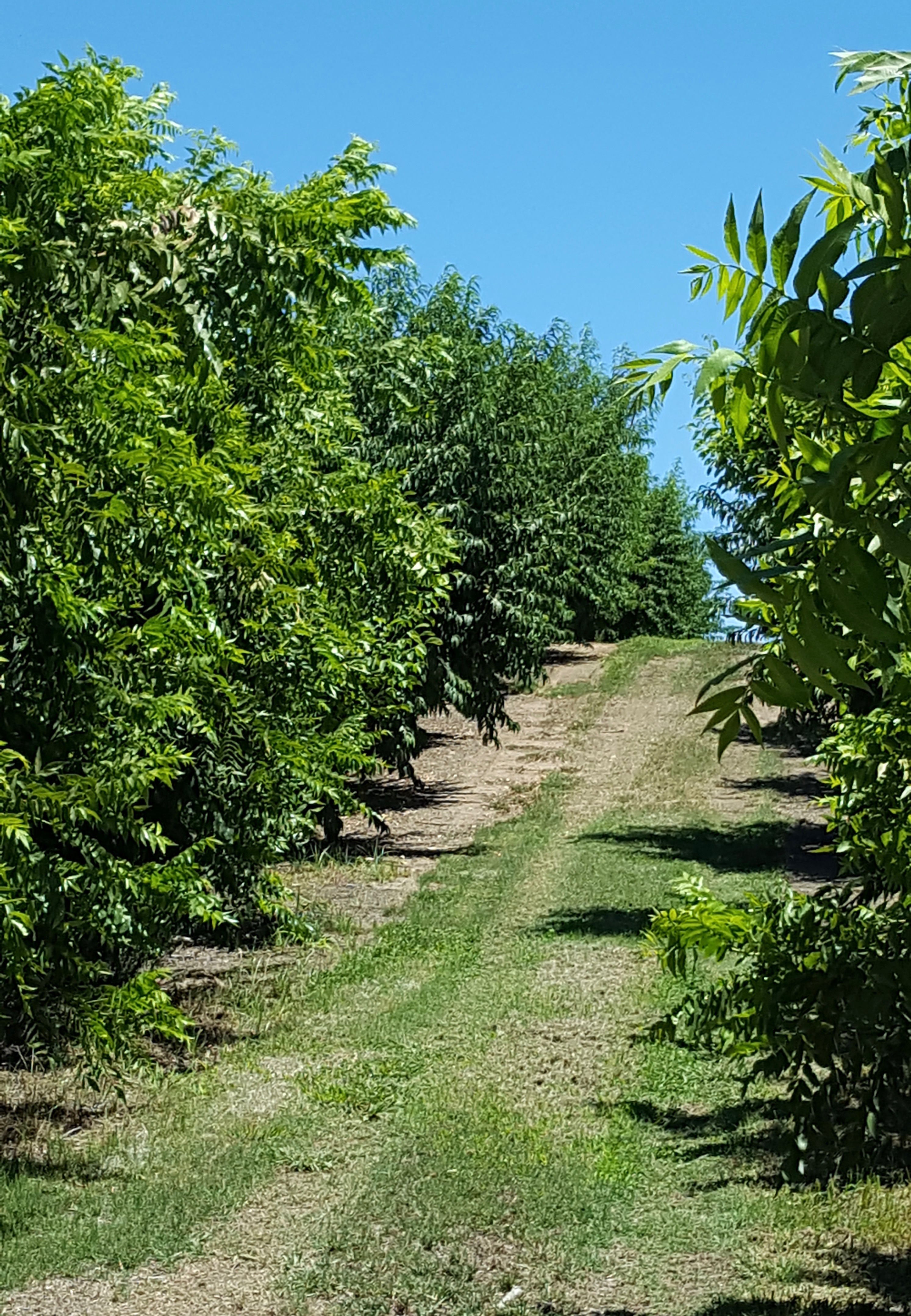
  1. HPecan Cluster Royalty Farmsow will Nomination Forms be made available? Upon approval by OMB, official forms will be posted on the USDA website, mailed to growers and shellers on current USDA lists, and posted on the American Pecan Board website.
  2. Who can nominate? Any grower within a region can nominate another grower within the same region. Any sheller within a region can nominate another sheller within the same region.
  3. Who is a grower? A person who has produced an average of 50,000 lbs. of inshell pecans over the last four years or who has 30 pecan acres. All production or acreage must be within the 15 state production area (domestically produced).
  4. Who is a sheller? A person (entity) who has shelled at least one million lbs. of domestically produced inshell pecans in the prior fiscal year.
  5. What determines a large grower and small grower? A large grower is defined as having pecan acres equal to or more than 176 acres, and a small grower has less than 176 acres.
  6. What determines a large sheller and a small sheller? A large sheller is defined as having handled 12.5 million lbs. or more of domestically produced inshell pecans in the prior fiscal year, and a small sheller is defined as having handled less than 12.5 million lbs. of domestically produced inshell pecans in the prior fiscal year.
  7. Can a large grower nominate a small grower and can a small grower nominate a large grower for the appropriate seat? Yes
  8. Can a large grower second the nomination of a small grower, and can a small grower second the nomination of a large grower? Yes
  9. Can a large sheller nominate a small sheller and can a small sheller nominate a large sheller for the appropriate seat? Yes
  10. Can a large sheller second the nomination of a small sheller, and can a small sheTree Shaker Royalty Farmsller second the nomination of a large sheller? Yes
  11. If a grower grows pecans in more than one region, in which region can he/she be nominated? In the region in which he/she grows the largest volume of their production.
  12. If a sheller handles pecans in more than one region, in which region can he/she be nominated? In the region in which he/she handled the largest volume of domestically produced inshell pecans within the preceding fiscal year.
  13. Can a vertically integrated pecan operation (grows and shells) be nominated as a grower and a sheller? No, a decision must be made by the person (entity) being nominated whether to be nominated as a grower or a sheller.
  14. Who nominates the candidates for the accumulator and public member seats? Once the 15 member Council is seated, they nominate candidates for the accumulator and public member seats.

(Source: )

2016-09-01T17:31:06-07:00August 12th, 2016|
Go to Top