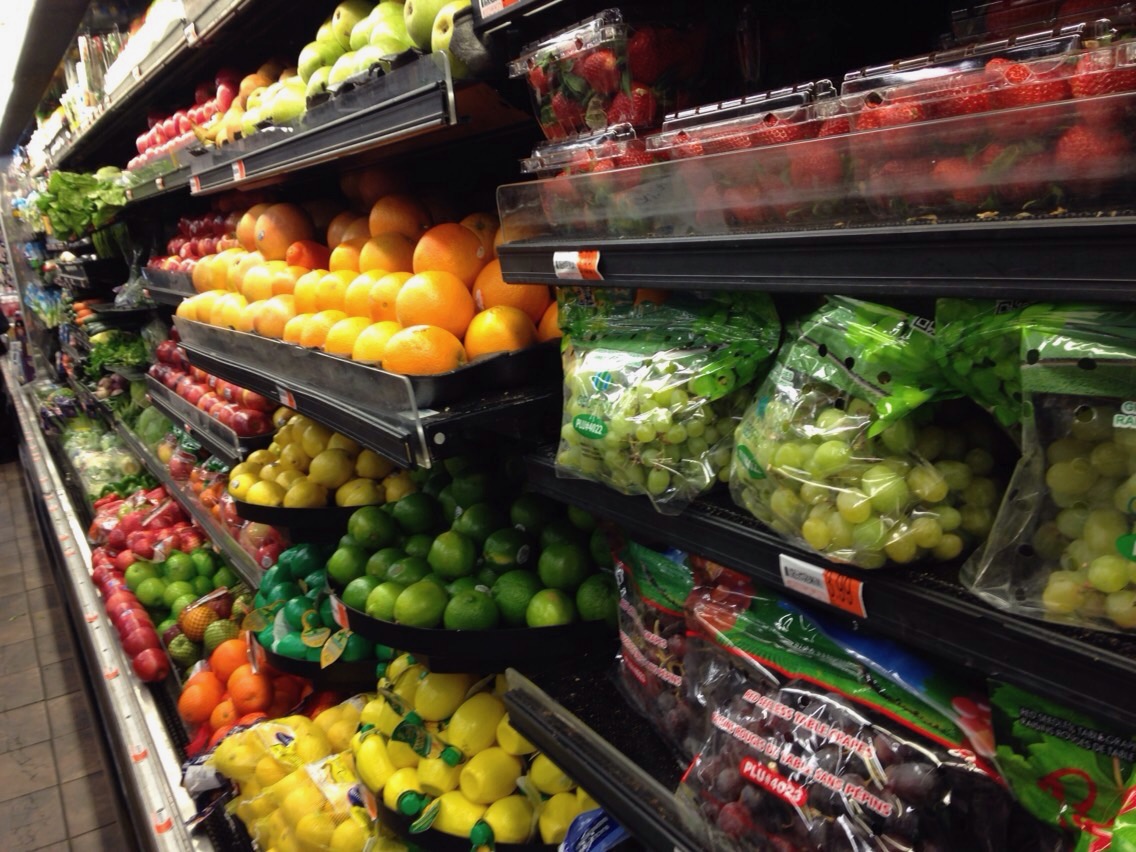
Americans Need to Eat More Fruits and Vegetables

After Nearly 25 Years, It’s time to Advocate for Consumption

News Release From SafeFruitsAndVeggies.com

There is so much good stuff to say about organic and conventional produce, from studies which clearly show the safety of both to decades of research that illustrate the disease-prevention aspects of these nutrient-dense foods.  Plus, farms and farming companies continue to develop innovative, convenient fruits and vegetables, which are helping to increase consumption.

But while we are making some headway, only one in 10 Americans eat enough produce according to the Centers for Disease Control.  Why?  Because barriers to consumption still exist. One of those barriers is safety fears generated by certain groups who inaccurately disparage the more affordable and accessible forms of produce.

Among the longest and biggest offenders comes from an activist group that annually releases its so-called “dirty dozen” list.  Since 1995, this group’s fear-based ‘marketing against’ tactic disparaging the most popular produce items has been used in an attempt to promote purchasing of organic products.

Look, we completely understand advocating for your members when the information is credible and the science is strong.  The AFF advocates on behalf of organic and conventional farmers of fruits and vegetables and the safety of their products every day.  But when you raise unfounded fears based upon unsupportable science about the only food group health experts universally agree we should eat more of, it is time to revisit your approach.  Especially when peer reviewed research is showing this tactic may result in low income consumers stating they are less likely to purchase any produce—organic or conventional—after learning about the “dirty dozen” list.

Put another way, according to these research findings, this activist group may actually be marketing against their own constituents’ organic products by releasing this list.

To summarize, the “dirty dozen” list is scientifically unsupportable, it may negatively impact consumers’ purchasing decisions, and it’s possibly even detrimental to the very products the list authors are trying to promote.   After almost 25 years, it is time to retire this tactic in favor of more creative “marketing for” strategies that encourage consumption and doesn’t scare consumers.


2021-05-12T11:05:04-07:00April 3rd, 2019|

More Facts About the “Dirty Dozen” List

New So-called “Dirty Dozen” List is Baseless

News Release

To everyone that has read about the “Dirty Dozen” list and is now confused and conflicted about buying the more affordable and accessible fruits and veggies, this blog is for you.  Keep in mind that the “Dirty Dozen” list is designed to make you worry and be fearful.  After all, fear is a very powerful motivator, and the list authors attempt to increase safety fears to motivate and influence consumers’ produce buying decisions.

So here are some facts about the “Dirty Dozen” list that underscore you can consume either conventional or organic produce with confidence.  Both are safe, and the right choice is to eat more every day.

  • Arbitrary Methodology: According to Dr. Carl Winter, toxicologist, University of California, Davis.: “This year’s EWG list is produced using the same arbitrary methodology the EWG has used in the past.  Most importantly, the EWG focuses upon the presence (or absence) of pesticide residues in its methodology and public statements rather than on the actual amounts of pesticides detected, which are extremely low.  To accurately assess consumer risks from pesticides, one needs to consider three major factors – 1) the amount of residue on the foods, 2) the amount of food consumed, and 3) the toxicity of the pesticides.  The methodology used by EWG ignores all three.”
  • Meet Organic Standard: Did you know that the vast majority of conventionally grown produce tested by United States Department of Agriculture could qualify to be labeled “organic,” specific to their residue levels? It’s true. The USDA allows organic produce to have residues that are “less than 5% of EPA tolerances” and the majority of residues found on conventionally grown produce are below this level.  This nicely illustrates how low residues are, if present at all.
  • You Can Eat A Lot of Kale:  If you are concerned about residues on kale, you would have to eat a lot more each day to see any health effects.  In fact, a man would have to eat 26,061 servings in a day.. Click here to continue reading and to like and share this blog post. 
2021-05-12T11:05:05-07:00March 26th, 2019|

Nomad Technology Consulting: Digital Technology For Ag

There are Ag Tech Providers Around the World

By Patrick Cavanaugh, Editor

Looking beyond borders is helping find technology for agriculture, according to Adrian Percy, formerly with Bayer Crop Science and now the owner of Nomad Technology Consulting. And he is excited to bring new solutions to agriculture.

“One of the things that were apparent to me working at Bayer is that there was so much beyond our borders, a lot of exciting ag tech out of there, a lot of passionate entrepreneurs trying to make a difference and bring new solutions to agriculture,” Percy said. “However, when I left Bayer a few months ago, I dived in and began working with many new technology providers across the globe who are looking to bring new solutions to various areas of ag tech. I desire to help and advise them.”

AgTech Experts At Recent AgTechx Event at Bayer Crop Science’s West Sacramento Research Facility, sponsored by Western Growers Association.

Digitalization is clearly going to be one of those new areas in agriculture, and basically, it’s going to help ag in many ways.

“I think our growers make more informed decisions about how to manage their crop, and so whatever type of crop that will be, whether it comes to time for harvesting and other areas, I think this is all going to be enabled by digital tools,” Percy explained.

The use of drones and high-resolution cameras will be aiding in combating pests.

“Do you take the use of drones with high-resolution visualization cameras? There are companies now that can detect insects that are less than half a millimeter,” Percy said.

“You may be able to detect the arrival of early disease pressure in a field or early insect infestations and perhaps send out another drone to zap those critters and protect fields with minimum use of crop protection chemistry,” Percy continued.

Building trust will help data sharing at some level.

“They may have to share their data to trust in that process, and a lot of companies are working on how they can build that trust with growers,” Percy explained.

Percy said the need to farm sustainably would help farms in the future.

“I think the fundamentals have always been strong. I know we go through periods of difficulty with low margins and commodity prices, for example, which are not strong right now, but the need for the future and the need for sustainable farming is always going to be there.”

2021-05-12T11:05:05-07:00March 25th, 2019|

Honor Cesar Chavez’s Legacy by Confronting UFW Corruption

Chavez Spent His life Trying to Improve Farm Worker’s Lives, Instead of Threatening Their Lives

By Jesse Rojas, Spokesperson for Pick Justice

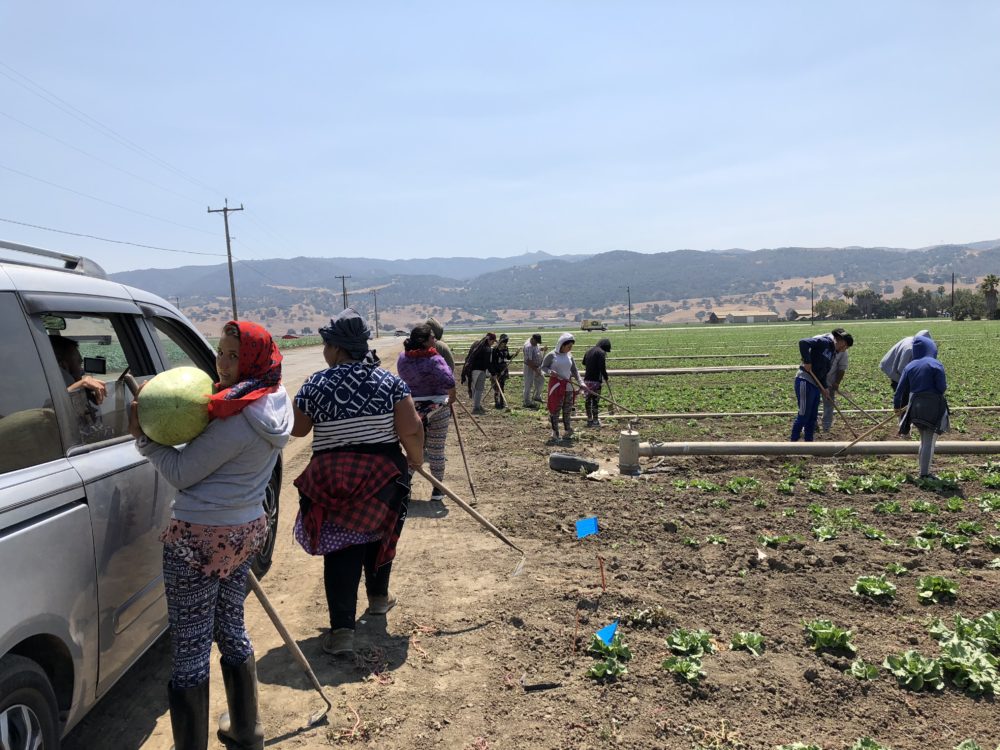
Cesar Chavez spent his life trying to improve life for farmworkers, fighting for changes he felt would bring about civil rights and justice for workers. At the end of this month, California state legislators plan to honor Cesar Chavez’s birthday as a day of public service.

The work Cesar Chavez did organizing farmworkers is credited with spurring better working conditions and increased wages, putting people who perform difficult work but still struggle to provide for their families a step closer to achieving the American Dream in California.

Jesse Rojas, CEO, The Redd Group

Cesar Chavez has been portrayed as the founder of The United Farm Workers union to help struggling farm workers achieve a better life.
Growing up in the fields in the Central Valley town of Delano, this fight begun by Cesar Chavez is personal to me. I too come from an immigrant background, I’ve eaten with the farmworkers who fought alongside Cesar Chavez and heard their stories.

Today, however, Cesar Chavez would be saddened to see what the UFW has become.

After voting overwhelmingly to leave the UFW, Gerawan farmworkers spent five long years in court fighting the UFW and the ALRB, who refused to count their votes until they were ordered to by a judge.
The Gerawan workers, just like the farmworker activists before they were fighting for a better life – and against a UFW contract that would have lowered their pay.

While in Cesar Chavez’s time the UFW gave farmworkers a voice, today’s UFW instead seeks to silence the workers.

When Gerawan farmworker activist Silvia Lopez, one of the leaders of the fight to leave the UFW, tried to speak with former Governor Jerry Brown, a top UFW leader physically blocked her way. The whole incident was captured on video and reported by the Sacramento Bee.

Cesar Chavez spoke out against humiliation and oppression, such as the methods of today’s UFW bosses.

The Gerawan farmworkers are far from alone. Today, the UFW represents just 1 percent of farmworkers, and more petition the ALRB to leave all the time. As reported by the Los Angeles Times, former ALRB Chairman William B. Gould IV, who resigned from the agency in disgust, stated the ALRB now spends more time on petitions from workers trying to leave the union than those trying to join.

In fact, the UFW even abuses its own workers, who the Los Angeles Times reported had to take the union to court to force the union to pay almost $2 million in unpaid wages and penalties.

Cesar Chavez devoted his life to fighting for workers rights. He supported workers right to choose whether or not to join a union. Civil rights for farmworkers cannot be achieved when the government looks the other way when workers are abused, regardless of who is committing the acts of oppression.

That’s why we cannot honor Cesar Chavez’s legacy without speaking out against the abuses of today’s UFW.

Jesse Rojas is a farm worker rights activist, spokesperson for Pick Justice, and founder of California Farm Workers & Families PAC. Rojas is a tireless advocate for liberty and civil rights and often provides news commentary on issues such as entrepreneurship, labor relations, and politics. 

Rojas also launched Mi America En La Radio, the first conservative Spanish-language radio show in the Central Valley. As CEO of The Redd Group, LLC, his organization offers labor relations, human resources consulting, public relations and political consulting.

2019-03-24T12:52:59-07:00March 22nd, 2019|

Alkaliweed Alert! Your Help is Needed!

Information Needed on A New Plant Called Alkaliweed 

By James Schaeffer, Kurt Hembree, and Anil Shrestha, Graduate Student CSU, Fresno, UCCE, Fresno County, and Professor, CSU, Fresno

Pistachio growers and consultants in the southern San Joaquin Valley have recently reported an invasion of a new plant (alkaliweed) along irrigation ditches, roadsides, and into their orchards. Alkaliweed is a California native perennial plant that seems to be rapidly spreading throughout the region.

In some cases, this weed has completely taken over pistachio orchards in a matter of a couple of years after first being spotted. Thus far, repeated applications of postemergence herbicides have only yielded minimal control effects.

Alkaliweed in the field.

Unfortunately, little information is known to date about specific biological and ecological characteristics of this weedy plant, so we are asking for your assistance to help us identify where specifically it has become a problem for you. With this information, we will better be able to understand its growth characteristics and hopefully develop control measures to mitigate the problem.

Studies are currently under way to look at some of these growth characteristics (such as response to salinity, light, and moisture). Your input of where it has become a problem for you and your growers is critical for us to be successful.

Please follow the link https://survey123.arcgis.com/share/1f4753edfd7347ce84cc81f35e65dc02     to take a quick survey on alkaliweed in your area. Your help on this important weed issue is greatly appreciated!

2021-05-12T11:05:05-07:00March 22nd, 2019|

CAPCA Gets to the Capitol To Work for PCAs

PCAs Are in Every Legislative District

By Jessica Theisman, Associate Editor

CAPCA has recently become more active in the capitol. Ruthann Anderson, CEO and president of  California Association of Pest Control Advisors (CAPCA), said the association has PCAs in every legislative district all over the state of California.

“Whether it’s in turf and ornamental or in production agriculture, you know, we have a voice, and we have a lot of ability to influence some of the decisions or at least advise on some of the decisions that might be happening.,” she said.

Anderson said that CAPCA’s capitol visits have been positive.

“We’re on a first name basis with a lot more people than we have been,” she explained.

CAPCA is working with both urban and agricultural legislators.

“I am trying to prioritize both. I think that it wouldn’t be fair for us to neglect our local legislators just because we know that the urbans are a little bit more of our moderate Dems that we’re trying to pursue relationships with,” she said.

CAPCA would like to balance both and continue educating them on the field.

“Our Northern California Chapter is meeting with Senator Nielsen’s office from time to time, just letting them know exactly what’s happening in the field and making sure that they are in the loop,” Anderson said.

This way, if any questions arise, there is open communication between the office and the local CAPCA chapter.

“I know that they are asking a lot of questions about specific crop protection materials, and I think that is important for us to be able to tell the story,” Anderson said.

Sometimes, there is not an alternative, and CAPCA is there to explain.

“When controlling the Asian Citrus Psyllid that can spread the Huanglongbing disease in citrus, sometimes there is not an alternative; sometimes we’re quarantined and forced to do scheduled spraying. That is just a part of protecting the industry,” Anderson explained.

2021-05-12T11:01:50-07:00March 20th, 2019|

Big Exports Numbers Mean Big Responsibilities for California

California Exported $20 Billion in Food Products in 2016

By Mikenzi Meyers, Associate Editor

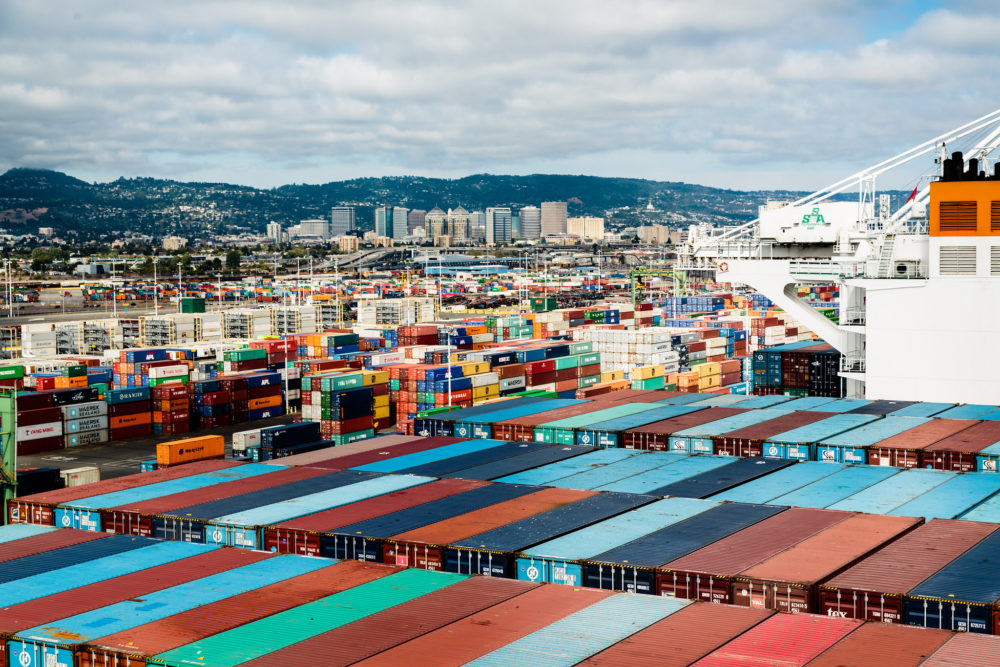
It’s no secret that California’s agricultural exports are a huge part of the state’s economy—but to put it in perspective, over $20 billion worth of food and agricultural products were exported in 2016 alone (the latest figures). With numbers like these, people like Glen Roberts of the U.S. Department of Commerce and International Trade Administration are kept busy.

Roberts, who is part of the Global Markets sector and based in Fresno, not only works with what he calls “easy” exports like Mexico and Canada, but other places across the globe, shipping anything and everything from food to machinery.

exports

Glen Roberts

When it comes to his role in California, Roberts explained, “Our office covers from the top of the Grapevine, Kern County, all the way up to Stanislaus County from San Louis Obispo over to Nevada.”

His sector, which handles more of the commercial side of things, acts as a gateway to other government programs that help out with international trade.

Although Roberts’ main focus is commercial, he’s still one of the go-to guys in agriculture exports.

“What happened when the almond prices dropped? I got the calls because Foreign Ag Service doesn’t handle contractual disputes,” he said.

Roberts further added, “I had to help out our local almond growers because the buyers didn’t want to pay the higher contracted price. They wanted to buy the new lower market price.”

2019-03-19T16:41:17-07:00March 19th, 2019|

Congressman McCarthy: Water Projects Needed Instead of High Speed Rail

McCarthy Introduces Legislation to Repurpose High-Speed Rail Funding to Water Infrastructure Projects

News Release

Congressman Kevin McCarthy introduced legislation recently that would repurpose recovered federal funding from the California High-Speed Rail project to critical water infrastructure projects in California and the West. McCarthy released the following statement on this legislation, H.R. 1600, the Repurposing Assets to Increase Long-term Water Availability and Yield (RAILWAY) Act:                                                                                   

“The California High-Speed Rail project is a boondoggle that California and American taxpayers must move on from. Since its inception, the project’s costs have ballooned while oversight and accountability within the California High-Speed Rail Authority has been nonexistent. Last month, Governor Newsom in his State of the State rightfully recognized these shortcomings and announced an end to the project as it was put to the voters.”

Congressman Kevin McCarthy

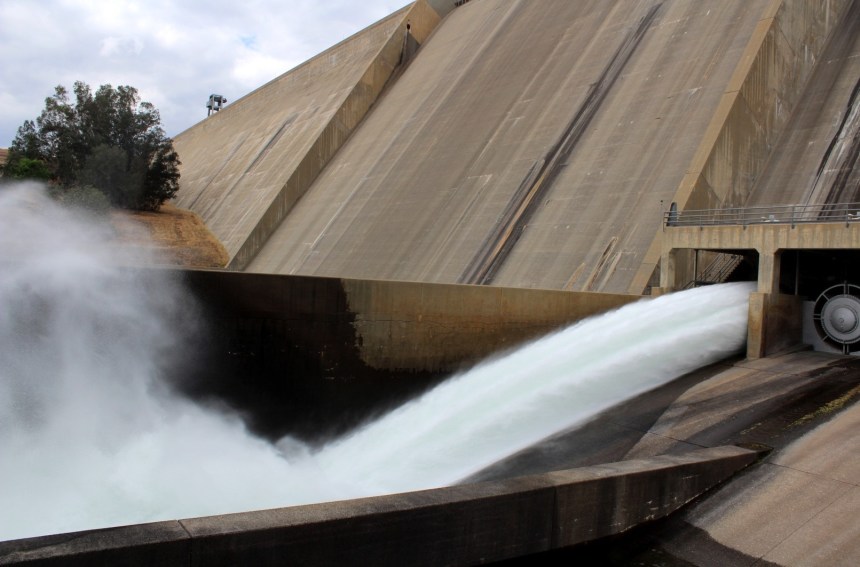
“The RAILWAY Act would end the Federal government’s involvement in this failed endeavor by repurposing up to $3.5 billion in recovered Federal funding for the California High-Speed Speed Rail project to water storage infrastructure projects as outlined in the bipartisan WIIN Act. Under the WIIN Act, five storage projects in California are advancing, and when completed, could provide 5 million acre-feet of additional water storage in our state. This is a far better use of taxpayer money that can address more important needs in our state.

 “California has experienced over five years of drought, and people across the state have felt the consequences, with entire communities on the brink of disaster due to lack of water. The RAILWAY Act would address this crisis head-on by providing significant funding for what California really needs: infrastructure projects that help our state capture and store water during wet years for use in dry ones. The RAILWAY Act builds on the success of the WIIN Act by continuing to increase California’s drought resiliency and helping ensure our communities, families, and farmers have access to life-sustaining water.” 

 Every Republican Member of the California Congressional Delegation joined McCarthy as cosponsors of the RAILWAY Act. Below are their quotes:

 “California farmers and families need a reliable water supply, not an extravagant high-speed rail line. This bill will redirect crucial funds and resources where they’re most needed—particularly in water infrastructure projects—to help ease the burden on Central Valley communities struggling through the water crisis.” –Congressman Devin Nunes (CA-22)

“The RAILWAY Act repurposes funding from the most wasteful project in California’s history and invests it into some of our most critical water storage projects. That’s a win for taxpayers and a win for California’s future. We know California experiences periods of droughts followed by periods of significant rainfall. The RAILWAY Act provides a common sense solution to this problem by building storage projects to capture more water in wet years in order to sustain California families and our economy through the dry years. Building water storage is long overdue. It’s time to stop watching water be diverted into the ocean and start acting to capture and store that water.” –Congressman Ken Calvert (CA-42)

“Years of drought in California brought entire cities within months of exhausting their water supplies. In extremely wet years, we have watched our dams spilling millions of acre feet of water to the ocean because of lack of storage. The infrastructure funding provided in the RAILWAY Act will begin to turn this tide in support of water abundance.” –Congressman Tom McClintock (CA-04)

“California’s high-speed rail project has been a very expensive disaster, with costs ballooning so much that voters are no longer getting anywhere close to what they were sold. I agree that all federal funding given to California for this project should be promptly returned and invested in commonsense projects people need, be it water storage or transportation. I have a bill, the High-Speed Refund Act, with a similar goal of reinvesting these funds into useful transportation infrastructure, such as widening Highway 70, three lanes for I-5, improving Highway 99 or 395, or many other real world projects that are actually useful to people in Northern California. Almost any type of infrastructure will be more beneficial and, one way or another, taxpayers deserve a stop to additional waste for this misguided pipedream of high-speed rail.”Congressman Doug LaMalfa (CA-01)

“The last major reservoir in California was built forty years ago. Since then, our population has grown significantly, and we’re ill-prepared to endure droughts. It’s time we take action to increase our water supply and modernize our water infrastructure. This bill makes good use of funds that were already going to be spent in California. I hope that Congress will pass this legislation quickly.” –Congressman Paul Cook (CA-08)

“Efficient water storage and management is California’s greatest need. The high-speed rail project is California’s greatest waste of time. The RAILWAY Act corrects this problem by implementing a common-sense plan to address a significant concern in our state by investing significant and critical resources to ensure we have water availability for the future. I am proud to be part of this effort and will continue working with my colleagues to lead on this important ongoing issue.”  –Congressman Duncan Hunter (CA-50)

Background

  • The Federal Railway Administration (FRA) made two grant awards to the California High-Speed Rail Authority for the High-Speed Rail (HSR) project totaling approximately $3.5 billion.
  • On February 12, the Governor of California, in his State of the State address summarized the reality that the HSR project costs too much, will take too long to build, and that “there simply isn’t a path to get from Sacramento to San Diego.”
  • On February 19, the FRA notified the California High-Speed Rail Authority it is de-obligating $929 million in unspent FRA grant funding for the HSR project after determining that the Authority “has materially failed to comply with the terms of the funding agreement and has failed to make reasonable progress on the HSR Project.”  The FRA also indicated it is “exploring all available legal options” to recover approximately $2.5 billion in Federal funds already expended on the HSR project.
  • To view the FRA letter click here.

The RAILWAY Act would accomplish three important things:

  • Ends the California High Speed Rail (HSR) Project: The RAILWAY Act would reflect reality and end Federal participation in the HSR project—consistent with the FRA notification of February 19—in the Central Valley and repurpose funds to critical water infrastructure projects.
  • Increases Drought Resiliency in California and the West: The RAILWAY Act would provide significant funding to the Water Infrastructure Improvements for the Nation (WIIN) Act program that the U.S. Department of the Interior (DOI) uses to design and construct various large-scale water infrastructure projects in California and the West, including expanding existing and building new reservoirs, thereby increasing drought resiliency in western states.
  • Helps Keep Federal Funds in California: By providing significant funding to the WIIN Act program that the DOI is using to advance the Shasta Dam and Reservoir Enlargement Project, the Sites Reservoir Storage Project, the Upper San Joaquin River Basin Storage Project, the Los Vaqueros Reservoir Phase 2 Expansion Project, and the Friant-Kern Canal subsidence correction project, all which are located in California, the RAILWAY Act would help ensure repurposed Federal funds remain in California to create jobs and build needed infrastructure.

The RAILWAY Act would also repurpose a portion of HSR project funds to the U.S. Department of Agriculture to award grants to projects designed to help small, rural communities by:

  • Developing new sources of water when residential wells run dry; and
  • Reducing or eliminating elevated nitrate levels in drinking water.
2019-03-18T14:40:31-07:00March 18th, 2019|

ALRB/UFW Access Update Meeting March 21 in Bakersfield

Meeting March 21, 7 am -11 am at Hodel’s Restaurant in Bakersfield

By Patrick Cavanaugh, Editor

Jesse Rojas, the founder, and CEO of The Redd Group; Michael Saqui from the Saqui Law Group; and Raul Calvo from Employer Services are the presenters of an upcoming important seminar. It will specifically focus on agriculture and farm labor contractors,  growers, packers, and shippers, regarding ALRB and UFW access. Attendees will learn what to do when the United Farm Workers union is wanting to take access and speak with farm employees to try to unionize them.

Jesse Rojas, The Redd Group

“The reason why we wanted to do this now before the season started is that the UFW has been very active this year, said Rojas. “The union is trying to get out of the hole that they’ve been in after so many losses. They pulled a big PR stunt earlier this year at Wonderful in Delano, and we also heard that they’re continuing to hire multiple organizers, which indicates that they’re trying to get more active in our industry this year.”

The dos and don’ts will be discussed when it comes to the union trying to take access to your employees or trying to gain access in your fields. Saqui will be presenting his hot topics in labor and employment. He will also delve into the overtime pay in agriculture, which is confusing and ever-changing.

“Raul Calvo will speak about how to improve employee relations and communications with your employees out in the field and avoid having a third party attempt to step in and become the medium of communication between you and your employees,” Rojas said.

State Senator Shannon Grove will also be speaking at the event at 8:30 in the morning, and she will be focusing on some of the legislation—the good and bad law that’s currently happening at the capital that’s going to affect agriculture.

“She will also speak about the general overreach of state agencies such as the ALRB,” Rojas said.

The location of the meeting is Hodel’s Country Dining at 5917 Knudsen Drive, Bakersfield, CA 93308.

For more information and to register, RSVP at Jesse@reddgroup.org or call 844-946-7333. Seating is limited.


2019-03-12T16:32:12-07:00March 12th, 2019|

Groundwater and Need for Temperance Flat Dam

To Deal with SGMA, Temperance Flat Dam Must Be Built

By Jessica Theisman, Associate Editor

The Sustainable Groundwater Management Act, also known as SGMA, is seen as dire for the future of farming as we know it in the San Joaquin Valley. One thing that could help reduce the threat of SGMA is more storage for surface water deliveries—increased storage such as the proposed Temperance Flat Dam.

Mario Santoyo is the executive director of the San Joaquin Valley Water Infrastructure Authority. For decades, Mario Santoyo has been pushing for the construction of Temperance Flat Dam.

“With this new groundwater sustainability law coming into play, it is going to basically shut down a lot of farming,” he said.

If farmers cannot prove that they are putting in as much water as they are taking out of the ground, they will lose their access to the groundwater pumps.

“Farming in the Central Valley is in for a world of hurt. The only thing that can help us won’t solve everything but can help us,” Santoyo said.

It is a major step in the right direction to be able to manage high runoff water that we are otherwise losing to the ocean—meaning millions and millions of acre-feet lost into the ocean.

“Building Temperance Flat, which would provide us additional storage opportunities up to additional 1.2 million acre-feet, will allow us to have carry over water from year to year,” Santoyo said. “This would come in handy when we hit dry years here in California. It would allow us to move water from above ground to below ground, stabilizing our groundwater condition.”

2019-03-07T16:21:59-08:00March 7th, 2019|
Go to Top