A Start on Comprehensive Immigration Reform?

Immigration Reform

Farm Workforce Modernization Act Introduced Today

By Patrick Cavanaugh, Editor

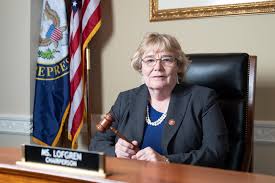
Today Congresswoman Zoe Lofgren, with the 19th Congressional District, representing San Jose and Santa Clara Counties, became the first representative to listen to the need for immigration reform for agricultural workers.

Lofgren introduced the Farm Workforce Modernization Act to the House of Representatives.

This is an immigration reform bill to improve agricultural job opportunities, benefits, and security for undocumented workers in the United States. This bill also allows for the petition of spouses and children to be granted status and includes a revamping of the current agricultural guest worker program, known as H2-A.

Manuel Cunha

Manuel Cunha, Jr., President of Nisei Farmers League, praised representative Lofgren, “Congresswoman Lofgren has worked tirelessly and is committed to getting much-needed immigration reform, which has been long over-due. She is working with other representatives in our Valley, including Congressmen Costa, Panetta and LaMalfa, Cox and Harder, who also believe our hard-working laborers and their families must feel safe and be granted legal status,” noted Cunha.
“Lofgren’s Committee deals with agricultural workers here, taking care of them and their immediate family. If it’s the wife or the husband or the kids, they will have an opportunity to become a Blue Cardholder, then eventually go into a permanent green card,” explained Cunha. The Blue Card it temporary.

“And down the road, if they wish to apply for citizenship, they could because that’s already in the law,” Cunha said

So in that, now what happens is that the house judiciary committee did an ag piece to take care of the current workers here, getting them into status, as long as there are no criminal records. And they’ve had to work in agriculture for a minimum of a hundred days a year.

This process represents 1.6 million farmworkers in the US, which California has about 500,000.

To qualify and advance to permanent residency, those ag workers must stay working in agriculture for a minimum of three years. “Then they would have advanced to the front of the line for residency if they stayed working in agriculture for a minimum of a hundred days a year,” Cunha said.

If we run short of workers, then we have a guest worker provision. The old H-2A is being modified. And that would allow those workers to come into work in the US up to 10 months, in some cases up to 36 months Those folks after eight years would be eligible to apply for the Blue Card of residency. So there’s a place even for those H-2A people down the line.

“Now there’s a catch to all of this and the catch for agriculture is that at the end, let’s say they give us three years to get everybody signed up into the blue card; those people then have this three years already, the agriculture industry would have to go into E-Verify. So, in other words, we would now be responsible for every worker hired after the third year. After the third year, we have to go into E-Verify every farmer, and every labor contractor would have to be registered in E-Verified,” explained Cunha.

Another objective would streamline the I-9 check “The grower would be able to scan your blue card, and it would have all the information necessary for the I-9, and it would meet that obligation. So the Farm Workforce Modernization Act will do some things that are innovative to take a lot of paperwork away from having to do things over and over again,” noted Cunha.

Once the Farm Workforce Modernization Act passes the House, it will go the Senate. It will need to concur with the Senate’s plan. “And upon doing that, making the changes and making sure we have the correct definition for agriculture because right now it’s too narrow, but it needs to be broadened a little bit. For the ag industry, the Senate’s side would be done.

And then when they go back to the house side, where the members will work together through the deals, get everything ironed out, and then after that happens, there are two other bills over in the Senate that have to move at the same time. And that’s the Dreamers and the temporary protective-status (TPS) people. This is for people from countries that were having civil war and unrest, where thousands and thousands of people would be killed. They came here for protection. Those people’s visas would be extended.

“Then we come back later next year we start helping the undocumented in construction and manufacturing. So we start inching away at each of these industries,” Cunha said.

“But if you do dreamers, you do TPS’s, and you do agriculture, you’re probably going to take away around three and a half to 4 million of the 8 million undocumented workers,” Cunha noted. “And that’s a big dent into that program.”

2019-10-30T13:33:21-07:00October 30th, 2019|

Volunteers Need for CDFA Citrus Pest Prevention

CDFA Announces Three Vacancies on the Citrus Pest and Disease Prevention Committee

The California Department of Food and Agriculture is announcing three vacancies on the Citrus Pest and Disease Prevention Committee. Committee member vacancies exist for one grower representative each from Tulare and Ventura Counties, and one citrus nursery representative from Southern California. Individuals interested in being considered for a committee appointment should send a brief resume by November 1, 2019 to the California Department of Food and Agriculture.

Asian Citrus Psyllid Evidence on New Growth (Source: California Ag Today

Asian Citrus Psyllid Evidence on New Growth (Source: California Ag Today)

The Committee advises the CDFA secretary on activities associated with the statewide citrus specific pest and disease work plan that includes but is not limited to outreach and education programs and programs for surveying, detecting, analyzing, and treating pests and diseases specific to citrus.

The members receive no compensation but are entitled to payment of necessary travel expenses in accordance with the rules of the Department of Personnel Administration.

Committee member vacancies exists for one grower representative each from Tulare and Ventura Counties, and one citrus nursery representative from Southern California. All three member terms expire on September 30, 2023. Applicants should have an interest in agriculture and citrus pest and disease prevention. Individuals interested in being considered for a committee appointment should send a brief resume by November 1, 2019 to the California Department of Food and Agriculture, Citrus Pest and Disease Prevention Division, 2800 Gateway Oaks Dr., Suite 200, Sacramento, California 95833, Attention: Victoria Hornbaker.

For additional information, contact: Victoria Hornbaker, Director, Citrus Pest and Disease Prevention Division at 916-654-0317, or e-mail victoria.hornbaker@cdfa.ca.gov.

2021-05-12T11:01:45-07:00October 30th, 2019|

Army Corps After Another Wheat Grower

Another Northern California Wheat Grower is being sued by the U.S. Army Corps of Engineers

By Patrick Cavanaugh, Editor

In February 2013, with no warning or opportunity to discuss the matter, U.S. Army Corp of Engineers sent farmer John Duarte a cease and desist letter to suspend farming operations, claiming that he had illegally filled wetlands on his wheat field by merely plowing it. Duarte spent millions to defend himself and to prevent the personal financial ruin with legal fees and fines

He settled just before his trial was set to start August 2017 in U.S. District Court in Sacramento, Duarte settled, admitting no liability, but agreeing to pay $330,000 in civil penalty fines and another $770,000 for “compensatory mitigation,” in vernal pool mitigation credits.

Now another wheat farmer Jack LaPant, owner of J and J farms in Chico, is facing the same pressure from the Corp of Army Engineers that Duarte faced. In fact, in 2011, LaPant sold that property Durate was trying to farm wheat that led to his prosecution.

Jack LaPant is being sued by the Army Corps of Engineers for plowing a wheat field to grow wheat on land that he formerly owned in northern California.

Tony Francois is an attorney for the Pacific Legal Foundation. He represented John Duarte, and he now is representing Jack LaPant. “Jack’s being sued for growing a wheat crop on another portion of the same property the year before, in 2011, so it was a package deal for the Army here.
LaPant was already embroiled with the U.S. Army Corps of Engineers before Duarte.
“The Army’s investigation extended over several years. So they knew about Jack’s wheat crop in March of 2011,” said Francois. “They didn’t take any action regarding him until December or so of 2012, at which point they decided that growing wheat was also a violation of the Clean Water Act.”

Francois explained: “Then the investigation and threats from the Army and the justice department continued for about three years after that. And then when the government won their liability ruling on the Duarte case, they pretty quickly filed this lawsuit against Jack. I assume thinking that they were going to sweep him into it, claiming that he can afford to pay millions of dollars in fines, so it appears to be part of the same pattern.”

Mostly that’s how they approached the Duarte case. They saw that he was not only a farmer, but he also operates a major Northern California nursery, Duarte Nursery, thinking he had plenty of money to pay the fine, but Duarte did settle for less than what they were trying to get from him. And Francois sees a significant problem here since the Army Corps of Engineers is the Army.

“I think it’s important for people to recognize what we’re talking about here—the United States Army is regulating how farmers grow food for America. I think we’re accustomed to thinking of the Army Corps as not part of the military,” Francois said. “Of course, I served in the Army and knew a lot of excellent engineer officers who served in the Army Corps, and even some that served as the district engineers that oversee this work that goes on domestically,” Francois said. They mostly oversee reservoirs, levees, and flood control, but this all does go on under the auspices of the Army.

“But what’s gone on here is that that important traditional role that the Army has played has morphed, or you could call it mission creep, into a much more questionable, at a policy level, legal authority to regulate farming.”

That happens because of the Clean Water Act authority that the Army Corps has. In that, it deals directly with a deposit of soil into navigable rivers and lakes. If someone needs to build a pier in a lake, they are going to have to dump a bunch of fill to do that. And fairly reasonably, the Army Corp of Engineers is the agency that regulates that.

“The problem is when you start thinking of soil, not dumped into a river, but soil that makes up a farm, and is moved and broken up and tilled when you plow and farm. The EPA and the Army Corps view that soil on a farm as a pollutant. And when you, in their view, move it a few feet or a few inches, from point A to point B, you’ve dredged it from point A, and you’ve filled point B, thereby polluting it,” Francois said.

However, in LaPant’s case, as it was in Durate’s case, we’re talking about a low area of the field where there may be water, and it could be just from recent rain. “That’s not the way the Clean Water Act is supposed to work. Recognizing that this would never work with farms, Congress in the 1970s, in one of their rare lucid moments, actually exempted farming from this whole regulatory authority that the Army has,” Francois noted.

“The Army has then added its conditions, so they deny Congress’s exemption for farming, in all kinds of circumstances where, in their opinion, they think that exemption is unwarranted. So, in this case, the LaPant’s property had not been tilled for several years before he grew his wheat crop, and the way the Army looks at it, if you don’t keep tilling it, you lose the exemption,” he said.
The nature of farming, of course, is to use your expertise as a farmer to turn soil and water into a living thing. So there is no way that a farmer is going to effectively till the soil without, first of all, modifying that soil beneficially so that you’ll be able to grow more crops in it, and B, one of the reasons you do that is to improve the way, whether it’s rainfall, or irrigation water, or groundwater, to improve the way that your crop can access that water resource.

“This is how farming works, and we should leave farmers alone to do that,” noted Francois. “It’s critically important for our entire society, and people forget this, the food surplus that we enjoy because of the ingenuity and hard work and industriousness of American farmers. This is the reason why all the rest of us who aren’t farmers, have the luxury, maybe even, of pursuing other careers, of doing anything that we have the desire and the aptitude and the opportunity to do,” he said.

Francois also noted that all kinds of bad history have occurred in the last century when you get militaries involved in deciding where and how and when people can farm.

The case against farmer Jack LaPant is currently focused on depositions and discoveries being made before a possible trial. “We’ll be filing an order called a summary judgment motion in about a month with the judge. That’s where we try to identify whether there are legal questions that can resolve the case. And if that doesn’t dispose of the case, then we’ll be taking this to a jury in Sacramento to argue Jack’s case.

Francois said he is quite optimistic in terms of helping LaPant. “I think that we’ve seen, particularly from the U.S. Supreme Court over the last couple of years, a renewed interest in holding agencies to the actual authority that Congress gives them. Instead of the prevailing judicial view of the last 50 to 60 years, which has been fairly deferential to agencies basically re-interpreting statutes to fit their policy preferences, he said.

“We think when you read the Clean Water Act, what you see is a pretty clear, broad exemption for normal farming from this permitting. And we’re optimistic that Jack and similar cases like this make their way through the courts, the courts are going to agree that the agencies can’t add their conditions and take away what Congress meant, that be the fundamental protection for farming in this country,” he said.
The Pacific Legal Foundation, based in Sacramento, represents hundreds of Americans who seek to improve their lives but are hindered by the government. They sue the government when it violates American’s constitutional rights and wins. The PLF’s record of success at the U.S. Supreme Court is unmatched by any other organization of its kind, 12 victories, and counting.


2019-10-25T14:13:47-07:00October 25th, 2019|

Any New Biological Opinions Will Get Review by CA Congress Reps

California Members Release Statement on Updated Biological Opinions for Central Valley Project

WASHINGTON, DC – Representatives Josh Harder (CA-10), John Garamendi (CA-03), Jim Costa (CA-16), and TJ Cox (CA-21) and U.S. Senator Dianne Feinstein (D-CA) released the following statement on the updated biological opinions for federally protected fish species and coordinated operations of the Central Valley Project and State Water Project:

“The Endangered Species Act requires periodic reviews to determine the best available science. The federal government’s science for Chinook salmon and Delta smelt was more than a decade old and needed to be updated, especially given climate change.

“We are examining the new biological opinions to ensure they incorporate the adaptive management and real-time monitoring needed to properly manage the Central Valley Project for the benefit of all Californians. The new biological opinions must also provide the scientific basis needed to finalize the voluntary settlement agreements between the State Water Resources Control Board and water users.

“We look forward to the State of California’s thoughtful analysis of the biological opinions. In Congress, we continue working to secure federal investment in the Central Valley Project to meet California’s future water needs and support habitat restoration efforts called for in the updated biological opinions.”


2021-05-12T11:05:01-07:00October 24th, 2019|

PLF Sues EPA Over Continued WOTUS Ruling

EPA Sued for Relying on Illegal Rules Following WOTUS Repeal

Albuquerque, New Mexico; October 22, 2019: A lawsuit filed today on behalf of the New Mexico Cattle Growers’ Association challenges the Trump Administration’s decision to rely on old, unconstitutional rules in the wake of the 2015 Waters of the United States rule’s repeal

Last month, the Environmental Protection Agency announced the repeal of thecontroversial 2015 Waters of the United States rule. The 2015 rule was the subject to numerous lawsuits, and five federal courts found that the 2015 rule was illegal.However, the EPA reverted toolder rules that are similarly unconstitutional. 

Represented by Pacific Legal Foundation, the New Mexico Cattle Growers’ Association is challenging this reversion to the pre-2015 rules. 

“The old rules that EPA is using now have been ruled unconstitutional by the Supreme Court,” said PLF Senior Attorney Tony Francois. “While it is good that EPA is repealing the 2015 rule, the older rules the agency is now enforcing have many of the same legal defects. The problem here is that for decades, not just since 2015, EPA has sought to use its Clean Water Act authority over navigable lakes and rivers to regulate puddles and dry arroyos on private property all over the country. This is the trend that has to be turned back.”

PLF has represented numerous people who were unfairly prosecuted under the rules on which EPA will now rely, including Andy Johnson, whose case President Trump discussed when he ordered the EPA to review the WOTUS rule in 2017.

2019-10-22T13:47:05-07:00October 23rd, 2019|

New Biological Opinion Adds Flexibility to CA Water System

FARM BUREAU: FISHERY PLANS SHOULD ADD FLEXIBILITY TO WATER SYSTEM


New biological opinions for fish in the Sacramento-San Joaquin Delta open the way toward additional flexibility in the California water system, according to the California Farm Bureau Federation. CFBF President Jamie Johansson said the opinions released today by federal fisheries agencies enhance prior protection for fish while adjusting operation of water projects to improve water supplies.

“Everyone wants to see endangered fish recover,” Johansson said. “But the methods of the past haven’t worked. Doubling down on those failed methods would make no sense. It’s time to try something new, and we’re satisfied that the career scientists at the federal agencies have taken the time they need to create well thought-out plans that reflect advances in knowledge acquired during the past 10 years.”

Johansson said the biological opinions can lead to progress in restoring balance to California water management.

“We expect these new biological opinions to approach fishery recovery through a variety of tactics, including habitat restoration, improved science, and flexibility in dedicating enough water at the right time to maximize fishery benefits and improve water deliveries to people,” he said.

“Narrow solutions based only on water flow mandates have failed to restore fisheries, at great loss of water for people. Water used for environmental purposes should be analyzed for efficiency, just as people are when they water their lawns, run their dishwashers or irrigate their crops,” Johansson said.

 “Californians face a challenging water future as we seesaw between extreme drought and flood, incorporate new restrictions on groundwater and work to accommodate a growing population while enhancing the environment and sustaining agricultural production,” he said. “We hope these new biological opinions will move California toward those goals, and that state and federal leaders will work together in pursuing them.”


The California Farm Bureau Federation works to protect family farms and ranches on behalf of nearly 36,000 members statewide and as part of a nationwide network of nearly 5.6 million Farm Bureau members.


2019-10-22T15:33:14-07:00October 22nd, 2019|

New Computer App To Help Fight HLB Disease

Computer App Available To Aid In HLB Fight in Southern California

 By Patrick Cavanaugh, Editor

A computer app is now available to anyone curious about how close a HLB infected tree was found near his or her home.

The fight to reduce the incidence of Southern California trees infected with the fatal Huanglongbing disease takes many different strategies, in Southern California, particularly in Orange and LA Counties, where the disease continues to spread in trees in the yards of residents.

UC Scientist and others in the citrus industry are suggesting that homeowners remove citrus trees in their yards and replace them with non-citrus trees.

Beth Grafton-Cardwell

“One of the things we’re suggesting that homeowners do is if they’re near where a tree has been removed because it’s been declared positive, that, the homeowner consider removing their citrus trees proactively implanting non citrus,” said Beth Grafton-Cardwell a UCANR Entomologist based at the Lindcove Research and Extension Center.

And if homeowners want to know how close a positive has been found to their home, they can now find out. The information can be found by going to ucanr.edu/hlbapp. By zooming in, the site gives recommendations as to whether a homeowner should replace a tree or not.

It’s not a downloadable app for a smart phone but the web address can be access on the phone and be bookmarked.

“The point of this is because we can’t tell in an early infection which trees are infected,” said Grafton-Cardwell. “If a homeowner is near a known infected tree, there is a good chance that your trees are already infected and we just can’t tell yet.”

“So you help your neighbors and the industry by just taking those trees out and then you don’t have to have CDFA knocking on your door to spray pesticides or to ask to test your tree, if you just get the tree out,” she said.

Already more then 1,600 citrus trees in Southern California have been tested positive for HLB disease, and those trees have been removed.

2021-05-12T11:01:46-07:00October 21st, 2019|

Another CA Wheat Farmer Being Sued By EPA

From The Pacific Legal Foundation

Jack LaPant, A Wheat Farmer Sued for Plowing his Land

When most people think about preventing water pollution, they probably picture sewage plants and factories, spilling gunk into a river or lake right?  But according to the Environmental Protection Agency (EPA) and the Clean Water Act (CWA), overturned dirt in a farmer’s field is technically the same thing as that noxious gunk: pollution.

Jack LaPant’s wheat crop, growing in March 2012, for which our federal government is threatening him with millions in penalties.

Yet one major side effect of considering dirt a pollutant is that doing so allows the government to regulate a farmer’s field in the same way that it would regulate chemicals being dumped in a river. This means that many farmers across the country have been forced to pay exorbitant fines and go through years of court battles simply for plowing their fields.

For example, Northern  California farmer Jack LaPant is currently being sued by the EPA for plowing his property to grow wheat on it. He faces millions in penalties for plowing the dirt on his farm. His neighbor John Duarte had to pay $1.1 million to settle similar charges for which EPA officials threatened him with over $40 million in liability.

All in the name of “fighting pollution.”

The EPA treats small family farmers or someone building a home the same as massive cases of pollution. The reality is that they’re not the same, and treating them as such violates people’s property rights while harming the mission of protecting the environment. Yet there are solutions to this problem. Federal courts can clarify that plowing a farm does not pollute that farm, such as in Jack LaPant’s case. For its part, Congress could clarify that plowing dirt to make it grow plants better is not “pollution.” And the Trump administration could live up to its reputation for regulatory reform by not suing farmers for millions of dollars for plowing their farms.

We all want clean water. The EPA should stick to preventing actual water pollution, stop pretending that farm dirt pollutes farms, and leave the farmers alone.  This is a national problem.

Pacific Legal Foundation is representing Farmer Jack LaPant

2019-10-17T14:22:37-07:00October 18th, 2019|

New DPR Chief Along with Other Directors

Val Dolcini is New DPR Chief

Other DPR Directors Announced

Val Dolcini, 56, of Sacramento, has been appointed director at the Department of Pesticide Regulation, where he has served as acting director since June 2019. Dolcini has been deputy secretary for agriculture at the California Environmental Protection Agency since 2019.

He was president and chief executive officer at Pollinator Partnership from 2017 to 2019. He was an administrator for the Farm Service Agency at the U.S. Department of Agriculture from 2014 to 2017, and state executive director for California for the Farm Service Agency from 2009 to 2014.

Dolcini was a senior manager at Accenture LLC from 2004 to 2009, director of policy in the Office of Lieutenant Governor Cruz Bustamante from 2003 to 2004 and deputy legislative secretary in the Office of Governor Gray Davis from 2001 to 2002. He held several positions in the Office of Congressman Vic Fazio from 1995 to 1999, including legislative assistant and district chief of staff, and was legislative assistant in the Office of Congresswoman Nancy Pelosi from 1994 to 1995. He earned a Juris Doctor degree from the Golden Gate University School of Law. This position requires Senate confirmation and the compensation is $177,516.

Jesse Cuevas, 32, of Sacramento, has been appointed chief deputy director at the Department of Pesticide Regulation, where he has been assistant director in the Pesticide Programs Division since 2017. He was director of legislation and policy at the Department of Pesticide Regulation from 2015 to 2017 and legislative director in the Office of California State Assemblymember Henry T. Perea from 2010 to 2015. This position does not require Senate confirmation and the compensation is $179,868.

Raybon Johnson, 53, of Tehachapi, has been appointed warden of California State Prison, Lancaster, where he has been acting warden since 2018 and was chief deputy warden from 2017 to 2018. He served in multiple positions at the California City Correctional Facility from 2013 to 2017, including associate warden, correctional administrator and correctional captain. He held multiple positions at California Correctional Institution, Tehachapi from 1993 to 2013, including lieutenant, sergeant and correctional officer. This position does not require Senate confirmation and the compensation is $162,024.

Jared Lozano, 44, of El Dorado Hills, has been appointed warden of California Medical Facility, Vacaville, where he has been acting warden since 2018. Lozano was chief deputy warden at Folsom State Prison from 2015 to 2018 and a correctional administrator at the California Department of Corrections and Rehabilitation Headquarters in 2015 and from 2012 to 2013.

Lozano was acting chief deputy warden at California Health Care Facility, Stockton from 2013 to 2015 and acting correctional administrator and facility captain at Deuel Vocational Institution from 2014 to 2015 and from 2008 to 2012. He was a lieutenant and captain at California Department of Corrections and Rehabilitation Headquarters from 2006 to 2008, a lieutenant at California State Prison, Solano from 2004 to 2006, a sergeant at Deuel Vocational Institution from 2000 to 2004 and a correctional officer at California State Prison, Solano from 1997 to 2000. This position does not require Senate confirmation and the compensation is $162,024. Lozano is a Republican.

Marion Spearman, 56, of Janesville, has been appointed associate director of general population male facilities in the Division of Adult Institutions at the California Department of Corrections and Rehabilitation. Spearman has been warden of High Desert State Prison since 2016. He was warden at Correctional Training Facility, Soledad from 2012 to 2016, where he was chief deputy warden from 2011 to 2012.

Spearman held multiple positions at Pleasant Valley State Prison from 1994 to 2011, including the associate warden, correctional administrator, facility captain, lieutenant and sergeant. He was a correctional officer at Mule Creek State Prison from 1987 to1994. Spearman earned a Master of Science degree in criminology from California State University, Fresno. This position requires Senate confirmation and the compensation is $170,004. Spearman is registered without party preference.

Tammatha Foss, 50, of Soledad, has been appointed associate director of reception centers in the Division of Adult Institutions at the California Department of Corrections and Rehabilitation. She has been acting warden at Salinas Valley State Prison since 2018, where she was chief deputy warden in 2018.

Foss was chief deputy warden at High Desert State Prison from 2016 to 2018. She was a chief in the Program Support Unit at the California Department of Corrections and Rehabilitation Headquarters from 2014 to 2016 and correctional administrator in the Division of Adult Institutions from 2013 to 2014. Foss was a business manager and community resource manager at San Quentin State Prison from 2009 to 2013. She served in multiple positions at Pelican Bay State Prison, including procurement officer, budget analyst and correctional officer from 1996 to 2009. This position requires Senate confirmation and the compensation is $170,004.

2021-05-12T11:01:46-07:00October 16th, 2019|

How to Read a Groundwater Sustainability Plan (GSP)

GSP Are Important to Understand

By Don A. Wright
www.WaterWrights.net

The following will have a lot of abbreviations so buckle up. The California Department of Water Resources – DWR – had divided the southern San Joaquin Valley into nine hydrologic sub-basins. Under the Sustainable Groundwater Management Act – SGMA – each sub-basin must have one or more Groundwater Sustainability Agency – GSA. These GSAs are required to submit a Groundwater Sustainability Plan – GSP – to DWR for review no later than January 2020.

DWR will only accept one GSP per sub-basin and most sub-basins have multiple GSAs. Most GSAs overlie an irrigation or water district, municipality or county line.

Don Wright

In order to ensure the expert knowledge and interests of the area are well represented most GSAs have opted to write their own GSP. These individual GSPs will be combined as chapters for the overarching sub-basin GSP; so DWR will only have to review the one plan per sub-basin. For instance, the Kings River sub-basin has seven GSAs. The North Kings GSA’s GSP would be more than a foot thick if printed on paper. Stacked on top of one another all seven GSP chapters of the Kings River Sub Basin would be about five feet high.

The taxpayers of California pay the state to hire trained employees at DWR to read these plans. Most folks don’t have the luxury to hire someone to read the plans or the time and patience to do so themselves.

However, there is good news. Much of each chapter is redundant to the other chapter. For example; within the same sub-basin each GSA is required to use the same methodology to arrive at its GSP findings. This helps with uniformity in style – one chapter won’t be in acre-feet while another uses liters. In other words, you read one methodology you’ve read them all. To further refine your reading task each GSP has an executive summary. This passage sums up most of the information in the overall GSP and will save a lot of time, eyestrain and stifled yawns.

Under SGMA GSAs are required to release drafts of the GSPs for review to only counties and cities. However, most if not all of the GSAs in the San Joaquin Valley have opted to release public drafts of their GSP for comment. Not all GSPs have yet to be released but most have and the remainder will soon follow. They are available online.

In the Southern San Joaquin Valley from north to south the sub-basins are:

Delta Mendota –  http://deltamendota.org/,

Chowchilla – https://www.maderacountywater.com/subbasins/,

Madera – https://www.maderacountywater.com/subbasins/

Westside – https://www.countyofkings.com/departments/administration/county-counsel/waterfaq,

Kings River – http://kingsgroundwater.info/sgma-legislation/groundwater-sustainability-agencies/,

Tulare Lake – https://www.countyofkings.com/departments/administration/county-counsel/waterfaq

Kaweah River – https://tularelakebasin.com/alliance/index.cfm/sustainable-groundwater-management-act-sgma/kaweah-sub-basin/,

Tule River – https://tulesgma.com/,

Kern – http://www.kerngwa.com/

2019-10-04T21:27:43-07:00October 10th, 2019|
Go to Top