Almond Buyers Are Curious About The Farm

Buyers of Almonds Are Asking More Questions About Farm Practices

By Patrick Cavanaugh, AgInfo.net

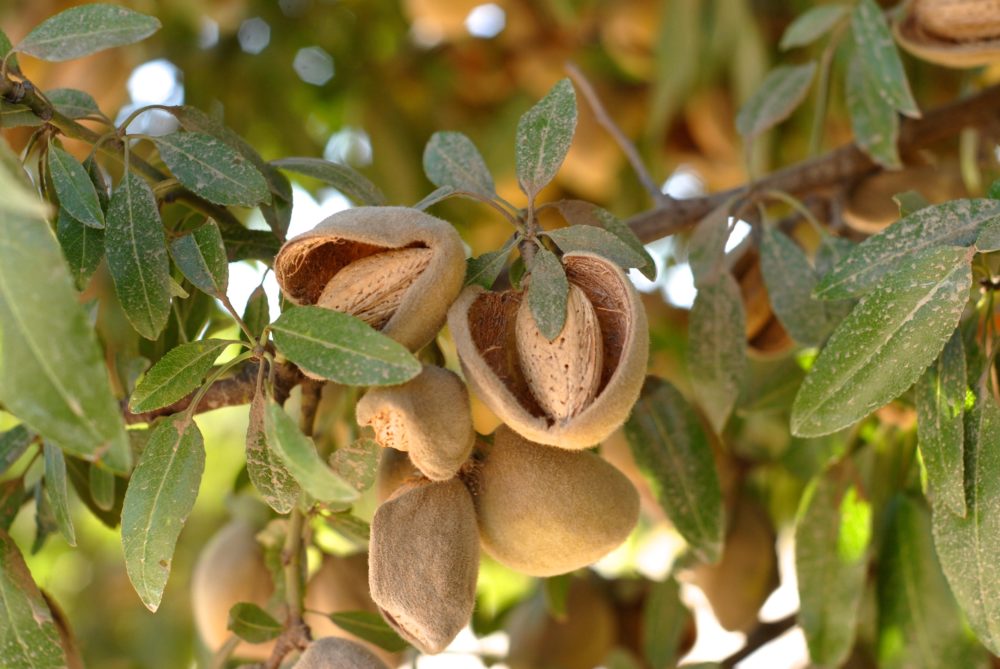
Ben Goudie is membership development with Blue Diamond Growers, who move a lot of almonds around the word.

He noted that buyers of their products for distribution are interested in sustainability growing practices. “You know, in the past sales conversations have been pretty basic, with general questions about price and availability,” said Goudie. “Now, a lot of the sales meetings start with conversations about sustainability, start with conversations about corporate social responsibility and what we’re doing with our growers. What we’re also doing in manufacturing, looking at energy savings, looking at all aspects of sustainability on the corporate level,” h explained.

And the Almond Board of California’s Almond Sustainability Program (CASP) where growers fill out information on their growing practices is part of the information Blue Diamond Growers share where their buyers. “We are using the CASP survey as the basis for our grower information. We are also working on a full and comprehensive sustainability program with our sustainability manager, Catherine Campbell, and she has put together a full package that we supply to our buyers,” Goudie said.

Goudie noted that the in-house sustainability program they’re putting together is comprehensive. “It is pretty robust—everything from energy savings to looking at our distribution and supply chain, how we’ve made savings and looking at our carbon footprint,” he said.
2020-03-18T22:15:16-07:00March 23rd, 2020|

Ag Is Critical Infrastructure—Essential!

Ag Critical Statement from California Farm Bureau President Jamie Johansson:


With agriculture designated “critical infrastructure” by federal and state governments, the California Farm Bureau Federation continues its commitment to assist the state’s farmers, ranchers and agricultural businesses during the statewide stay-at-home order issued by Gov. Gavin Newsom.

“As people who work in a sector defined as critical, farmers, ranchers and people working in agricultural businesses recognize our special responsibility to maintain normal work schedules,” CFBF President Jamie Johansson said. “We encourage local, state and federal agencies to interpret the guidelines as broadly as practicable, to be sure everyone in agriculture can stay on the job, producing food and farm products during this crisis.”

As with any decisive action, Johansson said, there will likely be some confusion and questions about definitions, but he said he has been reassured agencies remain committed to smoothing the production, marketing and transportation of food and farm products.

“The state Office of Emergency Services has made it clear: People involved in agriculture, food production, distribution and transportation of food or agricultural products—anyone working in the food supply chain—people in those critical jobs are allowed and should continue to show up for work,” Johansson said.

To ensure people working in agriculture can do their jobs safely, Farm Bureau has redoubled its work with employers to make sure they’re aware of the latest guidelines from health officials and government agencies.

“Based on the questions we’ve been receiving from farmers, we know they’re being diligent in having employees engage in sanitary practices,” Johansson said. “That’s already a high priority for reasons both of food safety and employee health. Farmers take a number of steps on a regular basis to protect themselves, their employees, their families and their crops.”

County Farm Bureaus around California and CFBF will remain operational, in order to support their members.

“County Farm Bureaus provide a critical local resource for farmers, ranchers and people in agricultural businesses,” Johansson said. “County Farm Bureaus and those of us at CFBF will remain available to respond to our members and work with government agencies to assure continuity of critical food and agricultural activity.”


2020-03-20T14:41:58-07:00March 20th, 2020|

“Dirty Dozen” List is UnTrue and Fear Mongering

How Registered Dietitions Can Stop Food Fears Before They Begin Due to the “Dirty Dozen” List

By Elizabeth Shaw, MS RDN, CPT, CLT

Guess what? It’s that time again when media outlets will start covering the release of this year’s “Dirty Dozen” and “Clean Fifteen” produce lists. As a registered dietitian nutritionist in the media, this season is always a busy one.

I must first disclose I am an EOPP (equal opportunity produce pusher), a term I coined after realizing one in every 10 Americans is falling short of meeting their fruit and vegetable intakes. Being someone who has devoted their entire career to ensuring the public feels safe and informed about their food intakes, lists like the “Dirty Dozen” always make me feel like my messaging and the work I’ve strived so hard to do is taking three giant steps backwards.

Thankfully, the Alliance for Food and Farming invited me here today to share with you how we can stop the food fears before they even start!

Let’s rewind first, shall we?

The “Dirty Dozen” is a list produced by the Environmental Working Group (EWG) that is released every spring with claims about produce items and “high” pesticide residues. I won’t repeat exactly what Dr. Carl Winter, toxicologist and professor emeritus, University of California Davis, had to say on the topic in this post here, but I highly encourage you to check it out.

Basically, there is flawed methodology not being conveyed to the consumer when the report is released. When this happens, an immediate fear is embedded into minds, leaving consumers apprehensive to purchase some of their favorite fruits and vegetables (like strawberries and kale, two of last years so-called “dirty” contenders.)

Here’s the deal: the produce picks included in the dirty dozen don’t tell consumers that the actual percentage of pesticide residue left on the items is so negligible, if present at all, that it poses NO POTENITAL RISK to humans, both adults and kids alike.

To me, that is just crazy! Right?

Not only do reports annually confirm the safety of both conventionally and organically produced produce (like the California Department of Pesticide Regulation (DPR) 2018 and the USDA Pesticide Data 2018 Report), but so do organizations like the Environmental Protection Agency (EPA.)

And, for those who are still uneasy and need more proof, the Alliance has a robust, state-of-the-art Pesticide Residue Calculator that allows consumers to identify the number of servings they would have to consume for their gender and age group each day to remotely come close to having pesticide levels present to pose a concern.

For reference, as an adult female myself, I would have to consume 453 servings of strawberries to be a concern! My daughter, a young toddler, would have to consume 180 servings! While she is a strawberry addict, it’s hard to ever imagine she would get close to meeting that number of servings in a month, yet alone a day.

As much as we know produce is safe to consume and the above studies are valid and based upon peer-reviewed resources, it’s inevitable the fear messaging will come out rampant with the “Dirty Dozen” release.

To jump ahead three steps, I’m here to show you how you can actively use messaging to support produce consumption (both organic and conventional) and ease the minds of your followers as well as consumers at large that ALL produce IS safe to enjoy!


2020-03-18T16:04:48-07:00March 20th, 2020|

Safe Food Alliance on COVID-19

How Safe Food Alliance is Addressing COVID -19

SFC 2020 Has Been Canceled

As Safe Food Alliance grapple with these unprecedented circumstances, our team would like you to know that we are taking the COVID-19 outbreak very seriously.

The safety of our customers and consumers is our top priority, which is why it remains our primary focus to provide services to the greatest extent as practicable to ensure a safe food supply. We know you may have questions regarding next steps and we will do our best to help. To assist you during this difficult time, we have taken the following actions:

  • COVID-19 Resource Page –Created an online page with links, articles, guides, videos, and news to provide you with straightforward answers and updates. This page will be updated daily with the latest information.
  • Coronavirus Guidance for Food Facilities – An article written by Jon Kimble, Senior Food Safety Manager detailing steps a food processing facility should take under these circumstances.
  • Safe Food California – Unfortunately, we have canceled SFC 2020. An email has been sent to all attendees regarding refunds options. In light of the cancellation, we will still host the HACCP Refresher and Internal Auditor conference courses virtually on Monday, March 30th and Tuesday, March 31st. There will be no charge for these courses for any attendees that registered for our “all-access” pass.
  • Public Training – To stop the spread of the virus, all March and April training courses have been canceled. If you have registered for one of these courses, please reach out to our team to process your refund.
  • Laboratory Services – At this time, our laboratories remain open for business. We are aware that the demand for food has gone up, and we will continue to do our part to ensure that the food you produce is safe.

We understand this is a fluid situation and assure you that our team is addressing the outbreak constantly. As we know more, we will remain vigilant in communicating that information to you, likely on a daily basis. We must now all work together to contain COVID-19 and keep everyone safe.

2020-03-17T21:15:28-07:00March 19th, 2020|

More Surface Water For Farmers

The Need for More Water South of the Delta

By Patrick Cavanaugh, Editor

With the initial allocation of only 15% on the federal side for water deliveries for farmers, it’s more important now that more water come through the Delta instead of being needlessly sent to the ocean.

Michael Frantz who owns Frantz Wholesale Nursery, along with his brother in the town of Hickman (Stanislaus County). He also sits on the board of the Turlock irrigation district, which delivers water to thousands of acres of almonds and walnuts.

“Increasing flows South through those Delta pumps. So critical this year. Clearly we need to be able to export as much water out of the Delta as we can environmentally and scientifically do, is a net win for all the people in California,” said Frantz.

“I’m sensitive to the Delta farmers who need to see Delta outflow to keep the salinity from building up in their channels. I recognize that’s a concern of theirs, but the reality is this state allows millions, tens of millions of acre-feet on some water years to escape out to sea,” said Frantz. “Those pumps should be turning at full speed, pushing water down into the South Valley where it could be applied on farms and allowed to percolate down into the aquifer and help recharge and rebuild a healthy aquifer.”


2020-03-17T21:52:48-07:00March 17th, 2020|

Plant-Based–A New Consumer Buzzword

Animal Ag Wants to Share the Plant-Based Plate

By David Sparks, with AgInfo.net
The now-often used terms that you hear at such places as Whole Foods, Burger King and even McDonald’s “plant-based” seems to exclude meat, poultry, milk and eggs – but that’s not the whole story.
Registered dietitians Cara Harbstreet, Street Smart Nutrition; Nicole Rodriguez, Enjoy Food, Enjoy Life and Alison Webster, International Food Information Council, at the Animal Agriculture Alliance’s 2020 Stakeholders Summit for a candid conversation about the latest consumer buzzwords.

Connecting with consumers can start with conversations that are more inclusive and less divisive. This panel will highlight best practices from producers in the field and strategies to partner with registered dietitians and other influencers in the food space. Summit attendees will leave this panel empowered to share their story of positively impacting consumer health and invite those who are hungry to learn more into the conversation.

The Alliance’s annual Summit brings together thought leaders in the industry to discuss hot-button issues and out-of-the-box ideas to connect everyone along the food chain, engage influencers and protect the future of animal agriculture. The 2020 event, themed “Primed & Prepared,” is set for May 7-8 at the Renaissance Arlington Capital View Hotel in Arlington, Va.

Harbstreet, Rodriguez and Webster will each bring a unique perspective to this panel, titled “Conversations that Cultivate: Staking Your Claim on the Plant-Based Plate.” The panel will be moderated by National Chicken Council’s Tom Super.

With sessions covering sustainability, animal welfare, influencer engagement, preparing for animal rights activist campaigns and other hot topics, attendees will leave the 2020 Summit primed and prepared with the tools they need to take action and be part of any and all conversations that could impact the future of animal agriculture and their business. Early registration discounts are available through April 3. To register, visit summit.animalagalliance.org.

“The animal agriculture community already understands the importance of delivering facts that are true to the science and safety of food production – now it’s time to elevate our messages to effectively showcase our products as an integral part of a ‘plant-based’ diet,” said Kay Johnson Smith, Alliance president and CEO. “This panel of rock star dietitians will leave 2020 Summit attendees primed and prepared to have conversations that cultivate trust with consumers, customers and influencers.”

Be sure to check the Summit website for the most up-to-date Summit information and the full agenda. You can also follow the hashtags #AAA20 and #PrimedAndPrepared for periodic updates about the event. For general questions about the Summit please contact summit@animalagalliance.org or call (703) 562-5160.

PREVIOUS REPORTTaxes are coming
2021-05-12T11:17:08-07:00March 12th, 2020|

Harder’s SAVE Water Resources Act Takes Final Step Towards House Passage

 Harder Bill Will Make Massive Investments in Local Storage Projects, Water Infrastructure, Research


WASHINGTON – The first bill introduced by Representative Josh Harder (CA-10), the Securing Access for the Central Valley and Enhancing (SAVE) Water Resources Act passed in the Natural Resources Committee today on a vote of 19-12. The bill provides a wraparound approach to addressing water issues facing the Central Valley by supporting local water storage projects, spurring innovation, and making long-overdue investments in our aging water infrastructure. This is the final step in the legislative process before the bill receives a vote in the full House of Representatives.


“My job is to teach these people in Washington what we need in the Valley – the top of that list is investments to protect our water,” said Rep. Harder. “This is a huge win for our area – it’s got local support from folks on all sides of the issue and it makes the investments we’ve needed for decades. Next stop is the House floor.”

The SAVE Water Resources Act touches on a broad range of water policy areas aimed at increasing water storage opportunities, spurring innovation in water sustainability, and making responsible federal investments in our aging water infrastructure. In brief, the bill:

SUPPORTS LOCAL WATER STORAGE PROJECTS

Improves water storage by requiring the Bureau of Reclamation to expedite feasibility studies for four specific storage projects in the Central Valley, including: Sites Reservoir, Del Puerto Canyon Reservoir, Los Vaqueros, San Luis Reservoir, and Pacheco Reservoir and provides $100 million in storage funding. Last year, Rep. Harder secured $14 million in federal funding for several of these projects – the first funding for a new surface water storage project in his district in 50 years.

Helps farmers prepare for SGMA by leveraging federal resources to identify prime locations for groundwater storage and recharge in California and across the Western United States.

SPURS INNOVATION


Creates the “X-Prize” program to incentivize private sector development of cutting-edge water technology including desalination and water recycling.

Invests in water reuse and recycling by increasing funding for WaterSMART programs from $50 million to $500 million and extending the program’s authorization.

INVESTS MILLIONS IN OUR AGING WATER INFRASTRUCTURE

Establishes a water infrastructure and drought solutions fund to provide $300 million for water surface and groundwater storage, water reclamation and reuse, and WaterSMART program projects.

Creates an innovative financing program which would provide low-interest federal loans to fund local water infrastructure projects.

Reauthorizes the Rural Water Supply Act, which requires the Bureau of Reclamation to work with rural communities to improve access to safe and clean sources of drinking water. 

The SAVE Water Resources Act previously received a hearing in the Water, Oceans, and Wildlife Subcommittee.

2020-03-11T12:19:57-07:00March 11th, 2020|

Barn Owls Consume Loads of Vertebrate Pests

Barn Owls for Integrated Pest Management

By Tim Hammerich with AgInfo.net

Farmers have always turned to integrated pest management to control crop pests in both an economic and environmentally sustainable way. This includes vertebrate pests like gophers, voles, and mice.

Ryan Bourbour is a graduate student at UC Davis who studies what raptors eat in agricultural settings and during migration. One of the projects he is working on involves the use of barn owls for integrated pest management.

“Basically, if you have a pocket gopher problem or meadow vole or even mice. Barn owls are one of the most efficient hunters of those agricultural pests,” said Bourbour.  “So they’re cavity nesters, and they readily use artificial cavities for breeding and even roosting. So if you want to check barn owls to hunt on or near your property or, adjacent to a crop field, you can just install nest boxes, and as soon as they find them, they’ll readily use them.”

Depending on how many are already in your area, it could take a long time for them to find your new nest box. But they’ll stick around as long as they are finding plenty of food.

“A single nest will consume a little over 200 pounds of rodent prey each year. And I think in California vineyards it has been estimated, that a single nest will remove about 800 gophers, 600 voles, and over 1500 mice per year. Even just having barn owl activity on farms has been shown to reduce gopher activity, so less mounds, gophers are more vigilant, they won’t be as active,” he said.

Plus owls are just beautiful creatures to have around.

2020-03-05T21:11:42-08:00March 11th, 2020|

Reaching Listeners on and Off the Farm

The Modern Acre Podcast


By Tim Hammerich with AgInfo.net

Tyler and Tim Nuss are 5th generation from a family farm in Lodi, California. The brothers each left the farm to start their careers, but are making their way back in the form of a podcast they’ve started about agricultural innovation called “The Modern Acre”.

The brothers started the podcast as a side business but say the benefits go far beyond money.

“What was surprising for me is all of the value I got out of doing it that was not financially related. It was about building connections with people and learning from other people, and partnership opportunities, said Tyler.I would have done this a hundred times over with no visibility or roadmap to get money. I think just the network we have developed and relationships we, we’ve built has, has, has been truly valuable.”

Now that network built through the podcast is also coming in handy as the brothers become more active with the family farm.

“One thing we’re looking to kind of further integrate this year into just the overall storyline and narrative of the podcast is Tyler and I’s involvement with the family farm, said Tim.Where we’re not on the farm day to day, but we are involved from a strategic level and getting more involved in looking at kind of the the best practices and companies and people that we’re engaging with. How we can incorporate that into the farm and actually interweave that into The Modern Acre and what we’re doing there.”

Find “The Modern Acre” on any podcast player or at www.themodernacre.com

2020-03-05T20:10:04-08:00March 10th, 2020|

Decision Making Barriers Need to be Overcome

Barriers in Making Decisions in Tree Nut Orchards

By Patrick Cavanaugh, Editor

There’s a lot going on in agriculture throughout the year. There are many cultural practices, and decisions to make. Patrick Brown is a professor in the department of plant scientists at UC Davis. He’s looking at the barriers of that decision making.

“We’ve got an interesting project right now on the barriers to decision making processes and the adaption of new technologies by growers,” said Brown. “So it’s more of a sociological, cultural sort of analysis and it’s very interesting to see where their constraints lie and how you can use that information to focus our research and your extension.”

And we asked Brown what some of those barriers are and how growers in their employees get past them.
“There are some barriers on education that the irrigators, and the fertilizer guys who manage those systems might not necessarily have a full understanding of the needs and the science behind it, and perhaps not the time to make nuance decisions,” noted Brown. “In much of California, you have irrigation delivery systems both from the districts as well as the built engineering in the field that constrain the ability of the grower to make fine tuned decisions because they can’t turn the pumps on only when they wish them to be on.”

And Brown said there are other issues about where the information stream is coming from. Employees are not sure where to get that needed information, which is a definite barrier.


2020-03-04T16:08:34-08:00March 9th, 2020|
Go to Top