Driscoll’s Goes Vertical with Strawberries

(Featured photo courtesy of Tex AgriLife Today)

Driscoll’s and Plenty Team Up to Grow Strawberries Indoors

By Tim Hammerich, with the Ag Information Network

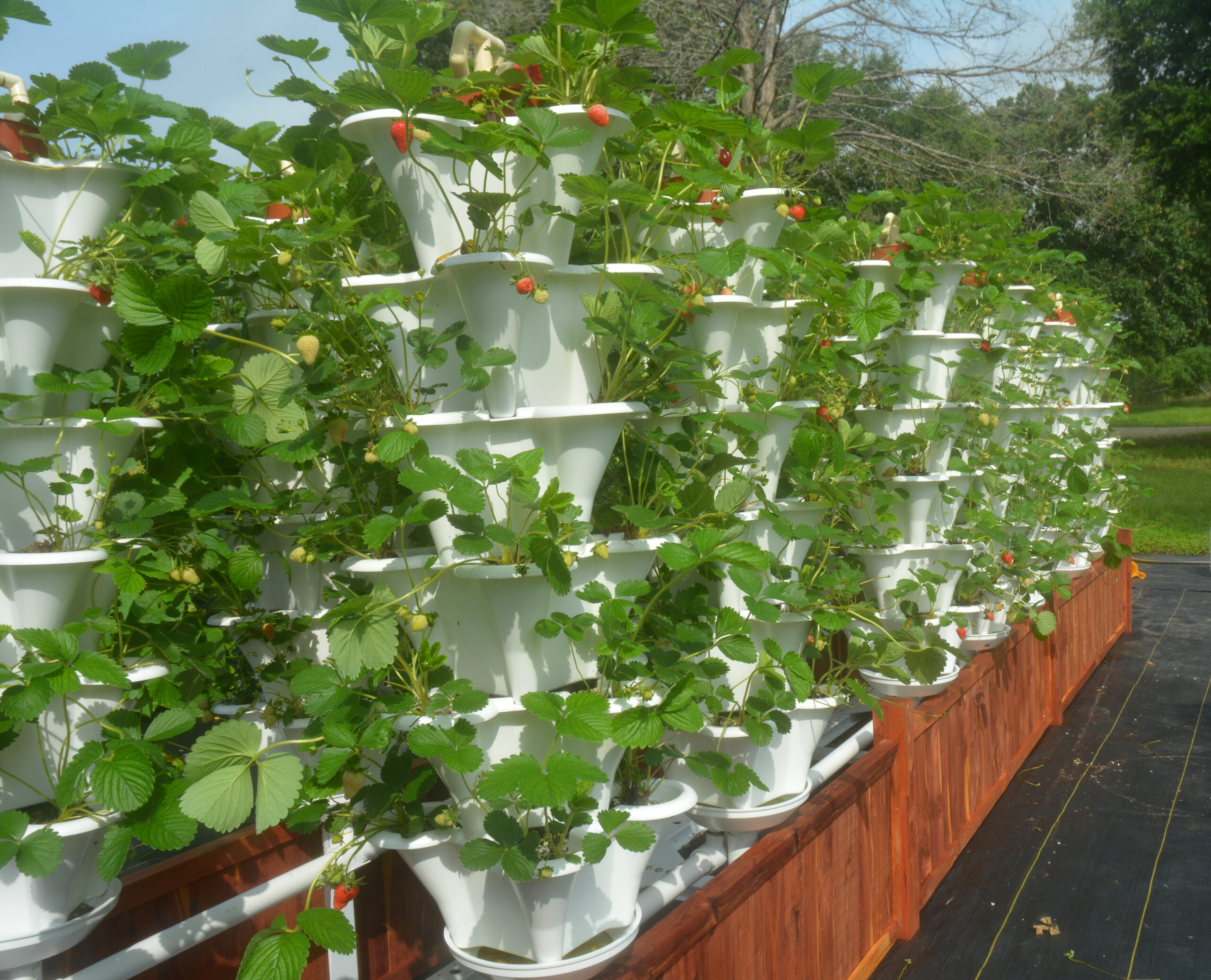
The concept of growing crops in vertical farms with plants indoors stacked on top of each other has been around for years. But this industry got some serious validation when Driscoll’s the global berry leader announced a partnership with Plenty – a San Francisco-based vertical farming company.

Plenty Chief Scientific Officer Dr. Nate Storey says this is a big deal for the evolution of vertical farming.

“It’s a big deal for several reasons. The first reason is, you know, people just need more delicious things – access to more delicious things. You know, that’s a source of excitement and joy and just part of the human experience. And the other thing is, I think it signals to folks that, you know, indoor ag is a thing,” said Storey. “It’s not a concept anymore-it’s a thing. And when you have people who know their business, who are serious about production, who have been in the space for a very long time and are kind of the best at what they do investing and engaging. You know, that’s a pretty big deal,” Storey.

Traditionally, one of the criticisms of vertical farming was it was somewhat limited commercially to leafy greens. Nate says this deal with Driscoll’s is exciting to expand their offerings into strawberries, and eventually, far beyond.

“At the end of the day, the number of crops that are going to move indoors, I think is going to surprise everyone. And, strawberries are just the first; definitely not the last,” noted Storey.

2020-12-11T18:11:39-08:00December 11th, 2020|

Stop Use Order on Agro Gold Organic Fertilizer


CDFA Issues Stop Use Notice and Statewide Quarantine on Organic Fertilizer Agro Gold WS

Agro Gold WS was found adulterated with glyphosate and diquat and CDFA has issued a stop order for use on organic farms in the state of California.

The California Department of Food and Agriculture (CDFA)  announced recently a Stop Use notice and statewide quarantine have been issued for the organic fertilizer product AGRO GOLD WS to all organic operations registered in California. CDFA lab analysis of the product detected the presence of Diquat and Glyphosate, which are substances prohibited by the U.S. Department of Agriculture (USDA) National Organic Program for use in organic production. Continued use of this product in organic production may jeopardize an operation’s organic status.

Pursuant to authority under the California Food and Agricultural Code (FAC), Division 17, Chapter 10, CDFA’s State Organic Program (SOP) in coordination with the Fertilizer Materials Inspection Program (FMIP) issued a Stop Use notice today for AGRO GOLD WS to all organic operations in California registered with the SOP. CDFA’s FMIP also announced today that all California operations registered as organic in possession of AGRO GOLD WS must hold the product and contact CDFA for quarantine instructions on how to handle it.

AGRO GOLD WS is manufactured by Agro Research International, LLC. It has been distributed in a co-packaged box that also contains the product WEED SLAYER. CDFA continues to provide follow up to this investigation and is working with state and federal agencies. CDFA received a complaint about the AGRO GOLD WS product and program staff collected product samples from various locations to conduct lab analysis in CDFA’s Center for Analytical Chemistry. FMIP is an industry-funded program that ensures consumers receive fertilizing materials that meet the quality and quantity guaranteed on the product label. Investigators located throughout the state conduct routine sampling and inspections, respond to consumer complaints, and enforce the laws and regulations that govern the manufacturing and distribution of fertilizing materials in California. CDFA’s State Organic Program protects the organic label through enforcement, education and outreach.

If you are in possession of AGRO GOLD WS and seek additional information, please contact the Fertilizing Materials Inspection Program at FMIP@cdfa.ca.gov. Any appeal of the determination that this product violates the Food and Agricultural Code must be filed with the Fertilizing Materials Inspection Program no later than 15 days from receipt of the Stop Use notice and statewide quarantine. See Food and Agricultural Code section 14659.

2020-12-10T13:21:57-08:00December 10th, 2020|

Jose Dias A New UCANR Agronomy/Weed Advisor


Jose Dias Named UCANR Agronomy and Weed Management Advisor

José Luiz Carvalho de Souza Dias joined UC Cooperative Extension (UCCE) on Nov. 2, 2020, as an area agronomy and weed management advisor in Merced, Stanislaus and San Joaquin Counties.

Jose Dias

Prior to joining UCCE, Dias was a postdoctoral researcher at the University of Wisconsin – Madison, where he worked with Mark Renz and John Grabber on projects focused on identification of management practices and environmental factors to ensure successful establishment of alfalfa interseeded into corn silage; sustainable management of waterhemp in established alfalfa for dairy systems; and weed control, clover selectivity and resulting yield of grass-clover mixed swards treated with florpyrauxifen-benzyl + 2,4-D in Wisconsin.

Dias earned a Ph.D. in agronomy with focus in weed science from the University of Florida and an M.S. in crop protection and B.S. in agronomy from São Paulo State University in Brazil. He is fluent in Portugese.

His Ph.D. research focused on developing and implementing integrated management practices to reduce giant smutgrass populations in bahiagrass pastures. His M.S. research focused on investigating the selectivity of several residual herbicides applied preplanting of prebudded seedlings of different sugarcane cultivars.

2020-12-03T09:05:40-08:00December 3rd, 2020|

Navel Orangeworm Control Strategies

Climate Change and Navel Orangeworm


By Tim Hammerich, with the AgInformation Network 

Navel Orangeworm is a major pest of crops like almonds, walnuts, and pistachios. Dr. Tapan Pathak with the UC Cooperative Extension recently completed a study on how climate change might impact the pest.

“Navel orangeworm, when they finished their first generation, their population number is low. But for every additional generation they can complete during the growing cycle, their population increases significantly,” said Pathak.

This is a concern because the study reveals that earlier springs and warmer falls are likely to increase these Navel Orangeworm populations.

“In the past, we used to see two to four generations of navel orangeworm, depending on the location. If it is in the southern part of the central valley, that would be more generation compared to the north. But on an average, two to four generations are typical for navel orangeworm,” said Pathak.  “

But what we are seeing with this climate change study is that under future climate, the fifth generation of navel orangeworm is more likely in many, many counties. And especially by the end of the century, it’s present or expected to be present in the entire central valley,” Pathak

Pathak says orchard sanitation and integrated pest management will continue to be critical to remain resilient under these conditions.

2020-12-02T08:17:26-08:00December 2nd, 2020|

Canada Thistle Alert!

Canada Thistle: A Very Prickly Problem in Row Crop Ground


By Rachel Freeman Long, UCANR Farm Advisor, Field Crops

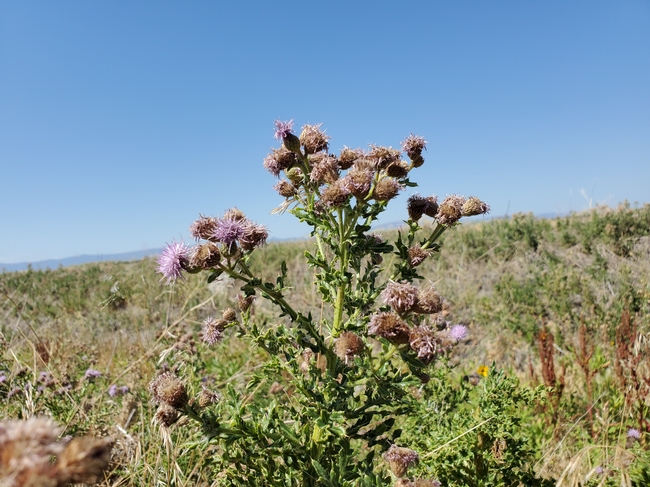
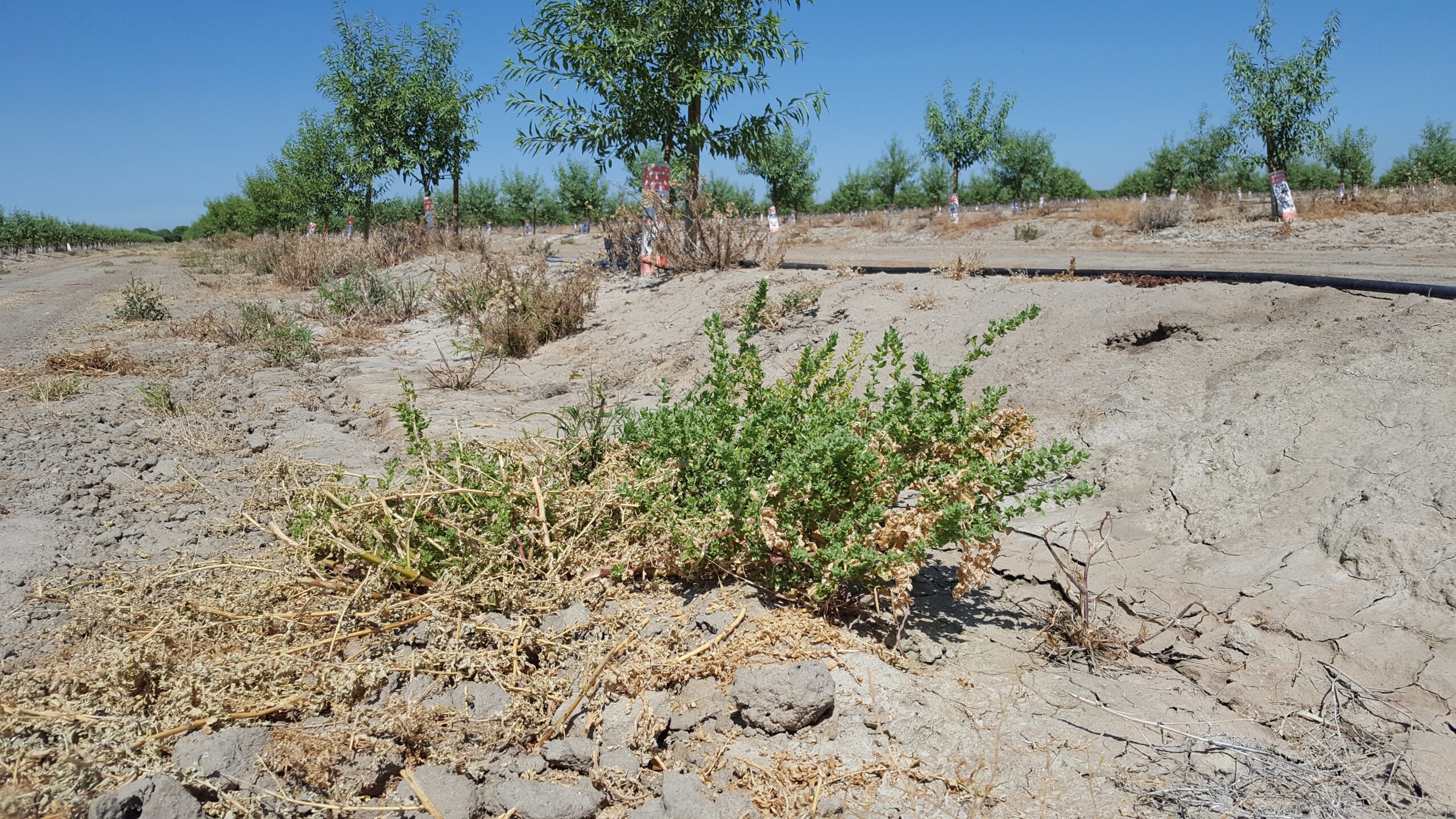
A very spiny plant was dropped off at my office here in Woodland, CA that turned out to be Canada thistle, a noxious weed.

This plant is commonly found in the Intermountain area in northern California where it has overtaken fields, but my first encounter here in the Sacramento Valley. It was found in row crop ground and the landowner was having trouble controlling it. He cut it 6-in below ground, but it resprouted and grew back more shoots. He spot-sprayed it with glyphosate and 2,4D, but the plants recovered (likely burned back the plants before good translocation happened).


Canada Thistle overtaking a ditch bank in Intermountain area of CA

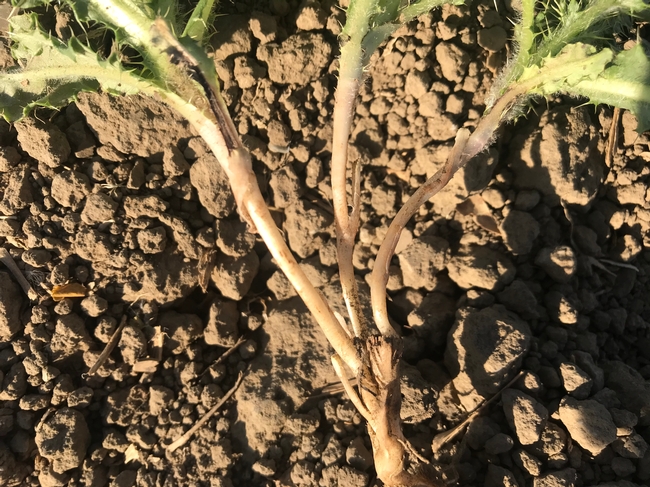
Canada thistle is difficult to control because it is a perennial plant with a deep taproot (Photo 6). It also has the ability to spread by the root forming dense patches in agricultural land or natural areas. Like other rhizomatous perennial weeds, tillage can break up Canada thistle roots into fragments spreading them thought a field making patches larger! Herbicides are typically needed to kill the deep extensive roots of the plants.

Canada thistle spot sprayed with Glyphosate and 2,4 D

In rangelands research has shown that Canada thistle control can be achieved with applications of Milestone (aminopyralid); Stinger/Transline (clopyralid) can offer suppression. However, both of these herbicides have a very long residual activity restricting what can be planted into a treated area after application. There are few options for controlling Canada thistle in row crop ground. One can rogue it, but one has to be sure to pull up the entire root or it will regrow. One can also spray with glyphosate in the fall when Canada thistle is translocating carbohydrates down to the roots. A spring application when Canada thistle is actively growing in the bud stage is the next best time to hit it with glyphosate, but that is not possible if a crop is planted. Multiple years of treatment with glyphosate are often needed to eradicate a thick patch once established.

Canada thistle regrowing from a root that was cut 6-inches underground

Canada thistle also needs to be actively growing at time of application for good herbicide translocation. Dust on the leaves can also affect the application (watch for all that ash that was deposited on plants this year from the fires). If one is making a spot treatment be sure that the glyphosate concentration in the backpack sprayer isn’t too high or you’ll likely get burn back but less translocation down to the root and less control. A slow death is generally desired for those deep-rooted noxious weeds (and perhaps more satisfying!)

Keep this weed out of your fields!

Canada thistle is a prohibited weed in certified seed production, so check your fields regularly and keep it out. Don’t let it get established! The California Crop Improvement Association (CCIA) charged with certifying seed fields states the following: “We have a zero tolerance for prohibited weeds in any class of certified fields. If the grower does not remove the plants from the field, then that field is automatically rejected, no matter the stage of said plant.”

Other troublesome thistle species commonly found in the Sacramento Valley include Italian thistle (Carduus pycnocephalus) and slenderflower thistle (Carduus tenuiflorus); see the UC IPM resources below. Both Italian and slenderflower thistles are annual, or sometimes biennial species, different than Canada thistle which is a perennial. Additionally, we created Table 1 comparing key common traits to help with identification of these three thistle species. Both Italian and slenderflower thistles are classified as restricted weeds. CCIA states, “For restricted weeds there can be a number of those plants in the field. However, if any of the restricted weed seeds are found in the seed analysis then the lot is rejected.”

Tomas Getts, and Jose Carvalho de Souza Dias assisted Long in writing this report.


2020-12-01T17:22:26-08:00December 1st, 2020|

World Ag Expo Will be Virtual

2021 World Ag Expo Will Be Online

For the first time in show history, the 2021 World Ag Expo® will be an online event February 9-11. Officials at the International Agri-Center® announced the cancellation of the live event on September 14, and spent the next month carefully weighing the implications of a digital show.
“A digital show is not a replacement for a live event like World Ag Expo,“ said Jerry Sinift, International Agri-Center® CEO. “But the ag industry has never stopped working, and neither will we. Ag is essential and so is our job as a trade show to bring buyers and sellers together. We’re just going to do it a little bit differently in 2021.”
World Ag Expo® will work with Map Your Show, an industry leader in event and conference management software. The Map Your Show team has executed more than 120 digital trade shows since March.
While most digital trade shows have limited their online show to their traditional dates, the World Ag Expo® team is taking a year-long approach.
“Instead of just a one-week show, we will be supporting our exhibitors and the online site throughout 2021,” said Jennifer Fawkes, International Agri-Center® Marketing Manager. “Each exhibitor has a micro-site within the show to share information and hold live chats, along with many other options. These can be changed during the year. As organizers, we will have online seminars, the Top-10 New Products Contest, and more new content being released throughout the year.”
World Ag Expo® Online will kick off February 9-11, 2021 – the original show dates. Live events and seminars will be scheduled 9:00 a.m. – 4:00 p.m. PST each day, but content will be available on-demand at no charge to attendees around the clock.
Seminars will be presented online by exhibitors, California State University – Fresno, Irrigation Association, Center for International Trade Development, and many more. The schedule will be finalized in January and will be available for attendees to begin planning their viewing schedule.
One feature World Ag Expo® will carry over from the live show is the Exhibitor Guide.
“Many of our attendees like to have a catalogue of the show to keep after World Ag Expo is over,” said Wally Roeben, International Agri-Center® Show Manager. “It’s a great resource and we’re excited to make it available nationwide.”
New Holland dealers across the United States will have copies of the 2021 World Ag Expo® Online Exhibitor Guide available for pick-up beginning January 25, 2021. Additional copies will be mailed to past show attendees. To make sure you are on the mailing list, please complete the form at https://bit.ly/WAE21Mail.
Exhibitors are adding content to their microsites now through February 5, 2021. Attendees can preview the platform at https://bit.ly/WAE21Online. To have free access to all content, users can register for their My Show Planner to save their must-visit exhibitor list, set reminders for events, download content, email exhibitors, and more. To stay up-to-date on World Ag Expo® information year-round, join the email list at https://bit.ly/WAEupdates.
2020-11-30T07:49:44-08:00November 30th, 2020|

Promoting Pistachio Consumption


Increasing Marketing Efforts Ahead of the Billion Pound Pistachio Crop

By Patrick Cavanaugh, with the AgInformation Network

American Pistachio Growers are mounting a full court press to market the big crop.

And the APG Marketing team is aware that more families are preparing meals at home due to COVID pandemic so they organized five interact webinars with famous chefs for food writers and other influential people. All webinars featured famous chefs.

Rick Kreps is a new pistachio grower in Eastern Madera County, and he was featured in a video with Chef Wolfgang Puck for audiences in Germany and the US.

“I think they got excited about having someone as excited as I am to have the first crop actually come in after all six years of labor and blood, sweat, and tears to get to market, and then have someone like Wolfgang Puck taking your product and turning it into something special that everyone loves to eat,” said Kreps.

“It’s exciting to drum up some excitement and get more people cooking with pistachios,” said Kreps. “You know, pistachios have been used for centuries in Mediterranean cuisine, but for the most part, it was just kind of a luxury snack in the U S and now that we’ve got production this year, hopefully we’re going to get a billion pounds, we want to let the public know that there’s enough nuts to go out and eat. And it’s not just a luxury nut item, but a healthy snack.”

“Pistachios should be not an alternative, but probably your go-to snack and ingredient item. And especially the fact that we know pistachios have the complete proteins, or it is the most complete protein of any nut. I think people feel a lot better about not only eating a snack, that’s delicious, but also very good for you,” Kreps’s said.

2020-11-17T14:15:04-08:00November 17th, 2020|

Full Court Press to Market Big Pistachio Crop

American Pistachio Growers Expands Marketing Efforts Ahead of Expected Record 2020 Crop


Trade organization pulls out stops with virtual harvest event and chef cook-alongs


American Pistachio Growers (APG) is mounting a full-court press to market the expected one-billion-pound harvest that is now filling bins in processing facilities. APG’s strategy includes a virtual harvest tour in California’s San Joaquin Valley and a schedule of live, interactive cooking demonstrations with celebrity chefs catering to food writers and industry influencers in the U.S. as well as in six other countries.

This unique agricultural virtual tour will take participants from the pistachio orchards of California’s San Joaquin Valley into the kitchens of some of the most celebrated chefs in the country. The harvest segment features grower Rich Kreps, of LARK Farms in Madera, California, as he witnesses his first-ever harvest.

“Watching those delicious nuts falling out of our trees and into the catch frames was a literal dream finally realized. We were truly elated when it all came together in our first harvest,” said Kreps. “After five years of labor and investment in these pistachio orchards, we are finally seeing our first paycheck.”

APG has assembled an All-Star line-up of celebrity chefs who will make U.S.-grown pistachios the star of their dishes. Wolfgang Puck, Nancy Silverton, Gerald Hirigoyen and Martin Yan will guide journalists in the U.S., China, France, Germany, India, Italy and Spain through live, interactive cook-alongs via Zoom. The Zoom events are limited to journalists only. The schedule of chef events runs from Nov. 12 through Nov. 25.

“Our growers have done their part, producing the world’s largest supply of quality pistachios in history. It’s our job at American Pistachio Growers to generate consumer demand around the world,” said Judy Hirigoyen, APG Vice President, Global Marketing. “Given the large number of confirmed journalists we have for these events, we will likely make this an ongoing series.”

Exports of U.S. pistachios are essential to the economic health of the industry as, on average, about 70 percent of the U.S. crop is sold in overseas markets. While growers in three states of California, Arizona and New Mexico are expected to harvest a record crop in 2020, growers in Iran are expected to harvest about 484 million pounds, less than half of the projected U.S. production, according to the U.S. Department of Agriculture’s Economic Research Service.

“There’s no bigger time of year than now as American pistachio growers bring in their 2020 harvest, so we created this virtual event to give agricultural reporters, food writers, and other food industry professionals the red carpet treatment to follow pistachios from the orchard to the kitchen,” Hirigoyen said.

Hirigoyen said pistachios have become a highly popular food due to their nutrient-dense, high protein content. Home cooks and professional chefs, alike, have embraced pistachios because of their growing reputation as a healthy, nutritious food for active lifestyles. Earlier this year, pistachios earned status as a “complete protein,” joining other plant proteins such as quinoa, chickpeas and soybeans. In July, a university study underscored the importance of pistachios as part of weight loss programs.

“Our marketing team is keenly aware that more and more families are preparing meals at home during the COVID-19 pandemic and attention is now focused on holiday meal planning in the coming weeks,” said Hirigoyen. “We’re excited to add these unique marketing elements to raise consumer awareness to the large U.S. crop and to the fact that in addition to their popularity as a snack food, pistachios are playing a bigger role in home-prepared recipes, on restaurant menus, and in a growing list of consumer food items.”


2020-11-17T14:24:49-08:00November 16th, 2020|

Mummy Shake Video Contest Announced

Almond Board’s Video Contest Helps Remind Growers of Mummy Nut Sanitation

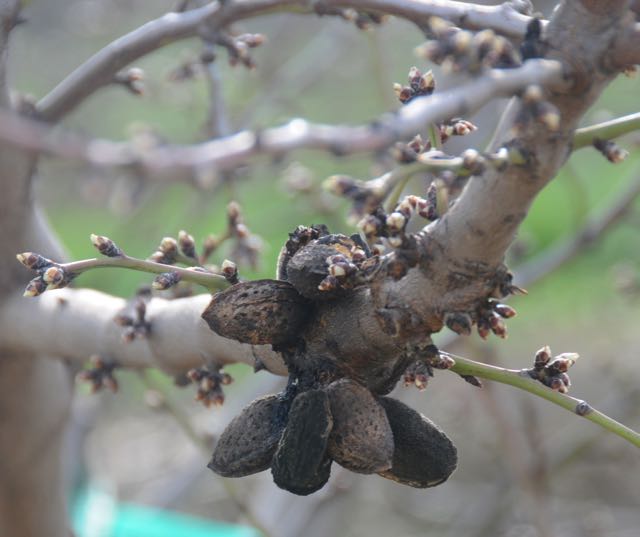
The Almond Board of California is excited to announce its third-annual Mummy Shake Video Contest, and we would deeply appreciate your help in spreading the word about this year’s competition. This contest is aimed at helping remind growers to break the link between mummy nuts (nuts left on the tree after harvest) and overwintering navel orangeworm (NOW).

NOW is the primary insect pest in California almonds, posing a high risk to the crop as the worms bore into the nut and feed on the nutmeat. This not only damages the nut but also opens the door to Aspergillus molds that can produce aflatoxins, a food safety contaminant.

To participate in this contest, almond industry and allied industry members are invited to submit a video of their families dancing – or even singing – along to The Mummy Shake! This year’s contest will run from Monday, Oct. 26, and end at 11:59 p.m. PT on Friday, Nov. 20. The winner of this year’s contest will receive a $500 Amazon gift card. Entries will be judged based on enthusiasm, creativity and composition, and a full list of contest rules may be found at Almonds.com/MummyShakeRules.

If you’re interested in helping us promote this year’s contest, please let me know. Sharing this event with industry stakeholders could include anything from mentioning the contest dates in an online calendar, sharing the contest in an email newsletter or on a social media page, or even giving the contest a shout out during a radio segment. Here’s some quick links to various mummy shake/NOW information that you may use in your promotions:

2020-11-04T12:02:43-08:00November 4th, 2020|

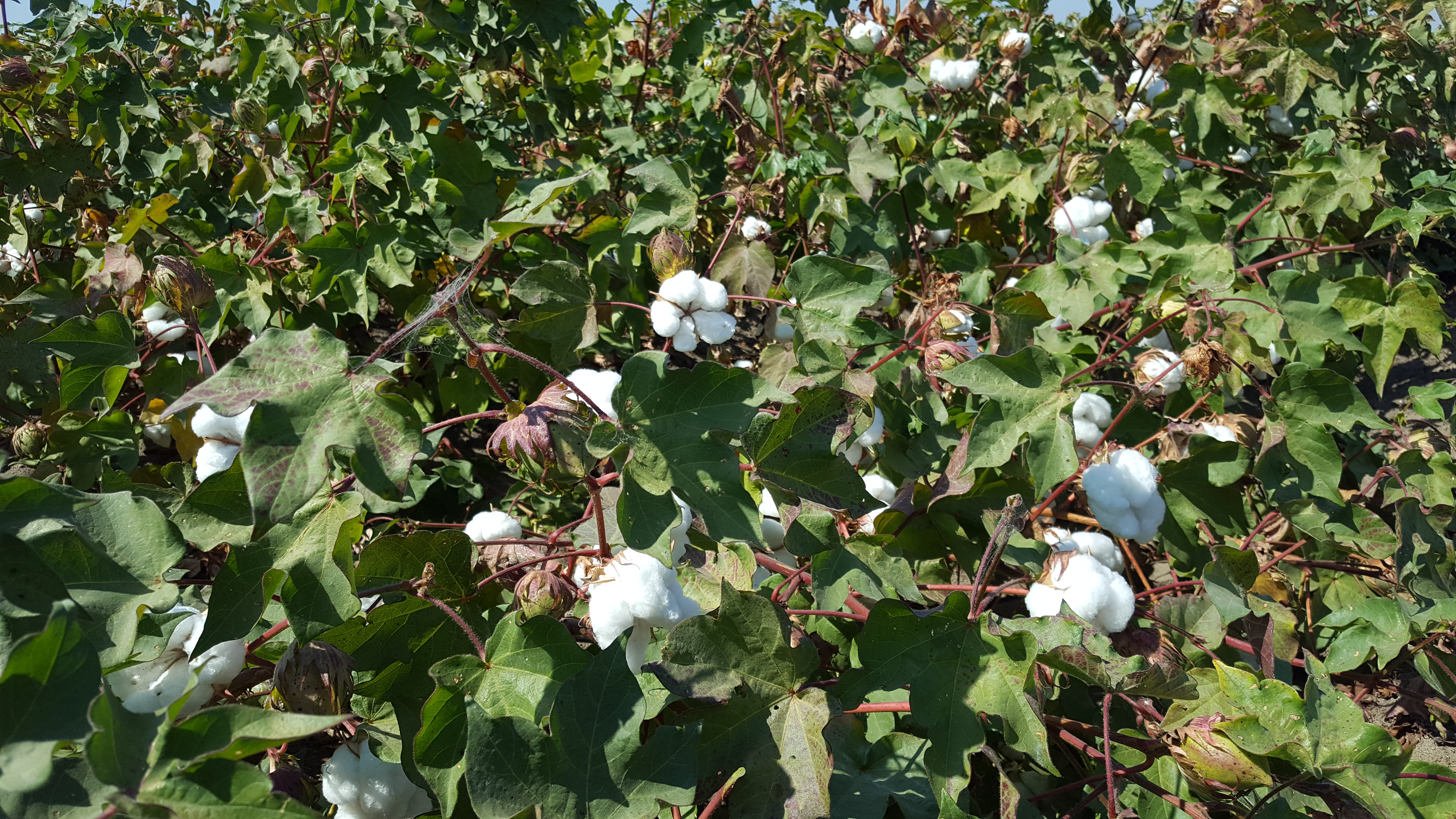
Cotton Acreage Declines Due To Poor Prices

Cotton Acreage Continues to Decline

By Tim Hammerich, with the Ag Information Network

Good news and bad news on the cotton crop this year. The good news is that yields per acre are expected to be a record high, but the cotton acres and total production are down sharply, noted  USDA Deputy Chief Economist Cindy Nickerson.

“We have production forecast at 17 million 480 pound bales, which is down just a 10th of a percent from last month, but down a little greater from 2019: 14.4%. And this is due to significantly fewer acres, both planted and harvested, with the harvested acres projected down 23%,” said Nickerson.

But, Nickerson says, there’s good news: record high yields.

“Yields are still expected to average a record high at 909 pounds per harvested acre, just down slightly from the expected yield last month. And we know that all cotton harvested areas forecast at 9 million acres, no change from last month, but down 22.5% year over year,” she said.

California, which at one time had planted over 1 million acres of cotton, continues to see a decline in cotton acreage down 28% from the previous year to just over 187,000 acres. Poor prices and limited water availability are largely to blame.

2020-11-02T10:04:00-08:00November 2nd, 2020|
Go to Top