Agreeing on Water Needs

Sixth Generation Farmer and EDF Director Discuss Water Challenges

By Cannon Michael and Ann Hayden

Despite a seemingly endless era of upheaval – a surging pandemic, contentious election cycle and racial strife – we still have the responsibility to address pressing issues that cannot wait for calmer times. The future of California’s water is one of those issues.

While collaboration and relationship building have been made even more challenging due to distancing required by COVID-19, we believe that water is an issue where we can rise above party lines and entrenched perspectives.
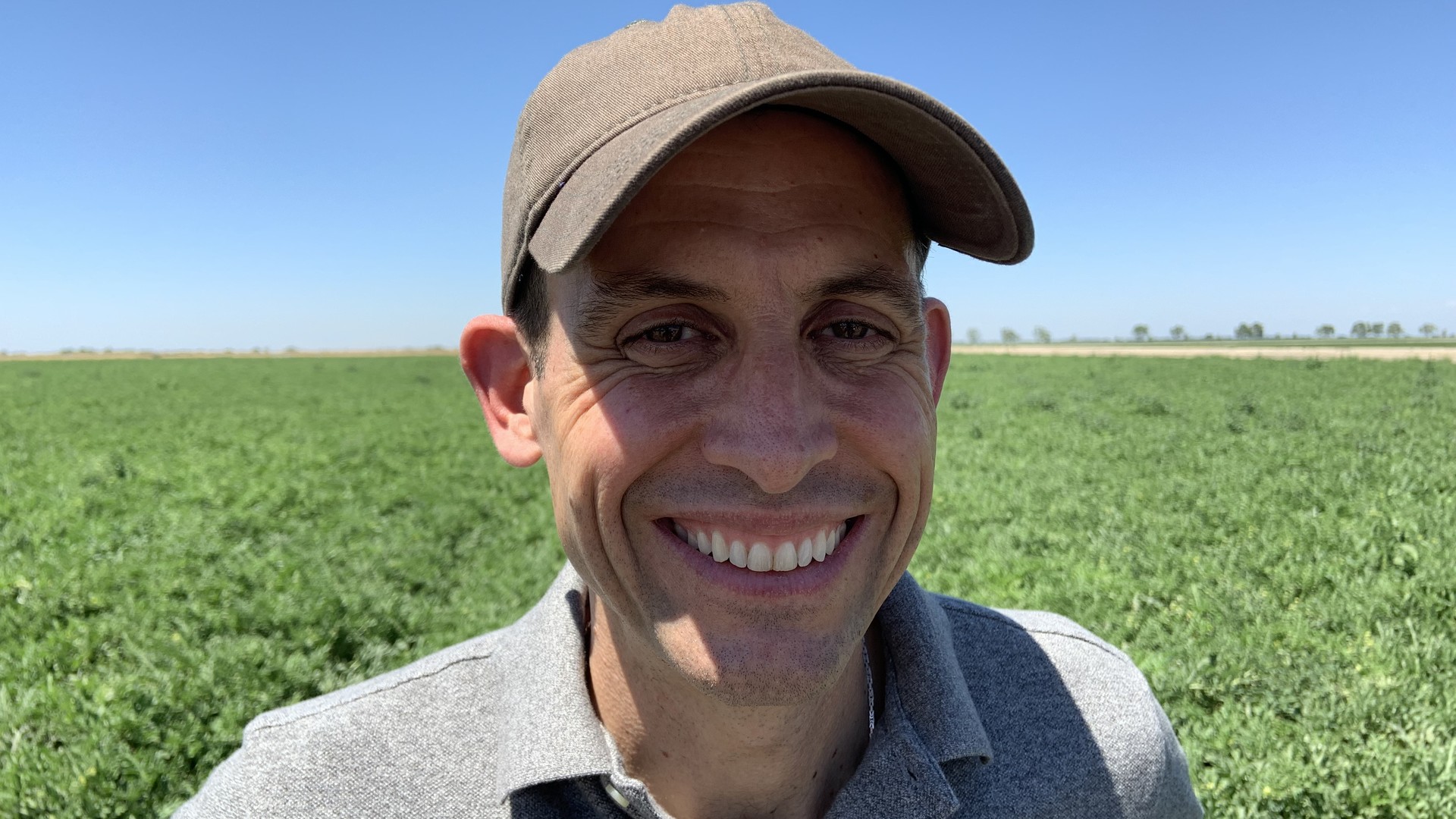
Cannon Michael, Sixth Generation Grower

Water is the backbone of California’s agricultural economy, supports our iconic rivers, and of course, is essential to our survival.  Simply put, water is a lifeline that binds us together, and without it, we jeopardize our future and that of coming generations.

Could now be the time to collectively start down a better path for managing this precious resource and roll up our sleeves to make it happen? We think so.

For decades, fighting over water has stalled progress and sown deep mistrust across different water users.

We have forgotten that we are all stewards of California – a special place like no other, a rich connected tapestry of environmental beauty, diverse communities and productive agriculture.

We need to come together as Californians – not just farmers, environmentalists, rural community organizers and urbanites. We need to come together as Californians working for our children and future generations who are depending on us to leave them with a better California than we have today.

We need to come together to solve some admittedly difficult water challenges that affect the future of rural communities, cities, wildlife, farming in the Central Valley and consequently our country’s food supply. Drought and water scarcity are high on the list of these challenges. During our last major drought, the Sustainable Groundwater Management Act was enacted as one major piece of the solution to ensure we have enough water for future generations.

Looking forward, 2021 will be an important year for moving ahead on implementation of this sweeping change to water law. The state will be rolling out its first assessments of sustainability plans developed by regions with the most critically overdrafted groundwater supplies.

Balancing groundwater supply and demand, as required by the law, will no doubt be challenging: Some models say San Joaquin Valley landowners may need to take equivalent acreage to Yosemite National Park out of production to balance groundwater supply and demand.

To reach durable, fair solutions to such large challenges, we need to drop the baggage we’ve amassed over time. We need to come together as Californians to start collaboratively tackling problems – not just talking and arguing them. We need to come together and break the cycle of mistrust and take the time to truly understand how each side views the challenges and potential solutions.

It’s unlikely we will agree on everything – if we did California wouldn’t be the dynamic, diverse state it is today. But there is significant common ground we can build from. For instance, we all agree every single person in California should have clean and affordable drinking water when they turn on their kitchen faucet.

We also agree that replenishing groundwater is one of many solutions we will need to comply with the Sustainable Groundwater Management Act. But it’s not the only solution; it’s inevitable that we still will need to scale back some agriculture.

The question we need to address is, how can we make sure that agriculture can still thrive while some farmland becomes productive in new ways, whether it’s with less water-intensive ranching, low-impact solar projects, wildlife habitat or recreational areas for our families to enjoy on picnics and hikes?

Taking action to address these challenges may mean parts of our state and the very communities we live in will look different from how they look today. But if we can come together as Californians to get it right, California will evolve and endure as the special place it is today for generations to come.

We have decades of experience coming at water challenges from our silos. Let’s break down those silos, come together as Californians and see what happens. Isn’t it worth a shot?

Cannon Michael is a sixth-generation farmer and president and CEO of Bowles Farming Co., headquartered in Los Banos, cannon@bfarm.com

Ann Hayden is senior director of western water and resilient landscapes at Environmental Defense Fund, ahayden@edf.org

This document first appeared in WaterWrights.net
 

2021-05-12T10:52:43-07:00January 11th, 2021|

The Quick Math on Navel Orangeworm

The Math on Navel Orangeworm Sanitation

By Patrick Cavanaugh, with AgInformation Network

Get a napkin out. Let’s do some math on navel orangeworm sanitation. The numbers really matter.

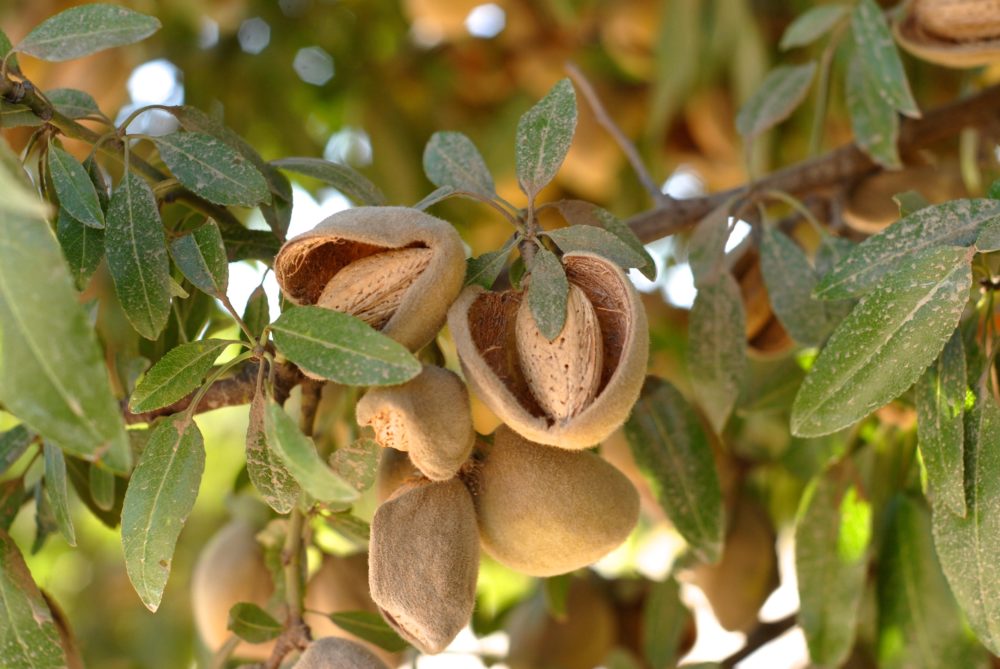
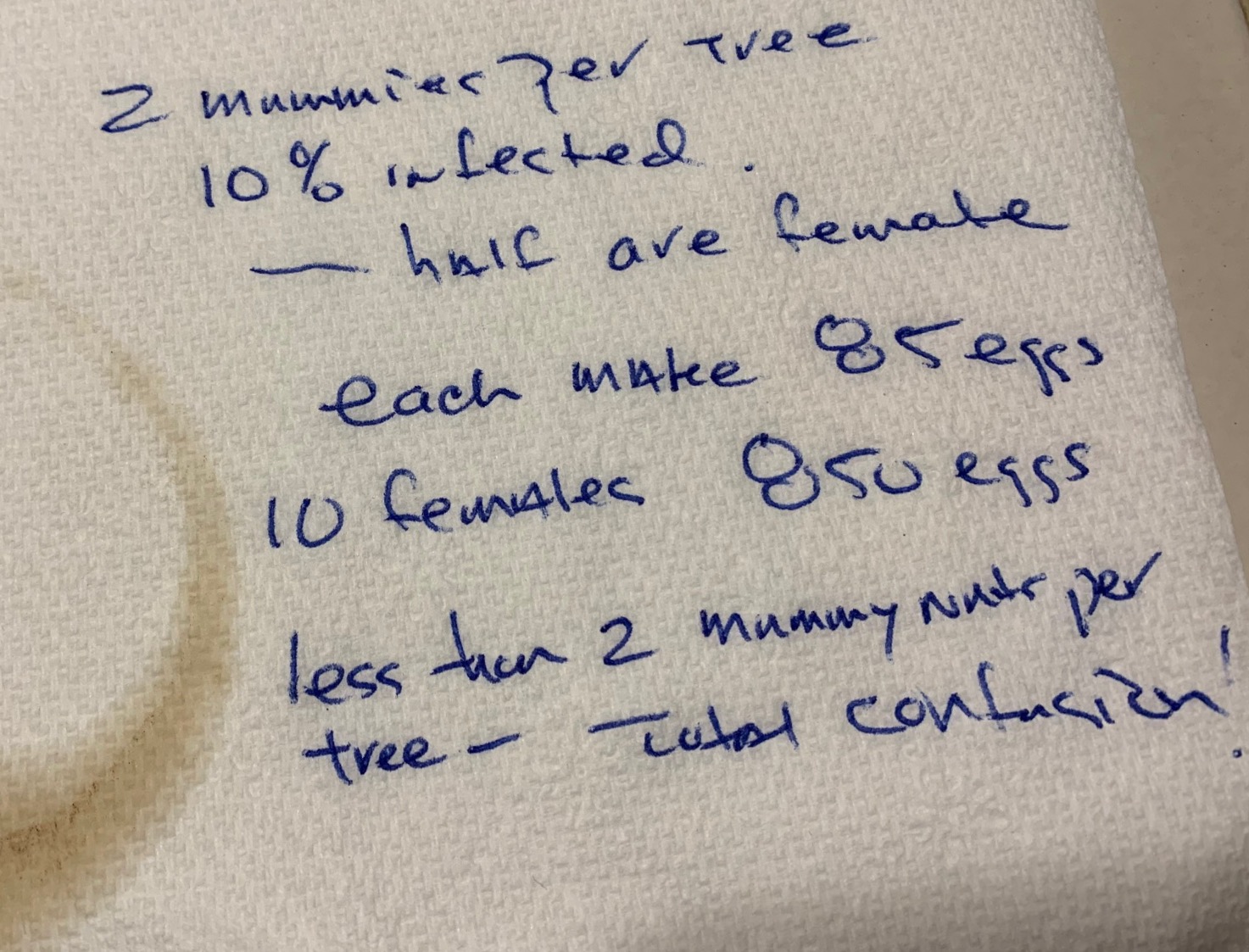
David Haviland is a UCANR Cooperative Extension Entomologist in Kern County. “I just want to do a little bit of a back of a napkin math. Just think about this scenario. If you’re down to two mummies per tree, if 10% of those were infested, you assume that half of any worms in there are going to be females. And each of those females, when it comes out, it’s going to make 85 eggs. Just roughly look at that scenario,” noted Haviland.

“In that case within an acre, you’re going to have 10 females that are all coming out at different times that are all competing to lay 850 eggs. And they’re trying to do that in 200 nuts. They’re also trying to find mates in the process,” explained Haviland.

“And if you think about it, each one of those females, in order to lay 85 eggs, they have to find a nut in a tree, fly around the tree, find another nut, lay an egg, and so on. They literally have to fly to 42 different trees to lay one egg in each nut, if you’re down to two nuts per tree,” he said.

And that’s the goal with sanitation, no more than two mummy nuts per tree. “So, you know, all that’s being done uncoordinated, of course, sometimes they’re flying back to the same nuts. Sometimes there’s a nut that isn’t even suitable. Sometimes there’s already an egg in that nut,” Haviland said.

Haviland noted: You’re just creating a lot of chaos! “When you can get under two mummies per tree,” he said.

“And when you think about it, any egg that you prevent from being laid in May is one less moth at hull split. So, sanitation is extremely important and we do recommend that everybody do their best attempt,” he said.

2021-01-07T18:13:24-08:00January 7th, 2021|

Lower Almond Prices Will Promote Big Sales

How to View Lower Almond Prices

By Patrick Cavanaugh, with the AgInformation Network

Lower prices should help move them quickly around the world, said Dan Sumner a Distinguished Professor in the Department of Agricultural and Resource Economics, and the director of the UC Agricultural Issues Center at UC Davis. He thinks that lower price of almonds will not last long, but in the meantime, it’ll help move the crop around the world—a hungry world for almonds!

“A little price moderation will help you move the crop. And we’ve got a big world out there,” said Sumner. “We’ve got income growth in other countries over the longer haul. We’ll see how tough it is over the next few years,” he said.

“We think about our problem with COVID and our economy and our government spent….. If I can say it….trillions keeping money in the hands of consumers, keeping people employed to the extent that it was possible, but the rest of the world who can still buy some of our almonds have also been hit. So, if you look at Europe, their economy’s been hit as bad as ours. That’s a big market for our almonds,” said Sumner.

Sumner spoke about India, new big market for California almonds

“Of course only the higher income Indians can afford almonds, the very poorest to the Indians couldn’t buy our almonds, but you know, you get well over a billion people and you can get a few hundred million in a kind of a middle-class that can buy our crops, and so India is a good market,” Sumner noted. “But they’ve been hit by the COVID pandemic as well.”

“Regarding almond pricing? It’s going to be tough over a year or two. It seems to me,” Sumner said.

2021-01-06T18:31:33-08:00January 6th, 2021|

Farmwise Bringing Automation to the Vegetable Field

Automation in Vegetable Crops

By Tim Hammerich with the AgInformationNetwork

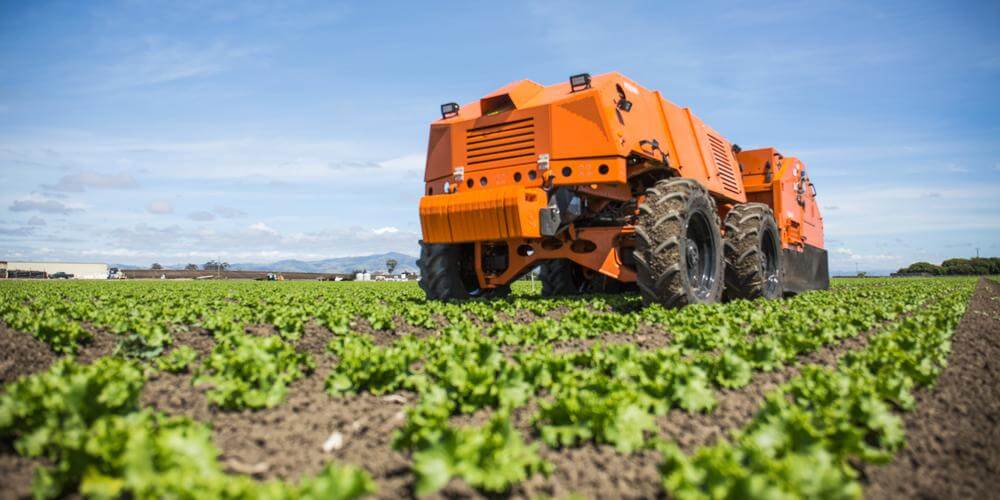
Farmers are being squeezed between the scarcity of labor and the regulation of tools to try to do their job most efficiently. Some companies, like San Francisco-based Farmwise, think automation is the answer. Here is co founder and CEO Sebastian Boyer.

“The number of people willing and able to do manual tasks on the field is obviously shrinking. And that’s a big concern for most of U.S. farmers today. Automation can play a big role in making every one of these workers much more productive. And that leads to more productivity in the field, but also better jobs and better wages for these workers,” noted Boyer

Boyer says a more automated farm will also enable more data collection which could lead to further efficiencies.

“And a lot of that that has to do with the ability for machines to capture data on crops. And we’re actually at Farmwise, leveraging that technology to make every one of our machines not only automating the tasks that we’re here to automate, but using that as a way to capture unique data about the crops,” Boyer said.  “And that’s becoming increasingly relevant for farmers. We can use that data to make better decisions at the strategic level, and at the field level.”

Farmwise offers automation technology to vegetable growers in California and Arizona. Learn more at Farmwise.io.

2021-01-04T09:56:21-08:00January 4th, 2021|

Improving Food Safety

Government, Academia and Farmers Join Forces to Improve Food Safety

By  April Ward, LGMA Director of Marketing and Communication

On November 19, 2020 the U.S. Food and Drug Administration announced the launch of a longitudinal study in partnership with the California Department of Food and Agriculture (CDFA), University of California Davis, Western Center for Food Safety (WCFS) and agricultural stakeholders in the Central Coast of California.

In recent years several E. coli O157:H7 outbreaks have been linked to lettuce. In an effort to find the cause of these outbreaks and arm farmers with a way to prevent them, this multi-year project will examine how pathogens survive and move through the environment and possibly contaminate produce. FDA will work closely with water quality, food safety, and agricultural experts, representatives from various agriculture industries, and members of the leafy greens industry.

As a part of the project, research teams will aim to determine potential sources of contamination by collecting and examining samples from the environment including adjacent lands, well and surface waters, soil inputs that include compost, dust and animal fecal samples.

U.S. FDA:

The findings from this study will contribute new knowledge on how various environmental factors may influence bacterial persistence and distribution in this region, and how those factors may impact the risk of leafy greens becoming contaminated. Results from this collaboration will lead to improved practices to prevent or mitigate food safety risks, and ultimately enhance the safety of leafy greens grown in California.

CDFA Secretary Karen Ross:

California leads the world in leafy greens production and innovation. Industry and food safety officials are proud to partner on this in-depth scientific study protecting public health.

Dan Sutton, Chairman of the California LGMA and General Manager of Pismo Oceano Vegetable Exchange:

The California LGMA completely supports this joint effort spearheaded by the U.S. Food and Drug Administration. LGMA members are committed to safe leafy greens and look forward to any findings that will help to make our crops safer for consumers. We are pleased to see wide participation from industry, academia and regulators. All of these stakeholders bring different strengths to the project and share a common goal of improving food safety for lettuce and leafy greens.

A similar study is being conducted in the Yuma, Arizona growing region.

2021-01-06T18:27:55-08:00December 30th, 2020|

Food Systems Continue for Consumers

Food Systems Remain Flexible Through the Pandemic


By Tim Hammerich with Ag Information Network

Throughout the pandemic we have occasionally been bringing you updates on how our agricultural and food systems are impacted. Here is another update courtesy of the California Farm Bureau Federation.

As the food system continues adjusting to changes caused by the COVID-19 pandemic, marketers say the system has proven resilient so far. Supply chains have had to adapt as restaurants and other food-service facilities have been restricted or closed. The changes have tested food supplies and forced farmers and marketers to reconfigure some operations. But people involved in the food system say they’ve remained flexible to try to match demand and supplies.

The vitamin C content of citrus fruit has helped boost its popularity during the pandemic, and farmers who grow mandarins say they’ve seen more demand for their fruit. California Citrus Mutual says it expects increased volumes for this year’s mandarin harvest, which began last month and will continue for several more weeks. Recent cool, wet weather has helped the fruit gain color, and farmers say they’re expecting a good mandarin season.

College graduates with degrees in agriculture can expect strong job demand, according to a new report. The study estimates steady growth in job opportunities for agricultural graduates, and that employer demand for the available graduates will exceed supply. Although the study began before the pandemic, the report’s authors say they’re confident demand for agricultural graduates will remain “strong and steady.”

2020-12-29T18:02:21-08:00December 29th, 2020|

SGMA Resource for Growers

New SGMA Resource for Underrepresented Growers

By Tim Hammerich, with the Ag Information Network

Vicky Espinoza is a PhD candidate at UC Merced who is researching the impacts of the Sustainable Groundwater Management Act on agricultural land use. She noticed that there weren’t enough resources out there for underrepresented growers about SGMA, especially those who English is not their first language. So she developed a series of bilingual videos and posted them on a new YouTube channel: CaliWaterAg.

“Hopefully through CaliWaterAg, they can obtain what is SGMA, how does it impact them and how they can become involved. Because you know, our growers and communities can attend Groundwater Sustainability Agency meetings, and they could voice their concerns and any suggestions that they may have for developing solutions,” said Espinoza

Those videos are free on YouTube and can be found just by searching CaliWaterAg. Espinoza is also hosting a series of workshops on the topic next month.

“So it’s really a channel to inform, empower and encourage them to become involved in the conversation. And I will be hosting a workshop January 13th in English and January 14th in Spanish to talk to growers and community members, answer any questions they may have regarding the series, SGMA, land use or land re-purposing options that I go over in the fourth video of the series,” noted Espinoz.  “And to listen to them, to listen to their perspectives and what they think about land re-purposing options and to address groundwater overdraft.”

2020-12-21T18:02:01-08:00December 21st, 2020|

Dan Sumner on Almond Industry


Economics Of The Massive and Growing California Almond Industry

By Patrick Cavanaugh, with the Ag Information Network

Dan Sumner is a Distinguished professor in the Department of Agricultural and Resource Economics at UC Davis, as well as the Director of the UC Agricultural Issues Center at UC Davis.

“Of course, we’ve seen this coming for a decade. So, we’ve known that the bearings acreage was going to continue to go up because we’ve got the non-bearing acreage, and that’ always coming up,” Sumner said. “We don’t know for sure how many acres will be pulled, but nobody’s surprised that we have a massive crop.”almond crop

“The question is long-term demand. Do we get used to lower prices? There’s a million-dollar question. Actually, that’s a billion-dollar question, isn’t it? And nobody really knows the answer and I’m not going to pretend like I do either,” said Sumner.

“And we do know as well that even though you can’t grow almonds, very many places everybody’s trying to figure out whether the can expand outside of California. So,we know it’s a world crop and California dominates the world,” Sumner said. “It’s not just our additional size of crop, but it’s the rest of the world as well. And you can do a few almonds in Australia and you can do a few almonds here and there, and everybody’s going to try to figure out they can expand,” he said.

“And so, I don’t see any long-term disaster going on and almonds that is to say demand will continue to grow. But the real question is can demand keep up with the very rapid production increases. And the answer is maybe,” explained Sumner.

2020-12-17T18:01:07-08:00December 17th, 2020|

Individual 24/7 Bee Monitoring Now Available


ApisProtect Has Launched in the US

More than ten years of research, decades of beekeeping, three years of validating and testing, over 15 million anonymized data sets and more than 20 million honey bees monitored. There have been a few challenges along the way but the day is finally here.

“We are delighted to launch our new technology now exclusively available in the United States. There are a limited number of monitors available now,” said ApisProtect VP of Sales Dennis Kautz.

“Watch our short video here to demonstrate just how quickly and easily our monitors can be installed in the hive,” noted Kautz

“Our science-based honey bee monitoring technology empowers beekeepers to manage their apiaries more efficiently, reduce labor and transport costs, and focus on cultivating larger and stronger colonies. Using ApisProtect, beekeepers can generate an additional $98 of value from each hive per year,” Kautz said.

Commercial beekeepers in the United States will now be able to drive operational improvements, including increased labor efficiencies of up to 50% and reduced transportation costs during pollination by up to 25%.

Deciding which hives to send to pollination is important and time-consuming. “We provide beekeepers with an instant condition report on each hive so they can identify strong hives to travel to the almond orchards. This ensures beekeepers can fulfill their pollination contracts, earn bonuses, and increase productivity for growers,” Kautz said.

ApisProtect works with the beekeepers to ensure they have the strongest hives to maximize revenue from the pollination season. “Critically, we give beekeepers control of their information and data, enabling them to maximize the value to their operation,” noted Krautz.


2020-12-15T18:44:03-08:00December 15th, 2020|

Agreeing on Water Needs

Sixth Generation Farmer and EDF Director Discuss Water Challenges

By Cannon Michael and Ann Hayden

Despite a seemingly endless era of upheaval – a surging pandemic, contentious election cycle and racial strife – we still have the responsibility to address pressing issues that cannot wait for calmer times. The future of California’s water is one of those issues.

While collaboration and relationship building have been made even more challenging due to distancing required by COVID-19, we believe that water is an issue where we can rise above party lines and entrenched perspectives.

Cannon Michael, Sixth Generation Grower

Water is the backbone of California’s agricultural economy, supports our iconic rivers, and of course, is essential to our survival.  Simply put, water is a lifeline that binds us together, and without it, we jeopardize our future and that of coming generations.

Could now be the time to collectively start down a better path for managing this precious resource and roll up our sleeves to make it happen? We think so.

For decades, fighting over water has stalled progress and sown deep mistrust across different water users.

We have forgotten that we are all stewards of California – a special place like no other, a rich connected tapestry of environmental beauty, diverse communities and productive agriculture.

We need to come together as Californians – not just farmers, environmentalists, rural community organizers and urbanites. We need to come together as Californians working for our children and future generations who are depending on us to leave them with a better California than we have today.

We need to come together to solve some admittedly difficult water challenges that affect the future of rural communities, cities, wildlife, farming in the Central Valley and consequently our country’s food supply. Drought and water scarcity are high on the list of these challenges. During our last major drought, the Sustainable Groundwater Management Act was enacted as one major piece of the solution to ensure we have enough water for future generations.

Looking forward, 2021 will be an important year for moving ahead on implementation of this sweeping change to water law. The state will be rolling out its first assessments of sustainability plans developed by regions with the most critically overdrafted groundwater supplies.

Balancing groundwater supply and demand, as required by the law, will no doubt be challenging: Some models say San Joaquin Valley landowners may need to take equivalent acreage to Yosemite National Park out of production to balance groundwater supply and demand.

To reach durable, fair solutions to such large challenges, we need to drop the baggage we’ve amassed over time. We need to come together as Californians to start collaboratively tackling problems – not just talking and arguing them. We need to come together and break the cycle of mistrust and take the time to truly understand how each side views the challenges and potential solutions.

It’s unlikely we will agree on everything – if we did California wouldn’t be the dynamic, diverse state it is today. But there is significant common ground we can build from. For instance, we all agree every single person in California should have clean and affordable drinking water when they turn on their kitchen faucet.

We also agree that replenishing groundwater is one of many solutions we will need to comply with the Sustainable Groundwater Management Act. But it’s not the only solution; it’s inevitable that we still will need to scale back some agriculture.

The question we need to address is, how can we make sure that agriculture can still thrive while some farmland becomes productive in new ways, whether it’s with less water-intensive ranching, low-impact solar projects, wildlife habitat or recreational areas for our families to enjoy on picnics and hikes?

Taking action to address these challenges may mean parts of our state and the very communities we live in will look different from how they look today. But if we can come together as Californians to get it right, California will evolve and endure as the special place it is today for generations to come.

We have decades of experience coming at water challenges from our silos. Let’s break down those silos, come together as Californians and see what happens. Isn’t it worth a shot?

Cannon Michael is a sixth-generation farmer and president and CEO of Bowles Farming Co., headquartered in Los Banos, cannon@bfarm.com

Ann Hayden is senior director of western water and resilient landscapes at Environmental Defense Fund, ahayden@edf.org

This document first appeared in WaterWrights.net


2020-12-14T11:32:24-08:00December 14th, 2020|
Go to Top