Orchard Sanitation Will Reduce Navel Orange Worm

Sanitation is Foundation of Navel Orange Worm Pressure

By Patrick Cavanaugh, Editor

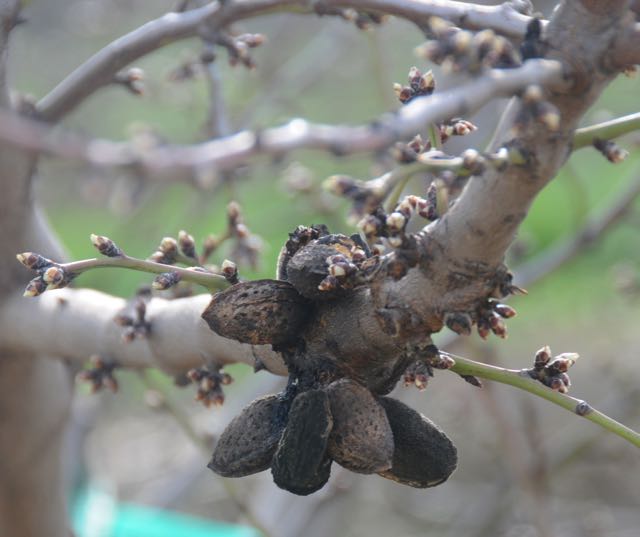
Now that almonds and pistachios are harvested there is needed break on the farm. But soon it is recommended by experts that orchard sanitation is needed to remove any mummy nuts from the trees to reduce to reduce Navel Orange Worm next year

Joel Siegel is a USDA ARS entomologists and Parlier in Fresno County

“Yes, and again, in a perfect world, if everybody could sanitize perfectly, you could argue there’d be very little need for spraying because there wouldn’t be any navel orange worm,” Siegel said. “The reality is far uglier than that. We’re dealing with difficulties and getting into the orchard because of weather. And again, people have to make that commitment towards sanitation and the cost has gone up. So I’m hearing talk of $300 per acre and higher. So again, people have to factor that their worlds has changed,” he said.

Sanitation is a numbers game. The higher the population at the beginning of the season, the higher the damage expected at the end of the season. The most effective way to reduce overwintering populations of navel orange worm is sanitation. For every mummy left on the tree, that’s equal to its percent damage. One mummy nut, 1% damaged, five mummy nuts per tree, that’s 5% damage. So the ultimate goal is to leave less than one mummy nut per tree, and then those nuts must be removed from the orchard or disced into the ground.
2021-05-12T11:01:45-07:00November 13th, 2019|

Waiting for Any Sign of Rain

The Lack of Rain is on the Minds of Growers throughout California

By Patrick Cavanaugh, Editor

We spoke with Joe Del Bosque, a diversified grower in Western Fresno and Madera Counties. He farms Almonds, Cherries, asparagus and cantaloupes. He is concerned about the lack of rain.

“We started the water year in pretty good shape with the most of our reservoirs above normal and I think they’re probably still in pretty good shape,” said Del Bosque. “But of course right now it’s starting out like a dry year.”

“We typically have some rains up in the north part of the state by this time of year. And the last time I checked the pumps of the Delta were not running for quite some time there and so we were not picking up hardly any water,” he said.

And, any water coming through those pumps ends up in the San Louis Reservoir. “And the San Louis Reservoir water level was dropping, but hopefully we can pick up more water here as we get into the rainy season.

The fear is that it doesn’t look like any storms, even in the short to long-term forecast.

“That’s exactly right. That’s what I’m seeing. There’s nothing in the near future, at least the next couple of weeks. So yeah, it’s starting to concern us. Absolutely,” noted Del Bosque.


2019-11-07T18:42:06-08:00November 12th, 2019|

Almond Industry Conference Dec. 10-12

Get it on your calendar!

The Almond Industry Conference, is December 10th through the 12th in Sacramento

By Patrick Cavanaugh, Editor

“The Almond Industry Conference is just a short month and a half away, December 10th through the 12th,” said Jenny Nicolau Senior Manager of Industry Relations and Communications at the Almond Board of California. “This year it’s being held at Cal Expo in Sacramento. It’s a three day event with something for anyone involved in the almond industry.”

It’s free to attend. There are sessions from production research to marketing, more than 250 exhibitors and you can register online today at almondconference.com.

“As long as you register, there’s a badge waiting for you. And this way we have everything set up for all the attendees. It is free, but we want people to preregister, so we can plan in advance,” noted Nicolau.

On that website you can also purchase a lunch for Tuesday and Wednesday while supplies last, but this year, there will be more food options.

“New this year, we’ll actually have a food truck village, so there’s really no reason that you need to leave Cal Expo to go grab something to eat,” explained Nicolau. “We’re going to bring everything on site so you don’t miss out any time walking the trade show floor or attending any of the sessions. Everything will be on site,” she added.

Of course there’ll be lots of hours and continuation credit for growers and PCAs.

2021-05-12T11:05:01-07:00November 11th, 2019|

Almond Board Selects Winner of Mummy Shake Contest


Amber Scheel Steals the Show in Mummy Shake Video Contest

The Almond Board of California (ABC) is proud to announce the winner of this year’s Mummy Shake Video Contest – the Scheel family!

The Scheels are third-generation almond growers in the Ripon/Manteca area. In their video, Amber Scheel dances along to the Mummy Shake while donned in typical mummy garb, with interludes of a side-to-side sway with her mother, Karen, and an appearance from her father Dave, who manages the family’s farming operation.

“When we received a flyer in the mail about the contest, we were so excited to make a video,” said Amber. “I dance professionally, and the contest called for singing and dancing, which is right in my wheelhouse.

“I really wanted to be true to the era of music that the Monster Mash, which inspired the Mummy Shake, came from. I watched 1950’s dance videos and old movies with monsters in them to get inspired. But, of course, in some cases the lyrics told me what to do, like doing ‘The Worm’ to represent ‘navel orangeworm spouses.’”

The Almond Board created the parody song “The Mummy Shake” to help remind growers to break the link between Navel Orangeworm (NOW) and mummy nuts. Now finished with its second year, ABC’s Mummy Shake Video Contest encourages industry members to gather up their friends and family, don their Halloween costumes and dance along to the song in the spirit of both Halloween and the need go back into the orchard postharvest to remove mummy nuts. Participants had from Sept. 16 to Nov. 4 to submit their fun video entries.

Winter Sanitation Should Not be Ignored…

Winter is the time to remove and destroy mummy nuts that harbor NOW larvae, which can hatch in the spring and wreak havoc in the orchard. By removing the nuts, growers are eliminating both a shelter and food source for these overwintering pests. This practice falls in line with the Integrated Pest Management (IPM) program for NOW, established by the University of California with support from ABC, which includes different tactics to combat this pest depending on the time of the year.

“Winter sanitation is the core of IPM programs,” said UCCE farm advisor David Haviland, whose family won the contest last year. In their video, Haviland’s sons dressed in super hero costumes and used their super powers to remove mummy nuts from the trees.

…Let’s Follow Tips from the Almond Board!

Growers should keep these key tips in mind when preparing to remove mummy nuts from their orchards and do the “mummy shake”:

Growers should knock all mummies off their trees no later than Jan. 15.
To note: Winter sanitation is most effective when dew has formed or after it’s rained because mummy nuts will have absorbed some moisture, making them heavier and more likely to fall. In addition, a wet orchard floor helps to increase NOW mortality rates.
Both hard- and soft-shell varieties can harbor overwintering NOW, so growers must be sure to remove mummies in both types.
Growers should aim to have fewer than two mummies per tree before bud swell (around Feb. 1). However, growers in the San Joaquin Valley should aim for less than one mummy per tree.
Once on the ground, mummy nuts should be swept into windrows and destroyed either by flail mowing or disking them into the soil, by March. 15.
“We’ve been stressing the importance of winter sanitation for many years, but with increased levels of insect damage in recent crops we decided to shake things up to get growers’ attention,” said Daren Williams, senior director of Global Communications at the Almond Board. “A parody of the Halloween classic ‘Monster Mash’ seemed like a perfect fit given the timing, coinciding with the end of harvest, and the video contest is a fun way to engage growers and their families to spread the word on a serious issue.”

The Scheel family’s winning video, shown below, will be featured at The Almond Conference 2019, held Dec. 10-12 at Cal Expo in Sacramento, among all other submissions in a fun video mash up. There’s still time to register for this premier industry event – visit AlmondConference.com to RSVP for luncheons, book a hotel and check out this year’s agenda.


2019-11-08T11:25:12-08:00November 11th, 2019|

Teaching Kids to Cook California’s Bounty

California Farmers Donate Fruits Vegetables, Nuts and Beef to Cook


About 2,725 Consumer Science (formerly home economics) high school students at 15 different high schools will learn how to cook with locally grown produce and meat. The San Joaquin Chapter of California Women for Agriculture (SJ CWA), San Joaquin-Stanislaus CattleWomen and the San Joaquin Farm Bureau Federation (SJFB) have partnered to locate more than 500 pounds of cheese, olives, pumpkins, dry garbanzo beans, walnuts and beef for the students to cook this semester.

For three consecutive weeks starting October 22 and 29 and November 5, 2019, from 4:00 pm to 5:00 pm at the San Joaquin Office of Education in Stockton, each teacher will receive two commodities, recipes and handling material to share with their classes. The local agriculture organizations hope to both teach students what is grown locally and showcase the freshness of locally sourced produce.

The fresh pumpkins and dry garbanzo beans provided by the San Joaquin Chapter of Women for Agriculture were donated by local pumpkin grower, Van Groningen and Sons of Manteca (vgandsons.com) and the Rhodes-Stockton Bean Co-Op of Stockton. SJ CWA provides this “hands on educational” cooking opportunity for local high school students enrolled in consumer science courses to give them a snapshot of the variety of crops and commodities grown/raised in San Joaquin County. Teachers and students are provided with a variety of educational information regarding the nutritional value of each of the commodities along with cooking tips and recipes.


SJ CWA Chapter President, Dr. Marit Arana, said, “This is an excellent opportunity to showcase the commodities grown and raised in our county. We are grateful for the opportunity to work collaboratively with our donors and for our partnerships with both the San Joaquin-Stanislaus CattleWomen and San Joaquin Farm Bureau Federation. It takes a team effort to bring an educational experience of this size and scope to so many students within our county.”

San Joaquin County Agriculture is ranked seventh in the nation in dollar value at $2.5 billion and sixth out of 58 counties in the state. California produces about 400 different agriculture commodities and about half the fruits and vegetables in the United States.

###


October 22, 2019 – CWA donation of pumpkins and dry garbanzo beans

October 29, 2019 – CattleWomen donation of walnuts and beef

November 5, 2019 – SJFB donation of table olives and cheese

Pick-Up Times – From 4:00pm to 5:00pm at 2911 Transworld Drive, Stockton, CA. under the solar panels in Stockton at the San Joaquin Office of Education

For information contact:
Lora Daniels
916-215-1494
SanJoaquinCWA@gmail.com

2019-11-01T16:43:07-07:00November 8th, 2019|

Don’t Fear Pesticide Residues

New Report Seeks to Reassure Consumers, Calm Unwarranted Safety Fears re: Pesticide

This time of year, food becomes a primary focus of conversation as we turn our thoughts to colder weather, cozy family dinners and the holidays.  Food should be a source of fun, healthiness and good flavors – it should not be a source of fear.  But, when it comes to fruits and vegetables, some groups actively promote inaccurate messaging designed to evoke fear in an effort to promote one farming method over others.

Study after study and government sampling programs repeatedly confirm the safety of produce.  Decades of studies also show the significant health benefits of a diet rich in fruits and vegetables, including the prevention of diseases and increased lifespan.  Yet these groups continue promoting disparaging messaging and have even increased the veracity of their statements in recent promotional efforts.

Even more concerning is this is done in light of peer reviewed research which is showing that when consumers are exposed to inaccurate messaging about “high” residues, they state they are less likely to purchase any produce – organic or conventionally grown.  With only one in 10 Americans eating enough produce each day, registered dietitians and nutritionists have a hard enough time working with clients and consumers on overcoming barriers to consumption, now they also have to counter safety fears?  Doesn’t seem right.

Now a new report seeks to reassure consumers by describing how information from complex risk assessments can be misinterpreted in news stories and by certain groups. “Consumers should feel confident, rather than uncomfortable, when purchasing fruits and vegetables,” says Dr. Carl K. Winter, Cooperative Extension Food Toxicology Specialist Emeritus at the University of California, Davis, and chair author of the Council of Agriculture Science and Technology publication. Continue reading blog post.

2019-10-31T20:56:16-07:00November 7th, 2019|

Robotic Dairies Saves on Labor

Robotics Slowly Coming Into California Dairy Barns

 By Patrick Cavanaugh, Editor

It’s all associated with labor shortages, and skills and dairies aim to do something about it by bringing in robotics into the milking parlor

“If you have 3,000 cows, robotics will be a huge investment; however, most of the data collected is for robots in smaller operations,” said Daniela Bruno, who earned a Veterinary Medicine degree in Brazil and then went to grad school at UC Davis. She is a UCANR Dairy Advisor for Fresno County. “Many dairies are interested in how the robots will work in their operation because of major labor shortages,” she said.

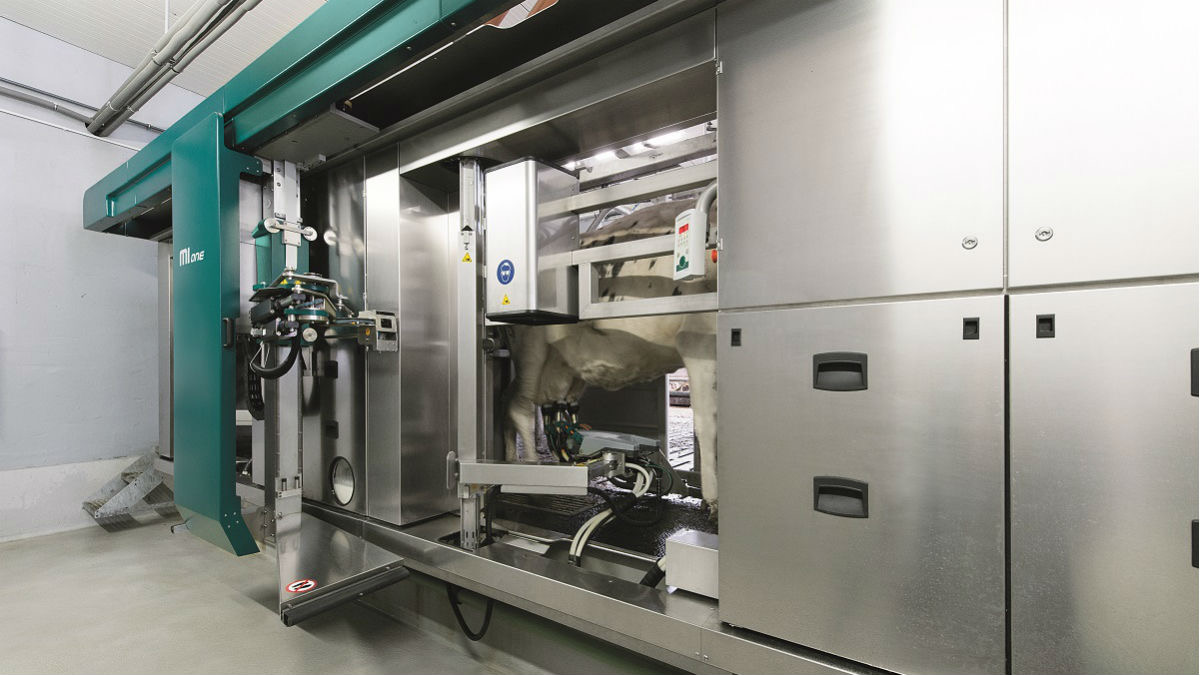
The robotic milking machines are stationary in the milking barn, and cows will walk in at an assigned amount of times per day. “I talk about large versus small operations, because each robot, can milk between 65 and 70 cows so that you would need a lot of robots for a 3,000 cow dairy,” Bruno said.

Robotic arm milks a cow.

As far as installing robots, the manufacturer has to come up with a plan. Sometimes they need to build a new barn.

Bruno noted that smaller dairies on the East Coast or Midwest  have many robots, but they’re smaller operations. “They have two or three robots per dairy, while the largest one, to my knowledge, is in Chile, which has 64 milking robots,” noted Bruno.

“But it’s growing in California, due to labor regulations and the number of hours that the workers can milk cows. Dairies are now thinking if they had robots, then they will have to worry less about all the labor issues,” she said.

Bruno described how these robots work, how the cows get to the robots for milking.

“The cows have a collar, and there are several sorting gates that lead to the robot. So let’s say the cow feels the urge to be milked, but the last time she was milked was less than four hours ago. She does not have the permission to be milked again,” noted Bruno. “The dairy can decide if they want the cows milked two, three, or four times a day,” she noted.

The permissions are based on the lactation stage or if she’s a heifer if she’s a first, a second lactation cow. They’re going to control it, and everything is stored in software. And when she approaches the gate, the gate is going to open for the cow if she’s allowed to go, or if she’s not going to be able to be milked yet, the cow is sent to a waiting place where she can rest and eat.

When a cow gets the permission, she walks into the robot milking machines, which will do everything that a dairy employee would do. “It prepares the cow, cleans the cow, and stimulates the cow, then the milking equipment is automatically put on the udders,” Bruno said. “And once the cow is done milking, it applies the post dipping sanitizer on the teat, and the cow is released to go back to its bedding area.”

Bruno said that the robots have many cameras, so they know exactly what they’re doing when they’re pre-treating the cow before milking and milking the cow and post treating the cow after the milking with sanitizer.

And while dairies will need less labor in the milking barn, there will still require employees to maintain the equipment, and there are several companies that offer that service, and prices vary.

“In California, I know of two dairies that have robots already. They’re both in Stanislaus County, and one of the dairies is planning to expand to 10 robots,” she said.

“The dairy operators are pleased to have the robots in place and feel that they could pay for themselves in short order,” Bruno said.

Bruno said she is working with dairy economic specialist Fernanda Ferreira at the  UC Davis research center in Tulare, where there is a project focused on the financial analysis of robots.

2021-05-12T11:17:08-07:00November 6th, 2019|

List of SGMA GSAs and GSPs


SGMA Update

GSAs Must Develop GSPs

By Don Wright, California Ag Today Contributor

SGMA uses Department of Water Resources Bulletin 118 to define basins and sub basins and assign them numbers. The San Joaquin Valley Basin is number 5-22. Within it are sub basins with their numbers following a decimal. Each sub basin one Groundwater Sustainability Agency or several, but DWR will only recognize one representative GSA per sub basin. Each GSA must develop a Groundwater Sustainability Plan on its own or as a contribution to an overarching GSP as again, DWR will only deal with one GSP per sub basin.

SGMA

Don Wright

Many of the sub basins with multiple GSAs are combining each of the GSAs’ GSPs into one overarching GSP. Most of the GSAs have released public drafts of their GSPs for review and comment. The following is a list of GSP links. When possible the links go directly to the GSP but many of the links take you to a page that has additional links to the GSPs. Some of them I haven’t found.

Merced Sub Basin 5-22.04

The Merced Sub Basin has formed three Groundwater Sustainability Agencies (GSAs): the Merced Irrigation-Urban Groundwater Sustainability Agency, the Merced Sub Basin Groundwater Sustainability Agency, and the Turner Island Water District Groundwater Sustainability Agency.

GSP https://www.mercedsgma.org/assets/pdf/gsp-sections/Merced-Subbasin-GSP-Draft-Report-Executive-Summary_2019-07-30.pdf


Chowchilla Sub Basin 5-22.05

The Chowchilla Sub Basin has four GSAs: Chowchilla WD, Triangle T WD, Madera County and Merced County

GSP https://www.maderacountywater.com/chowchilla-subbasin/


Madera Sub Basin 5-22.06

The Madera Sub Basin has seven GSAs: Madera County GSA, City of Madera GSA, Madera Irrigation District, Root Creek Water District, Madera Water District, Gravelly Ford Water District, New Stone Water District.

GSP https://www.maderacountywater.com/madera-subbasin/


Delta Mendota Sub Basin 5-22.07

The Delta Mendota Sub Basin has 24 GSAs: the Counties of Merced, Madera and Fresno, the Cities of Dos Palos, Firebaugh, Gustine, Los Banos, Mendota, Newman and Patterson, San Joaquin River Exchange Contractors Water Authority, Turner Island WD, Ora Loma WD, DM-II, Northwestern Delta Mendota, Patterson ID, West Stanislaus ID, Widren WD, Central Delta Mendota Regional Multi-Agency, Farmers WD, Aliso WD and Grasslands.

GSP http://deltamendota.org


Kings River Sub Basin 5-22.08

The Kings River Sub Basin has seven GSAs: James ID, North Kings, McMullin Area, Kings River East, Central Kings, North Fork Kings and South Kings.

GSP

North Kings https://drive.google.com/file/d/1CgjQ4-oY3AVaKXOexcJnyi3gaVhk5DPM/view


Westside Sub Basin 5-22.09

The Westside Sub Basin has one GSA: Westlands WD

https://wwd.ca.gov/draft-gsp/


Kaweah River Sub Basin 5-22.11

The Kaweah River Sub Basin has three GSAs: Eastern Kaweah, Mid Kaweah and Greater Kaweah.

GSP East Kaweah

https://ppeng.sharefile.com/share/view/sd08385c0b564a85a/fo4153c4-8351-4fc2-ae23-87be2dbeb1f0

Mid Kaweah https://www.midkaweah.org/documents

Greater Kaweah http://greaterkaweahgsa.org/resources/groundwater-sustainability-plan/


Tulare Lake Sub Basin 5-22.12

The Tulare Lake Sub Basin has seven GSAs; South Fork Kings, Mid Kings, Alpaugh ID, El Rico, Mid Kings River, South Fork Kings and Tri County WA

https://southforkkings.org/wp-content/uploads/2019/09/2019-0906-tulare-lake-subbasin-gsp-prelim-draft_for-upload.pdf


Tule River Sub Basin 5-22.13

The Tule River Sub Basin has six GSAs: Alpaugh, Delano-Earlimart, Lower Tule River, Pixley, Eastern Tule and Tri-County

https://drive.google.com/drive/folders/1P1M5tayhYI0Jc0-8Tm1o832nQ8WBBibj


Kern Sub Basin 5-022.14

The Kern Sub Basin went from two GSAs to 11 since SGMA began.

Kern River http://www.kernrivergsa.org/?page_id=966

Buena Vista WSD http://bvh2o.com/BVGSA-GSP-DRAFT.pdf

Kern Groundwater Authority http://www.kerngwa.com/gsp.html

Semitropic WSD

Olcese WD https://olcesewaterdistrict.org/sgma/West Kern WD


Arvin Edison WSD http://www.aewsd.org/

Tejon Castaic WD

Wheeler Ridge Maricopa WD


2019-11-01T16:36:48-07:00November 5th, 2019|

California Hemp Industry in the Making

California Hemp Growth Registrations Skyrocketed in 2019

By Robert W. Selna, Califonia Ag Today Contributor

California hemp growth registrations skyrocketed in 2019 due to federal decriminalization and a nationwide demand for hemp-derived products. A full-fledged statewide hemp industry has not quite arrived however, due to new regulations and limitations placed on hemp-based CBD products.

Hemp is defined as cannabis with extremely low concentrations of THC (not more than 0.3 percent on a dry weight basis). The Food and Drug Administration (FDA) prohibits CBD in food, beverages and cosmetics, regardless of whether the CBD is derived from cannabis that includes THC (the psychoactive constituent of cannabis) or from hemp.

California Hemp Field

On Oct. 29, the U.S. Department of Agriculture (USDA) released its long-awaited interim rule for domestic hemp production, which is a key step in implementing the 2018 Farm Bill and allows the USDA to approve hemp production plans developed by individual states. California is in the process of creating such a plan, and once it is approved, the state’s hemp industry is expected to expand.

Federal and State Laws

During the past year, California’s fledgling hemp businesses have waited patiently for the federal interim rule and closely monitored two bills that state legislators introduced to take advantage of a vast new hemp business opportunity. As the legislative session came to a close, results on the bills were mixed.

In mid-October, Governor Gavin Newsom approved SB 153, which modified California hemp regulations so that they would align with the anticipated interim rule. In contrast, state lawmakers failed to decide on AB 228, which would have legalized the statewide manufacture and sale of food, beverages and cosmetics that include hemp-derived CBD. The bill died in the Senate Appropriations Committee without a vote.

Following the lead of a handful of other states, including Colorado and Oregon, California Assemblymember Cecilia Aguiar-Curry (D-Winters) tried to address the federal CBD disconnect through AB 228. AB 228 contradicted the FDA, which deems products with CBD as “adulterated,” and prohibits them from being introduced into interstate commerce.

The FDA’s position is based on its decision to approve CBD as an active ingredient in the pharmaceutical drug Epidiolex, which treats a rare form of epilepsy. In turn, the FDA deems CBD to be like all other active drug ingredients, which may not be added to food and dietary supplements. Aguiar-Curry vowed to bring back AB 228 in early 2020.

Thus far, the California Department of Public Health (CDPH) has followed the FDA’s restrictions on CBD. Meanwhile, one can find hemp-derived CBD wellness products in small health food stores, as well as large chain supermarkets, which has caused confusion among consumers statewide.

The FDA and CDPH prohibition is seen by many as inconsistent with the spirit of the 2018 Farm Bill, which generally approved the production and sale of hemp, as well as the interstate commercial transfers of hemp and hemp products, including hemp-derived CBD. The Farm Bill decriminalized hemp by removing it from the Controlled Substances Act, but the bill did not remove marijuana. The federal government has long described marijuana as cannabis that includes more than trace amounts of THC. California, however, regulates a commercial cannabis industry separate from hemp.

Representatives in Congress are starting to awaken to issues surrounding the FDA’s CBD prohibition. Senate Majority Leader Mitch McConnell has taken baby steps to resolve the problem. In mid-September, McConnell introduced a bill that could result in the FDA adopting a more lenient framework for hemp-derived CBD products. Specifically, the legislation directs the FDA to issue “an enforcement discretion policy” that would give the agency latitude and possibly lead to recognition that CBD products are safe.

Industry Growth

Legislative hiccups and regulatory confusion aside, the California hemp industry is gaining momentum. Q3 statistics from the California Department of Food and Agriculture show that the number of registered hemp growers in California increased from 74 in June 2019 to 292 as of August 26. In addition, there are now at least 629 registered hemp cultivation sites and 17,571 acres associated with growers and seed breeders.

Under the 2018 Farm Bill, counties may only allow limited cultivation pilot programs until the USDA confirms that their state’s hemp plan conforms with federal rules. However, until the USDA’s interim rule issuance on Oct. 29, there was a chicken-and-egg problem. California and other states have struggled to draft federally compliant hemp plans not knowing exactly what to expect in the interim rule. As a result, at least half of California countries have temporary bans or restrictions on hemp cultivation.

The federal interim rule clarifies states’ hemp regulation responsibilities, including practices for record keeping, methods for testing hemp to ensure that it is below the legal THC limit, and plans for the proper disposal of non-compliant hemp. In addition, the interim rule makes it clear that states and Native American tribes may not prohibit the interstate transport of hemp that has been legally grown under federal and state laws.

California is said to now be working on its hemp conformance plan. SB 153 aids that effort by adding testing, enforcement, and other administrative provisions and extending the state’s deadline for completing a federal hemp conformance plan from Jan. 31, 2020 to May 1, 2020.

Despite an evolving legal landscape, the California hemp industry is gearing up for a big 2020. The publication of the interim rule and support for legalizing hemp-derived CBD products should propel the California hemp industry closer to a wide-open market.

Rob Selna an attorney for Wendel Rosen, with offices in Oakland an Modesto. He  is  an active member of the firm’s Land Use, Real Estate, and Cannabis practices, and represents clients in a wide range of transactional and regulatory matters. He chairs the firm’s Cannabis practice group and frequently writes and speaks on related legal issues.

2021-05-12T11:05:01-07:00November 4th, 2019|

Kincaid Fire Hurts Many Ag Operations

Kincaid Fire Destroys Several Wineries and Cattle Ranches

By Patrick Cavanaugh, Editor

The Kincaid Fire, which focused on Sonoma County, did cause much damage to agricultural operations.

“Sonoma County is very familiar with fires, and I wish that were something we couldn’t say. But this fire was a little bit different than the one that hit us in 2017,” said Tawny Tesconi. Executive Director of the Sonoma County Farm Bureau.

The Kincaid fire burned a little bit differently, in the sense that in actuality impacted more of our small cattle ranches, this time around. Tragically in the previous fire, it was a lot of homes that were burned.

Other Ag operations have been impacted, as well. “Several wineries that have been confirmed as burned is Soda Rock, and then, also Fieldstone. And I don’t want to say any others because I haven’t been able to confirm those,” said Tesconi. “There might be a few other actual winery structures that have burned, and it did hit our vineyards as well. Some of those vineyards are seeing some end post structure damage

However, Tesconi said that vineyards are very excellent firebreaks. Many of the homes that are surrounded by vineyards were able to make it through the fire. “I think any structures that burned came from flying embers,” she said.

There was a severe wind in the Kincaid fired, and it was part of the worst of two worlds hitting at the same time due to the PG&E shutoffs. “But luckily, Sonoma County is very grassroots and very community-based. We’re all helping each other out, and we’re very strong. And so, we’ll come through this one too, like we did the last one, but it’s just a little too close for comfort as far as timing goes.”

This fire was initially caused by PG&E equipment failure. “But I have to say, one thing that I have to shout out and recognize is the effort of our local sheriff and our county administrators and staff. They started doing the necessary evacuations of communities early on. And that can be tough in our county with 500,000 people,” she said.

The evacuation was focused on about 190,000 people. And officials were very organized, in that they evacuated different areas at different times. But even then, it took some four hours to go 10 miles. “So if there’s anything we learned and other communities can learn from this is that we all complained about having to be evacuated when we didn’t think we were in any danger, but it was the safest thing. Lives were saved. No lives were lost on this fire,” Tesconi said.

Some Cabernet Sauvignon vineyards had not been harvested yet. And with grapes are hanging and subjected to smoke—it can cause smoke taint grapes, which leaves them unusable. “We still are trying to get that figured out. The one great thing that our sheriff allowed us to do is that he was allowing our vineyard managers in and pick grapes, even in areas that had been in the evacuation zones because we know about smoke taint,” said Tesconi. “We don’t want to see smoke taint. So our guys got on it. People were helping with the harvest. One vineyard that had already finished harvesting for the year would send their staff over to help get the grapes off a neighbors vine.

One ranch that was the hardest hit was the LaFranchi Angus Ranch, which is up in Knights Valley, right on the Sonoma/Napa line. The family has been ranching for the last 107 years. And they lost seven houses. They lost most of their barn structures. They lost all of their hay, and they don’t know if they lost any animals yet, they’re still trying to assess that. “We’ve been doing a hay drive here at Sonoma County Farm Bureau to get them a couple of loads of hay to get them through the next couple of weeks,

“I’ve got word that there’s another cattle ranch up on the Geyser Ridge. They lost a lot of structures. They lost all their fencing,” said Tesconi. “They’re trying to keep 200 cow/calf pairs on the ranch without any fencing. So I’m sure that’s a challenge.”

“We’re still reaching out to our members, trying to asses all the damages because we have tons of support coming in. We were just notified that American AgCredit is donating a $25,000 matching grant for a program we’re running through Sonoma County Farm Bureau for people to help our farmers that are in trouble,” noted Tesconi. “If anybody wants to donate to that, they can go to our Facebook page, Sonoma County Farm Bureau. So, the awful thing is that we’re going through the tragedy. The good thing is that we’re extremely well supported by all of Sonoma County in our Ag industry.”

2019-11-01T16:42:23-07:00November 4th, 2019|
Go to Top