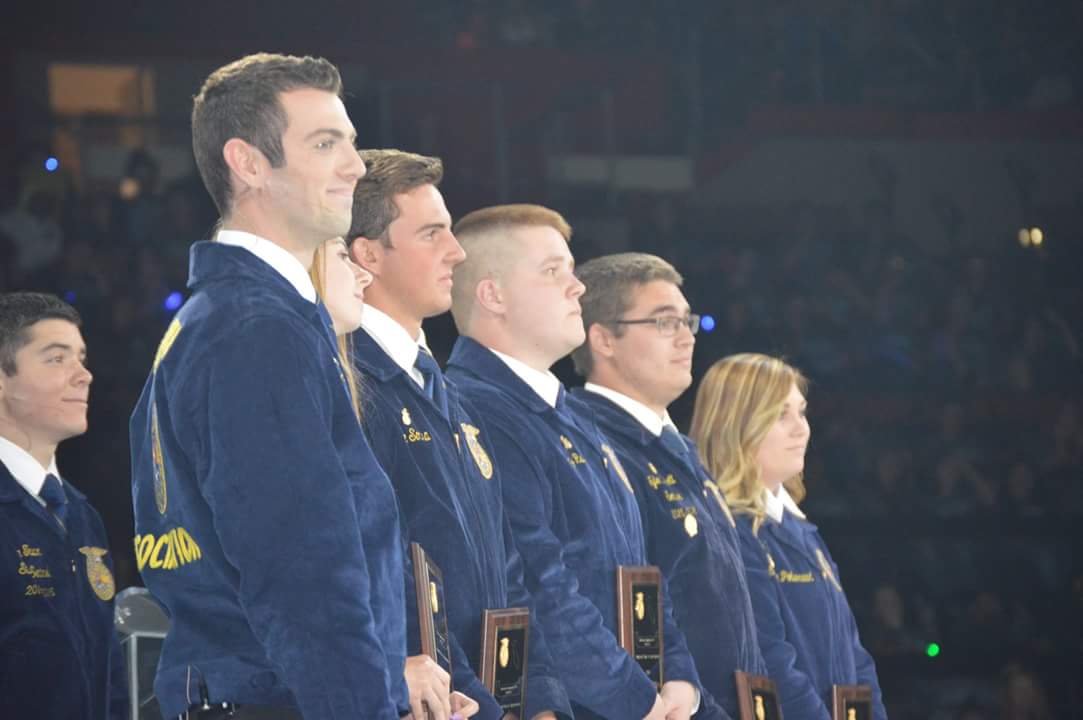
Please Support California FFA Student’s Jacket Campaign


Blue Jacket Campaign to Help Many FFA Students

More than 46,000 California FFA members, or one out of every two students from the FFA chapter in your community cannot afford the prominent blue corduroy jacket. A contribution from you would also help fund crucial leadership events they will attend.

Future Farmers of America is a perfect way to teach our youth business, speaking, and technical skills. In addition, the value of hard work and entrepreneurship that are the building blocks of our country’s prosperity.FFA

FFA was a great way for FFA Students and millions of others to build strong connections, lifelong friendships, and a business network.

FFA is an ever-growing vocational agriculture organization that has over 92,000 members in California. The support we provide to our youth will provide them great opportunities to grow and succeed.

As industry leaders it is our responsibility to contribute and build a foundation for future generations.

Your contribution is critical in changing the outcome of Americas youth. Please support the FFA Foundation Board in backing our students. The cost of a jacket, tie or scarf is $75. Blue Diamond will match every jacket purchased before December 3rd 2019. If individual can purchase 150 jackets by December 3, 300 members will receive a new FFA jacket. Thanks Blue Diamond!


To donate, please go hear.
2019-11-29T18:07:11-08:00December 2nd, 2019|

Superior Farms is Big with Solar and Wind Energy

The American Lamb’s Dixon Facility’s Wind and Solar offsets 95 percent of Energy Use


Superior Farms, the leading purveyor of farm-to-table American lamb in the United States, has activated a state-of-the-art solar panel system at its Dixon, Calif. facility. Now, combined with its wind turbine, 95 percent of the energy requirements for its facility will be from clean energy sources.

The solar panel system is the latest initiative in the company’s overall commitment to providing sustainably raised lamb. In addition to reducing its energy use in recent years and running on clean energy, Superior Farms has also reduced its use of water, diesel fuel and plastics as part of its dedication to the environment, animal care, food quality and people.

“Our employee owned company is proud to be making significant strides in our commitment to providing sustainably raised American lamb, though clean energy solutions and careful considerations regarding water use, transportation, packaging, and more,” said Anders Hemphill, vice president of marketing and brand strategy at Superior Farms. “We lead the industry in our sustainability efforts while supporting local, rural communities and American farming families, and providing a homegrown alternative to imported lamb which must be shipped thousands of miles.”

In addition to its wind and solar clean energy initiatives, Superior Farms’ sustainability efforts have resulted in:

  • A reduced use of water by 33 percent at its Dixon facility. That savings equals the amount of water used by more than 130 households annually.
  • A reduced use of diesel fuel since 2015 by more over 140,000 gallons per year.
  • Less food waste and less plastic packaging. Transitioning its case ready packaging to a vacuum skin package reduced Superior Farms use of plastics by a third. It also eliminates the need for retailers to repackage the product when it arrives in store and keeps the lamb meat fresh for a longer period, reducing food waste.

A 100 percent employee owned company, Superior Farms partners with over 1,000 American family ranchers to provide high-quality lamb with a strong commitment to animal wellbeing and sustainability. The lambs graze mainly on open pasture lands, sustaining on the natural vegetation of vast grasslands as they have for centuries while providing benefits to the land through fertilization, erosion mitigation and wildfire suppression.

Many sheep producers also work with crop farms to coordinate regenerative grazing and bring sheep onto fields after crops have been harvested. These lambs eat naturally enriched crops while boosting the level of organic matter in the soil, making it more fertile, and lowering carbon emissions by reducing the amount of tractor time on the field. Lambs receive excellent care and nutrition as well as proper handling to consistently provide the highest quality products to consumers.

For more information about Superior Farms and its sustainability efforts, including its four pillars of sustainability, visit www.superiorfarms.com. For sales inquiries, please contact sfsales@superiorfarms.com.


2021-05-12T11:17:08-07:00November 26th, 2019|

Nutria Swamp Rats Need Control

$7 Million Legislation Announce to Battle Nutria Swamp Rats

By Patrick Cavanaugh, Editor

The nutria swamp rat, similar in size of the common beaver, with a very high reproduction rate, is capable of wide destruction to farm waterways. It has gotten so bad in California that Congressman Josh Harder of Modesto has introduced legislation in order to get funding in an attempt to eradicate the invasive pests.

Josh Harder

Congressman Harder

These swamp rats are taking over California. And for those who aren’t familiar with what a nutria is, it is a giant 40-pound rodent that causes flooding, divert water and eat through farm canals destroy the entire wetlands that the Central Valley relies on.

One of the challenges is that they grow exponentially and one female can have 200 offspring a year. “If we don’t nip this in the bud within a couple of years, they’re going to go from seeing one or two here and there to 250,000 of them in the next five years if we don’t nip it in the bud. So that’s why it’s so critical to get this done early,” noted Harder.

Harder is trying to invest $7 million to eradicate this while it is still early. “While we still have time, we’ve seen this nutria problem in two different states. In Louisiana, they did not nip this problem in the bud and now these nutrients are everywhere. You can’t go two yards without seeing one of these rodents in ag country. It’s really disruptive and they have destroyed a lot of the levies and a lot of the wetlands and, and wrecked-havoc on farms all over Louisiana,” Harder explained.

“On the other hand, Maryland has had an eradication program that has been quite successful, now there are no nutria left in that state. What my bill is trying to do is take that Maryland program and extend it into California because we know it works,” he said.

Controlling nutria is done mostly by trapping right now. But what Maryland has done is they catch one, they sterilize it, and then they throw it back into the population. That female then sniffs out all of its mates and then once we have identified the entire den, all the nutrias are eradicated, with an air gun dart, in a humanly way.  “It’s actually a pretty clever program to make sure that you’re getting every single last one because the issue here is because of that exponential reproduction and growth rate, If we don’t get every animal, it’s never going to end. We have to make sure we’re getting down to zero,” Harder said.

And while nutria is similar looking to beavers, beavers do not have 200 offspring a year. Beavers create their own dams. They’re living their peaceful life, but beavers aren’t out there destroying almonds. They’re not out there destroying canals. So, they may look similar, but the nutria is an invasive species and because it grows so quickly, it’s much more important to make sure we’re rooting them out early.

Optimistic the Legislation Will Pass

“I’m very optimistic about it because we have a really strong precedent for this issue. This is a bipartisan issue supported by Republicans and Democrats. We can point to the federal program that has been successful in Maryland.

“And you know, the biggest thing I hear from folks is they say, why should we spend $7 million on this program? And I say, if we don’t spend $7 million today, our farmers are going to be spending hundreds of millions, if not billions,” said Harder, “Over time, because if you look at how much Louisiana is spending right now, they have no hope of eradication. This is a fiscally responsible measure because it’s going to prevent major problems and expenses.”

Nutrias were originally introduced to the United States as part of the fur trade in the late 1800s but were eradicated from California in the 1970s. The species was rediscovered in the Central Valley in 2017. There have been 531 nutrias removed from the Central Valley since this first sighting.

2021-05-12T11:01:45-07:00November 26th, 2019|

HISTORIC STORM SYSTEM HEADING TOWARD WEST COAST

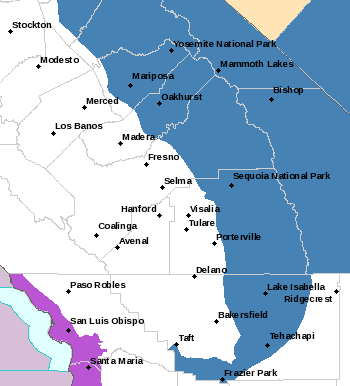
HISTORIC STORM SYSTEM HEADING TOWARD THE WEST COAST WITH RECORD-SETTING COLD AIR AND SNOW FALL REACHING THE SJV FLOOR for up to 48 hours!!!


From Steve Johnson
Atmospherics Group International LLC


  • Long Range has flipped to extremely WET beginning on Dec 5 and continuing thru to the end of the Fantasyland period ending on Dec 10th.   Lack of model consistency applies to this!


An unprecedented event is unfolding on weather charts for the entire West Coast, with the incoming storm system which now has the potential to be a record-setting event with cold temps and snowfall to extremely low elevations during the month of NOVEMBER!  If current charts verify then snow is possible to some very unusual places within CA over the Holiday weekend!!!

It is becoming increasing possible that a rare snowfall event could occur on the floor of the San Joaquin Valley over the Thanksgiving holiday with SNOW possible in the forecast for about a 48 hour period, ThuPM ending SatPM.

With partially clearing skies on Friday night MIN Temps could drop well below the Freezing mark of 32° …with some AG Stations calibrated to drop as low as 27° as of this forecast issuance timing.   This is also combined with chances of precip occurring at the same time, with high possibilities of snowfall accumulating within the San Joaquin Valley.   Extremely hazardous driving conditions are highly probable from Thanksgiving Day forward thru at least Saturday.

2019-11-24T16:43:18-08:00November 24th, 2019|

Farmers Devastated by Latest Romaine Lettuce Outbreak

Problem Lettuce Centers On Salinas.

All Other Growing Areas Deemed Safe

Note: Video and graphic resources supporting this press release are available here.

Today’s announcement by the U.S. Food and Drug Administration (FDA) and the Centers for Disease Control (CDC) of expanding illnesses in the E. Coli O157:H7 outbreak associated with romaine lettuce is being met with frustration and heartbreak by California lettuce farmers.

The root cause of this and other recent outbreaks linked to romaine lettuce remain a mystery despite a concentrated focus on safety by leafy greens producers and government regulators.

“No one is more frustrated than the producers of leafy greens that outbreaks continue to be associated with our products,” said Scott Horsfall, CEO of the California Leafy Greens Marketing Agreement (LGMA), a food safety program created in 2007 to prevent foodborne illnesses caused by lettuce and leafy greens.

“We are devastated as a leafy greens community when this happens,” said Dan Sutton, a farmer from Oceano, CA. “Our thoughts go to those affected by this outbreak. But that’s why we want to continue to work with governmental agencies to learn why this is happening so that we can improve.”

According to FDA and CDC, consumers are advised not to eat any of the specific products included in recent salad mix recalls and to avoid romaine lettuce from Salinas. At this time, romaine lettuce that was harvested outside of the Salinas region has not been implicated in this outbreak investigation.

“Right now, romaine is being harvested in Arizona and southern California growing areas that are not part of this outbreak and harvest is nearly complete in the Salinas Valley,” explained Horsfall.  “Public health agencies have stated that only product from the Salinas area is included in the consumer advisory. Romaine producers will be working closely with their customers to make sure all product from Salinas is removed from marketing channels, but romaine from any other growing area is safe for consumption.”

This means that romaine from the following regions is safe: Yuma, Phoenix, Southern Arizona, Northern Arizona, Northern California, Santa Maria, Southern California, Imperial Valley, Coachella, and Central Valley. Product from Mexico and other states is also cleared. Hydroponically and greenhouse-grown romaine is also not implicated in the outbreak.

“For the past year, producers have been voluntarily labeling romaine lettuce with information on harvest date and growing region,” explained Horsfall.  “Today, this information provides consumers, retailers and foodservice operators with assurances the products they are purchasing have been identified as safe for consumption. We are hopeful these actions by industry will minimize withdrawal of safe product from stores and restaurants and reduce food waste.”

The current outbreak is occurring at a time when the production of leafy greens in central California is transitioning to growing regions in southern California and Arizona. It appears that romaine lettuce involved in this outbreak was likely harvested in the Salinas Valley growing area in September and October.

“We are very hopeful that what we learn from these recent outbreaks will help us to strengthen our food safety practices,” said Horsfall, who emphasized that since an outbreak linked to romaine last Thanksgiving, California and Arizona leafy greens producers made several changes to the food safety practices required of farmers. The changes include updated protocols for irrigation and increased buffer zones between leafy greens farms and adjacent animal operations.

A very stringent set of food safety practices is enforced on leafy greens farms through the LGMA system. Horsfall explained that the role of the LGMA is to verify through government inspection that leafy greens producers are following a set of food safety practices on the farm. Each LGMA member is subject to 4 to 5 on-farm audits each year that are conducted by government officials. The LGMA is the most comprehensive food safety program for fresh produce in the world.

“As farmers, we never want outbreaks to happen,” stressed Sutton, who serves as the chairman of the LGMA. “We will continue to do everything we possibly can to improve our required practices, to improve the way we farm leafy greens and to make sure we can improve the safety of these products we are putting out to our consumers.

“The situation is heartbreaking,” continued Sutton. “I have a very young family and the products we grow go to my family’s dinner table. My children consume the very same products we are sending out to consumers across the nation. That’s something I think about every day.”

The LGMA is working closely with public health agencies and have volunteered to assist with investigations in any way possible. The organization is also working with other initiatives to conduct research to learn more about how romaine is the source of outbreaks. They invite the public, media and government officials to learn more about their program and the practices required of leafy green producers at www.lgma.ca.gov or by contacting them directly at (916) 441-1240.

2019-11-22T15:28:27-08:00November 22nd, 2019|

Workforce Modernization Act Passes Hurdle

Workforce Act Must Come to Full House Floor

In response to passage of the Farm Workforce Modernization Act by voice vote in the House Judiciary Committee, Nov.20, Western Growers President & CEO Tom Nassif issued the following statement:

“Western Growers applauds today’s passage of the Farm Workforce Modernization Act in the House Judiciary Committee. We thank the lead authors, Congresswoman Zoe Lofgren and Congressman Dan Newhouse, and the bipartisan group of legislators who have negotiated and supported this bill.

“Throughout the U.S., agriculture is experiencing a critical shortage of labor that jeopardizes our ability to continue producing an abundant, safe and affordable domestic food supply. Securing a reliable and skilled workforce is critical to the future viability of America’s family farms, said Nassif.

This bill does exactly that.

“By protecting existing, experienced farm workers, and streamlining the agricultural guest worker program to provide a more accessible, predictable and flexible future flow of labor, the Farm Workforce Modernization Act contains real solutions to the labor crisis facing the industry.

“This bipartisan bill, which has 29 Democratic and 23 Republican co-sponsors, has been carefully crafted through a series of difficult stakeholder-driven negotiations, and has garnered the widespread support of nearly 300 agricultural organizations across the country, as well as the U.S. Chamber of Commerce and farm worker unions.

“While the Farm Workforce Modernization Act is not perfect, we remain committed to working through the legislative process to address our outstanding concerns, and encourage to Speaker to bring this bill before the House floor for a vote as soon as possible.”

2019-11-20T20:57:35-08:00November 22nd, 2019|

New Proposed Westlands Water Contracts to Users

Statement from Tom Birmingham, General Manager of Westlands Water District

A response to the U.S. Bureau of Reclamation’s proposed conversion of the Westlands Water District water service contract to a repayment contract

The American West is an arid region. When President Obama signed the Water Infrastructure Improvements for the Nation (WIIN) Act in 2016, it was with the express intent of improving the nation’s water infrastructure, especially in the western United States. As part of this improvement, Section 4011 (a)(1) of Subtitle J of the Act provides that the Secretary of the Interior shall convert water service contracts to repayment contracts at the request of any existing water service contractor.
Section 4011 was included in the WIIN Act to create a source of money that the Bureau of Reclamation could use to construct water storage projects around the west. It was intended by the Act’s co-author, Senator Dianne Feinstein, to help California “prepare for [that] future while providing us with access to more water now.” When President Obama signed the bill into law, he stated that, “This important partnership has helped us achieve a careful balance based on existing state and federal law.”
Converting “temporary” water service contracts to “permanent” repayment contracts is not uncommon. In fact, an underlying principle of federal Reclamation law  that water users who have repaid the construction costs of a project would have a permanent right to the use of water developed by a project  has been reaffirmed by Congress multiple times since it was first laid out in the Reclamation Act of 1902.
In the Central Valley Project, the San Joaquin River Restoration Settlement Act directed the Secretary of the Interior to convert water service contracts in the Friant Division to repayment contracts to generate revenue for the San Joaquin River restoration program, and those water service contracts were in fact converted to repayment contracts. According to the Bureau of Reclamation, as of October 2019 more than 75 agencies that had “temporary” water service contracts to receive Central Valley Project water, including the State of California Department of Fish and Wildlife, have exercised the option provided by the WIIN Act to convert their contracts to “permanent” repayment contracts. The contract terms proposed in the repayment contracts for Westlands and other Central Valley Project contractors under the WIIN Act are nearly identical to those in the Friant Division repayment contracts.
Further, as President Obama also noted, the provisions of Subtitle J of the WIIN Act were intended to help meet California’s long-term water needs, helping to “assure that California is more resilient in the face of growing water demands and drought-based uncertainty.” In the case of Westlands’ contract conversion, like all contract conversions done before or after, it offers a win-win for all parties.
The Westlands contract conversion will accelerate payment of approximately $320 million to the federal government years before payment is due. This money, pursuant to the WIIN Act, will be placed in the Reclamation Water Storage Account to be used for the construction of water storage and supply projects that can benefit all Central Valley Project purposes.
2019-11-20T19:40:39-08:00November 21st, 2019|

Almond Alliance of California Works For Industry

Almond Alliance Releases the 2019 Advocacy Report

A successful advocacy organization relies on teamwork and collaboration. It takes all of us working together to get to a good place for your business.  Each year we are dealt a new set of challenges and each year we face them with new strategies and tenacity.  While our industry is diverse, we are bound by the commitment to succeed, educate and prevail in this ever-changing political landscape.

The 2019 legislative session was one of the most bizarre and active we have seen in recent years. Our advocacy team worked diligently and tirelessly to defend the industry against harmful legislation and promote logical and practical perspectives when implementing federal and state regulatory changes. 
The Almond Alliance continues to advocate for and defend programs that help in the advancement of our industry.  The Advocacy Report provides a summary of these bills, key policies and issues for your information and review. 
As always, we appreciate your support and invite you to contact us for any questions, comments or to discuss policy and legislation.
Click Here, for your copy of the 2019 Advocacy Report.
Click Here, to view our Advocacy Video.
2019-11-19T23:13:25-08:00November 20th, 2019|

USDA Grant Helps CA Nutrition Incentive Programs

CDFA Receives USDA Grant To Continue Incentives Ag Farmers Markets 

 The California Department of Food and Agriculture (CDFA) has been awarded a Gus Schumacher Nutrition Incentive Program (GusNIP) grant of $7,166,877 from the U.S. Department of Agriculture (USDA) to fund nutrition incentives at Certified Farmers Markets and small retailers throughout the state.

The grant will help fund the California Nutrition Incentive Program (CNIP), which offers nutrition incentives to CalFresh shoppers utilizing benefits at participating farmers markets and retail outlets. For every CalFresh benefit dollar spent, CNIP offers CalFresh shoppers an additional dollar to spend on California-grown fruits and vegetables, within set parameters. This incentive is intended to empower CalFresh shoppers to increase their consumption of healthy fruits and vegetables.

“CNIP addresses food insecurity and access to fresh fruits and vegetables among low-income Californians while simultaneously supporting and expanding markets for California farmers,” CDFA Secretary Karen Ross said. “We’re honored to have been awarded a GusNIP grant for the second time to help continue this good work.”

CNIP began in 2017 and is administered by CDFA’s Office of Farm to Fork (CDFA-F2F), which leads CDFA’s food access work. The GusNIP award is matched by state funds to provide funding for incentives, program operations, and marketing and outreach. CDFA will work with seven partner organizations, chosen through a competitive grant process, to implement the program.

“The California Nutrition Incentive Program is a crucial program that I continue to champion because increasing access to farmers markets helps residents improve their health,” said Assemblymember Phil Ting (D-San Francisco), Chair of the Assembly Budget Committee, who authored legislation to create the program. “This $7.1 million federal grant is great news and ensures that those who can’t always afford fresh, locally grown produce can now do so. Nutritious food is the foundation for good health.”

More information about CNIP, its grantees and participating retail outlets can be found at https://cafarmtofork.cdfa.ca.gov/cnip.html

2019-11-18T11:11:03-08:00November 19th, 2019|

Westlands Could Get Permanent Federal Water

Huge Water Contract for Westlands

From Families Protecting the Valley

www.FamiliesProtectingTheValley.com


According to the L.A. Times, the “Westlands Water District, a sprawling San Joaquin Valley farm district with ties to the Trump administration, is poised to get a permanent entitlement to a massive quantity of cheap federal irrigation supplies.”


How much are they supposed to get?  “1.15 million acre-feet of water.”


BUT…”There is no guarantee it will get that, since Westlands is low in the federal project’s pecking order and is among the first cut in times of shortage. Since 1990, it has received its full allotment in only four years.”  Conclusion:  Even with all the water available last year they only received 55%.


The article goes on to say “long-term control would also allow Westlands to make lucrative water sales to thirsty cities and other agricultural agencies”…Conclusion:  BUT, “To date Westlands hasn’t sold any water outside of its district. We don’t sell the water for a handsome profit.”


Why were they able to make the deal?  “Westlands asked for the new agreement under provisions of the 2016 WIIN Act, which opened the door for all reclamation contractors across the West to convert their water service contracts to permanent contracts if they repaid what they still owe federal taxpayers for construction of a federal water project.”  Conclusion:  So, they followed the law. 

So, how much do they still owe?  “In a letter to Westlands, the reclamation bureau last year estimated that the district owed the government $320.5 million as of June 2018.”


BUT, “In 2015 Westlands struck a settlement over drainage services that courts had ruled the federal government was legally obligated to provide…Under the settlement, Westlands agreed to assume drainage responsibility, said it would permanently retire 100,000 acres of badly drained land and would also accept a 25% cut to its water contract.”

SO, “In return, the government agreed to forgive Westlands’ construction debt — then roughly $350 million — and give the district a permanent contract for the reduced delivery amount.”  


Conclusion:  If you follow the story you can see the federal government had some obligations with regard to drainage, and made a deal for Westlands to assume the responsibility in exchange for the water contract.

  
The headline – Feds set to lock in huge water contract for well-connected Westlands Water District – would have you believe Westlands is getting something because of their powerful connections.  Conclusion:  It looks like they just followed the law and made a deal.

2019-11-14T07:37:36-08:00November 14th, 2019|
Go to Top