Environment

Governor Signs AB 1066 Overtime Bill for Farmworkers

Governor Signs AB 1066 With Good Intentions

By Patrick Cavanaugh, Farm News Director and Laurie Greene, Editor


TODAY, Governor Jerry Brown signed AB 1066, the overtime bill for farmworkers, despite pushback from agricultural groups and farmworkers in the state. Ian LeMay, director of member relations & communications of the Fresno-based California Fresh Fruit Association, anticipates that not only will farmers in the state lose, but farmworkers, exports, and possibly consumers will lose as well. 

For years, California farm employees accrued overtime pay only after working a 10-hour day, instead of an 8-hour day, like most other employees in California. AB 1066 changes the overtime rules for farmworkers by gradually lowering overtime thresholds in steps over the next four years so farmworkers will eventually earn overtime after an 8-hour day.

The California farm industry has appreciated the prior overtime policy, according to LeMay, because agriculture is not a typical 52-week type of job. The workload of farming ebbs and flows with the seasons, weather, cultural practices and tasks.Farmworkers

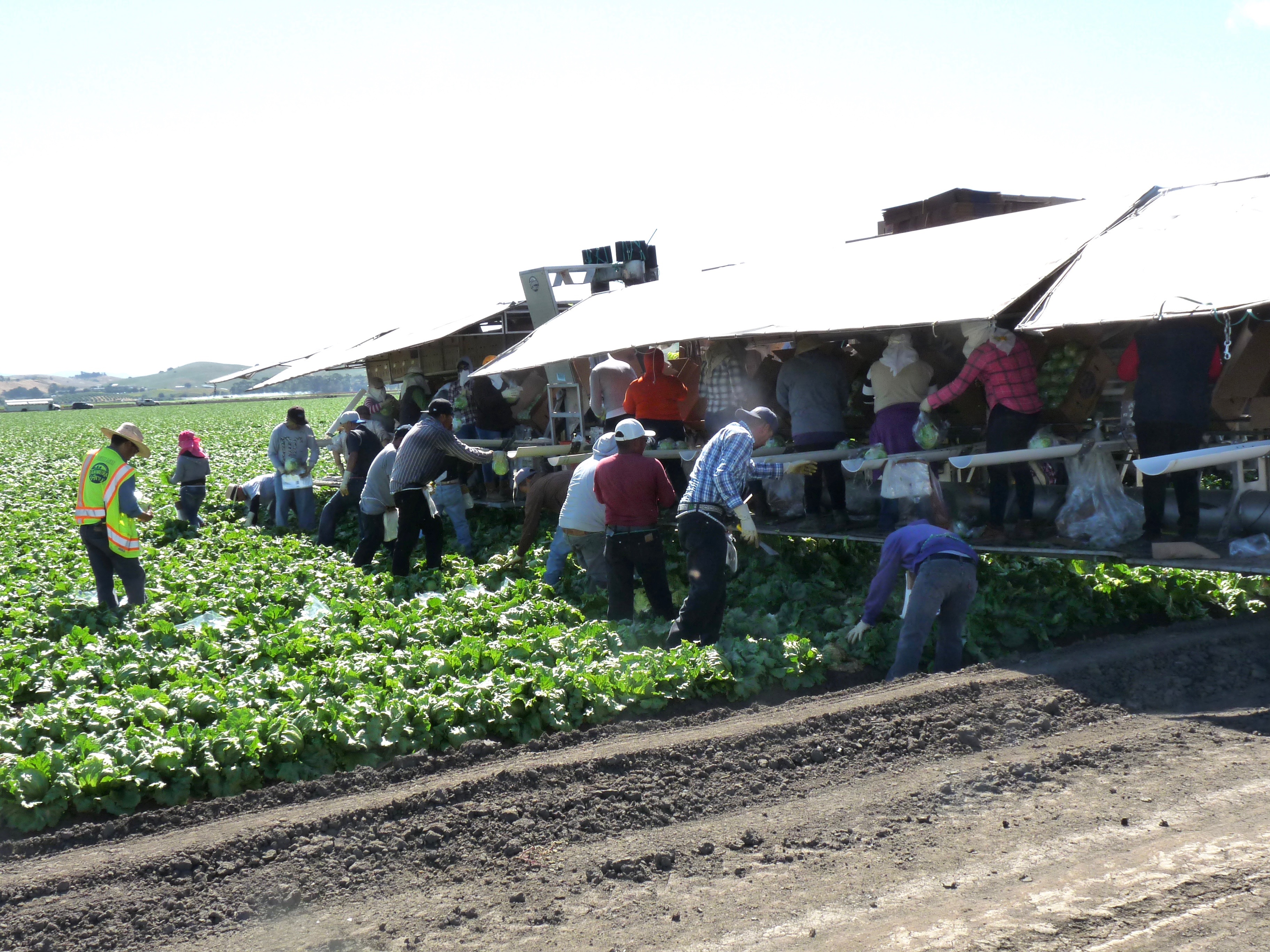
For instance, harvesting of crops such as strawberries, citrus and table grapes, normally occurs during short 2- to 3-week periods in the state and is accompanied by an increase in demand for labor. As one might expect, the need for labor declines during non-harvest and non-planting phases, to the extent that farmworkers may endure periods of no work, and hence, no pay. So farmworkers have appreciated the opportunity to work extra hours and earn overtime during busier phases.

Labor costs for California growers of all fresh fruit, avocados and many vegetable crops will be most affected by this change. “This is going to have a very, very big impact on crops that require a high degree of labor like our stone fruit, table grapes and the rest,” said LeMay, “It’s definitely going to change the way our members have to approach doing business,” he said.

“When you compare it to the other states in the union that we are going to have to compete with,” LeMay elaborated, “when you take into account recent changes in minimum wage, piece-rate compensation, increasing farm regulations and now overtime, it’s going to be very difficult to compete not only in a domestic market, but also internationally. That’s the disappointing part about this.”

LeMay also explained that over the last 40 years, the California legislature has crafted labor law to create the highest worker standards in the U.S. “California was the only state in the union that had a daily threshold for overtime of [only] 10 hours per day, and we were one of four in the union that had a weekly threshold for overtime of [only] 60 hours. So in terms of ag overtime, California was already the gold standard.”

And, although lawmakers intended AB 1066 to help farmworkers, LeMay noted, “ultimately, the measure will impact farmworkers the most because farmers in the number one Ag state will find a way to keep its bottom line from eroding any further.

“California farmers will need to solve the puzzle of how to achieve the same amount of work in fewer hours per day,” said LeMay. “They will consider hiring double crews, increasing mechanization in packing facilities, orchards and vineyards, and reducing farm acreage to match their workforce. Or, for those commodities that require increased labor, you could see a transition to commodities like nut crops that use less labor.”

LeMay explained that during down periods on the farm, farmworkers generally collect unemployment, which is based on gross annual income. Now, by giving the farmer an incentive to reduce worker hours, farmworkers’ unemployment compensation may decrease as well.

Furthermore, for the consumer who desires fresh local food from small farms, the phase-in schedule AB 1066 provides to smaller companies is actually a competitive disadvantage. “While AB 1066 allows small farmers—those with fewer than 25 employeesmore time to phase in changes,” LeMay asked, “why would a farmworker stay at small farm under the prolonged 60-hour per week overtime threshold rule, when he or she could work at a larger farm under the phased-in 40-hour per week threshold?”

ab-1066-provisions


Are consumers willing to pay for increased labor costs on the farm? “As the saying goes,” LeMay quipped, “generally farmers aren’t price makers, they are price takers. Consumers are usually unwilling to pay extra for their produce, so farmers usually have to absorb increased costs.”

“Economically,” LeMay summarized, “the legislature has taken us from high labor standards to economically disadvantaging farmers and farmworkers. Lawmakers are not paying enough attention to keeping California companies viable, sustainable and successful.”

2016-09-12T18:40:13-07:00September 12th, 2016|

USDA NRCS Works To Increase Diversity

NRCS Conducts Outreach for Diversity


By Emily McKay Johnson, Associate Editor


The United States Department of Agriculture (USDA) Natural Resources Conservation Service (NRCS) works with local growers across America to conserve the nation’s soil, water, air and other natural resources. Elisabeth “Elise” Miller, is an area engineer for the entire Southern California region. “I also serve my agency as the NRCS-California LGBT Special Emphasis Program Manager, a collateral duty that I perform on several levels to increase diversity,” said Miller.


“First, I work to educate employees within my agency, to make them better informed and more in tune to language,” Miller explained. “Then, I work to get a more diversified workforce within the USDA,” she added, to make the organization stronger and better.


Unlock the secrets in the soil diversity

“My efforts might include going to a university,” she elaborated, “trying to tie in with their resource center and encouraging more people who identify as LGBT to apply for federal jobs. Our colleges, the University of California (UC) and the California State (Cal State) University system, have a lot of really good, positive and powerful resource centers that I’m hoping will continue to help us with our outreach and pull more people in who want to work for us.”


“Certainly we do have human resources,” commented Miller. “And we do a lot of outreach. With California being so large and so diverse,” Miller said, “it is hard to reach out to everybody. We have to start with the big UC schools first. We also try to reach out to universities such as Fresno State, Cal Poly, San Luis Obispo or Pomona or UC Davis, or Humboldt State. Those would be schools that certainly we want to outreach to and try to bring more of those graduating students in under our fold.”


“My agency is a very technical agency,” said Miller. “We work on conservation-type issues—resource issues that farmers, ranchers or private landowners might deal with—requiring an agronomist, biologist or soil scientist. I often go out with a multi-disciplinary team and meet with a farmer, rancher, or just a landowner.”


“Every farmer I meet has some kind of issue,” Miller commented, “whether it’s pest management, whether it’s dealing with manure management or an erosion issue that’s going on. If they have a hillside orchard, they have to deal with that.”


“And obviously they focus a lot on drought management and water conservation,” Miller explained, “A lot of these farmers of course are forced to use groundwater, which is depleting the groundwater sources and may be causing irreparable damage.


We work cooperatively to try to help them resolve their land issues. That’s what I like about my agency—that we’re invited there. We’re not there to push a regulation. We’re there to help them to better manage. They always maintain control of their decision making. We try to give them options available and we have cost share programs to assist them, if something is identified. We work towards developing conservation plans on the property.”


The agency is also responsible for the soil survey work. “We map the soils five feet deep,” said Miller, “to gather information, resource information, which has worked fantastically well for a farmer to know what kind of soil he’s dealing with. It may make a difference on how a farmer irrigates. It may be why he’s having a problem with a crop or many other areas that could be helpful to them.”


“We are in the community. We’re very much aware; we know who the farmers are, we know what the issues are and we work with farmers to try to address their land problems. We don’t just pop in and then pop out,” Miller said.


The United States Department of Agriculture (USDA) Natural Resources Conservation Service (NRSC) works with local growers across America to conserve the nation’s soil, water, air and other natural resources with voluntary programs and science-based solutions that benefit both the landowner and the environment. 

2021-05-12T11:05:47-07:00September 12th, 2016|

Salinas Valley SGMA Agency Progresses

Salinas Valley SGMA Agency Development Makes Headway

By Patrick Cavanaugh, Farm News Director


The Sustainable Groundwater Management Act (SGMA) empowers local agencies to adopt groundwater management plans that are customized to the resources and needs of their communities. All such designated groundwater sustainability agencies (GSAs) in the State’s high- and medium-priority groundwater basins and subbasins must be identified by June 30, 2017.


A GSA is responsible for developing and implementing a groundwater sustainability plan (GSP) to meet the sustainability goal of the basin to ensure that it is operated within its sustainable yield, without causing undesirable results. The GSP Emergency Regulations for evaluating GSPs, the implementation of GSPs, and coordination agreements were adopted by DWR and approved by the California Water Commission on May 18, 2016.


“We’re coming down to the wire pretty quickly,” commented Norm Groot, executive director of the Monterey County Farm Bureau in Salinas. “We’re moving forward with our SGMA implementation and moving closer to a proposal for our groundwater sustainability agency. We hope to have something presentable to the public entities sometime this fall.”


“We are meeting with stakeholders in the Valley and hopefully we can move forward with some of the solidification of the proposals and get into the nitty-gritty details of how to work that particular agency through the process,” Groot continued. “We have options to either take an agency that we have here in our county and rework it legislatively, or perhaps create a brand new agency. It just depends on the complexities of that particular issue based on the proposal that we come up with,” said Groot.


Groot noted local agricultural leaders have proposals on the table and various different options are under consideration. “The complexity of reworking an existing agency through a legislative process is rather daunting,” explained Groot. “The complexity of creating a new agency from the scratch is also very daunting and probably very expensive.”


Certainly any of these proposals under scrutiny will not be approved overnight. “It’s going to take some thought; some time, effort, and energy; and definitely some money to do,” said Groot.


Resources:

2016-09-08T08:02:22-07:00September 8th, 2016|

Episcopal Priest Becomes Farmer

Following His Heart to a Second Calling, Suburban Detroit Priest Becomes California Farmer


By Patrick Cavanaugh, Farm News Director


People change careers for a variety of reasons, but Ken Erickson took that notion to an extreme. Erickson, who had grown up in the Detroit suburbs and who was serving as an Episcopal priest in Detroit, received a phone call from relatives who had been farming in Sutter and Colusa Counties for 25 years.


“My aunt and uncle asked if I would be interested in coming to California to learn how to farm and help manage their orchards, which included walnuts, pecans, and olives for oil,” said Erickson. “So my family and I eventually made a decision to do just that, and it has been a big adventure for us.”

walnut orchard


Currently living in Meridian, Sutter County and working side by side with his cousin, Lars Jerkins, Erickson took stock, “We are enjoying living and working in the country. It’s great to work outside,” he said.


People often ask Erickson about the difference between farming and pastoring. “I tell people trees are like people; they need lots of nurture and care, but they don’t talk back,” he quipped.


But, of course, giving up his career as an Episcopal priest required a great deal of thought. “It was a hard decision,” Erickson explained. “It was a big change, but we decided to go for it. Here we are and learning from lots of people, especially from my aunt, uncle and cousin. And I have come to respect and appreciate the fact that the farming community is supportive. They want to help in any way. My family and I are here to stay.”

2016-09-06T17:50:08-07:00September 7th, 2016|

Weedy Rice Challenges Some Rice Growers

Weedy Rice Crops Ups Again in Northern Calif. Rice Fields


By Patrick Cavanaugh, Farm News Director


In Northern California, rice growers typically prepare to start harvesting in mid-September, but some growers have endured a lot of weed pressure from weedy rice (Oryza), also known as red rice, according to Whitney Brim-DeForest, a UC Cooperative Extension Rice Farm Advisor in Sutter, Yuba, Placer, and Sacramento Counties who focuses particularly on weeds. Red rice is actually the same species as cultivated rice, but it produces far fewer grains per plant and is therefore considered a pest.


Brim-DeForest said weedy rice is common in the Southeast, but not in California. “We’ve been pretty lucky in California in that we actually don’t have a big problem with it,” she said. “It’s a big problem down in the southern U.S. and they have been dealing with it in for a long time; but we have had it crop up. I think the last time was in 2006, and we managed to deal with it. It somehow popped up again in the last couple of years, so we’re dealing with it again.”


How weedy rice reached California is apparently a mystery. “We don’t really know the source of it, to be honest,” said Brim-DeForest. “We’re investigating that through research, hopefully starting this fall,” she said.


Brim-DeForest said growers have few choices to control weedy rice. “Growers that have it will either have to rogue¹ it out, pull it out by hand or sacrifice that field and spray it with Roundup,” she said, “which would kill the rice as well. And, if the rice grower doesn’t know he has weedy rice in the field, it could hurt him later at the rice mill,” explained Brim-DeForest.


“Once harvested, the rice goes to the mill. If a certain amount of red rice bran (the outer layer surrounding the rice grain) is discovered, the mill will not accept it and could reject the entire load,” she said.


¹rogue (verb) to remove inferior or unwanted plants

2021-05-12T11:05:48-07:00September 2nd, 2016|

Julie Borlaug Honors her Famous Grandfather

Julie Borlaug Honors her Famous Grandfather, Norman Borlaug, in Advancing Science in Agriculture


Editor’s Note: Julie Borlaug spoke recently at the 2016 Forbes AgTech Summit in Salinas, and shared with us the legacy of her Grandfather, Norman  Ernest Borlaug, a man who used technology to ward off starvation and the recipient of the Nobel Peace Prize, the Medal of Freedom, the Congressional Gold Medal, as well as the importance of advanced technology in Agriculture. 


Julie Borlaug, associate director for external relations, Norman Borlaug Institute for International Agriculture at Texas A&M University, introduced the Institute’s mission, “We design and implement development and training programs. We take the legacy of my grandfather and we carry it out through the land-grant mission of teaching, research and extension. We’re primarily funded by organizations like USAID and USDA, so we truly are a development agency.”

Here is more of what she shared:

Norman Borlaug

We all know why we care about agriculture and a lot of why we care is pretty much some of the same reasons my grandfather was up against during the green revolution. My grandfather was the recipient of the Nobel Peace Prize, the Medal of Freedom, the Congressional Gold Medal and now a statue in the National Statuary Hall at the U.S. Capitol. However, when I speak about my grandfather I like to humanize him a little and make people realize he was a normal person and that anyone can, if they’re dedicated, change the world.

Norman E. Borlaug Statue

Norman E. Borlaug Statue, National Statuary Hall, U.S. Capitol.

Growing up with him, we didn’t really know what he did. We just knew he flew through Dallas on his way to Mexico or Africa or India. In third grade, I took him to show and tell, and he was upstaged by a hamster. I think it was good for him.

When he got the Congressional Gold Medal I got to sit with him on stage and he had two minutes to talk. The entire Congress was shut down. At 10 minutes, Nancy Pelosi‘s staff [was] poking me from behind saying, “You’ve got to stop him.” I leaned forward to President Bush and I said, “They want him to stop. You’re the President.” He said, “This isn’t my thing, this is the Congressional.” Right at that point, I think we were about 18 minutes in, my grandfather said, “Poverty and hunger are fertile seeds for isms, and terrorism is one of them.” At that point Bush leaned back and said, “Don’t stop him now.”

Norman Borlaug, Congressional Gold Medal

President George W. Bush Presents Congressional Gold Medal to Dr. Norman Borlaug. Also pictured is House Majority Leader Steny Hoyer, left, and Speaker of the House Nancy Pelosi. (Source: White House photo by Chris Greenberg)

My grandfather was many things. He was a warrior against hunger, he was a teacher, but first and foremost he was a scientist. He often said, “The fear of change is the greatest obstacle to progress.” He came down on the side of innovation and was known to be bold and quick.

He was a fierce advocate for innovation and technological change, especially when it came to developing countries and small-scale farmers. His most potent view of science was that man’s most advanced knowledge and technology should be used in the battle against hunger and poverty.

Like my grandfather’s green revolution, we have a huge challenge in front of us: How to feed 9 billion people. This is going to require new economic, political policies, new rounds of innovation, of technological advancements, but most importantly in agriculture, it will require a new way of agriculture to address things.

Transformation

We have to change our thinking, we have to have new partners and we can’t be the traditional Ag and take a silo approach. We have to be interconnected, transformative, with greater transparency and we need to bring the life science technology entrepreneurs—everyone, even the medical community—to the table.

That’s one of the reasons why my grandfather’s green revolution was so successful. He realized he had to bring the government, economic infrastructure and technology together for the small-holder farmer for it truly to work, because agriculture alone cannot transform.

Like my grandfather, I strongly believe in biotechnology and innovation. I always get asked, “Can we feed 9 billion people?” My answer is yes, if we are allowed to. If my grandfather were here he’d say, “We are not going to be able to do this without science and without pushing the boundaries of innovation.”

To feed 9 billion we need to realize we have a new strain of fact-resistant humans and we have a lack of transparency, that’s all you can call them. I could call them something else, but that’s the most polite way.

Consumer Confusion

We need to realize that our consumer is very different. We have mommy bloggers, we have foodies driving the conversation and the table is moving closer to the farm. We have all the misconceptions; a backyard garden is not farming.

Pretty backyard gardens with chickens running around is not going to feed the world. It takes more than that and we have a public who thinks that’s what it is. I always ask those people, if they want to go see reality, come with me to rural Kenya and let’s ask a female farmer what she needs. It’s seeds, inputs and technology.

We also have market confusion. We have vegan green beans, we have gluten-free cranberries, we have GMO-free beef. I was at an opening of Whole Foods a few years ago and there was a North Texas cattle company that was showing GMO-free beef and I had to walk over and ask what he meant. He said, “We do not genetically modify our cattle.” I said, “Well, of course you don’t. Do you mean you’re not giving feed that has been genetically modified?” He said, “No, no, no, we do that. We just don’t genetically modify our cattle.” It was great marketing.

Julie Borlaug -2

Julie Borlaug, associate director for external relations, Norman Borlaug Institute for International Agriculture at Texas A&M University

We had GMO-free salt that sold at stores. I like that one. We have a public that believes everything on social media, especially what their 20-year-old yoga instructor says, who got a degree in nutrition online. We also have fear campaigns; look at what Greenpeace has done.

You cannot be anti-hunger and anti-innovation. If you are going to be anti-innovation, you better have a solution for us because we’re willing to accept it.

Innovation and NextGen

What’s really [fascinating] is where my grandfather would be excited about the future of Agriculture. My grandfather would be most excited about the gene revolution. We have gene-editing and synthetic biology. There are so many new solutions out there. We have a sharing economy, internet of everything, cloud biology, MachineryLink—something I’m involved in. It’s an uber platform for sharing of equipment.

In order to really get to my grandfather’s legacy, we have to remember that we are responsible for the next generation. We have to build the hunger-fighters that my grandfather built. The next generation is growing up with technology, they’re creative, they have bold ideas, they collaborate across discipline and they want change. We need to bring them to the table and support them.wheat

When my grandfather got the Nobel Peace Prize, the Chair said, “Behind the outstanding results in the sphere of wheat research for which the dry statistics speak, we sense the presence of a dynamic, indomitable and refreshingly unconventional research scientist. We still need more of those today. It’s going to be unconventional partnerships and innovations that help us end hunger. Just remember, if we don’t allow it to happen here, if we try to ban the future of agriculture and innovation, it’s just going to happen somewhere else, and I think we want that to happen here.”

If my grandfather was here he would thank you for your dedication and he’d tell you to move faster, because there are 25,000 people who are going to die today while we’re debating future technologies. I think we need to always remember that.

Before he died he said he had a problem. This was when he was told he was going to pass away, and it was 3 days before he died. My mom and I asked what his problem was and he said it was Africa. “I never brought a green revolution to Africa.”

I quickly said, “All the hunger-fighters, everyone you’ve trained, everyone in this room is going to ensure we bring a green revolution to Africa that’s appropriate for each country and each area, and we will do that everywhere.” That is what you’re doing, but remember, your innovation and technology is only good when you take it to the farmer.


2021-05-12T11:05:48-07:00September 1st, 2016|

Tulare County Ag is Down But Strong

Tulare County Annual Crop Report is Down But Still Strong


By Patrick Cavanaugh, Farm News Director


The numbers are in for the 2015 Tulare County Annual Crop and Livestock Report.  Marilyn Kinoshita, Agricultural Commissioner/Sealer of Tulare County, reported, “We had an overall value of $6.9 billion, compared to last year, which was more than $8 billion,” which means the County led the nation in total crop value and dairy production, despite a decrease of nearly 14% in one year.

Tulare County’s top ten crops [crop value] in 2015 were:

  1. Milk
  2. Cattle & Calves
  3. Oranges- Navels & Valencias
  4. Grapes
  5. Almonds Meats & Hulls
  6. Tangerines – Fresh
  7. Corn – Grain & Silage
  8. Silage – Small Grain
  9. Pistachio Nuts
  10. Walnuts

Kinoshita explained, “Dairy is our number one industry here. Our milk production was off a little bit. We have fewer dairies in business now because of the low milk prices. Anytime your fresh market milk is off, that’s going to affect our overall value. A good 2/3 of that billion-dollar decrease came from the dairy industry. The price was low the entire year, as opposed to the year before.”

Marilyn Kinoshita, agricultural commissioner, Tulare County

Marilyn Kinoshita, Tulare County Ag Commissioner


Thus far, the reported 2015 county crop reports in the Central Valley are down this year. “Fresno County, for instance, was down 6.5% off its record $7 billion in 2014,” Kinoshita said.


“It has a lot to do with low water deliveries in Fresno and Tulare Counties,” she continued. “The smaller the water deliveries, the more efficient those growers have to be with that water. Anytime you’re pumping water out of the ground, it’s terribly expensive,” she noted.


“Some of our growers have had to decide, ‘All right, I’ve got this much water; I’m going to keep those blocks alive and I’m going to push an older block that isn’t producing as well.’ The returns aren’t as good as some of the newer plantings,” said Kinoshita.


Despite all of that, Kinoshita said agriculture does sit at the head of the table in Tulare County. “Yes, and we need a successful Ag industry to thrive here,” she said.


To view a video of the interview, click HERE.


Tricia Stever Blattler, executive director of the Tulare County Farm Bureau, noted the crop report demonstrates the strength of the agricultural industry. “I think every year when this crop report comes out, it is always a testament to the resiliency of this industry. This industry takes hard knocks, gets knocked down, then steps right back up to the plate and keeps swinging,” Blattler said. “The agricultural sector has a lot of outside challenges that impact the number that we see reported every year.”


Tricia Stever Blattler

Tricia Stever Blattler, executive director , Tulare County Farm Bureau

Blattler acknowledged the crop value numbers do not reflect net revenue for growers. “It’s always really important for our listeners to know that the crop value is a gross revenue number. When our Ag Commissioner steps to the microphone and speaks to our Board of Supervisors about this report each year, she’s reflecting values that are attributed to all of the gross revenue, and it’s not only the field value,” Blattler said.


“That gross number reported each year also represents our packing houses, our milk processing facilities—the creameries, the butter plants—the packing shedsall those other parts of our industry that [create] value in our industry,” said Blattler.


Blattler noted up or down, it’s all about the resiliency of farmers. “The industry has its years that are really blockbuster and it has its years when it falls back and we see a reduction acreage. We see reductions in surface water deliveries. The drought is still certainly playing a significant role in the numbers we’re seeing,” she explained.


With regard to surface water, Tulare County is in a bit of a unique position. “As an Eastside county, some of our water deliveries are not as subject to the situation that the Westside is in. In the same sense, we have some significant cutbacks that have been attributed to the San Joaquin River’s restoration and the biological opinions in the Delta—all have had an impact on the Central San Joaquin Valley [water] deliveries regardless of whether you’re Eastside or Westside.


“Also, as the exchange contractors either take greater deliveries of water or give up water, that also impacts the amount available to Eastside growers here in Tulare County,” she said.


In summary, 2015 Tulare Crop Report covers more than 120 different commodities, 45 of which have a gross value in excess of $1 million. Although individual commodities may experience difficulties from year to year, Tulare County continues to produce high quality crops that provide food and fiber to more than 90 countries worldwide.


Featured photo: Tulare County 2015 Crop Report

2021-05-12T11:17:12-07:00August 31st, 2016|

BREAKING NEWS: Historic Monterey County Farmworker Safety Initiative

BREAKING NEWS

Ag Commissioner & Farmworker Advisory Committee Announce Historic Pesticide Initiative for Farmworker Safety


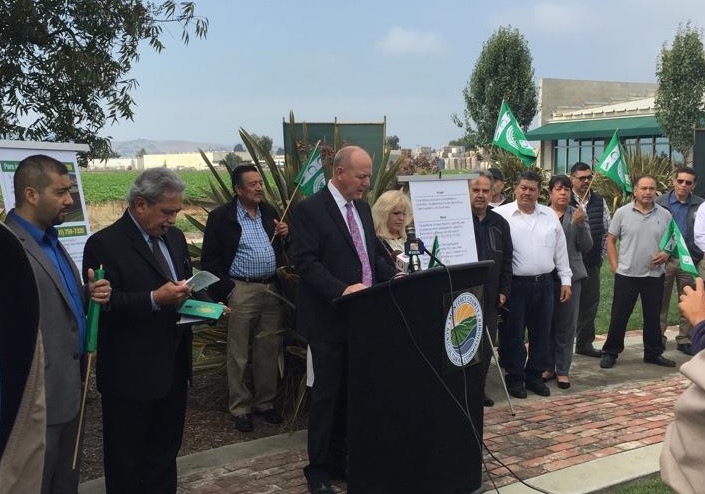
Monterey County Agricultural Commissioner, Eric Lauritzen and the Farmworker Advisory Committee, formed with the assistance of the Center for Community Advocacy (CCA), announced an historic initiative TODAY aimed at providing additional pesticide protections for farmworker safety. The initiative launches a pilot program with leading growers to enhance worker notification through warning signs when pesticides are used in the fields.


“California has the toughest farm pesticide restrictions in the nation, and Monterey County already imposes local rules that further protect farmworkers,” said Lauritzen at TODAY’s press conference. “But we are going to do even more to communicate our commitment to safety in the fields.”


“We are excited about this initiative that adds an additional element of protection for farmworkers by providing the time and date when it is safe to reenter the fields that require posting,” said Lauritzen. “Farmworkers are the backbone of Monterey County’s $4.8 billion Ag industry, and they are entitled to the highest standard of pesticide safety.”


Eric Lauritzen, Monterey County Ag Commissioner

Eric Lauritzen, Monterey County Ag Commissioner, speaking at Press Conference TODAY on Historic Farmworker Safety Initiative

Intended to protect farmworkers, the initiate “has created a relationship between our office, the regulators and the farm worker community,” said Lauritzen. “And it’s really building trust and confidence with our office and the regulatory program there to protect farmworkers,” noted Lauritzen.


Additionally, every farmworker in Monterey County (approximately 50,000) will receive a business-card-sized information card (in Spanish) advising them to call the Agricultural Commissioner’s Office if they suspect violations of safety rules. The cards also advise employers that it is illegal to retaliate against farmworkers who seek the help of the Agricultural Commissioner’s Office.


The information card reads:

If you have questions or complaints on pesticides, the Monterey County Agricultural Commissioner’s Office will help.

The card includes phone numbers and advises workers that state law also protects them against retaliation if they report a pesticide problem.


Currently, regulations for posting pesticide warning signs do not require information indicating the date or time when it is safe for farmworkers to re-enter the fields. The pilot program will include the addition of one sign that will be prominently marked with a red flag and include the date and time that the law allows workers to safely reenter the field. Only the grower or his/her officially designated representative may remove the signs, after first showing the crew leader proof that the re-entry restrictions have expired.


Osvaldo Cisneros, a lettuce worker and member of the Farmworker Advisory Committee, feels that the change is very important. “Some farmworkers have been showing up for work and have been told by their mayordomos (supervisors) to re-enter fields even though warning signs are still up,” said Cisneros. “They have to depend on the word of the mayordomos even though they have no way to verify what they are told. This change will allow farmworkers, themselves, to tell when it is safe to enter fields.”


The posting and information card initiatives were developed in cooperation with the Farmworker Advisory Committee, a group formed jointly by Lauritzen and the non-profit Center for Community Advocacy. “Many farmworkers are unaware of their right to a safe working environment,” said CCA Executive Director Juan Uranga. “That’s why it is important to provide farmworkers with the information they need to both protect themselves and also gain access to the agencies, like the Monterey County Agricultural Commissioner’s Office, that exist to protect them.”


A second member of the Farmworker Advisory Committee, Maria Elena Andrade, added: “It is important for our community to know that the Agricultural Commissioner’s Office exists to serve us, as well as the other parts of the agricultural industry. We are trying to create that message through the Farmworker Advisory Committee, even as we work with the Ag Commissioner and his staff to improve safety for farmworkers.”


Growers involved with the initiative include Sea Mist Farms, Tanimura & Antle, Bayview Farms, Scheid Vineyards and Costa Family Farms. Lauritzen recognized these leading growers for their, support, innovation and dedication in their effort to provide additional protections for farmworkers.


Lauritzen briefed officials at the state Department of Pesticide Regulation (DPR) on the pilot warning sign program and the information card campaign. DPR Director Brian Leahy praised the Monterey County initiative. “We all know that farmworkers are the most vulnerable population in terms of potential exposure to pesticides,” said Leahy. “When we protect farmworkers more effectively, we also enhance protection for the environment and the community at large. This initiative represents an important step forward for farmworker safety, and it underscores California’s leadership in environmental protection.”


Historic Note:

The accord reached two years ago between the Office of the Monterey County Agricultural Commissioner, the agency that oversees pesticide regulations and other worker safety matters, and the Center for Community Advocacy (CCA), a farmworker advocacy group, established the Farmworker Advisory Committee for the Office of the Agricultural Commissioner of Monterey County—the first of its kind in the State Of California.


2021-05-12T11:05:48-07:00August 29th, 2016|

Nisei Farmers League and African American Farmers of Calif in Sacramento TODAY to Oppose AB 1066

Nisei Farmers League and African American Farmers of California Discuss Disastrous AB 1066 in Sacramento Today


EDITOR’S NOTE: SEE TEDX TALK VIDEO BELOW OF WILL SCOTT, JR., PRESIDENT OF AFRICAN AMERICAN FARMERS OF CALIFORNIA.


TODAY, Manuel Cunha Jr., president of the Nisei Farmers League and Will Scott, Jr., president of the African American Farmers of California are meeting in Sacramento with members of the California Assembly to explain the disastrous consequences of AB 1066, referred to as Agricultural workers: wages, hours, and working conditions, on small and minority farmers.

African American Farmers of California logo


The effects of this legislation, particularly the Phase-In Overtime for Agricultural Workers Act of 2016,  will be detrimental not only to the farmworker who counts on the extra hours, but to the farmer who, with the increasing costs of regulations and the lack of water, will be forced to cut back on crops and their workforce, according to their joint press release.


Manuel Cunha, Jr.

Manuel Cunha, Jr., president, Nisei Farmers League

“The small and minority farmer will be adversely affected by this ill-conceived legislation,” said Manuel Cunha Jr. “The small farmer works hand in hand with their workforce in the fields and [is] in a better position —with direct input from the workers—to determine schedules rather than politicians in Sacramento looking for a soundbite,” he explained. “Without meeting with our small and minority farmers and farmworkers, these politicians pass legislation that will cost our workforce money, our farmers crops, and the residents of California the fresh fruits and vegetables they enjoy everyday.”


Both Manuel Cunha Jr. and Will Scott believe the Legislators need to consider the small and minority farmers when casting their votes. “We are confident that after we meet with the Assembly members,” said Will Scott, Jr., they will understand how harmful this legislation is to our farmers and farmworkers. It is our hope that by educating the members, they will understand the importance of this bill and vote No on AB 1066.”


Nisei Farmers League

The League continues to inform grower members about ever changing regulations and policies providing legal assistance for labor and workplace related issues. Our leadership and staff maintains a close working relationship with local, state and federal agencies and legislators to assure grower interests are adequately understood and defended.

The NFL also collaborates with other grower and agricultural organizations in both California and other states to help provide a powerful, unified voice for the agricultural commNisei Farmers League logounity.

Grower members are kept informed through meetings, seminars, newsletters and special bulletins.

Strength, clear focus and growers looking out for growers and farm workers… that is what the Nisei Farmers League is all about.

African American Farmers of California


The Fresno-based African American Farmers of California organization has doubled its membership since it opened a 16-acre demonstration farm in Fresno County, which serves as a testing area where new farmers can get hands-on experience growing a variety of produce.

View Will Scott, Jr. present a TEDx Fruitvale Talk (Uploaded on Oct 20, 2011) Here.


One of Scott Family Farms primary goals is to reintroduce Southern specialty crops, part of the traditional African American diet, into black communities, to help stop the obesity and diabetes epidemics. Crops include: black-eyed peas, crowder peas, purple hull peas, field peas, collard greens, turnip greens, mustard, corn, tomatoes, okra and sweet potatoes.

2016-08-29T10:27:40-07:00August 29th, 2016|

Frieda’s Karen Caplan Fears No Fruit

Frieda’s  – A Legacy of Introducing Americans to Exotic Fruits & Vegetables


By Laurie Greene, Editor


Karen Caplan, CEO and president, Frieda’s Inc., the 54 year old family business that first introduced kiwi fruit to America in 1962, recounted, “We’ve probably introduced close to 200 exotic fruits and vegetables to American consumers, mostly through supermarkets, but also through restaurants. We continue to introduce new and exotic fruits and vegetables. You’ve got the kiwi fruit; you’ve got sun-dried tomatoes; you’ve got habanero chilies, spaghetti squash, alfalfa sprouts, hothouse cucumbers, shallots, purple sweet potatoes, and purple potatoes.

PurpleKiwiBook_Karen Caplan


Caplan knows consumers love to try new products and new foods. “We really credit the TV Food Networks,” she explained. “If you’re watching ‘Chopped’ one night or any of the other food shows and you see these exotic fruits and vegetables like our purple snow peas as a secret ingredient, and you watch a couple of chefs cook with them, you say, ‘Wow that’s really exciting. I never would have picked that up at the grocery store.’ Consumers go to their local grocery store and find those products. It works in a synergistic way, but we continue to have new varieties of fruits and vegetables to introduce.”


Caplan continued, “It is wonderful that American supermarkets seem to realize consumers are passionate about trying these new foods. I think they realize that if they don’t offer the exotic fruits and vegetables, like tropical fruits, different varieties of citrus fruits and some of the peppers, consumers are going to go online and either order them as meals through Blue Apron or purchase the products on Amazon Fresh.”

Fear No Fruit, The Frieda Caplan Documentary

Fear No Fruit, The Frieda Caplan Documentary


At Frieda’s, we represent about 1,000 different suppliers, mostly farmers. About half of them are in California; the rest are outside of California and around the world. I think the biggest challenges shared by all our farmers, are first of all—water and how to use it efficiently, and then number two—how do we find the labor to pick our products.


When asked how farmers are doing, Caplan replied, “I in awe of farmers. I heard a peach and plum and grape grower speak this morning about his passion. He said, ‘I love this business. I could stop growing this product right now and make more money by putting in nuts, which I could harvest automatically.’”


Caplan continued, “I think what’s so admirable about farmers is they do have a passion for the land and for their products. We’re seeing resurgence in young people wanting to come into the business because everyone has to eat of course; but they love the lifestyle that goes along with it and the work-life balance.


Frieda Rapoport Caplan, Ph.D., founder & chair of the Board, Frieda’s Inc. established Frieda’s Finest/Produce Specialties Inc. in 1962, in the male-dominated Los Angeles Wholesale Produce Market. One of very few women in the produce industry at the time, and the first to own and operate a U.S. produce business, Frieda debuted with a purple sign, which later became the company’s signature color, and her premier product was fresh brown mushrooms – an unusual specialty at that time. She quickly developed a reputation for buying and selling new and unusual produce specialties.

Frieda’s two daughters, Karen Caplan and Jackie Caplan Wiggins, head up the family company and the third generation, Karen’s eldest daughter Alex Jackson, has linked in too. 


2016-08-25T12:32:20-07:00August 25th, 2016|
Go to Top