Social Media Critical To Reach Consumers

Animal Ag Alliance Promotes Social Media to Bridge the Gap Between Farm and Fork

By Mikenzi Meyers, Associate Editor

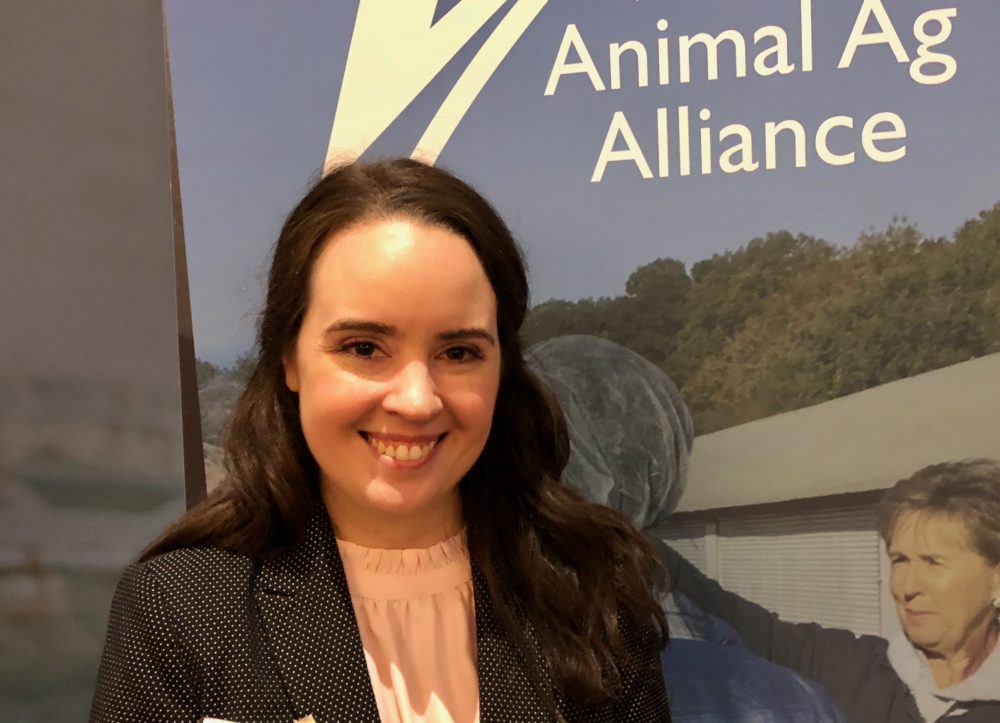
In the age of social media, facilitating the connection between producer and consumer is more accessible than ever. Casey Kinler, Communications Manager with the Animal Ag Alliance based out of Arlington, Virginia, is not only urging farmers to jump on board the social media craze but is also focusing on helping zealous educators develop their message.

“Now more than ever, it is really important for individual farmers and ranchers to be on social media,” Kinler said.

Although this may be foreign territory for some, she recommends beginning with only one platform such as Facebook because it offers the biggest reach of people

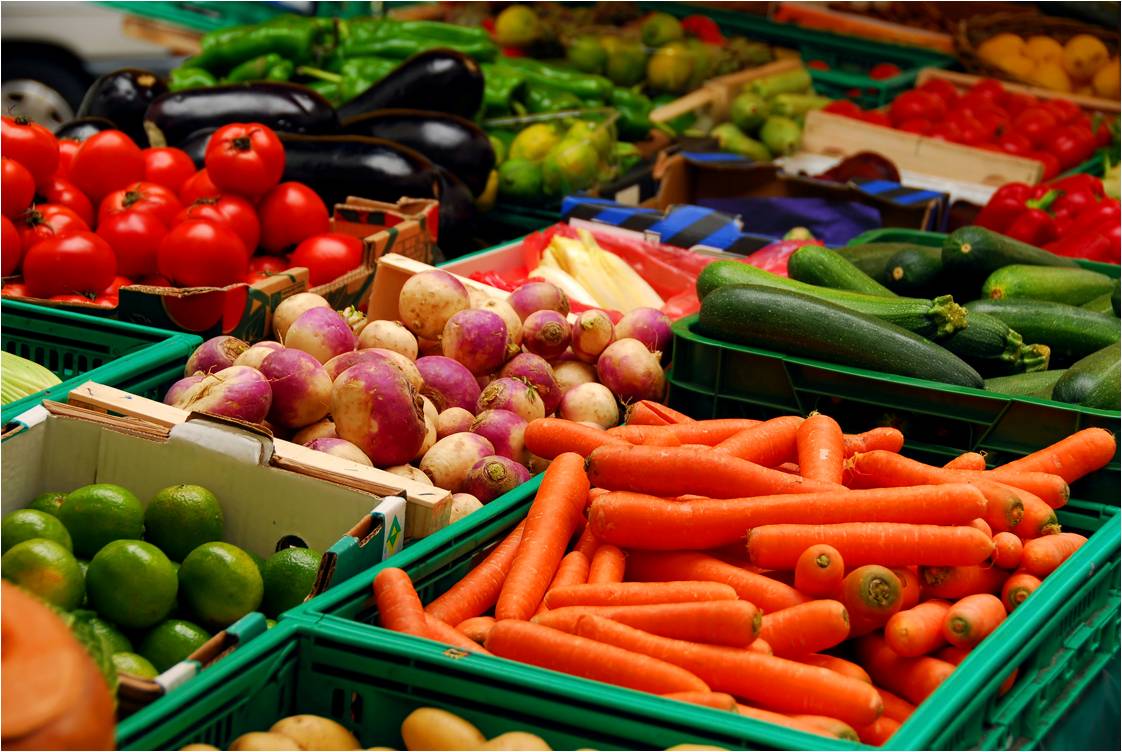
produce safety

Bloggers Learning more About California Agriculture

To take it one step further, the Ag Alliance also works with college students, hosting an online scholarship competition where the goal is to teach them how to effectively communicate about animal agriculture. They just celebrated their 10th anniversary of the competition, where over 430 individuals from more than 40 different states participated.

“It’s really important for farmers to get out there and share what they’re doing on their farm and make sure that people in their community know that they are a trusted source.”

2021-05-12T11:17:09-07:00December 3rd, 2018|

Almond Export Diversification Helps During Tariff War

Overseas Markets are Vast for Almond Industry

By Patrick Cavanaugh, Editor

Diversification is a strength, Richard Waycott, president of the Almond Board of California, told California Ag Today recently. The Almond Board of California is a nonprofit organization that administers a grower enacted federal marketing order under the supervision of the U.S. Department of Agriculture. When it comes to any losses due to a tariff war in China, the almonds can be redirected to other countries.

“It’s fortunate to be as diversified as we are. Always a strength of this industry is the diversification of our overseas markets,” Waycott said. “I think whatever volume we ultimately do lose—if we do lose volume to China—can be redirected and absorbed by other markets.”

The USDA has opened up a direct payment program to the almond industry if growers were to lose any money in a tariff war.

As those programs were announced, by far the largest piece of the pie, $6 billion, initially was directed to the soybean and corn growers and livestock, while the specialty crops were completely left out of it.

“We got together with the Almond Alliance of California and some of our industry members made a very concerted effort while there was still time to do so before the rules around these programs and those that got to participate were set in stone and were able to convince the powers that be … to open up to the direct payment program to almonds, and the sweet cherry industry did the same,” Waycott explained

Waycott also commented on the epic frost that hit almonds this past spring. And he is not sure of the impact on the crop.

“We realized that we don’t understand the impact of frost on almonds all that well because we saw one side of the street there was quite a bit of damage, while on the other side there was no damage. So I think there’s mother nature at work here that, you know, we don’t necessarily completely understand,” Waycott said.

2018-10-23T14:57:40-07:00October 23rd, 2018|

2018 Raisin Price Still in Limbo

Discussions Continue Over Raisin Price

News Release Edited by Patrick Cavanaugh

The Board of Directors of the Fresno-based Raisin Bargaining Association have offered to sell the 2018 Natural Seedless Raisin Crop for $2,250.00 per ton. Also, the board has offered to sell both the 2018 & 2019 crops for $2,150.00 per ton. This 2-year Memorandum of Understanding (M.O.U.) at $2,150.00 per ton has safeguards in it for the second year in case there are changes that could force the raisin price to go higher or lower, with a lower bottom not to fall below $2,000.00 per ton.

Last year, they had 12 signatory packers agree to the M.O.U. negotiated at $1,800.00 per ton. This year, they have been instructed that Sun-Maid has rejected both the $2,250.00 one year contract and the $2,150.00 two year contract. They have also advised the RBA to try and move the 2,000 tons of RBA growers to other packers, which we are in the process of doing.

Of the remaining 11 packers, 6 have agreed to accept the $2,150.00 2-year plan. Those six packers are Central California Packing Company, Chooljian Brothers Packing Company, Inc., Del Rey Packing Company, National Raisin Company, River Ranch Raisins, LLC., and Sun Valley Raisins, Inc.

The 5 remaining packers who have rejected both the one year price at $2,250.00 per ton and the $2,150.00 per ton two-year M.O.U. include: Boghosian Raisin Packing Company, Inc., Caruthers Raisin Packing Company, Inc., Fresno Cooperative Raisin Growers, Inc., Lion Raisins, and Victor Packing Company.

In the discussion with the packers who have not agreed to M.O.U. terms, their arguments were that the $2,250.00 price was too high and the $2,150.00 price was acceptable but not for 2 years. Discussions will continue until Friday, October 12. For updates please go to our website at www.RaisinBargainingAssociation.com and click on the “From the Office” tab.

2018-10-12T16:49:55-07:00October 12th, 2018|

California Walnuts Face Threatening Tariffs

Big Challenges For the Walnut Industry

By Mikenzi Meyers, Associate Editor

It takes one glance at current news headlines to know that agriculture trade is a hot-button issue within the industry. Amongst countless exported crops being hindered by tariffs, the California walnut industry is no different. With California English walnuts making up two-thirds of the world’s trade, the California Walnut Commission is on high alert to ensure that growers are protected from tariffs that could damage their markets.

Pamela Graviet, the commission’s senior marketing director, spoke deeper on this issue.

Pam Graviet

“If you look at the three major markets—China, Turkey, and India—where we have tariff issues,” Graviet said, “that represents twenty percent of our total shipments … it’s over $300 million we’re going to lose.”

Thus far, the walnut industry has avoided paying the full tariff direct to China through the “gray market,” or the sales of walnuts through other countries that feed into China.

“But when you’re tariff constrained or in a trade war” Graviet explained, “they are also cracking down on those other routes, and the gray market has also suffered.”

The California Walnut Commission will continue their work to protect nearly 100 handlers and 4,800+ growers that make up the California walnut industry.

2018-10-11T14:42:10-07:00October 11th, 2018|

Facts Not Fear on Growing Produce

Understanding Salinas Valley Farming Practices

By Jessica Theisman, Associate Editor

Among the mix of registered dietitians conveying the accurate message, California Ag Today concluded our conversation about Facts Not Fear with Teresa Thorn, executive director of the Alliance for Food and Farming, located in Watsonville.

The Alliance hosted the second Facts Not Fear produce safety media tour, in conjunction with Markon Cooperative, for registered dieticians, health and nutrition writers, and bloggers last month in the Salinas Valley. Impacting the customer with the proper information is key.

Teresa Thorn

“We have a mix of writers and bloggers who again have that bullhorn to consumers,” Thorn said.

Social media was also used in conveying the message.

“They’re posting, and we’ve read it and retweeted a lot of their stuff so you can go to our social channels and see some of it,” she explained.

Speaking to growers was very important, and asking industry professionals to attend was vital to cultivating relationships.

“They loved being out in the field. We were always the last ones to get on the bus because they had so many questions,” Thorn said.

The group also does a roundtable discussion where they bring in scientists, shafts, regulators, farmers, and farming companies into the room at Markon’s Produce Expo.

“Building that network was really important,” Thorn said.

2018-10-10T16:43:27-07:00October 10th, 2018|

STK REGEV ‘Hybrid’ Fungicide Named Finalist for Best New Crop Protection Product

TIMOREX GOLD Finalist for Best Marketing Campaign

News Release Edited by Patrick Cavanaugh

STK bio-ag technologies, a global leader in the development and marketing of botanical based and hybrid solutions for food protection, was selected as a Finalist in two Agrow Award categories … REGEV ‘Hybrid’ Fungicide for Best New Crop Protection Product of the Year, and the TIMOREX GOLD Outreach for South American Growers as the Best Marketing Campaign of the Year.

Note that Regev is not registered in California while Timorex Gold is pending registration in California.

REGEV is the first product of its kind in the market. REGEV is a pre-mix hybrid solution that delivers effective and sustainable disease control in a very wide variety of high-value, row and even broad acre crops. This is a breakthrough formulation which creates a bridge to future biologics use, enabling growers in all sectors and geographies to reduce their ecological footprint and thrive economically to better meet the demand for sustainable food protection.

REGEV is a revolutionary and easy-to-use approach to sustainable crop protection. REGEV is a hybrid pre-mix, which is used in exactly the same way growers use their current chemical fungicides. No mixing. No Rotating.

REGEV enables growers who have never used any biological product to try a biologic, experience an effective new tool for combating resistance, increase crop yields, sharply reduce chemical residues and make crops more competitive with consumers and regulators globally,” said Arye Tenenbaum, CEO of STK bio-ag technologies.

The Agrow Awards were developed to recognize excellence in the crop protection and production industries. Entries are evaluated using a wide range of criteria by an independent judging panel consisting of a group of experts from around the world.

Winners of the 11th Annual Agrow Awards will be announced at the Awards Gala scheduled to take place on November 12th at 8 Northumberland in London.

2021-05-12T11:01:53-07:00October 2nd, 2018|

Farmers Launch New Health Advertising Campaign for Grapes

Ad Series Highlights Links Between Grapes and Healthy Heart, Brain, and Colon

News Release Edited By Patrick Cavanaugh

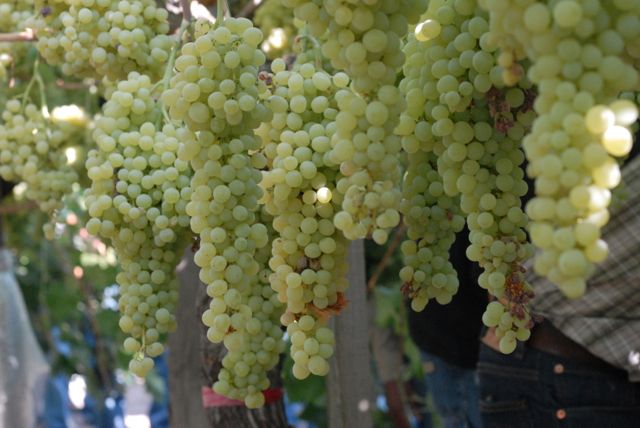
A new ad campaign from the farmers of fresh California grapes highlights how consuming normal amounts of grapes each day may contribute to long-term health by helping to maintain a healthy heart, brain, and colon.

Reaching consumers online and through print and broadcast, the campaign revolves around a series of ads focusing on the power of the whole fruit: grapes contain more than 1,600 documented natural plant compounds, including antioxidants and other polyphenols.

Each ad highlights key research from scientific study in the area of heart, brain, and colon health. Scientists believe it is the combination of natural plant compounds and daily consumption that provides benefit.

Kathleen Nave, California Table Grape Commission president

Kathleen Nave, California Table Grape Commission president

“Consumers have always loved grapes for their great taste, convenience, share-ability, and beauty. Through this campaign, consumers will learn that the health benefits grapes provide go beyond the basics of eating a favorite fruit as part of a healthy diet,” said Kathleen Nave, California Table Grape Commission president. “It is already established that grapes are a heart-healthy food, and now research in the areas of brain and colon health is emerging that suggests that grapes may have an even broader role to play in long-term health.”

Nave noted that research into these three areas of health, and numerous others, will continue.

The campaign will run in magazines and newspapers in both print and online, on health-related websites, on television and radio, and on social media.

2018-10-01T15:35:35-07:00October 1st, 2018|

Federal Milk Marketing Order in California in Effect Nov. 1

Questions Arise Regarding Milk Quota

Edited by Patrick Cavanaugh

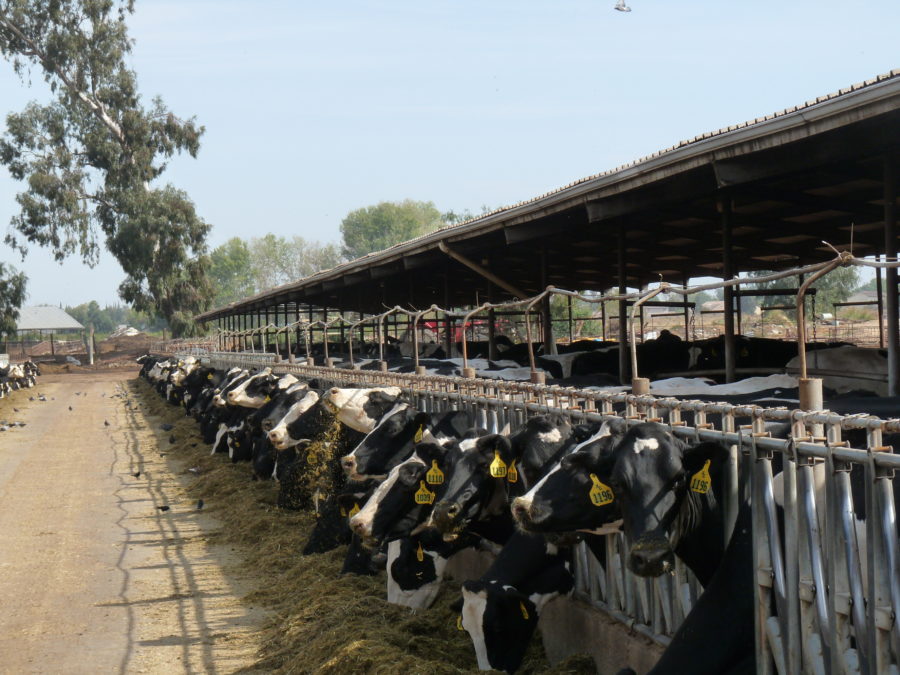
Dairymen and women throughout California are working hard to provide milk and other dairy products for consumers in California and the world. Because the industry has struggled over the past decade with price swings that have often landed dairies in red, many dairies have gone out of business. Still, other operations relocated to others states where regulations are a fraction of what they are in California.

In June 2018, California dairy producers voted to establish a new Federal Milk Marketing Order (FMMO) for the state. The vote was a paramount step in a long process that would culminate with the new order taking effect on November 1. The order will adopt the same dairy product classification and pricing provisions currently used throughout the FMMO system.

California accounts for more than 18 percent of U.S. milk production and is currently regulated by a state milk marketing order administered by the California Department of Agriculture (CDFA). Once this new FMMO takes effect, more than 80 percent of the U.S. milk supply will fall under the FMMO regulatory framework.

Western United Dairymen is a trade association based in Modesto. Annie AcMoody is the Director of Economic Analysis. She explained that there have been questions from the industry regarding the upcoming FMMO.

Among the often asked question revolves around when the state switches to FMMO in November, what will happen to their quota if a dairy ships milk out of state?

Annie AcMoody: When our California state system goes away to make way for the Federal Milk Marketing Order (FMMO) in November, the Quota Implementation Plan (QIP) will be the language in place to ensure the quota system’s smooth transition into the FMMO system.

When we enter that new world, all market milk received from California producers at a California plant will be assessed for quota. By “received”, the language defines “to convey milk physically into a milk plant where it is utilized within the plant, or stored within such milk plant and transferred to another plant for utilization. This means that a milk truck driver cannot drive by a plant, wave hello to an operator, and keep on going out of state and still call this milk received in California. Basically, if your California milk leaves the state, you will not be assessed for quota.

But you also will not be paid for it. But, if your milk is 60% quota and only 40% of your milk goes out of state, you will be assessed on 60% of your milk and get paid quota on that same 60%. If your quota covers 100% of your milk and 40% of your milk goes out of state you will be assessed on 60% of your milk and get paid quota on that same 60%. In this instance, one could wonder if it makes much sense to keep your quota.

While it may not make much economic sense to hold on to quota you are not paid for, some reasons may validate that decision (perhaps it is expected milk will be shipped to a California plant in the near future). If you were to decide to hold on to that quota, it is important to keep in mind that “if quota is not made active by shipments of market milk to a California plant or cooperative association or is not transferred within the 60-day period, such quota shall revert to the Department”.

This excerpt from the QIP means that if your quota milk is not paid on for over 60 days, you will lose it, so you better sell it. This is likely going to be an issue if you ship to a proprietary plant and all your milk goes out of state. If you ship milk to a cooperative, there is more flexibility because that coop has the ability to combine quotas assigned to it by its members.

So as long as the quota total within the coop is not larger than the total amount of market milk produced and received in California, then there should be no issue for you as a quota holder.

What 
is 
defined 
as 
market 
milk?


Answer:
 Grade A milk.

If your milk is Grade B, you cannot have quota now and will not be able to under the QIP. You will not be assessed for it either. Currently, only around 3% of the milk in California is Grade B. WUD will keep an eye out on this topic to ensure that percentage does not deviate significantly. As a reassurance, this is not something that could grow from 3% to 50% in a month since fluid milk is not allowed to take in Grade B milk and the three largest coops in the state (CDI, DFA and LOL) committed to not taking in any more Grade B milk after the transition to the FMMO.

2021-05-12T11:17:09-07:00September 23rd, 2018|

$102.7 Million Available to Help Expand Specialty Crops

USDA Funding Program to Help Support Local Projects

News Release Edited By Patrick Cavanaugh

Specialty crop growers in California may be able to use part of the $102.7 million available to support local projects and to help expand markets for specialty crops.

“Every state has agricultural priorities that contribute to the well-being of farm families, consumers and the economic health of rural America,” said Under Secretary Greg Ibach in a recent press release. “These programs target resources to the state, local and regional level where the people who understand the issues best can find solutions that help everyone.”

Resources to be apportioned include:
  • $72.15 million is directed to state departments of agriculture in 50 states, the District of Columbia and five U.S. territories through the Specialty Crop Block Grant Program to support farmers growing specialty crops, including fruits, vegetables, tree nuts, and nursery crops. States use the grant to fund research, agricultural extension activities and programs to increase demand for agricultural goods of value to farmers in the state or territory.
  • $13.35 million is directed to 49 projects supporting direct producer-to-consumer marketing projects such as farmers markets, community-supported agriculture programs, roadside stands, and agri-tourism through the Farmers Market Promotion Program.
  • $13.45 million is directed to 44 projects to support the development and expansion of local and regional food businesses to increase domestic consumption of, and access to, locally and regionally produced agricultural products, and to develop new market opportunities for farm and ranch operations serving local markets through the Local Food Promotion Program.
  • $1.1 million is awarded for nine projects through the Federal-State Marketing Improvement Program to assist in exploring new market opportunities for U.S. food and agricultural products and to encourage research and innovation aimed at improving the efficiency and performance of the marketing system.

For more information about these programs, visit www.ams.usda.gov

2018-09-21T15:24:22-07:00September 21st, 2018|

Worker Transportation Pay is a New Threat to Agriculture

Plaintiff Trial Attorneys Pushing For Ag to Pay for Transportation Time

By Patrick Cavanaugh, Editor

Something serious that could cost growers a lot of money concerns paying for worker transportation to and from a field, which traditionally has not been paid.

Michael Saqui is the principal owner of the Saqui Law Group, with offices in Roseville and Salinas. He specializes in labor and employment in agriculture.

“We’ve been having area meetings around the state regarding what we consider to be the most pressing and catastrophic issue facing agriculture today,” Saqui said. “The macro view is the proliferation of litigation against farmers for wage and hour Private Attorney General Acts.”

Saqui said it’s moved from nonproductive time, which could have bankrupted many companies had there not been a fixed put in through AB 1513.

“However, now the California Rural Legal Assistance and plaintiff attorneys have moved to the next big issue and that’s farm worker transportation.”

Farm worker transportation spins off the fact that we have a serious labor shortage, and we’re transporting workers greater distances than ever before.

And workers in car crews and buses and vans are being transported or transport themselves greater and greater distances.

“And the theory, of course from plaintiff trial attorneys is that even when they’re clearly voluntary mechanisms by which workers get transported on buses and vans, that it’s defacto involuntary because their theory is that farm workers have no position or station in life to make their own free decisions or have no other means, which is simply not the case.”

“Our workers for the last 30 years through car cruise and carpooling arrangements in vans have been getting around in servicing our crop needs and we have the best, most productive workforce on the planet,” said Saqui. “The plaintiff trial attorneys just keep nipping at different issues, and this is an issue that could potentially cost us hundreds of millions of dollars.”

For more information go to www.CAFarmersforFairness.com.

2018-09-20T17:00:38-07:00September 20th, 2018|
Go to Top