Reducing Food Waste Should Be Top of Mind

“No Taste for Waste” Initiative Starts a Big Conversation

By Mikenzi Meyers, Associate Editor

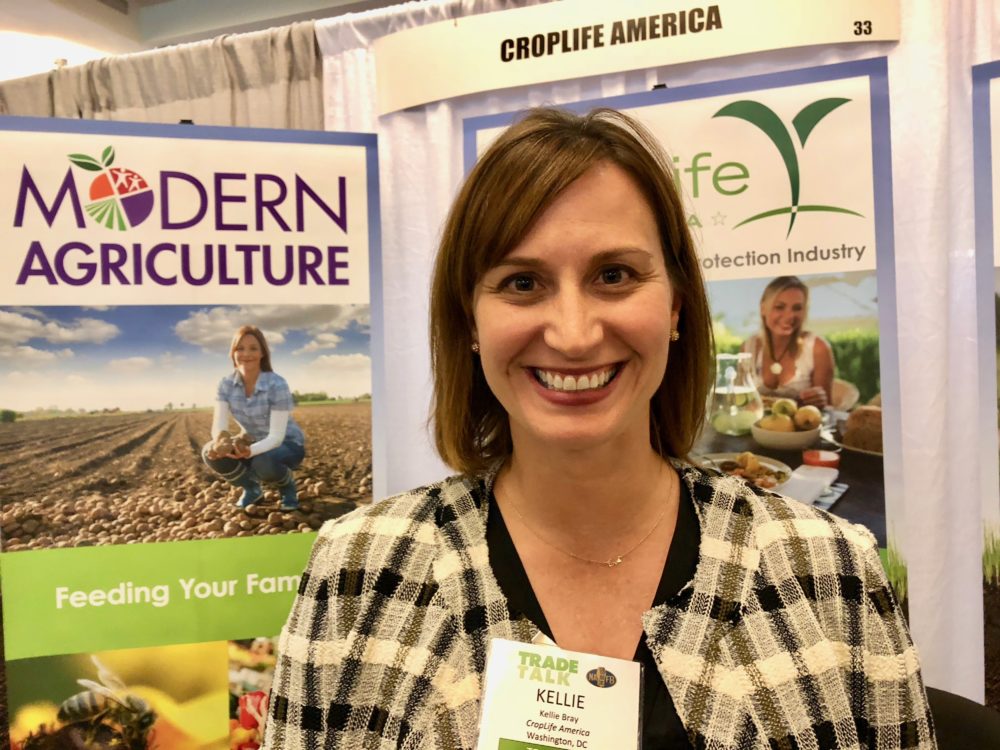
As we end 2018 and head to 2019, it’s a good idea to think about reducing food waste. CropLife America, a national trade organization that represents manufacturers, formulators, and distributors of pesticides, is working to minimize the amount of food Americans throw away every day. Kellie Bray, Senior Director of Government Affairs for CropLife, encourages Americans to start the conversation of food waste.

“This is a conversation that is so important not only to growers and producers but to consumers and the people who are really cognizant of food issues. Not only making sure that they save money and food in their own homes but making sure too that people who need food have it,” Bray urged.

In order to set this conversation into motion, CropLife, along with the American Farm Bureau and Meredith Corporation, have partnered on an initiative called, “No Taste for Waste.” The initiative has worked to create a “bookazine” that was available in grocery stores and even your local Target.

“It’s a combination of recipes, farmer’s stories, and tips and tricks on how to maximize the food you have now, so nothing goes to waste,” Bray explained.

Get the Facts on Food Waste

  1. The amount of food wasted in the United States equates to more than 1,250 calories per day, per person, annually.
  2. Food waste is responsible for at least 2.6 percent of all U.S. greenhouse gas emissions.
  3. The number one contributor to all landfill content is food waste, contributing around 21 percent each year.
  4. Each year, between 125 and 160 billion pounds of food are left uneaten in the United States.
  5. Between 21 to 33 percent of agricultural water use is accounted for by food waste.
  6. Cropland of uneaten food accounts for between 18 to 28 percent of U.S. total cropland, which is more than the entire state of New Mexico.
  7. Households are responsible for the largest portion of all food waste. At 238 pounds of food per person, that equals 76 billion pounds!
  8. Many farmers cut back on food waste by using unsold produce as feed for livestock or compost in the soil.

For more information on how to prevent food waste, visit: notasteforwaste.org

2018-12-31T14:46:10-08:00December 31st, 2018|

Hershey’s Chocolate Loves California Almonds

Almonds and Chocolate: The Perfect Duo

By Mikenzi Meyers, Associate Editor

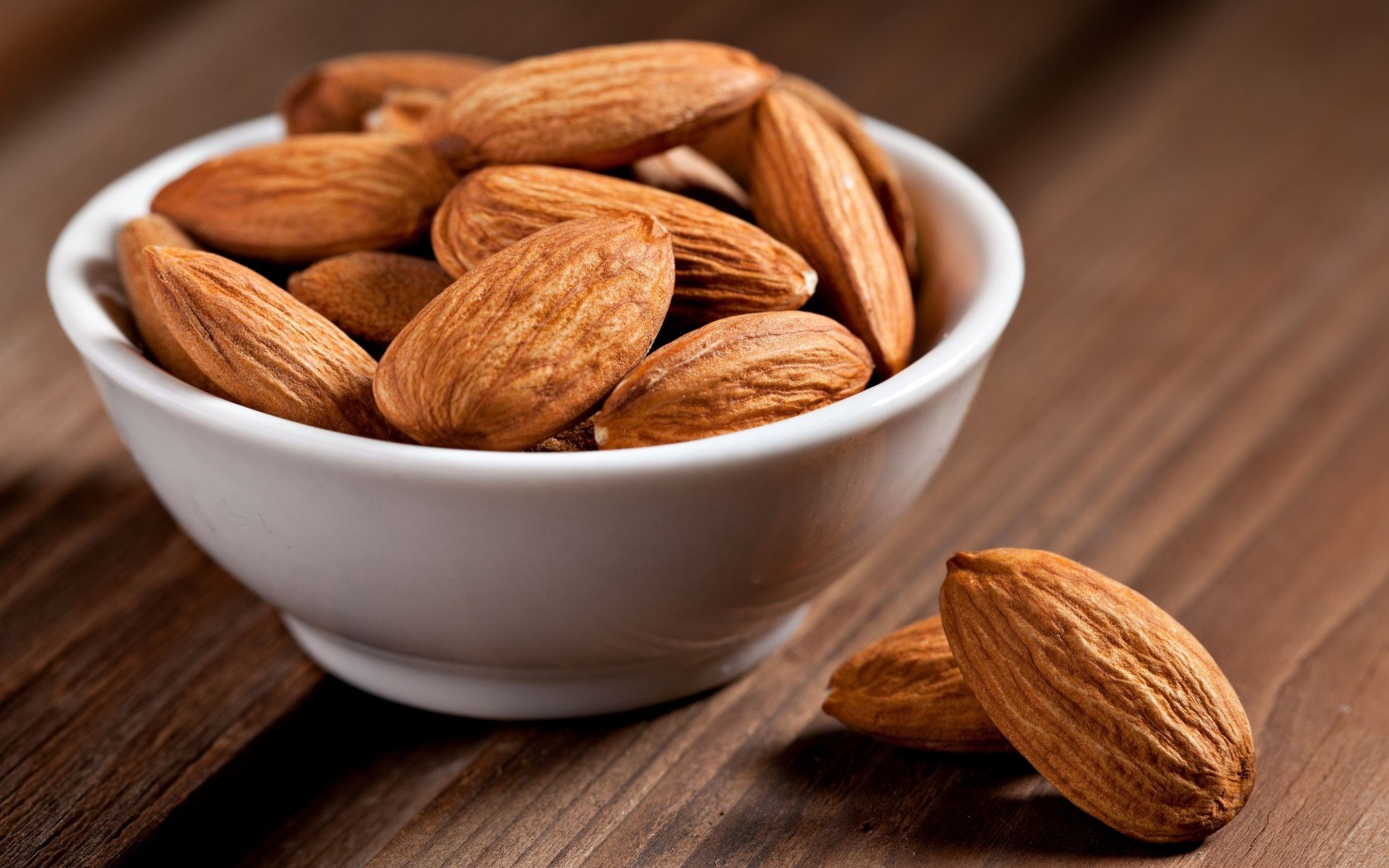
You can find a piece of Hershey’s Chocolate with almonds almost anywhere. The delicious pairing makes for the perfect treat! Karen Ocamb, a supply quality auditor for Hershey’s, is working to make sure the relationship between the almond industry and her company remains sustainable and beneficial.

After visiting the Almond Board Conference in Sacramento, Ocamb reported the good things the board is doing to make the partnership a success.

“My perspective of the Almond Board is a really good, beneficial kind of facility that takes the almonds and gives us a better perspective of what should be done out there,” she explained.

Ocamb also knows the importance of maintaining a healthy relationship between Hershey’s and the almond industry, particularly on the consumer’s behalf. Her goal is to ensure that the communication between the two stay open, in order to keep improving the quality of product for the customer.

“Almonds are a great source of protein, so for the company, blending the chocolate and the almonds together is an essential piece of giving something to the consumer that is beneficial to them, but also sweet,” she said.

2018-12-21T16:40:09-08:00December 21st, 2018|

Social Media Tips for Moveable Middle

Educating the Moveable Middle, One Picture at a Time

By Mikenzi Meyers, Associate Editor

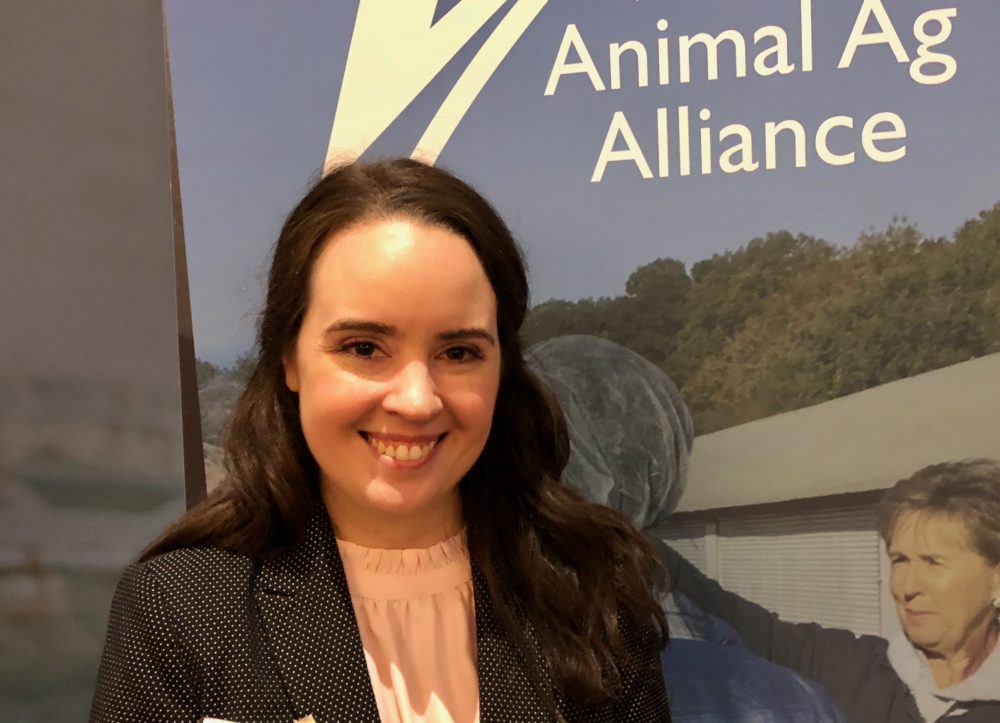
With technological advancements that enable everyone to share stories on social media at the click of a button, farmers now have the ability to educate the public beyond the news that chocolate milk does not, in fact, come from brown cows. Casey Kinler, Communications Manager with the Animal Ag Alliance based out of Arlington, Virginia, is urging farmers to capitalize on this opportunity.

moveable middle“The problem is … [consumers] don’t hear from farmers too often,” Kinler said. “They hear a lot from the other side.”

Sharing their agricultural story can be as simple as one photo a day with a beneficial, detailed explanation that will protect it from being taken out of context.

“Stay honest and be that relatable person that people can ask questions to,” Kinler advised.

It is important that producers are engaged in conversations with those optimistic and interested in where their food comes from. Kinler calls this the moveable middle and encourages this to be the focal point for farmers.

“Have a conversation with those people and don’t waste your time on people who are trying to detract your message,” she concluded.

2018-12-20T16:33:22-08:00December 20th, 2018|

Almond Alliance Helps Growers with Advocacy

Almond Alliance Lent a Hand on Tariff Relief

By Jessica Theisman, Associate Editor

Like many agricultural sectors, almond growers have also been affected by recent tariff wars. However, almond growers have a true friend in the Modesto-based Almond Alliance.

“We are definitely an advocacy organization, that is the core of what we do,” said Elaine Trevino, president of the Almond Alliance.

Elaine Trevino

“The Almond Alliance educates our legislators, their department officials and cabinet about issues that are important to the almond industry. It is very critical that our elected officials, specifically the urban [ones] that are not familiar with agriculture, understand agriculture. They need to understand … the inputs and the natural resources needed for agriculture, and also understand the best practices that we put into place to be good corporate and small businesses,” Trevino said.

“Obviously with almonds, you have hulls and shells and the biomass that comes with almonds, and so we focus on all aspects of that,” she explained.

Almond growers are being affected by tariffs increases into China. Beginning on April 2nd, the first 232 retaliatory tariffs was seen that affected China. Since then, our turkey has also been affected by the tariffs.

The almond industry exports 67 percent of its production to more than 100 countries.

“Looking at export markets and how they impact the industry is critical. Secretary Purdue came out with the mitigation package,” Trevino said.

The almond industry fought very hard to be included in direct payments. While many say it’s just three cents a pound, the allocation to almonds was $63.3 million.

“It’s our intention that the alliance fight for every penny of that goes back to the growers, and if they are not eligible for the direct payments, then we’ll make sure that they receive it through market promotion that will help move their product and hopefully get those prices back up if they haven’t been affected,” Trevino said.

2018-12-18T15:07:08-08:00December 18th, 2018|

#GiveACrop Campaign Helps Consumers Understand Crop Protection

#GiveACrop: Simple Message About Crop Protection Tools

By Patrick Cavanaugh, Editor

Sarah Macedo is the communications manager for CropLife America, a trade association that assists and advocates for their members, based in Washington D.C. They are the manufacturers, formulators, and distributors that manufacture organic and non-organic pesticides,

Macedo explained the #GiveACrop campaign, which puts a positive message for the need for crop protection products in agriculture.

“Go to GiveACrop.org, take a look at those memes along with myths and facts. We just want to talk about things in a realistic person-to-person way and not get too into this science, but just kind of talk about why pesticides are necessary,” Macedo said.

“Regarding the Give a Crop videos, we have heard from both farmer friends, adversaries, and consumers. We had a lot of the FFA kids who absolutely love them, which is great since that is our target audience; we do know that they are sharing that with their friends who are in the on-ag space,” she noted.

We don’t have a lot of money behind it, so we have been promoting it on social media, and we’ve gotten great pickup even from folks who normally aren’t the friendliest in the ag space. They’ll watch one, and they’ll have posted and saying, ‘we may not necessarily agree, but these are funny and to the point,’” Macedo explained

Again, Crop Life America is a trade association representing the manufacturers, formulators, and distributors of organic and non-organic pesticides.

“We include government affairs, science and regulatory communications experts, and those from the legal profession who help our members, and our members And we advocate on their behalf to make sure that no regulations are going unchecked, that everything is based on sound science and getting the information out about the benefits of pesticides and why they’re used and about American farming in general,” Macedo said.

2021-05-12T11:05:07-07:00December 17th, 2018|

Table Grape Shipments Soar

California Table Grape Industry Continues Record-Breaking Shipping Season

News Release

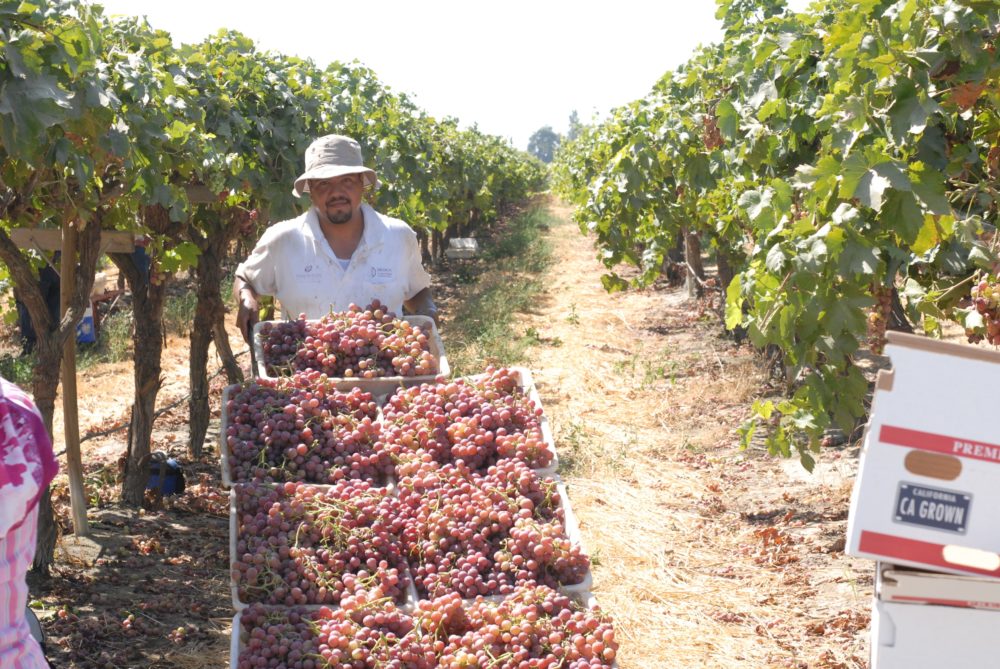
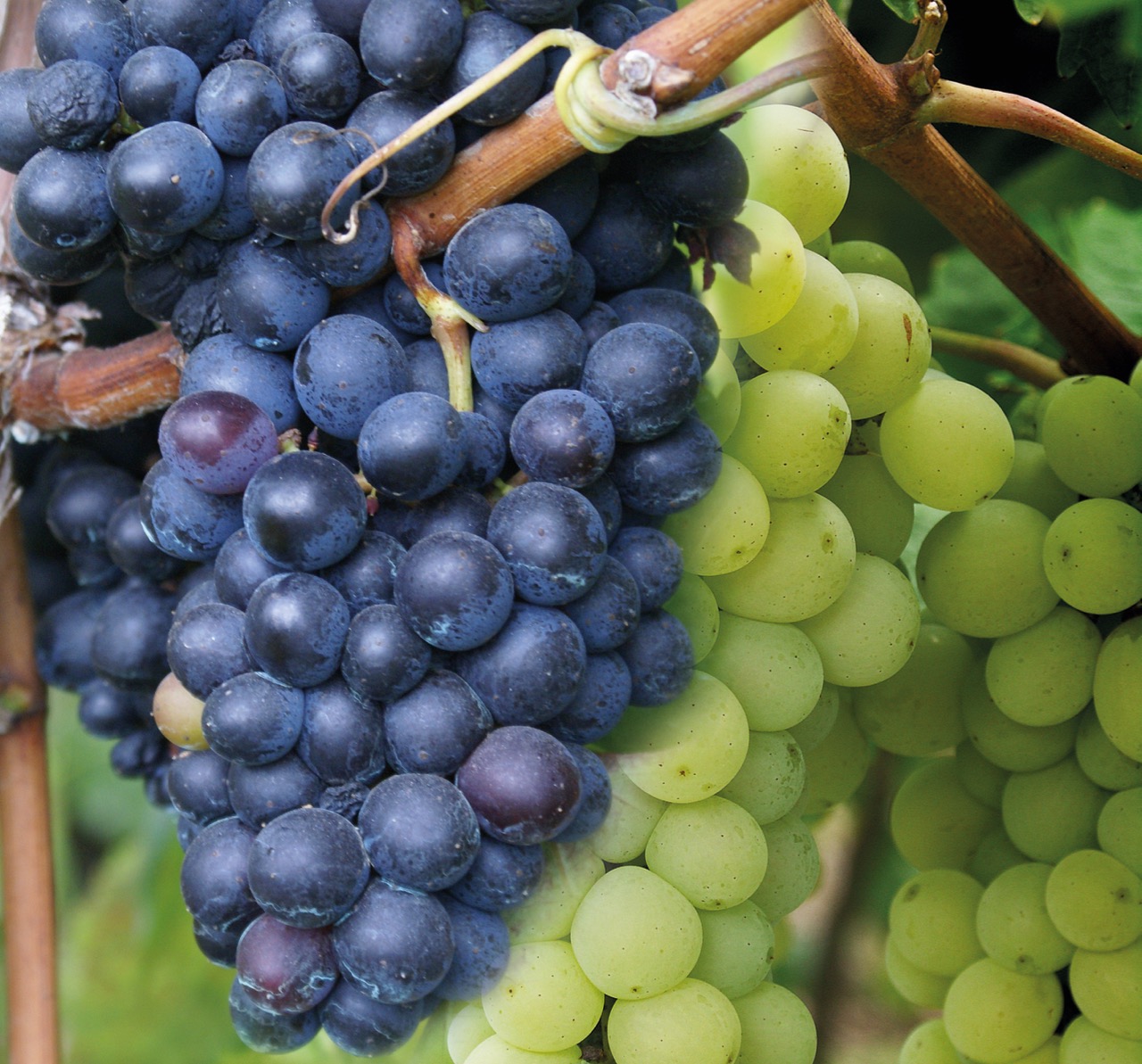
California table grape growers shipped more than 27.7 million boxes into the worldwide marketplace from October 13 to November 30, the highest amount ever for the time period, according to the United States Department of Agriculture (USDA).

The previous seven-week shipment record during the same time period was set in 2013. Earlier this season, the five-week shipping record for the time period between September 8 through October 12 was broken.

The three-month period of September 1 to November 30 set another record with over 55 million boxes of grapes shipped—an all-time high, according to USDA, beating the previous record set in 2013 for this time period.

According to Kathleen Nave, president of the California Table Grape Commission, an aggressive fall and winter promotion program continues, with shipments expected to continue through the end of January.

2018-12-14T15:40:18-08:00December 14th, 2018|

Citrus Mutual Encouraged by Farm Bill

California Citrus Mutual Commends Congress for Action on 2018 Farm Bill

News Release

This week, the U.S. Senate and the House passed the Agriculture Improvement Act of 2018, commonly known as the 2018 Farm Bill, with overwhelming bipartisan support. This legislation will direct agricultural policy and authorize funding for key agricultural programs in the federal government for the next 5 years.

President Trump has the opportunity to enact the 2018 Farm Bill before the end of the year.

CCM President Joel Nelsen offers the following statement:

“California Citrus Mutual applauds the Farm Bill conferees and House and Senate Ag Committees for moving forward a bill that includes priority programs for specialty crop producers. Jeff Denham, Jim Costa, and Jimmy Panetta were crucial voices for California farmers on the House Ag Committee. Along with Representatives Julia Brownley, Ken Calvert, and David Valadao, the California Members were instrumental to securing funding for research, trade and market enhancement, and pest and disease prevention that will directly benefit California specialty crop producers.

“With support from Congressmen Kevin McCarthy and Devin Nunes and Senators Feinstein and Harris, key programs and funding for the U.S. citrus industry will continue in the next Farm Bill.

“The U.S. citrus industry will receive funding to continue priority research to identify a solution to Huanglongbing, a devastating plant disease that is threatening the sustainability of our domestic citrus industry. This is a significant win for U.S. citrus growers.

“On behalf of the California citrus industry, I thank the Congressmen and Congresswoman, our U.S. Senators, and our colleagues in the specialty crop industry who worked diligently over the past several months to create a bipartisan Farm Bill that provides crucial resources to ensure our farmers can continue providing nutritious produce to Americans and people around the world.”

The 2018 Farm Bill includes $25 million per year for 5 years starting in 2019 for research specific to the invasive insect Asian citrus psyllid and deadly plant disease Huanglongbing (HLB). This Emergency Citrus Disease Research and Development Trust Fund will build upon the program created in the Specialty Crop Research Initiative (SCRI) title in the 2014 Farm Bill and complements the $40 million per year program funded by California citrus growers to stop the spread of HLB.

The legislation also includes funding for the USDA Animal and Plant Health Inspection Service’s (APHIS) Plant Pest and Disease Management and Disaster Prevention Program and the National Clean Plant Network (NCPN). Additionally, funding will continue for the Technical Assistance for Specialty Crops (TASC) program, which helps growers overcome artificial trade barriers. TASC has been in operation for over fifteen years and was created to address sanitary and phytosanitary issues and technical barriers to trade that prohibit or threaten exports of U.S. specialty crops.

2021-05-12T11:00:39-07:00December 13th, 2018|

American Lamb on the Rise

American Lamb Is Part of U.S. Culture

By Jessica Theisman, Associate Editor

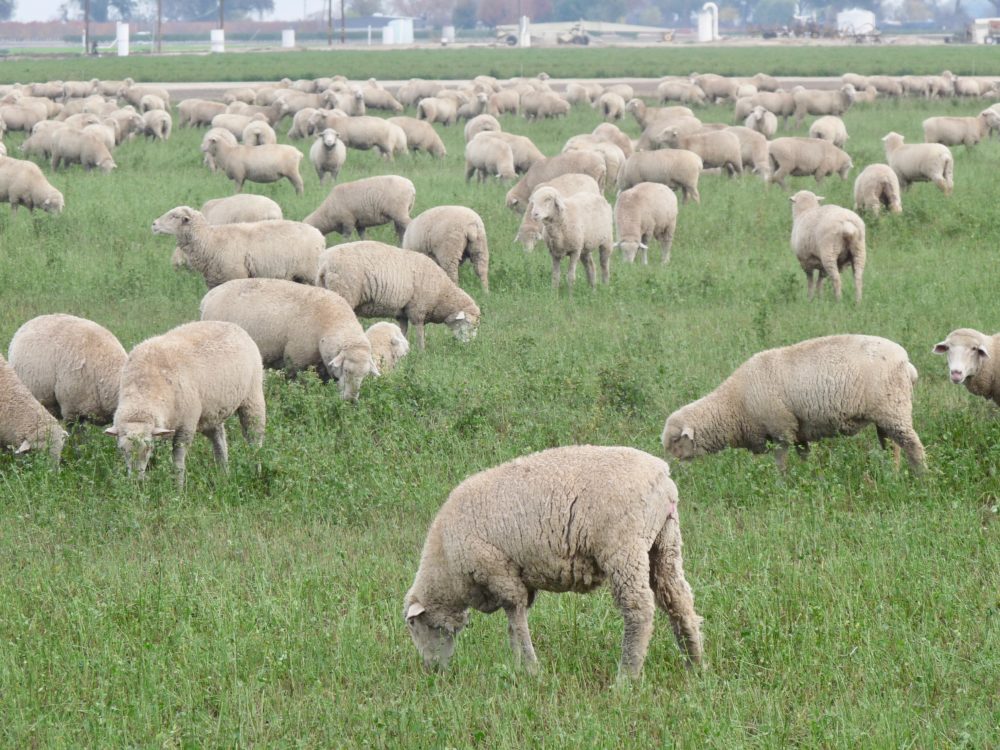
American lamb is as popular as ever. California Ag Today recently spoke about lamb with Jim Percival, chair of the American Lamb Board, who is also a lamb producer in Ohio.

“It is part of our culture, and the majority of the folks that raised lamb in the U.S. are family operations, family farms,” Percival said.

Some of the farms are generational: three to five generations old. The American Lamb Board is working to build that domestic demand for lamb. They have seen an increase in the last couple of years.

“We are finding that millennials love American lamb, and that is one of the things that excites us,” Percival said.

John Percival is Chair of the American Lamb Board

“[There’s] our Feed Your Adventure Side campaign; we have also worked really hard to make lamb more approachable, easy to serve, and easy to fix,” he explained.

“The millennials also want something different, and lamb is a wonderful premium protein and they love the taste. They love the texture, they love the meat, and they’re flocking to it.”

Lamb is especially popular in California and other places on the West Coast.

“We still do that lamb jam every year in San Francisco, and that is still a huge event that a lot of people show up to,” Percival said.

After 16 years without open trade, Japan has recently opened back up for American lamb producers. Trade was closed after the BSE scare, and lamb was never able to be exported into Japan. As of two weeks ago, the first load of American lamb was shipped to Japan.

The demand there is very strong; the Japanese want that premium protein product.

“The chefs over there are asking for our product, and we see that as a real opportunity for growth for American lamb,” Percival said.

“Japan was one of our biggest trade partners before it was closed. I’m sure it is going to have a huge impact on the California producers, and the demand there is very strong, but as with anything else, our biggest thing is to make sure that more Americans are eating more American. Lamb,” Percival said.

The American Lamb Board, the U.S. Meat Export Federation, and ASI all worked together to open the market back up with Japan.

2021-05-12T11:17:09-07:00December 11th, 2018|

USDA Purchases More Than $10 Million in California Table Grapes

Food Banks, Other Food Programs to Get Grapes as Part of Tariff Mitigation Program

New Release Edited By Patrick Cavanaugh

The United States Department of Agriculture (USDA) recently completed a purchase of more than 450,000 boxes of California table grapes as part of its tariff mitigation program.

California table grapes were included in the USDA Food Purchasing Program for the first time as part of the mitigation program because of the 53 percent tariff imposed on U.S. grapes by China.CA Table Grapes

According to the most recent USDA data, shipments of California grapes to China are down 42.2 percent in volume and 41.2 percent in value in 2018 compared to 2017.

“The 2018 season has been a tough one for table grape growers,” said Kathleen Nave, president of the California Table Grape Commission. “The tariffs on table grapes have been painful, but the real harm has been caused by the fact that tariffs on multiple competing commodities, such as cherries, stone fruits, and apples, caused more fruit of all kinds to be sold in the domestic market. The USDA purchasing program comes at a good time for table grape growers and is appreciated.”

Table grape suppliers interested in participating in the food purchasing program had to go through a rigorous process to become a USDA vendor and then if approved, submit bids in a competitive process. Multiple Valley companies were awarded the opportunity to supply California grapes to customers across the country.

The grapes will be distributed to food banks and other food programs around the country, starting in December.

2018-12-07T15:46:23-08:00December 7th, 2018|

Tea: A Potential High-Value Specialty Crop in California

California: The State That Really Grows It All—Even Tea

By Mikenzi Meyers, Associate Editor

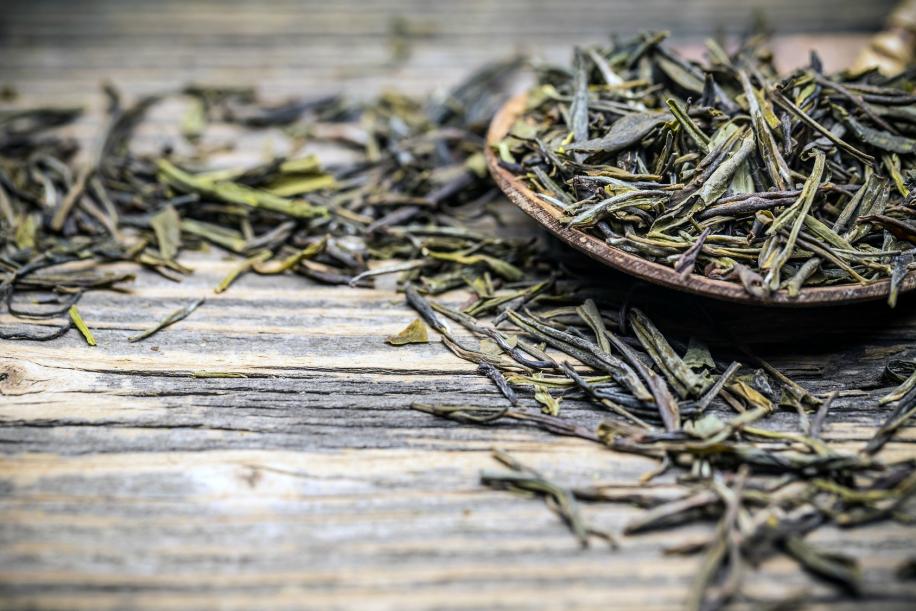
New opportunities for California Farmers are on the rise. Jeff Dahlberg, director of the Kearney Ag Research and Extension Center in Parlier, recently gave California Ag Today insight into a new project on growing tea in the state.

“The folks up at Davis have been able to propagate enough tea to get us at least half an acre or a bit more planted, so we’re trying to get that planted this fall,” he explained.

However, this isn’t the first time the idea of growing tea has been introduced to California. In fact, Dahlberg noted that Richard Nixon actually traveled to China to look into bringing it back to the states. Although the idea didn’t progress much further, plants were saved, and the project is being brought back to life.

Dahlberg said that tea has a lot of potential as a high-value specialty crop for those looking to grow it.

“There are a lot of really, really interesting things coming down,” he promised.

For more information on the Global Tea Initiative, visit GlobalTea.UCDavis.Edu.

For more information on the Kearney Ag Research and Extension Center, visit their website at: kare.ucanr.edu

2018-12-04T15:45:20-08:00December 4th, 2018|
Go to Top