Consumers Get More Information with iTrade Fresh

More Transparency On Produce Available through iTrade Fresh

By Patrick Cavanaugh, Editor

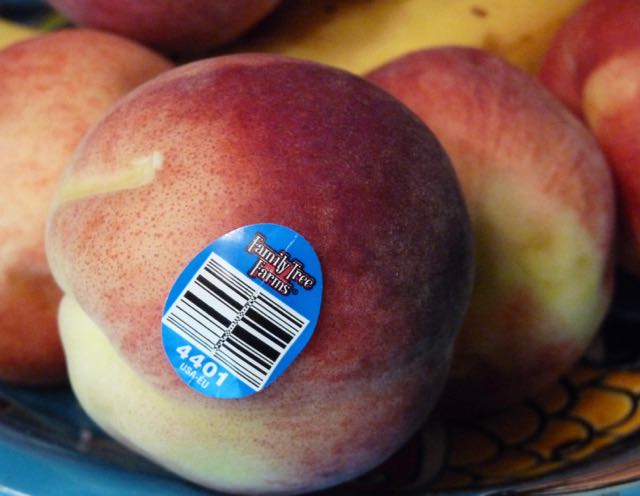
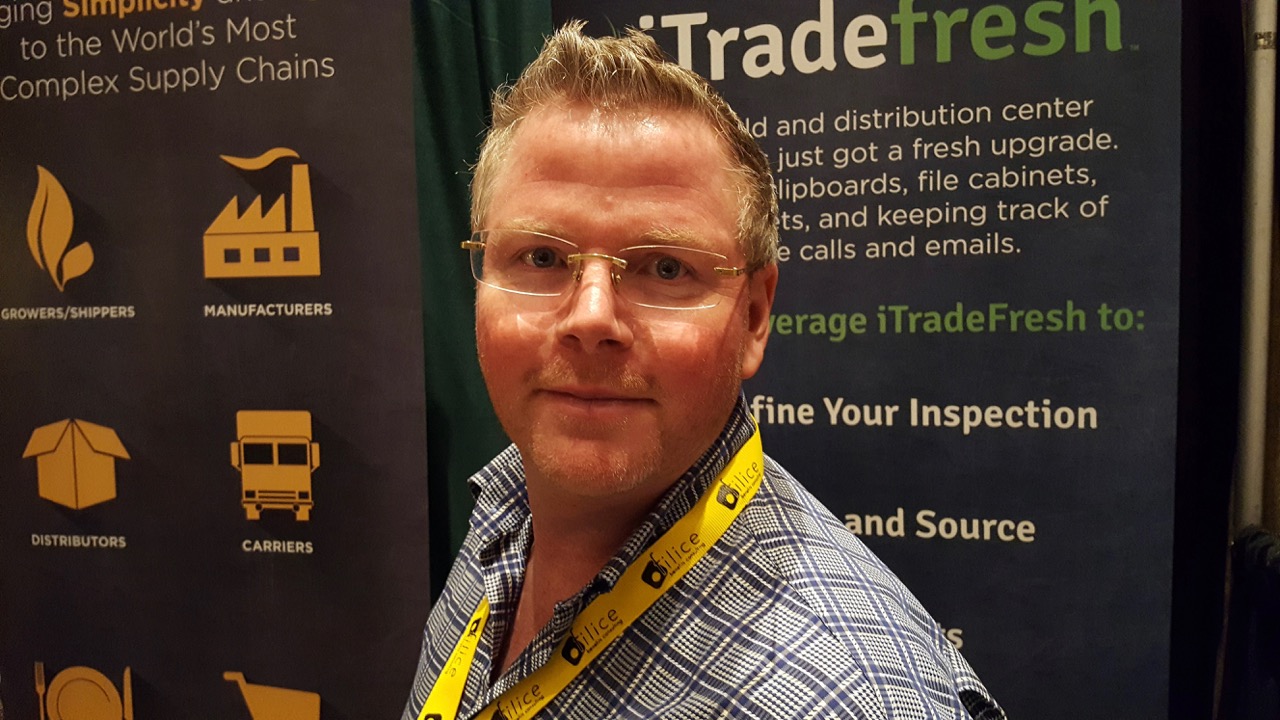
There is more transparency available now in produce sales, according to Dan Reighn, director of grower/shipper sales with iTrade Fresh. He explained how iTrade works with the entire supply chain for produce and perishables, providing scanning information for the customer.

“People know iTrade as a portal between buyers and sellers, so a buyer like Safeway is transacting with a supplier like Dole, … [and] we handle the purchase order, invoice, advance ship notice for them, but also we extend across the entire supply chain,” Reighn said.

“We’re offering full visibility at the very first mile supply chain where a case is either packed in the field or packed in the packing shed, and we can put a PTI traceability sticker or an item traceability sticker on a clamshell of berries and we’re able to track that product all the way to the other end of the supply chain,” he explained. “So when a consumer scans the product at the other end, they can learn more about where the product came from, and it’s a way for increased consumer engagement.”

The stickers placed on the packaging are for the customer to learn more about the grower and the local communities where the product was grown.

“There is information about the grower, so whether the product is picked in Mexico or South America, there’s a lot of growers that do a lot for local communities, and so consumers can learn about giving back and how they support the community,” Reighn said.

Because consumers are voting with their dollar, learning and feeling good about products that they’re buying can support the grower who might be providing community services or hospitals or other educational opportunities in Mexico.

“Alerts can also be sent,” Reighn said. “Our system allows us to send alerts out to consumers, so if as a clamshell of berries is part of the food recall, they’re able to understand it and follow instructions on what to do. They can call a number, turn the product in and so forth. So it’s a way for consumers to feel good about what they’re eating and making sure that they’re eating safe produce.”

2018-04-18T21:12:50-07:00April 16th, 2018|

California Coffee Brews Success

Mark Gaskell on California Coffee Crop

By Laurie Greene, Founding Editor

California Ag Today recently spoke about the emerging California coffee crop  with Mark Gaskell, who covers San Luis Obispo and Santa Barbara Counties as farm advisor for the University of California Small Farm Program as well as the UC Division of Agriculture and Natural Resources (UCANR) Cooperative Extension.

“Currently, there are about 30 farms with maybe 30,000 coffee plants between San Luis Obispo and San Diego Counties,” Gaskell said. “I would expect that to double this year. California’s coffee crop is doing well.”

“There is also now a private company, Frinj Coffee,” explained Gaskell, “that evolved out of a long relationship I had with Jay Ruskey, CEO and co-founder of Goleta-based Good Land Organics. Ruskey participated in some of our early research and development work with California coffee. Our collaboration has justified investment by the number of coffee growers in the Frinj Coffee operations.”

There are 25 growers, according to the Frinj Coffee website.

Coffee cultivation is new to California, because, as Gaskell explained, “traditionally, coffee is grown in subtropical areas, specifically at high elevations where the relatively cooler temperatures are. Cooler temperatures prolong the ripening time, which improves the quality of the coffee beans.”

“So, in the world’s newest coffee growing region, Coastal Southern California,” Gaskell said, “we replaced the high elevation with the influence of the Pacific Ocean. The ocean delivers a huge mass of relatively cool temperatures—always between 50 and 60 degrees Fahrenheit. These mild coastal conditions enable a very long ripening season for the coffee cherries and coffee beans.”

Gaskell projects the California coffee crop will be very successful.

“We expect the coffee volume will double this year and probably continue to double for the next few years. Just based on existing interest in coffee, I expect demand to keep pace with the ability of California growers to supply it, and more and more growers will be planting it this year.”

2021-05-12T11:05:12-07:00April 4th, 2018|

15 Percent Chinese Tariff will Harm Farmers

CCM President Issues Statement Regarding Chinese Tariff Announcement

News Release from California Citrus Mutual

While the proposed 15% Chinese tariff increase will affect all fruits, nuts and vegetables shipped to China, California Citrus Mutual (CCM) President Joel Nelsen issued the following statement regarding the tariff increase on  California citrus as a retaliatory counter to President Donald Trump’s new tariffs on steel and aluminum:

The decision by the Chinese government to levy exorbitant tariff increases on U.S. produce will surely have a direct impact on California citrus producers. Maintaining access to foreign markets and having the ability to compete in a global market place are critical to the success of the citrus industry.

The retaliatory tariffs imposed by China hinders our ability to be competitive by increasing costs for Chinese consumers, an important market for California citrus. Family farmers in our industry will suffer from the economic fallout unless we can find alternative markets for California’s While our Administration focuses on those business sectors requiring attention, the Chinese Administration has chosen to expand the discussion to include the agricultural industry. In fact, the Chinese indicated last week in a statement that constructive talks could alleviate the real issues, yet insufficient time was given to accomplish that objective. Now Chinese consumers and California citrus producers are innocent parties to a trade debate.

Nelsen, CCM Executive Vice President Casey Creamer, and Board Chairman Curt Holmes have traveled to Washington, D.C. recently for meetings with Congress and the Administration regarding trade and other important issues affecting the California citrus industry.

2018-04-04T17:00:22-07:00April 4th, 2018|

Trade Must be Fair for America

Ray Starling, Special Assistant to Trump, on Trade

By Patrick Cavanaugh, Editor

Ray Starling is Special Assistant to President Trump for Agriculture Trade and Food Assistance. He was the keynote speaker at the 2018 Citrus Showcase hosted by California Citrus Mutual.

He spoke about addressing imbalance in trade.

Ray Starling, left, with Joel Nelsen of California Citrus Mutual.

“The thing that the president wants to do is to address some of the imbalance that we have. We go out and negotiate these agreements,” Starling said. “We say that we’re all agreeing to the rules of the road and then all of a sudden in the middle of trading, when we will have almonds on a boat or we’ll have pork on a boat or have fruit on a boat and all of a sudden, we find out the rules have changed. That is not the kind of trade we’re talking about. We want to sort of fix those inequities, if you will.”

NAFTA also needs to be looked at closely.

“There are a number of chapters in the agreement and a lot of the things that we need to fix on agriculture, we have worked out,” Starling explained. “Some of those are things that are never going to make the news. They are agreements and understandings about maximum residue levels of pesticides. Their understanding about what is the tolerance of foreign matter in material that we may be shipping to Mexico or Canada.”

“But on the big issues for ag that we’ve still got to make progress on: One of those is with Canada, and it deals with the dairy issues,” Starling said. “They supposedly have a supply management system where they limit the amount that they produce in the country to get a higher price, but yet a lot of their products still ends up on the international market, so our point is if you’re going to have a supply management system, it’d be great if you actually manage your supply and then didn’t dump that product out on the world market to compete with American product out there.”

Enforcement is also a concern, noted Starling.

“I wouldn’t say that it has to be a sequential process like that. I mean, we’re always going to look for new agreements and new opportunities, but I think that often when we look at the way we’re resolving disagreements about trade, it’s a very long process,” he said.

“It takes years to go to the WTO and to get a successful outcome, and we’ve gotten many successful outcomes at the WTO, which some would argue is actually a sign that that system is not that successful because notwithstanding the fact that we keep winning there, we keep having to go there to get these solutions,” Starling explained.

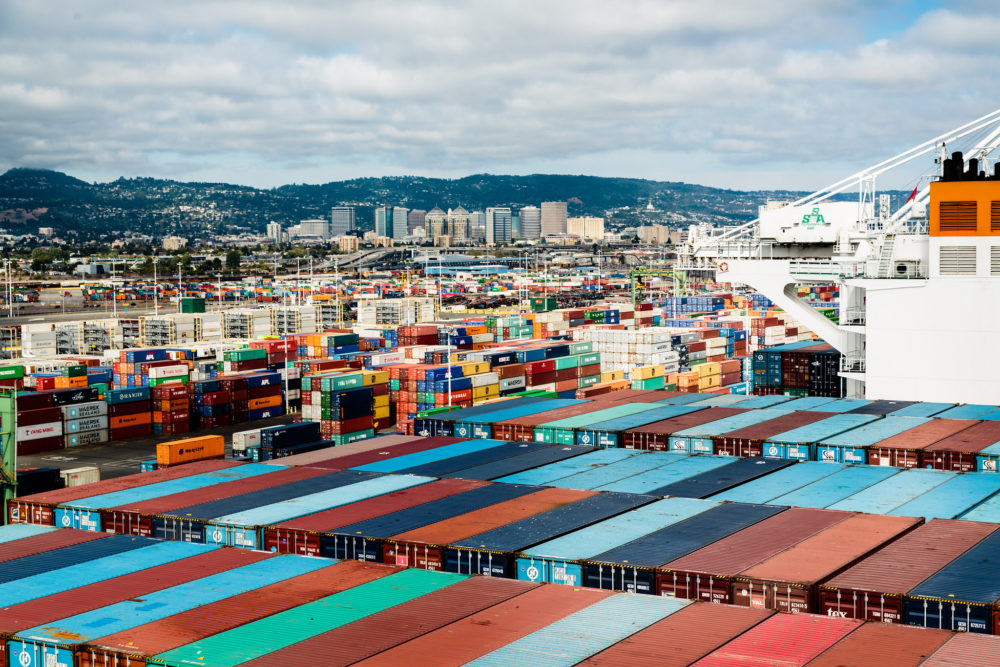
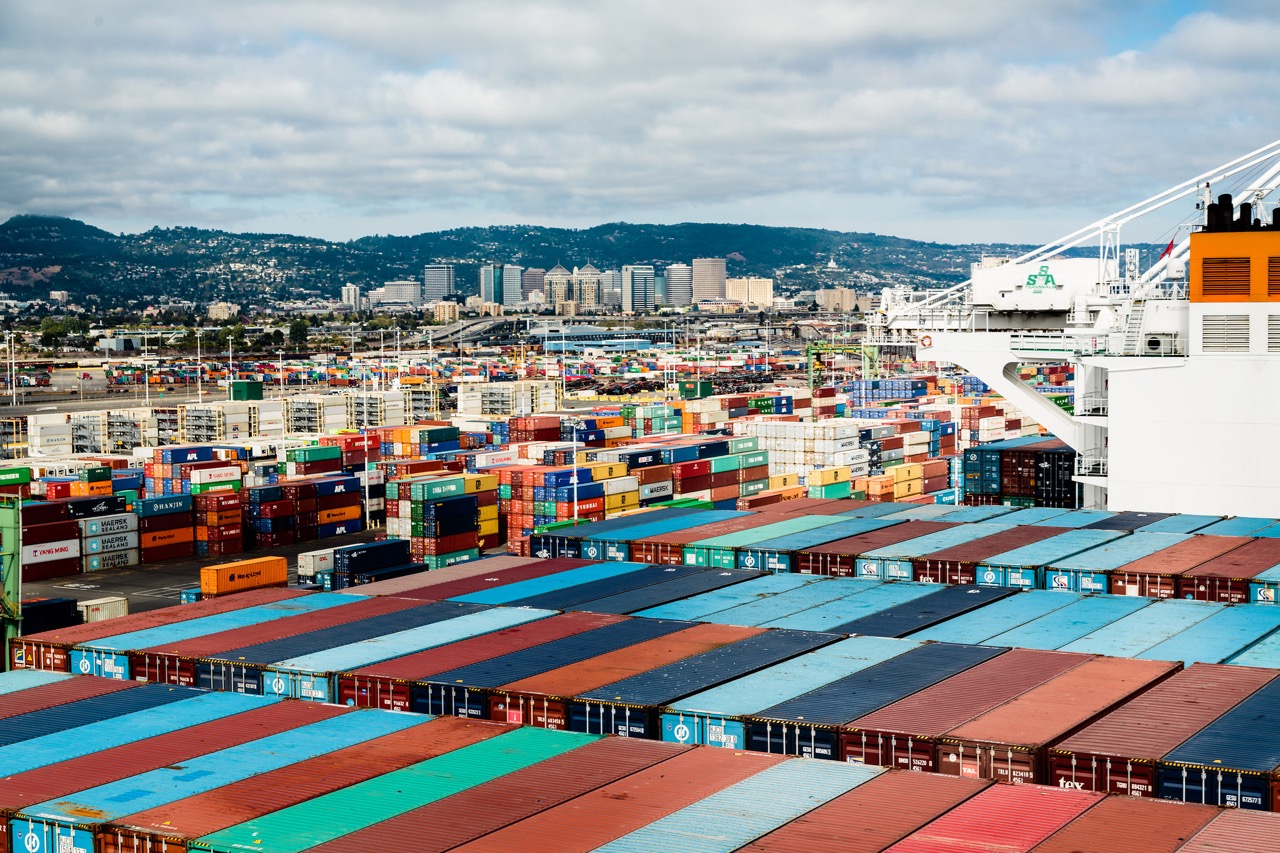
Photo Credit: Port of Oakland

2018-03-17T12:35:22-07:00March 16th, 2018|

Uniqueness of California Wheat Industry

California Wheat Growers Farm Every Class of Wheat

By Brian German, Associate Broadcaster

Wheat is a primary crop for many producers, along with being a valuable rotational crop that helps manage disease and improve the condition of the soil. Wheat production is an important aspect of the economics of farming in California.  Nick Matteis is the Executive Director for the California Association of Wheat Growers.  Having finished planting last month, California wheat growers are pleased with the amount of rainfall already coming to California.

“Soil moisture is key for having a good start on the wheat-growing season. … It’s the best start you could ask for as far as growing season goes,” Matteis said.

The average wheat production in California is 1.1 million tons annually and is most often used within the state for both human and animal consumption. Nearly a quarter of that total is exported. Between 2010 and 2014, an average of 47 percent of the common wheat planted in California was used for silage, forage, green chop or hay.    California wheat also has some characteristics that sets it apart other states.

“We have both irrigated and non-irrigated acreage in this state which is sort of unique compared to most other wheat-growing regions in the country. Most of it’s rain-fed; what we call dryland farming,” Matteis said.

The irrigated wheat acreage in the state also provides “the highest yields in the country, like tons per acre versus bushels, which is how most of the other wheat producing states would measure it,” Matteis said. This quality also contributes to the production of high protein wheat.

California growers planted close to 470,000 acres of wheat in 2015, with a farm value of nearly $125 million for grain produced.  It appears that 2016 saw an increase in plantings. “Right now, I think the guesstimate is somewhere between 500,000 and 600,000 acres are planted in wheat,” Matteis said.

The two main types of wheat grown in California are hard red winter wheat and durum wheat, but growers also produce multiple other varieties.  “We grow every class of wheat, which we’re one of the only states that actually does that. You’re talking Hard Red Winter, Hard Red Spring, Hard White, Soft White. We have the Desert Durum which is really popular for the pasta makers in the world,” Matteis said.

The hard red varieties are classified as winter wheat because of the timing of when it enters the market.  Winter wheat is grown throughout the state, with the majority of production coming from areas located in the San Joaquin Valley, where Fresno, Kern, Kings and Tulare counties dominate production.

Desert Durum is a registered certification mark owned by the Arizona Grain Research and Promotion Council and the California Wheat Commission.  Durum is the hardest of all the wheat varieties, with a high protein content and white bran. Its most often used to make pasta, couscous and some types of Mediterranean breads.

A significant portion of the state’s common wheat is used for milling into general purpose or bread flour.  California also happens to have the largest milling capacity in the U.S., due to having the most mills in one state.

2017-01-22T19:11:41-08:00January 22nd, 2017|

Livestock Economics for Western Producers

Livestock Economics: What Attributes Bring Higher Prices?


By Laurie Greene, Editor


At the 100th Annual California Cattlemen’s Association (CCA) & California CattleWomen’s (CCW) Convention last week in Sparks, Nevada, Tina Saitone, cooperative extension specialist, UC Davis Department of Agricultural and Resource Economics, described her research on rangeland and livestock economics. “Primarily, my focus has been on cattle — beef cattle to date — but I’ve also started some projects recently with sheep producers and the predator interactions they have specifically with coyotes. I am examining whether or not [producers] can use nonlethal depredation methods to mitigate those losses.”

“Right now, I have been concentrating on marketing characteristics of cattle,” she said. “I study those practices employed by producers, such as when they wean their cattle; how many vaccinations they have; whether they market [their cattle] as natural, grass-fed, or organic; and the impact that [these choices] have on their prices.”

Tina Saitone

Tina Saitone, cooperative extension specialist, UC Davis Department of Agricultural and Resource Economics

Interestingly, Saitone and her colleagues have mainly been using satellite video auction data. “Western Video Market Auction actually held their auction this month here in Sparks, Nevada because they can do it at different locations all the time. So, we use that data to figure out cattle characteristics and then determine the marginal impact that each of those characteristics has on price,” said Saitone.

Characteristics such breed, frame score, flesh score, and weight, are definitely controls in Saitone’s research model because those are main drivers of price. “But what we want to do is figure out — holding all those things constant —if a producer raises their cattle natural, what kind of premium does that bring them? We’re really looking for that incremental difference.”

One might expect certain factors such as natural or organic, to deserve a higher price, but there always has to be a buyer. “Right now, when prices are low relative to 2014 and early 2015, ranchers do have some opportunities to get some higher prices in what we would call niche markets. Consumers are increasingly demanding a wider range of characteristics. They want grass-fed. They want organic. They want natural, no hormones. All of these are what we would call credence attributes. If you go to the grocery store and you taste a steak, you probably don’t know if it was raised natural.”

Accordingly, the industry has third-party certification to assure consumers that when they pay a higher price for that product they are actually getting those traits. “Farmers actually have the ability to fill some of those niche markets that consumers have created with their demand and possibly get higher prices than just selling into traditional commercial channels.”

The data that Saitone has been looking at from Western Video is focused on Western states, including California. Certainly, location places Western producers at a persistent disadvantage because the majority of the processing capacity is in the central part of the country, with Nebraska being the hub. Saitone said, “When you think about cattle being raised in California having to be transported all the way to Nebraska, some 1600 or 1700 miles, not only do you have the cost associated with that transportation, but you also have shrink; you have mortality.

California Cattlemen’s Association (CCA)

California CattleWomen

UC Davis Department of Agricultural and Resource Economics

2021-05-12T11:17:11-07:00December 6th, 2016|

Safe Food Alliance Helps Farmers Cope with MRL Disharmony

California Farmers Cope with MRL Disharmony


By Patrick Cavanaugh, Farm News Director


California farmers are careful with crop protection products because they know the importance of producing safe and wholesome food for their customers across the nation and in their export markets. “However, I think that there are some real challenges facing growers in California today,” said Thomas Jones, senior analytical services director for the Fresno-based Safe Food Alliance.

“As growers send their commodities around the world, they’re facing increasing challenges of knowing the right chemicals to apply and at what levels. We have our own strict regulations within California, if needed, [that govern] not only the application but also the maximum residue levels (MRL) or tolerances allowed for various crops,” said Jones.

Thomas Jones, senior analytical services director, Safe Food Alliance, MRL Disharmony

Thomas Jones, senior analytical services director, Safe Food Alliance

“That’s also carried onto the federal level; we have very strict EPA regulations. But as we [export] into other countries, they may have entirely different regulations,” said Jones. He noted this could be confusing not only to farmers, but also to registrants of crop protection materials because there is a lack of standardization of MRLs in different countries.

“Historically, there was the CODEX system, a UN-based system geared towards a more international standard for pesticide residues. It was very thought out, and very scientifically based,” Jones said.

However, as Jones explained, many countries do not want to follow the important scientific standard. “Increasingly, we are seeing countries want to establish their own systems, their own tolerances. They may be responding to their own political pressures within their countries.”

“We are seeing a process called ‘deharmonization’ in which every country wants to establish its own positive list of what is allowed and what is not allowed in [farm] products. Sometimes, those are in agreement with U.S. regulations and California state regulations; sometimes they are not. So it is important that [our] growers know not only what is legal in this country and in our state, but also what is allowed in their target [export] markets.”

Jones commented it is now known that some of these marketers [apply] random low MRLs and keep other MRLs high on some of their own products in order to get a marketing edge. “Some of those MRLs may or may not be based on any scientific standards.”

“There are a number of great tools out there,” he said. “There are a number of great software programs. Obviously, anything that [information growers] can get out of the print media or any educational courses are really essential. It is important to work with your Pest Control Adviser (PCA), as well. It’s important that [farmers] know what they are up against, as far as growing these crops,” said Jones.

The Safe Food Alliance is available to growers to help them qualify to meet the standards in the U.S. and abroad. “We [provide] training twice a year on fumigation safety for the various processors of dried fruits and tree nuts. We focus particularly on commodity fumigations and on what treatments are allowed and not allowed. We also have a full-service pesticide-testing laboratory and are very aware of the requirements in these other countries, so we’re happy to help both processors and growers with our monitoring efforts,” noted Jones.


Featured Photo: For these California-grown peaches to be shippable to any out-of-state U.S. consumers or international export markets, they must meet scientific Maximum Residue Levels (MRLs).

C O D E X  A L I M E N T A R I U S, the international food standards, guidelines and codes of practice contribute to the safety, quality and fairness of the international food trade. Begun in 1963, Codex standards are based on the best available science assisted by independent international risk assessment bodies or ad-hoc consultations organized by Food and Agricultural Organization of the United Nations (FAO) and World Health Organization (WHO). Consumers can trust the safety and quality of the food products they buy and importers can trust that the food they ordered will be in accordance with their specifications.

2021-05-12T11:05:44-07:00November 28th, 2016|

Celebrating California Agriculture . . .A Farmer Can Be The Cowboy, Buying Everybody Drinks

Peterangelo Vallis Offers Advice on How Farmers Can Connect with Public

By Patrick  Cavanaugh, Farm News Director


Peterangelo Vallis, executive director of the San Joaquin Valley Wine Growers Association based in Fresno.  He says if you were to go around the world and see how farmers interact with the public, you would observe their interactions are different in other countries than here in California.

“Especially if you go to Europe, agriculture is pervasive in the countryside. If you have a city, automatically you’re going to have farmland around it,” Vallis said. “It’s a little different than what we have in California, where you have urban spaces, some desert, mountains and then you tend to have agriculture, but realistically the core portion’s the same.

Peterangelo Vallis, executive director of the San Joaquin Valley Wine Growers Association

Peterangelo Vallis, executive director of the San Joaquin Valley Wine Growers Association

“If you go to France or Italy, your main business is agriculture. Farmers are not looked at as being different somehow. They are looked at as businessmen who happen to make the food that we’re serving on the table, you’re buying at the store or the restaurateur is preparing for you to enjoy,” he said.

There, they think about the farmer—the agriculturalist, who brings that food to them as “filling up your happy, cheese-loving belly. That’s something that we are totally missing in this country because, by and large, our rural populations are removed from our urban populations,” Vallis said.

california saloon, Peterangelo Vallis“As a result, that’s on us, with our own PR for our own businesses—to come into town and make a place for ourselves. . . show ourselves off so that people recognize when we come in and are thinking about us when we’re not there.”

“It’s just like in the Old West. No one worried about the guy that slunk in the back door of the saloon and just sat there with his hat down hoping no one would shoot at him. But everyone knew the guy with the black hat who walked right through the front door into the middle of the bar, said hello and bought everyone drinks. That’s us!” Vallis said.

2016-11-28T00:37:42-08:00November 25th, 2016|

Almond Alliance Advances Almond Issues

Alliance Advocates for Almond Industry

By Patrick Cavanaugh, Farm News Director


The Almond Board of California does many great things for the California almond industry, most notably marketing annually about two billion pounds of almonds—both domestically and internationally. But there is one thing the Almond Board cannot do, and that is lobby on behalf of this big industry.

Kelly Covello, president of the Almond Alliance

Kelly Covello, president of the Almond Alliance

Enter the Almond Alliance of California (AAC) on August 1, 2016. Formerly known as the Almond Hullers and Processors Association (AHPA) and established in 1980, this renamed and revitalized trade organization is the only trade association fully dedicated to advocating for and protecting members’ investment in the almond industry. The AAC will represent and serve growers, hullers/shellers, handlers, processors and allied industry partners.

Kelly Covello, president of the Almond Alliance, said, “Over the last year, we’ve done some strategic planning with the Almond Board so that we can complement one another’s activities. The Almond Board cannot lobby or advocate, and the trade association—the Almond Alliance—can.” Nevertheless, Covello said, “the industry has invested in the Almond Board through their assessment and has great resources available in terms of expertise, data [and] research that we can use to support our policy positions.”

For nearly 100 years, the almond industry has been active in California without a dedicated political voice. “The trade association has always been able to advocate on issues when necessary. The industry has grown; we’re over a million acres now. With the increase in acreage, the number of issues, the visibility and the scrutiny of our industry has dramatically increased,” Covello said.

Ms. Covello currently serves on the Board of Directors for the Agricultural Council of California and serves on two Almond Board of California (ABC) committees: the Almond Quality & Food Safety Committee and the Technical and Regulatory Affairs Committee.

2016-11-23T17:02:09-08:00November 23rd, 2016|

Another Record Season for Walnuts

Walnut Yield Could Continue to Increase Over Next Few Years

By Brian German, Associate Broadcaster

October was the peak of harvest for the state’s biggest tree nut crops: almonds, pistachios and walnuts. California growers have completed this year’s walnut harvest, and so far growers are pleased with the yields. Final statistics for California walnut production in 2016 will not be available until mid- to late-January 2017.

The USDA National Agricultural Statistics Service (NASS)’s 2015 estimate of 365 thousand walnut acres in California (of which 300 thousand were bearing acres), represents a 50 percent increase versus a decade ago, according to Dennis Balint. Balint, who just retired as longtime executive director of the Folsom-based California Walnut Board and CEO of the California Walnut Commission since 1995, became the new special assistant to the California Walnut Board on November 1, 2016.

Dennis-Balint, California Walnuts

Dennis-Balint, California Walnuts

Growers had a record walnut harvest last year, and this year looks even more promising. “This year’s crop estimate from USDA’s California Agricultural Statistic Service (CASS) is 670 thousand tons, an 11 percent increase over last year’s 603,000 tons. 

The NASS office in Sacramento, as relayed by Balint, reported this year’s walnut season began with a significant amount of winter moisture, along with an ample amount of chilling hours and average weather conditions during walnut bloom.  Springtime rain concerned some growers because of the increased chances of blight and any resulting damage is under assessment.

While overall weather conditions were advantageous for growers, results were varied. “If you’re in Reading or Modesto, or Visalia, different factors affected you: climates, your own horticultural practices, what varieties you’re growing, etc.,” said Balint.

The estimate of this year’s harvest is good news for growers who, not many years ago, were fortunate to harvest merely 300,000 tons. Even with the estimated record harvest, there are still close to 80,000 acres of younger, nonbearing walnut trees in the state. Balint commented, “As those acres mature and come into production over the next few years—all things being equal—California’s walnut harvest could potentially increase by another 30 to 40 thousand tons per year.”

california-walnut-boardBalint also reported the Walnut Board has four tests in the grocery marketplace to determine how to increase stores’ holiday inventory of walnuts. [EDITOR’S NOTE: For fans of inshell walnuts, buy your supply early and often. Inventory of inshell walnuts is not expected to extend beyond the holidays.]

As of November 1, 2016, board members of the California Walnut Industry appointed Michelle Mcneil Connelly, former senior marketing director, as executive director of the California Walnut Board and as CEO of the California Walnut Commission.


Links:

The California Walnut Board was established in 1948 to represent the walnut growers and handlers of California. The Board is funded by mandatory assessments of the handlers. The California Walnut Commission, established in 1987, is funded by mandatory assessments of the growers.

USDA’s National Agricultural Statistics Service California Field Office is operated in cooperation with the California Department of Food and Agriculture.

2016-11-17T13:33:58-08:00November 16th, 2016|
Go to Top