Fresno County Ag Value Down in 2015 Crop Report

Fresno County Ag Commissioner Les Wright on the 6.55 Percent Drop in Ag Value

The Fresno County agriculture value for the 2015 fiscal year was calculated at $6.6 billion. It was down 6.55 percent from 2014, when Fresno County had a record year of $7.0 billion in agriculture value. The report included nearly 400 commodities; 62 of which had a value in excess of $1 million.

The report represents the resiliency and hard work of farmers and farm workers, as well as those allied in the industry.

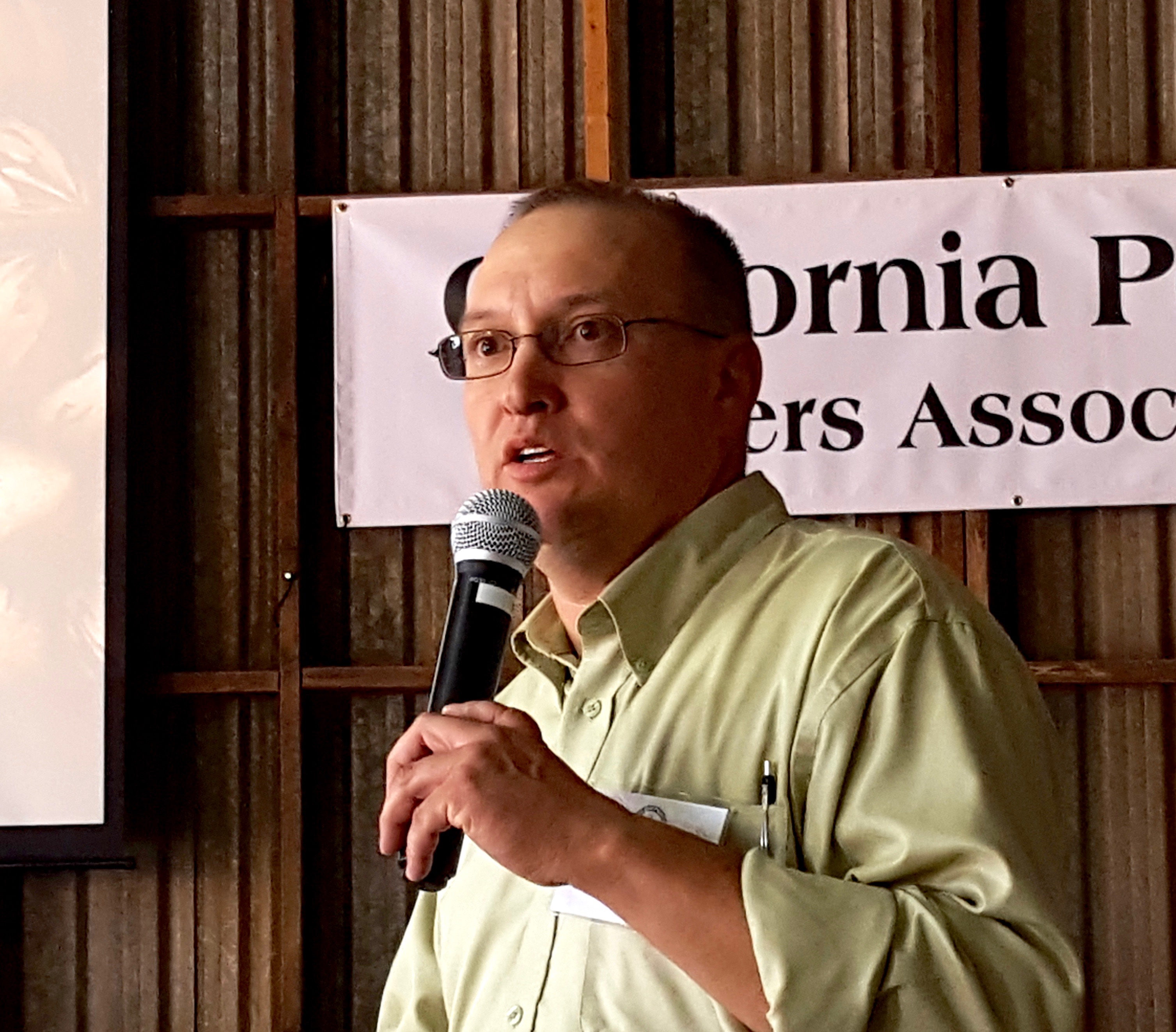
In the video above, Les Wright, the Fresno County Ag Commissioner, spoke about the implications of the drop.
2016-08-11T06:50:05-07:00August 10th, 2016|

Fresno County Agricultural Value Declines in 2015

Fresno County Agricultural Value Declines in 2015

Drought, Lower Commodity Prices and Production Issues Drive Report Down

The Fresno County Department of Agriculture’s 2015 Crop and Livestock Report was presented to the Fresno County Board of Supervisors TODAY.  Overall, agricultural production in Fresno County totaled $6.61 billion, showing a 6.55 percent decrease from 2014’s $7.04 billion.

“The strength of Fresno County’s agricultural industry is based upon the diversity of crops produced.  This year’s report covers nearly 400 commodities, of which, 62 exceed $1 million in value,” said Fresno County Agricultural Commissioner/Sealer of Weights and Measures Les Wright“The lack of a reliable water supply continues to fallow productive land,” Wright continued.

Les Wright Fresno County Ag Commissioner

Les Wright, Fresno County Ag Commissioner

The annual crop report provides a chance to examine changes and trends in crop acreage and yields.  Amounts in the report reflect the gross income values only (income before expenses) and does not reflect net return to producers.

According to the released figures, an increase was seen in vegetable crops (4.95% = $59,025,000). Decreases occurred in field crops (41.99% = $134,995,000), seed crops (30.80% = $10,437,000), fruit and nut crops (6.6% = $229,551,000), nursery products (25.65% = $16,088,000), livestock and poultry (9.44% = $118,769,000), livestock and poultry products (31.38% = $199,769,000), apiary (2.39% = $1,735,000) and industrial crops (54.38% = $3,992,000). 

“Every day, millions throughout the world are eating food that originated in Fresno County,” said FCFB CEO Ryan Jacobsen. “The magnitude of this industry does not occur by happenstance. Generation upon generation of agricultural infrastructure has been built to feed an unbelievably productive, wholesome and affordable food supply.

Ryan Jacobsen

Ryan Jacobsen, CEO Fresno County Farm Bureau

“I continue to remind all—eaters; elected officials; local residents who benefit from a healthy, vibrant farm economy; and those whose jobs depend upon agriculture—that we must not take what we have for granted,” continued Jacobsen.  “By not addressing our challenges head-on, whether it be water supply reductions, labor issues, governmental red-tape, etc., we are allowing our economy, our food and our people to wilt away. The direction of the Valley’s agricultural industry explicitly determines the direction of the Valley as a whole.”

One popular component of the report is review of the county’s “Top 10 Crops,” which offers a quick glimpse of the diversity of products grown here. In 2015, these crops accounted for three-fourths of the report’s value.  Added to this year’s list were mandarins (9) and oranges (10).  Mandarin demand continues to push acreage upwards.  Dropping out of the Top 10 was pistachios and cotton.  Pistachio production was significantly reduced last year due to the “blanking” issue that left many shells without nuts, and cotton acreage continues to be depressed due to reduced water supplies and fallowed land.

For a copy of the full crop report, contact FCFB at 559-237-0263 or info@fcfb.org. 
Fresno County Crops 2015
Fresno County Farm Bureau is the county’s largest agricultural advocacy and educational organization, representing members on water, labor, air quality, land use, and major agricultural related issues. Fresno County produces more than 400 commercial crops annually, totaling $6.61 billion in gross production value in 2015.  For Fresno County agricultural information, visit www.fcfb.org.
2021-05-12T11:05:49-07:00August 9th, 2016|

Pecan Growers Excited about Federal Marketing Order

Calif. Pecan Growers Gather to Discuss Federal Marketing Order

By Patrick Cavanaugh, Farm News Director

On Wednesday, August 3, nearly 100 people attended the California Pecan Growers Association meeting at Linwood Nursery, the oldest supplier of pecan trees in the world, located in Le Grand in eastern Merced County.

Not all attendees were current pecan growers; many were contemplating planting pecan trees. New interest and excitement in pecan farming surrounds the newly approved (May 2016) and forthcoming Federal Marketing Order For Pecans (FMO) that will assess growers a few cents per pound to increase pecan marketing and awareness in California and other areas of the country.

Pecan growers and others interested in the crop gathered in Le Grand to discuss Federal Marketing Order for Pecans

“We want to model it after the Almond Board of California,” said Mark Hendrixson, president of the California Pecan Growers Association, whose members farm approximately 4,000 acres of the crop throughout the San Joaquin and Sacramento Valleys.

“We had a very a good turnout. Pecans are a growing industry in California; we have great weather for them,” said Hendrixson. “We do things a little bit differently because of our great weather, but we’re able to produce extremely good quality.”

CPGA-Logo“Pecans are extremely healthy,” said Hendrixson. “The research has been out there for quite some time, but the pecan industry has never had a unified marketing voice. Once we develop the Federal Marketing Order, we will be able to spread the message about health and other great benefits that will help drive interest in pecans and pecan consumption, and to deliver quality product to consumers around the world.

Hendrixson expects the Federal Marketing Order For Pecans to be in place very soon. The USDA will officially seat the Board of the American Pecan Council (APC), the new governing board of the FMO, by October 1, 2016 by calling for board member nominations, qualifying the candidates and issuing a ballot for qualified voters to vote on those nominations.

“Once those ballots are approved by the Secretary of Agriculture,” Hendrixson said, “we’ll have an elected Board that can begin to function and actually set the assessment, which in turn will be approved by the USDA going forward.”

2021-05-12T11:05:50-07:00August 4th, 2016|

WGA Conflicted on SCOTUS DACA Decision

Western Growers Association has Mixed Feelings on Recent Supreme Court DACA Decision

By Patrick Cavanaugh, Farm News Director

The 4-4 ruling on immigration reform last month by the Supreme Court of the United State’s (SCOTUS) affirmed the lower court’s injunction against President Obama’s executive order, which would have granted deportation deferrals and temporary legal work status to about five million undocumented immigrants. Tom Nassif, president and CEO of Western Growers Association (WGA), has been vocal about the need to establish some type of immigration reform.

Nassif compared the recent SCOTUS ruling to what happened when a 2013 U.S. Senate-endorsed bill that supported a pathway to citizenship was never passed in the U.S. House of Representatives. “The House did not want a pathway to citizenship,” said Nassif. “They were not even sure if they wanted a pathway to legalization. Most Republicans did not even want a border security bill in the House coming to the floor for a vote because they didn’t want any immigration reform—whatsoever.”

Western Growers logoNassif said, “The House was part of that Send-them-home! crowd that considered anything you did—even if it was putting them on probation—as amnesty. It is interesting that with the House doing nothing about immigration, what we have today is amnesty, because we’re not doing anything about it.”

Nassif expressed mixed feelings about the SCOTUS decision. “In a way, it disappointed us; in a way, it didn’t. It didn’t disappoint us because there was no requirement that people working in agriculture who might qualify for this Deferred Action For Childhood Arrivals (DACA) or Deferred Action for Parents of Americans (DAPA) would actually remain working in agriculture.”

To get a pathway under the Senate bill, farmworkers would have to stay in agriculture for a certain number of years, but they could eventually work in other industries. So if you have a choice of working in any industry, why would you go to work on the farm? But, in this instance, you would adversely affect other American jobs,” said Nassif.

Nassif said the motivation of the Obama administration is understandable due to the inability of Congress to compromise on immigration reform, yet Nassif maintains the Immigration Reform should not be done with Executive Orders as the President has done. Instead, Nassif stressed that Congress should take up Immigration Reform and pass it.

2016-08-04T15:40:15-07:00August 1st, 2016|

It Is California Cantaloupe Week!

California Cantaloupe Week Begins in Fresno County

By Lauren Dutra, NAFB Summer Intern


Established by the Fresno County Board of Supervisors for this week, Monday July 25 through Sunday, July 31,“California Cantaloupe Week,” recognizes Fresno County as the lead canteloupe-producing county in California, which currently produces 75% of all cantaloupes sold in the United States.

Steve Patricio, president and CEO of Westside Produce, a grower, packer and shipper in Firebaugh said, “The quality has been absolutely outstanding this year, with some of the highest sugar results we’ve seen in recent years.” Patricio has also observed great demand in the marketplace as well.  At this point, it’s time to eat those beautiful California cantaloupes,” he noted.

Tri Westside ProducePacked with nutrition, “Cantaloupes are one of the most outstanding things we can eat for our health,” Patricio affirmed. “That daily dose of cantaloupe can do wonders for a healthy lifestyle.”

The California Cantaloupe industry has been on the forefront of the food safety movement throughout the world, “You can be assured that every cantaloupe grown, packed and shipped from California meets the highest standard of food safety anywhere in the world,” Patricio stated.

The California Cantaloupe Advisory Board (CCAB) requires all California cantaloupe growers, packing operations, and cooling facilities undergo mandatory announced and unannounced government food safety audits. The audits are based on a set of food safety standards developed from 20 years of university research along with input from government, food safety and farming experts. CCAB food safety systems allow for science-based standards to be updated as new information or science becomes available.

You can review all of the safety checkpoints here.

2021-05-12T11:05:51-07:00July 27th, 2016|

Celebrate National Ice Cream Month!

Celebrate National Ice Cream Month with California Ice Cream and Flavors!

By Lauren Dutra, NAFB Summer Intern and Assistant Editor

Jennifer Giambroni, director of communications, California Milk Advisory Board

Jennifer Giambroni, director of communications, California Milk Advisory Board

First established in 1984 by Ronald Reagan, the 40th President of the United States, National Ice Cream Month was scheduled for the month of July, with the third Sunday of the month designated as National Ice Cream Day.

Jennifer Giambroni, director of communications, California Milk Advisory Board, explained why Californians, in particular, have so much to celebrate during National Ice Cream Month. “As the number one ice cream state,” she said, “we produce 126 million gallons of ice cream a year.”

Thats a lot of scoops!

California also leads the nation in milk production, and 99 percent of dairies in the state are family-owned. Including milk production on farms and milk processing, the California dairy industry, supports about 190,000 jobs in the California economy and contributed about $21 billion in economic value added in 2014, according to “Contributions of the California Dairy Industry to the California Economy,” by the University of California Agricultural Issues Center (May 14, 2015). 

Blueberry Ice Cream Float

Blueberry Ice Cream Float (Source: California Milk Advisory Board, Kristina Vanni Blogger, 2012)

Ice cream, being both timeless and innovative, has evolved in flavors and varieties over the years, according to Giambroni, while still holding true to the traditional treat you grew up with as a kid. “Ice cream is an important category that represents a lot of the milk produced on California’s more than 1,400 family dairy farms and carry the Real California Milk seal,” she noted.

“We’re seeing adult-friendly milkshakes with the addition of spirits, ice cream sandwiches made with more than cookies, and sundaes with everything from balsamic vinegar reductions to red bean paste,” Giambroni elaborated. Other new ice cream trends include hyper-indulgent flavor combinations, including nuts and fruits grown in California, and “better for you” versions with probiotics, varying levels of fat and sugar, added calcium, lactose-free, and different kinds of oils. “We’re loving the olive oil and walnut oil ice creams for their subtle flavors,” Giambroni noted.


Approximately 12 pounds of Real California Milk are used to make just one gallon of California ice cream.


Watermelon Chill Ice Cream (California Milk Advisory Board)

Watermelon Chill Ice Cream (California Milk Advisory Board)

The California Milk Advisory Board works with bloggers on how to incorporate ice cream into events for children of all ages:

TomKat Studio – DIY Ice cream Sandwich Bar

Hostess with the Mostess – Healthy Milkshake Bar

Hostess with the Mostess – How to Set Up a Cocktail Milkshake Bar

Hostess with the Mostess – Kids Sundae Party


Check it out:

Ice Cream Sandwich (California Milk Advisory Board)

Ice Cream Sandwich (California Milk Advisory Board)

Rick’s Ice CreamBlue Moon-A fruit loops tasting ice cream with super-secret natural ingredients

McConnell’s Boysenberry Rosé Milk JamCentral Coast, grass-fed milk & cream and cane sugar, slowly-simmered to a thick, rich and decadent milk jam – then churned into house-made, boysenberry & rosé wine preserves. 

Breyer’s Strawberry Ice Cream-packed with sun-ripened California strawberries picked at the peak of happiness!

Gilroy Garlic Festival Garlic Ice Cream-July 29-31, 2016

The Orange Works‘ Orange Ice Cream and Chili Mango Ice Cream

Where Is the Best Ice Cream in California? (PBS, 2014)

2016-07-23T17:33:15-07:00July 22nd, 2016|

Poultry Industry Doing Well, for Now

Poultry Industry Shines, Like a Canary in a Coal Mine

By Patrick Cavanaugh, Farm News Director


Bill Mattos, president of the California Poultry Federation, based in Modesto, reported the state’s poultry industry is doing well despite new regulations and wage increases. “First of all,” he explained, “it looks like chicken has taken over as the [category of] highest meat consumption now in the United States. It’s getting more and more popular, so that’s good,” Mattos noted.

“Also, the best thing is the industry seems to be weathering the Highly Pathogenic Avian Flu (HPAI) A (H5N1) storm,” he continued. “In California, we’re doing our due diligence with biosecurity. We don’t have any Avian Influenza. We’ll knock on wood for that.”

California Poultry Federation logo“The industry is also enjoying lower feed costs. That’s 60% of our cost, so that’s good news,” he added.

And, poultry industry employees have job security. “It doesn’t look like there will be fewer employees in the industry over the next few years, and we’d like to have more,” he said.

Notwithstanding the good news, challenges loom on the near horizon. “The Air Quality and Water Quality Control Boards are regulating a lot of different industries,” Mattos observed. “They’re starting to look at the poultry industry now that they have completed the dairy rules. We’re very concerned about those issues, so we are trying to work with the boards to explain to them what we do and how our business runs,” noted Mattos.

The updated minimum wage requirement may hurt the California poultry industry, another big concern of Mattos. “We supply half the chicken consumed in California. The other half comes from out of state. Without the same minimum wage requirements, we’re going to be at a disadvantage. We’re looking into the different possibilities—what we can do—to offset that.”

“You will be seeing some new things coming out from the poultry industry as we look at the ramifications of the new minimum wage,” explained Mattos. “We can’t compete with that. They are going to be taking a lot more percentage away from us, which may cost us some jobs if we don’t work this out.”

“With the minimum wage hike, California lawmakers are trying to appease workers. But it really affects businesses. Ours happen to be mostly in the Central Valley, which is the hardest-pressed area for unemployment. It isn’t a good place to have to follow wage requirements like you’re seeing in San Francisco and Los Angeles. It frankly makes no sense in the Central Valley,” said Mattos.

2021-05-12T11:17:13-07:00July 21st, 2016|

RECYCLED WATER PROJECT FOR WATER STABILITY, PART 4

Recycled Water Project for Water Stability: Takes Shape, Part 4

By Brian German, Associate Editor and Broadcaster

As part of our ongoing coverage on the North Valley Regional Recycled Water Program (NVRRWP), we spoke with Anthea Hansen, general Manager of the Del Puerto Water District. Over the next few months the project will start to take shape following the U.S. Bureau of Reclamation signing the Record of Decision last month, the high level of cooperation taking place among all the different entities, and positive public response.

Del Puerto Water District dpwdHansen commented, “I can’t speak enough about our good experience thus far. The cities, partners and consultants on the project have come together to really advance this concept—which was all it was seven or eight years ago —into something that will become a reality.

When demands are low in the Del Puerto water district, specifically in the winter months, water deliveries can flow to storage facilities or the San Luis Reservoir for later usage when demand is high. While many areas have already been using recycled water for agricultural needs, the progress by the North Valley program has inspired some communities to improve their own water policies.

Recycled water has long been used in agriculture in other areas of the state, most notably the Salinas Valley and in the south, maybe a little bit up in the north in the winegrape country. The Del Puerto Water District currently relies on water delivered through the Central Valley Project, which had zero deliveries for the previous two years, and are only providing 5% this year. This new program has the potential to produce more than 30,000 acre-feet of water per year as soon as 2018.

NVRRWP map recycled water

NVRRWP map (Source: www.nvr-recycledwater.org/description.asp)

Among an estimated 100 recycled water projects in various stages of development throughout the state, Hansen stated, “For the Central Valley, I think this is definitely a big first. We received about 14 public comments on the joint environmental document. Of those 14, three or four were letters of support, and we received some broad support from the environmental community. 

A project of this magnitude to deliver needed water stability could also be accomplished in other dedicated communities, according to Hansen. “We believe this project to be a model for other municipal and agricultural agencies in ways to regionally solve issues together, and hopefully, it will be a model for the nation.”

Anthea_Hansen

Anthea Hansen, general Manager of the Del Puerto Water District

“Hopefully,” said Hansen, “people are looking at this as a good example of ways to think outside the box and use available technology to solve problems locally and regionally, which is what we have been forced to do here on the Westside.

“With all the complexities of California’s plumbing,” explained Hansen, “it would be impossible for a small district like Del Puerto to really affect any of the big picture changes, but we certainly do have the ability to affect how we act locally and regionally. I also think the Central Valley has not historically been a magnet for a lot of assistance, programs or changes that work to our benefit, so we have to devise these for ourselves or we’ll be out be of business. I’m very thankful that the two cities—Modesto and Turlockon the east side of the river in our county, were willing to work with us, and I think we have a good partnership going forward.”


AAEES logo Leadership and Excellence in Environmental Engineering and Science


The North Valley Regional Recycled Water Program (Phase 3) won the 2015 Excellence in Environmental Engineering and Science™ Competition – Honor Award – Planning from the American Academy of Environmental Engineers & Scientists.

2021-05-12T11:05:52-07:00July 19th, 2016|

BREAKING NEWS: ACP QUARANTINES IN MERCED AND MONTEREY COUNTIES

ASIAN CITRUS PSYLLID (ACP) QUARANTINES IN MERCED AND MONTEREY COUNTIES

Quarantines are now in place in both Merced and Monterey Counties due to recent Asian citrus psyllid (ACP) detections.  One ACP was detected near the City of Merced in Merced County and two ACP in one trap within the City of Salinas in Monterey County.

The quarantine zone in Merced County measures 123 square miles, bordered on the north by Kenney Avenue; on the south by W Dickenson Ferry Road; on the west by Shaffer Road; and on the east by

SaveOurCitrus

SAVE OUR CITRUS app is a free USDA iPhone to report and identify the four leading citrus diseases: citrus greening, citrus canker, citrus black spot and sweet orange scab. Report your symptoms, upload a photo and citrus experts will respond. ACP

E Yosemite Avenue. Monterey County’s quarantine measures 111 square miles and is bordered on the north by Pesante Road; on the south by the Salinas River; on the west by Castroville Road; and on the east by Gabilan Creek. The quarantine maps for both Merced and Monterey Counties are available online at: www.cdfa.ca.gov/go/acp-maps. Please check this link for future quarantine expansions in these counties, should they occur. Quarantines in new counties will be announced separately.

The quarantine prohibits the movement of citrus and curry leaf tree nursery stock, including all plant parts except fruit, out of the quarantine area and requires that all citrus fruit be cleaned of leaves and stems prior to moving out of the quarantine area.  An exception may be made for nursery stock and budwood grown in USDA-approved structures which are designed to keep ACP and other insects out.  Residents with backyard citrus trees in the quarantine area are asked not to transport or send citrus fruit or leaves, potted citrus trees, or curry leaves from the quarantine area.

ACP county-wide quarantines are now in place in Imperial, Los Angeles, Orange, Riverside, San Bernardino, San Diego, Santa Barbara, Tulare and Ventura Counties, with portions of Alameda, Fresno, Kern, Kings, Madera, Merced, Monterey, San Benito, San Francisco, San Joaquin, San Luis Obispo, San Mateo, Santa Clara, and Stanislaus counties also under quarantine.

The ACP is an invasive species of grave concern because it can carry the disease huanglongbing (HLB), also known as citrus greening.  All citrus and closely related species, such as curry leaf trees, are susceptible hosts for both the insect and disease.  There is no cure for HLB and once a tree becomes infected, the diseased tree will decline in health and produce bitter, misshaped fruit until it dies.  In California, HLB has only been detected on residential properties in Los Angeles County.  This plant disease does not affect human health.
Residents in the area who think they may have seen ACP or symptoms of HLB on their trees are urged to call CDFA’s Pest Hotline at 1-800-491-1899 or your local agricultural commissioner’s office (Merced County (209) 385-7431; Monterey County (831) 759-7325).  For more information on the ACP and HLB, please visit: www.cdfa.ca.gov/go/acp.

2021-05-12T11:05:52-07:00July 14th, 2016|

CULTIVATING COMMON GROUND: The State of the Wealthy Class in California

CULTIVATING COMMON GROUND:

The State is Sinking, and Its Wealthy Class Is Full of Hypocrites

Editor’s note: We thank Victor Davis Hanson for his contribution to California Ag Today’ CULTIVATING COMMON GROUND.

By Victor Davis Hanson

There was more of the same-old, same-old California news recently. Some 62 percent of state roads have been rated poor or mediocre. There were more predications of huge cost overruns and yearly losses on high-speed rail—before the first mile of track has been laid. One-third of Bay Area residents were polled as hoping to leave the area soon.

Such pessimism is daily fare, and for good reason.

The basket of California state taxes—sales, income, and gasoline—rate among the highest in the U.S. Yet California roads and K-12 education rank near the bottom.

After years of drought, California has not built a single new reservoir. Instead, scarce fresh aqueduct water is still being diverted to sea. Thousands of rural central-California homes, in Dust Bowl fashion, have been abandoned because of a sinking aquifer and dry wells.

One in three American welfare recipients resides in California. Almost a quarter of the state population lives below or near the poverty line. Yet the state’s gas and electricity prices are among the nation’s highest.

Finally by Victor Davis Hanson

– Victor Davis Hanson

One in four state residents was not born in the U.S. Current state-funded pension programs are not sustainable.

California depends on a tiny elite class for about half of its income-tax revenue. Yet many of these wealthy taxpayers are fleeing the 40-million-person state, angry over paying 12 percent of their income for lousy public services.

Public-health costs have soared as one-third of California residents admitted to state hospitals for any causes suffer from diabetes, a sometimes-lethal disease often predicated on poor diet, lack of exercise, and excessive weight.

Nearly half of all traffic accidents in the Los Angeles area are classified as hit-and-run collisions.

Grass-roots voter pushbacks are seen as pointless. Progressive state and federal courts have overturned a multitude of reform measures of the last 20 years that had passed with ample majorities.

In impoverished central-California towns such as Mendota, where thousands of acres were idled due to water cutoffs, once-busy farmworkers live in shacks. But even in opulent San Francisco, the sidewalks full of homeless people do not look much different.

What caused the California paradise to squander its rich natural inheritance?

Excessive state regulations and expanding government, massive illegal immigration from impoverished nations, and the rise of unimaginable wealth in the tech industry and coastal retirement communities created two antithetical Californias.

One is an elite, out-of-touch caste along the fashionable Pacific Ocean corridor that runs the state and has the money to escape the real-life consequences of its own unworkable agendas.

The other is a huge underclass in central, rural, and foothill California that cannot flee to the coast and suffers the bulk of the fallout from Byzantine state regulations, poor schools, and the failure to assimilate recent immigrants from some of the poorest areas in the world.

The result is Connecticut and Alabama combined in one state. A house in Menlo Park may sell for more than $1,000 a square foot. In Madera, three hours away, the cost is about one-tenth of that.

In response, state government practices escapism, haggling over transgender-restroom and locker-room issues and the aquatic environment of a three-inch baitfish rather than dealing with a sinking state.

What could save California?

Blue-ribbon committees for years have offered bipartisan plans to simplify and reduce the state tax code, prune burdensome regulations, reform schools, encourage assimilation and unity of culture, and offer incentives to build reasonably priced housing.

Instead, hypocrisy abounds in the two Californias.

If Facebook billionaire Mark Zuckerberg wants to continue lecturing Californians about their xenophobia, he at least should stop turning his estates into sanctuaries with walls and security patrols. And if faculty economists at the University of California at Berkeley keep hectoring the state about fixing income inequality, they might first acknowledge that the state pays them more than $300,000 per year — putting them among the top 2 percent of the university’s salaried employees.

Immigrants to a diverse state where there is no ethnic majority should welcome assimilation into a culture and a political matrix that is usually the direct opposite of what they fled from.

More unity and integration would help. So why not encourage liberal Google to move some of its operations inland to needy Fresno, or lobby the wealthy Silicon Valley to encourage affordable housing in the near-wide-open spaces along the nearby I-280 corridor north to San Francisco?

Finally, state bureaucrats should remember that even cool Californians cannot drink Facebook, eat Google, drive on Oracle, or live in Apple. The distant people who make and grow things still matter. 

Elites need to go back and restudy the state’s can-do confidence of the 1950s and 1960s to rediscover good state government — at least if everyday Californians are ever again to have affordable gas, electricity, and homes; safe roads; and competitive schools.


Victor Davis Hanson, as described on his website, is the Martin and Illie Anderson Senior Fellow in Residence in Classics and Military History at the Hoover Institution, Stanford University, a professor of Classics Emeritus at California State University, Fresno, and a nationally syndicated columnist for Tribune Media Services.

He is also the Wayne & Marcia Buske Distinguished Fellow in History, Hillsdale College, where he teaches each fall semester courses in military history and classical culture.

Hanson was awarded the National Humanities Medal in 2007, the Bradley Prize in 2008, as well as the William F. Buckley Prize (2015), the Claremont Institute’s Statesmanship Award (2006), and the Eric Breindel Award for opinion journalism (2002).

Hanson, who was the fifth successive generation to live in the same house on his family’s farm, was a full-time orchard and vineyard grower from 1980-1984, before joining the nearby CSU Fresno campus in 1984 to initiate a classical languages program. In 1991, he was awarded an American Philological Association Excellence in Teaching Award, which is given yearly to the country’s top undergraduate teachers of Greek and Latin.


The opinions, beliefs and viewpoints expressed by the various participants on CaliforniaAgToday.com do not necessarily reflect the opinions, beliefs, viewpoints or official policies of the California Ag Today, Inc.

2016-08-09T15:32:36-07:00July 12th, 2016|
Go to Top