AgTech—The New Frontier for Farming

AgTech: Bringing Agriculture and Technology Together for Success

by Emily McKay Johnson, Associate Editor

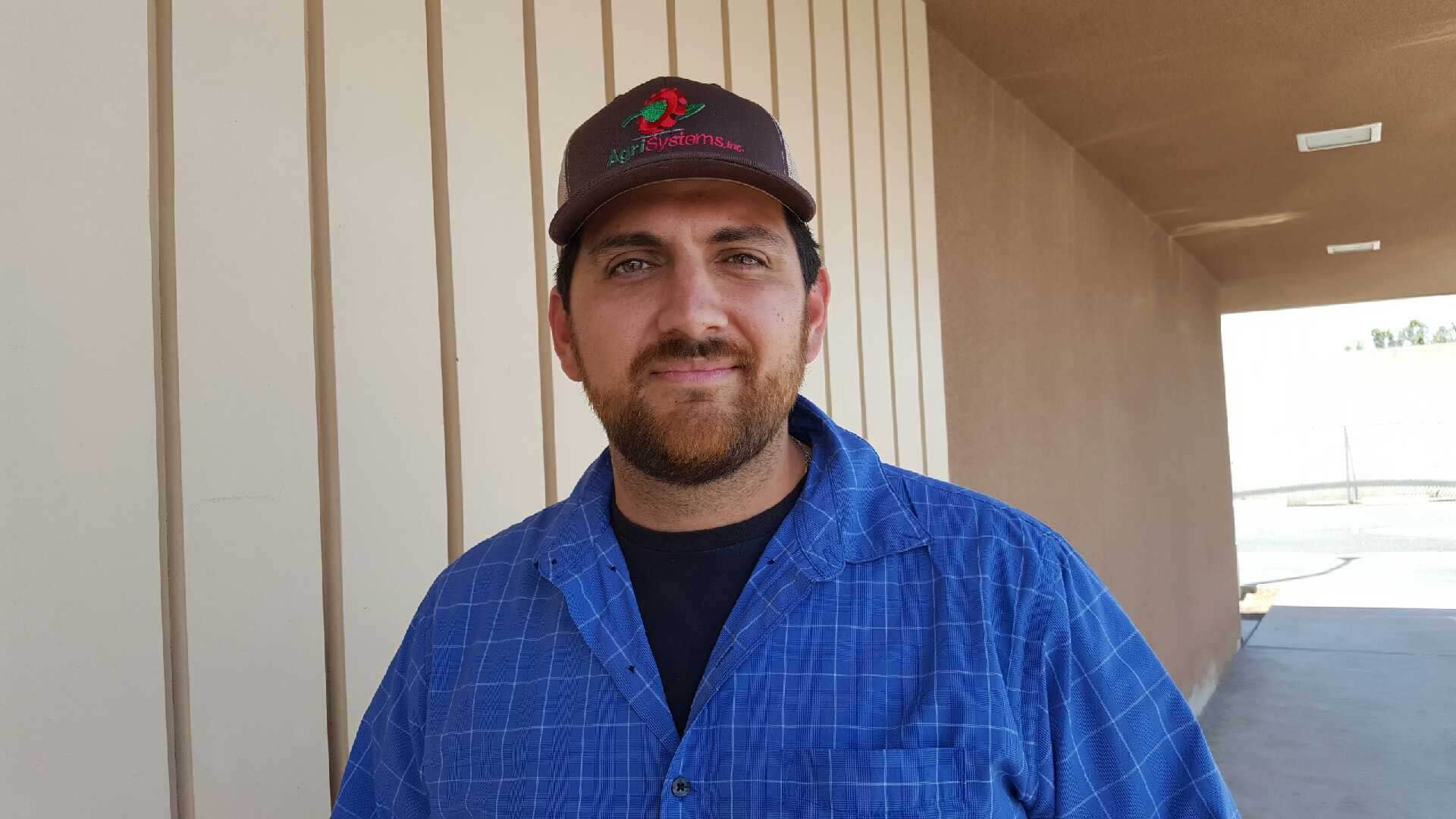
Aaron Magenheim, an innovative leader in the AgTech movement, helps startups and investment companies understand production farming in California to bridge the disconnect between farmers and evolving technology. Enabling farmers to be on the cutting edge of technology has been key to the success of his company, Ag Tech Insight (ATI).

Aaron Magenheim, AgTech Insight founder

Aaron Magenheim, AgTech Insight founder

Magenheim grew up in a family agricultural irrigation business on the Central Coast, Signature Irrigation, and has supported growers his whole life. Four years ago he started Signature AgTech, a stand-alone agriculture technology company, which sells, installs and supports various technologies for growers on the Central Coast and in the Salinas Valley.

The turning point occurred when, according to Magenheim, “I started spending a lot more time in Silicon Valley, and about two years ago I saw a huge disconnect among bright people with great ideas, a lot of money coming into the market and the knowledge that many farmers have absolutely no clue there are solutions 50-100 miles away.”

“That’s when I started AgTech Insight,” Magenheim continued. “I had no clue what we were going to do with it. We have evolved through a number of different situations and built a great team. We started doing meet-ups about a year and a half ago, and we have done nine or ten of them now.”

“We’re at the point now where we are getting collaboration from the city of Salinas and other Monterey Bay economic entities coming together to work with us to build meet-ups and more activity in the area.”

Helping Growers Understand

“As we’ve talked with growers and helped them understand what technology can do to them,” Magenheim explained, “we have also raised money for some companies through grower funding to develop technology and installed in the field. Through that process, we have found growers are really interested in working with and helping early-stage companies. But the value proposition has changed; growers used to have a good value proposition to help an early stage company because they would get use for two or three years of a new technology in their operation before someone else did and profit from that.”

“We’re starting the AgTech Grower’s Alliance (ATGA) —a next generation, ag industry-backed ecosystem to advance the development of AgTech businesses,” Magenheim detailed. “From prototype to market expansion, ATGA, a catalyst for the adoption of technology in agriculture, is basically putting a fund together to allow growers to invest in early stage companies before they’ve put a million dollars into their product, and develop their idea from concept to a scalable point that attracts Silicon Valley [investment],” Magenheim said.

ATGA is growing, even outside of California. “We’re stamping out a satellite in the Turlock area,” Magenheim stated, “and I’m heading to Chicago tomorrow to meet with groups of growers to establish another satellite in that area. This can happen in a lot of different regions—bringing the technology together. It’s really a community effort bringing the growers together,” he said.

Field-level actions

Magenheim wants to track equipment and improve collection of in-field data. “I want to be able to go to a field and see when it was disced, when it was listed, when it was watered, when it was planted, when we should harvest, and what that projected harvest is going to be,” he elaborated. “We have a lot of companies working on software and big data and Internet of Things (IOT) and that’s great; but if you can’t get that information from the field, and you don’t have a place to pull the data from, then it doesn’t exist. We really concentrate on a lot of field-level actions.”

“People are coming from schools such as California State University, Monterey Bay (CSUMB) and Hartnell College in Salinas, and from all over the country at this point,” Magenheim said, “whether they are educators or students trying to understand where their opportunities are. Growers come to our events to learn and understand where technology is going and how their operations can benefit. Then you have a lot of technology people. We get people from Silicon Valley and from Western Growers Center for Innovation & Technology coming down to hear what the growers are talking about and looking for.”

_______________

Over the past 45 years, Ag Tech Insight (ATI) team members have been integrating the best ideas and advancements available to the agriculture industry, including designing, building, and implementing new tractor equipment; revolutionizing row crop irrigation by incorporating drip tape in Salinas Valley; and starting drip tape recycling programs and hydrostatic harvesting. AgTech has brought dozens of new software solutions to the market, from multiple GPS asset tracking systems to world-leading data collection and remote management. Recently AgTech diversified and significantly improved current monitoring and control systems for some of the largest names in the agricultural industry.
2021-05-12T11:05:55-07:00June 22nd, 2016|

Downey Mildew Continues to Challenge Leafy Greens

Downey Mildew Continues to Threaten Lettuce and Spinach

By Patrick Cavanaugh, Farm Director

One of the many facets that makes California Agriculture so successful is the hard-working group of farm advisors who assist growers with a multitude of plant and pest issues. Steve Koike, plant pathology farm advisor for UC Division of Agriculture and Natural Resources, Cooperative Extension in Monterey County, noted, “It has been a fairly typical year, and I wouldn’t say any particular new disease has been noteworthy, which is good for the growers.”

Steve Koike, farm advisor of UC ANR Cooperative Extension, Monterey County.

Steve Koike, farm advisor of UC ANR Cooperative Extension, Monterey County.

Koike, whose research focuses primarily on understanding disease systems, identifying new diseases and examining new methods of disease control, said growers “don’t like to see new diseases come out of our work. The main concern, downey mildew, continues to be challenging for both lettuce and spinach growers.”

“We started in the early spring with heavy mildew on both lettuce and spinach crops,” explained Koike, “and it’s remained pretty heavy on lettuce throughout the spring and early summer here. Spinach downey mildew goes up and down, which is not unusual.” he said. “We had some heavy mildew weeks for spinach growers, then we didn’t hear anything, then we heard that it had died down, and then ten days ago there was another surge. It’s one of those things that is hard to predict because it is variable.”

Since starting his farm advising position in 1989, Koike has been involved in educational programs and applied research in vegetable, fruit and ornamental crop diseases. Because downey mildew can overwinter in perennial crops, its continued occurrence is not too surprising.

“Earlier this year, Jim Correll, my cooperator at University of Arkansas, other leaders in the industry and I finally did confirm race 16, a new biotype of downey mildew. A few years ago, it was only race 12; it is moving target,” he noted.

“Although we have confirmed Race 16 on spinach, we are a little concerned because there are reports of disease on some race 16-resistant varieties.” Koike said.

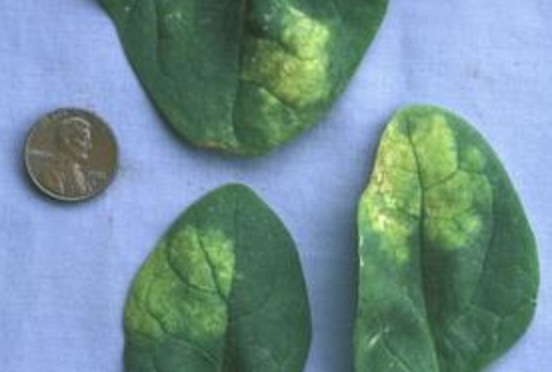
Featured image: Downey Mildew (Source: UCANR Cooperative Extension, Tehama County)

2021-05-12T11:05:55-07:00June 22nd, 2016|

Food Waste Solutions Include the American Farmer (Part 2)

Biotechnology is Part of the Food Waste Solution

by Patrick Cavanaugh, Farm Director

Last week, California Ag Today published an article about the food waste in America discussion held at the 2016 Maximum Residue Level (MRL) Workshop in San Francisco. Jay Vroom, CEO of CropLife America, felt the farmer’s voice was largely absent from the topic of food waste. In the second part of this series, Vroom advocates for the use of bioscience to help eliminate food waste.

According to Vroom, the most vital occurrence of food waste is in production. Consumer food waste is very high, but Vroom believes bioscience is key to keeping the statistics low in all areas of production. “The opportunities for crop protection and biotechnology span a visual that would certainly overcome food waste yield potential with biotechnology,” he said.

In addition, Vroom stated that other genetic enhancements, crop protection tools, seed bed preparation, soil health, moisture management, modern plant nutrient, fertility programs and equipment advances all underscore why farmers need to be included in the food waste discussion. “Most especially,” Vroom said agriculture community can contribute, “the miracles of precision agriculture that are out there in the hands of farmers in almost every corner of the United States today and in almost every farming system.”

At the MRL Workshop, Vroom told the audience, “The farmer’s role and the farmer’s voice in all this is largely absent. We’re looking to help lead—with many of you and others who are willing to participate in a broad coalition—in getting the farmer’s voice in there.”

Jay Vroom, CEO, CropLife America

Jay Vroom, CEO of CropLife America

The farmer’s voice, equipment and biotechnology are imperative because, “modern genetic seed advancements and breeding also generate plant material that is healthier and results in longer storability,” said Vroom. If food were to have longer storability, it wouldn’t be as much of a consumer issue.”

Vroom’s affiliates, who have surveyed the food waste landscape and uncovered results that encourage farmers to speak up, concluded, “The farmer’s voice in the food waste conversation is an opportunity that we see as wide open.”

“I think a place for us to start would be to get the facts together,” Vroom stated, “such as, ‘How much more food would be wasted if the technologies the farmers used to produce those crops today weren’t available and you would have a lot less storability, shelf life, etcetera?’”

“We know that insects, disease, weed control, regulators, fumigants, direct and indirect food waste data is out there,” Vroom said. “We need to gather that up, work together, and assemble it by crop to tell that story about the crops that are directly consumed by consumers.”

Vroom discussed food waste mostly with regard to produce; however, animals and dairy are equally important in the conversation. “Certainly  it gets a little more complicated with protein; but once again, better animal nutrition results in less food waste from meat, milk and eggs. Those are animal agriculture partnerships that we don’t often reach out to, yet another opportunity for us to be able to tell that indirect story as well,” he said.

Vroom contended there are many ways for farmers in every aspect of agriculture to “join forces, connect to the food waste and food safety debate, and to eliminate these critical issues, which certainly time to time is also front of mind for consumers and voters. And we’ve got a great story to tell,” he concluded.

2016-08-03T21:12:23-07:00June 21st, 2016|

Mohr-Fry Ranches Honored

Mohr-Fry Ranches is CAWG Grower of the Year

By Laurie Greene, Editor

The California Association of Wine Grape Growers (CAWG) has selected its 2016 Grower of the Year, Jerry and Bruce Fry of Mohr-Fry Ranches, who will be presented with the award at the CAWG Awards of Excellence Program in Monterey on July 20, 2016. The Grower of the Year Award is the highest honor given by the association to an individual, family, or company that represents an outstanding example of excellence in viticulture and management.

John Aguirre, president of the organization, offered some background on this year’s award winners. “Jerry and Bruce are icons of the Lodi wine grape growing community. They do not own a winery, but they are long-time vineyard agriculturalists and have a long history of community leadership, and involvement in agricultural organizations,” Aguirre said.

Mohr-Fry Ranches Logo, CAWG


Mohr-Fry Ranches was one of the original six Lodi growers to certify their vineyard under the Lodi Rules for Sustainable Wine Growing. Jerry Fry is the president and CEO, and Bruce Fry is the vice president of operations of the family-run Mohr-Fry Ranches. The father and son are two of the most respected growers in the Lodi wine grape community and also dedicate an enormous amount of time serving the industry in their community.

“Jerry was a past chairman of CAWG, and Jerry and Bruce have both been deeply involved not only with CAWG, but with the California Farm Bureau Federation, the Lodi District Grape Growers Association, and the Lodi Wine Grape Commission,” said Aguirre. “They really embraced the idea that working as a community is essential to the strength of agriculture.”

“Jerry was really visionary in terms of developing Lodi into the powerhouse that it is today. Arguably, Lodi occupies one of the most critical positions in the winegrape industry in its ability as a region to produce high-quality grapes that are sought by Napa winemakers to blend into Napa wines,” noted Aguirre.

2016-06-26T15:39:32-07:00June 21st, 2016|

Westands Water District Scholarships

Westands Water District Awards Agricultural Scholarships

By Patrick Cavanaugh, Farm News Director

Gayle Holman

Gayle Holman, Westlands Water District

As part of their educational outreach to the community to raise awareness about agricultural issues and to reward exceptional academic achievement and leadership, the Westlands Water District awarded six scholarships to local high school graduates who are on their way to college. Gayle Holman, public affairs representative for the district, offered some insight about the scholarship application process.

“We go out to each of the six area high schools each year,” said Holman. “We provide them with information, the application, and instructions, and they provide us with an essay on an agricultural-related topic, letters of reference and their transcripts by our deadline. We work with the guidance counselors at each of the schools to make sure those materials are received,” she added.

“A scholarship review committee goes through the applications and selects one person per school based on their academic performance, school activities and community leadership,” Holman said. “Each award recipient is an incredibly highly motivated student, who, we are hopeful, will take that education, bring it back, and apply it to their community in the future,” she said.

Tom Birmingham, general manager of the Westlands Water District noted, “Westlands is honored to provide this assistance for these outstanding student leaders. These scholarships represent a small gesture of thanks and support to the communities on the west side of the San Joaquin Valley that make our region such a productive and vibrant place.”

Holman continued, “Each scholarship recipient will receive $1,000 to be used for community college or university expenses. In addition, many local elected offices will send them congratulatory letters, or certificates. This really emphasizes to the students how important their academic endeavors are.” 

The 2016 scholarship recipients are:
 
Kristina Raulino, a Lemoore High School graduating honors student who plans to attend West Hills Community College to pursue a degree in Psychology,  has been actively involved in tennis and the Future Farmers of America and has served as the Club Secretary for the California Scholarship Federation.
Jonathan Sanchez, a Riverdale High School graduate who will attend California Polytechnic State University to pursue a degree in Agricultural Engineering, has received awards for honor roll and student of the month, and is heavily involved in soccer, cross country, baseball and football. Additionally, he is a member of the California Scholarship Federation and AVID.
Delaney Walker, a graduating senior from Coalinga High School, will attend University of California, Los Angeles to pursue a degree in Education/English. She has been actively involved in basketball and tennis and received awards for honor roll and mock trial. She is also a member of the California Scholarship Federation.
Jonathan Guzman, a graduate of Tranquillity High School, plans to attend the University of California, Irvine to pursue a degree in Business and Finance. He is an honors student actively involved in football and basketball and has received awards for bi-literacy and the Principal’s Honor Roll for all four high school years.
Savannah Rodriguez, a graduating honors student at Mendota High School, plans to attend University of California, Santa Cruz to pursue a degree in Feminist Studies. She has been involved in softball and badminton and received awards for perfect attendance, leadership and MESA.
Fatima Gamino, a Firebaugh High School graduate, will attend University of California, Merced to pursue a degree in Chemical Sciences. She has received several awards including Senior of the Month, Top Academic Athlete and Superintendent’s List. Additionally, she has been involved in the Spanish Club, cross country and Academic Decathlon.
 
2016-08-03T21:12:44-07:00June 20th, 2016|

Patience: How Homeowners Can Help ACP Detection

Authorities Need to Monitor ACP Detection, Confronted With Impatient Homeowners

by Patrick Cavanaugh, Farm Director

44111-CCM-Web_Headshot_Joel-Nelsen

Joel Nelsen, President of California Citrus Mutual

Joel Nelsen, the president of the Exeter-based California Citrus Mutual noted that most homeowners do not realize how intensive it is for authorities to monitor traps for the Asian Citrus psyllid (ACP) at their homes.

“Most people don’t realize how intrusive this process is,” said Nelsen. “You’ve got a member of the County Ag Commissioner’s office driving down a street. He sees a citrus tree in a front yard, or he can see it’s tall enough in the back. He knocks on the door. The homeowner’s not home, so he has to come back.”

“Later, he comes back to the home and again, knocks on the door and finds that the homeowner is home. He says, ‘Can I put a trap out here to find out if you’ve got the Asian citrus psyllid?’ The homeowner hopefully says, ‘Yes.’ He comes back in two weeks. He looks at the trap. There’s no ACP. He comes back two weeks later, and if the homeowner is home, he looks at the trap,” Nelsen explained.

“It’s a constant bother to that homeowner,” Nelsen said. “Eventually, they find more than one ACP. Then the inspector says: ‘Can I spray a crop protection material on your tree and kill the Asian citrus psyllid?’”

“Hopefully the homeowner says, ‘Yes,’” said Nelsen.

CCMLogoNelsen noted that the inspector visited five times already within a two month period, and now he needs to do inspect elsewhere, so having that homeowner be amenable to that much intrusiveness is a significant goal.

Nelsen noted, “The consumer education program that forms the partnership between us and them, from our perspective, is vitally important so the consumers understand what Huanglongbing (HLB)—the fatal citrus disease carried by ACP—is”.

“Then when you find Huanglongbing (HLB),” said Nelsen, “and hopefully it’s very minimal, that homeowner is more likely to agree that the tree must be removed. Fortunately, everybody has said: ‘Yes.’”


2021-05-12T11:03:01-07:00June 17th, 2016|

Vegetables Are the Key to Great Nutrition

How to Increase Fruit and Vegetable Consumption

By Laurie Greene, Editor

In honor of National Eat Your Veggies Day, we spoke with Francene Steinberg, department chair and professor of nutrition at UC Davis, and director of the UC Davis Dietetics Education Program for undergrads. She encouraged the importance of leaning on vegetables for optimum nutrition and health benefits.

Francene Steinberg, department chair and professor of nutrition at UC Davis

Francene Steinberg, department chair and professor of nutrition at UC Davis

“A varied diet of fruits and vegetables, along with grains and some protein sources is extremely valuable to give everybody the best energy for them to grow,” Steinberg said. “It really is so important to get the full spectrum of all the nutrients in these foods, particularly the vegetables.”

“In addition to all the required nutrients,” she explained, “we know the required vitamins and minerals—those that we know about and for which we have the Recommended Dietary Allowance (RDA), the “average daily level of intake sufficient to meet the nutrient requirements of nearly all (97%-98%) healthy people.” (Source: National Academies of Sciences, Engineering, and Medicine)

Continuing, Steinberg said, “There are also quite a few other nutrients and compounds in those foods that are good for usthat have biologic effects. Not only just fibers, but also phytochemicals, phytonutrients, they are really part of what helps to promote overall health. It’s not just the vitamins and minerals in a vitamin pill. You really need to eat the whole fruits and vegetables and grains, and so forth, to get the full effects,” noted Steinberg.

There is a new approach to how much produce people should eat on a daily basis. Steinberg noted the importance of eating the rainbow; fruits and vegetables of every color. Previous nutrition campaigns used to stress the importance of consuming five servings of fruits and vegetables each day.

“Most people don’t even come near to eating the amount of vegetables they need. Rather than focusing on a specific number, an easier goal is just eat more than you currently do, in terms of vegetables. Eat one more serving each day. Try a new vegetable each week. See if you like them,” said Steinberg.

Eat The Rainbow

In particular, Steinberg recommended red beets which are a wonderful vegetable to add to your eating list. “Beets are delicious. These deeply colored fruits and vegetableswhether they’re red, or green, or orangethat really denotes they have more nutrients in them. There are all these colored compounds that are often bioactive in the body. They really are good for you. You can, as you say, eat the rainbow by choosing these brightly colored fruits and vegetables.” noted Steinberg.

Steinberg encourages consumers to 'eat the rainbow'.

Steinberg encourages consumers to ‘”eat the rainbow.”

By consuming more vegetables, consumers can more avoid many chronic diseases. “I think that certainly most of the chronic diseases we suffer from today stem from obesity, diabetes, heart disease, that sort of thing,” Steinberg commented. “They’re often a combination of overconsumption of overall calories and empty nutrients, and not enough consumption of some of these fruits and vegetables that hold such valuable nutrients for us,” said Steinberg.

“It really is a matter of trying to make your diet as nutrient-rich as possible, and really avoiding those empty calories that seem to provide us lots of extra calories without any added benefit,” she stated. “If folks can cut down on some of the sugary and highly fatty snacks, chips and that sort of thing, and eat a piece of fruit or an extra vegetable serving per day they’re really much better off.”

Steinberg suggested one way to stimulate the desire to eat more vegetables is by making them readily available. “I think sometimes when people buy some of the produce, then they put it away in the refrigerator, it’s not visible. It’s hidden and they go to the cupboard and look and there’s a bag of chips that’s very easy to grab.”

She also recommended ways to make sure produce is not left behind. Consumers can purchase “fruits and vegetables that are already pre-washed and cut up, and put them in a little baggie or bowl on the counter, if they’re not perishable, or just a baggie in the refrigerator. It’s a quick grab and go. You can take it and have it as a quick snack. Things that are appealing to children are small bites that are easily consumed, bright and colorful.”

Steinberg recommended consumers “try to find those fruits and vegetables that are very fresh. Sometimes the ones we find in the grocery stores are not as flavorful as [backyard-grown], from the farmer’s market, or even just knowing which vegetables are in season. At the grocery store, the best things that are in season are usually going to be the freshest and tastiest. ” said Steinberg.

Fresh is not the only way consumers can enjoy the benefits of produce since frozen varieties are easy to come by. “Some of the frozen whole vegetables and fruits are highly nutritious,” said Steinberg. “They’re very affordable and available year round.”

Steinberg also mentioned the availability of low calorie dips such as hummus can easily be found in grocery and convenience stores which encourages more fresh vegetable consumption. In fact, hummus is primarily chickpeas, another great vegetable. “Dipping fresh vegetables in hummus. That’s delicious,” she said.

2016-10-24T15:54:25-07:00June 17th, 2016|

Tomato Distributor Works With Large, Small Scale CA Farms

Morning Star Company Supplies Tomatoes to Large Distributors 

By Emily McKay Johnson, Associate Editor

Renee_Rianda

Renee Rianda with Morning Star Packing discussing the California tomato processing company

The state of California has an ample supply of tomato processors and growers. Renee Rianda, a representative with Morning Star Company, talked about the Woodland, Calif. packing industry that mainly supplies to large distributors. “Morning Star company is the overall umbrella. Morning Star is a big player.” she said, “We are unique in the fact that we are owned by one person.”

The majority of California tomatoes are used as an ingredient in other brands. Morning Star is a name that is familiar with companies such as Domino’s Pizza and Heinz Ketchup. They are not branded like companies such as Del Monte or Campbell’s, but they are used in prepared foods for grocery stores.

“Where I fit into this whole massive situation is I deal with the growers.” she said about her role with the company, “I use roughly a couple hundred growers which is not quite everybody in the state but most of them.”

The fluctuation in supply and demand for tomatoes can vary from year to year. Rianda said that is why they work with a variety of farms in California, “We have everybody from a small individual grower of everything to larger family farms that do a variety of commodities.”

Though there is not a panel or board of directors, the Morning Star Company base is efficient. “We’re very flat as far as an organization goes.” Rianda said, “Everybody has their expertise in the areas that they are best versed in.”

Rianda likes to keep herself updated at conferences around the state. In turn, she can help growers have a commodity to sell. Using the right products is key to Rianda, “That way everybody can still have ample tomatoes to eat.”

2016-06-19T21:36:22-07:00June 16th, 2016|

Nut Harvest Safety Highlights

Nut Harvest Safety Seminar Highlights Risk Areas of Harvest Season

By Patrick Cavanaugh, Farm News Director

Nut harvest safety was the topic of a recent seminar, sponsored by AgSafe and the Western Agricultural Processors Association (WAPA), at the Fresno Farm Bureau office.

Nut_Harvest_Safety_2

Use of safety lighting for almond nut harvest

When almond harvest commences in a few months from now, safety in the field is very important as crews move out to eight hundred thousand acres of bearing orchards. California Ag Today produced a video on this meeting.

Click here to watch video.

Carlos Mendez, almond harvest manager for Madera-based AgriLand Farming, which produces almonds, pistachios, walnuts, grapes, and citrus, said, “Safety is number one for us. If you look at any of our vehicles, we have a lot of lights to help break through the dust. It looks like a Christmas tree, which includes my truck. We also use safety vests and strobe lights on everything,” he noted.

Nut_Harvest_Safety bank-out wagon

Bank-out wagon during almond nut harvest.

Mendez said safety is part of the AgriLand Farming culture. “We don’t have a safety officer or coordinator because we are all in charge of safety. All of us wear that ‘safety hat,’” Mendez said.

And when Mendez talks about all the necessary increased lighting, he is also trying to prevent harvest workers from being run over by harvest vehicles or getting their hands caught in chain drives or augers.

nut harvest safety

Bank-out wagon during almond nut harvest

“We’re moving, at any given time, sixty pieces of equipment. Everyone must be aware of harvesters backing up to bank-out wagons in the orchard to transfer the crop, as well as bank-out wagons unloading their the crop at elevators into transport trucks,” Mendez said.

“All workers need to be so constantly careful, even to preventing falling off equipment,” said Mendez.

__________________________

AgSafe is a statewide non-profit organization dedicated to providing employers and employees in the agricultural industry with education and resources to prevent injuries, illnesses and fatalities.  Our vision is to be a one-stop resource providing safety solutions for the agricultural industry.

Western Agricultural Processors Association (WAPA) was formed in 2009 to answer the industry’s call for representation and expertise in critical compliance areas, such as air pollution, food safety and safety services, a new agricultural organization has been formed. This organization shares staff and office with the California Cotton Ginners and Growers Associations. WAPA represents the tree nut industry including almond hullers and processors, pistachio, pecan and walnut processors, on regulatory and legislative issues. In addition, the Association performs critical consultative services for its members on issues such as air pollution permits, lockout/tagout and safety plans, Spill Prevention Control and Countermeasure (SPCC) plans and many other services.


2016-06-16T15:23:40-07:00June 16th, 2016|

Food Safety: Protecting Consumers, Protecting Brands

The Acheson Group Lends Commodity Groups Food Safety-Based Brand Protection 

By Patrick Cavanaugh, Farm News Director

David_Acheson

Dr. David Acheson, Founder and CEO of The Acheson Group

With the overall importance of food safety, it’s important that growers remain diligent in the enforcement of their food safety protocols. Dr. David Acheson is the Founder and CEO of The Acheson Group; a consulting firm for food and beverage companies as well as those who provide technical support to the food industry.

He noted that part of risk management is taking the particular commodity into account. Things like leafy greens and cilantro are examples of some of the more high-risk crops. One method of mitigating the risks involved is through the adoption of good agricultural practices. “That gets back to everything from controlling the quality of water that you’re using to irrigate, especially if its spray irrigation,” said Acheson.

Some other ways of lowering risk include making sure the equipment that’s being used is properly sanitized, checking for animal encroachment, as well as being mindful of the time it takes to get the product refrigerated after its been harvested. Acheson noted that, “as soon as you chop it out of the ground, you’ve got exposed surfaces and you’ve got pathogens where bugs can grow.”

Another area of vulnerability is making sure employees follow the established food safety protocols. Acheson said that when his firm is assessing the risk of an operation, “We’re always looking for, not only are you talking the talk, but are you walking the walk.” Safety means relying on people to follow procedure, “Most companies have good policies and procedures written but do they translate in the fields? To the way the workers are operating?” Acheson said.

Ensuring that all of the safety measures come together in a coherent and effective way is the cornerstone to a successful agricultural operation. Acheson noted that, “The good operations, they’re going to walk the fields just before they harvest to look for any evidence of obvious animal encroachment and are continuing to watch as they move down through the field harvesting the product.”

(Food_Safety)_Flags_in_the_field_mean_stop_harvest_here

Flags in the field mean “Stop Harvest Here”

One way the USDA has tried to limit the risk involved in one particular crop was through the adoption of the California Leafy Green Products Handler Marketing Agreement. “I think it was a great step forward,” said Acheson. “I mean, really what it was doing was codifying good agricultural practices in California.”

The agreement has been so successful; it was used as a template for the FDA’s Produce Safety rule. By codifying good agricultural practices through the leafy green agreement, the FDA has taken it a step further with their increased area of jurisdiction. The “FDA has got global jurisdiction over leafy greens and produce that’s grown anywhere in the world that’s coming into commerce in the US,” said Acheson. “If you’re growing spinach in Salinas, or you’re growing spinach in Mexico, or anywhere in the world and you’re bringing it into the US to go into interstate commerce, you are required to follow the produce rule.”

Food safety is of great importance to farming operations of all sizes. “To me, no food company is too small to pay attention to food safety, they can’t.” said Acheson. He also noted that enforcement of safe handling practices is what sets some operations apart from others.

Acheson said, “That’s where you start to see the difference between the good ones and the not so good ones. Because the good ones will say, ‘this is a priority, we need to stop harvesting the rest of this field. It’s maybe 10 acres, but we’ve got to plow it under because we’ve got risks that we can’t control.’” Acheson continued, “That’s where you differentiate from the ones who will say, “well there’s ten acres, maybe we can use 9 of those acres and we’ll just plow under one acre of it.”

It all comes down to being diligent in the adherence to food safety directives. While it can sometimes be challenging for growers to always strictly abide by healthy agricultural practices, the alternative of being lax in enforcement could create dire consequences for not just an individual grower, but an entire commodity group.

2021-05-12T11:03:01-07:00June 15th, 2016|
Go to Top