University of California, Division of Agricultural and Natural Resources
New IPM Work on Brown Stink Bug

New IPM Approach to Brown Stink Bug In Desert Cotton

By Patrick Cavanaugh, Farm News Director

This year, the UC Division of Agriculture and Natural Resources, Cooperative Extension, Riverside County began an Integrated Pest Management (IPM) program to control Euschistus servus, or brown stink bug, a problem in Southern California’s cotton production areas.

Vonny Barlow

Vonny Barlow, a UC Cooperative Extension farm advisor in Riverside County

Vonny Barlow, a UC Cooperative Extension farm advisor in Riverside County began evaluating brown stink bug in cotton last year, and he received additional funding this year from a National Institute of Food and Agriculture (NIFA) grant administered through North Carolina State University, to continue his research this year. Barlow just hired two interns to work with brown stink bug in the Palo Verde Valley in Southern California.

The pest was known to exist in Arizona for about eleven years, but was not a critical issue until about three years ago, when it moved into California. California cotton growers had to spend a lot of money to spray to manage the insect, and it just wasn’t economically feasible.

“In many areas in the south, the brown stink bug pierces into the cotton boll with its proboscis-like mouthpart—a stiff, short straw,” said Barlow. “Once the cotton boll is pierced, the brown stink bug tries to feed on the cotton seed. The problem is the puncture allows bacteria to enter and boll rot to set in. Boll rot is the issue because it lowers yield quality; without boll rot, the brown stink bug is much more of a manageable pest.”

Spraying is not the answer to control the bug, according to Barlow. “We are going to look at an area-wide pest management approach by just essentially surveying the pest control advisers (PCAs) and growers about cropping that is near or even some miles away from cotton,” he said. “Where is the brown stink bug showing up? When did it show up? Is it moving? When are you going to harvest? Is it moving into the cotton? That way, we can give the cotton growers a better idea of when they should start management practices for brown stink bug, instead of just routinely calendar-spraying every two weeks.”

“We hope to predict when brown stink bug will move into cotton. Farmers who just harvested wheat should expect it will come into your field within the week. Start scouting; it is another very good IPM tactic to reduce sprays and to better manage pests,” said Barlow.

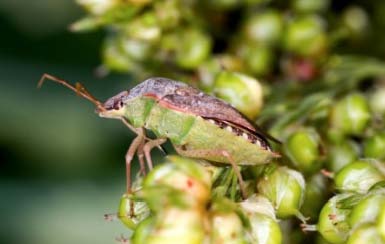
Featured image: Brown Stink Bug (Source: Brown Stink Bug (Source: “Chemical Efficacy Trial using Select Insecticides against Brown stink bug, Euschistus servus on Commercially Planted Cotton” by Vonny Barlow, University of California, Agricultural and Natural Resources, Riverside County, April 2016 issue of “Postings from the Palo Verde” newsletter)
2021-05-12T11:05:54-07:00June 23rd, 2016|

Downey Mildew Continues to Challenge Leafy Greens

Downey Mildew Continues to Threaten Lettuce and Spinach

By Patrick Cavanaugh, Farm Director

One of the many facets that makes California Agriculture so successful is the hard-working group of farm advisors who assist growers with a multitude of plant and pest issues. Steve Koike, plant pathology farm advisor for UC Division of Agriculture and Natural Resources, Cooperative Extension in Monterey County, noted, “It has been a fairly typical year, and I wouldn’t say any particular new disease has been noteworthy, which is good for the growers.”

Steve Koike, farm advisor of UC ANR Cooperative Extension, Monterey County.

Steve Koike, farm advisor of UC ANR Cooperative Extension, Monterey County.

Koike, whose research focuses primarily on understanding disease systems, identifying new diseases and examining new methods of disease control, said growers “don’t like to see new diseases come out of our work. The main concern, downey mildew, continues to be challenging for both lettuce and spinach growers.”

“We started in the early spring with heavy mildew on both lettuce and spinach crops,” explained Koike, “and it’s remained pretty heavy on lettuce throughout the spring and early summer here. Spinach downey mildew goes up and down, which is not unusual.” he said. “We had some heavy mildew weeks for spinach growers, then we didn’t hear anything, then we heard that it had died down, and then ten days ago there was another surge. It’s one of those things that is hard to predict because it is variable.”

Since starting his farm advising position in 1989, Koike has been involved in educational programs and applied research in vegetable, fruit and ornamental crop diseases. Because downey mildew can overwinter in perennial crops, its continued occurrence is not too surprising.

“Earlier this year, Jim Correll, my cooperator at University of Arkansas, other leaders in the industry and I finally did confirm race 16, a new biotype of downey mildew. A few years ago, it was only race 12; it is moving target,” he noted.

“Although we have confirmed Race 16 on spinach, we are a little concerned because there are reports of disease on some race 16-resistant varieties.” Koike said.

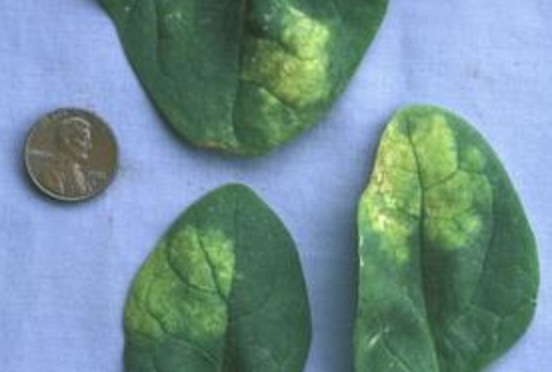
Featured image: Downey Mildew (Source: UCANR Cooperative Extension, Tehama County)

2021-05-12T11:05:55-07:00June 22nd, 2016|

Dry Weather Affecting Cattle Ranchers

Cattle Ranchers Hit Hard in the South Valley, Move to Greener Pastures

by Emily McKay Johnson, Associate Editor


Josh Davy, a University of California, Division of Agriculture and Natural Resources, Cooperative Extension livestock, range and natural resources advisor in Tehama County reported good news for the cattle industry despite dry weather conditions around the state.

Josh Davy, UCCE Tehama County

Josh Davy, UCCE Tehama County livestock, range and natural resources advisor (Source: UCCE Tehama)

Heading into last fall, the feed year started off relatively dry, according to Davy; however the end-of-season crops produced a better forage than the year before. Though prices slid for the cattle farmer, Davy said optimisticly, “We’re happier on our range conditions—as compared to the previous years that we’ve had—by a long shot.” he said.  

The drought that plagues California still directly impacts cattle ranges, and ranchers are not quite out of trouble. Davy had to resort to feed supplementation through the month of December. “We didn’t have to supplement as much as in the previous few years,” he said, “but we definitely did this fall.” Fortunately the winter months were short and the spring rainfall produced good growth—good assurances that will help Davy and his team make it through next year.

Cattle-on-I5Davy has fortunately sidestepped hardship with a tinge of luck, but it hasn’t been as easy for ranchers in the south of the state. When cattle lack enough sustenance, a domino effect is felt all across the state of California; a lactating cow may not produce enough milk to feed her calves.

The cows like lush grass, a rarity in the Central and South Valley summer months. Winter options for cattle are either winter range ground or mountain meadow ground where greenery is still prevalent. Some ranchers haul their cattle to summer pasture feedlots to graze, while some prefer Oregon instead.

“We’re dried off here to where you might find a swell with a little rye grass in it that’s still green,”Davy said regarding the disappearance of lush land, “but pretty much everything else, the oats and all that stuff, they’re done here.”

Looking forward, Josh Davy is hoping irrigation water will sustain not only the beef cattle, but the pastures as well, to keep the herds stationary and munching on green grass.


2021-05-12T11:17:13-07:00June 8th, 2016|

Boost in Butte County Rice Production

Butte County Rice Growers and Communities Are Optimistic

By Emily McKay Johnson, Associate Editor

Butte County rice growers are all smiles this year as regional filled-to-capacity water allotments have progressed crop production in a very timely manner. Randall Mutters, the county director of the University of California (UC) Cooperative Extension in Butte County, specializes in rice production.

Randall Mutters

Randall Mutters, county director of the UC Cooperative Extension in Butte County (Source: UCCE Butte County)

Butte County, known as the “land of natural wealth and beauty,” hosts the second largest acreage of rice in California and a population of over 220,000 residents as of 2012. Rice production is imperative for supporting local growers and surrounding communities. Mutters reiterated, “When the agricultural base is doing well, the community as a whole prospers.”

As growers continue to cultivate their rice, businesses and communities in the area are incredibly optimistic. Mutters explained, “I fully expect to have close to 500,000 acres of rice planted this year,” a remarkable number compared to last year’s 425,000 planted acres.

Mutters said, “It’s been relatively warm and dry, with just a few sprinkles here and there, but not enough to really slow down operations. The season is progressing very timely.” Also encouraging to Mutters, is pests that are typically an early season problem, have not been troublesome this year.

The UC Cooperative Extension in Butte County monitors and protects the agricultural industry by offering educational resources to promote technology and other strategies for farmers. Though the price of rice is not very strong, the community as a whole is enjoying their success.

2021-05-12T11:00:54-07:00June 7th, 2016|

It’s Avocado Month!

Celebrate the Magic of California Avocados.

By Emily McKay Johnson, Associate Editor


Chefs and foodies alike, get ready for California Avocado Month which begins TODAY, June 1st. Menus across California are celebrating this magical fruit, not only for its postive health benefits as a source of Omega-3 and Vitamin E, but also for its resiliency to thrive in spite of the prolonged drought.

california-avocados-logo


“Avocados are at their peak of the season,” said Jan DeLyser, vice president of marketing for the California Avocado Commission (CAC), “so we’re in very good supply and their eating quality is just second to none.”


Avocados are so diverse, they can be incorporated into daily menus for breakfast, lunch, dinner, snacks, beverages and even desserts. Consider celebrating summer gatherings with chocolate avocado pudding, avocado ice cream or, perhaps, even an avocado cake. Links to recipes are included at the end of the article.


Would you believe California avocados can be used as a butter alternative—with 300 fewer calories per quarter cup serving?


Despite entering year five of the drought, California and its farming industry received enough rain in the northern part of the state this year to replenish reservoirs and actually increase this year’s avocado harvest. Roughly 4,000 growers on approximately 53,000 acres have harvested 392 million pounds of avocados.


“We actually have more fruit this year than we had last year,” acknowledged DeLyser. “Our growers are continuing to be good stewards of the resources that are available to them and able to produce avocados for us all to enjoy throughout the summer months.”


The CAC’s collaboration with chefs around the country to feature California avocado items, helps support growers of the tree-bearing fruit in the state. Approximately 90 percent of the nation’s avocado crop comes from fertile, California soil, mostly on small family farms, which can ensure the avocados are carefully handled and inspected.


Recipes incorporating delectable avocados:  Chocolate Avocado CakeAvocado Ice Cream

2021-05-12T11:05:56-07:00June 2nd, 2016|

CCA Exam Signup Open

California Certified Crop Advisor Exam Signup Open

Certified Crop Advisers (CCAs) in California and Arizona have the opportunity to register for the August 5, 2016 CCA Exam until June 24, 2016.  The exam will be given in Sacramento, Tulare, Ventura and Yuma.  Registration for the exam is available at: https://www.certifiedcropadviser.org/exams/registration.CAPCA ED

More than 1,000 active CCAs in California and Arizona are playing an important role assisting growers with the efficient and environmentally sound use of fertilizer and crop management.  Many California CCAs recently completed the University of California/California Department of Food and Agriculture Nutrient Management Training Course which qualified them to complete grower nitrogen management plans that are or will be required by the various California Regional Water Quality Boards.

“Crop consultants are encouraged to become CCA s to show that they have the commitment, education, expertise, and experience to make a difference in a client’s business,” said California CCA Chairman, Fred Strauss, Crop Production Services.  “The CCA certification is largest, most recognized agriculturally-oriented program in North America.  The CCA Exam Preparation Course, scheduled in Sacramento on June 24,  will help candidates prepare for the test. Registration for the exam prep course is available at https://capcaed.com/june-24,-2016-ca-cca-exam-preparatory-workshop. 

For more information on the California CCA program, go to: www.cacca.org, or contact Steve Beckley at (916)539-4107 or steve.beckley48@gmail.com for more information. The California CCA Program is also on Facebook.

2016-06-15T18:03:18-07:00May 18th, 2016|

Bill Chandler on Farming

Bill Chandler Builds a Legacy

By Patrick Cavanaugh, Deputy Editor


A third-generation farmer in Fresno County, Bill Chandler farms near Parlier, Selma, and Fowler. The family operation has traditionally produced tree fruit such as peaches, plums and nectarines, but they are certainly expanding their crop diversity. “We have gone more into almonds lately because of unavailable labor,” Chandler commented. “We are looking into citrus, which is not as perishable as soft fruit—which, if you don’t harvest it right away, you’ve lost the whole year’s effort.”

Like so many farm families in California, the Chandlers go back a couple of generations farming here. “My grandfather came out here in 1888 from Illinois,” Chandler expounded, “and looked at this area. It was appealing because the land prices were not that bad compared to Illinois. But the big deal was the weather; we don’t have all that snow in the winter time. We also  have relatively level ground and not a lot of rocks in our soil. We, too, have hardpan under the soil, but that can be worked out.”peaches

“My father got out of school in 1921 and started farming in this area,” said Chandler. “I was the only son and I always wanted to farm. I have a sister who was able to inherit some, and I bought my sister out, so that’s what our farm is now.”

Bill Chandler and his wife, Carol, have two sons, Tom and John, who are both back on the farm. “They both majored in ag, which was kind of neat; one in ag econ and the other in food science, and we are very proud that they are both back farming with us now. Tom, the older one, majored in ag econ at UC Davis and was in banking for about 12 years. Now he has come back and has been helping us on that side of the farming, which is very very important. He also did some land appraisal on the side. His brother, John, who majored in in fruit science at Cal Poly, is more into field work, and he does some beekeeping on the side as well.”

Chandler said a lot of success and wonderful things about farming have always been accompanied by a lot of challenges as well. “Yeah, there is always something,” he said. “I don’t care if it’s labor, weather or regulations. We are really fortunate; we stand at a place here, Kearney Field Station*, where the UC has done a great job helping us solve some of these regulations or pests.”

Chandler’s sons, Tom and John, are going to pick up where their dad leaves off, but that may be awhile, “You know,” Chandler philosophized, “a farmer never does retire. Fortunately, I am able to live on the farm. They are doing most of the farmwork, but they do ask me questions.”

This year’s above-average rainfall, along with the snowfall, has been great, but Chandler said,  “There is still going to be a lot of work to dig ourselves out of this four-year drought. I have experience and so do many other people. Not only are our trees suffering from lack of proper irrigation, but we are spending a lot of money putting in new wells or new irrigation systems so that we can handle this drought.”

Chandler doesn’t take nearby UC and USDA researchers for granted. He always attends meetings and takes notes. “We can go to these folks and have these seminars that are really helpful.”

____________________________________________

*Kearney Agricultural Research and Extension (KARE) Center

2016-05-31T19:24:07-07:00April 12th, 2016|

Agriculture Science Recognition Awards, Part 4

Elizabeth Mosqueda, Agriculture Science Recognition Award Honoree

By Charmayne Hefley, Associate Editor


Elizabeth Guerrero Mosqueda, a graduate student in the Department of Plant Science at Fresno State, was one of four students to receive the Agriculture Science Award in mid-March presented by Jim Patterson, California assemblymember, along with, Sandra Witte, dean of the Jordan College of Agricultural Sciences and Technology and Lawrence Salinas, Fresno States’s executive director of government relations.

Jim Patterson, California Assemblymember

Jim Patterson, California State Assemblymember

Patterson said Mosqueda, the child of migrant farmworkers from Mexico,“set her sights on overcoming many obstacles from an early age. Elizabeth’s parents worked on the lettuce fields in the Salinas Valley, which led to her understanding the vital role farmworkers have in harvesting crops and the impact of frequent labor shortages on farming. All of that experience led her to study ways to improve lettuce production.”

Patterson said the labor shortage has required the use of automated lettuce thinners to raise lettuce, one of the state’s biggest crops.  “But some farmers are hesitant to use new technology,”said Patterson, “so Elizabeth decided to roll up her sleeves two and a half years ago” and conducted her graduate studies on the comparison of using lettuce thinning machines to lettuce work done by hand. “She completed her study and has since traveled nationwide to share her findings with other scientists and agronomists.”

Patterson added Mosqueda was recently selected as one of fifty students nationwide to attend American Society of Agronomy’s Graduate Student Leadership Conference.Amer Society of Agronomy

“Elizabeth believes that life is a challenge that shapes us into the people that we are meant to be,” Patterson said. “And each and every struggle and accomplishment that life has presented her has made her, and is making her, into the dedicated, hardworking and successful woman she is today.”

While at Fresno State, Patterson said Mosqueda helped to reestablish the Plant Science Club, serving as both the club’s secretary and president. “Elizabeth is also a member and has volunteered for the Central Valley California Women for Agriculture,” Patterson said, “and many other local, statewide and national farming organizations.”

Mosqueda was encouraged to apply for the award by professors in her department. “I’m very proud to be a part of the Department of Plant Science,” Mosqueda said. “I’m very thankful to all my professors, my advisor and all the other mentors who have helped me achieve this prestigious award.”

One month away from completing her program, Mosqueda hopes to obtain a position with the University of California Cooperative Extension (UCCE), Monterey County as a farm advisor either in vegetable crop production or weed science upon graduation. Mosqueda said she would like to “help growers firsthand with the problems that are going on in our agriculture industry today.”

2021-05-12T11:05:57-07:00April 11th, 2016|

New Citrus PSA Shows Homeowners HLB Threat

New Citrus PSA Shows Homeowners HLB Threat

By Charmayne Hefley, Associate Editor

Without the involvement and aid of backyard citrus growers to prevent the spread of the invasive Asian Citrus Psyllid (ACP) and the citrus-deadly Huanglongbing (HLB) disease vectored by the ACP, consumers would no longer have the opportunity to enjoy fresh citrus. Deadly Plant Disease Threatens California Citrus, the newest public service announcement (PSA) from California Citrus Pest Disease and Prevention Program (CCPDPP) conveys this message to residential citrus growers, according to Joel Nelsen, California Citrus Mutual (CCM) president, in order to keep all citrus safe from HLB.

Nelsen said the citrus PSA announcement “shows a family in the backyard barbequing and doing what families do on a weekend.”  They walk over to their row of three citrus trees in the backyard when an orange falls off the tree and disappears, followed by the disappearance of all three trees. Nelsen said the PSA zeros in on the family members’ confusion at the disappearance of the oranges and the trees, all associated with the HLB infection.

CCPDPP’s new PSA is a way for homeowners to understand the importance of keeping citrus safe from HLB, said Nelsen, ”because as much as they’re emotionally tied to their trees, so are the growers in our industry. We don’t want to see anyone’s tree get eliminated because of HLB.”

_________________________________

Prevent HLB; Check Your Citrus Trees for Asian Citrus Psyllid

In a new four-minute video, University of California, Division of Agriculture and Natural Resources (UC ANR) scientists encourage California farmers and home citrus growers to check new growth on their citrus trees for Asian citrus psyllid infestation. As ACPs spread Huanglongbing (HLB) disease, a serious, incurable threat to both the citrus industry and backyard citrus trees, scientists aim to minimize the ACP population until researchers find a cure.

A flush of new leaf growth on citrus trees announces spring in California. The emergence of feathery light green leaves is particularly attractive to Asian citrus psyllids (ACP), signaling a critical time to determine if the trees are infested with ACPs.

“We encourage home citrus growers and farmers to go out with a magnifying glass or hand lens and look closely at the new growth,” said Beth Grafton-Cardwell, UC Agriculture and Natural Resources (UC ANR) citrus entomologist. “Look for the various stages of the psyllid – small yellow eggs, sesame-seed sized yellow ACP young with curly white tubules, or aphid-like adults that perch with their hind quarters angled up.Save Our Citrus

Pictures of the ACP and its life stages are on the UC ANR website. Call the California Food and Agriculture (CDFA) Exotic Pest Hotline at (800) 491-1899 with any findings.

The UC ANR ACP website provides help in finding the pest and taking action.

(Source: UC ANR)

_________________________________

2021-05-12T11:03:03-07:00March 30th, 2016|

Citrus Growers Form ACP Management Areas

Commercial Citrus Growers Form Local ACP Management Areas

By Charmayne Hefley, Associate Editor


Commercial citrus growers are banding together to prevent the spread of the citrus-deadly Huanglongbing (HLB) disease and the pest that spreads it—the Asian Citrus Pysllid (ACP). Beth Grafton-Cardwell, an IPM specialist and research entomologist at UC Riverside and Director of UC ANR Lindcove Research & Extension Center, said growers are forming ACP management areas to prevent ACP from spreading HLB.

Elizabeth E. Grafton-Cardwell

Elizabeth E. Grafton-Cardwell

“ACP management areas are being formed by the citrus industry and community,” Grafton-Cardwell said. “They’re basically saying, ‘Let’s get together. Let’s form these groups of growers—25 to 35 growers in an area. Let’s work together as neighbors to treat across a large area and get more of the psyllids killed than if we each treated individually at different times.’”

HLB is a serious concern to growers, according to Grafton-Cardwell; the disease has already devastated the citrus industry in Florida. “We want to prevent that from happening here,” shel said.

According to the California Department of Food and Agriculture, ACP notices posted thus far in the first quarter of 2016 include the following areas:

            COUNTY                                                                 CITY

   Fresno County    Fresno
   Kern County    Bakersfield, Shafter, Wasco
   Imperial County    Bard, Brawley area, Calipatria, Niland, Winterhaven, Zone 7
   Los Angeles County    La Puente, San Gabriel
   Riverside County    Hemet, Riverside, San Jacinto
   San Bernardino County    Cadiz
   San Diego County    De Luz, Escondido, Fallbrook, Ramona, San Diego
   San Joaquin County    Stockton
   Santa Barbara County    Areawide, Buellton, Casmalia, Garey, Orcutt, Santa Maria, Sisquoc
   Santa Clara County    Milpitas, San Jose
   Stanislaus County    Oakdale
   Tulare County    Porterville, Strathmore
2021-05-12T11:03:03-07:00March 17th, 2016|
Go to Top