Associations, Organizations, Educational and Research Institutions

New UC IPM Program Director

Jim Farrar Named Director of UC Statewide IPM Management Program

By Pam Kan-Rice, UCANR Assistant Director, News and Information Outreach

Jim Farrar has been named director of the Statewide Integrated Pest Management Program for the University of California’s Division of Agriculture and Natural Resources. He will begin as new uc ipm program director on Oct. 1.

UC IPM works with growers and residents to protect human health and the environment by reducing risks caused by pests and pest management practices.

Farrar is currently director of the Western IPM Center, where he has served since 2013. He succeeds Kassim Al-Khatib, UC IPM director since 2009, who is transitioning to a UC Cooperative Extension specialist position located in the Department of Plant Sciences at UC Davis. There Al-Khatib will focus on his research in weed management.

“UC IPM is a widely recognized national leader in integrated pest management,” Farrar said. “I am excited to continue efforts to make IPM the standard practice for managing pests in agriculture, communities and natural areas in California.”

Prior to joining the Western IPM Center, Farrar was a professor of plant pathology in the Department of Plant Science at California State University, Fresno for 12 years.

At Fresno State, Farrar received three teaching awards. He taught courses in plant pathology, plant nematology, diagnosis and control of plant diseases, crop improvement, aspects of crop productivity, mycology, sustainable agriculture and advanced pest management. His research centered on fungal diseases of vegetable crops, including management strategies for cavity spot of carrot. During his Fresno State tenure, he served four years as chair of the Department of Plant Science and a year as interim chair of the Department of Food Science and Nutrition.

From 1995 to 1997, Farrar taught in the Botany Department at Weber State University in Ogden, Utah. At Weber State, he conducted research on rock cress plants infected with a rust fungus that causes false-flowers. This rust is closely related to a species that is a potential biological control agent for dyer’s woad (Isatis tinctoris), an invasive weed.

Farrar has published scientific papers, extension newsletter articles, and articles in agricultural industry magazines. He also wrote a chapter in the book Tomato Health Management and five disease descriptions in the book Compendium of Umbelliferous Crop Diseases. He recently completed a three-year term as senior editor for feature articles in the journal Plant Disease and was senior editor for the online journal Plant Health Progress for three years. Farrar is a member of the American Phytopathological Society and the Pacific Division of the American Phytopathological Society.

The Wisconsin native completed his Ph.D. in botany and B.S. in plant pathology at the University of Wisconsin, Madison, and his M.S. in plant pathology at UC Davis.


 

2016-05-31T19:28:05-07:00September 10th, 2015|

EWG’s “Dirty Dozen” Contradicts Its Own “Food Scores”

Teresa Thorne Speaks Against EWG’s “Dirty Dozen” List

By Charmayne Hefley, Associate Editor

There are constant concerns plaguing consumers about the safety of the foods they eat. As a result, consumers turn to the internet as a way to educate themselves, and oftentimes visit sites such as the Environmental Working Group (EWG) for information. Teresa Thorne of the Alliance for Food and Farming (AFF) said EWG is self-contradictory in its statements of food safety.

“Nine months ago, the Environmental Working Group released the Food Scores database which ranks organic and conventional fruits and vegetables among the best foods for consumers and urges them to eat more,” Thorne said.

And, EWG published the following statement on its website:

No, eat your fruits and vegetables! The health benefits of a diet rich in fruits and vegetables outweigh the risks of pesticide exposure. Eating conventionally grown produce is far better than skipping fruits and vegetables.

“So it’s ironic that four or five months later,” Thorne continued, “they released their Dirty Dozen list again and called those same conventionally grown fruits and vegetables they just said were safe and that consumers should be eat more of, ‘dirty’ and ‘toxin-laden’ in the new release.”

In addition, EWG reports widespread pesticide contamination among many conventionally grown fruits and vegetables with the explanation that a number of pesticides are EPA-approved for each crop, pesticides have been detected in produce and the USDA data reflects these findings. Elsewhere on their website, EWG acknowledges nearly all analyzed samples (99%) did not contain pesticide residues above legal limits—U.S. EPA safety levels or tolerances. EWG counters with an unsupported statement that ‘legal isn’t always safe’.

When the EWG released their food scores database, the AFF commended the group on finally adopting the same message as health experts. Thorne said AFF requested the EWG stop confusing consumers through their ‘Dirty Dozen’ list.

“We called on EWG when they published the Food Scores database to stop issuing the Dirty Dozen list,” Thorne said. “It’s conflicting information and it only confuses consumers.”

Thorne said not only do decades of scientific research back up the safety of consuming conventionally grown produce, the research shows that eating more fruits and vegetables in general prevents disease and premature death.

AFF reports on its website:

Recent research has shown that around 29% of consumers are not purchasing fruits and vegetables due to concerns about pesticide residues. Further, the Centers for Disease Control recently issued a report that consumption of fruits and vegetables continues to decline.

EWG proclaims, “We definitely recommend eating produce from the Dirty Dozen™ list rather than foods or snacks that are not as healthful, such as fat-, sugar- or additive-laden processed products.” Nonetheless, the deterrent name of their list remains unchanged.

“There’s so much research out there,” Thorne said, “that shows the benefit of eating more fruits and vegetables in your diet—both organic and conventionally grown produce. That’s what the message should be for consumers instead of this conflicting information on safe vs. not safe. It’s really inaccurate and unfair. Conventional and organic fruits and vegetables are safe. We should all be eating more. Let’s work together to get that message out to consumers.”

2016-05-31T19:28:05-07:00September 10th, 2015|

ALRB Education Does Not Require Worksite Access

Barry Bedwell Says ALRB Education for Farmworkers is Okay, But Not Worksite Access

By Patrick Cavanaugh, Deputy Editor

Officials from the California Agricultural Relations Labor Board (ALRB) held a public hearing in Fresno TODAY to talk about their proposal for worksite access– private operating farms–to educate farmworkers about the ALRB, and that did not sit well with ag leaders. Barry Bedwell, president of the California Fresh Fruit Association based in Fresno and other ag leaders questioned the ALRB’s motives.

“The real proposal has to do with granting legal access to ALRB agents to agricultural worksites for the purpose of educating workers about the Agricultural Labor Relations Act,” Bedwell said. “Education alone is something that no one I’ve talked to is against, clearly. We want people to understand their rights under the law.”

The Act provides, encourages and protects collective-bargaining rights for agricultural employees, but as Bedwell explained, access to a private worksite is a totally separate legal issue.

“It’s really complicated, unfortunately, because ALRB’s staff has shown to a great degree over the recent couple of years, a distinct bias towards organized labor,” Bedwell said. “The Act is all about a worker’s right to get one or more people together to complain about work conditions and to ask for certain things. It doesn’t mean the employer has to grant them; it’s really about worker’s rights.”

Bedwell said the request from the ALRB is distinctly not about a union’s rights, and “it’s never been about the employer’s rights,” Bedwell said. “We know that. But in this case, we think it’s at best premature to talk about workplace access without first understanding the issue of knowledge [or the lack thereof] out there currently and the best ways to conduct that education.”

Pointing to heat illness prevention and Cal/OSHA as a great example, Bedwell said, “Cal/OSHA did not ask for access to go onto someone’s private property. Instead, they said, ‘We will create the information systems through various media and through seminars which agriculture helped to organize and fund.’ We think that’s a great model for educational services, and we could help.”

2016-05-31T19:28:05-07:00September 10th, 2015|

Super PAC Needed to Fight Extreme Enviromentalists, Part 3

Rachel Martin on Need for Super PAC to Fight Extreme Environmentalists

By Charmayne Hefley, Associate Editor

Part 3:

This is the third and final part of a three-part series with Rachel Martin, the national chairperson of Homeland Security for the National Federation of Republican Women, on the importance of creating a political action committee (super PAC) to combat extreme environmentalists in order to save forests, wildlife, and ag suffering from limited water allocations during this extensive drought.

Martin discussed how groups in addition to agriculture are suffering due to the limited water allocations and environmental regulations that prevent forest maintenance, such as logging, thinning of the forests and controlled burns, the lack of which leaves forests vulnerable to wildfires that burn thousands of acres and kill protected animals annually. “The Super PAC that I’ve been putting together since February is bringing together law enforcement and fire fighting agencies,” Martin explained. “We’re also bringing in animal organizations; we’re just waiting for their board approval.”

Through combined funding, Martin hopes the Super Pac will  begin to rival the environmentalists who have already joined together to lobby for what they want. “We’re looking for associations and unions to get together and pool their money,” Martin said, “because that is what has helped the environmentalists get to this point–which is having almost total control of California. It’s lobbying, having the money, and joining forces to fight and pave their way through Sacramento and Washington to get their laws and their amendments approved. Yet we have a lot more people who are suffering, a lot more groups, organizations and animals that are suffering and dying because of the lack of water.”

Martin said she has been appealing first to those outside of agriculture to form her Super PAC and hopes the ag community will join in. “I figured ag is already in the fight,” Martin stated, anticipating strength in combined numbers and funds.


2016-05-31T19:28:05-07:00September 8th, 2015|

Super PAC to Save Animals that Die in Wildfires, Part 2

Rachel Martin on Need for Super PAC to Save Forests, Wildlife, Ag

By Charmayne Hefley, Assistant Editor

Part 2:  Animals Needlessly Die in Fires

We are continuing our three-part series with Rachel Martin, the national chairperson of Homeland Security for the National Federation of Republican Women (NFRW), who is urging the creation of a political action committee (super PAC) to save forests, wildlife, and ag suffering from limited water allocations during this extensive drought.

“Agricultural agencies aren’t the only entities suffering from the lack of water allocations,” Martin explained. “Other agencies are also suffering due to the environmental regulations that prevent forest maintenance, such as logging, thinning of the forests and controlled burns. Curtailment of forest maintenance leaves thousands of acres of forest, as well as wildlife, vulnerable to larger, more numerous, and containment-resistant wildfires each year.

“When law enforcement evacuates homes, they have to force people out,” Martin said. “People fight to come back into get their pets—their dogs, their cats, their horses, livestock and any other animals they may have. But, oftentimes, residents don’t have the means to haul their animals with them; they may not have horse trailers. Sometimes, animals actually run free up into the mountains and can’t readily be caught. As I was specifically told by some law enforcement officials, those animals end up dying in the fires.”

Martin realized that once animal lovers learn of the suffering caused by the environmental regulations, they might consider joining the fight against the environmentalists. “I’ve been working with animal organizations and animal lovers. I’m one myself. I have quite a few pets, and I grew up around horses. Animal organizations and animal lovers alike can get in on this fight against the environmentalists.”

“Environmentalists are trying to protect species that actually aren’t even on the protected list yet; they’re almost on the protected list,” Martin stated. “Yet, in doing so, they just keep getting further and further away with from their original goal of protecting endangered species and pristine forests. They’re getting away with a lot more through politicians, too.”

2016-05-31T19:28:05-07:00September 8th, 2015|

The Peril of Smoke Taint on Winegrapes

Wildfires Threaten Smoke Taint on Winegrapes

By Charmayne Hefley, Associate Editor

There are at least two dozen major fires burning in the wilderness of California. Many are now contained, while others are only minimally contained. One recent serious fire, known as the “Rocky Fire” in Lake, Yolo, and Colusa counties burned nearly 70,000 acres before firefighters extinguished it last month.

But smoke from that fire may yet cause problems for the wine grape industry in Napa, Sonoma, and Lake counties. James Kennedy, chair of the Department of Viticulture and Enology and director of the Viticulture and Enology Research Center at California State University Fresno, explained the threat of smoke taint on winegrapes. “Anytime you have wildfires near vineyards,” Kennedy said, “there is a concern about how that smoke might become associated with grapes, and as a result, become associated with wine.”

Kennedy said they learned a lot about this problem from the Australian wildfires in 2003 that tainted their wine. Kennedy explained,“grape growers are oftentimes not aware of the extent to which smoke can damage fruit. In a sense, it is a two-edged sword. When wine is made from smoke-tainted grapes, it will have characteristics reminiscent of ‘the morning-after ashtray’ that is quite obnoxious and certainly not desirable. The other side of the sword occurs when smoke compounds interact with the grapevine and grape berries, it is modified by the grapes. Like an iceberg in the ocean, the ice above the water suffers the apparent smoke taint; whereas, the massive chunk underneath the ocean, though not initially as obviously smoke-tainted, reveals obvious taint over time.”

Kennedy said, “Winemakers in Australia realized that while you can treat that initial smoke taint, you don’t resolve the long-term taint problem. We, as an industry, are trying to identify vineyards with smoke taint problems before their fruit is made into wine. By testing grapes in laboratories, we are trying to prevent those wineries from wasting significant investment in converting tainted fruit into tainted wine.”

The Napa Valley Vintners nonprofit trade association reported on its website yesterday, “So far no vineyards or wineries in Napa County have been threatened by any of this season’s wildfires. Most of the time the fires were burning, the smoke blew away from Napa County due to the typically prevailing winds from the southwest. The weekend of August 15/16, we did experience very hot temperatures and a wind shift that caused our air to be hazy and smoky as a result of the many fires burning throughout CA. However, there were no reports of smoke taint affecting Napa Valley wine grapes as a result.”

“Most reports on smoke taint indicate that it exists only after an extended period of close contact with smoke; conditions that have not, to our knowledge, existed within Napa Valley this summer. Furthermore, Napa Valley is known for the highest standards of fine wine production and our winemakers will be paying very close attention to this situation as they harvest grapes for the 2015 vintage.”

2016-05-31T19:28:05-07:00September 3rd, 2015|

No-tillage Grows in California

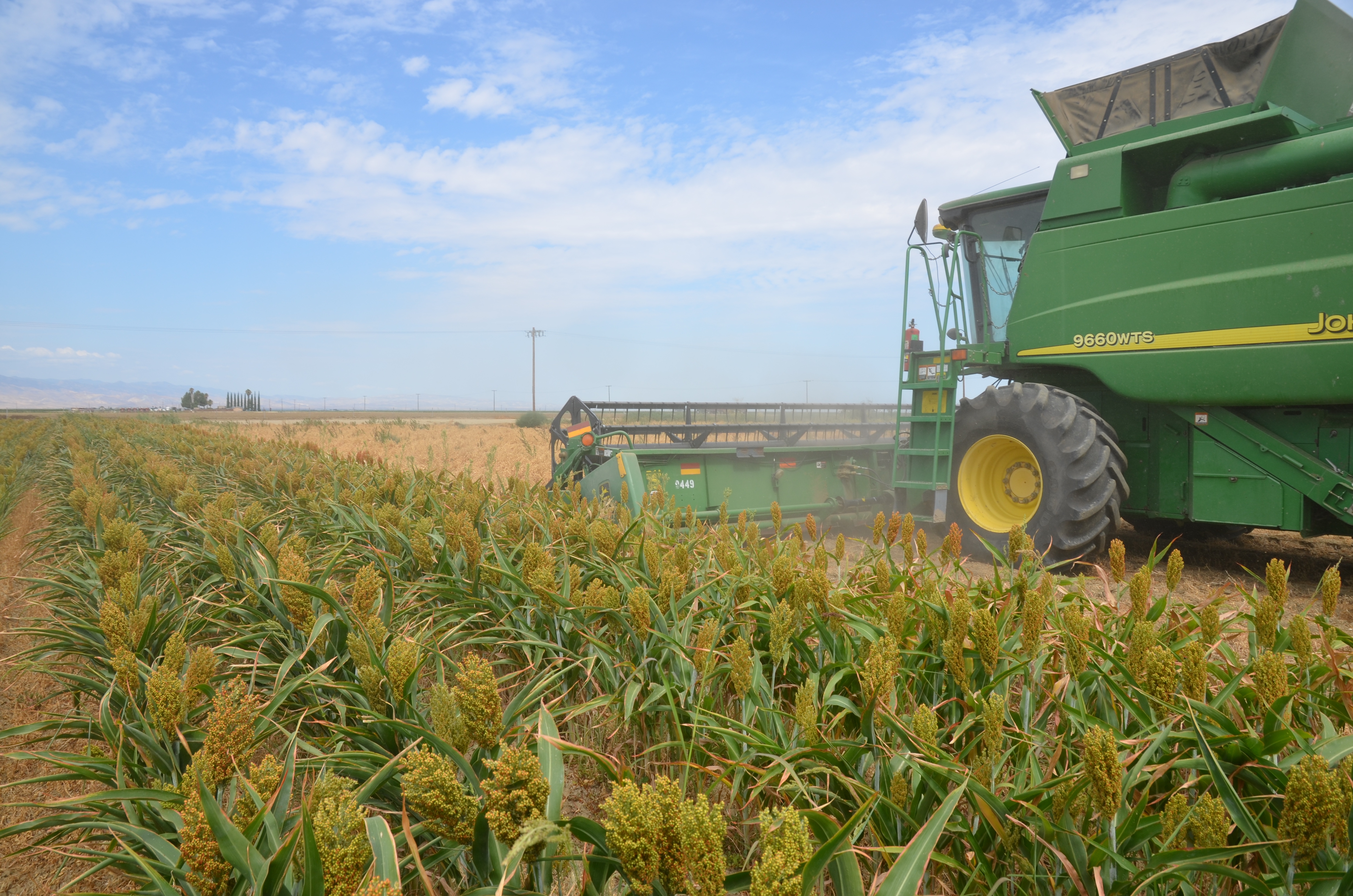
The list of crops that have been successfully grown using no-tillage in California continues to increase with garbanzo beans being the latest addition, according to Jeffrey P. Mitchell, CE cropping systems specialist, University of California, Division of Agriculture and Natural Resources.

Harvest data from the Conservation Tillage Workgroup are now in for a 2015 garbanzo crop that was no-till seeded in January in the longstanding conservation agriculture systems study field in Five Points, CA, and these data indicate no difference in yield between the no-till with and without cover crop treatments and the standard till with and without cover crop systems. Garbanzo yields for the four systems averaged about 3,600 lbs / acre with no statistical differences seen between the four experimental treatments.

Other than an herbicide spraying in the fall of 2014 to knock down weeds, the no-tillage systems relied on zero tillage prior to seeding that was done with a John Deere 1730 6-row 30” planter. Conventional tillage consisting of several passes of a Wilcox Performer bed-shaping tillage implement was done to prepare planting beds in the standard tillage plots as would be commonly done in the region.

There is now a growing list of several crops, including processing tomatoes, cotton and dairy forage that have been successfully produced, both in research studies and on California farms, with economically viable yields using no-tillage seeding.

Additional information about this study is available at the Conservation Agriculture Systems Innovation Center (CASI) website and by contacting Jeff Mitchell at jpmitchell@ucdavis.edu.

Established in 1998, the Conservation Cropping Systems Workgroup is a diverse group of more than 1,500 farmer, University of California, California State University, USDA – NRCS, Resource Conservation District, public agency, private sector and environmental group members that have come together to promote conservation cropping systems in California.

Featured Photo Soure: Source: CASI (Conservation Agriculture Systems Innovation) Center, University of California, Division of Agriculture and Natural Resources

2016-05-31T19:28:05-07:00September 2nd, 2015|

My Job Depends on Ag Update

My Job Depends on Ag Update

By Charmayne Hefley, Associate Editor

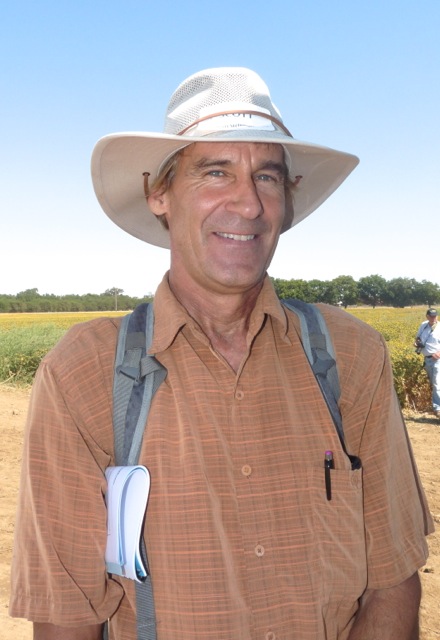
The “My Job Depends on Ag” Movement has more than just decals and a potential festival in the making. Erik Wilson, co-founder of “My Job Depends on Ag” with Steve Malanca, explained at the group’s meeting earlier this month, they hope to become a non-profit and use proceeds from decal sales to provide scholarships for students in agriculture. “We would like to keep young people connected to agriculture through scholarships and education,” Wilson said, “and foster their creative ideas about how their food is grown and processed.”

Erik Wilson

Erik Wilson

Wilson wants to see the movement grow to become an educational resource for agricultural topics directly from those involved in Ag. “I would really like to see anyone who is curious about how their food evolves from field to fork view our Facebook page as a open source of first-hand information—not from a news desk miles away from a field—but from the people in the field who are cultivating it. Because the people who do it and their kids, eat the same food and yet their stories haven’t been told.”

Wilson would like people to see that phrase My job depends on Ag, “and ask themselves if their own job depends on Ag. For me it would be a win-win for the public to grasp the value in growing food. I think growing food is the most honorable industry in the world.”

2016-05-31T19:28:06-07:00August 29th, 2015|

Trinity Reservoir Releases Water

U.S. Bureau of Reclamation Releases Shared Water From Trinity Reservoir Despite Making Claims Of “California’s Historic Drought”

The San Luis & Delta-Mendota Water Authority (Authority) along with Westlands Water District, according to their press release, has filed a lawsuit in federal court to stop the Bureau of Reclamation (Reclamation) from releasing Central Valley Project (CVP) water from the Trinity Division to the Klamath River.
The U.S. Bureau of Reclamation said releases started Friday from Lewiston Dam on the Trinity River, the Klamath’s primary tributary, and would continue into late September.SLDMWA logo
Yesterday, Reclamation announced the release of up to 88,000 acre-feet of CVP water from Trinity Reservoir in the hope of aiding returning non-listed Chinook salmon with the optimism of diminishing the effect of a naturally-occurring disease endemic known as “Ich” (pronounced “ick”) to the Klamath River system to which the Trinity River is connected. This action, which is outside of Reclamation’s authorized place of use, is a repeat of a similar action taken last year with the intention to help avoid an outbreak which has only been documented to have occurred once in 2002. Since 2000, a significant supply of water has been set aside each year from the Trinity Reservoir for fishery protection purposes. Specifically, over the past four years, this has equated to more than 200,000 acre-feet of water lost that was literally flushed down the Lower Klamath River.
“As our state is faced with a water supply crisis affecting every sector of people, businesses, and communities, an action like this is unthinkable. This will cause irreparable damage to drought-stricken communities already facing water restrictions,” said Dan Nelson, executive director of the San Luis & Delta-Mendota Water Authority.
The CVP and State Water Project (SWP) provide water for more than 25 million Californians who depend upon a reliable water supply. In the 50-year history of the Projects, water deliveries have never been lower–the CVP is experiencing its second year of a zero water allocation and the SWP sits at a mere 20 percent water allocation.
Reclamation is once again choosing to ignore the harms of its actions through the issuance of a “Finding of No Significant Environmental Impact” (FONSI) that hasn’t been properly analyzed. Further, Reclamation’s decision to release 88,000 acre-feet of CVP water for the Klamath River is a sad irony given that Reclamation is currently unable to meet its legally-mandated obligations within the CVP and SWP.
 Westlands Water District_logo
“The hardworking people of the State of California have been directed by state and federal agencies to conserve water in the form of dying lawns, fewer showers, unplanted fields, trees uprooted or turning brown, and community wells drying up. Yet Reclamation, which has been unable to deliver any water to farmers, has decided to release tens of thousands of acre feet in an arbitrary manner that the courts have previously held to be unlawful.” said Tom Birmingham, general manager of the Westlands Water District. “The fact that 88,000 acre-feet can be casually released without regard to the potential impacts on the environment, including at risk-species in the Sacramento River and the Delta, is a gross mismanagement of the state’s water supplies. The action filed today is intended to compel Reclamation to comply with its mandatory duties,” said Birmingham.
“During a time when we are experiencing the worst water management challenges in decades, when communities and agriculture throughout the state are suffering severe impacts that have negatively affected our economy, the labor force and the environment, the decision by the Bureau of Reclamation to repurpose precious Central Valley Project water resources to augment Klamath flows for non-endangered fish, an action that is of questionable benefit, is both irresponsible and incomprehensible. While the needs of cities, family farms, and endangered species that rely on CVP resources continue to go unmet, the reallocation of the Project’s limited supply of water defies all logic,” said Jeff Sutton, general manager of the Tehama-Colusa Canal Authority, an organization that represents seventeen Sacramento Valley water districts that hold CVP water service contracts, that are also highly critical of the action being undertaken by the Bureau of Reclamation.
The water planned for release is enough to farm 31,000 acres of food, or to serve the domestic needs of more than 175,000 families for an entire year. The devastating effects of the drought will be felt for decades to come especially if arbitrary decisions like these continue.
2016-05-31T19:28:06-07:00August 21st, 2015|

A Thought on Sustainability

Scott Steinmaus on Getting the Sustainability Message Out

By Charmayne Hefley, Producer and Associate Broadcaster

When considering the longevity of a farmer’s land, the question of the sustainability of modern day farming practices is often raised. Scott Steinmaus, professor and department head of the Horticulture and Crop Science Department at Cal Poly San Luis Obispo, said that it is important to get the message out to consumers that farmers are sustainable because their land is the future for their own children.

“Farmers are sustainable,” Steinmaus said, “even when the general public might say that unsustainable activities might include pesticide applications. There’s no farmer out there who wants to spray pesticides—it costs money. And they don’t want to hand off their land having exposed it to something that’s not sustainable. They have a piece of land, something they value and cherish, and they want to hand it off to their sons or daughters.”

Steinmaus said it is important for consumers to realize that farmers are humans too, and they care about the health of the planet in a way that more directly relates to their careers.

Steinmaus believes it is important for consumers “to understand that direct connection farmers have with the earth, to realize that farmers are humans too, with kids of their own, and to acknowledge that farmers care about the planet more than a lot of urbanites might do themselves. There’s nothing more important than sustainability—minimizing all farm inputs for safe, acceptable food production.”

2016-05-31T19:28:06-07:00August 20th, 2015|
Go to Top