Associations, Organizations, Educational and Research Institutions

Celery Management Research

Andre Biscaro on Celery Management Research to Improve Water and Nitrogen Use

By Charmayne Hefley, Associate Editor

logo-celery-sm

Ongoing research continually improves the agriculture industry. Andre Biscaro, agriculture and environmental issues advisor at the University of California, Division of Agriculture and Natural Resources, Cooperative Extension, Los Angeles and Ventura Counties, described current trials in celery management research, sponsored by the California Celery Research Advisory Board.

“We’re monitoring water and nitrogen use based on best management practices,” Biscaro said. “We evaluate ‘best management’ practices using the soil nitrate quick test. That gives us a really good estimate of how much nitrogen is in the soil, and we can accomplish the test in just about an hour.” The trial also incorporates data from weather stations to calculate the amount of applied water.

Celery“This trial and research actually monitors the amount of water and nitrogen we’re using and how much yield we’re getting under various best management scenarios,” Biscaro said, “and compares our practices to what the grower usually does.” Ultimately, the trial will help determine the yield of a celery field using best management practices, and how much water and nitrogen are required to achieve that yield.

Biscaro said the grower he has been working with to conduct the trial was already highly successful with soil and water management in the specific celery field under study. “He really knew what he was doing, and the nitrogen management was quite decent as well. So I believe there are opportunities for improvement in the industry, but the grower was actually doing quite well in this particular field I monitored.”
 

2016-05-31T19:27:09-07:00September 25th, 2015|

Plants Do Not USE Water…They Borrow it!

Plants Transpire Most of the Water They Use!

Editor’s note: California Ag Today interviewed Allan Fulton, an Irrigation and Water Resources Advisor, UC Cooperative Extension Tehama County, in Redbluff CA, to comment on the debate about the agricultural industry’s use of water and to focus on a critical but disregarded process—that all plants transpire, even plants cultivated for the crops we eat.

Allan Fulton, Irrigation and Water Resources Advisor

Allan Fulton, Irrigation and Water Resources Advisor

CalAgToday: We hear in the media that our crops are using too much water. And while all plants need water to grow food, we also know that a high percentage of water taken up by all plants actually transpires back into the atmosphere, to form clouds and precipitation, right?

Fulton: Yes, when plants transpire, the water just returns to the local hydrologic cycle, leaving the harvested crop that we distribute elsewhere in the US or in the world actually very low in water content.

CalAgToday: When we think about transpiration, are the plants actually “borrowing” the water?

Fulton: Yes. We get a lot of questions about why we irrigate our crops so much, and it comes from the general public not being as close to farming everyday. The truth is, plant transpiration is a necessary biological process. The water cools the tree so it stays healthy and exits the leaves through special cells called stomata. While the stomates are open to allow water to transpire, carbon dioxide enters and is used in photosynthesis, making sugars and carbohydrates for the plant to create the fruits and nuts that we eat. So, an inadequately watered plant cannot take in enough carbon dioxide during transpiration, resulting in defective fruits and nuts that are smaller, shriveled, cracked—all the things the typical consumer does not want to buy.

Plants cannot gain carbon dioxide without simultaneously losing water vapor.[1]

CalAgToday: Can we say 95 or 99% of the water that is taken up by the plant gets transpired and definitely not wasted?

Fulton: Definitely. We converted to pressurized irrigation systems, micro sprinklers and mini sprinklers, so we have a lot more control over how much water we apply at any one time. We do not put water out in acre-feet or depths of 4-6 inches at a time anymore. So, much like when rainfall occurs, we can measure it in tenths, or 1 or 2 inches at most. As a result, the water doesn’t penetrate the soil very deeply, maybe only 1 or 2 feet each irrigation.

We are very efficient with the water, but because we deliver it in small doses, we have to irrigate very frequently. That is why we see irrigation systems running a lot, but they are systems that efficiently stretch our water supply and do not waste it.

CalAgToday: But again, the vast majority of the water that the tree is taking up is being transpired, right?

Fulton: Yes, most of the time, at least 90% of the water that we apply taken up through the tree and transpired so that photosynthesis can happen.UCCE Tehama County

CalAgToday: And transpiration increases on a hot day?

Fulton: Yes, we do get a little bit of loss from surface evaporation from wet soil, but we try to control that with smaller wetting patterns—drip-confined wetting patterns. When you think about it, the heat of the day is in the afternoon when many irrigation systems don’t run because of higher energy costs. There are incentives not to pump in the middle of the afternoon, but those who do try to confine the wetted area to limit evaporation. And the hot hours of the day make up about 4 hours of a 24-hour cycle, so we irrigate mostly during the nighttime and early morning hours to lesson evaporative loss.

CalAgToday: Growers are doing everything they can to conserve water. If the trees and vines are all transpiring most of their irrigated water, why is using water to grow food a problm?

Fulton: I think the emphasis throughout the United States has always been to provide a secure food supply. That security has many benefits, economically and politically; and in the end, we are trying to provide the general public with good quality, safe food at the best price possible.

______________________________________________

[1]  Debbie Swarthout and C.Michael Hogan. 2010. Stomata. Encyclopedia of Earth. National Council for Science and the Environment, Washington DC.

CIMIS


The California Irrigation Management Information System (CIMIS) is a program unit in the Water Use and Efficiency Branch, Division of Statewide Integrated Water Management, California Department of Water Resources (DWR) that manages a network of over 145 automated weather stations in California. CIMIS was developed in 1982 by DWR and the University of California, Davis (UC Davis). It was designed to assist irrigators in managing their water resources more efficiently. Efficient use of water resources benefits Californians by saving water, energy, and money.

The CIMIS user base has expanded over the years. Currently, there are over 40,000 registered CIMIS data users, including landscapers, local water agencies, fire fighters, air control board, pest control managers, university researchers, school teachers, students, construction engineers, consultants, hydrologists, government agencies, utilities, lawyers, weather agencies, and many more.

2021-07-23T14:31:38-07:00September 23rd, 2015|

Ag in the Classroom

Teaching Ag in the Classroom


By Charmayne Hefley, Associate Editor


As the disconnect between consumers and the source of their food grows, many students do not understand where their food comes from. California teachers are doing their part to bridge the educational gap by teaching ag in the classroom.

Agriculture in the ClassroomKathy Yager, a fifth grade teacher at Fowler Unified School District, as well as a farmer, brings agriculture education to her students in several ways. “We’ve been using programs through the California Foundation for Agriculture in the Classroom,” Yager said.

“I’ve participated in Taste Test grants,” Yager said. The grant allows teachers to bring in a new ag product, “and the students get the opportunity to try those things.” Yager said it also helps expose students to new products, and allows them to become better informDairy Council of CAed consumers in the future.

“We also have visits from the Dairy Council of California and students get to see a dairy cow and how the whole milking process works,” Yager said.

In addition Yager brings farmers, including her own brother, into the classroom to educate students, “and [they] show students how agriculture works and how a product gets from the field, to the stores, and to them.”

Healthy Eating

California Foundation for Agriculture in the Classroom (CFAIC)

More than 7 million California students are fed, clothed and housed with products grown right here on our farms, in our fields and within our forests. California Foundation for Agriculture in the Classroom is dedicated to helping students and teachers across our great state gain an understanding of how agriculture provides the daily essentials necessary to make our society and our world function.

From the cotton in our jeans and the food on our tables, to our landscaped yards and playing fields, we all depend on agriculture. The survival of this vital industry depends on educating and encouraging the next generation of decision-makers. We do this by engaging students and educators in meaningful ways: developing and sharing unique classroom curriculum, supporting school garden efforts, spreading our message at local Ag Days, honoring outstanding educators, rewarding students who learn and write stories about agriculture and so much more.

http://www.cfaitc.org/imaginethis/Featured Programs:

Imagine this… Story Writing Contest

Meet Academic Content Standards for California schools through this creative writing contest!

Create a positive learning experience that promotes reading, writing and the arts, and furthers the understanding of agriculture in our lives by using this award-winning contest in your classroom.

PUBLISHED AUTHOR

State-winning authors will have their stories published in an illustrated book and will be distributed to school libraries and classrooms across the state!

DEADLINE: NOV. 1

Entries must be postmarked by November 1, annually.
Download entry form (PDF, 331 KB)

California Fruits and Vegetables Seasonal Chart (PDF, 18 KB)

2016-05-31T19:27:09-07:00September 22nd, 2015|

FarmFacts Banners Line Freeways

Kristi Diener on FarmFacts Banners

By Charmayne Hefley, Associate Editor


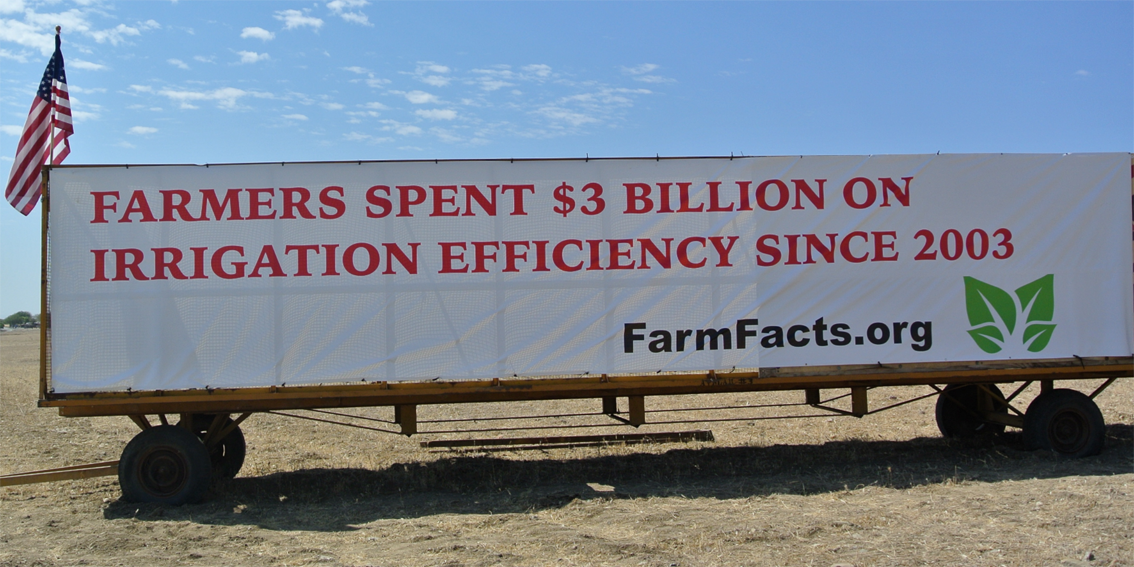
Farm-friendly banners sporting agriculture facts are beginning to sprout along California freeways in an attempt to reach consumers with the truth behind where their next meal comes from. Kristi Diener, a member of the FarmFacts website steering committee and a fourth generation San Joaquin Valley farmer, said the movement has 40 hosted banners lining several of the state’s freeways and highways from Ventura to Tracy.

Kristi Diener

Kristi Diener

“We wanted to take our message one step further by using the website to expand on the facts presented along the roadways,” Diener said. “We wanted to demonstrate how hardworking farmers are, so we ‘rebranded’ them by sharing onsite photos of growers and their families in their dusty boots, blue jeans and plaid shirts. These people are not greedy, ‘monopoly-banker’ characters; they are real industrious people who have families just like everybody else and are trying to earn a living.”

Diener said the movement plans to focus on positive messages. “While messages sporting the lines “Congress Created Dust Bowl” and others feel good to post,” she said, “they have a negative impact on consumers who already distrust farmers. “For ‘Joe Citizen’, messages like that only reinforce the falsehood that we are the bad people they’ve that we are.”

“We want to provide a positive message that also educates,” Diener elaborated, “one that would garner consumer support for our shared dependence on water.” Diener said the website reinforces the message that farmers are good.

farmfacts logo“People can go onto the FarmFacts website after they see the banners,” Diener said, “see the same banners they passed on the road and gain an expanded version of that fact. Maybe some will take a look around the website. And, perhaps, we can change a few people’s minds about who we are and what we do. Let’s get the truth out there.”

Diener said the movement is hoping to transform the banners into a usable size to be put on trucks so the message can travel further.

2016-05-31T19:27:10-07:00September 19th, 2015|

Fighting ACP in California

Fighting ACP In California to Stay Well Ahead of HLB

By Patrick Cavanaugh, Deputy Editor

With more than 275,000 acres of citrus trees in California, keeping the Asian Citrus Psyllid (ACP) out of groves is a serious concern. Bob Blakely, vice president of California Citrus Mutual, based in Exeter, talked to California Ag Today about how growers are fighting ACP in California.

“We’ve been very proactive, ever since the first psyllid was found here back in 2008. We already had an action plan in place when that psyllid was found. We have engaged with and educated the public and the media, and we have very good cooperation with the state’s citizens,” Blakely said.

Tamarixia radiata (female)

Tamarixia radiata (female); Mark Lewis, UC Riverside Center for Invasive Species Research

Blakely noted the industry is using a variety of methods, “We are usually able to go in and treat urban areas in Southern California, where ACP is now endemic, with crop protection materials. If we determine we cannot control it with pesticides, we implement a new biological program by releasing the parasitoid Tamarixia (a tiny non-native wasp) in residential areas. The new wasp is becoming well-established, and we are hoping the species will help manage ACP populations.”

“We hope to prevent ACP from creating the type of damage seen in Florida, where the citrus industry has been reduced by 50%,” said Blakely. “We are way ahead of the game here in California. We have managed to slow ACP spread in commercial areas in order stay ahead of the spread of the HLB disease the bug carries. We hope a reasonable cure can be found so we can prevent the kind of devastation we are witnessing in some other states.”

2016-05-31T19:27:10-07:00September 18th, 2015|

Expanding California Wine Industry

Will the Expanding Wine Industry Impact California Communities, Environments?

By Patrick Cavanaugh, Deputy Editor


How the expanding California wine industry might negatively impact the state’s communities and environment is growing concern. Rob McMillan, who founded Silicon Valley Bank’s Fine Wine Division in 1992, said in the Napa Valley community, “we are banding together to address apathy and address tourism issues in the community planning process. If we continue to build new wineries, those opposed characterize the downside in terms of traffic and noise, with very little fact-finding to back up their argument.”

McMillan described some current challenges associated with getting accurate information to the public. “With social media today, people just get to say what they want, and that grabs hold and becomes a catch phrase. Now in Napa Valley, we are working from behind in that there’s really a divide between growers and vintners about how Napa Valley ought to look. And this is not just limited to Napa Valley, either. You are seeing this anti-tourism attitude brewing in Sonoma County and in Santa Barbara County, legislatively.”

While growth of the industry is a good thing, McMillan believes implementing a strategy to prevent congestion is essential. “Whether you are in Washington or Oregon—pick a place—you also have to engage in the community planning process. If you are going to add tourism and direct consumer sales, you can’t have more and more people come and use your region’s resources until you have nothing but a Saturday traffic jam. Your neighborhood starts looking like New York or Tokyo. That is not going to convey the welcoming and accessible message you need to deliver.”

Silicon Valley Bank’s Fine Wine Division, founded by McMillan in 1992, has since become the leading provider of financial services to the U.S. fine wine industry. To ensure the California wine market remains vibrant, McMillan urges wineries to engage in the community planning process, reach beyond the individual winery to work together as a community, and determine how our wine tourism regions should look like. He elaborated, “We can’t go through distributors; we have to go directly to the public, and direct outreach requires a level of entertainment. We have to solve tourism issues in the planning process.”

2016-05-31T19:27:10-07:00September 16th, 2015|

ACP Devastates Florida Citrus

ACP Devastates Florida Citrus Industry; California Continues Vigilance

By Patrick Cavanaugh, Deputy Editor


California Citrus growers must not underestimate the potential damage from Asian Citrus Psyllid (ACP), according to Bob Blakely, vice president, California Citrus Mutual, based in Exeter.

Given multiple ACP detections in California this year, Blakely used Florida’s ACP catastrophe as an example of how devastating the pests can be. “We are challenged here in California with ACP,” Blakely began, “which vectors the fatal disease known Honglongbing, (HLB), also known as citrus greening. But, it is nothing like what they are dealing with in Florida, since HLB [the disease itself] was discovered there less than ten years ago. “Florida’s citrus acreage, which measured just under 1 million acres prior to the calamities they’ve been facing,” said Blakely, “has been reduced by almost 50%.”

Bob Blakely, VP, California Citrus Mutual

Bob Blakely, VP, California Citrus Mutual

While occurrences of Citrus Canker Disease as well as urbanization also contributed to the reduction in acreage, Blakely stated, “the big killer, citrus greening, is mostly responsible for the reduction of citrus acreage to the lowest level in decades.”

Because Florida has become so infested with ACP and HLB, reestablishing the industry there will take some time. “They are replanting and trying to replant healthy trees,” Blakely explained, “but they know those trees are short-lived compared to trees in California. We have hundred year-old groves. Florida farmers are just hoping to raise those trees and get a few years of production out of them before HLB re-infects them and they must be replaced again,” said Blakely.

2016-05-31T19:27:10-07:00September 16th, 2015|

Farmers Willing to Adapt

Farmers Willing to Adapt Farming Practices for Regulators

By Laurie Greene, Editor


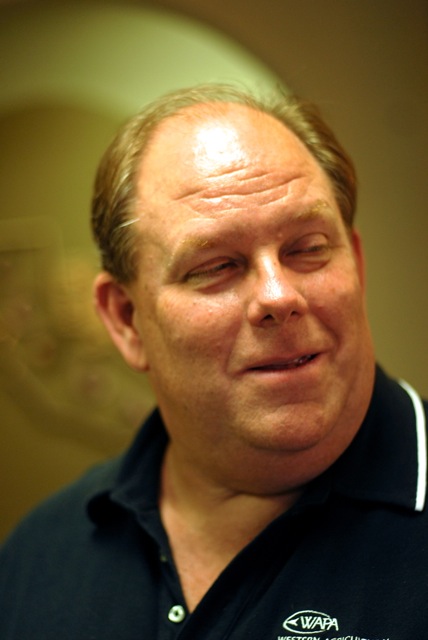
With increased scrutiny of the agriculture industry’s use of resources, growers must be proactive about their farming practices, and according to Roger Isom, president and ceo of Western Agricultural Processors Association, farmers are willing to adapt.

Isom noted how receptive growers are to improving their farming techniques. “One of the best examples I have for conservation management practices addresses air quality. Air quality regulators say we’ve got to put water on the back of tillage disks to suppress dust and to schedule no-farming days,” he said. “Wait a minute,” he added, “let’s get in a room and talk about what you want to do! You want to lower emissions? Well, farmers can combine practices and thereby lower emissions and save fuel and labor. And, we’ll do it!”

Isom said farmers appreciate incentive programs. “If I can get some money to help pay for it,” said Isom, “I’ll do it much sooner. There is nobody out there who doesn’t want a new tractor or truck to meet the mandated specifications; but if you provide some help, they will do it much sooner.”

“Growers and consumers each want the same things—a healthy environment and good produce,” he said. “You just have to sit down together and find solutions. The last thing we want is a food recall. Again, if we sit down in a room with scientists and the U.S. Food and Drug Administration, and develop agricultural guidance specific to each crop, farmers will be more amenable to adapt recommendations into practice,” Isom said.

2016-05-31T19:27:10-07:00September 16th, 2015|

E.A.T. Foundation – Connects Us to Ag

Kelly Deming Giacomazzi on the E.A.T. Foundation

By Charmayne Hefley, Associate Editor

There is a disconnect between consumers and an understanding of where their food originates. Kelly Deming Giacomazzi is the executive coordinator for the Education and Agriculture Together Foundationbetter known as the E.A.T. Foundation—a Hanford-based nonprofit that bridges this disconnect by providing educators with hands-on learning tools to teaching their students how food and other agricultural products are produced.

“They teach their students that jeans don’t just come from Old Navy or Walmart,” Giacomazzi said, “and their daily food doesn’t come from the grocery store.”

Giacomazzi said the E.A.T. Foundation offers several workshops for educators, including a 3-day “Intro to Ag” program, during which educators from all over the state are hosted by local farm families. “This is where the hands-on learning takes place. For example, educators learn to drive a tractor, siphon-irrigate, spray for bugs with a Pest Control Advisor (PCA), and visit a dairy. In the past and occasionally now, we visit the UC Davis Veterinary Medicine Teaching and Research Center (VMTRC) and AgVentures! at the Heritage Complex, both of which are in Tulare County, to give teachers a brief overview of what agriculture is doing to provide food and clothes for people in the state and in the nation.”

Giacomazzi also said E.A.T. hosts a two-day workshop on water. “We tour a hydroelectric plant, a dam/reservoir area, and distribution centers,” Giacomazzi said. “We talk about water laws, environmental impacts, and farm efficiency as well.”

The Foundation also offers summer and fall harvest workshops, plus a career workshop. Giacomazzi stated, “Many scholarship funds are available for agriculture majors, yet there aren’t enough students majoring in this field.”

2016-05-31T19:28:04-07:00September 15th, 2015|

Citrus Growers Determined to Succeed

Frustrated Citrus Growers Are Determined to Succeed

By Patrick Cavanaugh, Deputy Editor

While farmers have been dealing with some tough times, Bob Blakely, vice president of California Citrus Mutual is optimistic about future generations of citrus growers, “Perceptions and attitudes are really all over the board; we’ve got growers who are really frustrated and ready to throw it in. But most growers are staying in, thinking they can still makeSaveOurCitrus it in the citrus industry.”

“California growers are known for their tenacity in the face of challenges,” Blakely commented.  “It’s exciting to see young farmers come on, even though they continue to fight the regulatory battles and higher farming costs. But these young guys have the same determination the prior generation had when they started. So, I am optimistic about the future of the citrus industry in California.”

One of the major threats to citrus is the Asian Citrus Psyllid (ACP) and its potential to spread the disease Huanglongbing (HLB), as it has in Florida and Texas. “We are very concerned about the recent HLB finds. Here again, they have been discovered in residential areas, which is no iPhone Save Our Citrus Appsurprise to us. That is typically where diseases first show up. At the present time, the ACP are contained. We are starting to delimit that area, and residents are very cooperative in allowing those trees to be removed.”

Download the Save Our Citrus App

There is now an iPhone app to help California residents identify signs of the Asian citrus psyllid and HLB, and easily report findings to agriculture officials. Download the free app in the iTunes store.

2016-05-31T19:28:04-07:00September 11th, 2015|
Go to Top