Associations, Organizations, Educational and Research Institutions

Timorex Gold, Broad-spectrum Biofungicide

Biofungicide Timorex Gold to Help Western Vegetable Growers Fight Disease Pressure

By Patrick Cavanaugh, Farm News Director

The U.S. EPA has approved Timorex Gold, a new broad-spectrum reduced-risk biopesticide that is already a leading biofungicide in Latin America to control black sigatoka, a leaf-spot fungal disease on bananas, for various domestic crops such as tomatoes, strawberries, as well as other berries, cucurbits, grapes, tree nuts, and lettuce.

Stockton photo Strawberries & Blueberries beautiful!Timorex Gold is well positioned for American crops because it is known to be effective on powdery mildew and Botrytis on strawberries and tomatoes, plus bacterial blight on tomatoes.

Sarah Reiter, country manager of STK Stockton, an innovative Israeli company that opened its U.S. headquarters in Davis, CA. “We are very excited about the products performance we are seeing in areas where it is registered,” said Reiter. “We are happy with the label the EPA granted us. We still await registration in California and anticipate it next year or possibly late this season.”

Reiter noted the highly effective active ingredient in Timorex Gold, the plant extract Meluleuca alternifolia, or tea tree oil, gives growers a powerful new tool to control both bacteria and fungi diseases. “We know growers do not have a lot of choices for bacterial control,” said Reiter, “so any new active ingredient is a good thing. This product has the added bonus of being a fungicide too.”

“Timorex Gold has been established as a primary control product for sigatoka because it performs so well,” Reiter commented. “Growers use it because of its profile, and it’s easy to use. And while the product is a biopesticide, once the growers get it in their hands, they tend to forget it’s a biopesticide because it performs as if it is a synthetic material.”

timorexgold STK Stockton Group“As an industry we have been looking for this for quite a long time,” Reiter reflected. “While biologics have been around for a century, historically, growers would have to give up some levels of control in order to implement them into a conventional program. We do not see that loss when using Timorex Gold against sigatoka disease.”

“Our expectation in the U.S. is that growers will see that same high level of performance when they use the product here,” Reiter said. “And since Timorex Gold is a biological, there is no concern for Maximum Residue Level (MRL) data because there is no residue on the crop. The product will have very short re-entry intervals (REIs) and preharvest intervals (PHIs), as well as flexible application intervals, a strength that growers like because it gives them a lot of flexibility to implement the product into their program when they need to instead of having to manage REIs and PHIs.”

In addition, Timorex Gold has a very low designation of FRAC 7¹, which means the product has a unique mode of action that can be used in alternate succession with other fungicide modes of action to prevent the development of resistance.

Concurrently, STK Stockton continues to invest heavily in its new technology pipeline with the intention of bringing more innovative biopesticides into different markets. As part of these efforts, the company has recently announced the appointment of Shay Shaanan as the new vice president R&D, leading the company’s activities. The former global development manager of the fungicides division at ADAMA (formerly Makhteshim Agan), Shaanan has over 15 years of experience in research and commercialization of crop protection products.

“Having Shay join our team marks another significant milestone in our growth strategy. It reflects our commitment to advance our technologies and provide the agriculture industry with new solutions for sustainable agriculture.” explained Guy Elitzur, CEO of STK Stockton. “Shay will lead our R&D and will be of enormous value in moving our company forward. Additionally, we will be looking for in-licensing partners, including bio companies in the U.S. to broaden our product offerings.” said Elitzur.

The products of Stockton will be sold under the Syngenta brand for Botrytis and Powdery Mildew in ornamentals globally. The biofungicide technology complements the comprehensive fungicide portfolio of Syngenta and will help to provide its customers with innovative sustainable tools for disease resistance management.

“We are very excited about this agreement,” Elitzur commented, “as Syngenta is the perfect partner for our new products in ornamentals.”

________________________________

¹FRAC is a Specialist Technical Group of CropLife International (CLI) that provides fungicide resistance management guidelines to prolong the effectiveness of “at risk” fungicides and to limit crop losses should resistance occur.

The main aims of FRAC are to:

  1. Identify existing and potential resistance problems.
  2. Identify existing and potential resistance problems.
  3. Collate information and distribute it to those involved with
    fungicide research, distribution, registration and use.
  4. Provide guidelines and advice on the use of fungicides to reduce the risk of resistance developing, and to manage it should it occur
  5. Recommend procedures for use in fungicide resistance studies.
  6. Stimulate open liaison and collaboration with universities, government agencies, advisors, extension workers, distributors and farmers.

2021-05-12T11:05:54-07:00June 28th, 2016|

Steve Koike on Resistant Cultivars

The Search for Resistant Cultivars

By Emily McKay Johnson, Associate Editor

In the second part of our series with Steve Koike, plant pathology farm advisor for UC Division of Agriculture and Natural Resources, Cooperative Extension in Monterey County, the focus is on the critically needed research on resistant cultivars. Koike, who has focused his research since 1989 primarily on the understanding of disease systems and the investigation of new methods of disease control, said, “The role or the need for resistant cultivars is tremendous.”

“Some good case studies of resistant cultivar research address soil-born problems on lettuce,” Koike explained. “For example, Fusarium wilt and Verticillium wilt on lettuce could be managed lightly; but in order to overcome those diseases, resistant lettuce varieties need to be in place.”

Steve Koike, UC Cooperative Extension, Monterey County.

Steve Koike, UC Cooperative Extension, Monterey County.

“First discovered in 1995 on the Central Coast,” said Koike, “Verticillium wilt has the potential to infect and damage numerous different crops. And although Fusarium wilt was typically unseen in the San Joaquin Valley, it has recently begun to appear on the Central Coast.”

Continued improvement of management techniques upon discovering initial disease symptoms is necessary, according to Koike. “Symptoms of the disease usually appear on the lower leaves of plants, around the edges, and the areas between the veins can turn a yellowish-brown.”

“Strawberries currently have three really important disease pressures state-wide: Verticillium wilt, Macrophomina (charcoal rot) and Fusarium wilt,” Koike commented. “Even the fumigation tools we have are not cleaning them up 100 percent, so we have problems.”

“We will continue to have problems,” Koike elaborated, “until there are truly resistant strawberry varieties to those pathogens. Plant breeders understand that IPM management of these diseases is so dependent on developing resistant varieties,” he said, “but we’re not there yet. We do not yet have truly resistant lettuce or strawberry varieties out in the field,” Koike said.

_______________________________

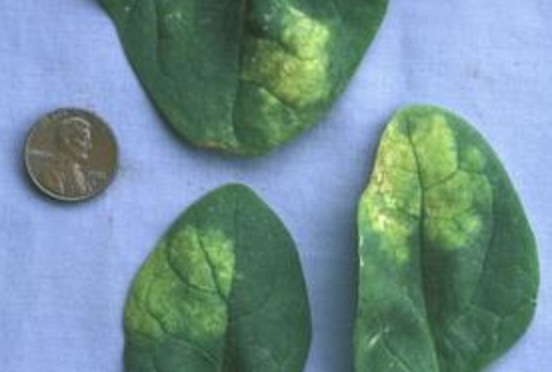
Koike and his fellow researchers discovered a new race of the downey mildew pathogen in spinach that has been designated race 16. While there are some varieties that are supposedly resistant to race 16, Koike noted that there is still more research to be done.

To read the first part of our series on Downey Mildew, click here.


2021-05-12T11:05:54-07:00June 27th, 2016|

Postharvest Short Course Focused on Taste and Quality

UC Davis Postharvest Course Covers Food Loss, Produce Handling

By Lauren Dutra, Associate Editor

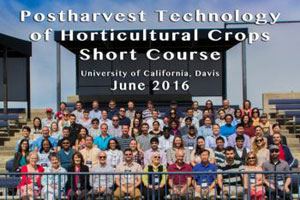
The 38th annual Postharvest Technology of Horticultural Crops Short Course concluded TODAY, June 24 at UC Davis. Presented by Beth Mitcham, director of the Postharvest Technology Center, the course focused on postharvest produce quality and safety.

Beth Mitcham, Director of the Postharvest Technology Center at UC Davis.

Beth Mitcham, Director of the Postharvest Technology Center at UC Davis.

“This class provided a really broad overview of all the topics that are relevant for postharvest handling of produce, including fruits, vegetables, nuts, and also ornamentals,” said Mitcham. “We cover the crops that are grown in California, but because our audience includes a lot of people from around the world who want to learn the basics about postharvest handling, we also cover a few crops that aren’t grown in California for commercial purposes. Furthermore,”she noted, “we also address some of the latest technologies that are available for maintaining excellent quality,”

Maintaining a good cold chain throughout the entire shipping line is critical, according to Mitcham. “We talk a lot about temperature,” she elaborated. “In fact, we tell students the three most important things about postharvest biology and technology are: temperature, temperature and temperature. We discussed many other technologies during the week, but they are secondary to good temperature management,” she noted.

Mitcham also mentioned food waste and how to control it. “So much effort goes into growing the crop, which includes harvesting at the prime of ripeness and getting it in the pre-cooler, on the trucks and to the market. But, people buy it, put it in their refrigerator and then don’t eat it. It goes bad and they waste it. It does happen,” said Mitcham. “Our goal is to try to make the product as hearty as possible while retaining really good flavor so it can last in your refrigerator as long as possible but also so people want to eat it, so hopefully it doesn’t sit in there and degrade.”
UCD Postharvest Technology Center

In reducing postharvest losses, Mitcham commented on the dissonance between addressing postharvest flavor and consumer satisfaction, “In some ways they are two opposite ends of the spectrum; some of the things we do to reduce losses are counter to delivering good flavor to consumers,” she said. “We really need to do both, and that was a big part of our message this week.”

Also at the event, the California Leafy Green Marketing Agreement (LGMA) discussed food safety principles, and Trevor Suslow, a UC Davis Plant Pathologist with the Postharvest Technology Center, discussed good agricultural practices (GAP) for food safety.

2021-05-12T11:05:54-07:00June 24th, 2016|

New IPM Work on Brown Stink Bug

New IPM Approach to Brown Stink Bug In Desert Cotton

By Patrick Cavanaugh, Farm News Director

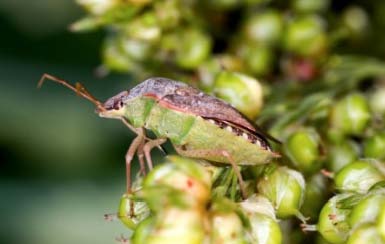
This year, the UC Division of Agriculture and Natural Resources, Cooperative Extension, Riverside County began an Integrated Pest Management (IPM) program to control Euschistus servus, or brown stink bug, a problem in Southern California’s cotton production areas.

Vonny Barlow

Vonny Barlow, a UC Cooperative Extension farm advisor in Riverside County

Vonny Barlow, a UC Cooperative Extension farm advisor in Riverside County began evaluating brown stink bug in cotton last year, and he received additional funding this year from a National Institute of Food and Agriculture (NIFA) grant administered through North Carolina State University, to continue his research this year. Barlow just hired two interns to work with brown stink bug in the Palo Verde Valley in Southern California.

The pest was known to exist in Arizona for about eleven years, but was not a critical issue until about three years ago, when it moved into California. California cotton growers had to spend a lot of money to spray to manage the insect, and it just wasn’t economically feasible.

“In many areas in the south, the brown stink bug pierces into the cotton boll with its proboscis-like mouthpart—a stiff, short straw,” said Barlow. “Once the cotton boll is pierced, the brown stink bug tries to feed on the cotton seed. The problem is the puncture allows bacteria to enter and boll rot to set in. Boll rot is the issue because it lowers yield quality; without boll rot, the brown stink bug is much more of a manageable pest.”

Spraying is not the answer to control the bug, according to Barlow. “We are going to look at an area-wide pest management approach by just essentially surveying the pest control advisers (PCAs) and growers about cropping that is near or even some miles away from cotton,” he said. “Where is the brown stink bug showing up? When did it show up? Is it moving? When are you going to harvest? Is it moving into the cotton? That way, we can give the cotton growers a better idea of when they should start management practices for brown stink bug, instead of just routinely calendar-spraying every two weeks.”

“We hope to predict when brown stink bug will move into cotton. Farmers who just harvested wheat should expect it will come into your field within the week. Start scouting; it is another very good IPM tactic to reduce sprays and to better manage pests,” said Barlow.

Featured image: Brown Stink Bug (Source: Brown Stink Bug (Source: “Chemical Efficacy Trial using Select Insecticides against Brown stink bug, Euschistus servus on Commercially Planted Cotton” by Vonny Barlow, University of California, Agricultural and Natural Resources, Riverside County, April 2016 issue of “Postings from the Palo Verde” newsletter)

2021-05-12T11:05:54-07:00June 23rd, 2016|

AgTech—The New Frontier for Farming

AgTech: Bringing Agriculture and Technology Together for Success

by Emily McKay Johnson, Associate Editor

Aaron Magenheim, an innovative leader in the AgTech movement, helps startups and investment companies understand production farming in California to bridge the disconnect between farmers and evolving technology. Enabling farmers to be on the cutting edge of technology has been key to the success of his company, Ag Tech Insight (ATI).

Aaron Magenheim, AgTech Insight founder

Aaron Magenheim, AgTech Insight founder

Magenheim grew up in a family agricultural irrigation business on the Central Coast, Signature Irrigation, and has supported growers his whole life. Four years ago he started Signature AgTech, a stand-alone agriculture technology company, which sells, installs and supports various technologies for growers on the Central Coast and in the Salinas Valley.

The turning point occurred when, according to Magenheim, “I started spending a lot more time in Silicon Valley, and about two years ago I saw a huge disconnect among bright people with great ideas, a lot of money coming into the market and the knowledge that many farmers have absolutely no clue there are solutions 50-100 miles away.”

“That’s when I started AgTech Insight,” Magenheim continued. “I had no clue what we were going to do with it. We have evolved through a number of different situations and built a great team. We started doing meet-ups about a year and a half ago, and we have done nine or ten of them now.”

“We’re at the point now where we are getting collaboration from the city of Salinas and other Monterey Bay economic entities coming together to work with us to build meet-ups and more activity in the area.”

Helping Growers Understand

“As we’ve talked with growers and helped them understand what technology can do to them,” Magenheim explained, “we have also raised money for some companies through grower funding to develop technology and installed in the field. Through that process, we have found growers are really interested in working with and helping early-stage companies. But the value proposition has changed; growers used to have a good value proposition to help an early stage company because they would get use for two or three years of a new technology in their operation before someone else did and profit from that.”

“We’re starting the AgTech Grower’s Alliance (ATGA) —a next generation, ag industry-backed ecosystem to advance the development of AgTech businesses,” Magenheim detailed. “From prototype to market expansion, ATGA, a catalyst for the adoption of technology in agriculture, is basically putting a fund together to allow growers to invest in early stage companies before they’ve put a million dollars into their product, and develop their idea from concept to a scalable point that attracts Silicon Valley [investment],” Magenheim said.

ATGA is growing, even outside of California. “We’re stamping out a satellite in the Turlock area,” Magenheim stated, “and I’m heading to Chicago tomorrow to meet with groups of growers to establish another satellite in that area. This can happen in a lot of different regions—bringing the technology together. It’s really a community effort bringing the growers together,” he said.

Field-level actions

Magenheim wants to track equipment and improve collection of in-field data. “I want to be able to go to a field and see when it was disced, when it was listed, when it was watered, when it was planted, when we should harvest, and what that projected harvest is going to be,” he elaborated. “We have a lot of companies working on software and big data and Internet of Things (IOT) and that’s great; but if you can’t get that information from the field, and you don’t have a place to pull the data from, then it doesn’t exist. We really concentrate on a lot of field-level actions.”

“People are coming from schools such as California State University, Monterey Bay (CSUMB) and Hartnell College in Salinas, and from all over the country at this point,” Magenheim said, “whether they are educators or students trying to understand where their opportunities are. Growers come to our events to learn and understand where technology is going and how their operations can benefit. Then you have a lot of technology people. We get people from Silicon Valley and from Western Growers Center for Innovation & Technology coming down to hear what the growers are talking about and looking for.”

_______________

Over the past 45 years, Ag Tech Insight (ATI) team members have been integrating the best ideas and advancements available to the agriculture industry, including designing, building, and implementing new tractor equipment; revolutionizing row crop irrigation by incorporating drip tape in Salinas Valley; and starting drip tape recycling programs and hydrostatic harvesting. AgTech has brought dozens of new software solutions to the market, from multiple GPS asset tracking systems to world-leading data collection and remote management. Recently AgTech diversified and significantly improved current monitoring and control systems for some of the largest names in the agricultural industry.

2021-05-12T11:05:55-07:00June 22nd, 2016|

Downey Mildew Continues to Challenge Leafy Greens

Downey Mildew Continues to Threaten Lettuce and Spinach

By Patrick Cavanaugh, Farm Director

One of the many facets that makes California Agriculture so successful is the hard-working group of farm advisors who assist growers with a multitude of plant and pest issues. Steve Koike, plant pathology farm advisor for UC Division of Agriculture and Natural Resources, Cooperative Extension in Monterey County, noted, “It has been a fairly typical year, and I wouldn’t say any particular new disease has been noteworthy, which is good for the growers.”

Steve Koike, farm advisor of UC ANR Cooperative Extension, Monterey County.

Steve Koike, farm advisor of UC ANR Cooperative Extension, Monterey County.

Koike, whose research focuses primarily on understanding disease systems, identifying new diseases and examining new methods of disease control, said growers “don’t like to see new diseases come out of our work. The main concern, downey mildew, continues to be challenging for both lettuce and spinach growers.”

“We started in the early spring with heavy mildew on both lettuce and spinach crops,” explained Koike, “and it’s remained pretty heavy on lettuce throughout the spring and early summer here. Spinach downey mildew goes up and down, which is not unusual.” he said. “We had some heavy mildew weeks for spinach growers, then we didn’t hear anything, then we heard that it had died down, and then ten days ago there was another surge. It’s one of those things that is hard to predict because it is variable.”

Since starting his farm advising position in 1989, Koike has been involved in educational programs and applied research in vegetable, fruit and ornamental crop diseases. Because downey mildew can overwinter in perennial crops, its continued occurrence is not too surprising.

“Earlier this year, Jim Correll, my cooperator at University of Arkansas, other leaders in the industry and I finally did confirm race 16, a new biotype of downey mildew. A few years ago, it was only race 12; it is moving target,” he noted.

“Although we have confirmed Race 16 on spinach, we are a little concerned because there are reports of disease on some race 16-resistant varieties.” Koike said.

Featured image: Downey Mildew (Source: UCANR Cooperative Extension, Tehama County)

2021-05-12T11:05:55-07:00June 22nd, 2016|

Mohr-Fry Ranches Honored

Mohr-Fry Ranches is CAWG Grower of the Year

By Laurie Greene, Editor

The California Association of Wine Grape Growers (CAWG) has selected its 2016 Grower of the Year, Jerry and Bruce Fry of Mohr-Fry Ranches, who will be presented with the award at the CAWG Awards of Excellence Program in Monterey on July 20, 2016. The Grower of the Year Award is the highest honor given by the association to an individual, family, or company that represents an outstanding example of excellence in viticulture and management.

John Aguirre, president of the organization, offered some background on this year’s award winners. “Jerry and Bruce are icons of the Lodi wine grape growing community. They do not own a winery, but they are long-time vineyard agriculturalists and have a long history of community leadership, and involvement in agricultural organizations,” Aguirre said.

Mohr-Fry Ranches Logo, CAWG


Mohr-Fry Ranches was one of the original six Lodi growers to certify their vineyard under the Lodi Rules for Sustainable Wine Growing. Jerry Fry is the president and CEO, and Bruce Fry is the vice president of operations of the family-run Mohr-Fry Ranches. The father and son are two of the most respected growers in the Lodi wine grape community and also dedicate an enormous amount of time serving the industry in their community.

“Jerry was a past chairman of CAWG, and Jerry and Bruce have both been deeply involved not only with CAWG, but with the California Farm Bureau Federation, the Lodi District Grape Growers Association, and the Lodi Wine Grape Commission,” said Aguirre. “They really embraced the idea that working as a community is essential to the strength of agriculture.”

“Jerry was really visionary in terms of developing Lodi into the powerhouse that it is today. Arguably, Lodi occupies one of the most critical positions in the winegrape industry in its ability as a region to produce high-quality grapes that are sought by Napa winemakers to blend into Napa wines,” noted Aguirre.

2016-06-26T15:39:32-07:00June 21st, 2016|

Patience: How Homeowners Can Help ACP Detection

Authorities Need to Monitor ACP Detection, Confronted With Impatient Homeowners

by Patrick Cavanaugh, Farm Director

44111-CCM-Web_Headshot_Joel-Nelsen

Joel Nelsen, President of California Citrus Mutual

Joel Nelsen, the president of the Exeter-based California Citrus Mutual noted that most homeowners do not realize how intensive it is for authorities to monitor traps for the Asian Citrus psyllid (ACP) at their homes.

“Most people don’t realize how intrusive this process is,” said Nelsen. “You’ve got a member of the County Ag Commissioner’s office driving down a street. He sees a citrus tree in a front yard, or he can see it’s tall enough in the back. He knocks on the door. The homeowner’s not home, so he has to come back.”

“Later, he comes back to the home and again, knocks on the door and finds that the homeowner is home. He says, ‘Can I put a trap out here to find out if you’ve got the Asian citrus psyllid?’ The homeowner hopefully says, ‘Yes.’ He comes back in two weeks. He looks at the trap. There’s no ACP. He comes back two weeks later, and if the homeowner is home, he looks at the trap,” Nelsen explained.

“It’s a constant bother to that homeowner,” Nelsen said. “Eventually, they find more than one ACP. Then the inspector says: ‘Can I spray a crop protection material on your tree and kill the Asian citrus psyllid?’”

“Hopefully the homeowner says, ‘Yes,’” said Nelsen.

CCMLogoNelsen noted that the inspector visited five times already within a two month period, and now he needs to do inspect elsewhere, so having that homeowner be amenable to that much intrusiveness is a significant goal.

Nelsen noted, “The consumer education program that forms the partnership between us and them, from our perspective, is vitally important so the consumers understand what Huanglongbing (HLB)—the fatal citrus disease carried by ACP—is”.

“Then when you find Huanglongbing (HLB),” said Nelsen, “and hopefully it’s very minimal, that homeowner is more likely to agree that the tree must be removed. Fortunately, everybody has said: ‘Yes.’”


2021-05-12T11:03:01-07:00June 17th, 2016|

Vegetables Are the Key to Great Nutrition

How to Increase Fruit and Vegetable Consumption

By Laurie Greene, Editor

In honor of National Eat Your Veggies Day, we spoke with Francene Steinberg, department chair and professor of nutrition at UC Davis, and director of the UC Davis Dietetics Education Program for undergrads. She encouraged the importance of leaning on vegetables for optimum nutrition and health benefits.

Francene Steinberg, department chair and professor of nutrition at UC Davis

Francene Steinberg, department chair and professor of nutrition at UC Davis

“A varied diet of fruits and vegetables, along with grains and some protein sources is extremely valuable to give everybody the best energy for them to grow,” Steinberg said. “It really is so important to get the full spectrum of all the nutrients in these foods, particularly the vegetables.”

“In addition to all the required nutrients,” she explained, “we know the required vitamins and minerals—those that we know about and for which we have the Recommended Dietary Allowance (RDA), the “average daily level of intake sufficient to meet the nutrient requirements of nearly all (97%-98%) healthy people.” (Source: National Academies of Sciences, Engineering, and Medicine)

Continuing, Steinberg said, “There are also quite a few other nutrients and compounds in those foods that are good for usthat have biologic effects. Not only just fibers, but also phytochemicals, phytonutrients, they are really part of what helps to promote overall health. It’s not just the vitamins and minerals in a vitamin pill. You really need to eat the whole fruits and vegetables and grains, and so forth, to get the full effects,” noted Steinberg.

There is a new approach to how much produce people should eat on a daily basis. Steinberg noted the importance of eating the rainbow; fruits and vegetables of every color. Previous nutrition campaigns used to stress the importance of consuming five servings of fruits and vegetables each day.

“Most people don’t even come near to eating the amount of vegetables they need. Rather than focusing on a specific number, an easier goal is just eat more than you currently do, in terms of vegetables. Eat one more serving each day. Try a new vegetable each week. See if you like them,” said Steinberg.

Eat The Rainbow

In particular, Steinberg recommended red beets which are a wonderful vegetable to add to your eating list. “Beets are delicious. These deeply colored fruits and vegetableswhether they’re red, or green, or orangethat really denotes they have more nutrients in them. There are all these colored compounds that are often bioactive in the body. They really are good for you. You can, as you say, eat the rainbow by choosing these brightly colored fruits and vegetables.” noted Steinberg.

Steinberg encourages consumers to 'eat the rainbow'.

Steinberg encourages consumers to ‘”eat the rainbow.”

By consuming more vegetables, consumers can more avoid many chronic diseases. “I think that certainly most of the chronic diseases we suffer from today stem from obesity, diabetes, heart disease, that sort of thing,” Steinberg commented. “They’re often a combination of overconsumption of overall calories and empty nutrients, and not enough consumption of some of these fruits and vegetables that hold such valuable nutrients for us,” said Steinberg.

“It really is a matter of trying to make your diet as nutrient-rich as possible, and really avoiding those empty calories that seem to provide us lots of extra calories without any added benefit,” she stated. “If folks can cut down on some of the sugary and highly fatty snacks, chips and that sort of thing, and eat a piece of fruit or an extra vegetable serving per day they’re really much better off.”

Steinberg suggested one way to stimulate the desire to eat more vegetables is by making them readily available. “I think sometimes when people buy some of the produce, then they put it away in the refrigerator, it’s not visible. It’s hidden and they go to the cupboard and look and there’s a bag of chips that’s very easy to grab.”

She also recommended ways to make sure produce is not left behind. Consumers can purchase “fruits and vegetables that are already pre-washed and cut up, and put them in a little baggie or bowl on the counter, if they’re not perishable, or just a baggie in the refrigerator. It’s a quick grab and go. You can take it and have it as a quick snack. Things that are appealing to children are small bites that are easily consumed, bright and colorful.”

Steinberg recommended consumers “try to find those fruits and vegetables that are very fresh. Sometimes the ones we find in the grocery stores are not as flavorful as [backyard-grown], from the farmer’s market, or even just knowing which vegetables are in season. At the grocery store, the best things that are in season are usually going to be the freshest and tastiest. ” said Steinberg.

Fresh is not the only way consumers can enjoy the benefits of produce since frozen varieties are easy to come by. “Some of the frozen whole vegetables and fruits are highly nutritious,” said Steinberg. “They’re very affordable and available year round.”

Steinberg also mentioned the availability of low calorie dips such as hummus can easily be found in grocery and convenience stores which encourages more fresh vegetable consumption. In fact, hummus is primarily chickpeas, another great vegetable. “Dipping fresh vegetables in hummus. That’s delicious,” she said.

2016-10-24T15:54:25-07:00June 17th, 2016|

Nut Harvest Safety Highlights

Nut Harvest Safety Seminar Highlights Risk Areas of Harvest Season

By Patrick Cavanaugh, Farm News Director

Nut harvest safety was the topic of a recent seminar, sponsored by AgSafe and the Western Agricultural Processors Association (WAPA), at the Fresno Farm Bureau office.

Nut_Harvest_Safety_2

Use of safety lighting for almond nut harvest

When almond harvest commences in a few months from now, safety in the field is very important as crews move out to eight hundred thousand acres of bearing orchards. California Ag Today produced a video on this meeting.

Click here to watch video.

Carlos Mendez, almond harvest manager for Madera-based AgriLand Farming, which produces almonds, pistachios, walnuts, grapes, and citrus, said, “Safety is number one for us. If you look at any of our vehicles, we have a lot of lights to help break through the dust. It looks like a Christmas tree, which includes my truck. We also use safety vests and strobe lights on everything,” he noted.

Nut_Harvest_Safety bank-out wagon

Bank-out wagon during almond nut harvest.

Mendez said safety is part of the AgriLand Farming culture. “We don’t have a safety officer or coordinator because we are all in charge of safety. All of us wear that ‘safety hat,’” Mendez said.

And when Mendez talks about all the necessary increased lighting, he is also trying to prevent harvest workers from being run over by harvest vehicles or getting their hands caught in chain drives or augers.

nut harvest safety

Bank-out wagon during almond nut harvest

“We’re moving, at any given time, sixty pieces of equipment. Everyone must be aware of harvesters backing up to bank-out wagons in the orchard to transfer the crop, as well as bank-out wagons unloading their the crop at elevators into transport trucks,” Mendez said.

“All workers need to be so constantly careful, even to preventing falling off equipment,” said Mendez.

__________________________

AgSafe is a statewide non-profit organization dedicated to providing employers and employees in the agricultural industry with education and resources to prevent injuries, illnesses and fatalities.  Our vision is to be a one-stop resource providing safety solutions for the agricultural industry.

Western Agricultural Processors Association (WAPA) was formed in 2009 to answer the industry’s call for representation and expertise in critical compliance areas, such as air pollution, food safety and safety services, a new agricultural organization has been formed. This organization shares staff and office with the California Cotton Ginners and Growers Associations. WAPA represents the tree nut industry including almond hullers and processors, pistachio, pecan and walnut processors, on regulatory and legislative issues. In addition, the Association performs critical consultative services for its members on issues such as air pollution permits, lockout/tagout and safety plans, Spill Prevention Control and Countermeasure (SPCC) plans and many other services.


2016-06-16T15:23:40-07:00June 16th, 2016|
Go to Top