
New Citrus PSA Shows Homeowners HLB Threat

New Citrus PSA Shows Homeowners HLB Threat

By Charmayne Hefley, Associate Editor

Without the involvement and aid of backyard citrus growers to prevent the spread of the invasive Asian Citrus Psyllid (ACP) and the citrus-deadly Huanglongbing (HLB) disease vectored by the ACP, consumers would no longer have the opportunity to enjoy fresh citrus. Deadly Plant Disease Threatens California Citrus, the newest public service announcement (PSA) from California Citrus Pest Disease and Prevention Program (CCPDPP) conveys this message to residential citrus growers, according to Joel Nelsen, California Citrus Mutual (CCM) president, in order to keep all citrus safe from HLB.

Nelsen said the citrus PSA announcement “shows a family in the backyard barbequing and doing what families do on a weekend.”  They walk over to their row of three citrus trees in the backyard when an orange falls off the tree and disappears, followed by the disappearance of all three trees. Nelsen said the PSA zeros in on the family members’ confusion at the disappearance of the oranges and the trees, all associated with the HLB infection.

CCPDPP’s new PSA is a way for homeowners to understand the importance of keeping citrus safe from HLB, said Nelsen, ”because as much as they’re emotionally tied to their trees, so are the growers in our industry. We don’t want to see anyone’s tree get eliminated because of HLB.”

_________________________________

Prevent HLB; Check Your Citrus Trees for Asian Citrus Psyllid

In a new four-minute video, University of California, Division of Agriculture and Natural Resources (UC ANR) scientists encourage California farmers and home citrus growers to check new growth on their citrus trees for Asian citrus psyllid infestation. As ACPs spread Huanglongbing (HLB) disease, a serious, incurable threat to both the citrus industry and backyard citrus trees, scientists aim to minimize the ACP population until researchers find a cure.

A flush of new leaf growth on citrus trees announces spring in California. The emergence of feathery light green leaves is particularly attractive to Asian citrus psyllids (ACP), signaling a critical time to determine if the trees are infested with ACPs.

“We encourage home citrus growers and farmers to go out with a magnifying glass or hand lens and look closely at the new growth,” said Beth Grafton-Cardwell, UC Agriculture and Natural Resources (UC ANR) citrus entomologist. “Look for the various stages of the psyllid – small yellow eggs, sesame-seed sized yellow ACP young with curly white tubules, or aphid-like adults that perch with their hind quarters angled up.Save Our Citrus

Pictures of the ACP and its life stages are on the UC ANR website. Call the California Food and Agriculture (CDFA) Exotic Pest Hotline at (800) 491-1899 with any findings.

The UC ANR ACP website provides help in finding the pest and taking action.

(Source: UC ANR)

_________________________________

2021-05-12T11:03:03-07:00March 30th, 2016|

Pollinator Bee Nutrition

Collaborators on Pollinator Bee Nutrition: Bayer’s Bee Care Program and Project Apis m. 

By Patrick Cavanaugh, Deputy Editor


The North American Bayer Bee Care Program which, according to director Becky Langer, has invested more than $12 million to maintain pollinator health, has been working closely with Project Apis m. (PAm), which funds research to enhance the health and vitality of honeybee colonies while improving crop production.

Project Apis m. pollinator bee nutrition“We have enjoyed working with Apis m,” said Langer, “because foraging nutrition is one of the top factors affecting bee health today. Our ‘Feed a Bee’ program, launched in March 2015, has the goal to partner with 50 different organizations as ‘Feed a Bee’ partners, and PAm, dedicated to pollinator health, and is one of the “Feed a Bee” partners.”

Bayer Feed a Beed Program logoLanger explained that PAm really focuses on crops growers can plant around their orchards to provide for the bees when they arrive in California before the almond bloom, as well as after the almond pollination just before the bees move on to their next job. “Because PAm distributes free wildflower seeds and other to growers,” Langer said, “we see it as a great partnership that really helps pollinator health thrive and move forward.”

2021-05-12T11:05:57-07:00March 18th, 2016|

Citrus Growers Form ACP Management Areas

Commercial Citrus Growers Form Local ACP Management Areas

By Charmayne Hefley, Associate Editor


Commercial citrus growers are banding together to prevent the spread of the citrus-deadly Huanglongbing (HLB) disease and the pest that spreads it—the Asian Citrus Pysllid (ACP). Beth Grafton-Cardwell, an IPM specialist and research entomologist at UC Riverside and Director of UC ANR Lindcove Research & Extension Center, said growers are forming ACP management areas to prevent ACP from spreading HLB.

Elizabeth E. Grafton-Cardwell

Elizabeth E. Grafton-Cardwell

“ACP management areas are being formed by the citrus industry and community,” Grafton-Cardwell said. “They’re basically saying, ‘Let’s get together. Let’s form these groups of growers—25 to 35 growers in an area. Let’s work together as neighbors to treat across a large area and get more of the psyllids killed than if we each treated individually at different times.’”

HLB is a serious concern to growers, according to Grafton-Cardwell; the disease has already devastated the citrus industry in Florida. “We want to prevent that from happening here,” shel said.

According to the California Department of Food and Agriculture, ACP notices posted thus far in the first quarter of 2016 include the following areas:

            COUNTY                                                                 CITY

   Fresno County    Fresno
   Kern County    Bakersfield, Shafter, Wasco
   Imperial County    Bard, Brawley area, Calipatria, Niland, Winterhaven, Zone 7
   Los Angeles County    La Puente, San Gabriel
   Riverside County    Hemet, Riverside, San Jacinto
   San Bernardino County    Cadiz
   San Diego County    De Luz, Escondido, Fallbrook, Ramona, San Diego
   San Joaquin County    Stockton
   Santa Barbara County    Areawide, Buellton, Casmalia, Garey, Orcutt, Santa Maria, Sisquoc
   Santa Clara County    Milpitas, San Jose
   Stanislaus County    Oakdale
   Tulare County    Porterville, Strathmore
2021-05-12T11:03:03-07:00March 17th, 2016|

Semios Approved for Navel Orangeworm Control

Semios Aerosol Pheromone Approved for Navel Orangeworm Control


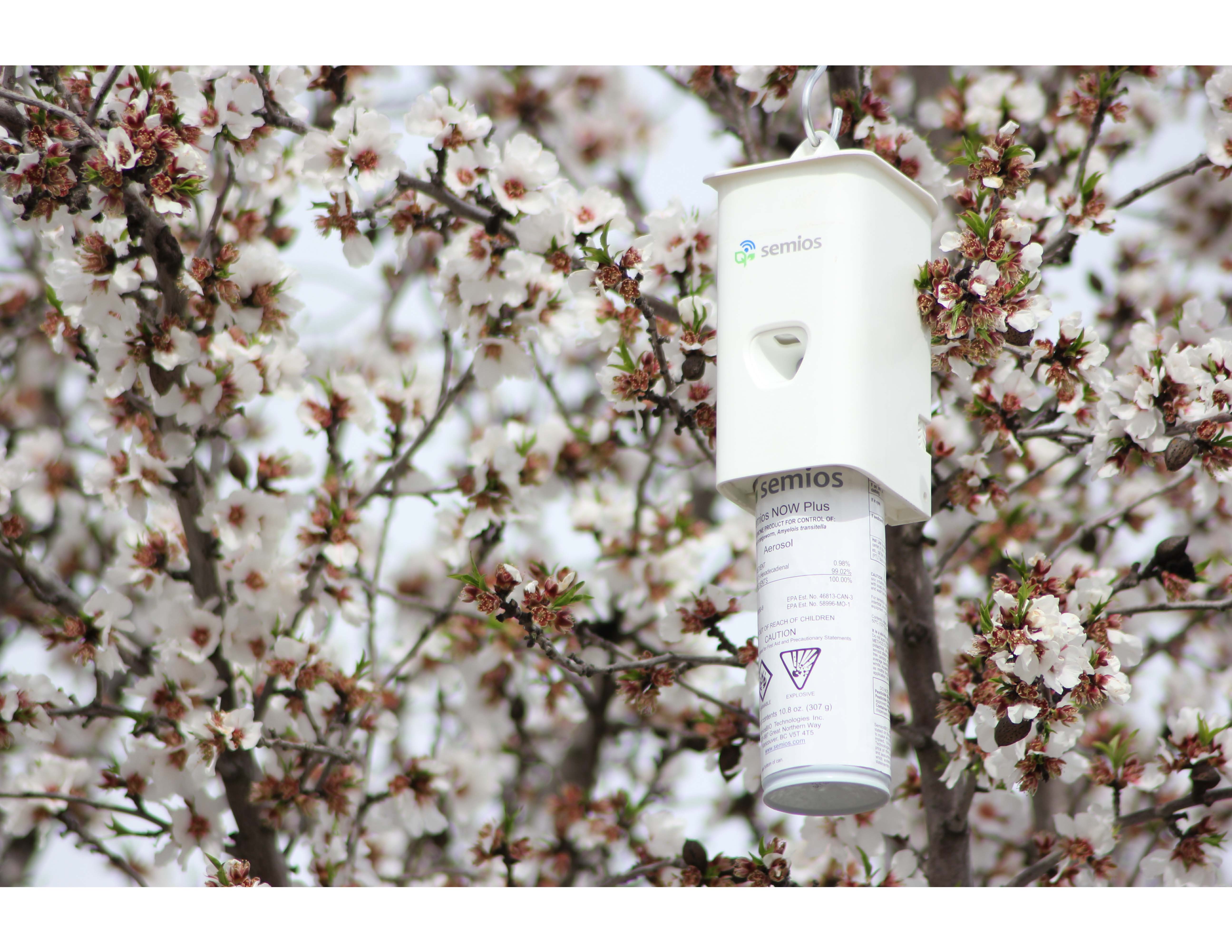
Announced TODAY, Semios, a leading provider of real-time agricultural information and precision pest management tools, has received US Environmental Protection Agency (EPA) approval and California Department of Pest Regulation (DPR) approval for aerosol pheromone biopesticide products that disrupt the mating of the Navel Orangeworm (NOW).  
Michael Gilbert, founder and CEO of Semios said, “The Navel Orangeworm pest causes significant loss of crop and revenue in the California almond and pistachio industries, and it’s getting worse every year.  The Semios NOW pheromone aerosol formulas give farmers the ability to reduce and control pest populations and, as a result, significantly reduce crop damage.  The Semios pheromone aerosol dispenser is part of a custom-designed controller and sensor network that gives farmers decision-making tools and remote access to the field conditions in real-time- all day, every day.”

Remote Control Makes it Highly Effective

The Semios platform includes in-field camera traps that monitor the number of pests and flight strength, which when combined with wind, temperature and other environmental conditions measured and reported by Semios, optimize pheromone deployment.  The combination of traps, pheromone dispensers and other sensors on the same network means farmers can deploy the right amount of pheromones where and when needed through a single interface.

A Destructive Pest for Many Crops

NOW is the most destructive pest of introduced nut crops. Semios NOW Plus and Semios NOW Standard (for organic growers) are available for control of NOW in orchards growing walnuts, pistachios, almonds, dates, figs, citrus, pome and stone fruits.


Sustainable Solution

Pheromones are a naturally occurring part of the communication systems used by insects.  Semios uses pheromones to disrupt the mating cycle of insects, thus diminishing pest populations and reducing crop damage.  Pheromones do not kill or damage the target insects and, as pheromones are species-specific and only target the specific pest, pollinators and other beneficial insect species are not affected.

_______________________________

About Semios

Semios is a leading precision farming platform that provides real-time information and pest management tools for the tree fruit, nut and grape growers.   Semios combines hardware with powerful secure online software that monitors field and weather conditions and allows remote pest monitoring and deployment of mating disruption pheromones. It’s easy to use, reduces labor and allows farmers to make decisions that preserve and increase crop value.
2021-05-12T11:03:03-07:00March 2nd, 2016|

Pistachios Trump Diabetes

Pistachios Trump Diabetes

By Brian German, Associate Editor

Just eating the right foods can benefit people diagnosed with pre-diabetes or with type 2 diabetes.  Recent research* suggests including pistachios as part of a balanced diet is a sound strategy to help lower the risk of developing type 2 diabetes. And the news could increase pistachio imports into China, where the disease is rampant.

Judy Hirigoyen, vice president of global marketing for the Fresno-based American Pistachio Growers organization that represents more than 800 growers in California, Arizona and New Mexico, noted pistachios have a good future in the global diabetes epidemic, especially in China. “Believe it or not,” she explained, “one-third of the entire world’s population of diabetics lives in China. Diabetes is associated, not with overweight or obesity, but with their diet. In particular, a lot of fingers are pointed at a lot of white rice,” she said.

“The good news for the pistachio industry,” said Hirigoyen, “is the Chinese population really loves American products, including pistachios. They’re looking for healthy foods to eat, and pistachios are very widely recommended, especially as part of a diet for someone who either has diabetes or who wants to prevent pre-diabetes from developing into diabetes.”

American Pistachio Growers Infographic - Pistachios and Diabetes

American Pistachio Growers Infographic – Pistachios and Diabetes

__________________________________

*A study, published in Diabetes Care, suggests that pistachios may have glucose- and insulin-lowering effects and promote a healthier metabolic profile in people with pre-diabetes. (Hernandez-Alonso, P., et al. Nutrition attributes and health effects of pistachio nuts. Br J Nutr. 2015 Apr;113 Suppl 2:S79-93.)

Another study, published in Nutrition, Metabolism and Cardiovascular Diseases, suggests that daily consumption of pistachios may shift the lipoprotein size and particle profile to a less atherogenic pattern in people with pre-diabetes. (Hernandez-Alonso, P., et al. Effect of pistachio consumption on plasma lipoprotein subclasses in pre-diabetic subjects. Nutr Metab Cardiovasc Dis. 2015 Apr;25(4):396-402.)

2021-05-12T11:05:58-07:00March 2nd, 2016|

Vertical Integration and Grape Flavors

Vertical Integration and Grape Flavors

By Charmayne Hefley, Associate Editor

Vertical integration, the combination in one company of two or more stages of production normally operated by separate companies, has helped lead to success in many facets of the agriculture industry. Harold McClarty, who founded HMC Farms with Mike Jensen, said without vertical integration, his farm would not be able to survive or have nearly the same level of success.  “We would not be in stone fruit if we were not vertically integrated,” McClarty explained. “There are three profit centers: the growing of it, the packing of it and the selling of it. We have all three of those profit centers. Without them we would not be able to survive the tough years.”

Cotton Candy grape clamshell

Cotton Candy grape clamshell (Photo source: Grapery)

McClarty also said the grape industry has made significant strides in flavor profiles in the marketplace. One popular flavor is Cotton Candy, which is grown and sold by Grapery, a company founded by Jack Pandol in 1996. Grapery also grows and sells Gum Drop grapes, Moon Drop grapes, Flavor Pops grapes and more.

The increase in unique flavors, according to McClarty, has helped grapes become a popular snack. “There’s been a revolution in the varieties of grapes grown just over the last five to seven years,” McClarty said. “These new varieties have revolutionized grapes and enabled us to produce more on less. 

To evaluate a grape, McClarty suggests you “look at a berry’s color, crispness and sweetness; these are the things that make a grape taste delicious. It really is a revolution, and we haven’t seen it in the California marketplace as much as we have in the rest of the United States. The retail chains in California just haven’t embraced it as well as some of the really good supermarkets on the East Coast and in the Southeast,” noted McClarty.

2016-05-31T19:24:13-07:00February 9th, 2016|

Dogs Detect Citrus Diseases

Dogs Detect Citrus Diseases

By Charmayne Hefley, Associate Editor

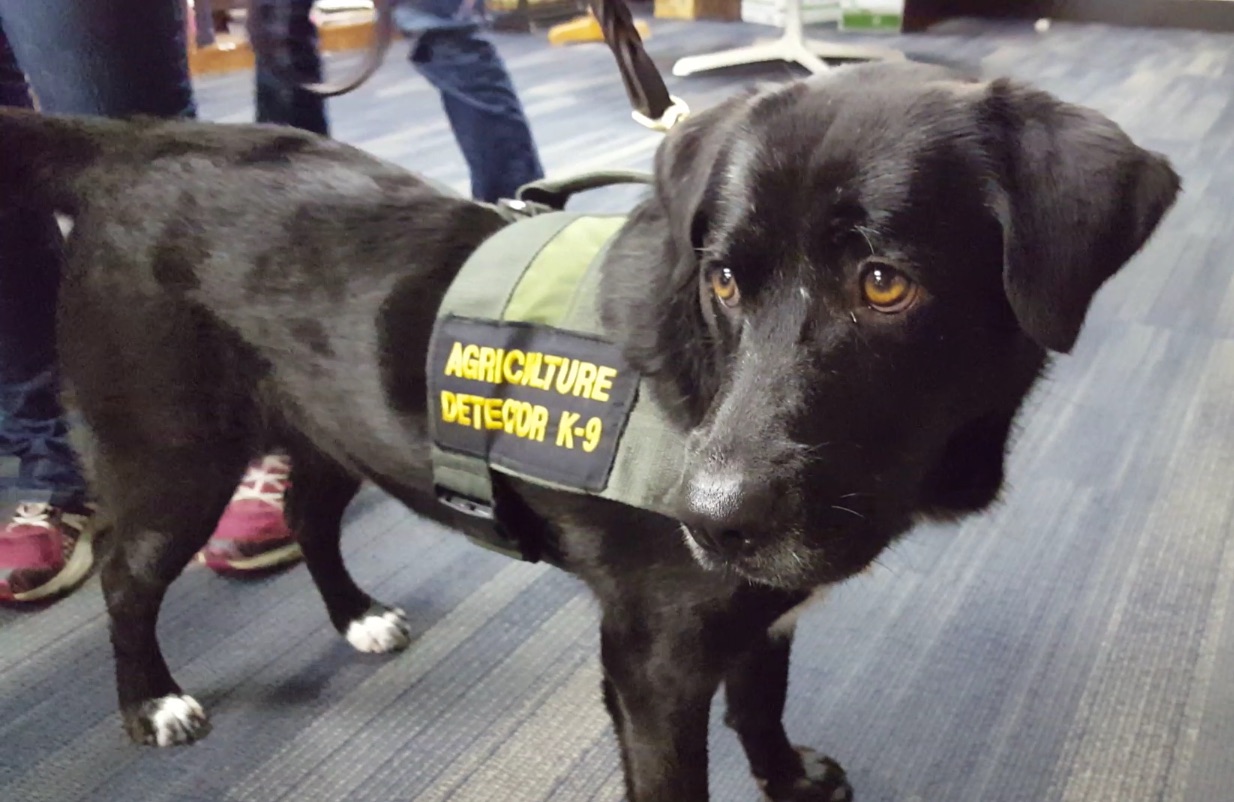
Animals have been known to be able to use their senses to detect things that humans require extensive technology to detect. Mary Palm, USDA Animal and Plant Health Inspection Service (APHIS) national coordinator for citrus pest programs, said dogs have been successfully trained to detect canker disease, and now Huanglongbing disease (HLB), in citrus.

“Over the past four to five years,” Palm said, “a researcher in Florida first determined dogs could actually detect canker, began training dogs,” Palm said, “and then trained different sets of dogs to detect it. It turned out that they were very good at it. In a demonstration there, none of the people could find any symptoms in a particular citrus tree, but the dogs came through and found the symptoms. Once the people came back and looked very closely, sure enough, it was there.”

Palm said the USDA Huanglongbing Multi Agency Coordination (MAC) Group funded research to determine if dogs could detect HLB in citrus as well as they detected canker. There are now five dogs being trained and tested daily. If grower demand increases, the use of canines in pest management could increase.

Palm said they will probably come up in the next year or two with certification criteria for other companies to train dogs and certify them as detectors. Palm said, “They would be able to get a certificate to show they had conducted all of the tests necessary with the [proper] degree of accuracy.” Palm said the dogs in this program have a 99 percent success rate at detecting HLB disease.

Palm said approximately 80 trees are put inside every night, the positive ones in one greenhouse and the negative ones in another. The trees are taken out the next day and positioned in different patterns for dogs to inspect throughout the day. When the dogs are brought out, even their trainers don’t know which trees are positive or negative. The trained dogs are more than 99 percent accurate.”

Link:

USDA Huanglongbing Multi Agency Coordination (MAC) Group Funded Projects: List for the Control and Mitigation of Huanglongbing FY 2015

2021-05-12T11:03:04-07:00January 25th, 2016|

State of the Winegrape Industry

State of the Winegrape Industry

By Charmayne Hefley, Associate Editor

Growers attending the Grape, Nut and Tree Fruit Expo in Fresno last November had the opportunity to learn about the state of the winegrape industry from Nat DiBuduo, president of Allied Grape Growers. While DiBuduo acknowledged growers were facing challenges, he encouraged them to continue to work with the industry.

DiBuduo said the immediate challenges facing the winegrape industry—largely in the production and price of winegrapes—depend on the variety, “but I’m asking all winegrape growers to look at their crops, production levels and quality levels.” DiBuduo is asking growers to work with the wineries to get higher production numbers and contracts with higher prices for long-term sustainability.”

“I think 2016 will be a challenge, but I look forward to 2017,” he elaborated; “however, it’s not going to get better without the removal of some vineyards. We’ve got to get the price to where growers are sustainable and viable going forward,” said DiBuduo. “We supply a big base of grapes to in the industry. We want to keep that base despite dwindling sales.”

DiBuduo explained that growers could work on overcoming their challenges by remaining active in the discussion. “Go to meetings like this,” he explained. “Go to viticulture meetings. Work with specialists to get better production and better quality.”

DiBuduo also stressed the importance of designing labels and wines that appeal to millennials. Labels that stand out as creative and unique appeal to the millennial generation, which also does not hold the same brand loyalty as prior generations, he said.

Having labels and brands that are attractive to the millennials is important, DiBuduo said, because this generation cannot “be standardized into one-cookie-cutter-fits-all, so you’ve got to be energized. I think the winegrape industry has really done that. We’ve come out with a number of different blends of wines and different labels that catch the eyes of the millennials and get them excited.”

2016-06-03T09:48:42-07:00January 19th, 2016|

FROM THE EDITOR

From the Editor

California Ag Today would like to issue a formal apology regarding errors in our article, “Korea Refuses Contaminated Citrus,” published yesterday on our website, CaliforniaAgToday.com.

While we strive to accurately report timely, trusted and essential news about California’s comprehensive and complex agricultural industry according to the highest standards in professional journalism, we always appreciate the opportunity to correct any errors we have made.

To be clear, Korea is not refusing citrus imports from California. Korea is concerned about the detected presence of Fuller rose beetles in arriving citrus shipments.

I, personally and sincerely apologize to:

  1. Dr. Elizabeth Grafton-Cardwell for any and all misrepresentations of her message.
  2. The California agricultural industry for any hindrance or concern our article may have caused.
  3. Our readers, the California Ag Today team, and Charmayne Hefley, author of the article, for my editorial errors.

In addition, I thank California Citrus Mutual for informing us about our errors with haste. 

We promptly removed the story from our website, CaliforniaAgToday.com, as soon as we were notified. We will continue to strive to better adhere to our mission of accurately reporting news about California’s agriculture industry.

Here is a more recent article on the issue:

Californian Citrus Rejected by Korea,” published on www.freshplaza.com today and tweeted by Elizabeth Grafton-Cardwell today as well.

Laurie Greene

Editor

1/14/16

2016-05-31T19:26:59-07:00January 15th, 2016|

Project Apis m. Helps Almond Growers Empower Bees

Project Apis m. Helps Almond Growers Empower Bees

With Free Flowering Forage

By Patrick Cavanaugh, Deputy Editor


Christi Heintz, executive director for Project Apis m. (PAm), elaborated on the message she presented at the annual Almond Conference last month in Sacramento, “Our purpose at the Almond Industry Conference was to meet growers and talk to them about planting additional forage before and after almond pollination. These are times of dearth when honey bees are not getting the nutrition they need and beekeepers have to feed tremendous amounts of sugar syrup or high-fructose corn syrup to keep the bees alive,” Heintz said.

Project Apis m.Established as a non-profit organization in 2006, PAm has the goal of funding and directing research to enhance the health and vitality of honey bee colonies while improving crop production. Heintz explained PAm.—named after Apis mellifera, the scientific name for the European honey bee—offers farmers free mustard mix for pre-almond bloom or clover mix for post-almond bloom to extend the season of nutrition availability for bees when they are most vulnerable. The increase in forage also benefits bees by providing additional natural and more diverse sources of nutrition resulting in better pollination and increased crop yields.

Heintz wants more growers to take part in the program. She reemphasized, “Honey bees love almonds, but we worry about those times just before and just after bloom. If you can get something going before bloom, you’ll get bee colonies that want to go out and forage for pollen, and they will be in great shape for almond pollination,”Heintz said.

Heintz enthusiastically urges growers to get involved by contacting PAm at ProjectApis@gmail.com and ask about forage seed mix to plant for honeybees. Growers can also go to the Project Apis m. website and to their web page For the Almond Grower.

Heintz has managed research, including pollination research since 1979, and has focused on honey bees since 2006. She also manages the Environmental Sustainability Program and production research for the Almond Board of California.

2021-05-12T11:05:58-07:00January 14th, 2016|
Go to Top