
About California Ag Today

This author has not yet filled in any details.
So far California Ag Today has created 2014 blog entries.

#AgLaw: Country of Origin Labeling (COOL)

S.1844 – Voluntary Country of Origin Labeling for Beef, Pork and Chicken

Status:

Sen. John Hoeven, [R-ND] introduced S. 1844 on July 23, 2015 to amend the Agricultural Marketing Act of 1946 to provide for voluntary country of origin labeling for beef, pork, and chicken. The bill was read twice and referred to the Senate Committee on Agriculture, Nutrition, and Forestry.

Description:
S. 1844 allows voluntary designation of country of origin labeling by packers of any raw single-ingredient beef, pork, or chicken product intended for retail sale as exclusively having a United States country of origin. No federal agency, state, or state agency may supercede this law by labeling beef, pork, or chicken for retail sale with a U.S. origin in a manner that is less stringent than, or inconsistent with, the federal requirements. S. 1844 does not affect any other federal marketing or regulatory program or similar state initiative.
2016-05-31T19:28:08-07:00August 2nd, 2015|

Alliance Against Food and Farmer Disparagement

The Alliance for Food and Farming Counters Food and Farmer Disparagement

By Patrick Cavanaugh, Laurie Greene and Courtney Steward, CaliforniaAgToday

Experts around the world agree that eating more fruits and vegetables is the best thing we can do to reduce disease, prevent obesity, and improve our health. But sometimes consumers need to know more about organic and conventional fruits and vegetables so they can make the right shopping choices for themselves and their families.

The Alliance for Food and Farming (AFF), based in Watsonville, is a non-profit organization comprised of both organic and conventional farmers that delivers credible information to consumers about the safety of organic and conventional fruits and vegetables.

According to Teresa Thorne, with AFF, “Many organizations such as Friends of the Earth (FOE), and the Environmental Working Group (EWG) are at odds with AFF for providing science-based and peer-reviewed information to consumers so they can make good shopping choices for their families.”

Friends of the Earth logo“Whether consumers purchase organic or conventional produce, both are safe,” Thorne said. “Health experts say simply that we should be eating more. Decades of nutrition science and health experts everywhere support the recommendation to eat more organic and conventional produce every day for better health. So, it is a little puzzling why FOE and some of the other activist groups would be concerned about that message. But, apparently they are.”

“So, what we are trying to do,” explained Thorne “is present accurate and more balanced information for consumers. Our Board of Directors, nearly 7 years ago, established that calling our healthy and safe produce “dirty” or “toxic” has to stop. We are not going to allow the disparagement of these nutritious products and the disparagement of the farmers who are working hard every single day to provide these healthy products to consumers, to stand.”

Thorne said, “So, AFF got in gear to stop it, largely by going toe-to-toe with the EWG’s so-called ‘Dirty Dozen’ list—one of the main vehicles of product disparagement. Not long ago, when the EWG published the list, nearly all newspapers, television networks and cable channels gave it widespread media coverage in major media markets and publications.”

AFF has achieved some success by introducing peer-reviewed science from experts into consumer media, with the credible message that both organic and conventional produce are safe, healthful, and people should eat more of them every day. “Just in the course of the last six years of the campaign,” said Thorne, “we’ve seen coverage of the EWR list diminish to the extent that in 2015, only one daily newspaper in Ohio covered the story. So their message is mostly limited to blogs for those who are very friendly to their message.”

ewg logo


Aside from the “Dirty Dozen” list, the EWG website does support the same scientific research as the Alliance:

Should we eat more fruits and vegetables?

…The health benefits of a diet rich in fruits and vegetables outweigh the risks of pesticide exposure. Eating conventionally grown produce is far better than skipping fruits and vegetables. And with EWG’s Shopper’s Guide™, consumers don’t have to choose between pesticides and healthy diets.

Do all these pesticides mean I shouldn’t eat fruits and vegetables?

No, eat your fruits and vegetables! The health benefits of a diet rich in fruits and vegetables outweigh the risks of pesticide exposure. Use EWG’s Shopper’s Guide™ to reduce your exposures as much as possible, but eating conventionally grown produce is better than not eating fruits and vegetables at all.

Shouldn’t I try to buy everything organic?

EWG recommends buying organic whenever possible.

…However, we know that organics are not accessible or affordable for everyone, so we created the Shopper’s Guide™ to help consumers make the healthiest choices given their circumstances.

…EWG always recommends eating fruits and vegetables, even conventionally grown, over processed foods and other less healthy alternatives.

SafeFruitsandVeggies logo

AFF claims on its website:

We have an obesity epidemic and current media and internet reporting is increasing fears consumers have about eating fruits and vegetables and is lowering the faith people have in the government regulations implemented to protect them.  It is inaccurate to suggest that organic is the only safe choice when it comes to selecting safe fruits and vegetables; because there is no scientific consensus to substantiate this claim.

-See more at the Alliance’s website, SafeFruitsandVeggies.com.

Thorne believes the Alliance’s success has lead to another activist group, Friends of the Earth (FOE), taking them on. Thorne said FOE is trying to discredit the Alliance by calling it a “front group”.

In its “Spinning Food” report, published in June 2015, the FOE reports:CFBF logo

While the Alliance presents itself as a science-based resource on the safety of organic and conventional produce, its funding comes from trade groups for industrially grown apples, citrus, pears and grapes, among other industry groups.

The “leading corporate Board Members or Donors” of the Alliance are listed as:

-California Farm Bureau Federation

-Western Growers

-Produce Marketing Association

Western Growers logo


Wikipedia defines a front organization as “any entity set up by and controlled by another organization, such as intelligence agencies, organized crime groups, banned organizations, religious or political groups, advocacy groups, or corporations. Front organizations can act for the parent group without the actions being attributed to the parent group.”

Thorne stated, “We’re not a front group. We are who we are—very transparent. The entire tax return is posted on the “About Us” section of the AFF website, as well as:

Who is Behind the Alliance for Food and Farming?   andPMA Logo    How is the Alliance for Food and Farming funded?

“But they never attack the scientific content we present,” stated Thorne, “and that really underscores our science is good and solid. They only try to discredit the organization itself with those unfounded ‘front group’ allegations.”

2016-05-31T19:28:08-07:00July 31st, 2015|

New APG Ambassadors Shine!

American Pistachio Growers Introduces New Ambassadors 

By Patrick Cavanaugh, Deputy Editor, California Ag Today

American Pistachio Growers (APG) held its annual summer luncheon late last week in Visalia, shared the organization’s marketing plans with a large crowd of growers, and introduced the newest APG ambassadors.

Richard Matoian, executive director of APG, framed the meeting, “We’re voting on our budget for the upcoming year, so it is a good opportunity to tell our growers what we are doing on their behalf to promote and to help sell pistachios.”

From Left, Sanya Jones, Cheryl Forberg and Judy Hirigoyen, APG

From Left, Sanya Jones, Cheryl Forberg and Judy Hirigoyen, APG

Bree Morse, recently crowned Miss California and now serving as an ambassador for American Pistachio Growers, effused, “We have so many once-in-a-lifetime opportunities being here today at the annual luncheon. It’s neat today because I get to meet and interact with the people in the industry, APG staff and the growers themselves, who are behind what I’m representing. We have amazing opportunities; I get to go to China in December to be Ambassador of American Pistachios abroad, and I’m just really excited to be the face of pistachios.”

Another great APG Ambassador introduced at the lunch was Sanya Jones, the recent Season 16 Biggest Loser television show runner-up, who lost 144 pounds. And guess what? Jones considers pistachios an important part of her success, “Well the funny thing is, I always loved pistachios. I would always get them for my dad as a kid and we would sit in front of the tv and eat them mindlessly.” Anecdotally, Jones shared that pistachios was the one food that her dad would put his teeth in to eat!

“But once I got to the ranch,” Jones continued, “Cheryl Forberg, chef and nutritionist for the tv show, got them on the menu for us. Pistachios are nice when you are a food-addict or a bulk-eater because they make you slow down. I can’t just inhale them; I have to slow down and crack them open. Plus, they are so nutritionally wonderful and keep me fuller longer.”

Who can argue with success?

Featured Photo: Bree Morse, Miss California

2016-05-31T19:28:09-07:00July 30th, 2015|

Westlands on Drought Relief Act

Westlands Water District Statement on the Introduction of the California Emergency Drought Relief Act of 2015

FRESNO, CA – Westlands Water District is encouraged TODAY by the introduction by Senator Dianne Feinstein of the California Emergency Drought Relief Act of 2015. The State is facing unprecedented drought conditions, and the water supply shortages caused by four years of extraordinary dry conditions have been exacerbated by the restrictions imposed on the operations of the federal Central Valley Project and the California State Water Project under federal law.

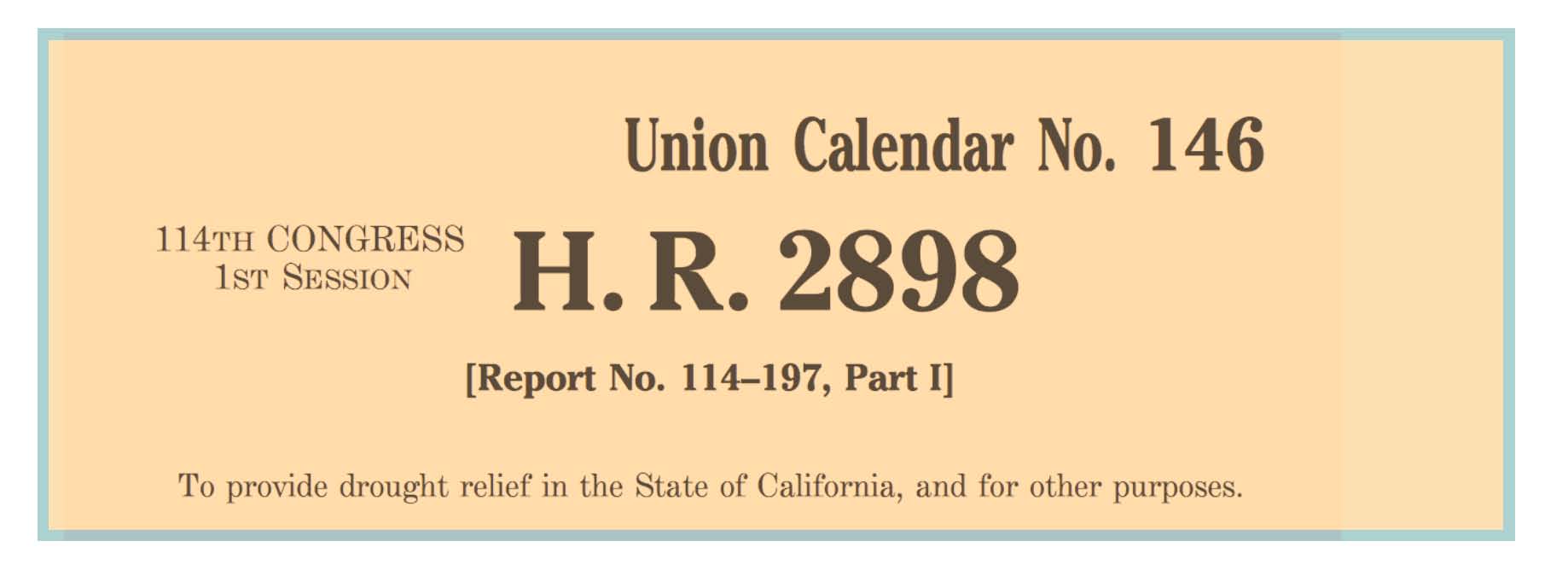
The introduction of the California Emergency Drought Relief Act of 2015 is an important step in the enactment of legislation to provide much-needed relief for the public water agencies that receive water from these projects and for the people, farms, and businesses they serve. There are great similarities between this bill and H.R. 2898, the Western Water and American Food Security Act of 2015, which passed in the House of Representatives on July 16, 2015. However, there are also great differences.

Westlands looks forward to quick passage of the California Emergency Drought Relief Act of 2015 by the Senate and to subsequent discussions in conference to reconcile the two bills. Through its work with Senator Feinstein and Members of the House of Representatives, Westlands knows that these policymakers are genuinely interested in working together with the District and other interested entities (a) to find a meaningful legislative solution to the chronic water supply shortages that have devastated the San Joaquin Valley and other regions of the State and (b) to provide effective means of protecting at-risk species. The District looks forward to working with them to find common-sense solutions that serve the interests of all Californians.

2016-05-31T19:28:09-07:00July 29th, 2015|

Ag Major Scholarships


It Pays to be an Ag Major: Friends of Dixon May Fair Awards $12,500 in Scholarships

Seven Solano County residents majoring in agriculture will receive some financial relief when they head for their college campuses this fall, thanks to a combined total of $12,500 awarded them in college scholarships from the Friends of the Dixon May Fair.

Dixon Winners

Olivia Ramirez of Dixon is the 2015 recipient of the Ester Armstrong Memorial Scholarship from Friends of the Dixon May Fair. With her are Donnie Huffman (far left) of Vacaville, president of the Friends; Tom Armstrong of Rocklin, husband of the late Ester Armstrong, former interim chief administrative officer of the Dixon May Fair; and JoAnn Giannoni of Dixon, scholarship chair. (Photo by Kathy Keatley Garvey)It Pays to be an Ag Major: Friends of Dixon May Fair Awards $12,500 in Scholarships

The seven include four from Dixon; two from Vacaville, and one from Rio Vista. Most are current or former members of the 4-H youth development program. Over the last 15 years, the Friends of the Dixon May Fair, headed by Donnie Huffman of Vacaville, has awarded a total of $154,500 in college scholarships to Solano students majoring in an agricultural-related field in a California university or community college.

Olivia Ramirez of Dixon, a 2015 graduate of Dixon High School headed for California State University, Chico, received the Ester Armstrong Memorial Scholarship of $3000. Her career goal is to become a veterinarian. The award memorializes fair industry veteran Ester Armstrong of Rockville, a former director of the California Division of Fairs and Expositions who served as interim chief executive officer of the Dixon May Fair from 2006-2009. She died in May 2009 of cancer.

Jordan Dosker

Jordan Dosker of Vacaville received a $2000 scholarship from the Friend of the Dixon May Fair.

Jordan Dosker of Vacaville, a third-year student at California Polytechnic University (Cal Poly), San Luis Obispo, received $2000. A 2012 graduate of Vacaville High School, she plans to become a veterinarian. This is the third year she has received a Friends of the Dixon May Fair award.

Marla Kogler of Rio Vista, a third-year student at California State University, Chico, received a $2000 scholarship.  A 2013 graduate of Rio Vista High School, she plans to become an agriculture teacher and FFA advisor. This is the third year she has received a Friends’ scholarship.

Jillian Raycraft, of Dixon, a 2015 graduate of Dixon High School, received a $2000 scholarship. She will attend Cal Poly, majoring in ag business.

Lyle Glass of Vacaville, a 2015 graduate of Vacaville High School, received the $1500 Jack Hopkins Scholarship award, memorializing  a longtime Dixon resident and supporter of the Dixon May Fair. Glass will attend Woodland Community College and plans to pursue a degree in agribusiness management.

Kyle Garlick of Dixon, a second-year student at Butte Community College, received a $1000 award. A 2012 graduate of Dixon High School, he is pursuing a career in agribusiness management. This is the second year he has received a scholarship.

Nicole Talken of Dixon, a 2015 graduate of Dixon High School, received $2000. She is currently attending Sacramento City College with plans to transfer to UC Davis as a junior. She plans to become a veterinarian.

The Friends, an all-volunteer organization raises funds by selling beverages at the Dixon May Fair. They use the proceeds for building and grounds improvements on the fairgrounds, exhibitor and special event awards, and college scholarships.

Only Solano County residents planning a career in agriculture and accepted into a California college, are eligible to apply, said JoAnn Giannoni of Dixon, the scholarship chair. Applicants have graduated from a Solano County high school and must be enrolled in or accepted for enrollment in either a four-year or two-year college.  They must major in an agricultural-related field, which can encompass dozens of majors, including agricultural business, forestry, pomology, nematology, plant pathology, viticulture, wildlife and fisheries biology, and child, family and consumer science.

Recipients are selected on their personal, civic and academic experience, academic standing, personal commitment and goals, leadership potential, civic accomplishments, and agricultural interests. Desired but not mandatory is 4-H, FFA or Grange experience.

All applicants must submit a personal statement of no more than two typed pages, explaining “why they are pursuing their desired career and what they hope to accomplish,” Giannoni said.  The rules are at http://www.friendsofthefair.org/.  Applications are generally due March 1.

The scholarship committee is comprised of Giannoni; Tootie Huffman, treasurer of the Friends; Vacaville veterinarian John Howard, who received his degree from UC Davis; and Kathy Keatley Garvey of Vacaville and Carrie Hamel of Dixon, both of UC Davis.

Capsule information on the recipients:

Olivia Ramirez was active in 4-H and FFA and also played basketball, water polo, volleyball, powderpuff football and softball in Dixon. “My plan is to go to Chico State for four years and get my bachelor of science degree in animal science, and then apply to the UC Davis Vet School to become a large animal veterinarian,” she said.  Ramirez said she intends to start a veterinary practice and also start a program that helps troubled youth of her community “learn the importance of farming, caring for animals.”  She remembers saving “every dollar from babysitting, allowance, birthday money, anything I could save” to buy a horse” when she was in middle school. She’s also raised swine and sheep and exhibited them at the Dixon May Fair.

Jordan Dosker says her ultimate goal is to become a veterinarian “and to work with either large or exotic animals.”  She didn’t grow up around animals but interned at the Sacramento Zoo. Dosker said she’d like to help people care for animals both in the United States and in third-world countries. “From Solano County to sub-Saharan Africa, I want to make an impact on people’s understanding of agriculture by taking my education on medicine and animal management and sharing it with numerous communities.”

Maria Kogler was active in the Rio Vista 4-H Club, showing market goats, and later joined the Rio Vista FFA. Both “created many opportunities for me to share my passion for agriculture with so many people,” she said. Her desire to teach is fueled by her passion for agriculture. “I want to create the same opportunities for future studenets that I was offered,” Kogler said.

Lyle Glass grew up on a 10-acre farm and continues to be active in 4-H. He served as a Solano County 4-H Ambassador, the highest 4-H rank in the county and then was named a California State Ambassador, the highest 4-H rank in the state. He seeks a career in agribusiness. “I love agriculture because of my extensive involvement in the industry,” eh said. “Also I enjoy working with people. I like to feel like I am a positive influence on people and can inspire greatness in them. I want to see people fulfill their full potential and I credit that to all the people who wanted to see me do the same.”

Of 4-H, Glass said it has morphed him into “who I am today, however, it was also the things I learned and achieved in the organization that helped make me who I am today. I was in an environment that helped me learn more about myself and what I love to do. I had a unique experience in my life that set me up for success.”

Kyle Garlick, a former 4-H’er, recalls his family moving to the country when he was in the second grade. “This was the beginning of my love for agriculture,” he said.  He credits Rhonda Rayn, a Dixon 4-H leader and former coordinator of the Dixon May Fair Junior Horse Show, with getting him involved in agriculture.  He later joined the Dixon FFA.  Garlick served as a foreign exchange student  in Argentina and attended a dairy school half of the day. “I had the opportunity to work in the dairy plant learning how to make yogurt, milk and cheese,”  he said. After graduating from Butte Community College, he plans to obtain his bachelor’s degree in ag business from Chico State and a “pursue a career with a company or agency specializing in agriculture.”

Nicole Talken, who plans to become a veterinarian, was active in both 4-H and FFA, and is presently involved in breeding and raising grand-champion rabbits. Her projects have included market goats, market lambs, market swine, dairy goats, horses, dogs, rabbits, poultry, photography, art work, taxidermy and ag mechanics. A second-year student at  Sacramento City College, she plans to transfer to UC Davis her junior year. She is majoring in animal science and management and minoring in animal nutrition and American sign language. Talken, a cancer survivor, was diagnosed with a rare cancer at age six. Her motto is “Never give up.” Said Talken: ‘Cancer opened my eyes to the world around me and I grew up wise beyond my years.:

Jillian Raycraft, raised in Dixon on a small farm, says that “agriculture has come to have most of my heart. She has fond memories of “sitting on my father’s lab, driving tractor and standing next to him trying to start an irrigation siphon with all my seven-year-old body’s might.” Raycraft was heavily involved in FFA and “raising animals and farming my own four acres of field corn and oat hay seasonally.” That further sparked her interest in pursing a career in agricultural business, which “permits me to combine the passion that I already encompass for agriculture with my willingness and dedication to further my knowledge and advocacy in this field.”  Already sparking much of her interest “are the ideas of seed distribution and agricultural lobbying.”

2016-05-31T19:28:09-07:00July 28th, 2015|

URGENT HLB Quarantine UPDATE

HLB Quarantine Update

A Huanglongbing (HLB) quarantine is now in effect in part of Los Angeles County following the detection of HLB in four citrus trees.

On July 10, a kumquat tree on a residential property was confirmed to be infected with the incurable HLB disease. After extensive surveying and testing in the area, three more diseased trees were found nearby. The four diseased trees were on four separate properties close to one another. The tree varieties include kumquat, lime, mandarin and calamondin.

California Department of Food and Agriculture (CDFA) has already removed two of the diseased trees and is currently working with the homeowners at the other two properties to remove those trees as soon as possible. See the CDFA press release below for more details on the resulting quarantine.

QUARANTINE FOR HUANGLONGBING DECLARED IN SAN GABRIEL, LOS ANGELES COUNTY

SaveOurCitrusSACRAMENTO, July 22, 2015 – An 87-square mile quarantine in the San Gabriel area of Los Angeles County has been added to the existing huanglongbing (HLB) quarantine in the Hacienda Heights-area following the detection of the citrus disease huanglongbing, or citrus greening.

Additional information, including a map of the quarantine zone, is available at the CDFA Save Our Citrus website.  The quarantine boundaries are: on the north, E. Orange Grove Boulevard; on the east, N. Lemon Avenue; on the west, Griffin Avenue; and on the south W. La Habra Boulevard.

This area is part of a much larger quarantine already in place for the Asian citrus psyllid (ACP), the pest that spreads bacteria causing huanglongbing (HLB). The new quarantine will prohibit the movement of all nursery stock out of the area, while maintaining existing provisions allowing the movement of only commercially cleaned and packed citrus fruit. Any fruit that is not commercially cleaned and packed, including residential citrus, must not be removed from the property on which it is grown, although it may be processed and/or consumed on the premises.

“The success of any quarantine depends on cooperation from those affected,” said CDFA Secretary Karen Ross. “The stakes couldn’t be higher for California citrus. We urge residents in the San Gabriel-area to do all they can to comply.”

CDFA, the USDA and the Los Angeles County Agricultural Commissioner’s continue their work to investigate the source of the disease, to survey and test for it throughout the Los Angeles Basin, and to continue with ground treatment of citrus trees within 800 meters of the find sites – which began earlier this week. In the long term, the strategy is to control the spread of ACPs while researchers work to find a cure for the disease.

Huanglongbing has been confirmed four times in San Gabriel, in a kumquat tree on a residential property, in a lime tree on an adjacent residential property, and in calamondin and mandarin trees on residential properties in close proximity to the original find. The disease is bacterial and attacks the vascular system of plants. It does not pose a threat to humans or animals. The Asian citrus psyllid can spread the bacteria as the pest feeds on citrus trees and other related plants. Once a tree is infected, there is no cure; it typically declines and dies within a few years.

Huanglongbing is known to be present in Mexico and in parts of the southern U.S. Florida first detected the disease in 2005, and the University of Florida estimates that the disease causes an average loss of 7,513 jobs per year, and has cost growers $2.994 billion in lost revenue since then. Huanglongbing has also been detected in Georgia, Louisiana, South Carolina and Texas as well as Puerto Rico and the U.S. Virgin Islands.

A total of 15 states or territories are under full or partial quarantine due to the presence of the ACP: Alabama, American Samoa, Arizona, California, Florida, Georgia, Guam, Hawaii, Louisiana, Mississippi, Northern Mariana Islands, Puerto Rico, South Carolina, Texas, and the U.S. Virgin Islands.

The Asian citrus psyllid was first detected in California in 2008 and quarantines for the pest are now in place in 17 California counties. If Californians believe they have seen evidence of huanglongbing in local citrus trees, they are asked to please call CDFA’s toll-free pest hotline at 1-800-491-1899 FREE. For more information on the Asian citrus psyllid and huanglongbing, please visit: http://www.cdfa.ca.gov/phpps/acp/.

2016-05-31T19:28:09-07:00July 23rd, 2015|

We are being lied to!

Assembly Member Patterson Accuses NRDC and Governor’s Office of Bias

By Laurie Greene, Editor


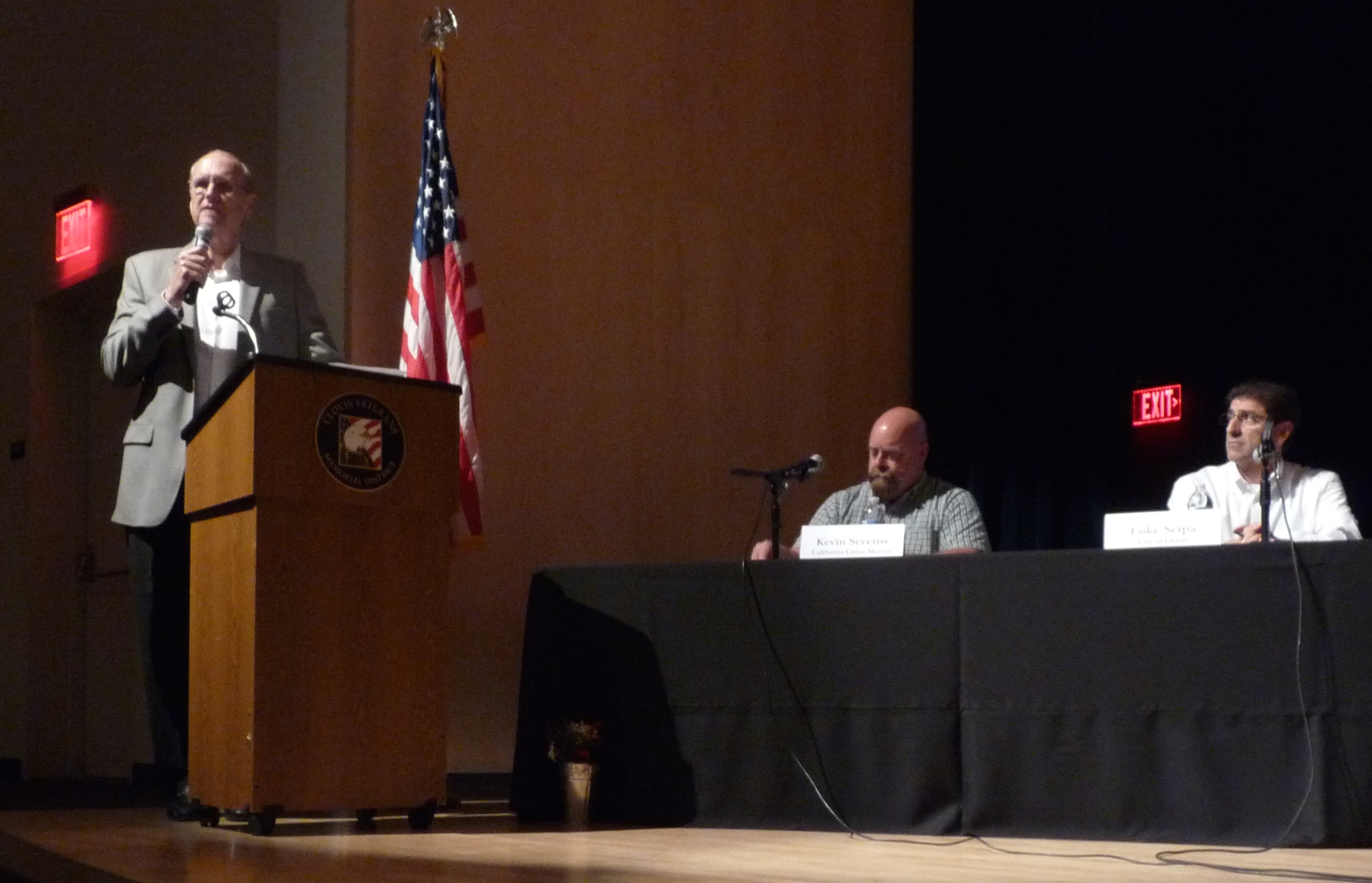
“We are being lied to,” declared Jim Patterson, who represents the 23rd Assembly District in the California State Assembly since 2012, at his recent drought forum in Clovis.

“I have come to the conclusion there is a power structure led by the Natural Resources Defense Council (NRDC), the governor’s office and in the bureaucracies,” Patterson explained. “They are not telling us the truth. They do not abide by their own agreements, and they have a bias against the very water technology and the water systems that have made California a ‘Golden State’. They are biased against dams, reservoirs and conveyance, and every time I turn around, I find another example.”

Jim Patterson, California Assembly Member

Jim Patterson, California State Assembly Member

“We need to have regulatory relief from the State of California in order to build Temperance Flat (a proposed dam project on the San Joaquin River) and its conveyance systems and to build the improvements at Shasta Dam and Reservoir and at Sites Reservoir,” said Patterson.

“And yet,” he continued, “I know for a fact that we are not going to get that regulatory relief. Nevertheless, the governor and this legislature have given that very same regulatory relief to the Kings’ Basketball Stadium in Sacramento (Golden 1 Center) and to two big NFL football stadiums in the state.”

To build water saving and conveyance systems, Patterson expects to face a gauntlet of litigation from the NRDC. “Though we have tried over and over again, unsuccessfully, to get the California Environmental Quality Act (CEQA) reformed,” he stated, “the Democrats will do it for basketball and football, but they won’t do it for water. That demonstrates to me they are absolutely disingenuous.”Map_of_proposed_Temperance_Flat_Dam_and_reservoir

“Secondly, we were promised money in this budget for the Central California InterConnect,” Patterson said. “Putting an interconnect between the federal Central Valley Project (CVP), best illustrated by the Kings River and San Joaquin River Watersheds in the Central Valley, and the state’s California State Water Project (SWP), exemplified by the San Luis Reservoir system, is critically important. We need to connect those projects so we have water conveyance alternatives to improve water reliability and to save us from the kinds of hard decisions that we’ve had to reach now—to starve a portion of the Valley. Because we can’t get water between the two systems, the situation is real and dire.”

“The governor promised those of us who negotiated the bond the budget would include appropriations for the InterConnect,” Patterson reported. There is no such thing. It doesn’t exist, and it didn’t show up in this budget. The governor didn’t come through on his promises.”

“I have tried repeatedly to talk with the water bureaucracies—appointees of the governor—and ask how I could help them understand the importance of giving us back the water,” Patterson commented. “For example, the water behind Shasta Dam right now has been paid for and banked by our farmers. I’ve asked repeatedly, ‘Why can’t we get the InterConnect funded? You promised us that you would do that.’ I’ve asked, ‘What is it going to take for you to understand the importance of storage in the San Joaquin River Watershed?’ It’s like talking to a wall; I get no answer.”

“So, I have had to come to the conclusion that we’re being misled, and it’s on purpose,” he said. “I just don’t believe this governor anymore. That’s a sad conclusion to have to come to, but I think we are seeing a ‘behind-the-scenes hand of power’ called the NRDC, that runs the governor’s office and the state legislature.

When asked what concerned citizens can do, Patterson answered, “Today we heard a lot of passion. I think we need to turn that passion into significant efforts, politically and organizationally. We have to make a real nuisance of ourselves to the governor and to the legislature until they pay attention to us. I have learned in public life, as mayor and now in the legislature, that those people who stand up and are persistent and persuasive get heard. We have got to continue to step up in ever-increasing numbers and be heard.”

Sign of drought Westlands Water District Turnout“We also have win some elections,” he emphasized. “We are under a one party-dictatorial rule right now. And I would be saying this even if Republicans were the party in rule. Our founders believed there should be separated powers in government and people in office from all walks of life. These kinds of checks and balances get us to good policy for most people, most of the time.”

“You can’t do that in a dictatorship,” Patterson explained, “and that’s really what we have—one party that has all the levels of power and is using them all against us in Central California. And we’re seeing the result of it.”

Patterson tells other members of the legislature on the committees he serves, “You are literally putting a bait fish that striped bass are eating, ahead of the lives and the wellbeing of people and their property, and you’re blaming us for it. The reality is you’re making a drought that is bad into a drought that is a nightmare.”

“If this were to be compared, for example, to a forest fire,” Patterson conjectured, “and the firefighters were told by the governor, ‘Stop trying to save lives and stop trying to save property; go make sure you save that tree over there because there’s a spotted owl in it,’ people would very quickly tell the governor where to go and what to do.”

2016-05-31T19:28:09-07:00July 21st, 2015|

Phone Calls Needed Now

STOP WHAT YOU’RE DOING AND MAKE AS MANY CALLS AS YOU CAN!

CALL all Senators to support the WESTERN WATER AND AMERICAN FOOD SECURITY ACT OF 2015

WE ARE DEDICATING THE REST OF THE DAY TO MAKE THESE CALLS.

OUR LIVES DEPEND ON THIS!


H.R.2898, the Western Water and American Food Security Act of 2015 has passed the House and is on the way to the Senate.

MY JOB Depends on Ag urges each and every one of us to call all U.S. Senators and tell them we want a YES vote.

  • Here’s a template letter to email.
  • Call these Senators, starting with CA and moving onward.
  • Say you are calling regarding HR 2898 and want the Senator to vote YES!! They may ask for your zip code and say they will pass along your concern.


Senator Dianne Feinstein (D-Calif.) TODAY released the following statement after the House of Representatives passed the Western Water and American Food Security Act:

“The House today passed a drought bill that included some useful short-term provisions as well as some provisions that would violate environmental law. While I cannot support the bill as passed, I remain hopeful we can come to an agreement that can advance through both chambers.

“House Republicans are right that we need to increase the flexibility of the state’s water delivery infrastructure. We need to facilitate water transfers and maximize water pumping without violating environmental laws like the Endangered Species Act or biological opinions, and we must do this using updated science and real-time monitoring. Provisions to accomplish this were in the bill the Senate unanimously passed last year, and I plan to include them again this year with added environmental protections.

“I also believe we must look closely at ways to support water recycling, storage, desalination and groundwater replenishment projects. There are already 15 ocean desalination projects and 65 water recycling projects being considered throughout California. These types of projects—as well as building or increasing reservoir capacity—must be a part of any long-term solution.

“To get a bill through the Senate and the House we’ll need to include provisions that benefit the entire West and help support the development of alternative water infrastructure. If the climate continues to warm, as I believe it will, these alternatives will be key.”

2016-05-31T19:28:10-07:00July 16th, 2015|

False Data Abounds

California Drought Information Game:

False Data Out-Markets Ag

By Laurie Greene, Editor and Producer


At “The Truth About the Drought” forum, organized by Assemblymember Jim Patterson recently in Clovis, CA, moderator John Broeske, executive director of Families Protecting The Valley, said he thinks Ag is doing really badly on the information game.

“I think that we are getting out-marketed in messaging in the state of California,” said Broeske. “I think a lot of the people in the Central Valley know things that the people in Southern California and in the Bay Area, don’t know.”

Broeske continued, “I don’t blame those people for not knowing because they’re being told over and over again about the ‘80% number’ for Ag water use; and the ‘2%’ Ag contributes to the economy’. These are not real numbers, but people hear them repeatedly, so it’s not hard to understand they believe it.”

“I think the environmentalists want people to believe the 80% figure,” Broeske stated, “because it’s a lot easier to demand water from us if it appears we are using it all. But we’re not, and it’s hard for us to get the message out that these numbers aren’t true.”

Broeske did not know the best way to get the message out, but said he tries to correct people when they get it wrong. He suggested correcting online articles in the comment section to empower more people with the right numbers as ammunition for when they get into conversations. “You’ve got to fight back; if you let people use these false numbers over and over again, nothing is ever going to change.”

As false data out-markets ag in messaging, Broeske said water usage accountability is unequivalent. “Farmers are getting blasted for raising almonds and using too many gallons per almond,” said Broeske. “But, there’s no article about how many gallons it takes to raise a smelt. How many acre-feet for salmon? How many is too many? I think those questions have to be asked.”

“California is spending four million dollars of water per salmon!” Broeske declared. “Should there be some accountability there? How much water are we going to spend on one salmon? At least we get almonds at the end of the farming process. That’s what accountability means; we’ve got to create some rules about how much water is too much to save one fish.”

“I think the only way the public can demand accountability from the government and the scientists is to win elections,” he conjectured. “We are not winning the marketing war on these water usage numbers, so voters keep electing the same people who tell them the wrong numbers, and there’s nothing we can do if they keep getting elected. It’s a tough battle.”

“We are outnumbered,” Broeske said, “and I don’t know how we can overcome their marketing. They’re not even buying marketing, like billboards or advertising—just newspaper articles and news stories they are quoted in—so their marketing costs them nothing.”

“For us to win the market,” Broeske concluded, “we have to buy billboards and ads, and have enough money to do so.”

2016-09-13T14:11:41-07:00July 16th, 2015|

Manufacturing Consortium

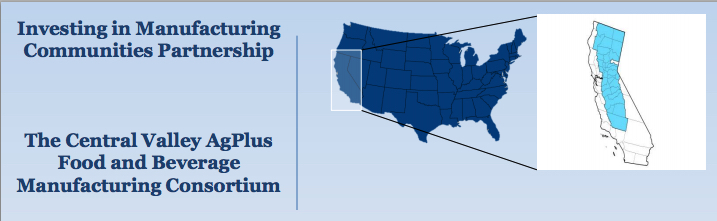
U.S. Secretary of Commerce Penny Pritzker announced late last week that The Central Valley AgPlus Food and Beverage Manufacturing Consortium, led by Fresno State, was one of 12 new communities designated this year under the Obama Administration’s Investing in Manufacturing Communities Partnership (IMCP) initiative. IMCP was designed to accelerate the resurgence of manufacturing in communities nationwide by supporting the development of long-term economic development strategies.

Consortium members represent major Central Valley public and private institutions from the education, business, economic and workforce development and civic sectors joining forces to foster the growth and creation of food and beverage businesses and middle-skills manufacturing jobs in the Central Valley.

“An IMCP designation is an important signal to potential investors that these communities are a good place to spend their money, and this is smart government at work,” Pritzker said. “By breaking down silos and encouraging communities to take a more thoughtful, comprehensive approach to their strategic plans, we are ensuring that precious federal dollars are used on the most high impact projects and in a way that maximizes return on investment.”

The new communities were selected by an interagency panel based on the strength of their economic development plans, the potential for impact in their communities and the depths of their partnerships across the public and private sectors to carry out their plans.

Consortium members worked together to identify a sector of manufacturing where their community has a comparative advantage and drafted a strategic plan that addresses workforce and supply chain challenges; infrastructure; research and innovation; trade and investment; capital access; and operational improvement for manufacturing companies.US EDA Logo

The 12 designated manufacturing communities will receive:

  • coordinated support for their strategies from 11 federal agencies with more than $1 billion available in federal economic development assistance.
  • a dedicated federal liaison who will help them navigate available federal resources.
  • recognition on a government website, accessible to prospective private foreign and domestic investors, looking for information on communities’ competitive attributes.

Mike Dozier, director of Fresno State’s Office of Community and Economic Development, the lead office for the project, said the opportunity and challenge facing the Central Valley is to claim more value from agricultural production through the food processing industry, along with its supply and distribution chains.

“California’s food system is the largest agricultural economy in the U.S. and among the top 10 globally,” Dozier said in the application. “It produced nearly $105 billion in economic output in 2012, and it was responsible for over 198,000 jobs tied directly to manufacturing.”

With 28 counties located in California’s heartland, the Central Valley plays a dominant role in this economy as America’s “Farm to Fork Capital.”

“Production agriculture has been the Central Valley’s mainstay and competitive advantage, fueling growth in the food manufacturing sector as those industries are part of a highly integrated supply chain,” he said.

The AgPlus implementation strategy will build upon the Central Valley’s unique asset base, committed partnerships and networks to:

  • capture more value-added cluster manufacturing and supply chain activity within the region, including to meet new demand and for local specialty products such as through the Farm to Fork efforts;
  • provide the workforce with the needed skills through successful career pathways models;
  • accelerate the development and adoption of innovative technologies so the Central Valley’s food and beverage manufacturing industry is the most efficient, safe, healthy, viable and sustainable national and global center of innovation for next-generation processing and supply chains;
  • facilitate the transformation of the industry to adapt to the short- and long-term impacts of drought and climate change; and
  • strengthen business operations and access to capital.

Consortium members are: 

Higher Education: Fresno State; California State University, Chico; University of California, Davis; Central/Mother Lode Regional Consortium; Fresno State’s Water, Energy and Technology Center; Los Rios Community College District; NextEd; and UC Merced Small Business Development Center.

Government Entity: Tuolumne County Economic Development Authority; City of Avenal; City of Fresno; City of Winters; and Sacramento Area Council of Governments.

Nonprofit: Valley Vision; Center for Land-Based Learning; Fresno Community Development Financial Institution; Northern California World Trade Center; Sacramento Employment and Training Agency; Sacramento Metropolitan Chamber of Commerce; and Solano Economic Development Corporation.

Private Sector: AgTech Innovation Fund; CalAsian Pacific Chamber of Commerce; Davis Chamber of Commerce; JBT FoodTech; and PackageOne, Inc.

For more information, contact Mike Dozier at 559.278.0727 or mdozier@csufresno.edu.


2016-05-31T19:28:10-07:00July 16th, 2015|
Go to Top