
About California Ag Today

This author has not yet filled in any details.
So far California Ag Today has created 2014 blog entries.

Bountiful Plant Transpiration

Guy Kyser on Plant Transpiration, Phytoremediation

By Patrick Cavanaugh, Deputy Editor

When plants get irrigated, not only do they provide food, but all plants transpire. Guy Kyser, a specialist at the UC Davis Plant Sciences Department, explained how plant transpiration transforms carbon dioxide into “food” for plants to grow.

“Water in the shallow soil is either going to evaporate, or it’s going to be transpired,” Kyser said, “which means it’s going to pass through a plant from the soil to the atmosphere. The transpiration process helps the plant fix CO2 and convert it into food or plant material. The plant is really a little solar powered machine that catches CO2 out of the atmosphere and turns it into something solid so it’s not a greenhouse gas anymore.”

Kyser also explained the phytoremediation* process that occurs in plants grown in less-than-ideal soil and water conditions, in which these plants take up polluted water from its roots while removing impurities from the soil, retain the impurities, and release pure water into the atmosphere. Kyser said, “So, with phytoremediation, you can use the plants to purify poor soil or water situations, then mow off the plant material when the process is done. All the toxins stay in the plant, and only the pure water goes through.” Despite being a slow process, phytoremediation is effective in toxin removal, environmentally friendly, and does not harm soil health.

*Phytoremediation: Ancient Greek for “plant” and Latin for “restoring balance”
2016-05-31T19:28:07-07:00August 13th, 2015|

SCOTUS Raisin Reserve Decision

Grower Reflects on SCOTUS Raisin Reserve Decision

By Charmayne Hefley, Associate Editor

The Supreme Court of the United States (SCOTUS) recently decided that California raisins held in reserve during heavy crop years belong to the government (under the Fresno-based Raisin Administrative Committee (RAC), a federal marketing order), and the government should pay growers for these raisins. Directly overseen by the United States Department of Agriculture (USDA), the RAC, created in 1949, is led by 47 growers and a public member.

Monte Schutz, a Fresno County raisin grower, as well as chairman of the executive committee of the RAC, said the recent decision by SCOTUS doesn’t make any sense. “The biggest problem I had with the decision is when Justice Roberts stated very clearly that the government took ownership of the raisins, and that was just not true—growers maintained ownership throughout,” Schutz noted. “And the committee, which is made up of growers and handlers, had complete control over when they sold the raisins and for how much. So I think they were mistaken that the government took control; while the government oversees our federal marketing order, we as a committee had control.”

Explaining how he thinks the Supreme Court got it wrong, Schutz said, “Personally I think it may have been the USDA lawyers who just didn’t explain it. The system is a little complicated, and I wasn’t in the courtroom, but I’m afraid they did not explain it properly. How they could conclude the government owned the raisins–is just completely wrong.”

“For the last five years, we haven’t used the reserve program at all because we are in a better balance right now than we were 13 years ago. At that time, the reserve was a tool to take care of the excess supply. We haven’t had to use it for the last five years, and we don’t intend on using it any time in the future. Although I would still like to keep that tool available, unfortunately, the Supreme Court has taken it away from us,” Schutz said.

“Now when we need to put the raisins in reserve, we have to consider, I assume, that the grower has to be compensated for them. But I do not know how the government can tell you at what price; the market dictates the price. That was the problem back then; the market was in a tough situation due to the oversupply, so we had to take less for those reserve raisins,” Schutz said. “Those raisin growers were paid less, but raisin prices did not spiral downward and the industry was kept in balance.”

“Without the reserve program, the raisin price would have crashed, ending in a bigger disaster than what occurred.”

The Supreme Court reached its decision at the end of a long fight by raisin grower Marvin Horne, who held that he did not have to give his raisins to the reserve without fair compensation.

2016-05-31T19:28:07-07:00August 12th, 2015|

European Farmland Under Pressure

European Farmland under Pressure Due to Regulation and Diversion

By Laurie Greene, Editor

Jose Gomez Carrasco, executive sales manager for AGQ Labs and Technological Services based in Oxnard, is in charge of covering a large area that includes the U.S., Mexico and Central America. Noting global concern regarding how farmland is being used, particularly European farmland, Carrasco said, “There’s a growing population of around 150,000 or 170,000 new mouths every day to feed.” Carrasco said agricultural production on land designated for agricultural use in every country, worldwide, is being diverted to bio-ethanol, or bio-mass, or different renewable energy use, so the availability of agricultural products for food is diminishing.

Carrasco stated this progression needs to be moving in the opposite direction, “especially because there are other issues that are making production more challenging, such as water scarcity, soil erosion and the use and price of agro-chemicals, inputs and fertilizers, all of which are being controlled and monitored more and more.”

“The regulation of crop protection materials is intended to help everyone in the food supply chain,” he continued, “all the way from the grower to the consumer; however, sometimes these regulations can be quite burdensome.”

“In some cases regulations are not for the benefit of all,” Carrasco explained; “just for some. So in markets such as the European Union where the [maximum threshold] number of molecules registered has diminished from 1,000 to 300 or 400 in the last decade, we’re finding a lot of this regulation comes from Germany.” Carrasco said they are leaving a lot of farmers with no agro-chemicals in their arsenal, especially in Spain, Portugal, and Greece, all in southern Europe.

2016-05-31T19:28:07-07:00August 11th, 2015|

Fig Fest This Saturday!

Fig Fest This Saturday at Fresno State

Chef Fabio Viviani

Bravo TV’s Chef Fabio Viviani

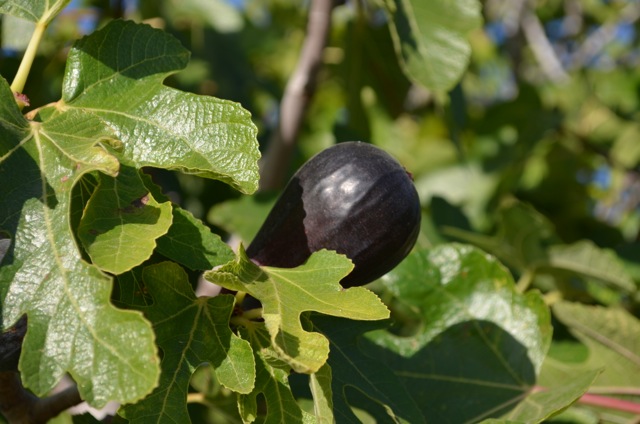
The big annual Fig Fest is coming up this Saturday, August 15, from 9 am till 1 pm at California State University Fresno.

“It’s going to be bigger and better than ever,” said Karla Stockli, chief executive officer with the California Fig Advisory Board in Fresno. “Guests will be able to savor gourmet fig-inspired recipes, extraordinary wines and craft beer from California’s best chefs, food purveyors, wineries and breweries.”

CA Fig Fest Logo“And there will be an exciting new addition this year; celebrity chef Favio Viviani will headline the event. Viviani is a restaurateur (5 in U.S.) and a New York Times best selling cookbook author (3 successful cookbooks). But, he is best known as the Fans’ favorite in Bravo TV’s Top Chef and the winner of Cutthroat Kitchen with the Food Network.” Viviani also sells his own wine collection and popular line of cookware.

“Viviani will be center stage at a chef culinary demonstration and he will also tape an episode of his new PBS series, Global Bites,” said Stockli. “He will be interacting with people and signing books. And he is very passionate about all things fig and fresh ingredients.”

Tickets are available. Go to California Fig Fest for more information.

2016-05-31T19:28:08-07:00August 10th, 2015|

“My Job Depends on Ag” is Growing

Steve Malanca on the Future of “My Job Depends on Ag”

By Charmayne Hefley, Associate Editor

Three months ago, a grassroots effort to spread the word of agriculturalists began in the form of the movement, My Job Depends on Ag. The organization held its first meeting this week at Harris Ranch in Coalinga with 50 members in attendance to discuss the future of the group.

Steve Malanca, co-founder of the movement, said his hope for the organization is to educate the consumer, as well as to unite the ag community. Malanca also sells agriculture equipment for AGCO.

“We really feel that educating the non-ag community about who we are and where our food comes from is very important,” Malanca said.

“We want to unite the ag community so that we all are represented together,” Malanca continued. “We want to encompass everybody—the organic farmer, the commercial farmer, the trucking company, the logging industry. But everybody that’s involved in ag we want them to know that we all have a stake in this, and if we can all come together and be as one, I think that we’ll be able to hopefully give a message to the general public that we have a need for people knowing where their food comes from.”

Malanca hopes to host a My Job Depends on Ag Festival in the future. The group is considering Los Banos as a location for the potential festival due to its accessibility with an airport, several hotels and a nearby fairgrounds for the event.

“We’re considering a festival in order to bring everybody together,” Malanca said, “and we’re considering combining the Salinas Valley growers with the San Joaquin Valley growers in a town for example like Los Banos.”

“We want to, perhaps, have ag tours around the city of Los Banos,” Malanca suggested, “and have buses available for people who aren’t familiar with ag to take a ride and come see what kind of crops are grown and how they’re done.”

“An historical pavilion would be nice to show people the history of agriculture, and California—not just central California, but the entire state,” Malanca stated, “and we’d bring in some big time entertainment and food, of course. And we’d have a way for everybody to be proud of what they do and to show people where their food comes from.”

Malanca said he hoped the group’s decal could be an icon that symbolized the importance of agriculture.

“We’re grateful for the response we’ve had with our decals,” Malanca said. “We hope that little decal being shown on people’s vehicles and equipment will be a sign or a vision for people to see where they’re food comes from and know that we are a huge community and that we are good people. Ag is good, and ag is where you’re food comes from.”

2016-05-31T19:28:08-07:00August 7th, 2015|

Senate Water Bill Hopeful

Senate Water Bill Introduction is a Glimmer of Hope for Water Agencies

FRESNO, CA – Last week’s introduction of Senator Dianne Feinstein’s legislation, the California Emergency Drought Relief Act of 2015, is welcome news for the people of the State of California and the Central Valley enduring another devastatingly dry year. Once again, multiple Central Valley water agencies joined together to express their unified voice in support of an expeditious passage of this Senate water bill. This bill comes on the heels of the introduction and passage by the House of Representatives of H.R. 2898, the Western Water and American Food Security Act of 2015.

 “We are encouraged by Senator Feinstein’s actions with the introduction of this legislation. There is no time to lose as the damaging effects of the drought continue to wreak havoc on local communities, businesses, farms and farmworkers in the San Joaquin Valley and other regions of the State. Immediate solutions are needed, and the District looks forward to working with Members of both the House and Senate to find a reasonable solution that will benefit our great State.”

–Don Peracchi, Chairman of the Board, Westlands Water District


“The South Valley Water Association thanks Senator Feinstein for introducing the California Emergency Drought Relief Act of 2015 and encourages the balance of the Senate to make quick work in passing the bill immediately upon return from the August recess. This is a further important step to get legislation that will help those many farms and communities in California who are going without water. We look forward to the members of Congress resolving key differences between the California Emergency Drought Relief Act and H.R. 2898, the Western Water and American Food Security Act of 2015, and finding real water supply solutions. The members of the South Valley Water Association stand ready to assist in any way we can.”

–Dan Vink, Executive Director, South Valley Water Association


“The San Joaquin River Exchange Contractors Water Authority thanks Senator Feinstein for the introduction of the California Emergency Drought Relief Act of 2015. We realize this is another important step to passing a bill out of the Senate later this year that provides a meaningful legislative solution to the long-standing water supply shortages that is crippling the state. We are optimistic that members of Congress and the Senate can resolve the key differences in this bill, and the previously passed House Bill H.R. 2898, the Western Water and American Food Security Act of 2015. The Authority looks forward to working with our legislative leaders to pass legislation that benefits all of California.”

–Steve Chedester, Executive Director, San Joaquin River Exchange Contractors Water Authority


“There is no more important issue facing the Valley than the drought. It is a statewide crisis with the most direct and severe impacts in the Valley. The Kern County Water Agency appreciates Senator Feinstein’s and Senator Boxer’s efforts to help reduce the drought’s terrible impacts by introducing a bill in the Senate that can improve water supplies for farms and cities. We are anxious for the House and Senate to start working on a compromise between Congressman Valadao’s bill and the bill in the Senate, and we encourage the Senate to take swift action on the Feinstein/Boxer bill so that process can begin.”

–Ted R. Page, Board President, Kern County Water Agency


“No area of the State, and perhaps the nation, has suffered more disproportionately the harmful stress of chronic water supply shortages. The San Luis & Delta-Mendota Water Authority is appreciative of the effort of Senators Feinstein and Boxer on the recently introduced California Emergency Drought Relief Act of 2015 bill in the Senate. This bill is not only important to the San Joaquin Valley, but it is also vital for the entire state of California. We encourage the Senate to act swiftly, and encourage both the House and Senate legislators to begin work immediately on a meaningful compromise bill to ensure that long-awaited and much-needed relief is realized.”

–Dan Nelson, Executive Director, San Luis & Delta-Mendota Water Authority


 “Friant Water Authority welcomes the introduction of Senate Bill 1894, the California Emergency Drought Relief Act of 2015, and we thank Senator Feinstein and her staff for all their efforts in bringing this bill forward. The immediate task is to pass Senate legislation so that work can begin to craft a compromise with the House-passed legislation. Our farms and communities have suffered more under these water cutbacks than any other area in the nation. Our people are desperate for solutions that will provide real water for our area. This bill is a critically important step in the process of developing compromise legislation that can be signed into law by the President this year. As the bill advances, Friant looks forward to working with our representatives on both sides of the aisle to achieve drought legislation that will provide real relief for the 2016 water year and beyond.”

–Eric Borba, Chair, Friant Water Authority

2016-05-31T19:28:08-07:00August 6th, 2015|

Farmer Mac Admires California Farmers

Farmer Mac Knows the Strength of California Farmers

By Patrick Cavanaugh, Deputy Editor

Curt Covington, senior vice president, agricultural finance for the Federal Agricultural Mortgage Corporation or ‘Farmer Mac,’ knows a lot about the California farmer, and the Central San Joaquin Valley farmer in particular. Covington said, “This grower has experienced “an ‘us’ versus ‘them’ mentality for a number of years.”

“The voting block in this state resides in Los Angeles and the Bay Area. There has been, particularly over the past ten years, this view that the American farmer–the California Farmer particularly given the drought–has not been a good steward of resources. The facts have proved otherwise. And despite everything that has been thrown at us by the uninformed consumer in Los Angeles and San Francisco, Central California farmers continue to thrive, and will find their way out of this problem. I am convinced of that,” said Covington.

Covington also has a lot of respect for the farmers’ management strategies in all parts of their businesses and lives. “Farmers are price takers; they do not set the price for their commodities. This forces them to be good managers of their expenses, good managers of their balance sheet, good managers of their assets and good managers of their labor,” Covington said.

“And no where else in this country, in my opinion, do you have a group of farmers who have dealt with more problems and come out on top than the California farmer. It is not only an honor, but a pleasure to work with many of them. They are just an incredible group of people,” Covington said.

2016-05-31T19:28:08-07:00August 6th, 2015|

#AgLaw: Safe and Accurate Food Labeling – GMOs

2016-05-31T19:28:08-07:00August 5th, 2015|

#AgLaw: Rural Broadband Initiative Act

H.R.3152 – Rural Broadband Initiative Act

Status:
Introduced by Rep. Richard M. Nolan [D-MN-8], the Rural Broadband Initiative Act has been referred to the House Committee on Agriculture and to the Committee on Energy and Commerce for a period to be subsequently determined by the Speaker.rural-broadband-initiative-act

Description:

This bill aims to amend the Rural Electrification Act of 1936 which helped (a) bring electricity and telephone service to rural America and (b) remove major barriers to the development of our rural economies.

According to the Federal Communications Commission, 53 percent of rural Americans lack access to service delivering broadband speeds of 25 Mbps for downloads and 3 Mbps for uploads. The current lack of affordable broadband presents a similar barrier to the development of our rural economy, and high-speed broadband access helps rural communities compete and grow in our digital economy. H.R. 3152 aims to establish an Office of Rural Broadband Initiatives in the Department of Agriculture, and for other purposes, and to provide necessary funds for universal and affordable broadband access to the United States of America with a focus on underserved rural communities.


2016-05-31T19:28:08-07:00August 5th, 2015|

Subsurface Drip in Alfalfa

Subsurface Drip in Alfalfa–A Growing Interest

By Laurie Greene, Editor

Dan Putnam is a faculty member and Cooperative Extension specialist at UC Davis with a statewide responsibility for alfalfa and forage crops. He said there has been an increased interest in subsurface drip irrigation in alfalfa, which is usually flood-irrigated. Alfalfa is a key forage source for the state’s top agricultural product, dairy, to the tune of more than $7 billion per year.

“It does come with some challenges,” but he said, “the growers who have really treated this as an educational experience are continually learning how to manage this system; not only the gophers, but the irrigation management component as well. To establish a crop with drip irrigation, growers need to plant in early fall and use sprinklers to germinate the seeds. A lot of growers fail on agronomic issues, like not planting at the right time of year rather than on drip irrigation issues,” Putnam said.

Putnam noted that growers are more interested in learning about subsurface drip irrigation because of increased yields. “I think over time, we are going to see a greater adaptation of this technology in California,” Putnam explained, “particularly in areas that have very high yield potential. For example, in the San Joaquin Valley and the Imperial low desert areas where the crop is actually capable of 12-16 ton yields, our yields average about 7-8 tons per acre. And so,” he added, “we do have a yield potential that we are unable to achieve, and part of that is in the limitation of surface irrigation.”

Putnam also noted one advantage of drip irrigation is efficient nutrient delivery, which in turn fosters increased uniformity across the system. “Growers can ‘spoon-feed’ the crop rather than inefficiently apply it on the surface,” stated Putnam. “I think a lot of growers have figured this out, although alfalfa does not have a nitrogen issue. Nevertheless, we have to apply significant phosphorous, potassium and several other nutrients in some deficient soils.”

As with most things, there are drawbacks, and Putnam outlined two. “One is an increased cost of the drip line and filtration system,” Putnam said. “Growers who are considering subsurface drip need to wrestle with the cost to be sure they can increase yields enough to justify the cost. In most cases, growers have been able to substantially increase yields in their systems to pay for the $1500-2500 per acre upfront investment in the technology,” he said.

“The other drawback is maintenance,” Putnam continued, “particularly with regard to rodent infestations. We’ve seen gophers, in particular, ground squirrels and meadow voles absolutely devastate drip-irrigation fields. As our vertebrate pest specialist at UC Davis says, ‘It is essentially an ideal habitat for gophers as they have plenty of food, plenty of shelter, plenty of water, and they are able to reproduce pretty readily.’ ”

“You should consider this system only if you are willing to accept a very high level of maintenance and no tolerance for rodent infestation because, if left unchecked, they will chew on the tapes and ruin the system,” he said.

Putnam reported there are strategies to get around gophers and other rodent issues, “You have start clean and do some deep tillage. We also recommend  retaining the capability of flood irrigation in those fields to use once in a while because it reaches the furrows very effectively,” he noted.

For those gophers, Putnam recommends every trick in the book. “There are traps organic farmers are able to use, flood irrigation, and boxes to help control the population,” Putnam said. “There are products available for baiting and other types of control measures that should be used. It is really too expensive a system to allow the gophers to have their way with it, so we need to have a high level of management,” he concluded.

2016-07-30T21:43:15-07:00August 3rd, 2015|
Go to Top