
About California Ag Today

This author has not yet filled in any details.
So far California Ag Today has created 2014 blog entries.

Viticulturist Mark Greenspan Confirmed as ASEV President

Announced TODAY, Mark Greenspan, president of Advanced Viticulture Inc., has been confirmed to serve as the American Society for Enology and Viticulture (ASEV) 2015-2016 president. Greenspan succeeds Lise Asimont of Francis Ford Coppola Presents to lead ASEV’s 12-member board.

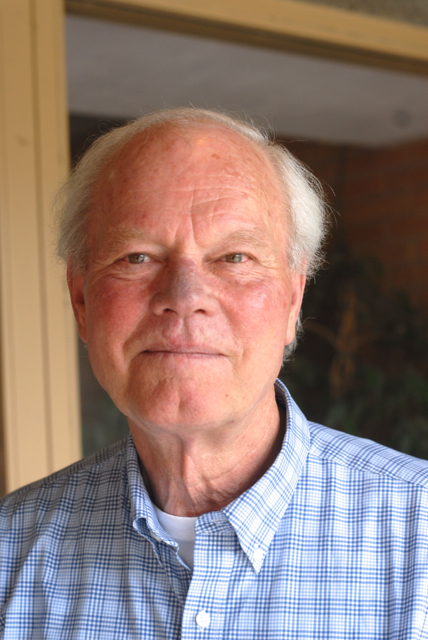
mark greenspan

Mark Greenspan, president of American Society for Enology and Viticulture

“Throughout my career, ASEV has been the go-to source for reliable, thoughtful research and science that has been critical to my success and that of my vineyard clients. It’s a real honor to serve as the Society’s new president and to hopefully carry on the impressive work of Lise and the other dedicated ASEV past presidents,” said the new ASEV president. 

Greenspan, a Sonoma County resident, provides premiere vineyard consultation in water management, nutrient management, precision viticulture and vineyard design, establishment and management. He has operated Advanced Viticulture for over 10 years. Previously, he was the viticulture research manager at E&J Gallo, responsible for viticulture experiments in the north coast vineyards and collaborative projects throughout the state of California. He is a monthly contributor to Wine Business Monthly and periodic contributor to other trade publications. He presents at local, national and international events, and is a certified crop advisor (CCA) and certified professional agronomist (CPAg). Mark has served on review panels for the American Vineyard Foundation and Viticulture Consortium – West and Viticulture Consortium – East. He is a member of Sonoma and Napa Viticulture Technical Groups, Sonoma County Farm Bureau and Napa Valley Grape Growers Association. He’s a former director of the UC Davis Trellis Alliance and sponsor of the Sonoma County Winegrape Commission.

As an active 25-year ASEV member, Mark has held several ASEV positions and served as a reviewer for the American Journal of Enology and Viticulture (AJEV). He has served on the best paper review committee, annual meeting technical abstract review committee, annual meeting program committee, and as sessions chair. He received the ASEV Best Viticulture Student Paper Award in 1991. 

ASEV has also confirmed two new directors: Patty Skinkis, associate professor at the Department of Horticulture at Oregon State University, and Hans Walter-Peterson, viticulture extension specialist at Cornell Cooperative Extension. In addition, the Society has announced its 2015-2016 executive team members: Nichola Hall of Scott Laboratories, confirmed as first vice president; James Harbertson of Washington State University, elected as second vice president; and Tom Collins of Washington State University will serve as secretary-treasurer. Additional Board members continuing current terms are: AJEV Science Editor Linda Bisson and Technical Program Director M. Andrew Walker, both of the University of California, Davis; and Directors Lise Asimont of Francis Ford Coppola Presents, Kristen Barnshisel of J. Lohr Vineyards & Wines, and Kay Bogart and Anita Oberholster, both from the University of California, Davis.

Formed in 1950 as a professional society dedicated to the interests of enologists, viticulturists and others in the fields of wine and grape research and production, the ASEV’s membership of more than 2,000 includes professionals from wineries, vineyards, and academic institutions and organizations around the world.  In addition to publishing the AJEV, the Society also hosts its National Conference (slated for Monterey in June of 2016) and co-presents the Unified Wine & Grape Symposium in January with the California Association for Winegrape Growers. For more information, visit www.asev.org.

2016-05-31T19:28:10-07:00July 16th, 2015|

HLB Found in LA

Huanglongbing Detected on LA County Pre-Symptomatic Kumquat Tree


By Patrick Cavanaugh, Farm Director; Laurie Greene, Editor, California Ag Today


#CitrusMatters

#CitrusMatters (provided by Bayer CropScience, in partnership with California Citrus Mutual)

“It’s disappointing, but fortunately it was found in a residential area,” commented Joel Nelsen, president of California Citrus Mutual (CCM), on the second discovery of Huanglongbing  [wong-long-bing] (HLB), or citrus greening, in California. CCM refers to HLB as “a death sentence for California citrus” as once the plant is infected with this bacterial disease, there is no known cure.

Joel Nelsen

Joel Nelsen, president, California Citrus Mutual

“HLB was detected in plant material taken from a kumquat tree in a residential neighborhood in the San Gabriel area of Los Angeles County,” Nelson stated. “The 20-year-old tree was in the front yard of a residence and had not yet shown any symptoms.”

The San Gabriel neighborhood is located about 15 miles from Hacienda Heights, where the first HLB case in the state was detected in 2012 in a residential citrus tree. The  An aggressive trapping program for the Asian citrus psyllid (ACP), a pest known to spread the HLB bacteria as it feeds on citrus trees and other plants, has been ongoing ever since this first finding, including in the San Gabriel area.

“It’s fortunate that the homeowner is quite cooperative,” said Nelsen, “and other neighborhood homeowners are allowing officials to run PCR tests (polymerase chain reaction) on samples of their trees to determine if the disease is present.” PCR analysis is a sensitive research technique for detecting and identifying small numbers of bacteria in plants via DNA amplification.

Nelsen declared, “This find is exactly what the Citrus Pest and Disease Prevention Program is designed to do. PCR testing of a random sampling of leaves and stems in the area, as our program prescribes, enabled us to hit a positive” before symptoms appeared.

“We do not know how long the tree had been diseased,” said Nelsen, “but we do know that we have been trapping ACPs there for a long time and had not found any HLB before. You do not want to

Citrus Pest & Disease Prevention Program

find anything,” Nelsen said, “but when you do, you want to find it before it becomes an epidemic.”

In a statement on Friday, California Department of Food and Agriculture (CDFA) Secretary Karen Ross said, “Citrus is a cherished part of our landscape and our shared history, as well as a major agricultural crop.” CDFA has been planning and preparing for HLB detections since before the first ACP was detected in the state in 2008. Quarantines are now in place in 17 California counties.

Los Angeles County Agricultural Commissioner Kurt Floren will mobilize his team over this week to check on citrus trees in plant nurseries that fall within the 800-meter radius around the infected tree area. A spray protocol is already in place for all citrus trees within the 800-meter radius.

“More traps are going out so we can try to delineate the scope of the problem. Hopefully it will be nothing more than this one tree, like the solitary diseased tree we found in Hacienda Heights,” Nelsen said.

Resources

To support the citrus industry in its fight against HLB, go to California Citrus Mutual Action Center.


For questions about the ACP or HLB, visit or call CDFA’s toll-free pest hotline at 1-800-491-1899.


View the Distribution Map  of ACP, HLB and parasites in California published by the UNIVERSITY OF CALIFORNIA Division of Agriculture and Natural Resources.

USDA's free "Save Our Citrus" iTunes app

USDA’s free “Save Our Citrus” iTunes app


Visit the Citrus Pest & Disease Prevention Program.


Verify plant symptoms at USDA’s SaveOurCitrus website.


For information and ACP solutions, go to #citrusmatters, provided by Bayer CropScience, in partnership with California Citrus Mutual


2016-05-31T19:28:11-07:00July 13th, 2015|

UC ANR Horticulture Advisor Retires After 28 Years

John Kabashima wrapped up his horticultural career on July 1, after 28 years with University of California Agriculture and Natural Resources. Nursery professionals lauded the UC Cooperative Extension advisor’s service to the nursery and landscape industry and to homeowners in Orange and Los Angeles counties.

“He’s one of the few people who could translate science into business with a sense of candor and fact-based conversation,” said Robert Crudup, president of Calabasas-based Valley Crest Tree Company, of Kabashima.” John has long-term vision, which he used throughout his career to move the nursery industry forward.”

John Kabashima

John Kabashima, UC ANR

“He is smart about political science as well as plant science,” Crudup said. On a regular basis, Kabashima would warn growers about emerging issues that were likely to affect the nursery industry, such as regulations to control the spread of polyphagous shot hole borer, red imported fire ant and palm borer.

“He’s been very, very valuable,” said retired nurseryman Gary Hayakawa, noting that Kabashima not only contributed research on pest control and water issues for the nursery and landscape industries, but also persuaded people from UC campuses, the California Department Food and Agriculture and industry to work together. “Before he was involved in issues, the work was all separate. Industry didn’t have input,” Hayakawa said. “What John has done is to work with all three to form a coalition.”

Crudup, whose company has nursery operations in Los Angeles, Ventura, Alameda and San Joaquin counties, agreed.

“John’s biggest contribution was his work with the glassy-winged sharpshooter subcommittee,” said Crudup, who served on the subcommittee. “He brought a voice of reason that helped counterbalance emotional sides of the discussion.”

“His ability to act as the primary liaison between the nursery industry, CDFA, the UC, the county agricultural departments and the wine and grape industries was the primary reason this part of the GWSS (glassy-winged sharpshooter)  program was so successful and, more importantly has resulted in the continued viability of the California nursery industry in light of significant regulatory pressures,” said Bob Wynn, who was statewide coordinator of the CDFA Pierce’s Disease Control  Program and who  continues to oversee the program as senior advisor to Secretary Karen Ross.

“The CDFA, with advisement and counseling from John, developed what is known as the Approved Nursery Treatment Program, which allows nurseries in the infested areas of the state to ship by merely treating the plants with an approved treatment,” Wynn said.  “John was the primary author in the development of the nursery ‘Approved Treatment Best Management Practices’ document published in 2008. The use of this document has allowed the nursery industry to save millions of dollars in regulatory compliance costs over time.”

A native of Los Angeles, Kabashima says he started working in his family’s nursery business as soon as he was tall enough to water 1-gallon nursery plants.  “After killing thousands of plants, I was finally allowed to manage the family business from 1970 to 1976,” he quipped.

In 1976, his family sold the nursery and Kabashima enrolled at California Polytechnic University, Pomona. After he  earned a B.S. in agricultural biology from Cal Poly Pomona in 1979, he was hired by UC Riverside horticulture entomologist Pat Morishita as a lab technician. While working at UC Riverside, Kabashima earned a  master’s degree in pest management. He would later complete a Ph.D. in entomology at UC Riverside.

Kabashima earned his MBA at Pepperdine University in 1986 while managing the Ornamental Horticulture Division at Target Specialty Products. In 1987, the UC Division of Agriculture and Natural Resources recruited him to become a UC Cooperative Extension environmental horticulture advisor in Orange and Los Angeles counties.

Over the years, he has studied the management of insects, diseases and weeds in horticulture production systems, biological control of exotic pests, and water-related problems in landscapes, golf courses, nurseries, municipalities and watersheds.

In 1998 Kabashima took over the fledgling UC Master Gardener Program in Orange County, which as of now has trained more than 300 UC Master Gardener volunteers to extend research-based information on gardening and horticulture to the public.

The UCCE environmental horticulture advisor has also served as director of UC Cooperative Extension in Orange County and interim director of the UC ANR South Coast Research and Extension Center.

In 1994, when Orange County filed for bankruptcy and the Board of Supervisors voted to discontinue funding and housing for the local UC Cooperative Extension, Kabashima worked with Gary Hayakawa to keep UCCE in the county.

“When Orange County cut Cooperative Extension’s budget, we found out that without extension you don’t have 4-H or Master Gardeners,” Hayakawa said. To preserve the UC Cooperative Extension programs, Hayakawa, who was an Orange County Fair Board member, helped Kabashima  secure office space in trailers on the fairgrounds. In 2014, the UCCE office moved from the fairgrounds to UC ANR South Coast Research and Extension Center in Irvine.

Kabashima belongs to many professional organizations including the Entomological Society of America, California Association of Nurseries and Garden Centers, Nursery Growers Association, Western Chapter of the International Society of Arboriculture, United Agribusiness League, and San Diego Flower and Plant Association. The scientist has served on numerous government and industry advisory committees.

Throughout his career, Kabashima’s achievements in education and research have been recognized by various organizations. To name a few, he received the 1987 Education and Research Award from the Orange County Chapter of the California Association of Nurseries and Garden Centers (CANGC), 1993 CANERS Research Award from CANGC, 2002 Nursery Extension Agent Award from the American Nursery and Landscape Association, 2008 Western Extension Directors Award of Excellence, 2010 Entomological Society of America’s National IPM Team Award and the 2011 California Agriculture Pest Control Advisors Association Outstanding Contribution to Agriculture Award. In 2014, he and his friend Hayakawa were inducted into the Green Industry Hall of Fame.

Being a UCCE advisor has suited Kabashima. “I love learning new things, sharing that information with others, and using my skills to solve problems facing California, such as the ever-increasing arrivals of exotic and invasive pests,” he said. The avid photographer has been able to unite his avocation with his vocation. His photographs of insects have been used to illustrate textbooks, websites and news articles.

“Success in one’s field is often a combination of natural ability, informal and formal training and education, being mentored, and networking with collaborators and colleagues, all sprinkled with a little bit of luck and support from one’s family and friends,” Kabashima said.

In retirement, Kabashima plans to seek new culinary experiences with his wife Janet and daughter Misa, at  home and in their travels together. He has been granted emeritus status by UC ANR and he will continue his efforts to help UC Irvine save trees on its campus that are infested with polyphagous shot hole borer.

UC Agriculture and Natural Resources researchers and educators draw on local expertise to conduct agricultural, environmental, economic, youth development and nutrition research that helps California thrive. Learn more at ucanr.edu.

2016-05-31T19:28:11-07:00July 12th, 2015|

UC Cooperative Extension Farm Advisor in Ventura County

UC Cooperative Extension Farm Advisor in Ventura County

By Laurie Greene, Editor California Ag Today

Ben Faber, UC Cooperative Extension Farm Advisor in Ventura County, works with growers who farm a variety of different crops including blueberries, raspberries, blackberries and strawberries as well as lemons and avocados.

Faber is developing new approaches for better avocado pruning to increase yield. “We have not done a lot of pruning on avocados in the past,” Faber said, “because this plant species responds to pruning in a very rapid fashion with a lot of shoots and water sprouts, so people have been scared to prune avocados. Over time, we have learned how to prune avocados somewhat differently than other tree crops.”

Faber said the two pruning choices are a heading cut and a thinning cut. “A heading cut,” he explained, “is often what you see peach growers doing, indiscriminately cutting into a branch. Well, they are actually doing is selecting the branches that will be the fruiting branches for the next year. Whereas, if you do that in avocados, you just get a lot of wild regrowth.”

So Faber believes the strategy in avocados has to be a thinning cut, “where you prune back to a sub-tending branch or a crotch so the remaining branch continues growth. This method controls growth lower down in the branch. It has taken a long time to discover this, though it seems simple now.”

He added, “Thinning cuts are all about keeping the tree from ‘crowning out,’ which reduces yield. As neighboring trees start shading each other, the flowering and fruiting spreads to the very top of the tree.  This is where you see significant yield reduction because instead of having fruit form all over the tree’s canopy, fruit and flower production forms only on the very top of the canopy.” Faber said.

“Keeping the avocado fruit lower in the tree is better for harvesters to grab,” Faber commented. “So, growing fruit high in the tree presents not only yield loss, but a worker safety issue as well.”

2016-05-31T19:28:11-07:00July 9th, 2015|

LA Declares Citrus Matters TODAY

LA Citizens And Commercial Citrus Growers Highlight Deadly Citrus Disease And Why Citrus Matters

LOS ANGELES (July 2, 2015) – California’s citrus industry is threatened by the Asian citrus psyllid (ACP), a tiny pest that can transmit the world’s deadliest citrus disease, Huanglongbing (HLB). Currently, all of Los Angeles County is under quarantine[1] for the psyllid, which continues to spread across the state. Along with Bayer CropScience and California Citrus Mutual, City Councilmember Gil Cedillo announced TODAY, July 2 that, “Citrus Matters” to Los Angeles. During the event, commercial citrus growers from the region were recognized for their contributions to the state of California and acknowledged the devastating disease that could destroy the state’s citrus industry. The announcement also serves to highlight the role Los Angeles residents must play in protecting California’s $2.4 billion commercial citrus industry through the #CitrusMatters initiative.Citrus Matters to Los Angeles

Citrus Matters Logo

To date, the psyllid has reached 15 counties throughout Southern California[2]; however, HLB has been recorded in only one tree in California[3] – a lemon/pummelo tree found on residential property in the Hacienda Heights neighborhood of Los Angeles in 2012. For every Californian who cares about citrus, that tree, which has since been removed and destroyed, serves as a warning that all citrus trees are at risk of being affected, from the trees that decorate their neighborhood to the commercial groves nearby.

The #CitrusMatters initiative from Bayer CropScience and California Citrus Mutual encourages all residents of California and Los Angeles – where there are more citrus trees on residential property than in commercial groves – to take action to help prevent the spread of the ACP. It is essential that homeowners with citrus trees on their property understand how to protect their trees and know what to do if they suspect trees are infected. If left untreated, the insects can move quickly from one tree to the next, eventually spreading to the commercial groves that cover much of Southern and Central California.There are a number of ways the Los Angeles community can get involved with the campaign to help prevent the spread of ACP and protect California citrus, including:

  1. Spreading the word and increasing awareness about the disease, the ACP and why they love citrus, using the hashtag #CitrusMatters. Through each use of the hashtag (now through September 30), Bayer CropScience will contribute $1, up to $25,000, to advance existing and future research to find a solution to HLB in California.
  2. Visiting CaliforniaCitrusThreat.org to access HLB and ACP resources specific to Los Angeles County.
  3. Monitoring their trees, contacting the California Department of Food and Agriculture (CDFA) Exotic Pest Hotline at 1-800-491-1899 if they think they’ve spotted an infestation and having their trees checked.
  4. Becoming familiar with solutions[4] available that can protect against ACP in their trees

CA Citrus Mutual

The citrus industry has a storied history in Los Angeles. Southern California’s first orange grove[5] was planted at San Gabriel Mission in 1804, and the state’s very first commercial citrus operation[6] was established in what is now downtown Los Angeles.

“Almost all of us native Los Angelenos have some kind of memory of grabbing a lemon off of the trees in our yards growing up or stepping outside during the spring and taking in the fresh scent of orange blossoms,” said Cedillo when he presented the announcement. “The city of Los Angeles recognizes the contribution citrus adds to California’s economy and our residents’ lives.”

“The Los Angeles area has played a vital role in the industry’s history,” said Joel Nelsen, president of California Citrus Mutual. “We’re excited to see residents celebrate citrus and rally around our mission to protect it from the spread of HLB.”bayer-cropscience-logo

The #CitrusMatters initiative is part of the ongoing effort by Bayer CropScience to provide citrus growers across the nation with solutions to help combat ACP and HLB. To learn more about the #CitrusMatters initiative and how homeowners, commercial citrus growers and citrus lovers alike can help save citrus, visit CitrusMatters.us.

For more information on Bayer CropScience’s citrus portfolio, please visit: https://www.bayercropscience.us/crops/citrus!

###

[1]http://www.aphis.usda.gov/plant_health/plant_pest_info/citrus_greening/downloads/pdf_files/nationalquarantinemap.pdf

[2] http://www.californiacitrusthreat.org/pdf/ACP-Quar%20Expansion_2-17-2015_CA-AZ.pdf

[3] http://californiacitrusthreat.org/news/huanglongbing-citrus-greening-disease-found-in-california.php[4] http://www.bayeradvanced.com/find-a-product/insects-pests/fruit-citrus-vegetable-insect-control

[5] http://ucanr.edu/blogs/blogcore/postdetail.cfm?postnum=924

[6] http://californiacountry.org/features/article.aspx?arID=695

###

Bayer CropScience Twitter Page: http://twitter.com/bayer4cropsus
Bayer CropScience Blog: 
https://www.bayercropscience.us/news 

Bayer CropScience is committed to bringing new technology and solutions for agriculture and non-agricultural uses. For questions concerning the availability and use of products, contact a local Bayer CropScience representative, or visit Bayer CropScience online at www.bayercropscience.us.

Visit the Bayer Connect – Social Hub for all Bayer CropScience social media, recent news, blog posts, videos and more.

###

About Bayer CropScience

Bayer is a global enterprise with core competencies in the fields of health care, agriculture and high-tech materials. Bayer CropScience, the subgroup of Bayer AG responsible for the agricultural business, has annual sales of EUR 9,494 million (2014) and is one of the world’s leading innovative crop science companies in the areas of seeds, crop protection and non-agricultural pest control. The company offers an outstanding range of products including high value seeds, innovative crop protection solutions based on chemical and biological modes of action as well as an extensive service backup for modern, sustainable agriculture. In the area of non-agricultural applications, Bayer CropScience has a broad portfolio of products and services to control pests from home and garden to forestry applications. The company has a global workforce of 23,100 and is represented in more than 120 countries. This and further news is available at: www.press.bayercropscience.com.

About California Citrus Mutual

California Citrus Mutual (CCM) is a citrus producer’s trade association whose 2,200 grower members comprise 60 percent of California’s 275,000 acre, $2.4 billion citrus industry. The Exeter, California-based organization was founded in 1977 by those who felt the need to unite their fellow growers into a cohesive, powerful force. Throughout the years, CCM has brought to fruition many of the goals of the founding fathers and has developed into a dominant force from within as well as outside the industry.  Having attained the privilege to be called the “voice of the citrus grower,” CCM remains the vessel which successfully navigates the often rocky waters of the business interest of its membership. For more information on CCM, visit www.cacitrusmutual.com.

2016-05-31T19:28:12-07:00July 2nd, 2015|

WADE: LET THE WATER FLOW!

Let The Water Flow:

Mike Wade Urges Water Board To Let Reclamation Pay Back Borrowed Water

By Laurie Greene, California Ag Today Editor

Mike Wade, executive director of the California Farm Water Coalition, discussed with California Ag Today, his article for the Coalition’s Blog, entitled, “State Water Resources Control Board Could Cost California’s Agricultural Economy $4.5 Billion.”

“A number of San Joaquin Valley farmers have been working the last couple of years to set aside emergency water supplies through conservation and water purchases on the open market,” began Wade. “That water is set aside in the San Luis Reservoir and currently being borrowed, if you will, by the Bureau of Reclamation to help meet their obligations and ultimately the temperature management plan for winter run Chinook salmon.”

Wade said the Bureau’s water obligations also include provisions for summer agriculture south of the Delta, as well as refuge management for numerous listed terrestrial species like the Giant Garter Snake.

Wade estimates the loaned water is worth hundreds of millions of dollars. Lending farmers include those who own land on the Westside of the San Joaquin Valley, Sacramento Valley rice farmers who fallowed land this year to make supplies available for transfers and Friant-area farmers seeking to augment a zero water allocation for the second year in a row.

“We believe the Bureau has an obligation to pay that water back this fall, and we’re urging the State Water Resources Control Board to let that payback happen.” In his article, Wade reported that Reclamation would pay back the water from supplies stored in Lake Shasta as soon as temperature goals for winter run Chinook salmon were met.

Regarding accountability, Wade said, “I believe the Bureau intends to pay it back, but we want the public to understand what’s happening. We want transparency so we can follow this obligation and make sure this fall, when water becomes available, the Bureau follows through to pay it back. People don’t forget.”

Built and operated jointly by the Bureau of Reclamation and the State of California, the San Luis Reservoir is at 44% capacity today, according to the California Department of Water Resources’ California Data Exchange Center, but the supply is already divided and allocated. Wade explained, “The water that is currently in San Luis Reservoir under the Bureau of Reclamation’s control is almost exclusively owned by growers who have conserved it or purchased it on the open market. The remainder belongs to the State Water Project and its users. So, there is little or no federally-owned water in San Luis at this time.”

Wade said, “There are a number of factors that contribute to the 4.5 – 4.9 billion dollar projected cost for San Joaquin Valley farmers. First is the actual value of the water that farmers have already set aside. Second is the monetary obligations farmers have contracted to pay Sacramento Valley rice growers for transferred water. The third component is the actual value of potential crop and orchard losses if that water isn’t paid back and farmers lose out on their ability to keep their farms going.”

Wade urged the State Water Resources Control Board, “to facilitate this complex and unprecedented collaboration” and allow Reclamation to release compensatory water as soon as possible.

Let the water flow!


Sources: Interview with Mike Wade, California Farm Water Coalition; “State Water Resources Control Board Could Cost California’s Agricultural Economy $4.5 Billion,” by Mike Wade, California Farm Water Coalition; Bureau of Reclamation; California Department of Water Resources

Featured Image: San Luis Reservoir-Empty, California Farm Water Coalition

2016-05-31T19:28:12-07:00June 26th, 2015|

Sakata Seed America Awarded Title of ‘Water Saving Hero’

Sakata Seed America Awarded Title of ‘Water Saving Hero,’ Sets Example during Severe California Drought

Sakata Seed America is doing their part to ‘Go Green’ and conserve water during the severe California drought. The drought has taken a huge toll on the entire state; however, it has hit both the Agricultural and Horticultural industries particularly hard. According to a study by the UC Davis Center for Watershed Sciences, “the drought is expected to be worse for California’s agricultural economy this year because of reduced water availability…Farmers will have 2.7 million acre-feet less surface water than they would in a normal water year – about 33 percent loss of water supply. Individual farmers will face losses of zero to 100 percent.” In response, Sakata has made it a priority to focus on ways to reduce their water usage and boost long-term sustainability for the future.

In 2014, two main projects were completed to conserve water at the Morgan Hill office headquarters. First, 12,500 square feet of turf was removed and replaced with drought-tolerant plants and landscape coverage. In addition, the overhead sprinklers were removed and replaced with a low-volume drip system. The estimated water savings for the 2014 updates totals to 300,000 gallons of water annually. For the remaining turf, complete irrigation updates were implemented, and over 275 sprinkler nozzles were upgraded to a weather track system which reduces water when it’s not needed, resulting in an additional 50,000 gallons of water conserved annually.

This year, Sakata has already begun their next phase of water reduction. Thus far, 16,088 additional square footage of turf has been removed from the front of the company’s headquarters and replaced with a new, drought-resistance landscape and low-volume drip systems. And it doesn’t stop there, Sakata’s internal committee, ‘GreenUp,’ which is solely dedicated to creating a greener work environment has a lot more in store for the future – some immediate plans for facility upgrades include water-saving restroom updates such as touchless faucets. In addition, the committee is distributing free shower buckets to all interested employees.

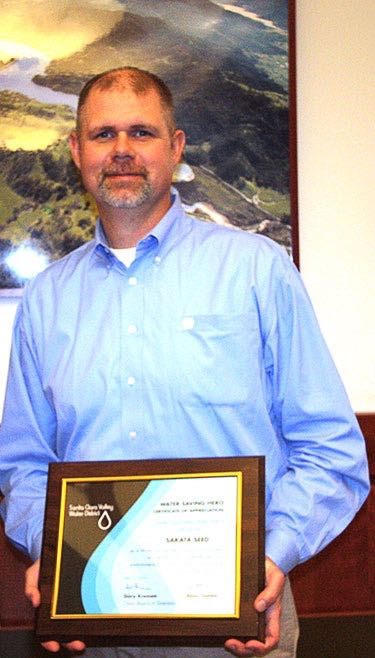
Sakata’s water conservation efforts have not gone unnoticed. In September 2014, Sakata was deemed the title of a ‘Water Saving Hero’ and presented a plaque by the Santa Clara Valley Water District, who have been encouraging water conservation all over Santa Clara County with their ‘Brown is the New Green’ campaign, which distributes free ‘Brown is the New Green’ lawn signs, shower buckets, moisture meters, shower timers, shower heads and hose nozzles for Santa Clara county residents.

“It’s part of our responsibility to the community and the industry to conserve water and lower our carbon footprint. We are proud of our efforts thus far, but are determined to take it further and become a role model for other companies,”states Tye Anderson, Senior Logistics & Operations Manager for Sakata.

Sakata’s GreenUp committee’s future plans stretch far beyond lessening water usage and focus on sustainability as a whole. Long-term goals include such workplace additions as bike racks and charging stations for electric cars.

For more information on how you can help conserve water during the California drought, please visit: www.saveourwater.com. For more on Sakata’s contribution, read the full article.

#

Headquartered in Morgan Hill, CA, Sakata Seed America is a major research, seed production and marketing-distribution subsidiary of Sakata Seed Corporation, established in 1913.   Sakata Seed America serves as the headquarters for the North American operations.  

Featured Photo: Sakata’s Tye Anderson accepts Water Saving Hero Award

2016-05-31T19:28:13-07:00June 25th, 2015|

ASIAN CITRUS PSYLLID QUARANTINE EXPANSION IN KERN COUNTY

The California Asian Citrus Psyllid Quarantine includes, as of TODAY, two portions of Kern County following the detections of two ACP within the City of Bakersfield, one in the Westchester area and the other in the Panorama Drive area. The quarantine zone measures 63-square miles in the Westchester area and 65-square miles in the Panorama Drive area.  A link to the quarantine maps may be found here: www.cdfa.ca.gov/plant/go/acp-qmaps

The quarantine prohibits the movement of citrus and curry tree nursery stock out of the quarantine area and requires that all citrus fruit be cleaned of leaves and stems prior to moving out of the quarantine area.  An exception may be made for nursery stock and budwood grown in USDA-approved structures which are designed to keep ACP and other insects out.  Residents with backyard citrus trees in the quarantine area are asked not to transport citrus fruit or leaves, potted citrus trees, or curry leaves from the quarantine area.

County-wide Asian Citrus Psyllid Quarantines are now in place in Imperial, Los Angeles, Orange, Riverside, San Bernardino, San Diego, Santa Barbara, Tulare and Ventura Counties, with portions of Fresno, Kern, Madera, San Benito, San Joaquin, San Luis Obispo, and Santa Clara counties are also under quarantine.

The ACP is an invasive species of grave concern because it can carry the disease huanglongbing (HLB), also known as citrus greening.  All citrus and closely related species, such as curry trees, are susceptible hosts for both the insect and disease.  There is not cure once a tree becomes infected, the diseased tree will decline in health and produce bitter, misshaped fruit until it dies.  HLB has been detected just once in California – in 2012 on a single residential property in Hacienda Heights, Los Angeles County.  This plant disease does not affect human health.

Residents in the area who think they may have seen ACP or symptoms of HLB on their trees are urged to call CDFA’s Pest Hotline at 1-800-491-1899.

For more information on the ACP and HLB, please visit: www.cdfa.ca.gov/go/acp.

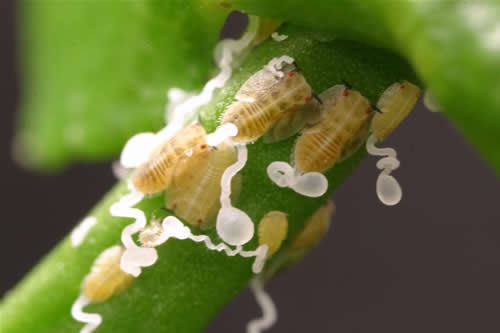
Featured Photo: Asian Citrus Psyllid, UC ANR

2016-05-31T19:28:14-07:00June 17th, 2015|

ADAMA Captan Gold ® 4L Now Registered in California

ADAMA Captan Gold ® 4L Fungicide Gets EPA “Go Ahead” for California Strawberries, Tree Fruits


Adama LogoADAMA has received EPA approval for Captan Gold 4L liquid fungicide for use on strawberries, tree fruits and other specialty crops. A multi-site contact fungicide, Captan Gold 4L penetrates fungal spores, protecting high-value crops against tough diseases like anthracnose, botrytis (gray mold), brown rot and scab.

“ADAMA Captan Gold 4L is the only liquid captan with a ‘Caution’ signal word,” states the company’s national marketing leader Sara Zinck. “Backed by more than 50 years of captan manufacturing experience, Captan Gold 4L delivers excellent efficacy through its multi-site mode of action, making it a trusted partner in fungicide resistance management.”

Gray Mold on Strawberry, UC IPM

Gray Mold on Strawberry, UC IPM


Captan Gold 4L on strawberries

For use on California strawberries, Captan Gold 4L is labeled for applications at 2 to 3 quarts per acre. Early applications at pre-bloom and bloom offer the best fruit protection from botrytis. Follow up applications can be applied at 7 to 14 day intervals up to harvest. Application rates are not to exceed 24 quarts per acre per crop cycle.

# # # # #

ADAMA Agricultural Solutions Ltd (formerly Makhteshim Agan Industries) is a leading global manufacturer of crop protection solutions. With a comprehensive range of high-quality, differentiated and effective products, ADAMA strives to provide accessible, easy-to-use solutions that simplify the user experience while improving crop yields.

For more information, call 866-406-6262 or visit Adama.com.

Always read and follow label directions. Captan Gold® is a registered trademark of an ADAMA Group Company. ©2015 Makhteshim Agan of North America, Inc. d/b/a ADAMA.

Featured photo: Strawberries, UC IPM

2016-05-31T19:28:14-07:00June 16th, 2015|

Westlands Water District Announces Westside Scholarship Recipients

Congratulations to the Westlands Water District Westside Scholarship Recipients!

Six outstanding high school seniors from communities on the Westside of the San Joaquin Valley have been selected to receive scholarships offered by the Westlands Water District. The 2015 scholarships are offered by Westlands under a program to recognize and reward exceptional academic achievement and leadership by graduate seniors at area high schools.

The recipients of the 2015 scholarships are:

Aneet Hundal, a senior at Coalinga High School. Ms. Hundal is an honors student who plans on attending the University of California, Irvine to pursue a degree in nursing. She was actively involved in the Academic Decathlon, Mock Trial, Link Crew, California Scholarship Federation and tennis and basketball. Additionally, she has received a number of awards including the Superintendent’s Honor Roll, Lab Biology II Star of the Month and Wendy’s High School Heisman.

Phillip Augusto, a senior at Lemoore High School. Mr. Augusto plans to attend Cal Poly, San Luis Obispo to pursue a degree in BioResource and Agricultural Engineering. He is an honors student who has received awards from the Future Farmers of America – Scholar Awards, State Degree, Chapter Degree and Greenhand Degree. Additionally, he has been a Robotics Team finalist at West Hills Collect Vex Robotics Competition and Student of the Month for the Lemoore High School Math Department.

Emily Parra, a senior at Tranquillity High School. Ms. Parra plans to attend Stanford University to pursue a degree in Economics/Education. She is an honors student who has been the president of the California Scholarship Federation, Associated Student Body Secretary and World Travel Club Vice President, Mathematician of the Year and Student of the Month.

Jackelyn Sanchez, a senior at Riverdale High School. Ms. Sanchez plans to attend University of California, San Diego to pursue a degree in Aerospace Engineering. She is an honors student who has competed in Academic Decathlon, is an AVID 8th Grade Tutor, Student of the Month, Science Olympiad Competitor, and won an End of the Year Award for maintaining a GPA above 4.0 throughout her high school career.

Gaston Ruben Aganza, a senior at Mendota High School. Mr. Aganza plans to attend Cal Poly, San Luis Obispo to pursue a degree in Engineering. He has held leadership positions in chess and Upward Bound and has participated in AVID, Young Legislators Program, Lend-A-Hand and MESA. Additionally, he was a cross-country runner.

Teddi Diedrich, a senior at Firebaugh High School. Ms. Diedrich plans to attend Menlo College to pursue a degree in agricultural business. She has received several awards in AVID (Student of the Year), Future Farmers of America Greenhand Degree, Honor Roll, Athlete Scholar, the Superintendent’s List and State Future Farmers of America and has also played softball and volleyball.

Each scholarship recipient will receive $1,000 to be used for community college or university expenses. Applicants were judged on their academic performance, school activities and community leadership. Each applicant submitted an essay on an agricultural-related topic.

“Westlands is honored to provide this assistance for these outstanding student leaders,” said Tom Birmingham, general manager of Westlands. “These scholarships represent a small gesture of thanks and support to the communities on the west side of the San Joaquin Valley that make our region such a productive and vibrant place.”

2016-05-31T19:28:14-07:00June 16th, 2015|
Go to Top