About California Ag Today

This author has not yet filled in any details.
So far California Ag Today has created 2014 blog entries.

William Bourdeau Speaks Out About SGMA

William Bourdeau: Surface Water Must Be Tied to SGMA

By Patrick Cavanaugh, Editor

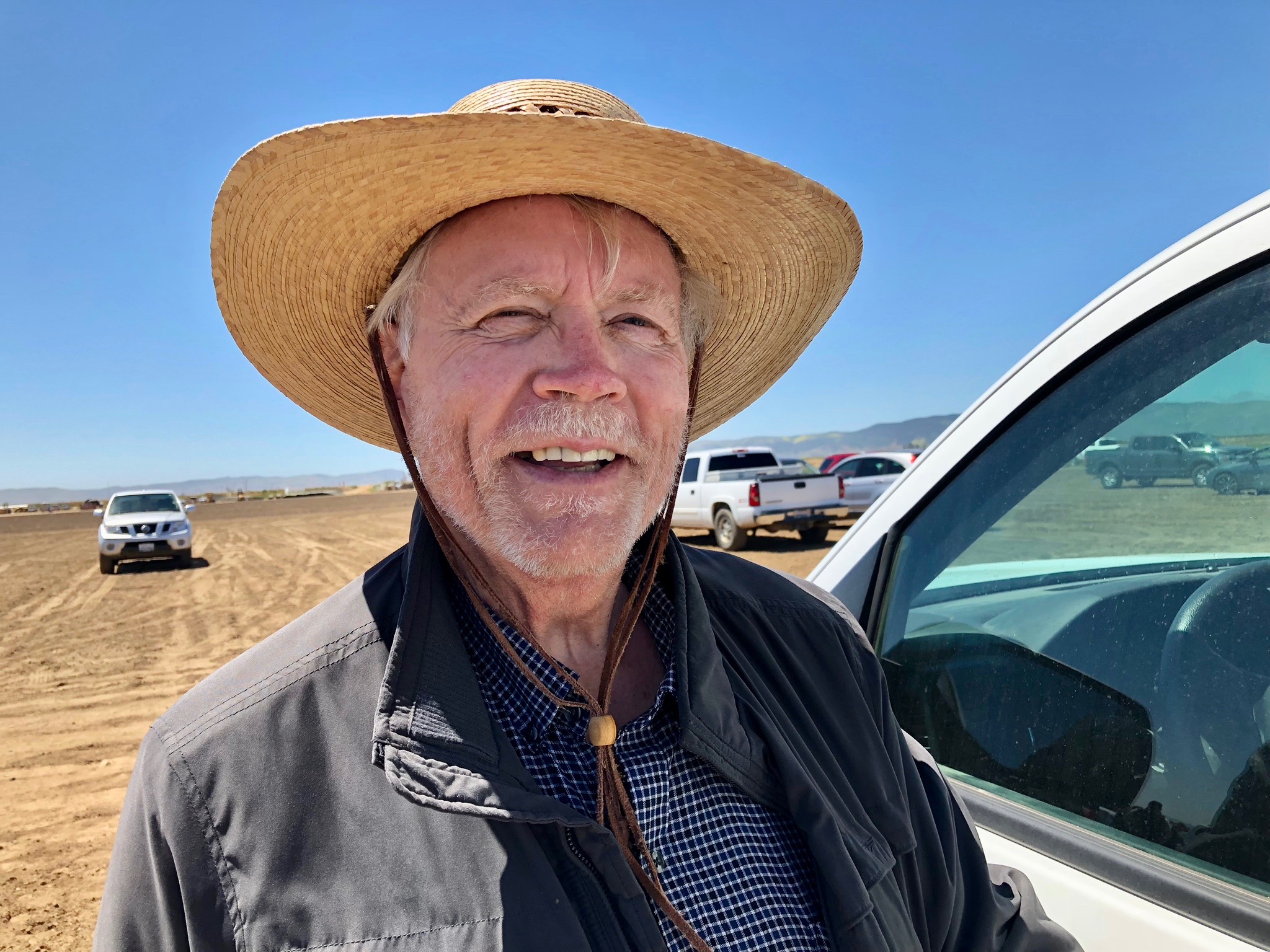
William Bourdeau is Vice President of Harris Farms, a Director of Westlands Water District, and Chairman of the Board of the California Water Alliance. Bourdeau recently talked to California Ag Today about the Sustainable Groundwater Management Act (SGMA), which will force growers in 2040 to keep the water levels in their wells in balance and not allow over-drafting.

William Bourdeau

“It’s mostly about living and growing up in the community and hearing about what the people did when I was still young,” Bourdeau said. “I understand that we were over-drafting the aquifer in the early days of agriculture on the west side of the valley and some very innovative, pioneering individuals figured out how to solve the problem. They built the Central Valley Project and delivered surface water. And if you look at the statistics, the problem was nearly solved. It’s only started to become a problem when the surface water deliveries have been cut off as a result of the biological opinions.”

“I can’t understand why that we can’t solve this problem. And I do think surface deliveries need to be tied into SGMA,” he said.

Bourdeau said he believes that the problem can be solved and not be detrimental to the environment.

“But any solution must consider humans and our needs … surface deliveries need to be incorporated into the plan,” Bourdeau added. “We need to use sound science, and it needs to be peer-reviewed.

“We need to make sure that we’re doing everything we can to preserve a domestic food supply capability. I think it’s in our national interest. … It’s a national security issue,” he said.

Bourdeau believes that we need to get away from looking at these very narrow issues and look at the big picture.

“We must find a way to do what’s best, and not all the decisions are going to be desirable, but I do think we can. We can make decisions that solve the problem and don’t take this wonderful resource out of production.

As a director for Westlands Water District, Bourdeau said no stones will be unturned for compliance to SGMA.

“We’re doing everything we can to try to make sure that we manage this situation to the best of our ability and our growers are represented in a way that they will succeed in the long term,” he said.
2019-01-22T16:43:33-08:00January 22nd, 2019|

Greensmith APN Expanding Services

Greensmith APN Ensures the Best of Both Worlds for Biological Control

By Mikenzi Meyers, Associate Editor

Integrated Pest and Crop Management, otherwise known as IPM, is a critical component of all forms of crop production. Perhaps one of the most important aspects of IPM is the practice of biological control, which includes the control of any pests or invasive plants by using other organisms to monitor their populations.

Lee Tecklenburg of Greensmith APN (Advanced Plant Nutrition), works with both conventional and organic operations in order to help maximize biological control.

Greensmith APN is currently working to put together and market products that work simultaneously with biocontrols on the nutrient side of things.

“We’re trying to create a situation where the plants can thrive and become more tolerant and more resistant,” Tecklenburg explained.

This includes integrating all parts of production, whether it be organic or conventional, in order to tie the entire system together.

“It’s all-encompassing. If you can register something organically today, a conventional grower can use it as well, and it’s not the reverse,” Tecklenburg added. “This approach ensures that everyone is able to benefit from the program Greensmith APN is creating.”

2021-05-12T11:01:50-07:00January 21st, 2019|

Tomato Spotted Wilt Virus Fights Back

New Strain Creates Challenges

By Mikenzi Meyers, Associate Editor

A new strain of the Tomato Spotted Wilt Virus has created a challenge among vegetable growers, making integrated pest management, or IPM, increasingly critical. Bob Gilbertson, plant pathologist at UC Davis, has insight and advice as to how farmers should tackle this new strain.

“The first thing is to know what’s out in your field. And there’s a good diagnostic test for curly top, spotted wilt, alfalfa mosaic, and other viruses,” Gilbertson said.

Bob Gilbertson

After the virus is confirmed, he encourages growers to explore their options of treatment. Prior to the new spotted wilt virus strain, growers could turn to the SW-5 resistance gene to cure their field. Unfortunately, Gilbertson explained, the new strain actually breaks that resistance, which is where IPM becomes even more important.

In the future, Gilbertson hopes to find additional resistance genes to break the new strain. Until that time comes, he wants to use good IPM to manage it.

Gilbertson further added, “Increased sanitation, removing overwintering hosts, weeds, and bridge crops like lettuce, and then timing the applications of thrips management better, to slow down the appearance of adult thrips that carry the virus,” are all examples of good IPM.

2021-05-12T11:01:50-07:00January 18th, 2019|

Crop Insurance Helps Manage Risk

Importance of Crop Insurance

By Jessica Theisman, Associate Editor

Crop insurance is an important risk management tool for California farmers. California Ag Today recently spoke with Mickey Paggi about the topic. He’s an agriculture policy analyst for National Crop Insurance Services, a nonprofit trade association based in Kansas.

There are certain deadlines for getting enrolled in the programs.

“The force of the crop insurance agents that are on the ground in the areas where these crops are grown is really valuable, and they can work individually with the producer to make them aware of what they have to do when they have to do it,” Paggi said.

These agents work with the farmers and available programs to find the best fit for their operation. They cover northern, central, and southern California.

Paggi said that a good place to start if you’re looking for more information about crop insurance is the USDA Risk Management Agency. The RMA looks to increase the availability and effectiveness of federal crop insurance, which is to be used as a risk management tool.

“RMA’s vision is to secure the future of agriculture by providing world-class management tools to rural America. This website can be found at rma.udsa.gov,” he said.

“I would start … with the USDA RMA website because it actually has a link to the individual commodity coverage, and within those fact sheets, they actually have a listing of crop insurance agents within your commodity,” Paggi explained.

2019-01-17T16:09:21-08:00January 17th, 2019|

California Fresh Fruit Association: Top Issues in 2019

Immigration and Labor Cost are Big Issues

News Release

The California Fresh Fruit Association (CFFA) recently announced their Top Issues for 2019. Members were surveyed in December 2018 and ranked the top issues for CFFA to concentrate on in 2019.

George Rodanovich

President of the California Fresh Fruit Association, George Radanovich, stated “As in years past, our membership has given us strong direction in identifying their top priorities for 2019. The issues of labor, water, and food safety, will lead our list of issues. CFFA will continue to serve as the primary liaison between regulatory and legislative authorities by acting as the unified voice for our members on these and many other issues.”

Here are the results:

1) Federal Immigration Policies Addressing Current and Future Labor Force

2) Increasing Wage Costs (Base Wages/OT Thresholds)

3) Water Supply Availability and Curtailment

4) Immigration Enforcement (ICE)

5) Groundwater Management Requirements (S.G.M.A.)

6) Labor Regulatory Compliance

7) Water Quality Requirements and Clean Drinking Water Liability

8) Federal and State Food Safety Compliance Requirements

9) Health Care Costs (Policy Costs/Paid Sick Leave)

10)  Plant Health Materials (Pesticide, Herbicides, Fungicides, etc.)

As always, it will be the Association’s goal to work on behalf of its members to address these issues and many more, in an effort to create a better working environment for their businesses.

2021-05-12T11:01:50-07:00January 15th, 2019|

Modesto Irrigation District Files Legal Action Against State Water Board

MID Lawsuit Challenges CA Water Board On Misguided Plan

News Release from Modesto Irrigation District

Modesto Irrigation District (MID) filed a lawsuit on Jan. 10 against the California State Water Resources Control Board in response to their vote to approve Phase 1 of the Bay-Delta Water Quality Control Plan.

MID’s lawsuit primarily challenges the State Water Board for failing to comply with both the United States and California Constitutions and the California Environmental Quality Act.

MID is among many parties—including our partners in the San Joaquin Tributaries Authority—who are pursuing independent legal action against the State Water Board.turlock irrigation canal

“The State Water Board misused its power to adopt a misguided and devastating plan,” said MID Board President Paul Campbell. “Given their current plan, we’re left with no choice but to pursue legal action. We must protect our more than 130-year old water rights, our water supplies, and the communities we serve.”

To balance the needs of our environment and customers, MID continues to advocate with our Tuolumne River partners for a durable solution composed of both flow and non-flow measures. Parallel to filing this lawsuit and consistent with the State Water Board’s direction, we’re working collaboratively to present a voluntary agreement for the State Water Board’s consideration in the coming months.

“Our voluntary agreement will ensure water security and reliability, includes environmental improvements, enhances fish populations far beyond what is projected in the state’s current plan and most importantly, guarantees timely implementation,” said MID Board Vice President John Mensinger. “Their plan threatens not only Central Valley ag and urban water users, but also the water supply of more than two million people living in the Bay Area.”

MID’s legal action reinforces our commitment to protect the environment, our customers, our region, and our water supply. For more information and to read MID’s full filing, visit www.mid.org.

2019-01-14T16:29:45-08:00January 14th, 2019|

Retirement Reception Honors Ag Commissioners Les and Marilyn Wright

Les and Marilyn Wright To Retire and Relocate to Nebraska

By Patrick Cavanaugh, Editor

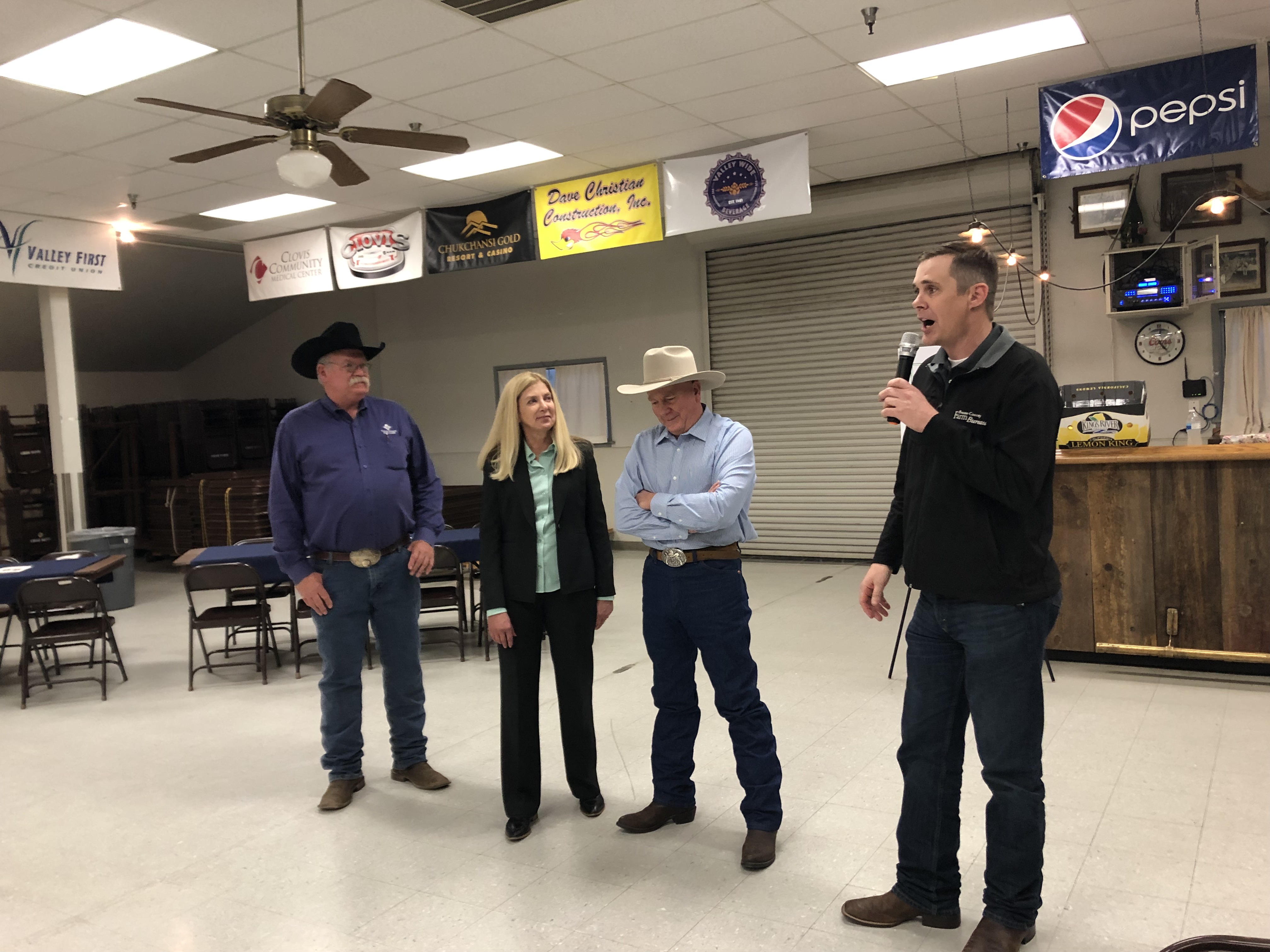
Nearly 100 people gathered at the Clovis Rodeo Hall to honor Les and Marilyn Wright, who have served faithfully as Ag Commissioners in Fresno and Tulare Counties, respectively. These two counties, along with Kern County, have consistently been among the nation’s top three agricultural counties.

Les Wright, who served as Fresno Ag Commissioner since August 2013, will officially retire in late January. Marilyn Wright (née Kinoshita), who served as Tulare Ag Commissioner since December 2009, will officially retire in late March.

Les and Marilyn Wright, soon to retire as Ag Commissioners

Together, they will relocate to the beautifully mountainous Sioux County, in the far northeastern part of Nebraska, where the population density is one person per square mile. This represents a return to Marilyn’s home state, where she grew up on a farm and studied agronomy at the University of Nebraska and Arkansas State University.

Highlights of Marilyn’s career include implementing an aggressive county-wide walnut theft ordinance and taking in more than 113,000 pounds of outdated pesticide products from Tulare County growers during her department’s Legacy Pesticide Disposal Event in 2018.

Les Wright was raised on a cattle ranch in northern California. Instantly, upon becoming Ag Commissioner Fresno County, he helped navigate county farmers through one of the worst droughts in state history.

Both Ag Commissioners have worked diligently to control populations of Asian Citrus Psyllids, which vector the Huanglongbing (HLB) disease in citrus. To date, no positive HLB trees in commercial citrus have been detected in the Valley’s billion-dollar citrus industry.

“It’s been a fun ride on most days over the years,” said Marilyn. “Some nights my brain was still working at 2 am, and I will not miss those days. I will also not miss the anti-pesticide crowd.”

“Yes it has been one heck of a ride,” said Les. “I’m grateful for the friends and colleagues that believed and fought the way we did for the ag industry in Fresno County. I have been fortunate these last few years, because my wife, Marilyn, was Ag Commissioner for Tulare County. We were able to travel to Washington D.C. and Sacramento together. It has been fun,” Les said

In honor of Les and Marilyn Wright’s service, funds are being raised to support the Fresno State Rodeo Team. Rodeoing is one of Les’ passions.

Rodeo has a long history at Fresno State; it is the University’s oldest club sport, with a rodeo held every year since 1949. A recent generous family foundation with local ties made a $250,000 gift to establish an endowment for the Fresno State Bulldoggers Rodeo Team and committed to match an additional $500,000 if that amount is raised by May 2019. If you are interested in supporting the team in honor of les and Marilyn Wright, please contact the Ag One Foundation at 559-278-4266 or visit www.fresnostate.edu/jcast/agonefoundation.


2019-01-14T22:04:12-08:00January 12th, 2019|

Curious of How Safe is Fresh Produce?

Residue Calculator Helps Public Understand How Safe Food Is

News Release

Recently, we have shared new government residue sampling results from the Federal Food and Drug Administration (FDA), United States Department of Agriculture (USDA) and the California Department of Pesticide Regulation (CDPR).  These programs consistently show that 99% of the foods sampled had no detectable residues at all or residues found were well below safety levels set by the Environmental Protection Agency (EPA).

For those who do not want to review these lengthy government reports, the Alliance for Food and Farming (AFF) created an easy-to-use “residue calculator” on safefruitsandveggies.com, which is based upon the USDA data.  We asked toxicologists with the University of California Personal Chemical Exposure Program to analyze this data.  Their findings: A child could literally eat hundreds to thousands of servings of a fruit or veggie in a day and still not have any health effects from residues.  This analysis shows how very minute residues are, if present at all.

The residue calculator features 19 of the most popular fruits and veggies, and you can click on a man, woman, teenager, or child to see the number of servings one would have to consume.  For example, a child could eat 181 servings or 1,448 strawberries in a day and still not have any effects from residues.  Apples?  A child could eat 340 apples in a day.  Kale?  7,446 servings!

These government reports and the UC toxicological analysis underscore the diligence of fruit and vegetable farmers when it comes to the judicious use of pesticides approved for organic and conventional crops.

“… Growers and farmers are adept at following our comprehensive rules to ensure produce is grown to the highest pesticide standards,” said Brian Leahy, Director of the California Department of Pesticide Regulation.

“Based on the PDP data, consumers can feel confident about eating a diet that is rich in fresh fruits and vegetables,” concludes the USDA report.

Read, learn, choose but eat more organic or conventional fruits and veggies for better health and longer life.

2021-05-12T11:01:50-07:00January 11th, 2019|

California Crop Values for 2017 Released by CDFA

Full Statistics Now Available For the Crop Year 2017

News Release

The California Agricultural Statistics Review for crop year 2017 has been released. It reports that California’s farms and ranches received more than $50 billion in cash receipts for their output. This represents an increase of almost 6 percent in crop values compared to 2016.

California’s agricultural abundance includes more than 400 commodities. Over a third of the country’s vegetables and two-thirds of the country’s fruits and nuts are grown in California. California is the leading U.S. state for cash farm receipts, accounting for over 13 percent of the nation’s total agricultural value. The top producing commodities for 2017 include:

Dairy Products, Milk — $6.56 billion

Grapes— $5.79 billion

Almonds— $5.60 billion

Strawberries— $3.10 billion

Cattle and Calves — $2.53 billion

Lettuce— $2.41 billion

Walnuts— $1.59 billion

Tomatoes— $1.05 billion

Pistachios— $1.01 billion

Broilers— $939 million

Complete Report at this Link:

https://www.cdfa.ca.gov/Statistics/PDFs/2017-18AgReport.pdf

2019-01-10T15:52:42-08:00January 10th, 2019|

Alliance for Food and Farming Supports Industry

Alliance for Food and Farming Works Hard for the Produce Industry

By Patrick Cavanaugh, Editor

Since 1989, the Alliance for Food and Farming based in Watsonville has constantly been on guard for the national produce industry. They fight against misinformation on conventional farming, all while supporting organic production.

Teresa Thorne has been with the Alliance since it began and now serves as Executive Director. She is assisted in all aspects of running the non-profit organization by Rosi Gong. These two women share respect and admiration for the farmers who work diligently every day to bring healthy fruits and vegetables to our table.

Teresa Thorne

The Alliance is a nationwide organization representing growers and shippers in California, the Northwest, Texas, Florida, and other states.

Top of mind at the Alliance is the Environmental Working Group (EWG), which will soon release its Dirty Dozen list of popular fruit and vegetables that they deem the public should not eat due to crop protection material contamination. Furthermore, they recommend that consumers only eat organic food.

The EWG list has come out since 1995, and the Alliance has debunked it with facts.

“We work diligently to put factual information out, to help consumers make the right choices for their families in the produce aisle,” Thorne said. “For the EWG to call healthy and safe conventionally grown produce dirty is really unconscionable and has no scientific basis.”

The Alliance wants the consumer to choose what is affordable, choose what’s accessible and buy it where it’s most convenient but choose to eat more every day, for better health and longer life.

The EWG is incentivized to promote organics, and because they are a multi-million dollar organization, they are able to get to the press.

“We are not even close to the budget they have, and we are always puzzled and surprised when they constantly refer to us,” Thorne said.

In fact, the EWG always refers to the Alliance as a front group that represents big farmers who produce both organic and conventional fruits and vegetables.

“If you want to call us a front group for farmers, it’s okay. But to try and categorize us as this big organization, we’re not, but what we have on our side is science and experts in the areas of nutrition, farming, toxicology and risk analysis,” Thorne explained.

“It’s interesting that the EWG has never questioned our science, and they’ve never questioned any of the content on our website, www.safefruitsandveggies.com. And it’s largely because they can’t, so they’re only real road is to try and discredit the organization carrying it,” Thorne continued. “That’s why they make allegations of us being a front group. But they are very much incentivized to promote organics; there’s no doubt about it. And again, that’s why they’re a multi-million dollar organization, and has celebrities as their spokespersons, and we don’t.”

And of course it is okay to promote organic food, but not at the expense of conventionally-grown produce.

“EWG is one-sided. It promotes organically-grown produce, yet maligns conventionally-grown produce—outright saying it’s unhealthy. That’s the crutch of the Dirty Dozen list,” Thorne explained.

“We strongly advocate organic as well as conventional production. We’re advocates for all fruit and vegetable production,” Thorne said.

The Alliance is also an advocate for consumer choice in the marketplace for conventional or organic produce, whether you prefer to buy at your favorite warehouse store, small grocery store, or farmer’s market. The Alliance wants consumers to have the choice of fruits and vegetables no matter how it’s grown.

The Alliance also interacts with consumers on social media, and many are confused as what they should be eating.

“We see a lot of confused consumers in our social media, and many consumers go to our website and sign up for informational food safety emails from us,” Thorne said.

“And that’s why we try and provide information for consumers on our website from nutritionist about the importance of eating fruits and vegetables and from farmers about how they preserve food safety and really … [get] that message across,” Thorne said. “We want consumers to know that the farmer’s first consumer is their own family. So food safety is obviously a top priority for them.”

2021-05-12T11:05:06-07:00January 9th, 2019|
Go to Top