About California Ag Today

This author has not yet filled in any details.
So far California Ag Today has created 2014 blog entries.

Leafy Green Marketing Agreement Issues New Food Safety Guideline

New, More Stringent Food Safety Practices Adopted to Prevent Outbreaks

By April Ward, LGMA Communications Director

The California Leafy Greens Marketing Agreement Board met April 19 and voted to strengthen mandatory food safety practices required on farms.

This means that every box of leafy greens placed into commerce by a certified LGMA member will soon be produced under new, more stringent requirements that are designed to reduce risk when it comes to water used in growing leafy greens. The updates include specific directives such as no longer allowing the use of untreated surface water for overhead irrigation of leafy greens prior to harvest.

The LGMA program has always required growers to test their water because it can be a carrier of pathogens. But the new requirements now include additional safeguards that ensure farmers categorize the source of the water; consider how and when water is applied to the crop; conduct testing to assure the water is safe for the intended use; sanitize water if necessary; and verify that all of the above precautions have been taken

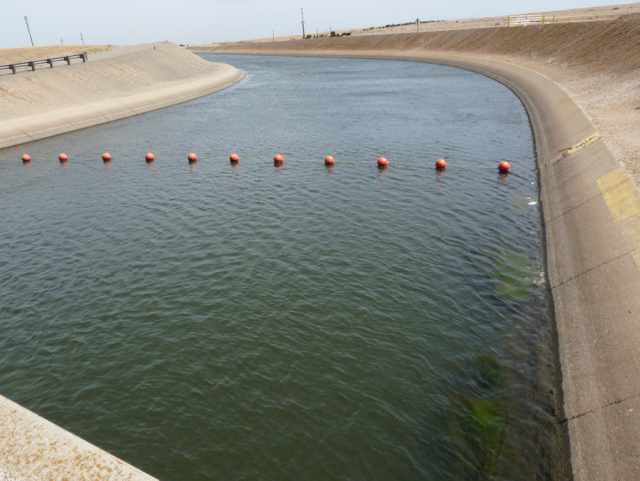
The new standards approved by the LGMA Board are in direct response to investigations conducted by the U.S. Food and Drug Administration into last year’s e. Coli outbreak involving romaine lettuce. Clues pointed to irrigation water from sources such as canals and reservoirs as a possible cause of the both the November outbreak and the one associated with romaine from Yuma last spring.

Government and the produce industry, in general, looked to the LGMA as the way to improve the safety of leafy greens. The leafy greens industry group, facilitated by Western Growers, has been working with industry members, growers and members of the academic community to fashion new and more stringent requirements for agricultural water use. And, in fact, the actions taken by the LGMA Board have effectively changed the way 99 percent of the leafy greens in California are farmed.

The LGMA will begin immediately to make sure everyone in the leafy greens community understands how to comply with the new requirements. The updated LGMA Food Safety Practices document is available on our website here. Additional information on specific changes to the LGMA food safety practices will be provided in the coming weeks and dates for workshops and webinars for both leafy greens industry members and the buying trade will be scheduled soon.

The LGMA and its members have an obligation to produce safe leafy greens. We are very aware of the tragic impacts a foodborne illness can have on consumers, our customers, and our entire industry. We are all passionately committed to producing the safest leafy greens possible. The LGMA will continue to make changes to as needed to strengthen the food safety requirements for leafy greens.

For more on the new regulations, check out this YouTube video.

2021-05-12T11:01:48-07:00April 25th, 2019|

Fighting for Citrus Industry

Continuing to Fight For Citrus Industry’s Longevity Requires Teamwork

By Jim Gorden, Committee Chair, Citrus Pest and Disease Prevention

For more than two centuries, citrus has grown strong in California’s yards and groves—serving as a source of nourishment, income, and tradition for many different individuals—but the citrus industry is at risk due to Huanglongbing’s (HLB) growing presence in California.

Jim Gorden

In 2018, HLB was found in more than 600 residential citrus trees in Southern California, and despite the program’s thorough surveying efforts, HLB has not been found in a commercial grove, but we must continue to hold strong. It has never been more important for all of us— including the Citrus Pest & Disease Prevention Program (CPDPP), regulatory authorities, the citrus industry, the scientific community, and others—to work together to prevent the spread of the disease and save California’s citrus industry.

While much has changed since the citrus industry came together ten years ago to support the creation of the CPDPP, one constant remains: the program’s dedication to fighting HLB. This year, the Citrus Pest & Disease Prevention Committee (CPDPC) created a strategic plan for combatting HLB now and in the future. The plan identified five prioritized strategies to achieve CPDPP’s goals of keeping HLB out of commercial groves, limiting Asian citrus psyllid (ACP) movement in the state and fine-tuning the program. In addition, the program agreed to align its annual budget in support of the strategies, which can be viewed in this report.

With this plan comes additional responsibilities for all individuals involved. The CPDPC understands HLB isn’t the only issue posing a threat to your business and our industry – but it’s one we can’t ignore. This report highlights the many activities the program and our partners are doing across the state to protect commercial groves from HLB, but we are only as strong as our weakest link.

Looking forward, much is at stake for California citrus growers, packers and workers as the industry faces its biggest threat yet in HLB. I encourage you to connect with the program, your local pest control district, or task force, and follow best practices for managing the ACP and HLB. If we sit idle, hoping others will take action for our benefit, we are welcoming this devastating disease into our groves.

But, by working together, we can protect California’s commercial citrus industry from devastation—sustaining our livelihood and the legacy of California citrus.

For more information on the  Citrus Pest & Disease Prevention Program Click here.

2021-05-12T11:01:49-07:00April 25th, 2019|

Alliance For Food and Farming Launches New Website!

New Safefruitsandveggies.com Website Will Improve Visitor Experience

News Release

The Alliance for Food and Farming (AFF) has launched an updated safefruitsandveggies.com website with new content and to improve visitors’ experiences on the increasingly popular site.

“The safefruitsandveggies.com website now receives tens of thousands of visitors each year,” said Teresa Thorne, AFF Executive Director.  “We want to continue to improve the site, retain our visitors, and attract new users.  The newly formatted site will help us to do that.”

New sections include “A Dozen Reasons to Eat Fruits and Veggies,” and “Five Facts About Produce,” which are based upon popular blog posts.  These sections provide quick and easily-retained information about the benefits of eating fruits and veggies as well as the safety of organic and conventional produce.

The Safety Standards section of the website, which provides comprehensive information about the stringent regulations governing the approval and use of organic and conventional pesticides, has also been updated.

“This has become among the most visited sections of safefruitsandveggies.com because all the pesticide regulation information from various government agencies can be found in one place,” Thorne said.  “Instead of going through multiple searches and websites to learn more about these regulations, people can just come to safefruitsandveggies.com.”

Still to come are web pages specifically designed for nutritionists and dietitians to help them answer produce safety questions from consumers, their customers, and clients.

“This new web page was actually requested by dietitians, and we are excited to have their input as we build the content,” Thorne said.

“Since research shows consumers find dietitians and nutritionists are among the most credible sources when it comes to pesticide residues and produce safety, it is important they have readily usable information,” Thorne added.

Among the most visited website section continues to be the residue calculator, which shows consumers they could literally eat hundreds to thousands of servings of a fruit or veggie in a day and still not have any health effects from residues.

“All of the website content is either based upon peer reviewed research or on analyses by experts in the areas of toxicology, risk analysis, nutrition and farming,” Thorne said.  “Consumers can also view 40 videos featuring farmers and scientists, as well as information about peer reviewed studies.”

The AFF works to provide credible, science-based information so consumers can make the right shopping choices for themselves and their families.

“The safefruitsandveggies.com website is the cornerstone of our efforts,” Thorne said. “By providing facts about produce safety and countering misinformation, we hope to remove fear as a barrier and encourage increased consumption of all forms of produce.”

2021-05-12T11:05:04-07:00April 24th, 2019|

Protecting Melons From Silver Leaf Whitefly

Avoid Planting Near Earlier Planted Crops

By Patrick Cavanaugh, Editor

Silver leaf whitefly can be a severe yield-robbing pest in melons, but there are ways to prevent the damage, according to Tom Turini, a UCANR Vegetable Crops Adviser in Fresno County.

“A tactic is going to depend upon planting. If you’re able to put the crop into an area where you’re not next to earlier planted melons or cotton or known sources of whitefly, your likelihood of experiencing damaging whitefly levels is going to be lower,” Turini said. “Growers can’t always do that, but that’s part of the approach when you can. You’ll limit your risk.”

Tom Turini, UCANR Farm Advisor, Fresno County

Turini said the pest could mainly be a problem when you’re putting in those late melon fields when whitefly populations are higher.

“Whiteflies are not good fliers, so when you put those fields in areas where you don’t have sources of whitefly nearby then you will have less pressure for sure,” Turini said.

“Then there are some insecticide programs that you can look at, particularly when you know you’re going to have pressure,” Turini explained. “If you’re coming into high temperatures, and you’ve got late-planted melons, you may want to start with soil-applied insecticides, through the drip. It could be Admire; also Sivanto is a newer material that that has registration and has shown efficacy in desert production areas, which have much higher pressures and more consistent pressures than we do in the San Joaquin Valley.”

2021-05-12T11:01:49-07:00April 23rd, 2019|

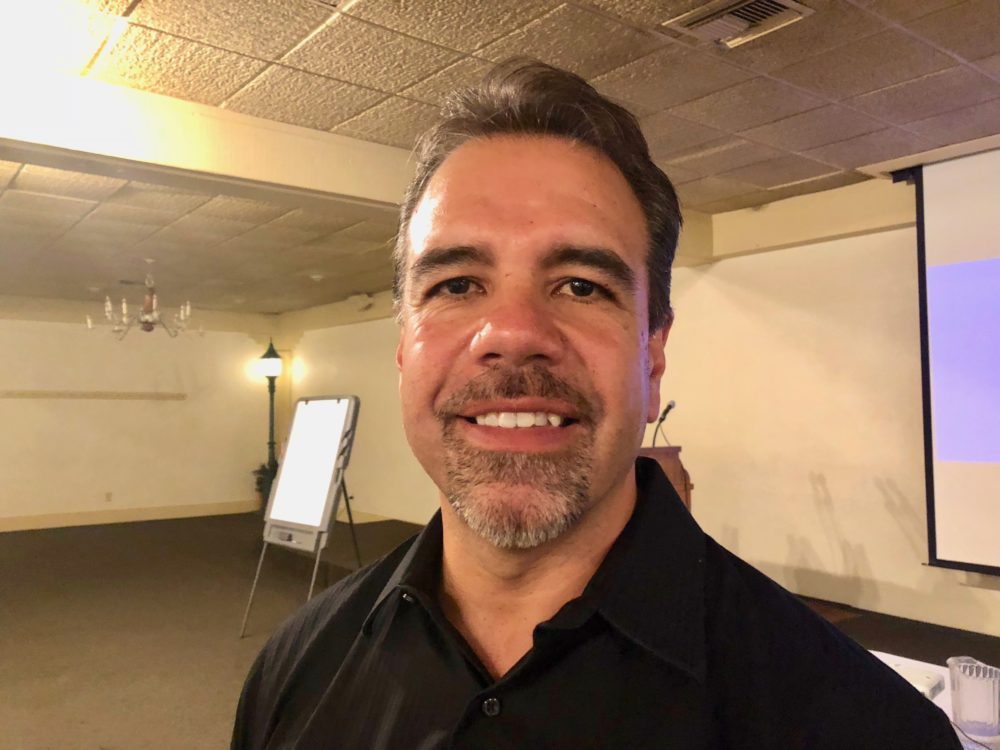
Raul Calvo: Good Employee Communication Shows Respect

Organizations Must Improve Their Culture

By Laurie Greene, Founding Editor

Communicating with employees on the farm is essential. Furthermore, according to Raul Calvo, owner of Employer Services, the manner in which an employer communicates is critical in terms of making employees feel respected.

“The services I provide to employers, including those in agriculture,” Calvo explained, “are typically designed to improve the culture of their organizations by helping them better manage their employees.”

Calvo described himself as “nonstop-busy because as long as companies have employees, there will always be some sort of conflict. And there are certain skills that foremen and supervisors should have to be able to better manage their employees. Unfortunately, the majority of foremen and supervisors are not very adept in those skills, so we work on helping them with those skills.”

“One such skill is conflict resolution—their ability to resolve conflict among themselves, with their employees, and among the employees,” Calvo said.

“Another skill is their ability to manage and minimize favoritism, probably one of the most difficult things to manage. Favoritism causes employees to come to work with this sour taste in their mouths. You know, they’re constantly thinking, ‘Why me?’ ‘Why not me?’ or ‘Why do they only do this?’ So, favoritism makes any little issue or small problem become much bigger because the employees are already carrying this baggage.”

“Third, we evaluate their ability to communicate with employees, which is very difficult.”

Moreover, Calvo believes communicating technical information is exceptionally difficult, “so we work on programs to help supervisors develop that skill. For instance, I’ll see a supervisor talking with an employee about a movie, a TV show, or a sports game they saw, and they’re communicating this vivid information so clearly. But as soon as the supervisor needs to communicate technical information that is required for the employee to be able to do the job, the supervisor stumbles and often says the wrong thing to the employee.”

“Finally,” Calvo said, “supervisors need to meet with their employees on a regular basis—two or three times per week sometimes. Meetings that should take three to five minutes to end up taking 20 to 25 minutes. A meeting that should take 10 minutes takes 40 to 45 minutes because the supervisor does not have the skills to run an effective meeting. So, we put them through the process of running effective meetings and to be quicker and more to the point.”

These are four essential skills that supervisors and foremen need to develop, according to Calvo.

2019-04-22T17:01:52-07:00April 22nd, 2019|

Charlie Arnot: A Better Way to Talk To Consumers About Ag

Listening to Customers Concerns Will Help With Skepticism

By Patrick Cavanaugh, Editor

There are biases against large-scale businesses, according to Charlie Arnot, CEO of The Center For Food Integrity. He said that listening to customers concerns will help with the skepticism.

“The fundamental bias we see against size and scale is a belief that the larger companies, the larger entities, will put profit ahead of public interest. We know that’s not true,” Arnot said. “Those of us who work in agriculture … know that the people—the men, and women who work in agriculture—are terrific. They’ve got values that resonate. They’re committed to doing what’s right. But because of the size, the scale of agriculture today, it raises greater questions.”

Charlie Arnot, CEO of The Center For Food Integrity

Arnot explained that this means that the ag industry needs to embrace that consumer skepticism and be willing to address those questions and not be defensive.

“We want to help people understand that yes, the size and scale has changed, but our commitment to do what’s right has never been stronger.

Consider the adage, “it’s better to make a friend than win an argument.”

“And when you get into that conversation, do you want to win an argument or do you want to win a friend?” Arnot asked. “You know, what’s important to you? And frequently if we listen hard enough, we can hear people’s values. We can listen to what they’re talking about and find that place of connection.”

“So when someone says, you know, ‘it makes me uncomfortable to see all the pesticides and the spraying on all the produce in California. I don’t think it’s safe.’ We can either defend pesticides and applications of crop protection chemicals, or we can listen to say, okay, well [what] I heard them say is they care about safe food.”

“Terrific. I care about safe food. Let’s have a conversation about our commitment to safe food as opposed to a conversation about trying to defend pesticides or crop protection chemicals,” Arnot explained.

He said that consumers have many needs when they’re making decisions about food. “Historically, we’ve thought about their rational needs. We’re going to give them information, but they also have social and emotional needs that they’re trying to meet as well.”

“They want to feel good. They want to have that emotional reinforcement [that] they’ve made the right decision for their families. They want to have confidence and feel good [that] they’ve decided to buy food that’s going to be safe and nutritious,” Arnot said. “They want to get that social reinforcement when they bring it out of the bag, when they talk to their friends, when they post a picture on Instagram or Facebook about what they’re doing. They want people to reinforce [that] they made the right choice about what they purchased.”

For more information on the Center For Food Integrity: http://www.foodintegrity.org/


2019-04-19T15:47:57-07:00April 19th, 2019|

65% Percent Water Allocation for Westlands with 163 Percent Snow Pack

Statement on Bureau of Reclamation’s April Water Allocation Announcement

News Release from Westlands Water District

Today, the Bureau of Reclamation announced the water allocation for south-of-Delta Central Valley Project agricultural water service contractors is being increased to 65%. In light of current hydrologic and reservoir conditions, this minor increase is astonishing.

Thomas Birmingham, Westlands Water District’s general manager, stated: “This announcement begs the question, what has to happen before south-of-Delta farmers served by the Central Valley Project can get a full supply?”

With San Luis Reservoir full and flood flows coming, the 65 % allocation was more than disappointment.

Since October 1, the beginning of the current water year, California has been blessed with abundant precipitation; the 2018-19 water year is now classified as wet. As of April 8, the snow water content in the northern and central Sierra Nevada was 160% and 163% of the long-term average, respectively. Storage in every CVP reservoir used to supply south-of-Delta CVP agricultural water service contractors was more than 100% of average for that date. Indeed, these reservoirs were and remain in flood control operations.

Birmingham added, “I know that Reclamation staff understands the consequences of the decisions they make. Reclamation staff understands reduced allocations in a year like this needlessly increases overdraft in already overdrafted groundwater basins. Reclamation staff understands delayed allocation announcements make it nearly impossible for farmers to effectively plan their operations. If Reclamation’s leadership could, they would make a 100% allocation. But Reclamation’s hands are tied by restrictions imposed by biological opinions issued under the Endangered Species Act. These restrictions have crippled the CVP and have provided no demonstrative protection for listed fish species, all of which have continued to decline despite the draconian effect the biological opinions have had on water supply for people.”

Birmingham concluded, “Notwithstanding the restrictions imposed by the biological opinions, Westlands firmly believes that there is sufficient water to allocate to south-of-Delta agricultural water services contractors 100%. Today’s announcement by Reclamation is disappointing for every south-of Delta farmer served by the CVP, and we hope Reclamation will increase the allocation quickly to enable farmers to quit pumping groundwater.”

After 2019, no one will be able to argue that water supply reductions for south-of-Delta CVP agricultural water service contractors are a result of hydrologic conditions. This year demonstrates only too well the crippling consequences of ineffective and unchecked regulations. Because of restrictions imposed on operations of the CVP under the guise of protecting fish, the CVP cannot be operated to satisfy one of the primary purposes for which it was built, supplying water to farmers.

2019-04-18T16:42:08-07:00April 18th, 2019|

Grape Crush for Wine Up in 2018

Red Wine Varieties Accounted For Largest Share

News Release

The 2018 crush totaled 4,506,583 tons, up 6.2 percent from the 2017 crush of 4,241,945 tons. Red wine varieties accounted for the largest share of all grapes crushed, at 2,447,930 tons, up 8.8 percent from 2017. The 2018 white wine variety crush totaled 1,833,755 tons, up 3.8 percent from 2017. Tons crushed of raisin type varieties totaled 82,508, down 12.5 percent from 2017, and tons crushed of table type varieties totaled 142,391, up 8.0 percent from 2017.

The 2018 average price of all varieties was $831.63, up 6.8 percent from 2017. Average prices for the 2018 crop by type were as follows: red wine grapes, $1,019.03, up 5.5 percent from 2017; white wine grapes, $634.84, up 8.0 percent from 2017; raisin grapes, $299.48, up 18.4 percent; and table grapes, $192.01, up 7.6 percent.

Leading Grape Varieties and Districts

In 2018, Chardonnay continued to account for the largest percentage of the total crush volume with 15.8 percent. Cabernet Sauvignon accounted for the second leading percentage of crush with 15.1 percent. Thompson Seedless, the leading raisin grape variety crushed for 2018, was only 1.5 percent of the total crush.

District 13, (Madera, Fresno, Alpine, Mono, Inyo Counties; and Kings and Tulare Counties north of Nevada Avenue (Avenue 192)), had the largest share of the state’s crush, at 1,370,068 tons. The average price per ton in District 13 was $318.38.

Grapes produced in District 4 (Napa County) received the highest average price of $5,571.44 per ton, up 6.6 percent from 2017. District 3 (Sonoma and Marin counties) received the second highest return of $2,817.92, up 0.3 percent from 2017. The 2018 Chardonnay price of $970.76 was up 5.1 percent from 2017, and the Cabernet Sauvignon price of $1,683.25 was up 8.3 percent from 2017. The 2018 average price for Zinfandel was $600.21, up 1.5 percent from 2017, while the Pinot Noir average price was down 0.9 percent from 2017 at $1,674.62 per ton.

The entire Grape Crush Report is available online in both PDF and spreadsheet format at www.nass.usda.gov/ca.

2019-04-17T16:01:12-07:00April 17th, 2019|

Tom Nassif: Ag Immigration Reform is Critical

All Fruits and Vegetables Harvested by Foreign Hands

By Cory Lunde, Western Growers Assoc. Director of Strategic Initiatives and Communications

Recently, Western Growers President and CEO Tom Nassif detailed the critical labor shortages facing American agriculture and laid out the case for agricultural immigration reform before the House Judiciary Subcommittee on Immigration and Citizenship.

In his testimony, Nassif stated that experienced workers are aging out of the agricultural workforce, with few Americans lining up to take their place, despite wages well above state and federal minimums. Farmers in all sectors of U.S. agriculture, especially in the labor-intensive fruit and vegetable industries, are experiencing chronic labor shortages, which have been exacerbated by recent interior immigration enforcement and tighter border security policies.

As a result of the uncertain agricultural labor market, Nassif explained, many American farmers are either shifting toward more mechanized crops or moving their operations to other countries.

“The simple fact is this,” Nassif said, “fruits and vegetables that are eaten in the United States will be harvested by foreign hands.”

He continued: “The simple question for you, as members of Congress, is do you want those foreign hands harvesting your fruits and vegetables to be on farms here in the United States or do you want to see production continue to shift to farms in foreign countries?”

After touching on the existing, flawed H-2A agricultural guest worker program, rife with burdensome regulatory red tape, Nassif outlined a two-pronged proposal for agricultural immigration reform that jointly provides a pathway to legalization for existing farmworkers and their immediate families and creates a more flexible, efficient and market-based agricultural worker visa program to ensure a sufficient future flow of labor.

Nassif concluded that while “immigration can be among the most divisive and difficult to resolve in Washington,” this issue is decidedly non-partisan, as agricultural immigration reform is really about securing the future of American agriculture and, by extension, long-term U.S. food security.

Western Growers appreciates the efforts of Chairwoman Zoe Lofgren and Ranking Member Ken Buck to elevate the dialogue around this vital issue, and we look forward to working across the aisle to advance bipartisan legislation that provides our country and farmers with a legal, stable and reliable source of agricultural labor.

2019-04-16T15:40:09-07:00April 16th, 2019|

Dire Need for Temperance Flat

Temperance Flat Dam Could Minimize the Devastation of SGMA

By Jessica Theisman, Associate Editor

Mario Santoyo, Executive Director at San Joaquin Valley Water Infrastructure Authority, explained the dire need to build Temperance Flat Dam to California Ag Today recently, and the possible consequences if it is not built.

“With the new groundwater sustainability law coming into play, it is going to basically shut down a lot of farming,” he said.

If farmers cannot prove that they are replenishing the amount of groundwater as they are taking out, they are not going to be allowed to use the groundwater pumps.

“With the continuing extraction of our surface water by the environmental community and by governmental regulations, farming in the Central Valley is in for a world of hurts,” Santoyo said.

The Temperance Flat Dam would give the ability to manage the high run-off water that is otherwise lost into the ocean.

“We are losing millions and millions of acre-feet into the ocean that makes absolutely no sense to anyone,” Santoyo explained.

Temperance Flat would provide additional storage opportunities—up to an additional 1.2 million acre-feet—and will allow farmers to have carryover water from year to year. This will carry the farmers through the dry years, and it will give the allowance to stabilize the groundwater condition.

This dam needs funding from federal, state, and local water agencies.

“The JPA that we represent secured 171 million dollars, which is enough money to pay for the environmental paperwork and initiate the engineering,” Santoyo said.

The remainder of the funds has come in chunks from the federal government through the WIIN Act.

“The bulk of it will have to be the end users, the beneficiaries, i.e. the water agencies,” Santoyo said.

Right now, they are working on the process to evaluate the level of investment that they want to partake in.

“The way this project will work is multidimensional. But the key element will be storage management,” Santoyo said.

The investors would be buying chunks of storage cells in that reservoir to manage.

“In some cases, if you have a bad year in which you have water and others don’t, you’d be able to work something out with them,” Santoyo explained.

“Temperance Flat was a part of the focus when the WIN Act was being put together by Senator Feinstein and Congressman McCarthy,” Santoyo said.

The money allocated is enough to keep the project moving forward on an annual basis.

President Trump signed a memorandum a few months ago, however, Santoyo said, “Since I’ve been involved for a longer period of time, unfortunately, that memorandum that was signed in effect really didn’t do anything.”

Federal courts had already ruled previously that the biological opinions needed to be redone.

“All this memorandum did was just accelerate the study of it,” Santoyo explained.

A resolution on the Delta does not look like it will be here anytime soon.

“That’s why I think that if you have an opportunity to do something positive that doesn’t affect usage of the Delta water you should take it,” Santoyo said.

That’s what Temperance Flat does.

“Three billion dollars represents the full construction of the dam,” Santoyo said.This is the targeted budget for the dam. If the funds can be collected and in time, the dam will be fully operational by 2033.

2019-04-15T16:22:59-07:00April 15th, 2019|
Go to Top