About California Ag Today

This author has not yet filled in any details.
So far California Ag Today has created 2014 blog entries.

Workforce Modernization Act Passes Hurdle

Workforce Act Must Come to Full House Floor

In response to passage of the Farm Workforce Modernization Act by voice vote in the House Judiciary Committee, Nov.20, Western Growers President & CEO Tom Nassif issued the following statement:

“Western Growers applauds today’s passage of the Farm Workforce Modernization Act in the House Judiciary Committee. We thank the lead authors, Congresswoman Zoe Lofgren and Congressman Dan Newhouse, and the bipartisan group of legislators who have negotiated and supported this bill.

“Throughout the U.S., agriculture is experiencing a critical shortage of labor that jeopardizes our ability to continue producing an abundant, safe and affordable domestic food supply. Securing a reliable and skilled workforce is critical to the future viability of America’s family farms, said Nassif.

This bill does exactly that.

“By protecting existing, experienced farm workers, and streamlining the agricultural guest worker program to provide a more accessible, predictable and flexible future flow of labor, the Farm Workforce Modernization Act contains real solutions to the labor crisis facing the industry.

“This bipartisan bill, which has 29 Democratic and 23 Republican co-sponsors, has been carefully crafted through a series of difficult stakeholder-driven negotiations, and has garnered the widespread support of nearly 300 agricultural organizations across the country, as well as the U.S. Chamber of Commerce and farm worker unions.

“While the Farm Workforce Modernization Act is not perfect, we remain committed to working through the legislative process to address our outstanding concerns, and encourage to Speaker to bring this bill before the House floor for a vote as soon as possible.”

2019-11-20T20:57:35-08:00November 22nd, 2019|

New Proposed Westlands Water Contracts to Users

Statement from Tom Birmingham, General Manager of Westlands Water District

A response to the U.S. Bureau of Reclamation’s proposed conversion of the Westlands Water District water service contract to a repayment contract

The American West is an arid region. When President Obama signed the Water Infrastructure Improvements for the Nation (WIIN) Act in 2016, it was with the express intent of improving the nation’s water infrastructure, especially in the western United States. As part of this improvement, Section 4011 (a)(1) of Subtitle J of the Act provides that the Secretary of the Interior shall convert water service contracts to repayment contracts at the request of any existing water service contractor.
Section 4011 was included in the WIIN Act to create a source of money that the Bureau of Reclamation could use to construct water storage projects around the west. It was intended by the Act’s co-author, Senator Dianne Feinstein, to help California “prepare for [that] future while providing us with access to more water now.” When President Obama signed the bill into law, he stated that, “This important partnership has helped us achieve a careful balance based on existing state and federal law.”
Converting “temporary” water service contracts to “permanent” repayment contracts is not uncommon. In fact, an underlying principle of federal Reclamation law  that water users who have repaid the construction costs of a project would have a permanent right to the use of water developed by a project  has been reaffirmed by Congress multiple times since it was first laid out in the Reclamation Act of 1902.
In the Central Valley Project, the San Joaquin River Restoration Settlement Act directed the Secretary of the Interior to convert water service contracts in the Friant Division to repayment contracts to generate revenue for the San Joaquin River restoration program, and those water service contracts were in fact converted to repayment contracts. According to the Bureau of Reclamation, as of October 2019 more than 75 agencies that had “temporary” water service contracts to receive Central Valley Project water, including the State of California Department of Fish and Wildlife, have exercised the option provided by the WIIN Act to convert their contracts to “permanent” repayment contracts. The contract terms proposed in the repayment contracts for Westlands and other Central Valley Project contractors under the WIIN Act are nearly identical to those in the Friant Division repayment contracts.
Further, as President Obama also noted, the provisions of Subtitle J of the WIIN Act were intended to help meet California’s long-term water needs, helping to “assure that California is more resilient in the face of growing water demands and drought-based uncertainty.” In the case of Westlands’ contract conversion, like all contract conversions done before or after, it offers a win-win for all parties.
The Westlands contract conversion will accelerate payment of approximately $320 million to the federal government years before payment is due. This money, pursuant to the WIIN Act, will be placed in the Reclamation Water Storage Account to be used for the construction of water storage and supply projects that can benefit all Central Valley Project purposes.
2019-11-20T19:40:39-08:00November 21st, 2019|

Almond Alliance of California Works For Industry

Almond Alliance Releases the 2019 Advocacy Report

A successful advocacy organization relies on teamwork and collaboration. It takes all of us working together to get to a good place for your business.  Each year we are dealt a new set of challenges and each year we face them with new strategies and tenacity.  While our industry is diverse, we are bound by the commitment to succeed, educate and prevail in this ever-changing political landscape.

The 2019 legislative session was one of the most bizarre and active we have seen in recent years. Our advocacy team worked diligently and tirelessly to defend the industry against harmful legislation and promote logical and practical perspectives when implementing federal and state regulatory changes. 
The Almond Alliance continues to advocate for and defend programs that help in the advancement of our industry.  The Advocacy Report provides a summary of these bills, key policies and issues for your information and review. 
As always, we appreciate your support and invite you to contact us for any questions, comments or to discuss policy and legislation.
Click Here, for your copy of the 2019 Advocacy Report.
Click Here, to view our Advocacy Video.
2019-11-19T23:13:25-08:00November 20th, 2019|

USDA Grant Helps CA Nutrition Incentive Programs

CDFA Receives USDA Grant To Continue Incentives Ag Farmers Markets 

 The California Department of Food and Agriculture (CDFA) has been awarded a Gus Schumacher Nutrition Incentive Program (GusNIP) grant of $7,166,877 from the U.S. Department of Agriculture (USDA) to fund nutrition incentives at Certified Farmers Markets and small retailers throughout the state.

The grant will help fund the California Nutrition Incentive Program (CNIP), which offers nutrition incentives to CalFresh shoppers utilizing benefits at participating farmers markets and retail outlets. For every CalFresh benefit dollar spent, CNIP offers CalFresh shoppers an additional dollar to spend on California-grown fruits and vegetables, within set parameters. This incentive is intended to empower CalFresh shoppers to increase their consumption of healthy fruits and vegetables.

“CNIP addresses food insecurity and access to fresh fruits and vegetables among low-income Californians while simultaneously supporting and expanding markets for California farmers,” CDFA Secretary Karen Ross said. “We’re honored to have been awarded a GusNIP grant for the second time to help continue this good work.”

CNIP began in 2017 and is administered by CDFA’s Office of Farm to Fork (CDFA-F2F), which leads CDFA’s food access work. The GusNIP award is matched by state funds to provide funding for incentives, program operations, and marketing and outreach. CDFA will work with seven partner organizations, chosen through a competitive grant process, to implement the program.

“The California Nutrition Incentive Program is a crucial program that I continue to champion because increasing access to farmers markets helps residents improve their health,” said Assemblymember Phil Ting (D-San Francisco), Chair of the Assembly Budget Committee, who authored legislation to create the program. “This $7.1 million federal grant is great news and ensures that those who can’t always afford fresh, locally grown produce can now do so. Nutritious food is the foundation for good health.”

More information about CNIP, its grantees and participating retail outlets can be found at https://cafarmtofork.cdfa.ca.gov/cnip.html

2019-11-18T11:11:03-08:00November 19th, 2019|

Mating Disruption For NOW Works

Trials Show that Mating Disruption Works Well to Offset NOW Damage

By Patrick Cavanaugh, Editor

Mating disruption for navel orangeworm works. David Haviland is a UCANR, farm advisor, Kern County. “We all know navel orangeworm is not a simple pest to control and it takes an integrated pest management approach. We know the base of that sanitation—getting rid of all the mummies in the winter to make sure that we reset the clock when navel orangeworm comes back in the spring,” noted Haviland.

“We know that the earlier you harvest, the better you’re going to be. So early and timely harvest is going to help. We know insecticides helped. They’ve been around a while and they’re effective and, certainly, people are using them,” said Haviland. “At the same time, those three things alone don’t always control the pest to the level you need. And that’s where mating disruption can come in as the other leg on the IPM chair.”

Haviland has tested the mating disruption products. Currently, there are three different groups of products registered. There are the aerosol products that releases pheromone throughout at certain intervals throughout the season. The second group, what we call the Meso emitter, that’s a rubber strip that’s hung in the trees that passively releases the pheromone all year and the third group, which is new, is as a sprayable pheromone. It’s one that you put in the tank and you spray it along with an insecticide or fungicide.

“In 2017 trials the big take-home message this that all three of the aerosol products were effective. They all work well, as does the Meso emitter, so all those work about the same,” noted Haviland.

In 2017/2018 Haviland had larger trials that confirmed their previous results. “The earlier trial showed a 40 to 50% reduction in damage, while the later trial on larger acreage showed a 60 to 70% reduction in damage, which was a positive return on investment to the grower,” he said.  In 2018, Haviland conducted the first UC trial on sprayable pheromone products.  They did not work very well.

2021-05-12T11:01:45-07:00November 15th, 2019|

Westlands Could Get Permanent Federal Water

Huge Water Contract for Westlands

From Families Protecting the Valley

www.FamiliesProtectingTheValley.com


According to the L.A. Times, the “Westlands Water District, a sprawling San Joaquin Valley farm district with ties to the Trump administration, is poised to get a permanent entitlement to a massive quantity of cheap federal irrigation supplies.”


How much are they supposed to get?  “1.15 million acre-feet of water.”


BUT…”There is no guarantee it will get that, since Westlands is low in the federal project’s pecking order and is among the first cut in times of shortage. Since 1990, it has received its full allotment in only four years.”  Conclusion:  Even with all the water available last year they only received 55%.


The article goes on to say “long-term control would also allow Westlands to make lucrative water sales to thirsty cities and other agricultural agencies”…Conclusion:  BUT, “To date Westlands hasn’t sold any water outside of its district. We don’t sell the water for a handsome profit.”


Why were they able to make the deal?  “Westlands asked for the new agreement under provisions of the 2016 WIIN Act, which opened the door for all reclamation contractors across the West to convert their water service contracts to permanent contracts if they repaid what they still owe federal taxpayers for construction of a federal water project.”  Conclusion:  So, they followed the law. 

So, how much do they still owe?  “In a letter to Westlands, the reclamation bureau last year estimated that the district owed the government $320.5 million as of June 2018.”


BUT, “In 2015 Westlands struck a settlement over drainage services that courts had ruled the federal government was legally obligated to provide…Under the settlement, Westlands agreed to assume drainage responsibility, said it would permanently retire 100,000 acres of badly drained land and would also accept a 25% cut to its water contract.”

SO, “In return, the government agreed to forgive Westlands’ construction debt — then roughly $350 million — and give the district a permanent contract for the reduced delivery amount.”  


Conclusion:  If you follow the story you can see the federal government had some obligations with regard to drainage, and made a deal for Westlands to assume the responsibility in exchange for the water contract.

  
The headline – Feds set to lock in huge water contract for well-connected Westlands Water District – would have you believe Westlands is getting something because of their powerful connections.  Conclusion:  It looks like they just followed the law and made a deal.

2019-11-14T07:37:36-08:00November 14th, 2019|

Orchard Sanitation Will Reduce Navel Orange Worm

Sanitation is Foundation of Navel Orange Worm Pressure

By Patrick Cavanaugh, Editor

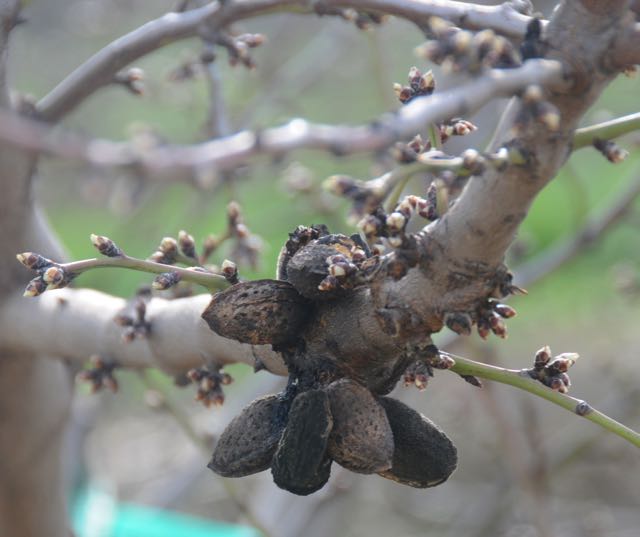
Now that almonds and pistachios are harvested there is needed break on the farm. But soon it is recommended by experts that orchard sanitation is needed to remove any mummy nuts from the trees to reduce to reduce Navel Orange Worm next year

Joel Siegel is a USDA ARS entomologists and Parlier in Fresno County

“Yes, and again, in a perfect world, if everybody could sanitize perfectly, you could argue there’d be very little need for spraying because there wouldn’t be any navel orange worm,” Siegel said. “The reality is far uglier than that. We’re dealing with difficulties and getting into the orchard because of weather. And again, people have to make that commitment towards sanitation and the cost has gone up. So I’m hearing talk of $300 per acre and higher. So again, people have to factor that their worlds has changed,” he said.

Sanitation is a numbers game. The higher the population at the beginning of the season, the higher the damage expected at the end of the season. The most effective way to reduce overwintering populations of navel orange worm is sanitation. For every mummy left on the tree, that’s equal to its percent damage. One mummy nut, 1% damaged, five mummy nuts per tree, that’s 5% damage. So the ultimate goal is to leave less than one mummy nut per tree, and then those nuts must be removed from the orchard or disced into the ground.

2021-05-12T11:01:45-07:00November 13th, 2019|

Waiting for Any Sign of Rain

The Lack of Rain is on the Minds of Growers throughout California

By Patrick Cavanaugh, Editor

We spoke with Joe Del Bosque, a diversified grower in Western Fresno and Madera Counties. He farms Almonds, Cherries, asparagus and cantaloupes. He is concerned about the lack of rain.

“We started the water year in pretty good shape with the most of our reservoirs above normal and I think they’re probably still in pretty good shape,” said Del Bosque. “But of course right now it’s starting out like a dry year.”

“We typically have some rains up in the north part of the state by this time of year. And the last time I checked the pumps of the Delta were not running for quite some time there and so we were not picking up hardly any water,” he said.

And, any water coming through those pumps ends up in the San Louis Reservoir. “And the San Louis Reservoir water level was dropping, but hopefully we can pick up more water here as we get into the rainy season.

The fear is that it doesn’t look like any storms, even in the short to long-term forecast.

“That’s exactly right. That’s what I’m seeing. There’s nothing in the near future, at least the next couple of weeks. So yeah, it’s starting to concern us. Absolutely,” noted Del Bosque.


2019-11-07T18:42:06-08:00November 12th, 2019|

Almond Industry Conference Dec. 10-12

Get it on your calendar!

The Almond Industry Conference, is December 10th through the 12th in Sacramento

By Patrick Cavanaugh, Editor

“The Almond Industry Conference is just a short month and a half away, December 10th through the 12th,” said Jenny Nicolau Senior Manager of Industry Relations and Communications at the Almond Board of California. “This year it’s being held at Cal Expo in Sacramento. It’s a three day event with something for anyone involved in the almond industry.”

It’s free to attend. There are sessions from production research to marketing, more than 250 exhibitors and you can register online today at almondconference.com.

“As long as you register, there’s a badge waiting for you. And this way we have everything set up for all the attendees. It is free, but we want people to preregister, so we can plan in advance,” noted Nicolau.

On that website you can also purchase a lunch for Tuesday and Wednesday while supplies last, but this year, there will be more food options.

“New this year, we’ll actually have a food truck village, so there’s really no reason that you need to leave Cal Expo to go grab something to eat,” explained Nicolau. “We’re going to bring everything on site so you don’t miss out any time walking the trade show floor or attending any of the sessions. Everything will be on site,” she added.

Of course there’ll be lots of hours and continuation credit for growers and PCAs.

2021-05-12T11:05:01-07:00November 11th, 2019|

Almond Board Selects Winner of Mummy Shake Contest


Amber Scheel Steals the Show in Mummy Shake Video Contest

The Almond Board of California (ABC) is proud to announce the winner of this year’s Mummy Shake Video Contest – the Scheel family!

The Scheels are third-generation almond growers in the Ripon/Manteca area. In their video, Amber Scheel dances along to the Mummy Shake while donned in typical mummy garb, with interludes of a side-to-side sway with her mother, Karen, and an appearance from her father Dave, who manages the family’s farming operation.

“When we received a flyer in the mail about the contest, we were so excited to make a video,” said Amber. “I dance professionally, and the contest called for singing and dancing, which is right in my wheelhouse.

“I really wanted to be true to the era of music that the Monster Mash, which inspired the Mummy Shake, came from. I watched 1950’s dance videos and old movies with monsters in them to get inspired. But, of course, in some cases the lyrics told me what to do, like doing ‘The Worm’ to represent ‘navel orangeworm spouses.’”

The Almond Board created the parody song “The Mummy Shake” to help remind growers to break the link between Navel Orangeworm (NOW) and mummy nuts. Now finished with its second year, ABC’s Mummy Shake Video Contest encourages industry members to gather up their friends and family, don their Halloween costumes and dance along to the song in the spirit of both Halloween and the need go back into the orchard postharvest to remove mummy nuts. Participants had from Sept. 16 to Nov. 4 to submit their fun video entries.

Winter Sanitation Should Not be Ignored…

Winter is the time to remove and destroy mummy nuts that harbor NOW larvae, which can hatch in the spring and wreak havoc in the orchard. By removing the nuts, growers are eliminating both a shelter and food source for these overwintering pests. This practice falls in line with the Integrated Pest Management (IPM) program for NOW, established by the University of California with support from ABC, which includes different tactics to combat this pest depending on the time of the year.

“Winter sanitation is the core of IPM programs,” said UCCE farm advisor David Haviland, whose family won the contest last year. In their video, Haviland’s sons dressed in super hero costumes and used their super powers to remove mummy nuts from the trees.

…Let’s Follow Tips from the Almond Board!

Growers should keep these key tips in mind when preparing to remove mummy nuts from their orchards and do the “mummy shake”:

Growers should knock all mummies off their trees no later than Jan. 15.
To note: Winter sanitation is most effective when dew has formed or after it’s rained because mummy nuts will have absorbed some moisture, making them heavier and more likely to fall. In addition, a wet orchard floor helps to increase NOW mortality rates.
Both hard- and soft-shell varieties can harbor overwintering NOW, so growers must be sure to remove mummies in both types.
Growers should aim to have fewer than two mummies per tree before bud swell (around Feb. 1). However, growers in the San Joaquin Valley should aim for less than one mummy per tree.
Once on the ground, mummy nuts should be swept into windrows and destroyed either by flail mowing or disking them into the soil, by March. 15.
“We’ve been stressing the importance of winter sanitation for many years, but with increased levels of insect damage in recent crops we decided to shake things up to get growers’ attention,” said Daren Williams, senior director of Global Communications at the Almond Board. “A parody of the Halloween classic ‘Monster Mash’ seemed like a perfect fit given the timing, coinciding with the end of harvest, and the video contest is a fun way to engage growers and their families to spread the word on a serious issue.”

The Scheel family’s winning video, shown below, will be featured at The Almond Conference 2019, held Dec. 10-12 at Cal Expo in Sacramento, among all other submissions in a fun video mash up. There’s still time to register for this premier industry event – visit AlmondConference.com to RSVP for luncheons, book a hotel and check out this year’s agenda.


2019-11-08T11:25:12-08:00November 11th, 2019|
Go to Top