Water Priorities Initiative Aims for 2018 Ballot

New Deadline for Water Priorities Ballot Measure

The California Water Alliance (CalWA) announced TODAY it has shifted its focus to qualifying the The Water Priorities Constitutional Amendment and Bond Act Ballot Initiative for the 2018 ballot instead of this fall’s general election, as originally planned.

With massive public support, CalWA has in a very short time succeeded in collecting more than half of the 585,407 signatures required to qualify the measure but fell short of today’s deadline to place the issue before voters this November, said CalWA’s executive director, Aubrey Bettencourt, who underscored that all signatures collected to date count toward the July 25, 2016 deadline for 2018 as well.

“While we certainly would have preferred to get this critical issue in front of voters this year, we have every confidence that we will be able to collect the remaining signatures by this summer’s deadline for 2018,” she said. “One of the benefits of setting a very ambitious timeline is that we have already surpassed the halfway signature mark and established a solid campaign operation, strong momentum and growing public awareness about the failed promise of the high-speed rail project and how to best fix California’s broken water system.”

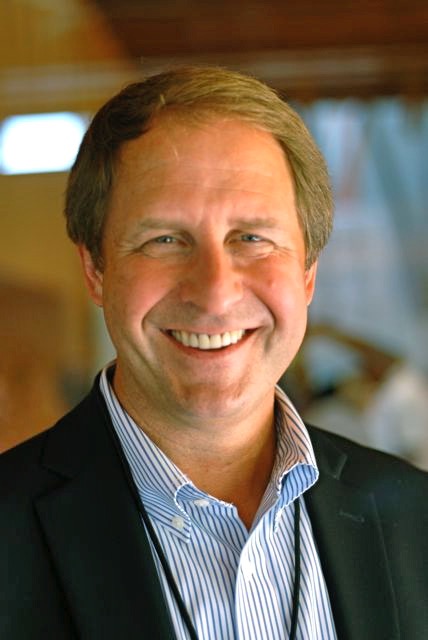
Aubrey Bettencourt, executive director of the California Water Alliance

Aubrey Bettencourt, executive director of the California Water Alliance

Additionally, Bettencourt said the signature gathering process for the water priorities initiative will become more productive and affordable now that the April 26 deadline has passed.

“The new deadline is turning out to be a blessing in disguise because the unusually large number of ballots in circulation had driven up costs to a ridiculous level,” she said. “The 2018 ballot will likely be less cluttered and provide Californians more time to focus and appreciate the benefits of the proposal.”

Recent polls show Californians strongly support terminating the Governor’s priority high-speed rail project and using its funds to provide people with more water.

“Our donors and volunteers are excited that we have a clearer path and more time to solve a problem that frankly has been 50 years in the making,” said Bettencourt. “This also provides our community leaders with enough time for Sites and Temperance to go through their approval process under Proposition 1.”

Information about the measure is available online at CaWater4All.com.

__________________________________________________

About the California Water Alliance The California Water Alliance is a statewide nonprofit organization dedicated to raising awareness about the nature of water and promoting long-term, sustainable solutions that meet the health and security needs of families, cities, businesses, farmers and the environment. To learn more, visit www.CaliforniaWaterAlliance.org.

__________________________________________________

About the California Water Alliance Initiative Fund Committee The California Water Alliance Initiative Fund Committee (FPPC ID#1381113), sponsored by the California Water Alliance, a non-profit IRC §501(c)(4) organization, is a state primarily formed ballot measure recipient committee organized to qualify two or more state ballot measures for the November 2016 ballot. It is permitted to accept unlimited, non-tax-deductible donations from individuals, corporations, partnerships, nonprofit organizations, and any other lawfully permissible sources. For more information and restrictions, please visit http://cawater4all.com/

__________________________________________________

Included at bottom of press release: Paid for by California Water Alliance Initiative Fund, with major funding by California Westside Farmers State PAC and Chris J. Rufer, Sacramento, CA
2016-05-31T19:24:05-07:00April 28th, 2016|

California Women for Agriculture Anew

California Women for Agriculture Rebrands After Forty Years

By Charmayne Hefley, Associate Editor


Founded in 1975 in Coachella Valley to promote and develop the interest of women in a strong agriculture industry in California, California Women for Agriculture (CWA) marks its 41st year with a rebranding. Jeanette Lombardo, president of CWA, said, “The theme for this year is Innovate, Activate and Motivate. We are really taking a look at everything we do, and trying to change it for the better,” she said.

Lombardo said there are currently 20 chapters with 2000-plus members across the state. Guided by five principle objectives, CWA aims to speak on behalf of agriculture in an intelligent, informative, direct and truthful manner; to keep members informed about pertinent legislative activities; to collaborate in support of agricultural issues and challenges; to improve the public image of farmers; and to develop a rapport with consumers, educators, and governmental & business leaders in communities throughout the State.

The wonderful thing about our organization is the age range,” Lombardo said, “from very young to very old. And the older ladies are wiser ladies, as I like to say; they provide mentoring capabilities to the younger folks who are coming in. And the younger folks are seeking leadership, personal growth, and network and industry knowledge,” Lombardo said.

Likewise, Lombardo said, young CWA members have been reverse-mentoring mentors on matters such as social media, “It is a wonderful thing and my goal is to have chapters in every county,” she noted.

2016-05-31T19:24:06-07:00April 22nd, 2016|

Winegrape Quality In SJV

Nat DiBuduo: Valley Winegrape Growers Must Produce Quality

By Laurie Greene, Editor

Nat DiBuduo, president of Fresno-based Allied Grape Growers believes there are good opportunities for Central San Joaquin Valley winegrape growers. “I think the San Joaquin Valley [winegrape growing industry] will survive because growers are working at producing winegrapes at a higher quality and at a higher price,” said DiBuduo.

“Overall, I think the industry is doing well,” stated DiBuduo, “and we just have to work with our San Joaquin Valley growers to produce a better quality grape. It’s like a chicken and an egg; they’ve got to be able to get paid for that better quality. And of course, growers need a solid contract with a good price to make it worthwhile,” he noted.Allied Grape Growers logo

DiBuduo noted that the Bureau of Reclamation’s initial announcement at the beginning of this month that federal water users will receive merely a five percent water allocation, fortunately, does not affect many of his grower-members. “Most Allied growers are not Westside growers; but they will be severely affected by the groundwater regulations soon to be in place.”

DiBuduo explained the Sustainable Groundwater Management Act is predicted to create major issues for production agriculture. “Oh yes, we’ve got guys who have sold their property because they didn’t have enough groundwater,” he said.

2016-05-31T19:24:06-07:00April 21st, 2016|

Costa: Westside Water Cut Unconscionable

Jim Costa: Water Allocation is Immoral

By Patrick Cavanaugh, Deputy Editor

Jim Costa, Congressman for the 16th Congressional District of California that covers all of Merced County and parts of Fresno and Madera Counties and includes vast areas of agricultural land, is not happy with the water situation in California. Costa stated, “To be sure, we are still in a water crisis even though we have had some good [wet] months.”

“Sadly those good months have seen too much of that water going out to sea—as opposed to getting into the San Luis Reservoir and providing water for our Valley—whether for the East side or the Westside. It is a fight that I have been engaged in for years, but most recently, I have been trying to ensure that we are pumping at the maximum levels even under the flawed biological opinions that we are having to contend with.”

Costa explained that while the pumps have been turned up over the past month, sometimes to the maximum level, “the San Luis Reservoir is only 51% full, and now we are are still looking at a 5 percent water allocation for Federal water users.  This has been avoidable, and it is unconscionable and immoral. Let me repeat that, it has been avoidable, and it is immoral and unconscionable that we, in fact, are in this predicament. It is largely because we have failed to take advantage of the El Niño months of December and January.”

Assessing our winter water losses,Costa remarked, “Since January 1st, we estimate that we have lost over 440,000 acre-feet of water. This freshwater440,000 acre-feetwould make a big difference to our Valley, which has been water-starved from a combination of 4 years of drought, plus the flawed biological operations of the Federal and State Water Projects. So, we have to fix this broken water system, bottom line.”

2016-05-31T19:24:06-07:00April 15th, 2016|

Bayer’s Inspiration: Agvocate for Ag

Ag Agvocacy: One Small Pebble Can Cause a Ripple Effect of Change

By Patrick Cavanaugh, Deputy Editor


At the March 2016 AgVocacy Forum in New Orleans, Rob Schrick, strategic business management lead – horticulture at Bayer CropScience, noted we should n3B Brae's Brown Bagsever give up trying to AgVocate on behalf of the agricultural industry. “It goes back to the pebble and the ripple, which is what Braedon Mannering, founder of Brae’s Brown Bags talked about; you know, little things can matter,” Schrick said.

Braeden Quinn Mannering is an amazing 12-year-old from Bear, Delaware, who founded the nonprofit, 3B Brae’s Brown Bags (3B), to provide healthy food and other items to homeless and low-income people in his community. Mannering’s ongoing mission is not only to feed people today, but also to raise awareness about the problems of food insecurity and poverty and to empower and inspire youth across the nation to become part of the solution

AgVocacy and Credibility

“The event was the fourth year running of what was the Ag Issues Forum,” Schrick said. “It is a forum that we put on just in front of Commodity Classic because Ag media is there, market influencers are there. So how can we get them together to talk about the issues relating to agriculture? That was a great theme four years ago, but now as the millennial generation is coming onboard [amidst] so much misinformation about production agriculture, we have re-coined this the AgVocacy Forum. What that comes down to is how do we tell our story about agriculture?”

AgVocacy Forum logo“One of the most interesting things we saw at the meeting,” Schrick noted, “was that we are influenced by people all around us, doctors, lawyers, and our pastors. However in agriculture, the number one influencer is the grower. That really resonated with me and it is true; he is the most credible source, he is the one who produces that food, and he has to make that land he is working on sustainable. He has to make that production come, year after year, after year, and in most cases, he wants to turn that over to the next generation of farmers.

Schrick expanded on the grower, “I think because they are at the point-source, their livelihood depends on it, and they have to get more out of that land and make it more fertile each following year, who is better stewarding that land? And because of that, who is the most credible source?” he asked. “You know, I would love for [the credible source] to be a company—like Bayer; we are very proud of ourselves. Or you could talk to a consumer, [but the story] is going to have a bent to it. But when a grower is talking about production agriculture, that is pretty credible,” he said. 

Food Chain Partnership

“At Bayer, our customer is the grower,” Schrick commented, “and we have to meet the needs of that grower. Well that grower is producing a crop and he has a customer, which is the food chain. These retailers, these food processing companies that are buying his product, are putting requirements on that grower. We have a food chain position on our team and a Food Chain Partnership coalition within our company, whose number one job is to understand what these food processors will require the grower. We understand that; we can help the grower meet those challenges; that is what our food chain partnership is all about.

Anticipating Future Agricultural Needs

Bayer CropScience's West Sacramento facility

Bayer CropScience’s West Sacramento facility (Source: Bayer CropScience)

“We have just recently expanded the greenhouse facilities at our integrated West Sacramento Biologics and Vegetables Seeds site. Bayer is an innovation company; our job is to look into the future and ask, ‘What will be the needs of growers ten years from now?’ Part of that is going to be a reduction in residues, and one of the ways to meet that need is through biologics. That is where we are making our investment. In 2012, we purchased AgraQuest, one of several biologics investments we made, not necessarily for the portfolio they had—which was a wonderful portfoliobut for that scientific know-how and the discovery engine that we have created for biologics.”

“We have got to come up with the next generation of crop protection products that can meet lower residue requirements. And as Bayer is Science for a Better Life, we are going to inject science into this and come up with a new portfolio of crop protection products that will meet the needs of the new generation.”

It all goes back to the pebble and the ripple effect.

2021-05-12T11:03:02-07:00April 13th, 2016|

Bill Chandler on Farming

Bill Chandler Builds a Legacy

By Patrick Cavanaugh, Deputy Editor


A third-generation farmer in Fresno County, Bill Chandler farms near Parlier, Selma, and Fowler. The family operation has traditionally produced tree fruit such as peaches, plums and nectarines, but they are certainly expanding their crop diversity. “We have gone more into almonds lately because of unavailable labor,” Chandler commented. “We are looking into citrus, which is not as perishable as soft fruit—which, if you don’t harvest it right away, you’ve lost the whole year’s effort.”

Like so many farm families in California, the Chandlers go back a couple of generations farming here. “My grandfather came out here in 1888 from Illinois,” Chandler expounded, “and looked at this area. It was appealing because the land prices were not that bad compared to Illinois. But the big deal was the weather; we don’t have all that snow in the winter time. We also  have relatively level ground and not a lot of rocks in our soil. We, too, have hardpan under the soil, but that can be worked out.”peaches

“My father got out of school in 1921 and started farming in this area,” said Chandler. “I was the only son and I always wanted to farm. I have a sister who was able to inherit some, and I bought my sister out, so that’s what our farm is now.”

Bill Chandler and his wife, Carol, have two sons, Tom and John, who are both back on the farm. “They both majored in ag, which was kind of neat; one in ag econ and the other in food science, and we are very proud that they are both back farming with us now. Tom, the older one, majored in ag econ at UC Davis and was in banking for about 12 years. Now he has come back and has been helping us on that side of the farming, which is very very important. He also did some land appraisal on the side. His brother, John, who majored in in fruit science at Cal Poly, is more into field work, and he does some beekeeping on the side as well.”

Chandler said a lot of success and wonderful things about farming have always been accompanied by a lot of challenges as well. “Yeah, there is always something,” he said. “I don’t care if it’s labor, weather or regulations. We are really fortunate; we stand at a place here, Kearney Field Station*, where the UC has done a great job helping us solve some of these regulations or pests.”

Chandler’s sons, Tom and John, are going to pick up where their dad leaves off, but that may be awhile, “You know,” Chandler philosophized, “a farmer never does retire. Fortunately, I am able to live on the farm. They are doing most of the farmwork, but they do ask me questions.”

This year’s above-average rainfall, along with the snowfall, has been great, but Chandler said,  “There is still going to be a lot of work to dig ourselves out of this four-year drought. I have experience and so do many other people. Not only are our trees suffering from lack of proper irrigation, but we are spending a lot of money putting in new wells or new irrigation systems so that we can handle this drought.”

Chandler doesn’t take nearby UC and USDA researchers for granted. He always attends meetings and takes notes. “We can go to these folks and have these seminars that are really helpful.”

____________________________________________

*Kearney Agricultural Research and Extension (KARE) Center

2016-05-31T19:24:07-07:00April 12th, 2016|

Ryan Jacobsen on 5 Percent Water Allocation

Fresno County Farm Bureau CEO on Water Allocation

 By Patrick Cavanaugh, Deputy Editor

California Ag Today staff interviewed Ryan Jacobsen, CEO and executive director of the Fresno County Farm Bureau moments after the Bureau of Reclamation announced only 5 percent of contracted water would be allocated to Federal surface water users south of the Sacramento Delta during this El Niño year.

California Ag Today: Forget how you feel about the Bureau of Reclamation’s initial 5 percent allocation for Federal water users. How many times can we say, “Frustrated?” 

Jacobsen: Absolutely just despicablethe announcement we heard earlier today. The frustration is that we’ve continually been told over the last couple of years with zero percent water allocations that it’s been Mother Nature.

Even though it’s not necessarily the big bang year we were hoping for in northern California, Mother Nature provided. We’ve seen the reservoirs overflowing. We’ve seen the reservoirs flood-releasing, and here we are with a five percent allocation. We saw outflows in the delta this winter that exceeded the 300,000 acre/feet a day, and yet we weren’t doing anything to capture it. So, it’s just frustration, frustration, frustration that here we aremore of the sameand what does this mean long-term for California agriculture? We can’t be viable without a surface water supply, and when Mother Nature provides, unfortunately the federal government’s not trying to collect it.

California Ag Today: What is going on? Why are they doing this? Do you have any theories?

Jacobsen: Obviously, it has so much to do with the environmental side and the belief that the federal government is doing all they can to protect these species up there. We have seen that it’s doing no good; the fish species are seeing no recovery; it’s actually going in the opposite direction. It is plain mismanagement. The unfortunate part is sound science isn’t even going into this right now; it is purely the emotional side of whoever decides to pull the trigger on the federal side. And here we are on the resulting end, losing millions and millions of dollars in our economy, idling more farmlandthe most productive farmland in the countryin the worldand losing the jobs that are associated with it.

San Luis Reservoir -Empty, California Farm Water Coalition

San Luis Reservoir Suffering the 2015 Drought is now barely half filled even after the El Nino rain, runoff and massive flood releases from Shasta an Oroville

California Ag Today: You speak brilliantly on this whole situation. Way more water has flowed out to the ocean than needed for the protection of any of the species or the environment, so who are they listening to?

Jacobsen: Right now, this is simply the administration’s decision. Reclamation falls under the federal side of things, so obviously, ultimately, it lays on the President’s desk. If we talk about resolution: by 9 a.m. tomorrow morning, we could see a resolution to this whole issue. If Congress would get their act together and pass some kind of bill, get it on the President’s desk and get it signed, we could see some resolution.

Unfortunately, here we are, April 1:  a good portion of the precipitation season is now behind us, the high flows through the delta are pretty much over. We still have healthy reservoirs up North, but unfortunately it doesn’t mean anything for us down here because we can’t convey it through the Delta to get here. That lack of  and the lack of ability on the federal side to make the decisions that would allow us to pump that water makes this just another year of doom and gloom. Again, how much more of this can we take? I think the long-term outlook for those farmers with permanent crops who have tried to scrape by, has to be, “Is this even viable for us to continue to do this anymore?” ‘Because Mother Nature provided, and yet we don’t see the water.

California Ag Today: Very bleak. Ninety-five percent of normal snowfall, too.

Jacobsen: The percentages in northern California, while good, weren’t the El Niño banner year we were expecting. The season looked bright, like it was going to be good. Yet, the fact of the matter is that during the months of January, February and March, when these just incredible numbers of high water flows were going through the Delta, pumps were pumping in single digits. And that’s not even close, or anywhere near where they should have been.

I think the misconception is when we talk about the water that is taken from the Delta, it’s such a small percentage, particularly during those high-flow times; it would have meant no difference to water species. It’s just a frustration that we continue to be bombarded by these environmental restrictions that are having no good effect on the long-term viability of these species they are trying to protect.

California Ag Today:  What is the economic impact of these water cutbacks on the Central Valley?

Jacobsen: Well, when you look at the five percent allocation, we are ground zero. Fresno County, right in the heartland of the Central Valley, is ground zero. We are going to see probably in excess of 200,000-250,000 acres of land continue to be fallowed and the loss of the tens of thousands of jobs associated with that, and millions, tens of millions of dollars. It’s obviously a very dire situation when it comes to long-term viability here in the Valley.

California Ag Today: Because they are going to hear a lot of outrage from us, do you think the Bureau of Reclamation would go to a 20 percent water allocation? Farmers must be thinking, “We got to get the seeds ordered today for the crops.” Is there any hope for an increase in water, or do you think farmers just can’t bank on it?

Jacobsen: It’s already too late. For this season, it’s already too late. It is April 1 already, and, unfortunately, this is not a joke. This decision is about one month-and-a-half late. I think the Bureau of Reclamation was hoping the numbers would improve magically. They didn’t.

The five percent allocation, while said not to be our final allocation, is likely to be close. It won’t go up to 20; it won’t go up to 15. Maybe if we pray enough, it may go up to ten, but that would be on the high side. Right now, it looks very realistic that five percent is where we end up, where we are going to stand for the year.

California Ag Today: Okay, I know growers who have planted tomatoes in Fresno County, thinking, “Hey, we gotta get water.” They’re not getting it.

Jacobsen: They’re not getting it, no.  And lack of surface water supply continues to make a huge dent in our groundwater supply, so this just can’t continue the way it is going. Plus, upcoming implementation of the Sustainable Groundwater Management Act (SGMA), combined with the lack of federal surface supplies, will absolutely hammer farms here in the Valley.

2016-05-31T19:24:07-07:00April 8th, 2016|

Justification for Reclamation’s 5 Percent Allocation

Justification for Reclamation’s 5 Percent Allocation


Following the stunning announcement by the Bureau of Reclamation (USBR) on Friday, April 1, 2016, of a 5 percent water allocation for Federal water users south of the Delta, Patrick Cavanaugh, deputy editor with California Ag Today interviewed Louis Moore, deputy public affairs officer with the Bureau of Reclamation (Reclamation) Mid-Pacific Region based in Sacramento regarding justification for the low allocation for the Central Valley during this El Niño year.

Cavanaugh: We are all stunned in Central California with that 5 percent water allocation to Central Valley Project water users. With so much hydrology in terms of rain and snow this winter, it seems impossible that farmers and cities could only expect 5 percent!

California Orchard Removal

California Orchard Removal

Moore: Yes, understood. I will try to explain what our logic is behind the 5 percent allocation.

Cavanaugh: Yes, I would like just one reason for the 5 percent. We cannot imagine why so much water is going to waste.

Moore: So basically when we looked at the hydrologic conditions in preparation to make the allocation announcement, we found that regionally, water has fallen differently in the various basins. There was substantially more rain and snow in the mountains in the Oroville and Shasta Dam areas that caused those reservoirs to increase storage quite rapidly. Over at the New Melones Reservoir, which provides water to the south, the storm systems did not materialize and did not produce large sums of runoff; therefore the reservoir storage is low.

Cavanaugh: But the snow that could fill New Melones has not yet melted. And, as you said, there is a lot of water in northern California, and there is a system to get it southward to farms and cities.

Moore: So this is the initial allocation that is out today. We are hopeful that conditions will improve; and if they do so, we can make an adjustment to what the allocation is.

Central Valley Project USBR

Central Valley Project (Source: USBR)

Cavanaugh: You did not mention San Luis Reservoir, a major reservoir jointly run by the state and federal governments that could have had more water pumped into it during the recent high flows, particularly given the flood releases from northern California.

Moore: Water is being pumped into San Luis, and it is for a combination of reasons. Sometimes the natural runoff causes different flows into the systems, but we have to regulate the water that goes through the Delta. San Luis is a shared Federal and State reservoir with legal criteria under which we operate. So we have to be very careful about what waters we can push through the Delta. But we were still providing water to that system.

Cavanaugh: Well, Louis, clearly more water should have pumped into the San Luis Reservoir. On April 2, it was only 52 percent full and, given the flood releases, it should have been more. Californians on farms and cities south of the Delta are frustrated. They assert that far too much water is wastefully flowing out to the ocean—way more than necessary for the protection of species and the prevention of salt-water intrusion. Please explain why so much fresh water, nearly 800,000 acre-feet have flowed out to sea.

Moore: We operate to meet endangered species requirements. We operated to meet water delivery requirements through these various systems. These are federal/state requirements and biological opinion that we are operating to. We are trying to make sure we are following the law, so there are combinations of things where Reclamation works with its partners to determine where and how to get the water where it needs to be.

Cavanaugh: Inflows into the Delta were as high as 300,000 acre-feet of water per day, and only a fraction of that has been moved into San Luis with a capacity of 2 million acre-feet. We understand why San Luis is not filled during drought years; but in an El Niño year like this, it’s confounding how Reclamation could justify an initial 5 percent allocation. It defies any logic, all the water, all the flood releases and the 95 percent on-average snow in the Sierras. Again, how can it possibly be justified?

Moore: What I can say is there is absolute consideration and we understand the impact this has on our customers. One of the reasons we waited until April 1 to make this allocation announcement is because we have been hopeful. We have been looking at the storage, snow and runoff to see if conditions improved enough, so we could actually increase what we thought was going to be a worse allocation.

3-28-16-reservoir_conditionsCavanaugh: Well, it’s laughableonly 5 percent for San Luis, with all the water in the system from the El Niño year! You’re still not answering the question. None of this makes sense to anyone who is a critical thinker. Can you please explain, other than preventing salt-water intrusion and protecting species, why so much more water—over the topwas sent out?

Moore: We are still coming out of the fourth year of dry conditions and that’s not news for folks. The dry conditions that we came through up until the fall of 2015 really impacted our ability to move water downstream into San Luis, which is the same water that can be provided to folks south of the Delta.

We completely understand that, but we are talking about timing of the water supply that we received. Of the additional 4.4 million acre-feet of water that we received over the past several months, 2 million-acre feet occurred in March, which was late [for purposes of allocation analyses]. So we are just getting the sum of this water into our system. And we are still hopeful that [these late hydrology] conditions will improve and we can provide additional water.

Cavanaugh: We know that Fresno received 135 percent of normal rainfall this year; it was wet throughout the area. Five percent was stunning to all of us. We know that farmers will never see 100 percent any longer. And possibly we will never see 80 percent any longer. I mean we could have record flooding throughout the state and farmers may not see a 50 percent allocation—even if the Delta Smelt were proven, unfortunately, to be extinct.

Moore: Yeah, I do hear you. But there is a lot of work that goes into developing water deliveries and a lot of coordination as well. I am not blaming it on the laws, but when we sit down at the table with all the interests for water, it literally becomes a discussion on how to distribute the water and meet all that demand. Now we come to these agreements to meet the legal obligations, to meet the contractual obligations and to protect the environment. So this requires a lot of effort.

Cavanaugh: Louis, I do not get what you are saying. In fact, I disagree with what you are saying. The family farming interest got a zero allocation two years in a row, but the environment still got all the water they wanted. So Reclamation is not sitting down with all the interests for water. The environment gets 100 percent of what they need while everyone else get far less—including zero two years in a row—and now only 5 percent.

Drought Monitor March 29, 2016

Drought Monitor March 29, 2016 (Source: The National Drought Mitigation Center)

Moore: That’s part of the legal requirement that we have talked about. It’s absolutely one of entities at the table that has to be managed.

Cavanaugh: Does the Bureau of Reclamation understand that all this water being used for the environment has not really helped the protected species in the Delta? The species continue to decline despite farmers going without water, fallowing land, and laying off workers, and in spite of devastating communities and severely hurting the economy in the Central Valley.

Moore: You know, I hear you. This is a discussion that I absolutely understand. It’s going to take a lot of folks coming to the table and a lot of discussion to change policy, to change the law and to introduce new ideas on how this works. Those are the things that have to happen

Cavanaugh: Can you help us make this happen?

Moore: You know, this is an ongoing discussion, I assure you. You probably see all the legislative reporting that’s done about water management. It is these discussions that somehow need to culminate into the change that you are mentioning.

2016-05-31T19:24:08-07:00April 4th, 2016|

Westlands Water Allocation “Despicable”

Westlands Water Allocation “Despicable”

By Patrick Cavanaugh, Deputy Editor

Earlier TODAY, the United States Bureau of Reclamation (USBR) stunned the farming industry by announcing a  5% water allocation for most of the farmland to the Westlands Water District on the Westside in the Central San Joaquin Valley. This single digit water allocation to the comes during an El Niño year of wet weather, following four years of drought and restricted water deliveries to Westlands of 40% in 2012, 20% (2013), 0% (2014) and 0% again (2015).

Westlands Water District LogoLes Wright, agriculture commissioner for the Fresno County Department of Agriculture—ground zero for agricultural water cutbacks, said, “I can’t think of a word to describe how I am feeling about our federal water managers. It’s despicable what they’re doing to this Valley.”

“You have two major reservoirs in flood stage,” said Wright, “but they are refusing to turn the pumps on. It’s like they want to starve out the Valley, its farmers and communities. Agriculture is the major economic driver for the Valley communities, and they’re doing everything they can to drive the people out of this Valley.”

Established in 1902, the USBR, according to its website, is best known for the building of more than 600 dams and reservoirs, plus power plants and canals, constructed in 17 western states. These water projects led to homesteading and promoted the economic development of the West. 
Sign of drought Westlands Water District Turnout

The USBR website reads, “Today, we are the largest wholesaler of water in the country. We bring water to more than 31 million people, and provide one out of five Western farmers (140,000) with irrigation water for 10 million acres of farmland that produce 60% of the nation’s vegetables and 25% of its fruits and nuts.”

Yet, some Western farmers have received a 0% water allocation for each of the past two years, and now may receive only 5% this year. Already, Westlands Water District reports over 200,000 acres of prime farmland in the district have already been fallowed.

Ryan Jacobsen, Fresno County Farm Bureau CEO

Ryan Jacobsen, Fresno County Farm Bureau CEO

“Reservoirs throughout the state have been filling,” said Fresno County Farm Bureau CEO, Ryan Jacobsen, in a statement TODAY. “However, the government’s restrictive interpretation has resulted in the permanent loss of 789,000 acre-feet of water,” said Jacobsen. “Since December 2015, more than 200 billion gallons of water have been forever lost to the ocean, with almost no water being allocated to agriculture.”

Commissioner Wright reflected, “President Obama and both California senators have been here in the Valley, on the ground. They have seen what we are doing. They recognize the crisis; yet they refuse to use their authorities to correct the situationin a year when we’re dumping millions of gallons of water to the ocean.”

Wright explained the federal government is sending fresh water to the ocean in excess of what is needed for the environment and the protected species. “They are just wasting the water,” he said, “and yet, we have the Governor telling us to cut back 25% to 35%. And all of that water we saved last summer and in the last year, they have more than doubled the waste.”

“Where is the governor on this issue?” Wright asked. “It is despicable what the government is doing to its people.”

2016-05-31T19:24:08-07:00April 1st, 2016|

Mario Santoyo: Recent Temperance Flat Dam Memo is Misleading

Mario Santoyo: Recent Temperance Flat Dam Memo is Misleading

By Patrick Cavanaugh, Deputy Editor


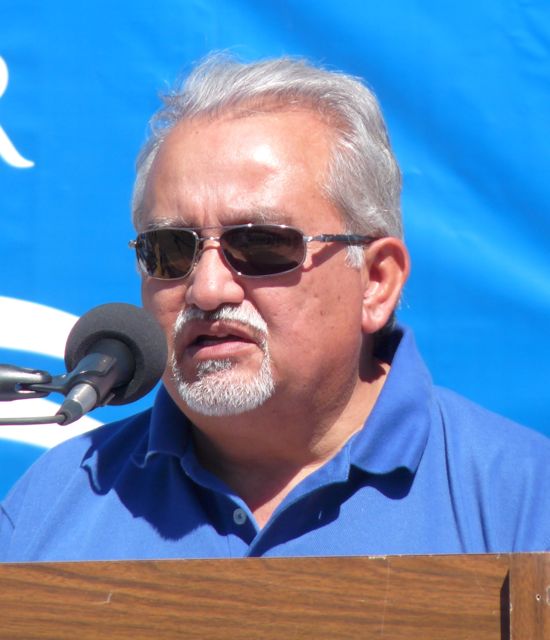
A recent memo to the City of Hanford, issued by the Townsend Public Affairs office in Washington D.C., stating the Temperance Flat Dam proposal may not be eligible to receive Proposition 1 funds, was deemed “misleading” according to Mario Santoyo, executive director of the 11-member board of the Joint Powers of Authority that oversees the proposed Temperance Flat Dam.

The U.S. Department of the Interior Bureau of Land Management’s 2014 decision to recommend designation of an 8 mile segment of the San Joaquin River (accompanied by a restricted-use river corridor extending 0.25 miles from the edge of the identified river segment) that falls in the footprint of Temperance Flat as a “National Wild and Scenic River,” has been a concern for awhile, noted Santoyo. “This memo is very misleading,” he said. “It has nothing to do with state bond funding”—California’s Proposition 1 (Prop 1), the legislatively-referred Water Bond (Assembly Bill 1471), passed by state voters on the November 4, 2014 ballot.

USBR Temperance Flat Dam and Reservoir

Temperance Flat Dam and Reservoir (Source: USBR, “Managing Water in the West: Alternative Water Management and Delivery,” 2014)

“But if the [recommended] designation stays in place,” Santoyo continued, “it would prevent us from building Temperance Flat with any funding. Whether with state funding, federal funding or Prop. 1 funding, it does not get builtperiod,” Santoyo said.

“To be eligible for Prop 1 funding, you have to have a feasibility report,” said Santoyo. “In other words, the federal government has to determine if the project is feasible under Prop. 1 money.” However, doing the feasibility report is part of doing the environmental paperwork. And, if at the end something changes on the conditions that were originally evaluated, then the project could be determined unfeasible.”

“But none of this has happened,” emphasized Santoyo, as the recommendation of this San Joaquin River segment to be designated National Wild and Scenic River has not yet been legislatively authorized. “We are perfectly aware of that hurdle. The designation is one of many things that we have to deal with.”

Santoyo said there would be a discussion this week with the regional director of the Bureau of Reclamation to talk about the Scenic River designation, the National Environmental Policy Act (NEPA), and the California Environmental Quality Act (CEQA), as well as technical partnership. “There are a series of things that need to happen to keep advancing the ball,” Santoyo said.

And even though the proposed Sites Reservoir is not subject to the Scenic River designation, it has not passed the feasibility study. “So it even has its challenges,” said Santoyo.

“All the projects have big challenges, but the question is: Do you keep moving forward regardless of how hard the issues are or do you just fold the first time you hit a bump? We are not folding; we are moving forward,” Santoyo said. “Either we shoot hard for currently available options or we shut down and do nothing. Why go through 10 years’ worth of effort to give us this opportunity and not take a shot?” he asked.

Editor’s Note:  Several calls to James Peterson, director of the Townsend Public Affairs federal office were not returned.

2016-05-31T19:24:08-07:00March 31st, 2016|
Go to Top