Breaking News: Contracted Contractual Water Deliveries Could Plummet

Breaking News: 

Promised Water Deliveries Could Plummet

Delta Smelt Among Many Reasons for Pumping Constraints

By Emily McKay Johnson, Associate Editor

Farmers in the federal water districts of Fresno and Kings Counties were granted only five percent of their contracted water this year; yet they are at risk of getting even less due to pumping constraints. Jason Peltier, executive director of the San Luis & Delta-Mendota Water Authority, a Los Banos-based federal water district explained, “The original forecast had full pumping in June, July, August, and September.

“Because of the temperature constraints and because of the water quality standards,” Peltier stated, “we’ve been operating only one or two pumps. There’s just not enough water flowing south to meet the U.S. Bureau of Reclamation’s (Reclamation) obligations to the exchange contractors, the [wildlife] refuges and the urban agencies, along with the 5% allocation to the ag services contractors,” he noted.

SLDMWAPeltier is concerned for those in the Central Valley, and water agencies are working frantically to find answers. “We’re working on it,” Peltier affirmed. “We’ve got a lot of engineers and operators preparing spreadsheets and analyzing both the variables and what changes could be made to avoid lower water levels at San Luis Reservoir.”

Commenting on this year’s deliveries, Peltier stated, “No doubt we’re in an unprecedented operating environment. Here we are, eight months into the water year, and we just got a temperature plan for Lake Shasta—that is driving the whole operation—the project. Limiting releases like they are in the temperature plan [designed keep the water cold to protect winter-run salmon eggs]at least we thoughtwould allow Reclamation to hold the commitments they made. But we’re on razor’s edge right now,” Peltier explained.

Peltier described how the process is holding up water release, “The National Marine Fisheries Service wants to keep as much water in storage as possible, in order to keep the cold water cool as long as they can. This is all to protect the winter-run salmon eggs that are in the gravel right now, protect them until the weather turns cool and things naturally cool down. Then they can release water. Shasta’s been effectively trumped by another million-acre feed because of this temperature plan.”

Peltier further noted that the Lake Shasta temperature plan has not allowed water to flow into the Sacramento River. It has severely impacted growers in Northern California on a year when the northern part of the state received above average rain and snowfall during the winter.

“People diverting off the river in the Sacramento Valley have had their own water level issues. There hasn’t been enough water coming down the river to get elevation enough adequate for their pumps. There’s been a lot of ground water pumping,” he said.

The nearly extinct Delta Smelt has been a longstanding issue for those affected by California’s drought. After the past five years of sacrifice, even more water is being taken from agriculture and cities to help save the fish from extinction.

“We’ve got the California Department of Fish and Wildlife wanting significant increases in delta outflow over the summer, supposedly for the benefit of delta smelt, another operational complexity that is sadly not based on any science that we could see. The agencies have their beliefs, and they have the power,” said Peltier.

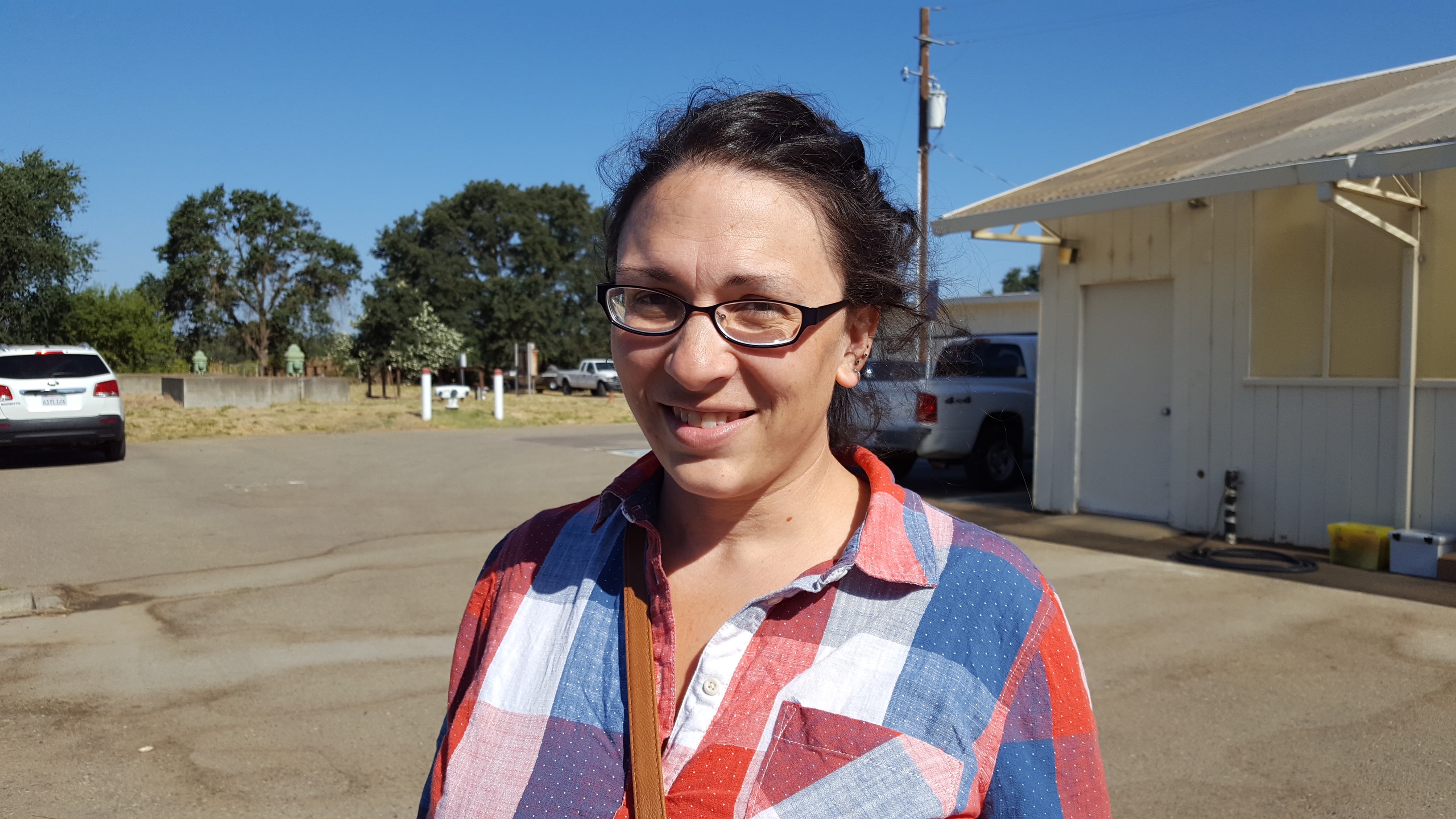
Featured photo: Jason Peltier, executive director of the San Luis & Delta-Mendota Water Authority.


California Ag Today will update readers on Bureau of Reclamation announcements about the 5% contracted water delivery federal water district growers were expecting.

2021-05-12T11:05:53-07:00July 12th, 2016|

CULTIVATING COMMON GROUND: The State of the Wealthy Class in California

CULTIVATING COMMON GROUND:

The State is Sinking, and Its Wealthy Class Is Full of Hypocrites

Editor’s note: We thank Victor Davis Hanson for his contribution to California Ag Today’ CULTIVATING COMMON GROUND.

By Victor Davis Hanson

There was more of the same-old, same-old California news recently. Some 62 percent of state roads have been rated poor or mediocre. There were more predications of huge cost overruns and yearly losses on high-speed rail—before the first mile of track has been laid. One-third of Bay Area residents were polled as hoping to leave the area soon.

Such pessimism is daily fare, and for good reason.

The basket of California state taxes—sales, income, and gasoline—rate among the highest in the U.S. Yet California roads and K-12 education rank near the bottom.

After years of drought, California has not built a single new reservoir. Instead, scarce fresh aqueduct water is still being diverted to sea. Thousands of rural central-California homes, in Dust Bowl fashion, have been abandoned because of a sinking aquifer and dry wells.

One in three American welfare recipients resides in California. Almost a quarter of the state population lives below or near the poverty line. Yet the state’s gas and electricity prices are among the nation’s highest.

Finally by Victor Davis Hanson

– Victor Davis Hanson

One in four state residents was not born in the U.S. Current state-funded pension programs are not sustainable.

California depends on a tiny elite class for about half of its income-tax revenue. Yet many of these wealthy taxpayers are fleeing the 40-million-person state, angry over paying 12 percent of their income for lousy public services.

Public-health costs have soared as one-third of California residents admitted to state hospitals for any causes suffer from diabetes, a sometimes-lethal disease often predicated on poor diet, lack of exercise, and excessive weight.

Nearly half of all traffic accidents in the Los Angeles area are classified as hit-and-run collisions.

Grass-roots voter pushbacks are seen as pointless. Progressive state and federal courts have overturned a multitude of reform measures of the last 20 years that had passed with ample majorities.

In impoverished central-California towns such as Mendota, where thousands of acres were idled due to water cutoffs, once-busy farmworkers live in shacks. But even in opulent San Francisco, the sidewalks full of homeless people do not look much different.

What caused the California paradise to squander its rich natural inheritance?

Excessive state regulations and expanding government, massive illegal immigration from impoverished nations, and the rise of unimaginable wealth in the tech industry and coastal retirement communities created two antithetical Californias.

One is an elite, out-of-touch caste along the fashionable Pacific Ocean corridor that runs the state and has the money to escape the real-life consequences of its own unworkable agendas.

The other is a huge underclass in central, rural, and foothill California that cannot flee to the coast and suffers the bulk of the fallout from Byzantine state regulations, poor schools, and the failure to assimilate recent immigrants from some of the poorest areas in the world.

The result is Connecticut and Alabama combined in one state. A house in Menlo Park may sell for more than $1,000 a square foot. In Madera, three hours away, the cost is about one-tenth of that.

In response, state government practices escapism, haggling over transgender-restroom and locker-room issues and the aquatic environment of a three-inch baitfish rather than dealing with a sinking state.

What could save California?

Blue-ribbon committees for years have offered bipartisan plans to simplify and reduce the state tax code, prune burdensome regulations, reform schools, encourage assimilation and unity of culture, and offer incentives to build reasonably priced housing.

Instead, hypocrisy abounds in the two Californias.

If Facebook billionaire Mark Zuckerberg wants to continue lecturing Californians about their xenophobia, he at least should stop turning his estates into sanctuaries with walls and security patrols. And if faculty economists at the University of California at Berkeley keep hectoring the state about fixing income inequality, they might first acknowledge that the state pays them more than $300,000 per year — putting them among the top 2 percent of the university’s salaried employees.

Immigrants to a diverse state where there is no ethnic majority should welcome assimilation into a culture and a political matrix that is usually the direct opposite of what they fled from.

More unity and integration would help. So why not encourage liberal Google to move some of its operations inland to needy Fresno, or lobby the wealthy Silicon Valley to encourage affordable housing in the near-wide-open spaces along the nearby I-280 corridor north to San Francisco?

Finally, state bureaucrats should remember that even cool Californians cannot drink Facebook, eat Google, drive on Oracle, or live in Apple. The distant people who make and grow things still matter. 

Elites need to go back and restudy the state’s can-do confidence of the 1950s and 1960s to rediscover good state government — at least if everyday Californians are ever again to have affordable gas, electricity, and homes; safe roads; and competitive schools.


Victor Davis Hanson, as described on his website, is the Martin and Illie Anderson Senior Fellow in Residence in Classics and Military History at the Hoover Institution, Stanford University, a professor of Classics Emeritus at California State University, Fresno, and a nationally syndicated columnist for Tribune Media Services.

He is also the Wayne & Marcia Buske Distinguished Fellow in History, Hillsdale College, where he teaches each fall semester courses in military history and classical culture.

Hanson was awarded the National Humanities Medal in 2007, the Bradley Prize in 2008, as well as the William F. Buckley Prize (2015), the Claremont Institute’s Statesmanship Award (2006), and the Eric Breindel Award for opinion journalism (2002).

Hanson, who was the fifth successive generation to live in the same house on his family’s farm, was a full-time orchard and vineyard grower from 1980-1984, before joining the nearby CSU Fresno campus in 1984 to initiate a classical languages program. In 1991, he was awarded an American Philological Association Excellence in Teaching Award, which is given yearly to the country’s top undergraduate teachers of Greek and Latin.


The opinions, beliefs and viewpoints expressed by the various participants on CaliforniaAgToday.com do not necessarily reflect the opinions, beliefs, viewpoints or official policies of the California Ag Today, Inc.

2016-08-09T15:32:36-07:00July 12th, 2016|

Weed Control in Rice Fields

Controlling Herbicide-Resistant Weeds in California Rice Fields

By Emily McKay Johnson, Associate Editor

Whitney Brim-DeForest, UC ANR Cooperative Extension rice farm advisor for Sutter, Yuba, Placer and Sacramento Counties in California, currently works in all rice production areas across the state to identify problematic weeds in rice fields.

Given her background in weed science, Brim-DeForest explained California rice growers flood their fields for weed suppression, as well as use herbicides for weed control and management. “I’d say that we do have quite a few herbicides right now. As we continue to get new herbicide resistant weeds every year,” said Brim-DeForest, “we are starting to run out of options, especially for some growers who encounter herbicide resistance.”

Brim-DeForest believes herbicide resistance was first discovered in the early 1990’s, but “has become significantly problematic for growers within the last 20 years. Because of the herbicides we use and the limited number that we have, we have ended up with an increasing number of weeds that are herbicide resistant every year. Since about 2000,  we’ve had a new species or herbicide that encounters resistance every year,” she stated.

Brim-DeForest treats a multitude of weed species in her line of work. “I would say the watergrass species is our biggest problem,” she noted. “We also have a weedy red rice that was discovered in the early 2000s. It is not widespread, but we do have a few fields with it,” she explained.

Featured Photo: Whitney Brim-DeForest, UC ANR Cooperative Extension rice farm advisor.

2021-05-12T11:03:00-07:00July 11th, 2016|

BREAKING NEWS: California Water Authorities Sue U.S. Bureau of Reclamation

The following is a joint statement by Jason Peltier, executive director of the San Luis & Delta-Mendota Water Authority and Tom Birmingham, general manager of the Westlands Water District on today’s filing of a lawsuit to compel the U.S. Department of the Interior, Bureau of Reclamation to reassess its Endangered Species Act (ESA)-related actions.

U.S. Bureau of Reclamation Fails to Consider the Environmental Impacts of Biological Opinions Which Have Been Devastating Communities

FRESNO, CA-TODAY the San Luis & Delta-Mendota Water Authority (SLDMWA) and Westlands Water District (WWD) filed a lawsuit in federal court to compel the U.S. Bureau of Reclamation (“Reclamation”) to examine the effectiveness of the existing measures intended to protect endangered species, the environmental impacts of those measures, and whether there are alternatives to those measures that would better protect both endangered fish species and California’s vital water supplies.

San Luis & Delta-Mendota Water Authority The existing measures, adopted in 2008 and 2009, are based on biological opinions issued under the Endangered Species Act.  The measures are responsible for the largest redistribution of Central Valley Project and State Water Project (water supplies away from urban and agricultural uses and have jeopardized the water supply for waterfowl and wildlife refuges.  Since 2008 and 2009, the farms, families, cities and wildlife that depend upon Central Valley Project and State Water Project water supplies have suffered substantial environmental and socio-economic harm from the reduced water deliveries caused by the existing measures, with little apparent benefit for fish.

Reclamation adopted the existing measures without any review under the National Environmental Policy Act (NEPA).  Federal courts, including the United States Court of Appeals for the Ninth Circuit, held this action violated NEPA, and Reclamation was ordered to perform environmental review.  The Ninth Circuit Court of Appeals wrote:

It is beyond dispute that Reclamation’s implementation of the Biological Opinions (BiOp) has important effects on human interaction with the natural environment.  We know that millions of people and vast areas of some of America’s most productive farmland will be impacted by Reclamation’s actions.  Those impacts were not the focus of the BiOp….  We recognize that the preparation of an Environmental Impact Assessment (EIS) will not alter Reclamation’s obligations under the ESA.  But the EIS may well inform Reclamation of the overall costs – including the human costs – of furthering the ESA.

The court-ordered review provided Reclamation a rare opportunity to reexamine the necessity for and the benefits of the existing measures, as well as the resulting impacts on the environment and water supplies, potential alternative measures, and new information and studies developed since 2008 and 2009.  It provided Reclamation an opportunity to make a new and better-informed choice.

Unfortunately, Reclamation neglected to take advantage of that opportunity. In November 2015 Reclamation completed an EIS that did not examine whether the measures are necessary or effective for protecting endangered fish populations.  Instead of analyzing the existing measures, Reclamation accepted them as the status quo.U.S. Bureau of Reclamation

The EIS did not identify any mitigation for the water supply lost to these measures, despite current modeling that estimated how the existing measures would reduce the annual water delivery capabilities of the Central Valley Project and State Water Project. Loss was estimated to be over 1 million acre-feet on a long-term average and in spite of years of harm caused by implementing the measures.

Nor did the EIS try to identify alternatives that could lessen these impacts.  Reclamation attempted to minimize the impacts of lost surface water supply by unreasonably assuming the lost supply would be made up from increased pumping of already stressed groundwater supplies.  In its Record of Decision issued January 11, 2016 Reclamation announced that it would continue on with the existing measures, and provide no mitigation.

It is inexplicable that Reclamation would pass up the opportunity to reassess the existing measures and make a much more careful and robust analysis than what is found in the EIS.  NEPA requires no less.

The lawsuit filed today seeks to compel Reclamation to do the right thing and perform the analysis it should have.  If successful, the lawsuit may ultimately result in measures that actually help fish, and identify mitigation activities or alternatives that lessen or avoid water supply impacts that millions of Californians in the Central Valley Project and the State Water Project depend on.

Many of those affected reside in disadvantaged communities and are already struggling to pay for a water supply made scarce by layers of other, yet equally ill-advised bureaucratic regulations.  California’s water supply is too precious for Reclamation not to make the best informed decision it can.

2021-05-12T11:00:52-07:00July 8th, 2016|

Final Feasibility Study Begins for Temperance Flat Dam

Temperance Flat Dam Would Provide Groundwater Relief, Jobs

By Patrick Cavanaugh, Farm News Director

Mario Santoyo, executive director, San Joaquin Valley Water Infrastructure Authority (Joint Powers of Authority), described the major and historic event held last week at the Friant Dam regarding the Temperance Flat Dam and California’s future water supply.

“At the event,” Santoyo said, “a Memorandum of Understanding (MOU) between the U.S. Department of the Interior, Bureau of Reclamation and the Joint Powers Authority, basically defines what the scope of work is going to be. In essence, it is full cooperation between their technical people and our Joint Powers Authority.  Our people are working on tailoring the application to the state to optimize how much money we get from them. Keep in mind, we’re talking big dollars here; we’re not talking a million or a hundred million.”

Joint Powers of Authority

At Friant Dam, a Memorandum of Understanding was signed between the Department of the Interior, Bureau of Reclamation and Joint Powers Authority for the Temperance Flat Dam.

Santoyo hopes to receive $1B in funding for the Temperance Flat Dam, although “it is going to cost somewhere around $2.8B. The maximum you could ask from the state is $1.4B. We don’t expect to be getting that because there is a lot of competition and there’s not enough dollars to go around. We’re hoping to shoot for somewhere around $1 billion,” he stated.

“In parallel with our efforts with the state,” Santoyo explained, “we’re working on the federal side with our senators and our congress members to obtain what they call a federal construction authorization—which allows the federal government to move ahead with this project. Then we work on appropriations,” he said.

Santoyo said the funding necessary to complete and complement dollars from the state will be procured in the same fashion as have projects in the past. “The Bureau of Reclamation typically funds the construction of a project and then recovers the cost through long-term water supply contracts or adjustments to existing water supply contracts,” he stated. “In this case, it would be adjustments to existing water supply contracts.”

Santoyo also noted preliminary feasibility studies are underway. Those already completed triggered the final feasibility report, “which is going through a final upper management review before being released to the public. I think we are all pretty confident it will come out in a very positive manner. I would expect that in the next sixty days,” he said.

The expected completion of the project varies. Santoyo estimated physical completion within five years,” but it has to go through design and environmental paperwork, plus legal challenges could cause setbacks as well. By the time you’re good to go, you’ll end up having this project built in probably under 15 years,” he said.

DAM CREATES NEEDED JOBS FOR VALLEY RESIDENTS

Nevertheless, Santoyo said the benefits of the Temperance Flat Dam project is to creates an economic boom and an increase in available jobs. “You’re going to be spending about $3B here for materials, labor, and everything that goes into it. It will be an economic boom; and once it’s built, we get more water reliability, creating a better situation for the farmers, and that creates employment. I wouldn’t look at waiting 15 years, it starts as soon as we start building,” he said.

“The best year for Temperance Flat is when we have high runoff periods, and we have those frequently,” Santoyo elaborated. “What I’ve determined is that there’s a 50% shot every time we have one that we will be dumping more than a million acre-feet into the ocean. That’s equivalent to a full-year of water supply for the east side of the valley. That’s a lot of water.”

DAM PROVIDES GROUNDWATER RELIEF

“The fact is, without this project, we will not be able to meet the ground water sustainability laws that exist because this water will be necessary to move underground to all these regions,” he said. “Right now, as it stands, San Joaquin River Settlement has taken away the Class II water that used by the Friant contractors to replenish the groundwater. Unless we have a means of replacing it, and that would be through Temperance Flat, we’re going to encounter very serious problems,” Santoyo noted.

“Take the typical example of a year in which we can save a million acre-feet in storage. We are not going to keep it there,” he said. “We are going to move it via the canal systems to the various groundwater recharging basins,” which capture and replenish underground water. “It’s not a matter of whether groundwater storage is better [or worse] than above-ground storage; they work in conjunction with each other to maximize storage.”

DAM SERVES A PURPOSE IN TIMES OF CRISIS

“There are a lot of conversations about the San Andreas Fault rumbling. If we had an earthquake, we could have a seismic event in the Delta,” Santoyo said. “What differentiates this project from all the other projects is that we could take Temperance Flat water and go north via the San Joaquin River to the Delta, or south via the Friant-Kern canal, across the valley canal to the California aqueduct then subsequently down to southern California,” he said.

“In a scenario of Delta failure, in which water was no longer moving to the millions of people in Southern California, that would be a crisis,” he stated, “they would be looking for help in any way, shape, and form. Temperance Flat could do that. That’s one of the public benefits being looked at by the California Water Commission, in a category called emergency services. That was written in there specifically because of Temperance’s capability.”

2016-07-08T12:22:21-07:00July 8th, 2016|

Duarte Nursery Loses Battle Against Army Corps Of Engineers

Ruling in Favor of Army Corps is Game Changer for Agriculture

By Patrick Cavanaugh, Farm News Director and Laurie Greene, Editor


Startling California family farmer, John Duarte, president of Duarte Nursery, Inc., his attorneys, and others who have also kept a close watch on the case, Duarte was dealt a serious blow recently in the biggest fight of his life—the right to farm his own property. This legal outcome may portend a game changer for American agriculture as a whole.


Background

Duarte Nursery and the U.S. Army Corps of Engineers (Army Corps) have been engaged in a long legal dispute over private property rights since the family purchased a 450-acre agricultural property in Tehama County in 2012 and planted wheat that fall.

As reported in, “Duarte Farmland Under Siege,” (California Ag Today, March 11, 2016), John Duarte recalled, “The property is in some slightly rolling grasslands, and has some minor wetlands on it, vernal pools, vernal swales. Like most grasslands, wheat areas and wheat plantings, we had a local contractor go out and plow the field for us, 4-7 inches deep, and we flew on some wheat seed for a winter wheat crop in 2012.”

The U.S. Army Corp of Engineers accused the farm of “deep ripping” the property (three feet deep), “which we were not,” Duarte said. Legal action ensued with the Army Corps issuing a cease and desist notice in early 2013, according to Duarte, without evidence or basis for their accusation. Duarte Nursery attorneys, under the Freedom of Information Act, requested evidence of deep ripping, the assumption that apparently warranted a cease and desist notice.

Without responding, according to Duarte, the Army Corps sustained the cease-and-desist notice without a hearing and without evidence. “They obstructed our farming operations indefinitely,” Duarte said in March 2016.


Current Scenario

Duarte’s attorneys are now scrambling to prepare and file appeals to Eastern District Federal Court Judge Kimberly Muller’s June 10 ruling that by plowing his land to grow wheat, Duarte could pollute vernal pools on his land, violating the Clean Water Act.

Pacific Legal FoundationOn behalf of Duarte Nursery, Pacific Legal Foundation attorneys have moved for reconsideration or certification for immediate appeal on several Clean Water Act issues. “We expect a decision from the court any day on this motion, which will determine whether Duarte Nursery can immediately address the trial court’s legal errors in the appellate court, or will have to go through a trial first on whether the government is entitled to a penalty.” (Source: “Duarte Nursery seeks immediate appeals in Clean Water Act case,” Tony Francois, Pacific Legal Foundation, June 30, 2016)


Reaction to the Ruling

California Farm Bureau Federation and Pacific Legal Foundation attorneys had great confidence that Duarte would be vindicated in the action brought by the Army Corps several years ago. “They are just astounded,” Duarte said. “I thought we might have to go to trial on some of our issues, but I did not think we would lose our issues and have the judge rule against us on the other side,” he said.

Duarte clarified, “We are talking about farming activity that only occurred on rolling land—land with dismal vernal pools and flails.” Duarte noted there is no controversy as to whether this tillage was four to six inches deep. “Both sides agreed this is four to six inch deep tillage. Both sides agree that this property had farmed wheat before,” he said.


Legal Implications

“The Army Corps’ position is they don’t know how long is too long, but at some point if you haven’t farmed wheat, you lose your ability to continue farming wheat,” Duarte continued. “As it is a rangeland, you cannot plow your ground without a permit from the Army Corps, which they’re not going to grant because there are wetlands,” he said.

John Duarte, president of Duarte Nursery.

John Duarte, president of Duarte Nursery.

“All of the Food Security Act protections for farming—our ability to idle ground and then bring it back into production—to ensure available food production resources—are gone,” Duarte said. “This is a very extreme ruling. It’s extreme of the law in a lot of different ways. It’s a game changer for agriculture. We’re meeting with Paul Wenger, the president of the California Farm Bureau and seeing what they want to do. I think it’s on a lot of folks’ radar,” said Duarte.

“According to the Clean Water Rule definition of “Waters of the United States” (WOTUS), everything is a wetland and farmers are not exempt,” Duarte stated. “Any tillage that the Army Corps, by their own standards, does not deem to be an ongoing agricultural operation, farmers have liability. Their settlement discussions were in the $5 million to $6 million range, and we’re talking about shallow tillage through vernal pools that covered maybe fourteen or sixteen acres over this property. We can show that those vernal pools are completely intact,” noted Duarte.

Duarte noted that consultants have been at the land to inspect the vernal pool wetlands that concern the Army Corps of Engineers, and have confirmed that all the biology has been restored. “It’s all wetland plants across the vernal pools. They’re not topographically damaged,” said Duarte. “We didn’t re-contour them, we didn’t till them, we didn’t grade them, we didn’t deep rip them such that the restrictive layers of soil no longer perched water—none of that,” he emphasized.


A Game Changer for Ag

“Every property owner should be concerned,” Duarte warned. “Basically, what they’re saying is if wheat is profitable for a window of time because of whatever market or geopolitical reasons, you can farm wheat. If you stop farming wheat for a decade because it’s not profitable, or because you have a lease with a cattleman who’s paying you decent money, or you just don’t have the capital to plant wheat, or you just don’t want to plant wheat, then you will lose the right to farm it in the future. You cannot adjust your farming enterprises to the markets or to your business plans or you will lose your right to farm.”

Duarte believes that the ultimate goal of the Army Corps of Engineers is to be able to tell you what you can and can’t do with your land on any given day. “They want simple control over how you use your property and discretion over what property is put into permanent habitat and what property remains rangeland. They do not believe that private landowners have any inherent right to farm their property to meet market demands.”

As for the ruling, Duarte said he plans to appeal it. “This ruling is in many ways right in the face of several completions that have come down in court last week,” he said. “A lot of this ruling hinges on the opinion in Rapanos v. United States, where senior Associate Justice of the Supreme Court of the United States Anthony Kennedy said wetlands either have to be navigable waters of the United States or tributaries or related.

As summarized in, “The Practical Application of the Significant Nexus Test: The Final Waters of the US Rule,” (by Lowell M. Rothschild, National Law Review, June 8, 2015):

The significant nexus test requires a determination of whether the water in question – alone or in aggregation with other similarly situated waters in the region – significantly affects the chemical, physical or biological integrity of a traditionally navigable or interstate water or the territorial sea (with “significant” meaning “more than speculative or insubstantial.”). The “region” is the watershed that drains to the nearest traditionally navigable or interstate water or the territorial sea, and waters are “similarly situated” when they function alike and are sufficiently close to function together in affecting downstream waters.
supreme court building

“That was one judge, who had none of the other eight judges agreeing with him,” said Duarte. Nevertheless, Duarte said Justice Kennedy was not correct. “We had four judges that said navigable is navigable. If the Clean Water Act says it exempts, it defines what jurisdictional waters are navigable waters in the United States, and then it defines what jurisdictional waters are. If you look in the Clean Water Act, it says that plowing shall never result in a discharge into waters of the United States,”  said Duarte.

“The language in the exclusion of the Clean Water Act is very clear. What this case tells us is that no regulatory legislation can be created with language that is durable to give private parties any protection with the government,” Duarte explained. “There’s no language clear enough that over time will be undermined by agency rule making and judges that give American public any protection against the government.”

“I don’t know how we will solve problems legislatively in the future,” he remarked. “I don’t know that any responsible Congress can pass a law that restricts activity, no matter what the protections,” Duarte said, clearly frustrated. “The Clean Water Act’s protections are incredibly clear. It is not badly worded. The protections are in there. The protections are careful; they’re clearly articulated; they’re very strong, and they’re completely obliterated,” he said.

Duarte is disappointed and has a long way to go in the appeals process. “All I can say is: Warning to all farmers across the land—this is what can happen. We’re just not strong enough, nor is it right for us to carry this entire thing; my family has already spent $1.5 million defending this case, and it’s likely to go to $2 million. We are going to be looking for help.”

___________________

2016-07-23T17:16:17-07:00July 7th, 2016|

Historic Temperance Flat MOU Signing

Assemblymember Bigelow on Historic July 1 MOU Signing

By Patrick Cavanaugh, Farm News Director

East of Fresno at Friant Dam last Friday, July 1, the San Joaquin Valley Water Infrastructure Authority (SJVWIA) and the United States Department of the Interior, Bureau of Reclamation signed an historic Memorandum of Understanding to coordinate and complete feasibility studies of the proposed Temperance Flat Dam. 

Historic July 1, 2016 MOU Signing for Temperance Flat Dam

Historic July 1, 2016 MOU Signing for Temperance Flat Dam

State Assemblymember Frank Bigelow, 5th Assembly District (serving a large portion of Madera County, along with all the foothill and mountain communities north of Madera to the Sacramento area) noted the critical importance of getting Temperance Flat Dam built to store freshwater for the citizens and farmers of California.

Bigelow, a Madera rancher and farmer of pistachios, figs, and persimmons, said, “This is a huge event to enable us to have additional [water] storage. I just am so thankful to the people who put the water bond forward. Without the money that the people have made possible by voting to support the water bond, none of this would be possible; that’s a clear message.”

Friant Dam and Millerton Lake State Recreation Area

Friant Dam and Millerton Lake State Recreation Area (Source: U.S. Bureau of Reclamation)

“Without water,” Bigelow explained, “none of our communities would continue to survive in the way they have for years and years. Much of the water we see is being used in different ways; it is not all going to agriculture, and it is not all going to residential. It is going to the environment. So we’ve got to divide that up by the law now, and in equal proportional value.”

“Right now,” he detailed, “Millerton Lake captures 526,000 acre-feet of [fresh] water, but we have millions of lost acre-feet that flow past every year into the Delta, then ultimately to the ocean.” Upon completion, the Temperance Flat Dam would hold more than twice the amount of water that Friant Dam holds—”especially important for capturing freshwater during heavy rain and snow years,” noted Bigelow.


2016-07-07T10:05:08-07:00July 7th, 2016|

Recycled Water Project for Water Stability, Part 2

North Valley Regional Recycled Water Program Projected Completion

By Brian German, Associate Editor

In our continued coverage of the monumental North Valley Regional Recycled Water Program (NVRRWP), Anthea Hansen, general manager of the Del Puerto Water District, talked about the projected completion for the project.

Anthea Hansen, general manager, Del Puerto Water District

Anthea Hansen, general manager, Del Puerto Water District

“We estimate the pipeline will be completed by December 2017—less than two years,” Hansen stated. “The first year’s combined quantities, if both cities (Turlock and Modesto) are online at the start date, will be somewhere between 25K and 30K acre-feet per year,” Hansen calculated.

NVRRWP will convey recycled water from Turlock and Modesto, currently being discharged into the San Joaquin River, instead to the Delta-Mendota Canal via pipeline for storage purposes and later use. “The sense that we all have here,” said Hansen, “is that this transaction and this accomplishment will change the future of the Del Puerto Water District for the better. It will give us some stability in our base [water] supply that we know will come year in and year out.”

After many years of working with various agencies and collaborating with  multiple cities, the project has passed all of its major hurdles and is set to break ground within the next few months. Using recycled water from treatment plants will reduce reliance on unsustainable groundwater supplies and also lower the amount of water pumped from the Delta.

NVRRWP map recycled water

NVRRWP map (Source: NVRRWP map)

“People use water in the cities every day, 365 days a year,” explained Hansen. “The reliability of the supply is so important to us because, for such a long time, we have not had reliability in our water supply,” Hansen noted.

“We have 40-year agreements in place with both cities,” she continued. “As a result of the program, even in the first years, each irrigable acre in the district will receive somewhere between one half to three-quarters of an acre-foot of guaranteed water supply, year in and year out.”

Hansen added the project will sustain a growing population. “Over time,” she remarked, “as the cites grow and the populations expand, the quantities of water are projected to grow over the build-out period for the project.”

______________________________

See Also: Recycled Water Project for Water Stability, Part 1, “North Valley Regional Recycled Water Program: A New Water Source for Valley Farmers,” June 14, 2015.

Additional Benefits of the North Valley Regional Recycled Water Program

2021-05-12T11:05:53-07:00July 5th, 2016|

Temperance Flat Dam Brings Five Valley Counties Together

Key July 1 Signing Ceremony to Launch Temperance Flat Dam Process

by Patrick Cavanaugh, Farm News Director

Mario Santoyo, executive director of the San Joaquin Water Infrastructure Authority (SJWIA), which represents the five-county joint powers of authority in the Central San Joaquin Valley, has announced an important event will launch the process needed for Temperance Flat Dam: the Temperance Flat Project Partnership Agreement Signing Ceremony outside Old Fresno County Courthouse overlooking Millerton Lake at 10 a.m. sharp on Friday, July 1, 2016.

USBR Water“This is a major event, a significant milestone in terms of the process to get Temperance Flat Dam built.” Santoyo said. “In essence, it is a partnership between the new joint powers of authority and the U.S. Bureau of Reclamation, and, more specifically, their study team who worked on the technical studies and the feasibility reports for Temperance Flat.”

Merced, Fresno, Kern, Kings and Tulare Counties are joining forces with leaders of cities, Tribes, and other agencies to begin this significant move towards building the Temperance Flat Dam. “Working together, we are going to put the application together and submit it to the California Water Commission for their consideration for funding through Proposition 1, Chapter 8,” Santoyo said.  “It’s a solid statement that needs a signature.”

“It’s a memorandum of understanding between the Bureau of Reclamation and the joint powers of authority,” he said, “that defines the scope of work. In essence, it’s full cooperation between their technical people and our joint powers of authority. Our people are tailoring the application to the state to optimize funding. Keep in mind, we’re talking big dollars here; we are not talking a million or a hundred million; we are talking a billion.”

Temperance Flat Dam would create nearly 1.3M acre-feet of new water storage, according to the SJWIA, 2.5 times the current capacity of Millerton Lake, and would be a part of the Federal Central Valley Project.

“Chapter 8, which is the storage chapter in Prop 1, has $2.7 billion in it,” Santoyo explained. “Projects that are submitted for funding are limited to up to 50% of the capital costs of their project. If we were to take Temperance Flat, for instance, that’s going to cost somewhere around $2.8 billion. The maximum you could ask from the state is $1.4 billion, but we don’t expect that because there is a lot of competition. There’s not enough dollars to go around. We’re hoping to shoot for somewhere around $1 billion.”

“I see [the July 1 event] as being historic,” Santoyo reflected, “because it is one of the most critical things to happen—to be able to build Temperance Flat, as well as a good opportunity to be at a place where history’s being made.”

__________________________

For more information, contact Mario Santoyo at 559-779-7595.

Featured image: Mario Santoyo, executive director of the San Joaquin Water Infrastructure Authority (SJWIA)

2021-05-12T11:05:53-07:00June 29th, 2016|

JUST RELEASED: Monterey County Ag Value Up Nearly Eight Percent

Monterey County 2015 Crop Report Shows Ag Value Up 7.75 Percent

By Patrick Cavanaugh, Farm News Director

Monterey County Ag Commissioner Eric Lauritzen announced TODAY the production value by farmers in Monterey County for 2015 is $4.84 billion, an increase of 7.75% or $348 million over the previous year. According to the the 2015 Monterey County Crop Report released TODAY, the Monterey is again the fourth highest Ag producing county in California, following Tulare, Kern, and Fresno Counties.Lettuce fields

“Crop values vary from year to year based on production, market and weather conditions,” said Lauritzen. “As often the case, there was much fluctuation in the 2015 values, with 22 commodities down and 29 commodities increasing in value.

Notable results include:

  • head values increased 12% on better pricing.
  • Head lettuce showed a decline of 2% with fewer acres planted but higher prices.
  • Spring mix and salad products also declined in overall value.
  • Strawberry values increased by 21% on increased acreage and higher production.
  • Cauliflower and celery each saw values increase by approximately 25%. Celery showed a decrease in production with stronger pricing and cauliflower posted increases in both production and pricing.
  • Winegrapes declined 25% in 2015, after above-average production in previous years. This followed the statewide trend, with lower production and slightly higher prices.
  • Despite reduced acreage related to the drought, the value of nursery products increased by 11% on stronger pricing for many products.
Monterey County Strawberries

Monterey County Strawberries

“It is always important to note that the figures provided here are gross values and do not represent or reflect net profit or loss experienced by individual growers or by the industry as a whole,” Lauritzen clarified. “The numbers are big and only tell part of the story. It’s really about diversity and the ability to withstand changes, whether it is commodity change or Mother Nature,” said Lauritzen. 

“Growers do not have control over increased input costs such as fuel, fertilizers and packaging, or drought and labor shortage conditions,” Lauritzen explained, “nor can they significantly affect market prices. The fact that the gross value of agriculture increased reflects positively on the diversity and strength of our agriculture industry and its ability to respond to the many challenges,” he noted.

“The mainstays in Monterey County are the cool season vegetables,” said Lauritzen. “County growers are able modify planting programs even within the same year depending on market strengths or changes in consumer needs. When the cable food shows or restaurants decide to feature certain vegetable there is suddenly increase demand so Monterey County growers are often flexible in their planting schedules to meet demand.

“The Salinas Valley floor is very tight on acreage and available land planted out on the bench lands,” he said. “And growers are being asked to produce more with the same amount or even less ground and we are seeing that it increases prices,” he noted.winegrapes

“Each year we like to highlight a component of the industry in our report,” Lauritzen elaborated, “and this year we chose Certified Farmers Markets. We include a short piece on some of the people who produce and sell their own products directly to consumers at the 14 markets in Monterey County and elsewhere,” he said. “This important segment of our industry lets consumers meet farmers face-to-face and to become more directly connected with the food they eat.”

“Monterey County is proud to produce the crops that are healthy for the nation,” Lauritzen said, “and if consumer demand really matched what we need for a healthy diet, there would not be enough vegetables produced. We produce the food that consumers need to eat and it’s not just an economic driver for our region, but for the health of our nation,” he added.

“This 2015 Crop Report is our yearly opportunity to recognize the growers, shippers, ranchers, and other businesses ancillary to and supportive of agriculture, which is the largest driver of Monterey County’s economy,” Lauritzen summarized. “Special recognition for the production of the report goes to Christina McGinnis, Graham Hunting, Shayla Neufeld, and all of the staff who assisted in compiling this information and improving the quality of the report.”

2021-05-12T11:05:54-07:00June 28th, 2016|
Go to Top