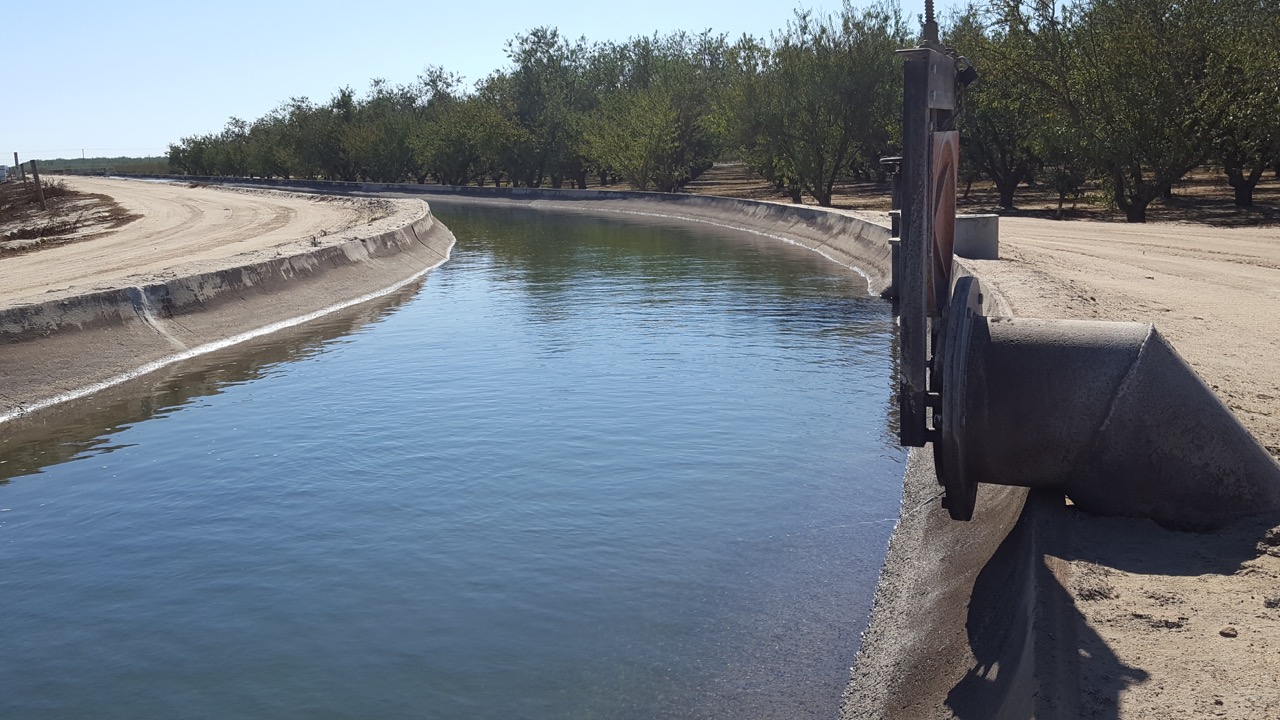
Halting the Sacramento Water Grab

Rep. Denham calls on Congress to halt Sacramento Water Grab by enacting Denham Amendment

News Release Edited By Patrick Cavanaugh, Editor

 Recently, U.S. Representative Jeff Denham (R-Calif.), along with thirteen of his California colleagues, sent a letter to Speaker of the House Paul Ryan (R-Wis.) to make sure Rep. Denham’s House-passed amendment to stop Sacramento’s water grab is included in the next spending bill that is signed into law.

“My amendment halts the disastrous Bay-Delta Plan that would see 40 percent of our water flushed out into the ocean,” Rep. Denham said. “Congress must act to protect the Valley.”

Rep. Jeff Denham, photo courtesy of his Facebook page

 Rep. Denham’s amendment to stop the state’s dangerous water grab passed the U.S. House of Representatives in July as part of a Department of the Interior appropriations bill and put a major spotlight on this issue. The amendment, currently awaiting a vote in the Senate, prohibits federal agencies from participating in the state’s plan to deplete the federally-owned New Melones reservoir, which provides water for the Central Valley Project and generates hydropower.

Sacramento’s plan would drain significantly more water from New Melones each year, potentially leaving it completely dry some years.

Sacramento’s planned water grab would do irreparable damage to Central Valley communities, directly interfering with the New Melones Project’s ability to store water and the Central Valley Project’s ability to deliver water.

The plan would subvert the will of Congress and jeopardize a significant portion of the nation’s agricultural productivity. Following a visit to New Melones at the request of Rep. Denham, Secretary of the Interior Ryan Zinke sent a letter to the State Water Resources Control Board highlighting serious concerns with the plan and directed his agencies to propose a new plan to maximize water storage and resolve issues with the state, among other directives. 

Rep. Denham will continue fighting to protect Central Valley water, support science-driven river management plans that revitalize our rivers without recklessly wasting water, and push major policies like the New WATER Act that will solve California’s water storage crisis and keep the Valley fertile and prosperous for generations to come.
2018-09-10T16:47:28-07:00September 10th, 2018|

State Water Resources Control Board Grab for Salmon Will Impact Federal Water

Feds and State Usually Do Not Work Well Together

By Jessica Theisman, Associate Editor

California Ag Today continues our report on the recent water rally in Sacramento at the capital building. Farmers and stakeholders attended to protest the California State Water Resources Control Board Proposed Water Grab 40 percent of the water from the Stanislaus, Tuolumne, and Merced rivers redirected to increase flows for salmon.

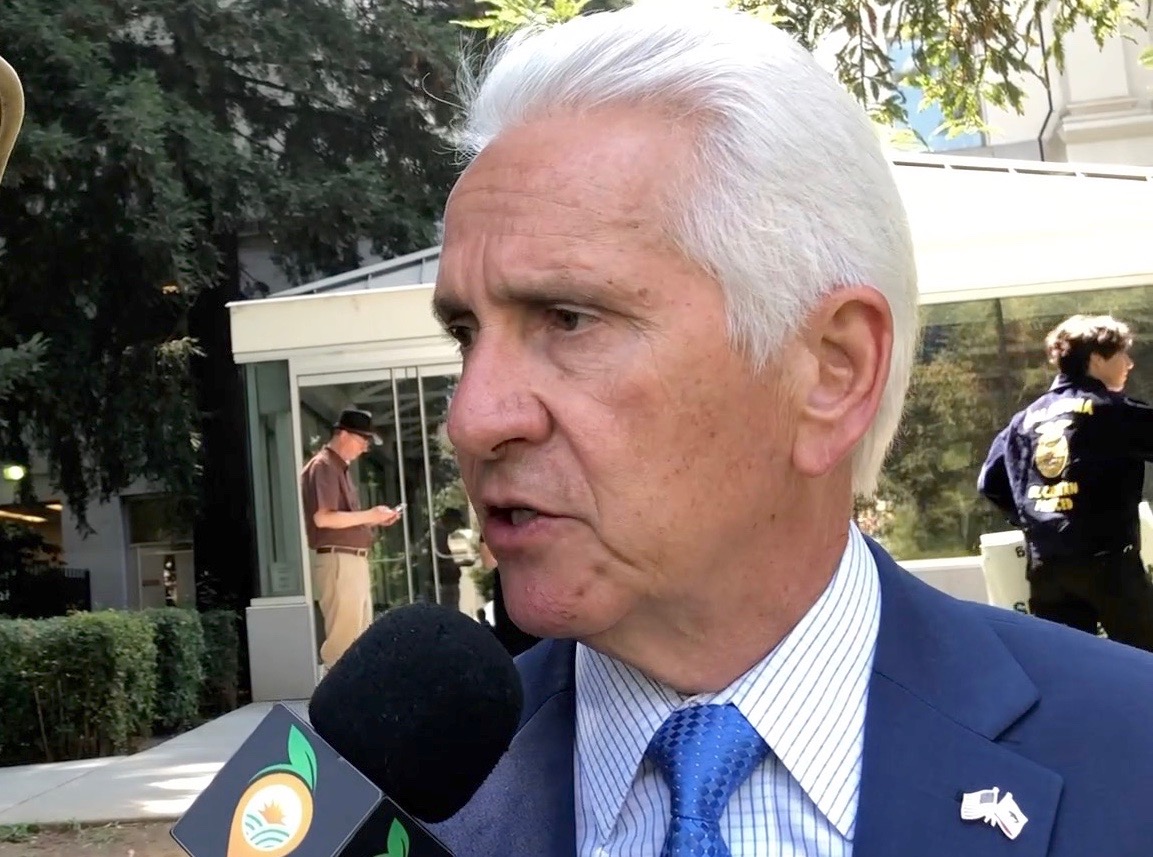
U.S. representative for the 16th district Jim Costa explained how federal and state water projects would be drastically impeded.

There are distinctions between state and federal laws as relates to water. However, there are federal water projects. In this case, New Melones  Dam, a Federal Central Valley Water Project site, will be severely impacted, which could be a problem for the Water Board’s plan,” Costa said.  “With all of the challenges in water, none in the last 20 years have worked together between the Central Valley Water Project and the State Water Project.”

 Adam Gray, 21st district assemblymen representing Merced and Stanislaus counties, explained the fight with the water resources board over the years.

“For the six years I’ve been in the assembly, we have been fighting this fight with the state water board, and despite repeated concerns that we have raised, testimony that I provided and members of my community have provided, the state continues to ignore the concerns and the farmers are not happy,” Gray said. “We are going to raise our voices as loud as they need to be and talk to whoever we need to talk to to get a fair deal on this.”

“The irrigation districts have science-based plans that involve habitat restoration, water, rebuilding a river, and dealing with non-native predators,” he said. It is not going to be easy, and it is going to take sacrifice to make a fair deal. All they want to do is take, take, take, and it is all water with no consideration for those other things.”

2018-09-03T16:47:21-07:00September 3rd, 2018|

Steve Malanca Voices Frustration Regarding Water Grab

More Water Storage is What is Needed

By Jessica Theisman, Associate Editor

At the capitol building in Sacramento, more than one thousand farmers and other stakeholders attended a big rally to protest the California State Water Resources Control Board’s proposed water grab of 40 percent of the water from the Stanislaus, Tuolumne, and Merced rivers to increase flows for salmon. California Ag Today met with Steve Malanca, co-founder of My Job Depends on Ag, as he explained the concerns for water storage.

“Being in western Fresno County at Ground Zero, where the water take has been going on for 30 years, we have continually asked for more storage,” he said.

Steve Malanca

Steve Malanca

The lack of surface delivery water and the lack of storage in the state of California is not good for anyone.

“The fish need water. The farms need water. We need fresh drinking water, and the problem continues to get worse with the amount of water we lose every winter out to the ocean,” Malanca said. “If that water could be saved and properly stored … this would generate more cold water for the salmon to live and spawn in. We just want them to know that we need help, but we need more water.”

U.S. Representative for the 16th district Jim Costa also attended the water rally and explained the devastating impact of the water restrictions.

“If there are 40 percent unimpeded flows were allowed to go through, it would have a devastating impact on those counties,” Costa said.

Jim Costa

California has reallocated water in the past and has not had very good results.

“What we have really got to do is talk about other proposals that take into account habitat, non-native predator species, non-point discharge and a balance that makes sense,” Costa said.

2018-08-31T16:38:58-07:00August 31st, 2018|

Almond Farmer Fights Back Against the State Water Grab

“Hundreds of Years of Property Rights Taken Away”

By Hannah Young, Associate Editor

More than 1,000 farmers, stakeholders, and supporters attended a rally in Sacramento protesting the California Water Resources Control Board’s proposed water grab.

This water grab will affect the Stanislaus, Tuolumne, and Merced rivers, redirecting 40% of the water to increase flows for salmon population.

Tim Sanders, an almond grower in Stanislaus County, described the catastrophic effects this water grab will have on Valley farmers.

“The scarier part about this, they’re trying to change hundreds of years of water rights,” Sanders said. “If they can take our water rights with this grab, they can take anybody’s water rights, so everybody in California should be concerned about this.”

Sanders explained how this is proposed water grab is a real government overstep.

“Our area is one of the few areas in the state that aren’t in extreme overdraft of groundwater, and it’s because we can do irrigation,” Sanders said. “We can recharge our aquifers all the time.”

If the state takes surface water from these growers, they will have to rely on their pumps extracting water from the ground, which could put them in a situation where they’ll be impacted by the Sustainable Groundwater Management Act.

“We’ve got a good system working. They just need to leave us alone or come to us at the table and be willing to compromise, talk to us,” Sanders said.

2018-08-29T16:36:15-07:00August 29th, 2018|

Assemblyman Adam Gray Speaks Out on Water Grab

Water Board Must Understand the Impact of Taking Water from Farms and Communities

By Patrick Cavanaugh, Editor

At the recent Water Rally in Sacramento, more than 1000 farmers and other stakeholders were protesting the California Water Resources Control Board, which is proposing a water grab of 40 percent of the water from the Stanislaus, Tuolumne, and Merced Rivers to increase flows for salmon. According to Adam Gray —21st District State Assemblyman, representing Stanislaus and Merced—counties said that large losses would occur in jobs and profits if the water grab is implemented.

“This is thousands of jobs and billions of dollars of economic loss to agriculture, to California, and we can’t afford that,” Gray said. “Not to mention the impact on drinking water in communities. Most of the communities in my district are on well water, and what people don’t think about is when you take water away from farmers and that water doesn’t go back into the ground. That further depletes our groundwater and our aquifers, and it creates more subsidence and environmental issues.”

Gray said that this is not about the environment versus business, or fish versus people. This is about the whole community, the schools, the ag economy and a lot of job losses for the people he represents.

“It’s dishonest; the Water Board is not admitting that there’s going to be an impact in the affected areas. They say farmers are going to offset the water losses by pumping more. Well, you and I both know with the implementation of SGMA and all of the other challenges, that’s not a reality,” he said.

“So how about we sit down and come up with a water plan that takes everybody’s needs into consideration and again, I’m not an us versus them advocate,” he said. “Southern California needs water, the coast needs water, northern California needs water and the San Joaquin Valley needs water. How about we sit down and make a water infrastructure plan for the next hundred years that serves all Californians.”

Gray said the farming community will stand up for the investments made to secure water.

“We are not going to lie down. We’re not going to apologize for being a farming community,” he said. “We’re going to stand up; we’re going to defend the investments we’ve made and the long-term planning we did, and we’re going to ask the state to step up and do some of their own.”

2018-08-28T16:40:28-07:00August 28th, 2018|

Gubernatorial Candidate John Cox Denounces State Water Resources Board

John Cox Joins Farmers and Agricultural Community in Calling to #StoptheWaterGrab 

News Release Edited By Patrick Cavanaugh

Gubernatorial candidate John Cox issued the following statements on the California State Water Resources Control Board’s recently proposed water plan that would divert between 350,000 and 1.7 million acre-feet of water away from Central Valley farmers annually.

The California Farm Water Coalition estimates the financial impact to Valley communities could be over $3 billion annually, with 6,500 jobs lost as a result.

Cox visited Fresno County last month to express support for the proposition 3 water bond. This announcement was ahead of visits to Fresno and Bakersfield.

“I am deeply disappointed yet sadly not surprised by the decision by the State Water Resources Control Board addressing flows on the San Joaquin river,” Cox said. “The complete failure of the Sacramento establishment to provide the necessary funding, authorization, and will to build adequate surface water storage is the single greatest reason California continues to suffer unnecessary water shortages. Even the most recent approval of funds by the California Water Commission for both the Sites and Temperance Flat reservoirs are but a fraction of the funds needed to complete these two vital water storage projects.”

“The time for action is long overdue and they need to stop the water grab,” Cox said. “As Governor, I and my appointments to all California boards and commissions—but in particular the State Water Resources Control Board and the California Water Commission—will take the steps necessary to develop sufficient water storage for California’s residential, agricultural, and business needs, while protecting our aquatic environment, the Delta, and our oceans.”

“Gavin Newsom is the very embodiment of the ‘Sacramento political class’ that ignores the plight of everyday Californians,” Cox said. “He will continue to spend countless billions of hard-earned tax dollars on proven failures like the so-called High-Speed Rail project rather than demand construction of essential water storage infrastructure to meet California’s needs—including environmental purposes, which today already use more water than all California agriculture.”

2018-08-27T16:18:00-07:00August 27th, 2018|

Interior Secretary Zinke Agrees: Sacramento Water Grab “Unacceptable”

Zinke Directs Staff to Propose New Plan

News Release

Secretary of the Interior Ryan Zinke’s visit to Don Pedro and New Melones Reservoirs at the request of U.S. Representative Jeff Denham (R-Turlock) continues to yield results for the Valley, with Secretary Zinke issuing an internal memo Friday declaring the state’s proposed water grab an “unacceptable restriction” that reduces the Department of the Interior’s ability to deliver water and directing his agencies to propose a plan within 25 days to maximize water supply, construct new water storage, and resolve issues with the state, among other directives.

“After our tour of local reservoirs, Secretary Zinke recognizes that Sacramento’s water grab would cripple our communities, farms and water storage infrastructure,” Denham said. “Our water, our water rights, and our future depend on stopping this wasteful plan.”

Rep. Jeff Denham, photo courtesy of his Facebook page

Previously, the Bureau of Reclamation, within the Department of Interior, issued an official comment on the state’s proposed water grab, noting the plan “directly interfere[s] with the New Melones Project’s ability to store water” and “elevate[s] the Project’s fish and wildlife purposes over the Project’s irrigation and domestic purposes contrary to the prioritization scheme carefully established by Congress.”

The agency’s comment also specifies that siphoning off at least 40 percent of the Central Valley’s rivers during peak season would result in significant reductions in water storage at New Melones and result in diminished power generation as well as recreational opportunities. The agency recommends the Board reconsider and postpone the scheduled August 21-22 public meeting to allow for “additional due diligence and dialogue.”

Recently, Denham’s amendment to stop the state’s dangerous water grab passed the U.S. House of Representatives as part of a Department of the Interior appropriations bill, and put a major spotlight on this issue. The amendment, currently awaiting a vote in the Senate, prohibits federal agencies from participating in the state’s plan to deplete the federally owned New Melones reservoir, which provides water for the Central Valley Project and generates hydropower.

Sacramento’s plan would drain significantly more water from New Melones each year, potentially leaving it completely dry some years. This would put in jeopardy critical water supplies for Central Valley farmers and communities who rely on the water for their homes, businesses, farms, and electric power. The amendment takes this issue head-on to protect Valley water.

Denham will continue fighting to protect Central Valley water, support science-driven river management plans that revitalize our rivers without recklessly wasting water, and push major policies like the New WATER Act that will solve California’s water storage crisis and keep the Valley fertile and prosperous for generations to come.

See the memo from Secretary Zinke here, or to read the full comment from the Department of the Interior on the state water grab plan, click here. For more information about what Denham is doing to fight for water in the Valley, visit www.Denham.house.gov/water, where you can also sign up to receive periodic updates on his work in Washington to improve local water infrastructure, storage and delivery.

2018-08-21T16:55:08-07:00August 21st, 2018|

Irrigation Improvement Continuum Part of Almond Board’s CASP

California Almond Sustainability Program Offers Big Help to Growers

By Patrick Cavanaugh, Editor

The Almond Board of California has an Irrigation Improvement Continuum, which is part of the California Almond Sustainability Program (CASP). California Ag Today recently spoke with Spencer Cooper, senior manager of irrigation and water efficiency with the Almond Board of California, about the program.

CASP

Spencer Cooper, Almond Board

The Irrigation Improvement module allows growers to move through from the most basic to the most advanced.

“We’re key on growers understanding the fundamentals and foundation of irrigation management practices,” Cooper said. “The more we can get out there with growers understanding the basics, the more we can advance and continue to be progressive and leaders in the industry.”

Cooper said if growers sign up for CASP at SustainableAlmondGrowing.org and complete all nine modules, growers will receive a copy of the Almond Irrigation Improvement Continuum, a 154-page of soup to nuts on irrigation management that has taken more then 40 years of research that almond growers have funded.

2018-08-10T15:26:54-07:00August 10th, 2018|

Proposition 3 Water Bond on Nov. Ballot

Initiative Would Fund Urgent Water Projects

By Patrick Cavanaugh, Editor

California Proposition 3, the Water Infrastructure and Watershed Conservation Bond Initiative, will be on the 2018 ballot. A yes vote supports the measure to authorize $8.8 billion in general obligation bonds for water infrastructure, groundwater supplies and storage, surface water storage and dam repairs, watershed and fisheries improvements, and habitat protection and restoration.

If passed, the bonds will help fix subsidence issues and the Friant Kern canal. If passed, this bond is sure to go to fixing things instead of being taken hostage by the California Water Commission and not used as it was intended.

Jason Phillips

Jason Phillips, CEO of the Friant Water Users Authority, which operates the Federal Friant Kern canal said, “It is real money that will be used. And I think what California will realize is that there’s a real need for that, and when you look at the size of California and the fact that the bond will fund projects that go from as far down as San Diego and the Salton Sea, and as far north to support the repairs needed Oroville Dam, it’s a 100 percent bond that would fund it, no reimbursement required, and the money would come straight to the Friant Water Authority to be used immediately.”

“We’ve already worked with Department of Water Resources to make sure that when the bond passes, we could start submitting requests for some of that funding immediately to start working on the canal in November 2018,” he said.

The subsidence along the canal is a big problem, and it’s growing. The worst part of it is in the middle of the 152-mile canal. The capacity of the canal has been reduced by about 60 percent, and that causes significant problems when there’s high demand, such as the middle of summer when the farmers need the water to put on their crops.

“It’s in the middle of summer, everybody’s asked for water, and we’re not able to move everything, so we have to turn people down and so what do they do? They have to turn on groundwater wells to supplement, and that is the problem that is causing more subsidence and right now,” Phillips explained.

Phillips said the canal, at it’s worse spot is, is sinking at about an inch a month.

Go to waterbond.org for more information.

2018-08-02T14:12:44-07:00August 2nd, 2018|

Interior Dept: Water Grab at New Melones Devastating for Central Valley

Comments Come After Secretary of the Interior’s Visit

News Release from the Office of Rep. Jeff Denham

Following Secretary of the Interior Ryan Zinke’s visit to Don Pedro and New Melones Reservoirs at the request of U.S. Representative Jeff Denham (R-Turlock), the Department of Interior issued an official comment on Friday regarding the State Water Resources Control Board’s proposed water grab.

The Department of Interior’s comment notes that the proposed water grab “directly interfere[s] with the New Melones Project’s ability to store water” and “elevate[s] the Project’s fish and wildlife purposes over the Project’s irrigation and domestic purposes contrary to the prioritization scheme carefully established by Congress.” Interior’s comment also specifies that siphoning off at least 40 percent of Central Valley’s rivers during peak season would result in significant reductions in water storage at New Melones and result in diminished power generation as well as recreational opportunities. DOI recommends the Board reconsider and postpone the scheduled August 21-22 public meeting to allow for “additional due diligence and dialogue.”

Rep. Jeff Denham, photo courtesy of his Facebook page

“Sacramento’s radical water grab would cripple the Central Valley’s economy, farms and community.  Secretary Zinke saw that when he visited New Melones and Don Pedro reservoirs with me last week,” Denham said. “They cannot drain our reservoirs and ignore our concerns.  I will continue fighting to make sure Central Valley voices are heard.”

“Under Sacramento’s plan, the Valley will suffer skyrocketing water and electricity rates.” Denham explained. “After a decade and millions of our money spent on a study that they required, the board ignored the science based proposal that would save our fish while preserving our water rights.  We will not allow them to take our water and destroy our way of life”

Last week, Denham’s amendment to stop the state’s dangerous water grab passed the U.S. House of Representatives as part of a Department of the Interior appropriations bill, and put a major spotlight on this issue. The amendment, currently awaiting a vote in the Senate, prohibits federal agencies from participating in the state’s plan to deplete the federally owned New Melones reservoir, which provides water for the Central Valley Project and generates hydropower. Sacramento’s plan would drain significantly more water from New Melones each year, potentially leaving it completely dry some years. This would put in jeopardy critical water supplies for Central Valley farmers and communities who rely on the water for their homes, businesses, farms, and electric power. The amendment takes this issue head-on to protect Valley water.

Denham will continue fighting to protect Central Valley water, support science-driven river management plans that revitalize our rivers without recklessly wasting water, and push major policies like the New WATER Act that will solve California’s water storage crisis and keep the Valley fertile and prosperous for generations to come.

To read the full comment from the Department of the Interior, click here. For more information about what Denham is doing to fight for water in the Valley, visit www.Denham.house.gov/water, where you can also sign up to receive periodic updates on his work in Washington to improve local water infrastructure, storage and delivery.

2018-07-31T21:47:56-07:00July 31st, 2018|
Go to Top