President Signs Rep. Jeff Denham’s Water Storage Legislation

President signs Denham Water Storage Legislation

News Release Edited By Patrick Cavanaugh

 President Donald Trump signed into law recently legislation written by Rep. Jeff Denham (R-Turlock) to authorize financing of new water storage projects as part of America’s Water Infrastructure Act of 2018 (WRDA).

 “With the signing of this bill into law, we are bringing water home to the Valley,” Denham said. “I’ve been fighting since day one in Washington to build more water storage for our farmers and neighbors. Today, we celebrate future generations having access to the water they need and deserve.”

 Denham’s New WATER Act provides financing for water projects throughout the western United States, including new reservoirs, below ground storage projects, recycling, and desalination projects. For Sites Reservoir alone, this policy will save hundreds of millions of dollars in construction costs and significantly lower prices for water users.

Rep. Jeff Denham

In California and across the west, this means billions of dollars saved as we build the necessary infrastructure to capture the plentiful run-off from the Sierras, which can be used to irrigate the Valley and save for the dry years. During the rains of 2017, we saw how our inadequate storage quickly filled reservoirs, wasting water, and led to flooding and levee breaches—issues Denham secured language for in the WRDA bill.

Additionally, the bill enhances long-delayed and badly needed local flood protection for more than 50,000 Valley residents. Rep. Denham hosted the highest ranking civilian responsible for water infrastructure in the Army Corps of Engineers, Assistant Secretary of the Army for Civil Works Rickey “R.D.” James, in Manteca recently to ensure quick completion of ongoing construction and prioritization of the projects in the bill.

The Army Corps is responsible for managing these projects, and R.D. James saw firsthand how critical water infrastructure is in Stanislaus and San Joaquin County, including the levees near Manteca that were breached in 2017. These levees are currently being restored with federal funding.

To build upon these infrastructure improvements, additional Denham language in the WRDA bill makes additional levee authorizations in San Joaquin County eligible for federal resources to protect our communities. Denham also included language to expedite the feasibility study of the Mossdale Tract, or Reclamation District 17, which includes the French Camp veterans treatment facility.
2018-10-30T16:36:46-07:00October 30th, 2018|

President’s Order Restores Western Water Supplies

Farm Bureau, CA Farm Water Coalition, Family Farm Alliance and Western Growers Support Order

News Release Edited By Patrick Cavanaugh

Last week, President Trump provided welcome relief to Western farmers, cities, rural communities and wildlife refuges that have struggled under water supply rules that are long overdue for an update. Prioritizing national interest and the value of California food production, the president’s order requires the re-consultation of the biological opinions to be completed and fully implemented by August 2019.

The deadline will bring to a close the review of rules governing the long-term operation of the federal Central Valley Project and California State Water Project. The review has been underway since August 2016, a process the order requires to be concluded by Aug. 31, 2019.

The president’s action fulfills his campaign commitment to help solve the state’s water supply shortages and will greatly benefit Central Valley communities and the environment. Since 1992, water supply restrictions have caused severe economic consequences for farms and the people who depend on them for work. Many of the state’s most disadvantaged communities have suffered due to scarce water supplies.temperance flat dam

Wildlife refuges that are a critical component of the Pacific Flyway have had insufficient water to meet the needs of millions of ducks, geese, shorebirds, songbirds and endangered animals in large parts of the Central Valley and the Klamath Basin. An ongoing review of the rules governing these critical water supplies only delays the ability of these important areas to recover.

This action will also help address water shortages that have occurred across the West as the result of federal regulations overseen by multiple agencies. It offers hope to farmers and ranchers served by federal water projects in the Pacific Northwest, including the Columbia Basin and the Klamath Basin. The president’s order places the responsibility of operating the federal water projects with the Department of the Interior, to be supported by the National Marine Fisheries Service and the U.S. Fish and Wildlife Service. The action prohibits any impacts to threatened or endangered species protected under the federal Endangered Species Act.

This issue has been scrutinized by the Executive Branch as far back as 2011. At that time, President Obama observed that the Interior Department is in charge of salmon while they’re in freshwater, but the Commerce Department handles them when they’re in saltwater. Those overlapping jurisdictions have only slowed efforts to help the fish.

A committee convened by the National Research Council also studied this matter a few years ago. The NRC found that the lack of a systematic, well-framed overall analysis between the two services is “a serious scientific deficiency, and it likely is related to the ESA’s practical limitations as to the scope of actions that can or must be considered in a single biological opinion.”

Improved coordination between federal agencies will promote more efficient, effective and coordinated management of all ESA responsibilities for anadromous and freshwater fish in Western watersheds, from the highest reaches of our headwaters to the Pacific Ocean.

“This action is an important and common-sense move that will benefit Western farmers and ranchers whose livelihoods depend on federal water projects,” said Dan Keppen, executive director of the Family Farm Alliance. “It’s a practical and assertive change to Western water management and species recovery that our membership strongly supports.”

California’s GOP congressional delegation from the Central Valley played an important role in identifying the problems in the state’s water system and worked closely with the Trump administration to produce a solution that is consistent with federal law and will improve the water delivery system.

“There’s no question that the Central Valley has lagged behind the economic recovery experienced in other parts of the state. We’re optimistic that these changes will not only help improve water supplies for farms, farm-related businesses, and disadvantaged rural communities, they will provide the incentive to put science-based solutions to work to help recover iconic native fish species that have suffered under the existing regulatory approach,” said Mike Wade, executive director of the California Farm Water Coalition.

“This is a common-sense improvement to a process that has been abused in the past by regulatory agencies seeking to impose a scientifically-unsound regime on water users that ultimately, by design, de-irrigates some of the highest quality farmland in the world. This move by the Administration simply ensures that the process of revising the rules governing Delta water operations will be less vulnerable to regulatory abuse,” said Tom Nassif, president of the Western Growers Association.

“Implementation of the Endangered Species Act can be better for both species and people, and the president’s action moves us in that direction,” California Farm Bureau Federation President Jamie Johansson said. “It’s time to grow beyond the culture of conflict that has governed California water for too long. We need streamlined solutions that benefit species and that benefit both the farmers who provide California-grown food and farm products and everyone who depends on those products.”

2021-05-12T11:05:09-07:00October 26th, 2018|

Nisei Farmers League Grateful for President Trump’s Executive Order on Water

Nisei Farmers League: It Was A Bold Move 

News Release Edited By Patrick Cavanaugh

Manuel Cunha, Jr., President of the Nisei Farmers League thanked President Trump for his Executive Order last week, which will streamline federal regulations and improve water reliability.

“We want to thank President Trump, Congressman Devin Nunes, and the entire Valley delegation for their efforts that will improve the lives of many, especially in the San Joaquin Valley,” Cunha stated. 

There will be a strict timetable for rewriting the biological opinion that caused millions of acre-feet of water that would have been used in the San Joaquin Valley to be flushed out to the ocean. This action prioritizes building water storage projects that are badly needed.

This bold move is a welcome announcement to farmers, families, and communities throughout California who have suffered through many dry years and have been harmed by the Endangered Species Act, which reduced much-needed water supplies to restore fish populations.

“I would like to thank Mario Santoyo and the California Latino Water Coalition for leading the ‘March for Water’ in 2009 that started the ‘turn on the pump’ effort to bring additional surface water supplies to our Valley. It has taken 9 years to get to this point, but we never gave up,” Cunha said.

It is a good day for California, for our hard-working families, and for our communities.

2018-10-25T13:19:29-07:00October 25th, 2018|

Water Board’s Water Grab From Rivers Will Impact Domestic Water

State Water Resources Control Board Plan is “Pseudo-Science”

By Jessica Theisman, Associate Editor

Over one thousand farmers and stakeholders gathered at the California state capital building in Sacramento in August to protest the California Water Resources Control Board’s recent proposed Water Grab.

Ronda Lucas, General Counsel with the Modesto Irrigation District, explained to California Ag Today that the water board’s plan would severely impact Modesto citizens.

Modesto Irrigation District provides surface drinking water to the city of Modesto.

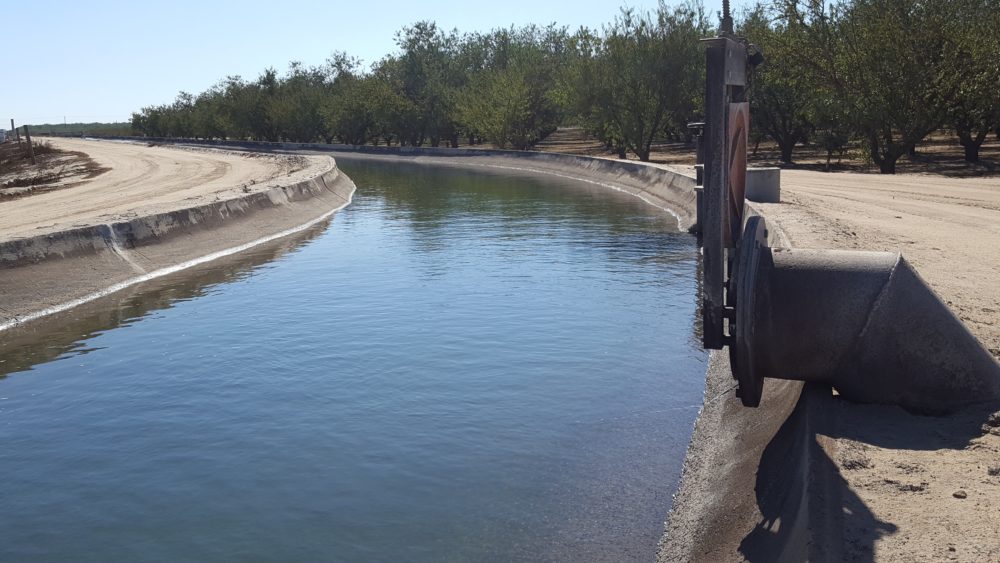
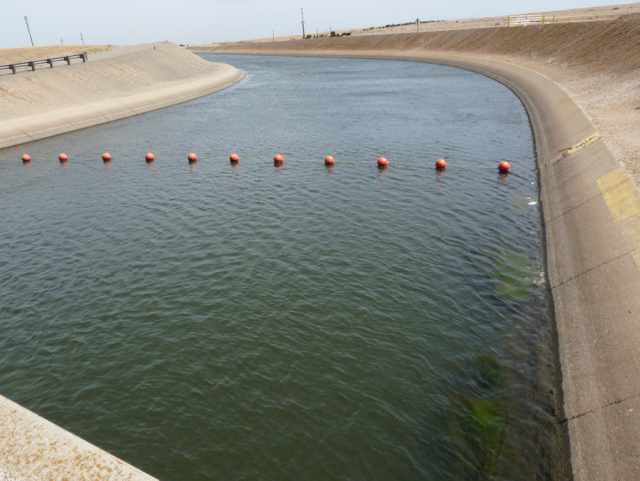
“If you take away Modesto Irrigation District surface water, you take away the domestic water supply for the entire city of Modesto, and they did not consider any of that in there,” Lucas said.turlock irrigation canal

The California Water Resources Control Board seriously underestimated the impact that their water grab would have on surrounding communities.

“Their science is shaky at best; it’s pseudo-science frankly,” Lucas said.

Modesto Irrigation District has spent more than $25 million in studies for over a decade specifically on the Tuolumne River with their partner, Turlock Irrigation District.

“We have presented them with a plan that gives them more fish that is sustainable, that protects groundwater, that protects surface water, and that allows everybody to get better together. This is our river,” Lucas said.

Also, Don Pedro is one of the few reservoirs and facilities that has zero state funding. The residents of Turlock, Turlock Irrigation District, and the Modesto Irrigation District paid 100 percent with a little federal money with Army Corp to build that facility.

“Because of that foresight, the state is going to come and try and take it and it is not theirs to take and we cannot let it happen,” Lucas explained.

2021-05-12T11:05:09-07:00October 17th, 2018|

40 Percent Water Grab Continues to Be Big Concern

Growers Will Fight Back

By Jessica Theisman, Associate Editor

Recently, over one thousand farmers and other stakeholders attended a rally in Sacramento outside the capital building, protesting the California State Water Resources Control Board’s proposed Water Grab, which consists of over 40 percent of the water from Stanislaus, Tuolumne, and Merced rivers to increase flows for salmon. California Ag Today spoke with Ronda Lucas, General Counsel with the Modesto Irrigation District.

Unfortunately, the state does not need to pick this fight, but they are choosing to.

“In ignoring our science in the process, one of the major deficiencies of the plan is the state board’s refusal,” Lucas said.

Rhonda Lucas

Lucas would like the water board to be intellectually honest about the linkage and the impact this will have on groundwater.

“They simply say that we’ll just get more water. There is no more water,” she said.

California is not in a critical overdraft area.

“Our sub base in the Modesto subbasin is in better shape than many, but that’s because we’ve been such good stewards,” Lucas said.

This plan will destroy the health of the groundwater basin.

Lucas says that many communities in the area could be impacted heavily. Some communities’ sole water source is groundwater, and this plan will dry up their drinking water.

“There will be school children that don’t have the basic needs to live, and we know it. And we’ve told the state board that, and they don’t seem to care,” Lucas said.

The bigger problem that is not well known is that the state is trying to come in and run the dam operation long-term.

“If the state is in charge of Don Pedro and the running of our facilities, which we believe to be illegal, we do not know what they are going to do because they have not had a good track record thus far,” Lucas explained.

2018-10-17T15:25:50-07:00October 16th, 2018|

Innovation is Bowles Farming Co.’s #1 Objective

Bowles Farming is Major Innovator in Merced County

By Mikenzi Meyers, Associate Editor

As every industry continues to be pressured by increasing technologies and the expectation to innovate, it is without question that agriculture is no different. With 160 years of experience growing various crops, Bowles Farming Co. in Merced County is not only a leader within the industry but strives to stand on the forefront of innovation.

Danny Royer, Vice President of Technology at Bowles, gave insight to California Ag Today recently as to how his company is using technology to make irrigation more efficient.

“There’s a lot that goes into the irrigation before it even gets to the farm,” he explained. “Our canal company that delivers our water is working on automating their system to meet our automation needs.”

Royer is utilizing water control and data gathering technology through innovative companies such as WaterBit and WiseConn to better regulate how Bowles Farming Co. resources are used.

He is in charge of the technology behind growing various crops, including tomatoes, cotton, wheat, watermelon, and other organic commodities. He said that the key to solving issues is by sharing data within the operation.

“Data is what’s going to provide the solution, but we have to create systems that give the people [the data] who have the competencies to solve the problem,” he explained.

One way Bowles Farming Co. is able to achieve this is by using Google Hangouts on the farm, which enables them to communicate with different sectors of the operation single-handedly.

“We’ve got to be a little more transparent and open about sharing our information with people that are coming from the tech sector trying to help us.”

Royer concluded, “the most important thing when we talk about tech and ag is talking about the impact on the operation … people’s jobs are going to change, how people function is going to change, and if you rule tech out, it’s going to be resisted.”

2021-05-12T11:05:09-07:00October 15th, 2018|

Irrigation Industry Needs Help

Promoting Efficient Irrigation

By Jessica Theisman, Associate Editor

What will affect the irrigation industry in the future? California Ag Today asks Brent Mecham, the industry development director with the Irrigation Association located in Fairfax, Virginia. Promoting effective irrigation is important.

“I work on the things that are going to affect our industry or the future and trying to position ourselves so we can continue to promote efficient irrigation,” Mecham said.

His occupation includes working on codes and standards, new technologies, technical programs, and educational programs. This is becoming popular among policymakers.

Everyone in the world is benefiting from irrigation. Everybody in the world is benefiting from water whether they know it or not.

“It’s something that affects everybody’s life, and they will not notice it until there’s no lettuce for your salad or no tomatoes. So irrigation affects people all around the world,” Mecham said.

There is more demand on water resources in property. Irrigation is very important for a state like California.

“There is more demand on water resources than ever before, and a lot of places where it is very sensitive, like in California, and the water shortages are becoming prevalent,” Mecham explained.

Farmers have been doing their part to be more profitable in their operations. Cities, too, need to do their part to prevent water running down gutters, which is not efficient.

2018-10-09T16:44:05-07:00October 9th, 2018|

Sound Science Funding for Farmers

Funding for Sound Science is Critical

By Jessica Theisman, Associate Editor

Increased funding to make farming easier is a priority, an expert told California Ag Today recently. LaKisha Odom is the science program director for the Foundation for Food and Agricultural Research based in Washington, DC. Funding sound science is a goal for the foundation.

“We are interested in increasing the amount of funding that is available to make farming and decision making easier,” Odom said.

This is all based on sound science. Their foundation base depends on the readily available funding.

“We match public-private dollars and increase that amount of funding available to fund sound science,” she explained.

The funding is for foundations and agencies that will assist farmers.

“The universities, industry partners, foundations and the research that’s funded by those entities can then inform those decision makers to assist those farmers who are making those decisions,” she said.

“We were provided $200 million dollars in the 2014 Farm Bill,” Odom added.

There are seven challenge areas that the foundation focuses on: water scarcity; urban agriculture; food waste; food loss; making my plate your plate, which focuses on nutrition; protein challenge, which focuses on animal sustainability; and innovation pathways.

Fresno State is one of the founding partners.

“I’m working with the irrigation innovation consortium, which is a consortium of university partners as well as industry partners, and Fresno State is one of our partners in that,” Odom said.

They are working with Dr. Davis at Fresno State for ways in which they can make innovations in irrigation and make water issues a little less challenging for farmers.

2021-05-12T11:05:09-07:00October 8th, 2018|

Denham Legislation Brings More Water Storage

Dept. of the Interior Moves forward on the Expansion of Shasta Dam

News Release Edited by Patrick Cavanaugh

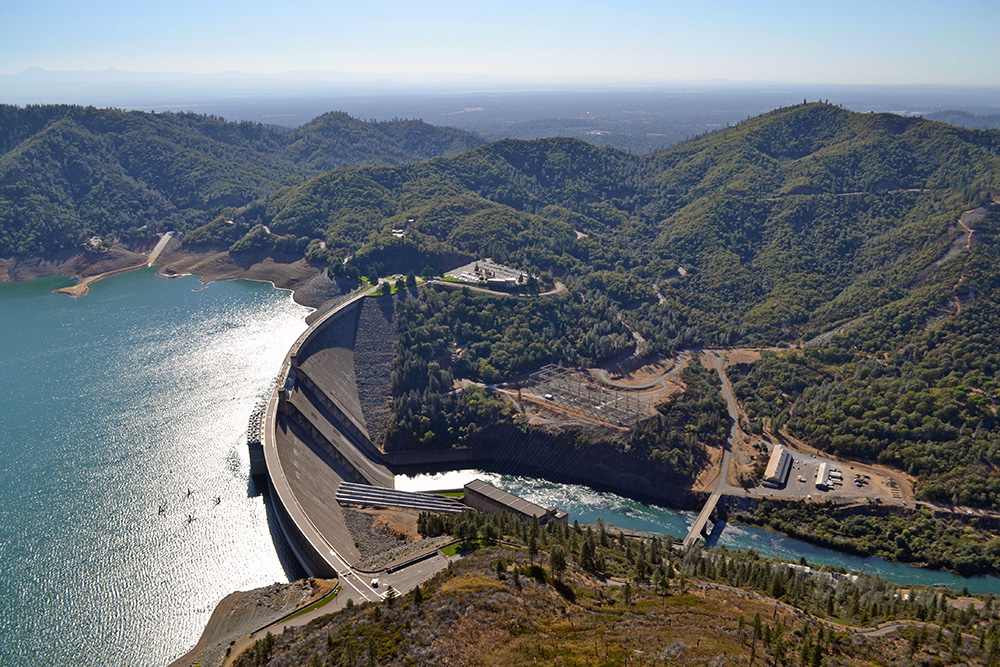
 The U.S. Department of the Interior is moving forward on the enlargement of Shasta Dam, a critical water storage reservoir in California. This expansion comes as a direct result of Rep. Jeff Denham’s Water Infrastructure Improvements for the Nation (WIIN) Act language and $20 million in funding approved in March of this year.

“We’re moving forward with building more water storage for the first time in decades,” Denham said. “Real progress and results are what California needs if the next generation wants water.”

Rep. Jeff Denham

The total expansion of Shasta Dam will raise the dam by 18 ½ feet and provide an additional 630,000 acre-feet of stored water for families, farmers, and cities, delivering more water and improving reliability for farmers and communities. The expansion will also help reduce flood damage and improve water quality in the Sacramento River to revitalize fish populations and foster a stronger ecosystem.

According to the Bureau of Reclamation, which is leading the expansion effort, construction contracts for the dam are expected to be issued by December 2019, and the entire project is estimated to cost $1.4 billion. The project is eligible for additional financing through Denham’s New WATER Act, which provides financing opportunities for water infrastructure projects and will reduce the cost to water users.

The Denham New WATER Act language is expected to be signed into law in the coming weeks to make major water infrastructure improvements a reality in the Central Valley. This success comes on the heels of major developments in the fight against Sacramento’s water grab, including Secretary of the Interior Ryan Zinke and Secretary of Agriculture Sonny Perdue voicing support for Denham’s efforts to stop the state’s Bay-Delta plan.

For more information about the enlargement of Shasta Dam, click here. To learn more about what Rep. Denham is doing to fight for water in the Valley, visit www.Denham.house.gov/water, where you can also sign up to receive periodic updates on his work in Washington to improve local water infrastructure, storage and delivery.

2018-09-25T16:40:50-07:00September 25th, 2018|

Marin County Farm Bureau Fights Back on Water Grab

More Water For Fish Will Not Work

By Jessica Theisman, Associate Editor

Recently in Sacramento, over one thousand farmers and other stakeholders attended a rally outside the Capitol building to protest the State Water Resources Control Board water grab. Over 40 percent of the water from Stanislaus, Tuolumne and Merced rivers may be sent to increase flows for salmon. California Ag Today spoke with Sam Dolcini with the Marin County Farm Bureau about the issue.

“I am here because water is critical to the entire agricultural infrastructure in the state of California. We have many dairies in our county that depend on the water from other parts of the state,” he said.

Marin County Farm Bureau

Sam Dolcini

The proposal would dedicate 40 percent of unimpaired flows along the Tuolumne River alone between February and June. This water would be used for fish, wildlife, and salinity control. This would be a huge increase in water currently used for environmental purposes, with water already in short supply.

“This can be devastating for valley farmers, which is why they flock this week to the Capitol building to be sure their voices are heard,” Dolcini said.

Ronda Lucas, General Counsel with the Modesto Irrigation district, agrees that this water grab could be devastating.

“We are one of the six senior water rights holders,” she said. “They are taking the waterfront, and the impact that will have on the Modesto irrigation district will just be devastating.”

2018-09-12T16:56:11-07:00September 12th, 2018|
Go to Top