FSA RESUMES 2013 CROP COMMODITY LOAN DISBURSEMENTS

Crop Commodity Loan 
Disbursements Resume

USDA Farm Service Agency (FSA) announced TODAYthe resumption of 2013 Crop Commodity Loan Disbursements.


Crop year 2013 commodity loan-making was suspended Oct. 1, 2013, to make changes necessary to accommodate the automatic funding reductions known as sequester. Sequestration is mandated by the Balanced Budget and Emergency Deficit Control Act of 1985 as amended by the Budget Control Act of 2011.


The commodity loan programs provide interim financing to producers for agricultural commodities stored after harvest and then sold throughout the year. Producers requesting 2013 crop commodity loans on their harvested commodities now will have a 5.1 percent reduction to the loan amount upon its disbursement, due to the sequestration. Commodity loans issued by marketing associations and loan servicing agents are also subject to the sequestration reduction.


During the period that loan-making was suspended, producers were still able to submit loan applications to their county FSA offices, marketing associations and loan servicing agents. The processing and disbursement of these applications will begin immediately.


For further information about commodity marketing loans, farmers may contact their local county FSA office or go online to www.fsa.usda.gov.


As an example, Tulare County USDA Service Center posted on its website:


The election of agricultural producers to the Farm Service Agency (FSA) that every eligible producer participate in these elections because FSA county committees are a link between the agricultural community and the U.S. Department of Agriculture.


County Committee (COC) members are a critical component of FSA operations. The intent is to have the COC reflect the diversity of producers and represent all constituents. This means that minorities, women or lower income producers need to be on the committee to speak for underrepresented groups.


County Committee election ballots will be mailed to eligible Local Administrative Area (LAA) 2 voters on Nov. 4, 2013. The last day to return completed ballots to the USDA Service Center is Dec. 2, 2013.
2016-05-31T19:43:12-07:00November 5th, 2013|

CDFA SPECIALTY CROP BLOCK GRANT COMMITTEE OPEN FOR NEW MEMBERS

CDFA TECHNOLOGY COMMITTEE SEEKS NEW REVIEWERS

California Department of Food and Agriculture (CDFA) Secretary Karen Ross announced TODAY the opportunity to serve as a reviewer on the 2014 Specialty Crop Block Grant Technical Review Committee. Individuals with interest and expertise in the agricultural sector are encouraged to apply.


This Technical Review Committee reviews, evaluates, and makes recommendations to CDFA on proposals submitted for funding from the California Specialty Crop Block Grant Program.


The Specialty Crop Block Grant Program is designed to enhance the competitiveness of California specialty crops – fruits, vegetables, tree nuts, dried fruits, horticulture, and nursery crops (including floriculture). Grant awards range from $50,000 to $400,000 per project. Funding is contingent upon passage of a Farm Bill and available funding from the United States Department of Agriculture, Agricultural Marketing Service (USDA, AMS).


The Specialty Crop Technical Review Committee will consist of individuals who have knowledge and expertise regarding California’s specialty crop industry, and who may represent government and non-government organizations. The timeframe for reviewing proposals is between January and May 2014. The first meeting will be held in January 2014. By establishing the Technical Review Committee, CDFA maintains a competitive process to ensure maximum public input and benefit.


Individuals interested in serving on the Technical Review Committee should include a letter of interest, short biography, and statement of qualifications identifying the California Specialty Crop Block Grant Program funding category or categories related to the applicants area of expertise. 

For a description of the funding categories, please reference the Notice of Funding Availability posted at www.cdfa.ca.gov/grants.

Information should be submitted via email to Leslie Sullivan (grants@cdfa.ca.gov) before December 2, 2013.

2016-05-31T19:43:12-07:00November 4th, 2013|

UPDATE: GERAWAN FARM EMPLOYEES TO VOTE ON THEIR ECONOMIC DESTINY

Gerawan Employees Will Vote Tomorrow On UFW Representation

By Laurie Greene, Associate Editor

Dan Gerawantold California Ag Today that Gerawan farm employees would be given the chance on Tuesday, November 5, 2013, to exercise their right to decide their own economic destiny.


The state’s Agriculture Labor Relations Board (ALRB), in a reversal of its earlier decision, is allowing workers, or “petitioners”, at Gerawan Farming to hold an election tomorrow, on whether they want to decertify UFW, in other words, to determine if they want to be represented by the United Farm Workers union.


This new development follows a very fast roller coaster of events last week.

Led by longtime Gerawan employee, Silvia López, the workers gathered thousands of signatures calling for a new election. The first attempt failed after many of the signatures were found to be invalid. However, a second attempt, which gathered 3,000 signatures, satisfied the number of valid signatures necessary.


Silas Shawver, regional director of ALRB, overturned the employees’ right for an election citing that the petition and signatures in too late to be valid.


On Thursday morning, October 31, 2013, the ALRB in Sacramento issued a “Showing of Interest” whereby Shawver confirmed there were enough qualifying signatures on the employee’s petition to warrant a vote.


Later that morning, the petitioners’ attorneyannounced in a press release the election would move forward.


By Thursday evening, Shawver again blocked the election, saying there were pending unfair labor practice complaints.


On Friday, Gerawan employees did not show up for work. Instead they traveled to the ALRB office (for the second time) and demanded the right to vote. After hours of protesting, an ALRB representative came out and announced by bullhorn that the most recent decision was overturned and the election would, indeed, occur.


In this latest decision, The Board made it clear that the Regional Director’s “last minute,” “eleventh-hour charges” in a “late filed complaint” left the Board “with serious doubts as to the propriety of using that complaint to block the election.” The Board rebuked the Regional Director for failing to mention statements he made in Fresno Superior Court, where he told Judge Jeffrey Hamilton that Gerawan and the Board remedied some of the alleged unfair labor practice charges he now claims justify blocking the election.


So, ALRB decided to allow the election while also impounding the ballots pending the resolution of any election objections and unfair labor practice complaints.


The ALRB issued a Notice and Direction of Election on November 3, 2013 included the following text:


This election is being held to determine whether a majority of the employees in this unit wish to continue to be represented by the United Farm Workers of America for collective bargaining with Gerawan on wages, hours, and working conditions.


It is a secret ballot election, which will be supervised by an agent of the Agricultural Labor Relations Board.


You are eligible to vote if you worked for Gerawan during the week of October 14, 2013 to October 20,2013, if you are not a supervisor, if you are not directly related to the employer, if you are not a confidential employee, and if you are not a guard.


If there are any questions, feel free to contact the ALRB office (listed below). If you wish to vote, you will be asked for identification such as a photo ID (such as a driver’s license), a Gerawan paystub, or any other identification as required by the Board Agent in charge.


ALRB has determined when and where elections will be held on various Gerawan sites on the Eastside in Reedley and on the Westside in the Kerman area.  ALRB will also conduct the elections.


Observers will include employees chosen by the UFW and employees chosen among the petitioners. Attorneys and management will not be present.


TODAY, ALRB will instruct Gerawan employees on their rights and where voting will take place tomorrow.

Upon completion of the election tomorrow, the ballots will be impounded pending resolution of legal challenges. 


“There’s no telling of when or if ballots will be counted,” said Gerawan.  “ALRB will first investigate employer allegations, both existing and new.


***

In a related story, Gerawan filed a lawsuit on October 28, 2013 in Fresno County Superior Court against the ALRB alleging one of its employee’s first amendment rights were violated after being denied access to a mediation session.


According to the lawsuit, the employee, Lupe Garcia, attempted to attend a mediation meeting between Gerawan and the United Farm Workers union in June, but was told by the state-appointed mediator that the proceedings were confidential.


Gerawan’s lawyers argue Garcia’s first amendment rights were violated by not being allowed in the session. They are asking the court to make the mediation meetings open to the public.

***

Additional Sources: CalWatchDog,Fresno Bee, ALRB

2016-05-31T19:43:12-07:00November 4th, 2013|

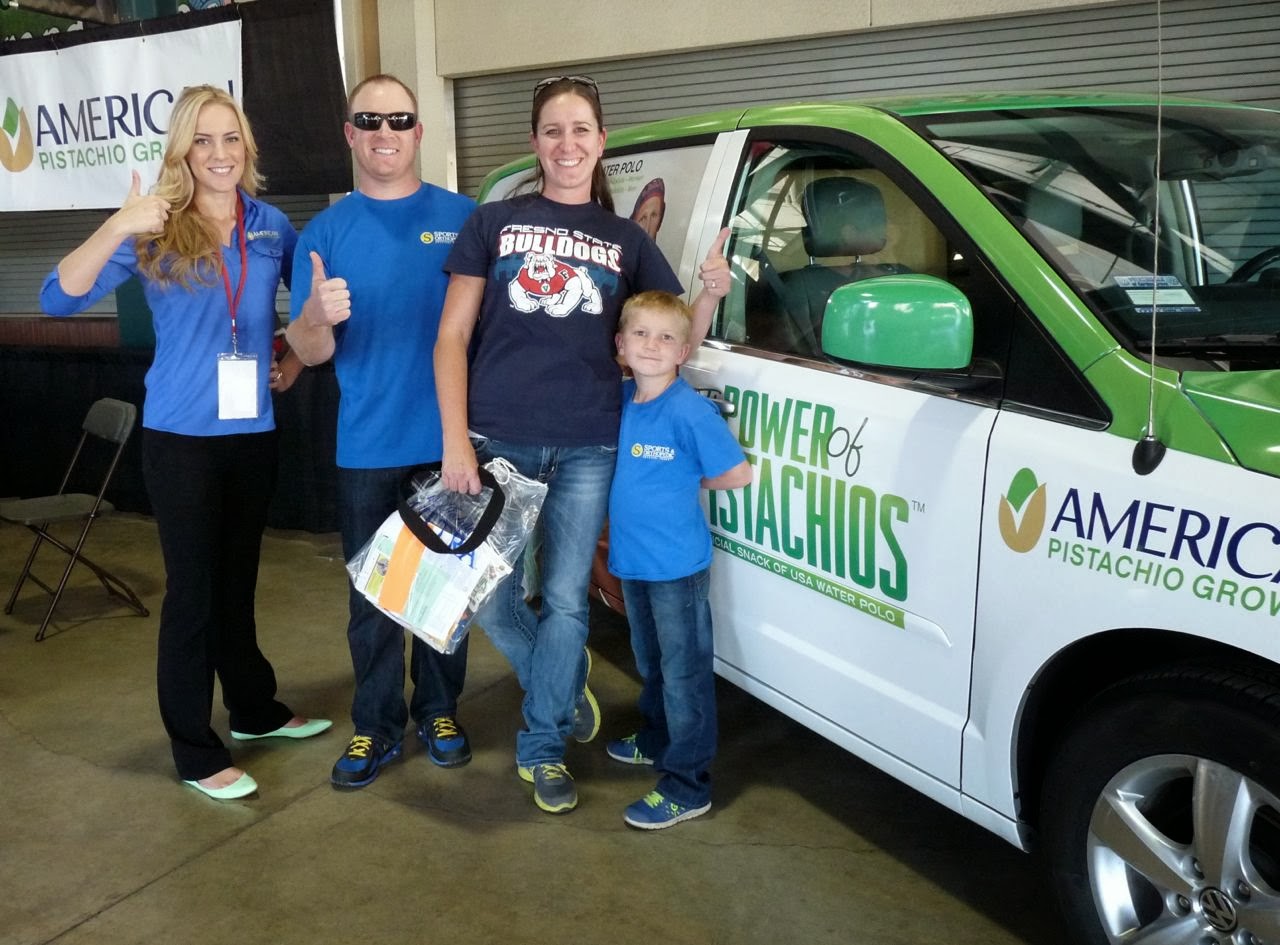
Pistachiomobile Promotes Power of Pistachios

American Pistachiomobile Debuts
Former Miss California Leah Cecil-Tibbitts, left, joins some pistachio
lovers at a pre-marathon event at Chukchansi Park in Fresno Today.

The new American Pistachiomobile will be cruising Fresno and Clovis this weekend with stops at the Two Cities Marathon Fitness Expo in downtown Fresno, Bulldog Boulevard before the Fresno State-Nevada football game, and finally at the Two Cities Marathon & Half at Woodward Park.

As a participating sponsor of these popular Fresno-Clovis events, American Pistachio Growers recognized them as great venues to introduce the specially designed Pistachiomobile, which will be used to promote the nutritional powers of pistachios at fitness events throughout California. These protein-packed and nutritionally-dense nuts are a favorite of athletes, both professional and amateur.

Attendees at all events are invited to stop by and learn more about the health benefits of pistachios, get a free sample pack, and have their picture taken with APG’s brand ambassadors Miss California 2013 Crystal Lee and Miss California 2012 Leah Cecil-Tibbitts. As an added bonus, people who like American Pistachio Growers on Facebook and upload photos of themselves with the Pistachiomobile on social media will be eligible to win a 100-day supply of pistachios.

Pistachios are a good source of lean protein and pack 3 grams of filling fiber per serving, which makes them a smart snack option. A one-ounce serving is equal to 49 nuts- more than any other tree nut- and contains 6g of protein, 290 mg of potassium along with calcium, phosphorus, magnesium, thiamin, vitamin B6 and other vitamins.
“Since our bodies don’t store protein it’s important to replenish, especially after participating in sports and athletic events,” says Judy Hirigoyen, Global Marketing Director for the Fresno-based American Pistachio Growers. She continues, “Health-oriented and sports events are a natural association for pistachios and this pistachio-themed van is a fun way to reach our consumers.”

The Pistachiomobile will be used during California events.
The Sierra Pacific Orthopedics Health & Fitness Expo was held at Chukchansi Park in downtown Fresno at 1800 Tulare Street on Friday, November 1 and from 4-7 p.m. and Saturday, November 2 from10 a.m. – 4 p.m. The Two Cities Marathon & Half will be held on Sunday, November 3 from 7 a.m. – 2 p.m. For more information, please go to www.runfresno.com.

The Pistachiomobile will also be joining tailgaters pregame (Fresno State vs. Nevada) from 5 p.m. – 7:30 p.m. at Bulldog Boulevard, located off Cedar Avenue just east of Bulldog Stadium and North of Beiden Field on the campus of Fresno State.

2016-05-31T19:43:12-07:00November 2nd, 2013|

TWO UPCOMING EVENTS

California Farm Labor Contractor Association Announces Two Conferences


Ag Supervisor Development Training Conference


Agricultural employers in the Central Valley and beyond should consider the opportunity offered through California Farm Labor Contractor Association’s (CFLCA) Ag Supervisor Training and Development Conference scheduled for November 13 at the Visalia Holiday Inn.

This conference offers 19 different sessions conducted entirely in SPANISH, to help with compliance, development, and improved performance for your front-line supervisors, safety and HR personnel. 


Many sponsors are making this an incredibly affordable program that includes lunch, handouts, documentation of training, and an exhibitors area!


   ____________________________


2013 Ag Employer Compliance Conferences

California Farm Labor Contractor Association (CFLCA) is pleased to announce a series of educational conferences for agricultural employers. The programs are approved by the Department of Labor Standards Enforcement (DLSE) for the required eight hours of continuing education for FLC licensing and renewal.


These “Ag Employer Compliance Conferences offer a wide range of information, including updates on: new and proposed labor laws; The Affordable Care Act/Obama Care; immigration reform; wage and hour issues; Cal OSHA requirements; worker transportation issues; and FLC licensing and continuing education. Plus – AB 1825 compliance with two-hour session on Sexual Harassment and Discrimination Prevention.


November 6, 2013 – Stockton

December 6, 2013 – Las Vegas


2016-05-31T19:43:13-07:00November 1st, 2013|

GROUNDWATER MEETING NOV. 5 IN SACRAMENTO

State Ag Board to Discuss

Groundwater Supply Challenges

The California State Board of Food and Agriculture announced TODAY it will focus on groundwater supply issues at its upcoming meeting in Sacramento on Tuesday, November 5th, from 10:00 a.m. to 2:30 p.m., at the California Department of Food and Agriculture, 1220 ‘N’ Street – Main Auditorium, Sacramento, CA 95814. 


“Groundwater plays a critical role in California’s water supply, but greater reliance upon this precious resource during times of drought increases the challenges we face,” said CDFA Secretary Karen Ross. “Managing groundwater at the local and regional levels is effective but must relate to California’s overall water management plan. Issues of overdraft, impaired water quality, salinity accumulation and land subsidence must be addressed to ensure sustainable groundwater management and the long-term vitality of agriculture.”

California’s groundwater supply provides about 40 to 50 percent of total annual water use for agricultural and urban purposes
In 2009, the U.S. Geological Survey reported that for water years 1962-2003, California’s Central Valley aquifer was depleted by almost 60 million acre-feet – the equivalent of providing every resident of California with water for eight years. 


In addition, the Central Valley is the second-most-pumped aquifer in the United States, accounting for approximately 20 percent of the nation’s groundwater demand. California is the largest agricultural producer in the United States, with farm revenue of $44.7 billion; an estimated seven percent of the total U.S. food supply comes from the Central Valley.

Invited speakers include: Jay Famiglietti, UC Center for Hydrologic Modeling, University of California, Irvine; Jim Branham, Sierra Nevada Conservancy; Martha Conklin, University of California, Merced; Dr. Ruth Langridge, University of California, Santa Cruz; Steve Phillips, U.S. Geological Survey; Eric Oppenheimer, State Water Resources Control Board; Clay Rodgers, Central Valley Regional Water Quality Control Board; Karen Christensen, Resource Conservation District of Santa Cruz County; Kelley Bell, Driscoll’s; Jerry Reaugh, Paso Robles Agricultural Alliance for Groundwater Solutions, and E. Michael Solomon, United Water Conservation District.

“Water remains one of the most critical topics for this Board,” said Craig McNamara, president of the California State Board of Food and Agriculture. “We cannot have the level of farming in this state that generations of consumers are used to unless we manage our water resources effectively and efficiently. Our rural communities and farmers deserve no less.”

The California State Board of Food and Agriculture advises the governor and the CDFA secretary on agricultural issues and consumer needs. The state board conducts forums that bring together local, state and federal government officials, agricultural representative and citizens to discuss current issues of concern to California agriculture.

This meeting will be streamed online at: www.cdfa.ca.gov/LiveMediaStream.html
Follow the board on Twitter at: www.twitter.com/Cafood_agboard
2016-05-31T19:43:13-07:00November 1st, 2013|

COLLABORATION, SOUND SCIENCE TO KEEP DELTA WATER OUT OF COURT

“We can do better. We must do better”
A newly published, peer-reviewed article this month, “We Can Do Better: Longfin Smelt and a Case Study in Collaborative Science” begins with the concept, “water is a limited resource” and “there should be no question that flows into, through, and out of California’s Delta are biologically important.”

The article also acknowledges, “Competing demands for Delta water include flows for native fish, water supply for farms and cities, and cold water held back in large reservoirs to cool salmon streams.”

The following passages attempt to quote and/or paraphrase the article:

Since water is limited, there are inevitable trade-offs. This is where science and policy intersect.

For too long, this tension has been handled one species at a time, one crisis at a time, and usually in court. This has fostered ‘combat science,’ where regulatory agencies, water contractors, and environmental advocates line up their own hypotheses, studies, and conclusions like artillery in the courtroom. It has fed distrust and stymied collaboration. This is a failed approach.

Absent a change in how we manage the Delta, there is no evidence to suggest the situation will improve. We can do better. We must do better.

The Bay Delta Conservation Plan (BDCP) takes a more comprehensive approach than the single-species management pursuant to the U.S. Endangered Species Act.

Yet, a commitment to a more robust and collaborative science program is also emerging between many of the long-term litigants and between several state and federal agencies involved in the Delta.

All of these positive developments involve a fundamental shift in the way water agencies and regulators interact. Different sides may have different policy overlays, but the science will be the science.

There has to be a better way than arguing about science while species continue to decline and water supply reliability is jeopardized.

This better way starts with applying state-of-the-art scientific approaches, models, and tools. The BDCP sets forth a three-step “decision tree” process to help resolve disagreements over the recovery of longfin smelt requires.

A decision tree is nothing new: In simplest terms, it is a chart that maps successive decision points over time.

In all, we will learn by doing, and evaluate our progress in a structured way. We will measure success by assessing how well stakeholders are meaningfully engaged and committed to the process; by generating science that all agree is sound; by making progress toward achieving the biological objectives; and, by determining how well results from the science research are used to adjust and improve management decisions.

If we can achieve these measures of success, we may be able to avoid the courts and use our best available science to give ourselves a firmer footing for balancing and managing the Delta’s co-equal goals.

**************
Source
This work is made available under the terms of the Creative Commons Attribution in the San Francisco Estuary and Watershed Science, 11(3), by Mark W., Cowin, California Department of Water Resources, and Charlton H. Bonham, California Department of Fish and Wildlife. Copyright 2013 by the article author(s).

Article References
(DSP) Delta Science Program. 2013.
(CA): Delta Stewardship Counci.
2016-05-31T19:43:13-07:00November 1st, 2013|

LET’S TALK ABOUT CALIFORNIA’S WATER PLAN

Westlands Supports Dialogue
on Draft California Water Action Plan
 
TODAY, Westlands Water District announced that it supports the goals of the draft California Water Action Plan, a proposal to secure reliable water supplies, restore important species and habitat, and construct a more resilient water system to meet changing conditions.
The Action Plan acknowledges that California cannot meet the water supply needs of the residents of the state or reach its environmental goals unless critical actions are taken to increase water supply and improve the state’s water infrastructure.
“This Action Plan comes at a critical time for the Westlands Water District and the people in the San Joaquin Valley who are facing the prospect of a record low water allocation, an historic low point in water supply reliability, and yet another year of severe economic hardship,” said Westlands General Manager Tom Birmingham.
The Plan recognizes the need for near-term solutions to respond to the extreme water supply conditions that currently exist that are adversely impacting state agriculture production.
The state and federal government must address the short-term water supply needs of farmers immediately. Westlands will continue to work closely with the Administration and federal officials to develop solutions that will protect the farms and families in the areas most impacted by chronic water supply shortages and to address the inability of the current water infrastructure to deliver available water.
Failure to address the recurring near-term water shortages will have a devastating impact on California’s agricultural economy and jobs in the Central Valley, and ultimately the economy of the entire state. Everything from farm workers harvesting crops for food supplies to agricultural exports at our ports will be impacted negatively by another crippling water supply allocation. 
Westlands is also committed to the longer-term solution provided by the Bay Delta Conservation Plan (BDCP) and supports the implementation of the BDCP as the means of achieving the long-term co-equal goals of providing a more reliable water supply for California and to protect, restore, and enhance the Delta ecosystem. Through new conveyance, the BDCP addresses water supply and delivery problems that have been discussed and debated for more than 30 years.
State and federal agencies have developed a comprehensive plan that has been analyzed by numerous experts from the scientific, economic, and environmental perspective, modified substantially to address issues raised by interested groups and presented to the public for review in more venues than any other state project.
As acknowledged by the draft California Water Action Plan, it is time for the project to begin. We must take action now.
The draft California Water Action Plan is the beginning of an important dialogue on a comprehensive solution, but dialogue needs to result in substantial changes. We are optimistic that the Plan will create the momentum for major water supply and ecosystem improvements throughout the state.
2016-05-31T19:43:13-07:00November 1st, 2013|

Dairies are Meeting the WDR Requirement

Water Board Reissued WDR To Dairies

The Central Valley Regional Water Quality Control Board in early October adopted Reissued Waste Discharge Requirements General Order No. R5-2013-0122 for existing milk cow dairies.

The water board will soon be sending out a letter to each dairy notifying them that they are now covered under the reissued order in place of the 2007 order. 

A copy of the Reissued Dairy General Order may be downloaded at http://www.waterboards.ca.gov/centralvalley/water_issues/dairies/dairy_program_regs_requirements/index.shtml.   The water board was mandated by a court order to set aside the Dairy WDR adopted in 2007 and reissue the Order once it complied with the court’s writ of mandate.

The reissued order, which is now 167 pages in length, strengthens the language within the document and makes it clear that the practices that dairy producers having been implementing for several years meet the requirements of the State’s antidegradation policy. 

 For dairies that are members of the Representative Monitoring Program (RMP) will continue to meet the requirement for groundwater monitoring.

Source: Western United Dairymen, Modesto

2016-05-31T19:43:13-07:00November 1st, 2013|

Novavine Open House Friday Nov. 1

Demand for Grafted Grapevines

Expands Supply Space

The increase in vineyard planting throughout California over the past few years has created a huge demand for grafted grapevines. 

Grapevines suppliers such as Novavine, who has the only production facility on the North Coast, have experienced expediential increases in the demand for vines.  With sales double what they were in 2010, Novavine has been expanding its infrastructure in order to keep up with the demand. 

One major need was more greenhouse space.  This created an opportunity to design and install a new state of the art greenhouse.  The new greenhouse will hold 595,000 vines at a time and will be filled at least twice during a growing season, resulting in more than one million vines per year produced. 

The new greenhouse facility features:

                     46,332 square feet

                     Rollup walls to provide natural cooling on average temperature days

                     A palletized traveling bench system

                     Both under bench and overhead heat to ensure optimum growing conditions

                     Duel boilers and pumping system to provide complete redundancy

                     Evaporative cooling

                     State of the art monitoring and control systems

                     Quick connect hose attachments for ease of watering

                     …And much more


Novavineis excited to embark on this new venture and will be opening their doors to the public hosting the Grand Opening of their new growing facility at 6735 Sonoma Highway, Santa Rosa, CA on Friday, November 1st from 1pm – 4pm. CEO Jay Jensen and the entire staff will be joined by local Sonoma County dignitaries, clients and vendors in a casual afternoon setting of clonal wine tasting, pizza, tours of the new facility and discussions about innovation in grapevine propagation.

2016-05-31T19:43:13-07:00November 1st, 2013|
Go to Top