California Citrus Mutual Annual Meeting, Nov. 7 in Visalia

Congressman Valadao

To Keynote Calif. Citrus Mutual Meeting

Central Valley Congressman David Valadao will serve as the Keynote Speaker at the California Citrus Mutual Annual Meeting on Thursday, November 7th at the Visalia Convention Center.

The first-term Congressman is expected to talk about his perspectives on the inner-workings of the U.S. House of Representatives andhow gridlock in Washington, D.C. has unquestionably impacted agriculture policy. 

“We are looking forward to an honest and engaging discussion with David on a number of issues which will undoubtedly include an evaluation of Congress’ performance on Farm Bill legislation and immigration reform,” says California Citrus Mutual President Joel Nelsen.

A Hanford native, Valadao has strong ties to Central Valley agriculture.  His family business now consists of 2 dairies and over 1,000 acres of farmland in Kings and Western Tulare County.


The Congressman was elected in 2012 and represents portions of Fresno, Tulare, Kings, and Kern Counties and serves on the House Appropriations Committee, specifically the Agriculture, Interior, and Legislative Branch Subcommittees. 

California Citrus Mutual is the industry trade association representing over 70 percent of the tree crop tonnage on a voluntary basis.  The event marks the organization’s 36th year serving as the “voice of the citrus grower.”

During the evening, newly elected Board Chairman Kevin Severns will offer his perspective on the organization’s agenda for the coming year and install the 2013-2014 Board of Directors.

California Citrus Mutual will also honor four retiring Directors who have completed 10 years of service to the organization: John Demshki, John Gless, David Tomlinson, and retiring Board Chairman Tom Wollenman.  

Social hour begins at 6:00 p.m. followed by the evening’s program and dinner at 7:00 p.m. Reservations are available by calling the Citrus Mutual office at 559-592-3790. 
2016-05-31T19:43:13-07:00November 1st, 2013|

Bakersfield Screening is Nov. 8

Award-wining film ‘The Fight for Water’

To Screen in Bakersfield

The award-winning documentary, “The Fight for Water: A Farm Worker Struggle”, which documents the historic 2009 Water March that spanned across the Westside of the California Central Valley to the San Luis Reservoir by farmers and their farm workers in order to restore their water, will screen in Bakersfield, California, as the “Official Selection” at this year’s first ever Outside the Box Bakersfield Film Festival, which will be held November 8 – 10, at the Historic Fox Theater. 

The film, which was just awarded Best Documentary at the Viña de Oro International Film Festival in Fresno, will screen Friday, November 8 at 1:50 pm.  Tickets for the screening can be purchased online at www.foxtheateronline.com or at www.bakersfieldfilmfest.com.

The documentary, which put a human face to the historic water crisis and the environmental decision that impacted a farm working community in the Westside of the California Central Valley, has won accolades and worldwide recognition.  The film was recently nominated for Excellence in Filmmaking and was Runner Up Winner for Best Documentary in Cinematography and Runner Up Winner for Best Political Documentary Film at the Action on Film International Film Festival.  The film also screened internationally at the Kuala Lumpur Eco Film Festival, in Malaysia, and at the Life Sciences Film Festival, in the Czech Republic.

The film will also screen in Pacific Grove, California, as the “Official Selection” at this year’s International Monarch Film Festival, which will be held December 11 and 12.

The film was produced by Juan Carlos Oseguera.  He is a San Francisco State University alumnus who has been a published film critic and has won awards and recognitions in writing, producing and directing. 

Oseguera is not associated with the California Latino Water Coalition, which was the prominent organization behind the 2009 Water March; nor did he receive any funds from any organization to produce the film.  Oseguera wrote, edited and directed the film independently to maintain his sole vision and perspective.

Hollywood actor Paul Rodriguez, who helped organize the water march, is featured in the film for his activism in this cause.  Major political figures from throughout the state, and community leaders representing the Central Valley community, who stood in favor and against the water cause, also appear on the film.  Arnold Schwarzenegger also makes an appearance.

The documentary features two Latino farmers, Joe Del Bosque and George Delgado, who describe how federal water measures contributed to fields going dry in the West Side of the California Central Valley in 2009 while refuges that protect a threatened fish received all of the water designated for them.  Because of this, workers were laid off and the governor had to declare the affected area a disaster in order to provide government-run food assistance for over two-hundred thousand farm working people who were now displaced from their jobs.  Many of these were undocumented workers who did not have other means to turn to.

Oseguera, 39, who was raised in the California Central Valley by parents who were migrant farmworkers, understood the struggle they were facing and set out to document the their plight as a lesson to be learned and as a voice to be heard.  Yet in his quest to understand this water situation, he uncovers class, racial and environmental intricacies behind water access and distribution in California, and the ripple effect it has on all of us. It is an eye opening documentary that everyone must see.

For additional information about the film and the film festivals screenings visit:

2016-05-31T19:43:13-07:00November 1st, 2013|

Western United Dairymen Convention March 5-7

New Convention Website for

Western United Dairymen 

Western United Dairymen has launched a website dedicated to

the WUD convention set to be held March 5-7, 2014 at the Embassy Suites in San Luis Obispo. 

For the latest convention updates, visit www.WUDconvention.com

You can also access the website link at www.WesternUnitedDairymen.com  on both the main page and the “About Us” page. 

“We developed the site to be an online clearinghouse for convention information,” stated Heidi Savage, convention manager. “If you have a question about the convention, the answer should be on the site. So, whether you need to make a hotel reservation, see what kind of workshops are offered or sign up for an exhibit booth, you’ll find the most updated information there.” 

The WUD staff wants the site to be as complete and easy to navigate as possible. If you see something on the site that can be improved, please contact Heidi Savage at hsavage@westernuniteddairymen.com

2016-05-31T19:43:14-07:00November 1st, 2013|

UC DAVIS TO LEAD NEW USAID PROGRAM

UC Davis Helping Africa
To Prevent Poultry Diseases 
A new program that will identify genes crucial for breeding chickens that can tolerate hot climates and resist infectious diseases — specifically the devastating Newcastle disease — has been launched under the leadership of the University of California, Davis.

The global economic impact of virulent Newcastle disease is enormous. The project is particularly important for Africa, where infectious diseases annually cause approximately 750 million poultry deaths. Newcastle disease, a global threat to food security, first appeared in 1950 in the United States. In 2002 it resulted in the death of 4 million birds at more than 2,600 California locations and cost $160 million to eradicate.

The new effort, called the Feed the Future Innovation Lab for Genomics to Improve Poultry, aims to dramatically increase chicken production among Africa’s rural households and small farms, advancing food security, human nutrition and personal livelihoods. The innovation lab recently was established with a $6 million grant from the U.S. Agency for International Development as part of Feed the Future, the U.S. government’s global hunger and food security initiative.

Huaijun Zhou, principal investigator for the program and an associate professor of animal science in the College of Agricultural and Environmental Sciences at UC Davis, noted that disease resistance is one of the most economically important traits for poultry production but also challenging to achieve through genetic selection and traditional breeding alone.

“We are thrilled by the opportunity to apply cutting-edge technology and advanced genomics to solve this problem in poor, developing countries,” said Zhou, whose research focuses on the relationship between genetics and the immune system.

“Developing a chicken that can survive Newcastle disease outbreaks is critical to increase poultry, meat and egg production in Africa and in other regions of the world,” said David Bunn, director of the new innovation lab. “Increasing the production of chickens and eggs can have a dramatic impact on the livelihoods of poor rural communities.”

Homestead and small-scale poultry production is considered to have tremendous potential for alleviating malnutrition and poverty in Africa’s climate-stressed rural communities. Improving the productivity of such poultry operations also promises to improve incomes and nourishment for women and children, who typically raise poultry for both income and food in Africa.

Collaborating with Zhou and Bunn at UC Davis are Rodrigo Gallardo, an assistant professor in the School of Veterinary Medicine, and Ermias Kebreab, a professor in the Department of Animal Science. The UC Davis team will partner with animal science professors Sue Lamont and Jack Dekkers, both at Iowa State University; Boniface Kayang, head of the Department of Animal Science at the University of Ghana; poultry health expert Peter Msoffe of Sokoine University of Agriculture in Tanzania; and Carl Schmidt, a professor of animal science at the University of Delaware.

About USAID and Feed the Future

The U.S. Agency for International Development (USAID) is an independent agency that provides economic, development and humanitarian assistance around the world in support of foreign policy goals of the United States. As stated in the President’s National Security Strategy, USAID’s work in development joins diplomacy and defense as one of the key pieces of the nation’s foreign policy apparatus. 

USAID promotes peace and stability by fostering economic growth, protecting human health, providing emergency humanitarian assistance, and enhancing democracy in developing countries. These efforts to improve the lives of millions of people worldwide represent U.S. values and advance U.S. interests for peace and prosperity. More at: http://www.usaid.gov.

Feed the Future is the U.S. Government’s global hunger and food security initiative. Feed the Future supports partner countries in developing their agriculture sectors to spur economic growth and trade that increase incomes and reduce hunger, poverty and undernutrition. More at http://www.feedthefuture.gov.

2016-05-31T19:43:14-07:00October 30th, 2013|

Church Brothers Produce Names New Food Safety Head

McDonald Heads Up Food Safety

for Church Brothers

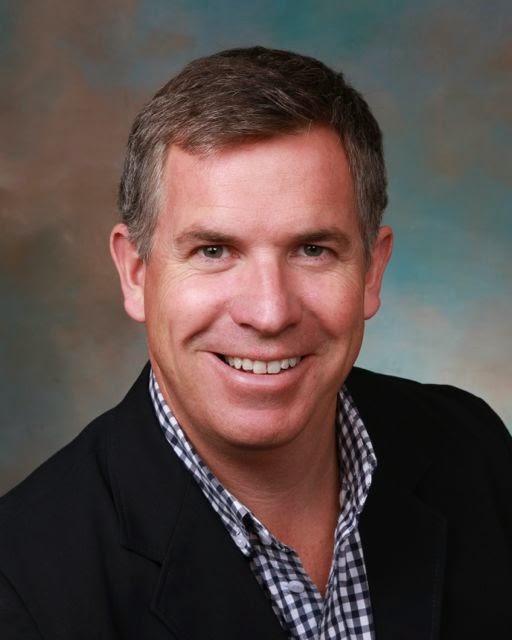
Salinas-based grower/shipper of fresh vegetables Church Brothers/True Leaf Farms has named Drew McDonald Vice President of Quality, Food Safety & Regulatory Affairs.  Drew will be working with all of the growing and processing operations under the Church Brothers family of companies.  

Drew has over 18 years’ experience in fresh-cut produce and fresh food operations and has worked with multiple buyers and suppliers assessing and assisting in the development and management of industry-leading quality and food safety programs.  

He is experienced with grower, processors, and suppliers of fresh food and produce items sourced from large commercial operations down to small, local farms throughout North America and world-wide.  

He currently serves on numerous food safety-related technical committees and has participated in the authorship of many produce food safety guidelines. 

Previously McDonald worked for Danaco Solutions, Taylor Farms, Dole Fresh Vegetables and Campbell’s. Drew received his education from Lawrence University in Wisconsin and currently resides on the Monterey Peninsula with his wife Aimee and their three daughters. 

Steve Church, CEO commented: “I don’t think we could have picked a better person for the job and we’re delighted to have Drew on board.”

2016-05-31T19:43:14-07:00October 30th, 2013|

CALIFORNIA DAIRY PRODUCERS EXPLORE ALTERNATIVES

Dairies Seek Federal Marketing Order

Dairy farmers and their representatives say they are moving forward with other efforts to bring more equity to the state’s milk pricing system, including joining the federal milk marketing order, after the California Department of Food and Agriculture denied another request to further raise the price of milk used to make cheese.

In a decision announced last week, CDFA extended an overall temporary price increase of 12.5 cents per hundredweight of milk that had been in place since July and was set to expire at the end of the year. The temporary price increase will now continue through June 2014 and apply to all classes of milk, including an increase of 15 cents per cwt. for Class 4b milk, which is used to manufacture cheese.

Producers have long contended that the state’s milk pricing system underpays them compared to what dairy farmers in other states earn under the federal milk marketing order. They say the main problem is the undervaluation of whey in the state milk pricing formula. Dairy organizations petitioned the department this summer to raise the 4b price up to 46 cents per cwt. and to change the sliding scale used to determine the whey value.

The groups said they petitioned the hearing thinking the proposed increases were part of a deal negotiated with processors, who later said during the September hearing that there was no agreement.

In a recent letter to dairy stakeholders, CDFA Secretary Karen Ross acknowledged her decision would bring disappointment “in light of the publicity surrounding the perceived agreement between producers and processors during the legislative session.” But she said the hearing testimony “failed to provide justification for the petitioners’ position that price relief be based solely on the whey factor and the 4b formula,” he said.

The CDFA hearing panel recommended keeping the current temporary price increase in place until the end of the year, but Ross said she decided to extend it despite “positive signs in the marketplace” because she felt the country’s economic recovery remains fragile and because she wanted to “provide a consistent level of revenue to producers to ensure a stable milk supply.”

Kings County dairy farmer Dino Giacomazzi said next year’s outlook for producers appears better because feed costs have come down and are expected to drop further due to the anticipated large U.S. corn crop, but he also said he doesn’t think corn prices should figure into a discussion about California milk pricing.

“We’re here trying to find the fair and correct way to determine milk price to producers in California. Just because our costs are coming down doesn’t mean that the CDFA should sit on their hands and do nothing to solve the problem,” he said.

Rob Vandenheuvel, general manager of the Milk Producers Council, said the message he got from the secretary’s decision is that there’s still a need for additional producer revenue, even though the department chose not to apply it “in a way that we felt was appropriate.”

“They wanted to apply it across the board for all classes (of milk) and we thought that the problem was isolated to the 4b price,” he said.

Ross said she simply couldn’t do what some producers have asked, “because there’s not the economic data for the formulas, or there are legislative and administrative hurdles to doing what some people want us to do.”

Vandenheuvel said producers have been “exploring alternatives,” noting that the state’s three dairy cooperatives plan to petition the U.S. Department of Agriculture to replace the current state milk marketing order with a federal order.

Lynne McBride, executive director of California Dairy Campaign, said joining the federal order is now “the only viable way to bring our state dairy producer prices in line with prices paid across the country.”

But not all producers believe joining the federal order is the panacea for their current problems.

Michael Marsh, CEO of Western United Dairymen, said one concern about going this route is the risk of losing the state quota system, which he described as a billion-dollar asset for California dairy farmers. The latest CDFA decision, he said, will “continue to foster momentum towards just finding something other than CDFA.”

Marsh said his organization will now go back to the state Legislature to ask for guidance, because some of its members have been sympathetic to dairy farmers’ plight and had testified at the last CDFA hearing about the need for milk pricing reform.

Bill Schiek, an economist for the Dairy Institute of California, which represents the state’s processors, said his group respects the secretary’s decision and her desire to balance the needs of producers and processors.

“I think she understood that conditions are improving for dairymen. The secretary has been responsive, and processors and cheese makers have been responsive,” he said, noting that CDFA had already granted emergency price relief twice this year and has now extended it again.

He also said the institute is “committed to the work” of the California Dairy Future Task Force, a group of producers and processors that Ross formed last year to work on reforming the state milk pricing system.

Ross said work of the task force had been pushed aside earlier this year as dairy groups introduced legislation to try to change how the state determines the whey value.

She said a group of “industry technical experts” is now working on “potential alternative pricing scenarios” that could replace the current formulas, and that the department has contracted economist Dan Sumner, Director, UC Agricultural Issues Center based at the University of California, Davis, to analyze those scenarios. She said CDFA staff is also drafting pricing proposals needed to make the changes, and she expects those proposals by Dec. 15.

Source: California Farm Bureau Federation
2016-05-31T19:43:14-07:00October 30th, 2013|

THREE VOLUNTARY RECALL EXPANSIONS

Salad Dressing in Packaged Salads May Have Listeria

The USDA Food and Drug Administration(FDA) announced TODAY that
Taylor Farms in Maryland and Texas are voluntarily recalling approximately 22,849 pounds of broccoli salad kit products due to concerns about possible Listeria monocytogenes contamination in the salad dressing. 


The USDA FDA also announced that BI-LO supermarkets is calling for an immediate recall of the Taylor Farms Spinach Antipasti Salad sold at one BI-LO store in Martinez, GA. This recall is an expansion of an earlier recall announced by Reser’s Fine Foods Inc. of packaged Taylor Farms salad kits with dressing included sold between Oct. 19 and Oct. 27.  According to the FDA, the reason for the recall is the potential that the product may be contaminated with Listeria monocytogenes

In addition, USDA FDA announced that Reser’s Fine Foods of Beaverton, Oregon is voluntarily expanding its October 22, 2013 recall of refrigerated ready-to-eat products because they may be contaminated with Listeria monocytogenes. The recalled refrigerated ready-to-eat products were distributed nationwide and Canada.


The Taylor Farms salad vegetables are NOT suspected of contamination.

There are no confirmed illnesses associated with these products.


Reser’s reports that the salad dressing included in the spinach salad pack is in question. The product is sold in retail and food service establishments. The packages will be marked with a Use-by-Date or Best By Date and followed by a plant identifier code of 20. Products affected by this recall are listed on the FDA website.  


Consumers who purchased the product may take it back to the store for a refund or discard it.


Listeriosis can cause fever, muscle aches, headache, stiff neck, confusion, loss of balance and convulsions, sometimes preceded by diarrhea or other gastrointestinal symptoms. For further explanation, go to the FDA website press release.


For more information please contact Reser’s Fine Foods Consumer Hotline 1-888-257-7913 (8am-10pm EST) or visit the FDA website.
2016-05-31T19:43:14-07:00October 29th, 2013|

Nut Theft Ordinance Continues to Be Enforced

Tulare County Walnut Buying Period Starts Nov. 1

Marilyn Sinoshita

Tulare County Agricultural Commissioner Marilyn Kinoshita announced today that the walnut-buying period will begin Friday, November 1st as the County’s nut theft ordinance continues to be enforced.

“Commercial production and handling of walnuts constitute an important industry here in Tulare County” Kinoshita said. “Unfortunately, some people steal them from orchards and attempt to sell the walnuts illegally on the streets. County staff has been actively enforcing the nut theft ordinance by conducting compliance checks at places where walnuts are sold to ensure that this practice stops.”

In 2012, the Tulare County Board of Supervisors unanimously approved amendments to an existing nut theft ordinance to assist with an issue that has long plagued the walnut industry. Walnuts are typically shaken from the trees and left unattended until workers can gather them up, making them prime targets for overnight heists.

One amendment to the ordinance mandates that non-processing walnut-buying stands shall not operate within the boundaries’ of Tulare County until a “Walnut Buying Period”, as established by the Agricultural Commissioner, is in effect. Kinoshita said that consensus was reached amongst walnut growers to determine the appropriate start date.

What documentation is required to sell walnuts at a non-processing walnut-buying stand?

The County’s nut theft ordinance states:

Upon probable cause to believe any amount of walnuts regulated pursuant to this ordinance is in unlawful possession, proof of ownership shall be made available for inspection upon request of the commissioner or any peace officer. The record shall contain the following information:

(a) Name, address, driver’s license number, telephone number, signature of seller.

(b) Name, address, telephone number, and signature of buyer.

(c) Vehicle license plate number of the seller.

(d) Common or generic name and quantity of the commodity involved.

(e) Date and time of the transaction.


A copy of the record shall be retained by the seller for a period of 60 days after delivery and by the buyer for a period of two years from the date of such sale.

2016-05-31T19:43:14-07:00October 29th, 2013|

Growers Surveillance Captures Pictures of Theft

Ag Crime Alert, Yuba City Area

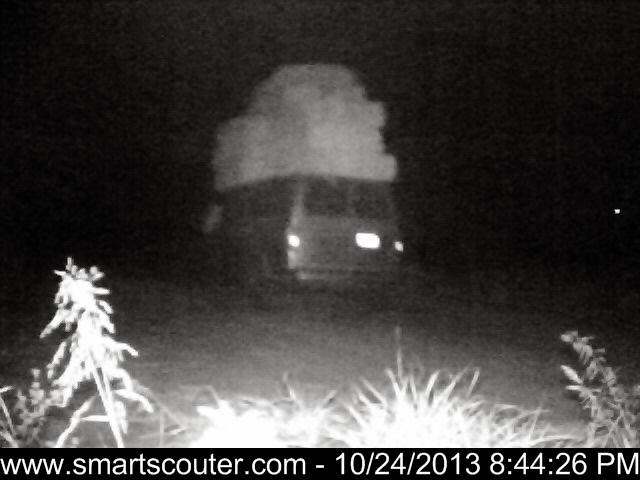
A grower’s security surveillance system captured the below images of a hay theft taking place at 8:44 p.m and 11:30 p.m. on Thursday, October 24, in an area south of Yuba City, north of the Sutter Bypass.

Please contact the Sutter County Sheriff’s Department with any information: 
Let’s work together to catch these thieves.

Thanks to Megan Foster with the Yuba Sutter Farm Bureau for getting this information to California Ag Today.


2016-05-31T19:43:14-07:00October 28th, 2013|

NEW KIDS ON THE BLOCK: CROP PROTECTION REGISTRATIONS

New Registrations


DUPONT CROP PROTECTION
DuPont Coregent Insect Control
For the control of various insects such as beet armyworms, cabbage loopers, and corn earworms on various crops such as cabbage, corn, and cotton

LOVELAND PRODUCTS, INC.
Lpi 643 Insecticide

For the control of various insects such as European red mites, avocado thrips, and white apple leafhoppers on crops such as apples, avocados, and cotton

2016-05-31T19:43:15-07:00October 28th, 2013|
Go to Top