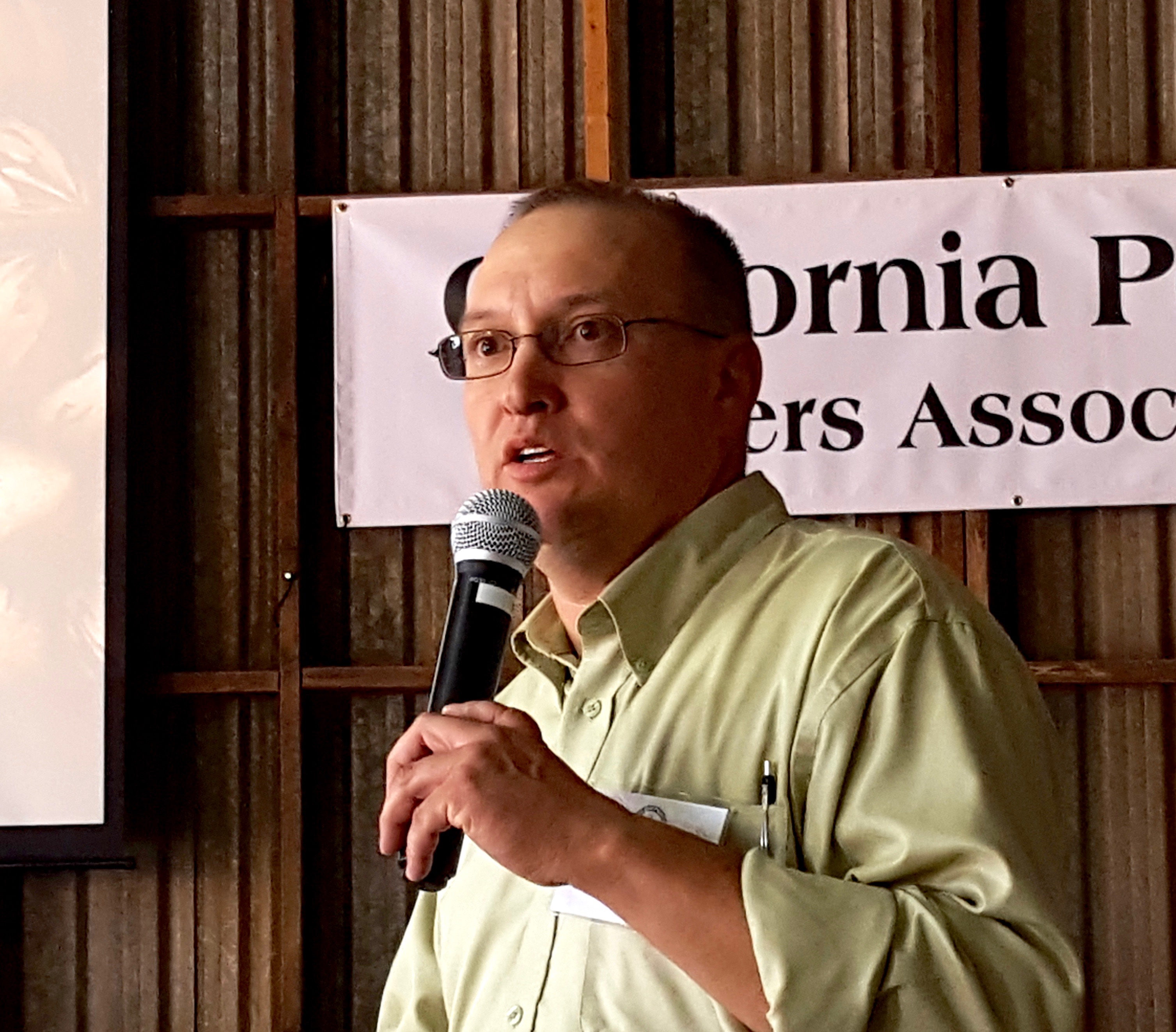
Ryan Metzler Juggles Many Farm Operations

Ryan Metzler Juggles Farm Operations—Large and Small


By Patrick Cavanaugh, Farm News Director


Ryan Metzler grew up as a fourth generation California farmer, as his dad and uncle had a fairly big farming operation producing tree fruit and winegrapes in the Fresno area throughout the 1970s and 1980s. Eventually, Ryan’s dad spun off on his own, enabling Ryan to work with his dad for many years.


Today, Metzler is a graduate of Fresno State, lives in Fresno, and as vice-president of Capital Agricultural Property Services—the property management division of Prudential Ag Investments—he manages many farm operations in the West. “Most of our clients are large investment groups,” said Metzler, “so these clients will typically look at large agricultural properties as an investment.”


As these investment companies typically know little about farming, Metzler explained, “our role is to not only make recommendations about what to plant, but also how to diversify, how many acres, how to process, and who gets to buy the fruit. So we end up growing fruits, nuts and vegetables and just about anything that is consumed,” he said.


“My charge is the western region of the U.S., but we manage farms in the Midwest and the East,” Metzler said. “It does give me opportunities to be involved with a lot of different commodities, but I have to say that growing winegrapes is probably my favorite.”


Managing many properties takes a very strong team. “I work directly with some managers and then we hire a secondary layer of management to do the tractor work and the day to day operations. We have both the economic responsibility, but also the practical farming responsibility to maintain these properties because they do change over time.”

California Cabernet Winegrapes


Metzler also farms 200 acres of winegrapes and tree fruit in the Fresno/ Sanger area. “What I find the most interesting, is that I get to be a small grower and deal with small grower issues, and I also get to be a large grower and deal with large grower issues. And I love to marry up those two challenges because it gives me a great perspective on decision making. Sometimes you have to make a strategy choice and other times you have to make a tactical choice, and I find that mix to be really rewarding,” said Metzler.


Metzler summed up farming as “an absolute thrill. I wake up everyday and pinch myself to be lucky enough to do something like this for a living.”
2016-08-26T12:05:07-07:00August 26th, 2016|

CULTIVATING COMMON GROUND: Economic Analysis of Drought on California Agriculture

Editor’s note: We thank Aubrey Bettencourt for her contribution to California Ag Today’s CULTIVATING COMMON GROUND commenting on the report, “Economic Analysis of the 2016 Drought for California Agriculture,” released this week. Lead UC Davis author Josué Medellín-Azuara’s response can be read below. 


By Aubrey Bettencourt, executive director, California Water Alliance (CalWA)


Josué Medellín-Azuara, Duncan MacEwan, Richard E. Howitt, Daniel A. Sumner and Jay R. Lund of the UC Davis Center for Watershed Sciences, ERA Economics and the UC Agricultural Issues Center reported their views on the economic impact of California’s continuing drought on agriculture this week. The study, “Economic Analysis of the 2016 Drought For California Agriculture,” proved to be uncommonly riddled with errors, questionable metrics and inaccuracies; it’s a continuation of a disturbing recent trend.

CA Water Alliance logo


The authors claim that about 78,800 acres of land might be idled due to the drought, but a quick Google search shows a single water district that had more than 200,000 acres of fallowed land in 2016. There are more than a hundred other water districts throughout the state, and most are reporting idled acreage.


In another irrigation district in Yuba County, more than 100 agricultural users have been cut off entirely, leaving their nearly-mature crops and fruit and nut trees without water.   [North Yuba Water District (NYWD)]


This year the federal and state water projects announced they would provide agriculture with 55% of their water. Two months ago, they reduced the estimate to 5% south of the Delta, and they are struggling to even deliver that amount.


Across the state, water prices have increased dramatically, whether pumped from the ground or bought on the faltering water-exchange market. Water that costs less than $250 per acre foot in 2012 now costs up to $750 or more.


It doesn’t take a doctoral or economic degree to understand that when the price of water goes up, the cost to produce food also goes up. Farmers may be getting more money for the produce they grow, but they are watching their bottom line shrink because it costs more to grow it. Even water from their wells isn’t free; pumping takes energy, and energy costs money too.


Adding to rapidly increasing costs are the new minimum wage, capped work hours, and hundreds of regulatory mandates from the 80+ local, state, and federal agencies that oversee every aspect of California farming and bury farmers in paperwork and red tape. Compliance takes time away from growing food, and it costs money.


Take a look at rice farmers. Growing rice today is a losing proposition. After the labor, cost of rice plants, fuel, fertilizing, care, harvesting, drying and milling, growers pay substantially more to grow rice than they can charge for their crop. Many have converted rice paddies to other uses, and some sell their water or take money from federal agencies and conservation groups to create wildlife habitat in order to simply stay afloat. Some are selling off their land to developers, a lose-lose decision affecting everyone.


On main street, consumers are another group taking a second, alarmed look at their grocery, water and sewage bills. All are rising far faster than inflation. Whether you are talking about the price of fruit, bread and eggs or the cost of taking a shower, all have been increasing over the past five years because of the drought.


To really understand what’s happening, take a drive out of the city and into the countryside where your food is grown. Stop at a roadside produce stand or park your car and strike up a conversation with some ranchers and farmers in a small town cafe.


After you hear their stories, you may realize that almonds and pistachios are not as labor intensive as strawberries, tomatoes, cucumbers, grapes, beef, lamb or many others out of the nearly 450 crops grown in California. Some crops are thirstier than others, too. This doesn’t diminish the value of these fruits, nuts, vegetables, and proteins. The value of water is what it provides us: in this case, safe, local, and hopefully affordable food.


But commonsense interviews and case studies of actual operations — once the heart of any competent agricultural economic study — are virtually missing from the report’s statistical models built on university computers, research hypotheses and tables of statistics.


The drought has hurt California farmers, and it is hurting Californians wherever they live. Gross income may be up, but net profits are down, and the rate of decline hasn’t hit bottom yet. 


Aubrey Bettencourt is the executive director of the California Water Alliance (CalWA), a leading educational voice and authority on California water. CalWA advocates for the water needs of California families, cities, businesses, farmers and the environment.


Editor’s note: California Ag today thanks Josué Medellín-Azuara, senior researcher, UC Davis Center for Watershed Sciences, and lead author of “Economic Analysis of the 2016 Drought For California Agriculture,” published this week, for his response to several claims made by Aubrey Bettencourt (above).

UC Davis Center for Watershed Sciences
Josué Medellín-Azuara told California Ag Today, “I will not go over debating the comments which I very much welcome and respect, but I would like to provide some thoughts instead.”


1)  “Through remote sensing,” Medellín-Azuara said, “we estimated summer idle land in Westlands by the end of the irrigation season to have been 170K acres in 2011 and just above 270K acres in 2014,” based on NASA data. The difference can be explained by some drought effects and other conditions, according to Medellín-Azuara, “so idled land differences should be taken with a grain of salt. As a point of interest, most of the fallow land we estimated was on the Westside of the south San Joaquin Valley.”


2) In addition, Medellín-Azuara clarified, “My understanding is that there is a cost issue and a cutoff issue. We estimated about 150 TAF (Thousand Acre-Feet) of [water] shortage in the Sacramento Valley in our study. At current conditions for North Yuba Water District (NYWD) agriculture is no more than 3 TAF from my reading of the attached document. I am not saying the cutoffs are not hard for the more than a hundred users, but [I] also want to put numbers into perspective.”


3) “From what I’ve heard and read,” Medellín-Azuara stated, “the timing [of] more than quantity of the projected releases is unfortunate. One of the things we highly encourage in this and past reports is easing of low environmental impact water transfers among users.”
2021-05-12T11:05:48-07:00August 22nd, 2016|

UC Davis Researchers Point to Government as Culprit for Fallow Land

Government Policies—not Drought—Blamed for Fallow Land


By Patrick Cavanaugh

“Neither snow nor rain nor heat nor gloom of night stays these couriers from the swift completion of their appointed”¹ water deliveries.

Not even drought can be blamed for land fallowing due to lack of water deliveries to Central Valley federal water users.


Jason Peltier, manager of the Federal water district, San Luis and Delta-Mendota Water Authority, said, a UC Davis study released this week, “Economic Analysis of the 2016 Drought For California Agriculture,” has confirmed that failed government water policiesnot a lack of rainfall and snow pack—are responsible for the widespread water shortages and the fallowing of more than 300,000 acres of land in the federal water districts on the Westside of Fresno and Kings Counties.

San Luis & Delta-Mendota Water Authority

“It raises this question,” Peltier asked, “When do we get honest and start talking about the regulatory drought—the man-made drought, the policy-induced drought, the policy-directed drought? We can’t even have an honest conversation about that.”


“That our opponents want to deflect and obscure that whole conversation is telling,” he continued, “because we have a tremendous story of adverse economic impact as a result of failed policies. When they tried to protect the fish, they took our water away and they made the supply unreliable. ‘Just a huge failure and they don’t want to address it; they don’t want to deal with it. The same agencies are fixated with their false confidence or their false certainty, their false precision, in terms of how to help the fish.”


Peltier explained the regulators failed to deliver all of the 5% allocation [née water delivery reduced by 95%] to growers california drought fallow landin the federal water districts south of the Delta. “It’s nonsense,” he reiterated, that part of the insufficient 5% was never delivered this season. “It’s avoidance of the reality that the regulators have constricted the heck out of the water projects and made it so—even in wet years, and like this year, a normal to wet year—we’ve got huge amounts of land out of production,” Peltier said, adding that almond growers in the federal water districts are not getting a late, post-harvest irrigation, which can hurt next year’s production.


¹Inscription on the James Farley Post Office in New York City

2021-05-12T11:05:49-07:00August 19th, 2016|

Jamming Leafhopper Signals

Jamming Leafhopper Signals to Reduce Insect Populations that Vector Plant Disease

By Patrick Cavanaugh, Farm News Director


An innovative team of researchers at the San Joaquin Valley Agricultural Sciences Center, USDA Agricultural Research Services (ARS) in Parlier Calif., are trying to confuse leafhopper communication in hopes of reducing certain devastating plant diseases. Of particular interest is the glassy-winged sharpshooter, a large leafhopper that can vector or spread the bacteria Xylella fastidiosa from one plant to another which causes devastating plant diseases such as Pierce’s disease in grapes and almond leaf scorch


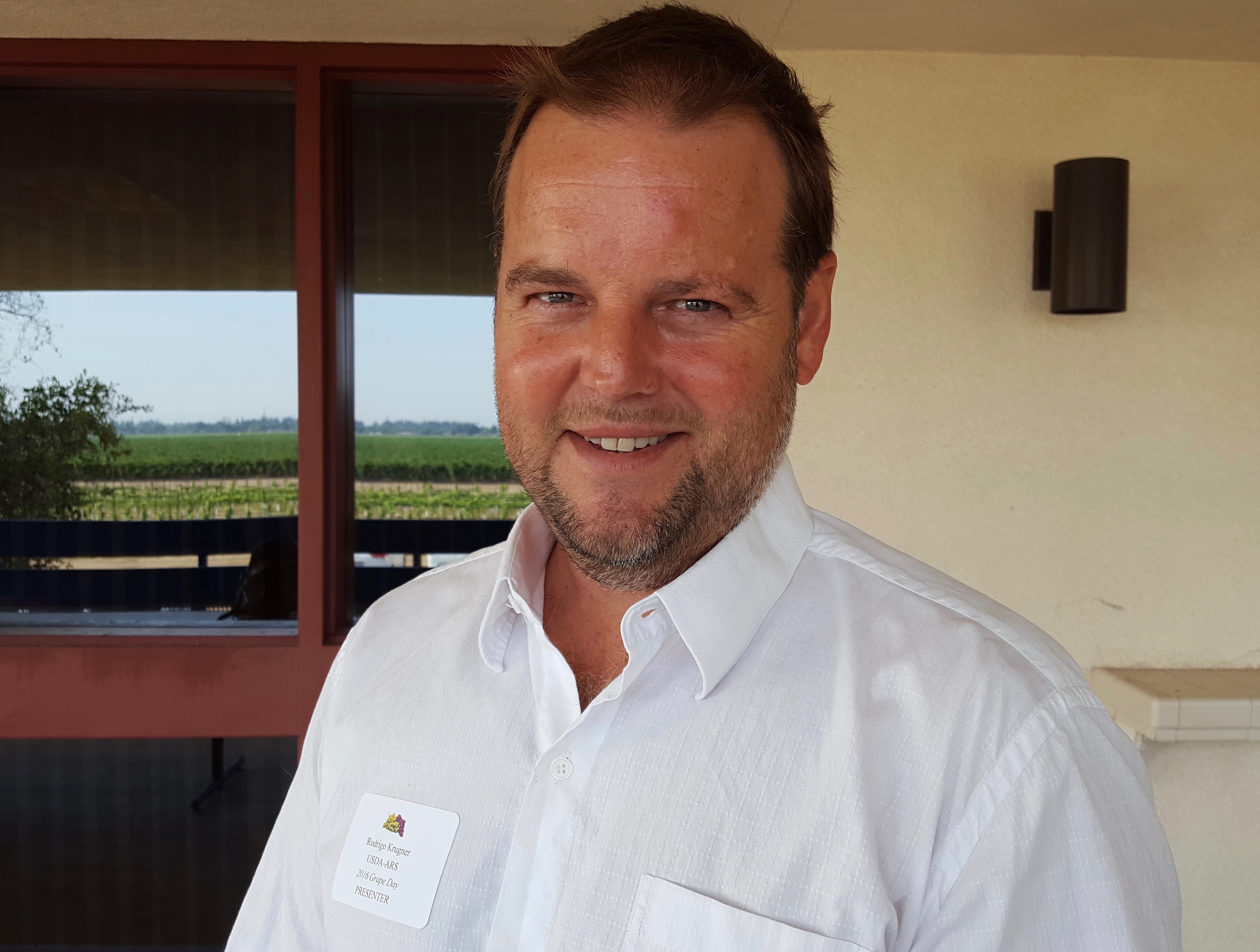
Dr. Rodrigo Krugner, a research entomologist on the USDA-ARS Parlier team since 2007, explained, “We started on this glassy-winged sharpshooter communication project about two years ago. These insects use substrate-borne vibrations, or sounds, to talk to, identify and locate each other; actually do courtship; and then mate,” Krugner said.

Click here to hear LEAFHOPPER SOUNDS!

Glassywinged Sharp Shooter

Glassywinged Sharp Shooter


“This area of research started probably 40, or 50 years ago with development of a commercially-available laser doppler vibrometer (LDV), a scientific instrument used to make non-contact vibration measurements of a surface,” Krugner said. “Commonly used in the automotive and aerospace engineering industries, the LDV enabled an entomologist to listen to and amplify leafhoppers communicating,” Krugner said. “We’ve been doing recordings in the laboratory, learning about their communication with the idea of breaking, or disrupting, that communication. Once we disrupt that, we can disrupt mating and thereby reduce their numbers in vineyards and among other crops.”


Krugner noted the research team is evaluating two different approaches: one is to discover signals that disrupt their communication, and the other is lure them away from crops or towards a trap. “We may be looking at female calls, for example. An analogous system would be the pheromones, or long-range attraction volatile chemicals released by female lepidoptera, to attract males.” However, since leafhoppers use only sound, Krugner said, “We’re trying to come up with signals to disrupt their mating communication. We’re also looking at signals to jam their frequency range, 4000-6000 Hz, so they cannot hear each other,” Kruger said. “We’re also looking at signals that can be used to aggregate them, or lure them, into one section of a crop, or maybe repel them from the crop. These are all different approaches that we’re investigating right now.”


Krugner explained, “Researchers are attempting to perfect the disruptive sounds in order to do the things we need—to actually implement a management strategy for disrupting not only glassy-winged sharpshooter, but anything in a vineyard that actually communicates using vibrational communication. We know what they are saying to each other, which is very important. In the laboratory, the signals that we have look promising in disrupting the communication of these insects, so we’re taking them into the field.


Current mating disruption trials are underway in Fresno State vineyards. “We’re going to finish that research, hopefully, next year,” said Krugner, adding, “usually, fieldwork takes two to three years to show something.”


(Featured photo:  Rodrigo Krugner, research entomologist, USDA-ARS, Parlier)


2021-05-12T11:05:49-07:00August 15th, 2016|

American Pecan Council Begins with Nominations

NOMINATIONS TO THE AMERICAN PECAN COUNCIL TO BEGIN SOON

UPDATE:  September 1, 2016. The U.S. Department of Agriculture’s (USDA) Agricultural Marketing Service (AMS) is seeking nominations of 15 growers and shellers (handlers) to serve on the American Pecan Council.  Members of the council will be appointed by the Secretary of Agriculture to administer the federal marketing order with oversight by AMS.

Nomination forms are available on online at https://www.ams.usda.gov/rules-regulations/moa/986-pecans or by contacting AMS at (863) 324-3375.

Completed nomination forms must be received by AMS no later than Sept. 6, 2016.

Forms may be submitted by mail to USDA, AMS, Marketing Order and Agreement Division, 1124 First Street South, Winter Haven, Fla. 33880 or email Jennie.Varela@ams.usda.gov.


The Final Rule for the Federal Marketing Order for Pecans was published in the Federal Register on Thursday, August 4, 2016. Posted by the , the historic event culminated a three year grassroots effort of pecan stakeholders who collaborated with USDA to write and support the order that is now federal law. This action initiates the process of nominating, selecting, and seating of the administrative body of the FMO, the American Pecan Council. A likely schedule over the next few weeks is as follows:

Week of August 8

  • OMB approves Nomination Forms
  • Call for Nomination Press Release; nomination forms mailed to Shellers and Growers, electronic versions available to download

Week of August 22

  • Deadline for Nominations to be returned to USDA

Week of August 29

  • USDA to mail ballots to growers and shellers to vote on Nominees

Week of September 19

  • Deadline for Ballots to be returned to USDA
  • Deadline for background statements (Nominator should seek to gather this document from the Nominees as soon as someone agrees to be nominated.) Only those with completed background statements can be sent forward on the selection order to the Secretary.

Month of October

  • Selection Press Release for the new Council
  • Conference call with USDA Staff and new Council Members (1/2 day) for FMO Orientation
  • Council meets in person

UPDATES WILL BE POSTED TO THE APB WEBSITE AS THEY BECOME AVAILABLE

FAQ about the Nomination Process:

  1. HPecan Cluster Royalty Farmsow will Nomination Forms be made available? Upon approval by OMB, official forms will be posted on the USDA website, mailed to growers and shellers on current USDA lists, and posted on the American Pecan Board website.
  2. Who can nominate? Any grower within a region can nominate another grower within the same region. Any sheller within a region can nominate another sheller within the same region.
  3. Who is a grower? A person who has produced an average of 50,000 lbs. of inshell pecans over the last four years or who has 30 pecan acres. All production or acreage must be within the 15 state production area (domestically produced).
  4. Who is a sheller? A person (entity) who has shelled at least one million lbs. of domestically produced inshell pecans in the prior fiscal year.
  5. What determines a large grower and small grower? A large grower is defined as having pecan acres equal to or more than 176 acres, and a small grower has less than 176 acres.
  6. What determines a large sheller and a small sheller? A large sheller is defined as having handled 12.5 million lbs. or more of domestically produced inshell pecans in the prior fiscal year, and a small sheller is defined as having handled less than 12.5 million lbs. of domestically produced inshell pecans in the prior fiscal year.
  7. Can a large grower nominate a small grower and can a small grower nominate a large grower for the appropriate seat? Yes
  8. Can a large grower second the nomination of a small grower, and can a small grower second the nomination of a large grower? Yes
  9. Can a large sheller nominate a small sheller and can a small sheller nominate a large sheller for the appropriate seat? Yes
  10. Can a large sheller second the nomination of a small sheller, and can a small sheTree Shaker Royalty Farmsller second the nomination of a large sheller? Yes
  11. If a grower grows pecans in more than one region, in which region can he/she be nominated? In the region in which he/she grows the largest volume of their production.
  12. If a sheller handles pecans in more than one region, in which region can he/she be nominated? In the region in which he/she handled the largest volume of domestically produced inshell pecans within the preceding fiscal year.
  13. Can a vertically integrated pecan operation (grows and shells) be nominated as a grower and a sheller? No, a decision must be made by the person (entity) being nominated whether to be nominated as a grower or a sheller.
  14. Who nominates the candidates for the accumulator and public member seats? Once the 15 member Council is seated, they nominate candidates for the accumulator and public member seats.

(Source: )

2016-09-01T17:31:06-07:00August 12th, 2016|

CULTIVATING COMMON GROUND: Almond Board on Assessment Increase

Almond Board’s Response on Assessment Increase


Editor’s note: We thank Mike Mason for his contribution to California Ag Today’s CULTIVATING COMMON GROUND, in response to the letter submitted by John Harris.

By Mike Mason, chairman of the Board of Directors, Almond Board of California


Over the history of this [almond] marketing order, assessments have risen and fallen to meet changing business conditions. This increase was voted on by the Board of Directors after much input from growers and handlers.  After the vote, the industry had an opportunity to weigh in again during a USDA-administered comment period.  They will get another chance during a second comment period.

Only after growers have had all of these opportunities to voice their opinions will the USDA make a final decision on the assessment.

The Almond Board of Directors welcomes your feedback and is available to discuss any questions you may have about the critical investments and justification for this assessment increase.

Below you will see a memo I sent to the industry, dated April 14 2016.  It covers why and how the assessment is needed and will be used.

Sincerely,

Mike Mason                                                                                                               


Mike Mason is a first generation almond farmer and partner of Supreme Almonds of California, a family owned and operated almond handling operation in Shafter. He is also the Chairman of the Board of Directors of the Almond Board of California.


CA Almond Board Header


To: Almond Handlers and Growers

From: Mike Mason, Chairman of the Board of Directors, and

Kent Stenderup, Vice Chairman of the Board of Directors

Re: Almond Board of California FY 16/17 Budget and Assessment Increase

Date: April 14, 2016

On April 12, the Board of Directors met to review the program and budget recommendations coming forward as a result of the extensive strategic planning efforts which have taken place over the past year.

The Board unanimously agreed to recommend a budget for FY 16/17 with an increase of the assessment from 3 cents per pound to 4 cents for a three year period. The increase is limited to three years due to the expectation that almond production will increase significantly during that time period thereby providing additional funding. This decision was made after extensive dialog among Board members as well as outreach between Board members and Handlers and Growers in the almond community.

There are three principal reasons the Board determined an assessment increase was needed. They are:

  1. 30% increase in production anticipated by 2020. This estimated 600 million pound increase needs to be planned for now, to invest in global demand prior to the production hitting the market.

This substantial volume increase is nearly as much as our largest market currently consumes, and is more than the consumption of our four largest export markets combined. This will require doing more of what has been working, as well as implementing innovative new marketing programs.

  1. Strain on agricultural resources has never been higher. Almonds are currently California’s highest value agricultural crop and soon will be its largest acreage crop. With this leadership comes responsibility. Additional investment will allow us to take a leadership role by investing in and accelerating research which will enable us to address concerns, such as:
    • our changing water supply and quality system,
    • air quality as it relates to harvesting, pesticide and energy use,
    • bee health, which is critical to our success
  2. Transformation of the consumer landscape. The environment in which we are growing and marketing almonds is quickly changing. Consumers are more interested in where and how their food is made. In response to this, the industry needs to take a leading role in the world of sustainable farming, as we have done for so long in the world of nutrition, by transparent communications regarding our meaningful and measured sustainable improvements.

To plan for and address these challenges, your Board of Directors has worked across the Environmental, Production Research, Almond Quality, Technical and Regulatory, and Global Market Development Committees to develop a plan of action. This plan is a two pronged approach including investment in research, via the Accelerated Innovation Management or AIM program (launched at our annual conference), and global marketing:

  • AIM Program: Expand and Accelerate sustainability and production research in 9 areas:
  1. Irrigation and nutrient management
  2. Orchard and rootstock development
  3. Harvesting innovations
  4. Pest management tool development
  5. Pollination research and management practices
  6. Bio-mass and by-product innovation
  7. Food safety leadership
  8. Soil health research
  9. Energy Innovation
  • Global Marketing: Expand our programs to address production growth & changing consumer needs by:
  1. Accelerating programs and results in current markets
  2. Considering additional markets for investment
  3. Increasing communication transparency and trust
  4. Ensuring confidence in our sustainability efforts

Your Board of Directors welcomes your feedback and is available to discuss questions you may have about the critical investments and justification for this assessment increase. The assessment increase will be reviewed by the USDA and an opportunity for public comment will be provided before any change is implemented.


1150 Ninth St., Ste. 1500  *  Modesto, CA  95354  USA

T: +1.209.549.8262  *  F: +1.209.549.8267


To read the original post to which the Almond Board is responding, go to: CULTIVATING COMMON GROUND: Almond Growers on Assessment Increase, by John Harris.


The opinions, beliefs and viewpoints expressed by the various participants on CaliforniaAgToday.com do not necessarily reflect the opinions, beliefs, viewpoints or official policies of the California Ag Today, Inc.

2016-08-10T17:24:51-07:00August 10th, 2016|

CULTIVATING COMMON GROUND: Almond Growers on Assessment Increase

Almond Growers Want Justification and Vote on Almond Board’s Assessment Increase


Editor’s note: We thank John Harris for his contribution to California Ag Today’s CULTIVATING COMMON GROUND. The Almond Board’s Response can be read at Almond Board’s Response on Assessment Increase.

By John Harris, owner, Harris Ranch


Marketing orders give agriculture a great tool to collect fees from producers to promote products and/or conduct research projects.  The concept is great, and increasing demand is always good. To be successful, the plan needs to be affordable and explained so it is understood and backed by a big majority of the producers.  I am concerned the Almond Board’s recent assessment increase from 3 to 4 cents a pound—in the absence of an almond producer vote—is unwise.

Harris Farms Fresh LogoAt the current rate of 3 cents per pound, money raised will increase as production increases, which seem fairly certain.  Plus, the fund receives significant help from a government program to encourage exports.  A year or so ago, almond growers were doing really well, when many sales were exceeded $4 a pound.  But last fall prices dropped significantly, in some cases to the $2 range. This loss in revenue made it tougher for almond growers to break even. A grower producing 2,500 pounds per acre is now paying $75 per acre in assessments; under the new plan it would increase to $100 per acre.

To get feedback from growers, the USDA published a request for comments. The comment period opened on July 18 and closed on August 2. But the industry was not notified until July 27. I commented at the time that I was not in favor of the assessment without full knowledge of the purpose of the extra money. I am certain many growers have an opinion on this, but only five comments were submitted. I think most growers did not realize both the assessment increase was under discussion and a producer vote would not be forthcoming.

The time frame for comments was alarmingly short; however, the USDA has decided to reopen the comment period for 10 days.  The reopening of the comment period is expected to be announced within the next two weeks and will be communicated immediately to the industry once it is published in the Federal Register.

I urge all producers to take a good look at the proposal and voice your opinions.

This link will take you to the almond assessment comment page: https://www.regulations.gov/docket?D=AMS-SC-16-0045.

There should be more of a democratic process. I think this proposed assessment increase needs to go to a vote among the growers affected by it and should require strong approval by at least 51 percent of the growers representing 60 percent of the production. We don’t want to micromanage the Board’s process, but large changes like this assessment increase should demand some form of referendum.

I also think everyone would like to know how the millions of extra dollars collected would be used.

And, of course I think the industry deserves more awareness of this proposed increase in assessment. I do not hear people talking about it; many growers may not even learn about the extra assessment until they get their check from their handler next year. I think all almond growers need to know this is happening now and not be surprised next year.

If I asked my boss for a 33% raise, I believe the onus would be on me to sell the idea and win support, rather than just push it through providing little information to the guy who would be paying me.

If the Almond Board is increasing their budget by 33%, shouldn’t the burden be placed on the Board to win the support of growers?  I would think they would communicate a clear plan on how to spend the enormous increase—a strong and strategic plan—they would be eager and proud to share with growers and handlers.

To increase any tax/assessment, the logical thought process should be, “No, unless proven to be needed, supported, and affordable,” instead of defaulting to, “Increase the tax unless we get stopped.”


The Almond Board’s Response can be read at Almond Board’s Response on Assessment Increase.


Harris Ranch and Allied Companies


The Harris Family’s commitment to agriculture spans over 100 years, four generations, and four states, from Mississippi, to Texas, to Arizona, and eventually into California.

J. A. Harris and his wife, Kate, arrived in California’s Imperial Valley in 1916 to start one of California’s first cotton gins and cotton seed oil mills. They later moved to the San Joaquin Valley and began farming there.

In 1937, their only son, Jack, and his wife Teresa, began what is now known as Harris Ranch, starting with a previously unfarmed 320 acres of desert land on the Valley’s Western edge. With vision and determination, Harris Ranch has grown into the most integrated, diversified, and one of the largest agribusinesses in the United States.

Beginning with cotton and grain, Harris Ranch now produces over thirty-three crops annually, including lettuce, tomatoes, garlic, onions, melons, oranges, lemons, almonds, pistachios, walnuts and winegrapes, all backed by their commitment to superior quality and satisfaction. Harris Farms thoroughbreds are raised and trained to compete internationally. Harris Feeding Company, California’s largest cattle raising operation, and Harris Ranch Beef Company produce and market a premium line of packaged and fully-cooked beef products, including Harris Ranch Restaurant Reserve™ beef. All Harris products are served and sold at the internationally acclaimed Harris Ranch Restaurant and Inn.


The opinions, beliefs and viewpoints expressed by the various participants on CaliforniaAgToday.com do not necessarily reflect the opinions, beliefs, viewpoints or official policies of the California Ag Today, Inc.


2016-08-10T16:46:47-07:00August 10th, 2016|

Fresno County Agricultural Value Declines in 2015

Fresno County Agricultural Value Declines in 2015

Drought, Lower Commodity Prices and Production Issues Drive Report Down

The Fresno County Department of Agriculture’s 2015 Crop and Livestock Report was presented to the Fresno County Board of Supervisors TODAY.  Overall, agricultural production in Fresno County totaled $6.61 billion, showing a 6.55 percent decrease from 2014’s $7.04 billion.

“The strength of Fresno County’s agricultural industry is based upon the diversity of crops produced.  This year’s report covers nearly 400 commodities, of which, 62 exceed $1 million in value,” said Fresno County Agricultural Commissioner/Sealer of Weights and Measures Les Wright“The lack of a reliable water supply continues to fallow productive land,” Wright continued.

Les Wright Fresno County Ag Commissioner

Les Wright, Fresno County Ag Commissioner

The annual crop report provides a chance to examine changes and trends in crop acreage and yields.  Amounts in the report reflect the gross income values only (income before expenses) and does not reflect net return to producers.

According to the released figures, an increase was seen in vegetable crops (4.95% = $59,025,000). Decreases occurred in field crops (41.99% = $134,995,000), seed crops (30.80% = $10,437,000), fruit and nut crops (6.6% = $229,551,000), nursery products (25.65% = $16,088,000), livestock and poultry (9.44% = $118,769,000), livestock and poultry products (31.38% = $199,769,000), apiary (2.39% = $1,735,000) and industrial crops (54.38% = $3,992,000). 

“Every day, millions throughout the world are eating food that originated in Fresno County,” said FCFB CEO Ryan Jacobsen. “The magnitude of this industry does not occur by happenstance. Generation upon generation of agricultural infrastructure has been built to feed an unbelievably productive, wholesome and affordable food supply.

Ryan Jacobsen

Ryan Jacobsen, CEO Fresno County Farm Bureau

“I continue to remind all—eaters; elected officials; local residents who benefit from a healthy, vibrant farm economy; and those whose jobs depend upon agriculture—that we must not take what we have for granted,” continued Jacobsen.  “By not addressing our challenges head-on, whether it be water supply reductions, labor issues, governmental red-tape, etc., we are allowing our economy, our food and our people to wilt away. The direction of the Valley’s agricultural industry explicitly determines the direction of the Valley as a whole.”

One popular component of the report is review of the county’s “Top 10 Crops,” which offers a quick glimpse of the diversity of products grown here. In 2015, these crops accounted for three-fourths of the report’s value.  Added to this year’s list were mandarins (9) and oranges (10).  Mandarin demand continues to push acreage upwards.  Dropping out of the Top 10 was pistachios and cotton.  Pistachio production was significantly reduced last year due to the “blanking” issue that left many shells without nuts, and cotton acreage continues to be depressed due to reduced water supplies and fallowed land.

For a copy of the full crop report, contact FCFB at 559-237-0263 or info@fcfb.org. 
Fresno County Crops 2015
Fresno County Farm Bureau is the county’s largest agricultural advocacy and educational organization, representing members on water, labor, air quality, land use, and major agricultural related issues. Fresno County produces more than 400 commercial crops annually, totaling $6.61 billion in gross production value in 2015.  For Fresno County agricultural information, visit www.fcfb.org.
2021-05-12T11:05:49-07:00August 9th, 2016|

Pecan Growers Excited about Federal Marketing Order

Calif. Pecan Growers Gather to Discuss Federal Marketing Order

By Patrick Cavanaugh, Farm News Director

On Wednesday, August 3, nearly 100 people attended the California Pecan Growers Association meeting at Linwood Nursery, the oldest supplier of pecan trees in the world, located in Le Grand in eastern Merced County.

Not all attendees were current pecan growers; many were contemplating planting pecan trees. New interest and excitement in pecan farming surrounds the newly approved (May 2016) and forthcoming Federal Marketing Order For Pecans (FMO) that will assess growers a few cents per pound to increase pecan marketing and awareness in California and other areas of the country.

Pecan growers and others interested in the crop gathered in Le Grand to discuss Federal Marketing Order for Pecans

“We want to model it after the Almond Board of California,” said Mark Hendrixson, president of the California Pecan Growers Association, whose members farm approximately 4,000 acres of the crop throughout the San Joaquin and Sacramento Valleys.

“We had a very a good turnout. Pecans are a growing industry in California; we have great weather for them,” said Hendrixson. “We do things a little bit differently because of our great weather, but we’re able to produce extremely good quality.”

CPGA-Logo“Pecans are extremely healthy,” said Hendrixson. “The research has been out there for quite some time, but the pecan industry has never had a unified marketing voice. Once we develop the Federal Marketing Order, we will be able to spread the message about health and other great benefits that will help drive interest in pecans and pecan consumption, and to deliver quality product to consumers around the world.

Hendrixson expects the Federal Marketing Order For Pecans to be in place very soon. The USDA will officially seat the Board of the American Pecan Council (APC), the new governing board of the FMO, by October 1, 2016 by calling for board member nominations, qualifying the candidates and issuing a ballot for qualified voters to vote on those nominations.

“Once those ballots are approved by the Secretary of Agriculture,” Hendrixson said, “we’ll have an elected Board that can begin to function and actually set the assessment, which in turn will be approved by the USDA going forward.”

2021-05-12T11:05:50-07:00August 4th, 2016|

Celebrate National Ice Cream Month!

Celebrate National Ice Cream Month with California Ice Cream and Flavors!

By Lauren Dutra, NAFB Summer Intern and Assistant Editor

Jennifer Giambroni, director of communications, California Milk Advisory Board

Jennifer Giambroni, director of communications, California Milk Advisory Board

First established in 1984 by Ronald Reagan, the 40th President of the United States, National Ice Cream Month was scheduled for the month of July, with the third Sunday of the month designated as National Ice Cream Day.

Jennifer Giambroni, director of communications, California Milk Advisory Board, explained why Californians, in particular, have so much to celebrate during National Ice Cream Month. “As the number one ice cream state,” she said, “we produce 126 million gallons of ice cream a year.”

Thats a lot of scoops!

California also leads the nation in milk production, and 99 percent of dairies in the state are family-owned. Including milk production on farms and milk processing, the California dairy industry, supports about 190,000 jobs in the California economy and contributed about $21 billion in economic value added in 2014, according to “Contributions of the California Dairy Industry to the California Economy,” by the University of California Agricultural Issues Center (May 14, 2015). 

Blueberry Ice Cream Float

Blueberry Ice Cream Float (Source: California Milk Advisory Board, Kristina Vanni Blogger, 2012)

Ice cream, being both timeless and innovative, has evolved in flavors and varieties over the years, according to Giambroni, while still holding true to the traditional treat you grew up with as a kid. “Ice cream is an important category that represents a lot of the milk produced on California’s more than 1,400 family dairy farms and carry the Real California Milk seal,” she noted.

“We’re seeing adult-friendly milkshakes with the addition of spirits, ice cream sandwiches made with more than cookies, and sundaes with everything from balsamic vinegar reductions to red bean paste,” Giambroni elaborated. Other new ice cream trends include hyper-indulgent flavor combinations, including nuts and fruits grown in California, and “better for you” versions with probiotics, varying levels of fat and sugar, added calcium, lactose-free, and different kinds of oils. “We’re loving the olive oil and walnut oil ice creams for their subtle flavors,” Giambroni noted.


Approximately 12 pounds of Real California Milk are used to make just one gallon of California ice cream.


Watermelon Chill Ice Cream (California Milk Advisory Board)

Watermelon Chill Ice Cream (California Milk Advisory Board)

The California Milk Advisory Board works with bloggers on how to incorporate ice cream into events for children of all ages:

TomKat Studio – DIY Ice cream Sandwich Bar

Hostess with the Mostess – Healthy Milkshake Bar

Hostess with the Mostess – How to Set Up a Cocktail Milkshake Bar

Hostess with the Mostess – Kids Sundae Party


Check it out:

Ice Cream Sandwich (California Milk Advisory Board)

Ice Cream Sandwich (California Milk Advisory Board)

Rick’s Ice CreamBlue Moon-A fruit loops tasting ice cream with super-secret natural ingredients

McConnell’s Boysenberry Rosé Milk JamCentral Coast, grass-fed milk & cream and cane sugar, slowly-simmered to a thick, rich and decadent milk jam – then churned into house-made, boysenberry & rosé wine preserves. 

Breyer’s Strawberry Ice Cream-packed with sun-ripened California strawberries picked at the peak of happiness!

Gilroy Garlic Festival Garlic Ice Cream-July 29-31, 2016

The Orange Works‘ Orange Ice Cream and Chili Mango Ice Cream

Where Is the Best Ice Cream in California? (PBS, 2014)

2016-07-23T17:33:15-07:00July 22nd, 2016|
Go to Top