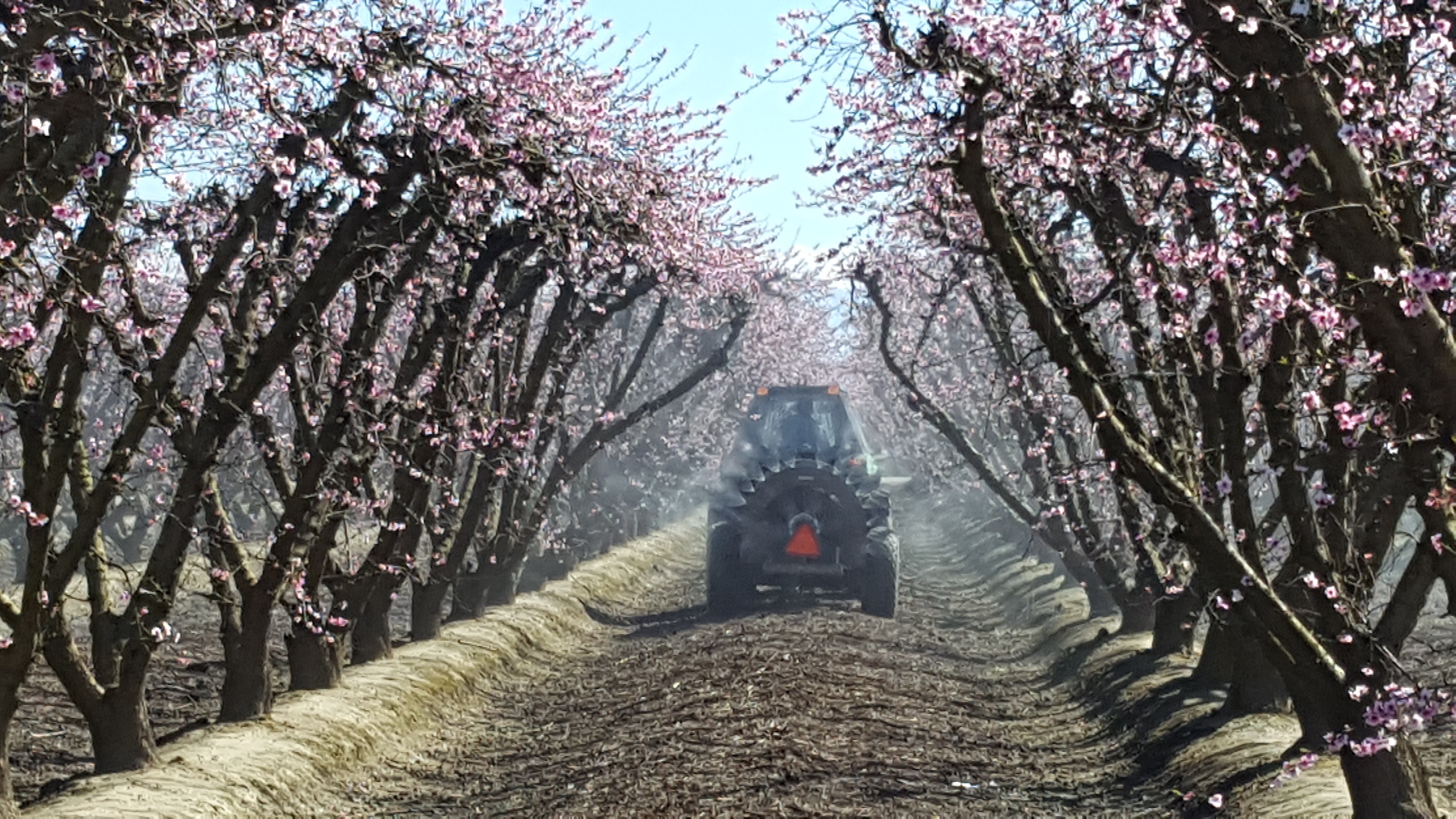
FieldIn Technology Answers Spray Questions

New FieldIn Technology Helps with Spray Efficiency

By Patrick Cavanaugh, Farm News Director

Those operating spray rigs for farmers are always striving to do their best job, but a company by the name of FieldIn has technology that will make sure that job is being done correctly.

Neil Knaak

Neil Knaak is with FieldIn, a company that puts accuracy into the spray rig.

“With FieldIn, you know, they can just track this stuff. It’s how it’s actually being sprayed, and with that type of information, they’re able to save time and money on their applications,” Knaak said.

It’s all part of the agricultural technology revolution we’re seeing, and Knaak says it’s being well received. “So far, it’s been pretty positive. It’s all the more critical for them to be taking a look at just the speeds. You know, to know the speed, the location, out put. You know, coverage of how these things are doing, and so once they see the data, it just kind of clicks, and it makes all the sense in the world.

Knaak said there’s sensors on the tractor that are recording important information.

“Now we know what’s going on in the field, and with that information you can track, because historically, maybe you had a material that didn’t work or a pressure dropped, and there was not a good way of testing the validity of why those things went wrong,” he said.

“Well, now we can actually replay spray events, and you can watch it in almost real time. So how it’s helping guys is when we go out there and talk to them about speeds and gallons per acre. A grower now can pull up a smartphone and just basically, from a simple dashboard, he’s looking at quality reports,” Knaak said.

“FieldIn will even give him weather data, and they have the scouting feature within the system. I mean, they can pull in just lots of good data that helps them make real time decisions,” he explained.

2021-05-12T11:05:16-07:00July 27th, 2017|

Prunes May Be Answer to Osteoporosis

Prunes May Help Fight Osteoporosis

By Melissa Moe, Associate Editor

California is the world’s largest producer of dried plums, producing about 40% of the world’s supply and 99% of the U.S. supply. Dried plums, also known as prunes, are considered to be a super food thanks to their valuable nutritional content. Recently, California Ag Today spoke to Donn Zea, the executive director of the California Dried Plum Board, about the prune industry and the nutritional benefits of prunes.

“The growers are doing well. Of course, we’ve lost acreage over the last decade. We’re at about 47,000 acres or so. We have a big crop this year; it looks like 105,000 tons. Last year was a short one because of the weather. We seem to be in a good place, Zea said. “I think acreage, certainly in California but even globally, is in balance with demand, and it’s our job now to make sure that we continue to keep California prunes at a high value profile. We like to think that we grow them better and that they taste better than any other prune in the world.”

Recent studies show that prunes are able to assist in aiding and even reversing osteoporosis, the process in which bones become fragile and brittle due to old age.

“We’re finding out a lot about the prune’s role in slowing or even reversing age-related osteoporosis and improving bone health in women so far, but we’re now doing research in men,” Zea said. “There’s a lot of exciting things going on there, especially for those that can’t eat dairy. It’s not the calcium. What we’re learning is that it’s a combination of polyphenols that are working together in prunes. The evidence seems to be clear, in the animal studies we’ve done and in the clinical trials that we’ve done, that these combinations of nutrients and micronutrients are working together to produce a defense against osteoporosis and bone loss and maybe even strengthening bone.”

2021-05-12T11:05:16-07:00June 29th, 2017|

Sorghum May Be Alternative to Corn

Researcher Looks to Sorghum to Replace Corn Silage in Dry Years

By Jessica Theisman, Associate Editor

Water has been a big issue in California for the last couple of years, and many dairy producers are looking for an alternative to corn silage for when water is scarce. Sorghum silage may be a viable alternative to corn. California Ag Today met with Jennifer Heguy, a farm advisor with the UC Cooperative Extension in Merced County who is working on a project, funded by the University of California, to research sorghum.

Heguy’s project consists of looking at sorghum silage to see if it is a good replacement for dairies when California does not have enough water to grow corn. Heguy said this is, “not a good time to talk about sorghum right now because we’ve had a really wet winter and we had this devastating sugar cane aphid last year, which just decimated sorghum crops, but we are continuing to work on sorghum silage.”

With the recent emergence of the sugar cane aphid last year, the sorghum crop in California took a big hit, but the project continues. Some of these projects can take two to three years to determine if it is a good fit into the California feeding systems.

“So this year, we are going to be taking a deeper look at the sorghum quality in terms of nutrition, fermentation characteristics, how people are putting this silage up, and how they are actually feeding it out,” Heguy said.

Photo Courtesy of University of California

2021-05-12T11:05:16-07:00June 15th, 2017|

Working on Nematode Resistant California Commercial Carrot

Nematode Resistant California Commercial Carrot On Its Way?

By Jessica Theisman, Associate Editor

Phil Simon is a carrot breeder and geneticist with the USDA Ag Research Service based at the University of Wisconsin. He produces the vast majority of carrots for the consumers throughout the nation. A big goal is to find a commercial carrot variety that is root-knot nematode resistant. Nematodes are a soil-borne, microscope, worm-like organism destroying production in some fields. Through lots of research, the carrot industry is getting closer to a resistant variety.

The first resistance gene was first discovered in 1992 in a Brazilian variety that may have some genetic resistance. The resistance was discovered by using derivatives from the Brazilian variety crossed with California-adapted carrots. This is all being done with, “the idea of moving that resistance gene into a carrot that’s suitable for California in terms of shape, size, flavor, and productivity,” Simon said.

The Brazilian variety is not suited to California because it is shorter and wider. It does not look like a California carrot, and it bolts very easy, which means it flowers and goes to seed. But with the Brazilian carrot having nematode resistance, it is also heat-tolerant, which is great news for us in California, especially with the rising temperatures.

It is said that California is getting closer and closer to getting its own commercial variety. “We’ve also found genes for resistance in other carrots from around the world, from Syria, China, Europe, and we intercrossed those also into California, so we’re putting a couple of genes in,” he said.

With all of these genes, this makes for an even stronger and durable resistance to nematodes.

2021-05-12T11:05:16-07:00May 16th, 2017|

USDA Raises Plant Pest and Disease Awareness

USDA Website Provides Helpful Tips for Everyone

By Melissa Moe, Associate Editor

April is Invasive Plant Pest and Disease Awareness Month. Pests can vector dangerous diseases. In a state so dense with agriculture, Californians must be aware of the huge dangers that these pests create. We spoke to Edward Verona, the state operations coordinator for the USDA Plant Protection and Quarantine, about Hungrypests.com and how Invasive Plant Pest and Disease Awareness Month will help spread awareness of the dangers of plant pests to the public.

“There are eight helpful tips on Hungrypests.com. The public can learn what they can do to make sure that they’re not moving all of these hungry pests, not just from one state to another, but even within California, being that it’s such a large state,” Verona said.

California grows half of the fruit, vegetables and nuts that are consumed in the United States. Carrying fresh fruits and vegetables across state lines into California can spread dangerous diseases into previously uncontaminated areas and risks harming this huge supply of crops. Plants bought from nurseries and growers can also be homes for invasive pests.

“Make sure that you do buy plants and seeds from reputable sources, such as established nurseries or online businesses. You definitely don’t want to be doing that with fly-by-night dealers. Whether it’s in your neighborhood or online, definitely buy from certified sources,” Verona said.

Growers, producers, and consumers alike are all encouraged to visit Hungrypests.com to learn about the threat and what they can do to help. The website is available in English and in Spanish.

“What’s important is, only one person moving that orange, that apple, or that little sprig of citrus, can be the one to move the problem, but also, it’s everyone and the public that can help by learning what they can do and learning to recognize symptoms of these pests and diseases on hungrypests.com and report,” Verona said.

2021-05-12T11:05:16-07:00April 28th, 2017|

Atmospheric Rivers Hit California

Many Atmospheric Rivers Hit State

By Patrick Cavanaugh, Farm News Director

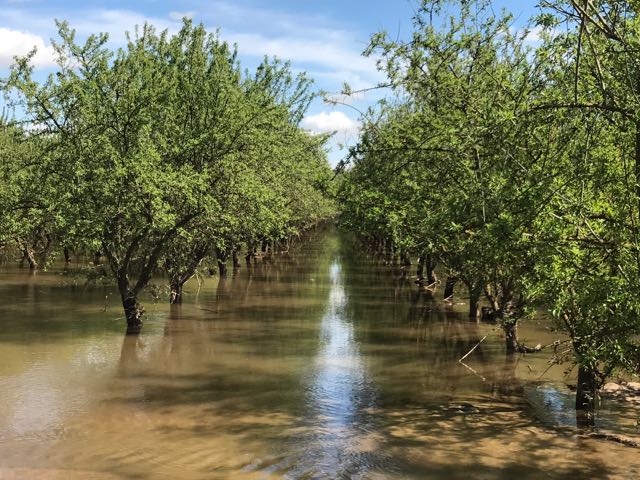
California needs an average of three atmospheric rivers annually to reach its average yearly rainfall. So far this year, the state has seen an incredible 46 atmospheric rivers. This intense rainfall has pushed much of California out of longstanding drought conditions.

California Ag Today spoke with Steve Johnson, a private meteorologist for farmers in California. We discussed atmospheric rivers (AR) and the abundance of rain California has seen in late winter and early spring.

“We had four very big AR flows, and that made a big difference. I think we’re up to 46, and that’s what has made the big difference this year,” Johnson said. With the additional 41 smaller AR, we have seen a very wet California; it is an astounding amount of atmospheric rivers.

Johnson explained that because the storms have been so difficult to predict, it has made things difficult for farmers planning their season. “This year, there was no signal at all. These storms crept up on us this winter. It was very, very dicey for forecasting,” he said. “The year was difficult because some of these storms – in fact the big ones – even though they showed up in the 14, 16-day period, they didn’t look gigantic until about day seven or eight. Then they start gaining and gaining and gaining, and by day four or day five they looked monstrous. Well, that’s not very much time to prepare.”

Johnson noted that these unpredictable storms were caused by an anomaly in the Pacific Ocean that is a remnant of last year’s El Nino. “The predominant reason that we kept getting these atmospheric rivers has been the fact that the sea surface temperatures across the Pacific Ocean have been in a very unusual anomaly,” he said. “They’ve been cold in the Gulf of Alaska, and we have a leftover bit of warmth from last year’s record-setting El Nino that has spread north to just west of the California coast – very warm waters that go all the way over to Japan.”

“If you take a look at the differentiation between the cold water in the Gulf of Alaska versus the warm water, the anomalies between Japan and California, that has created a zonal flow since October.

“Those atmospheric rivers have been grabbing a lot of moisture coming up from that warm water off the California to the Hawaii coast, and then coming into California. It’s just been one right after another,” Johnson said.


2021-05-12T11:05:16-07:00April 25th, 2017|

Indoor Heat Regs: A Solution to a Problem?

New Regs Target Indoor Heat Illness Prevention

By Patrick Cavanaugh, Farm News Director

Many agricultural organizations have submitted written comments opposing Cal-OSHA’s proposed heat illness prevention in indoor places of employment. California has long had an outdoor heat illness regulation, but now an indoor regulation is a possibility. Roger Isom, President and CEO of the Western Agricultural Processors Association – which includes California’s nut processors, cotton gins and other industries – spoke to California Ag Today about the issue.

“This is a solution looking for a problem,” Isom said. “There’s no problem here. The incidents that drove the legislation came out of the Riverside-Ontario, area where you had warehouses that don’t have air conditioning. Most of the time, the temperature in that area is in the 70s and 80s, occasionally in the 90s. Every once in a while they’ll get that rare heat wave that gets up to 100, and if you’re not used to it, yeah, you’re going to have a problem.”

Because Central Valley agriculture is used to the higher heat levels, the buildings are designed differently for the workers, Isom explained. “They’re adequately ventilated. The air moves through it, and we’re used to that heat, so it’s not what we’re talking about in the San Joaquin Valley. Why throw everybody under the bus, so to speak? Makes no sense in this case. It really should be a targeted regulation. The legislature’s allowed for that. Cal-OSHA just need to be directed,” Isom said.

Nearly all the farm buildings have big open doors and are well ventilated with fans and some portable evaporative coolers. Workers who come out of the field where it’s 105 degrees and then walk into those buildings find it quite comfortable.

“It’s going to not make a lot of sense that if we’re telling the guys that are working out on the gin yard to come into the gin for shade if you’re feeling hot or you’re feeling ill. Now you’re subject to another rule regarding higher heat in the building that might be contrary to what you’re doing. It just doesn’t make a lot of sense,” Isom said.

2021-05-12T11:05:17-07:00April 21st, 2017|

White Rot Poses Threat to California Garlic and Onions

Research Committee Works to Prevent White Rot

 By Brian German, Associate Broadcaster

The California Garlic and Onion Research Committee was established in 2005 as a state marketing order under the supervision of the California Department of Food and Agriculture.  Bob Ehn is the CEO & Technical Manager for the committee.  The organization’s main goal is to organize onion and garlic growers to develop white rot management programs.  “Once we find a white rot field, we mark it. We then prepare a white rot list that we hand out every fall to our processors or handlers for them to be able to know not to go back into a field,” Ehn said.

Once infected with white rot pathogens, leaves of the plant will begin to show yellowing and wilting.  Leaf decay will also occur starting at the base, with older leaves collapsing first.  Plants can become infected with white rot at any stage of growth, but symptoms typically appear from mid-season to harvest.  “It has a window of where it’s viable. It’s stimulated by organosulfur oxidate or odor that comes off the roots. … That sends out a message like ringing a dinner bell,” Ehn said.

One of the reasons white rot pathogens are so dangerous to California growers is because of their longevity in the soil.  “If you had a field that had light damage, you go back into that field another time and that 10 percent is probably going to turn into 50 percent because of the ability to reproduce,” Ehn explained. “They are hardy little critters. They’re still viable [in] we know, we’ve documented, 20 years. And anecdotally, we have information that it’s been there 30 years.”

California is the leading producer of garlic and onions in the country, growing more than 90 percent of the commercial garlic in the U.S.  Ehn described how white rot destroys the bulb from the inside out.  “The sclerotia virtually wake up and send out a germination tube looking for that source of the organosulfur compounds, find it, enter the roots, and then can enter the base plate of the garlic. Once it’s inside the base plate, it will reproduce.”

Each year, garlic and onions contribute between $150 to $300 million to the overall farm gate value.  If white rot is found in a field, there is still a chance that the land can remain viable.  “If we could GPS a corner or a piece of ground where the white rot was, and it wasn’t in the rest of the field, we will then map that. By mapping that, we ultimately could come back and treat only that area, thereby not having to do the cost of treating the entire field,” Ehn said.

2021-05-12T11:05:17-07:00April 7th, 2017|

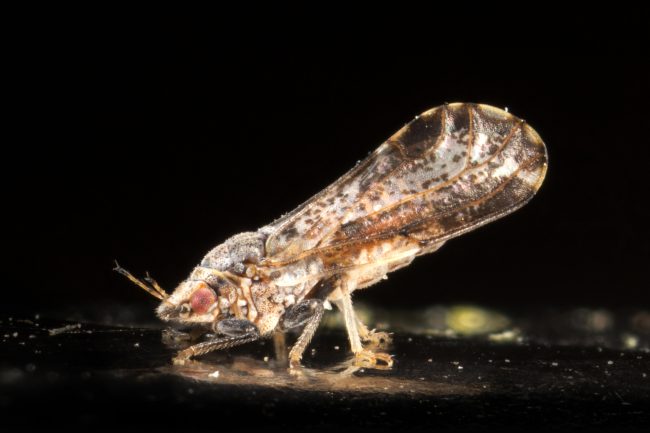
HLB Detected Again in San Gabriel

46 HLB Positive Trees in California

News Release from Citrus Insider

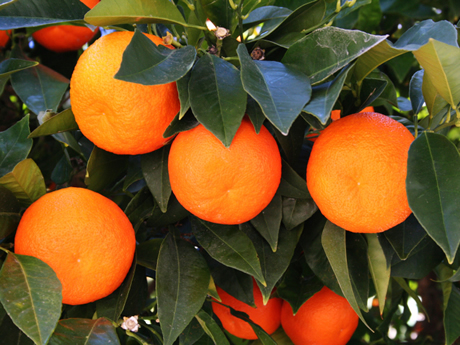
CDFA routinely conducts HLB surveys throughout the state based on a risk model that considers factors that may make an area more likely to have a presence of the disease. CDFA has further fine-tuned this approach by increasing the number of samples pulled from citrus trees that are considered high risk. This strategic approach – developed by the CDFA lead diagnostician with input from the Citrus Pest & Disease Prevention Program and leading scientific researchers – has helped pinpoint infected trees.

State and local crews are building relationships with residents in the area, which not only helps gain access to properties, but also results in swift removal of trees identified as having HLB. While removal of diseased trees is mandatory, positive homeowner relationships encourage cooperation. Of the eight trees recently detected, seven have already been removed or been scheduled for removal by CDFA. Crews are contacting the property owner of the remaining citrus tree Tuesday, March 28, and will pursue quick removal.

In 2016, CDFA collected nearly 50,000 plant samples and nearly 80,000 Asian citrus psyllid samples to test for HLB. Since sample collection began in 2008, more than 400,000 plant and psyllid samples have been collected and processed. This diligent work has contributed to quick detection and eradication of diseased trees.

As a part of the Citrus Pest & Disease Prevention Program, CDFA will continue surveying and sampling the area for HLB and keep the industry abreast of finds as they occur.

2021-05-12T11:05:17-07:00March 29th, 2017|

Dirty Dozen List has No Scientific Basis

Ag Industry Pushes Back on EWG Dirty Dozen List

By Patrick Cavanaugh, Farm News Director

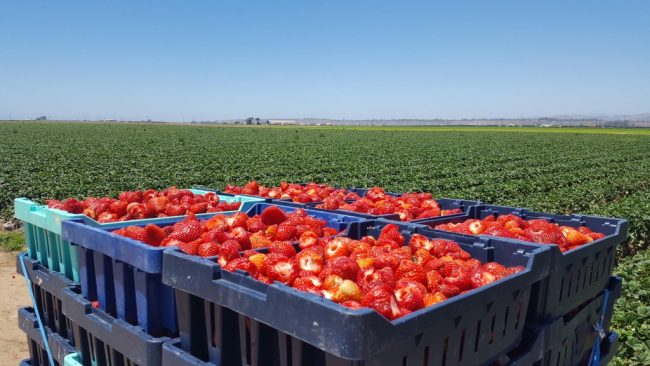
The Environmental Working Group, headquartered in Washington D.C., with a local California office in San Francisco, has released its annual Dirty Dozen list. Topping the list again are strawberries, followed by spinach and many other fresh produce items.

The California agricultural industry is puzzled by the list because EWG provides no scientific evidence of residues on any of the itemized produce, according to Theresa Thorne, the newly named executive director of the Watsonville, California-based organization Alliance for Food and Farming.

The AFF exists to deliver credible information to consumers about the safety of fruits and vegetables, and to counteract misinformation like EWG’s Dirty Dozen list.

Thorne explained, “We really try and work to provide science-based information to consumers so that facts — not fears — can guide their shopping choices. You just can’t, year after year, continue to call safe and healthy fruits and vegetables ‘dirty.’ Nevertheless, EWG has been doing this since 1995. So every year, we work aggressively to put our information out there to counter the misinformation that EWG puts out, so people can make the right shopping choices for their families.”

According to Thorne, the EWG manipulates data issued by the well-known government-issued USDA Agricultural Marketing Service (AMS) Pesticide Data Program implemented through cooperation with state agriculture departments and other federal agencies. According to the USDA AMS website, “The PDP data show, overall, that pesticide residues on foods tested are at levels below the tolerances established by the U.S. Environmental Protection Agency (EPA) and pose no safety concern.”

“But EWG goes through and manipulates that data,” Thorne said. “Even if there is some minute amount of residues detected, they are below safety threshold levels set by the EPA. According to a toxicologist from the Personal Chemical Exposure Program Department of Entomology at University of California, Riverside, you can eat an excessive amount of strawberries in a day, and still not have any health effects from residues. That’s how low residues are if they’re even present.”


Links:

Alliance for Food & Farming (AFF)

AFF Flyer

SafeFruitsandVeggies.com Pesticide Residue Calculator

  • Scientists and health experts overwhelmingly agree that the mere presence of pesticide residues on food does not mean they are harmful.
  • Use facts, not fear, to make healthy food choices
  • Health experts and scientists say produce, grown either conventionally or organically, is safe to eat for you and your children. Not only are conventionally and organically grown fruits and vegetables safe and nutritious, Americans should be consuming more of these, not less, if they hope to reduce their risk of cancer, heart disease, diabetes, and obesity.

Pesticide Data Program (PDP)

  • Pesticide data Program (PDP) is a national pesticide residue-monitoring program and produces the most comprehensive pesticide residue database in the U.S.

Personal Chemical Exposure Program (PCEP) Department of Entomology, University of California, Riverside

2021-05-12T11:05:17-07:00March 24th, 2017|
Go to Top