Food Safety is Critically Important for Consumers

Safe Food Alliance’s Big Lab in Kingsburg Will Serve Ag Industry

By Patrick Cavanaugh, Editor

California Ag Today recently spoke with Tom Jones, senior director of analytical services with the Safe Food Alliance, about the new state of the art food safety lab in Kingsburg.

“We have laboratories, not only here but also in Kerman, Winters, as well as Yuba City,” Jones said. “But this is a big lab; our main lab that will provide plenty of space for research and testing.”

food safety

Tom Jones Sr. Director of Analytic Services for Safe Food Alliance

“We were in a laboratory in downtown Fresno that … was less than  8,000 square feet. We’re now in more than 20,000 square feet, and it’s made a tremendous difference—a lot more space and capacity for us to do our work,” Jones explained.

There is adequate room for additional sample storage, more instrumentation as the business grows and more people doing more work.

“We also have room for additional incubation of samples, so in the microbiological testing, that’s a big issue,” Jones said. “It is a much easier place to work in.”

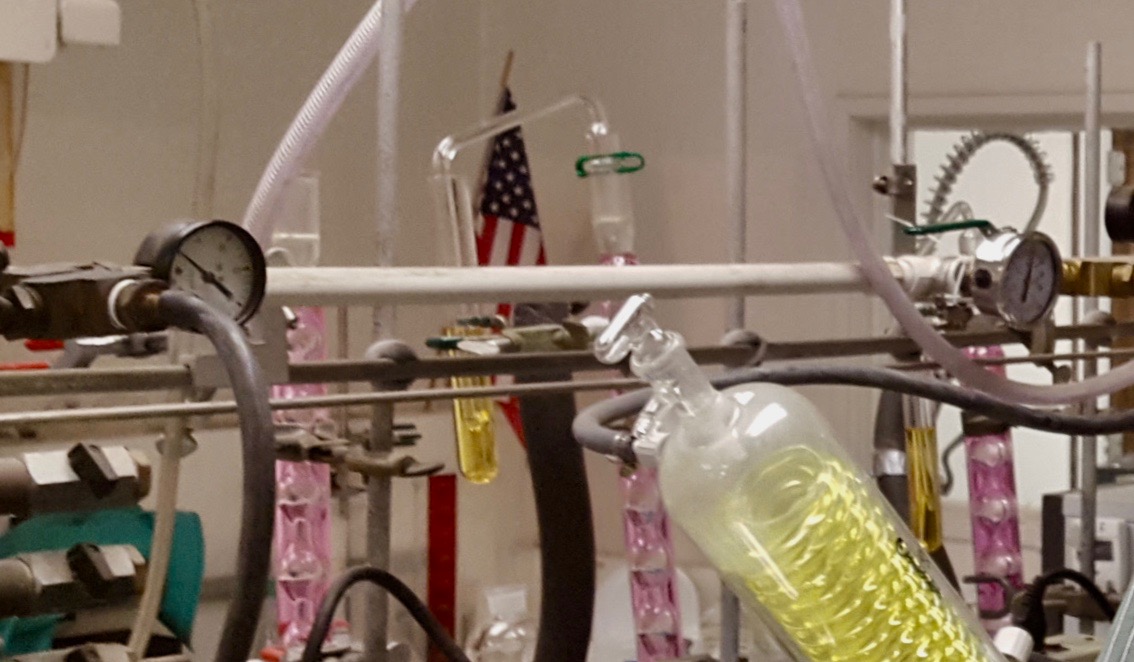
“The first piece of instrumentation actually installed in the new lab before we officially moved in was our GC Mass Spectrometer Time of Flight system, and it’s a powerful system to be able to analyze for unknown compounds,” Jones said. “If you have a problem … you can take that sample, run it through the GC Mass Spectrometer and start getting data right away. Even if you don’t know what you’re exactly analyzing for, you can actually start the process there, so that’s really exciting.”

“You need qualified people to run that machine So, that’s a big part of the testing world as well. And the end goal of all of this new technology is to keep consumers safe,” Jones continued. “Our mission is to see a safe food supply from farm to fork, and we’re really excited to have this facility because we can test to a wider range of food products, using a wider range of analysis. We are here to help support our agricultural community as well as the food processing community as we export to the world.”

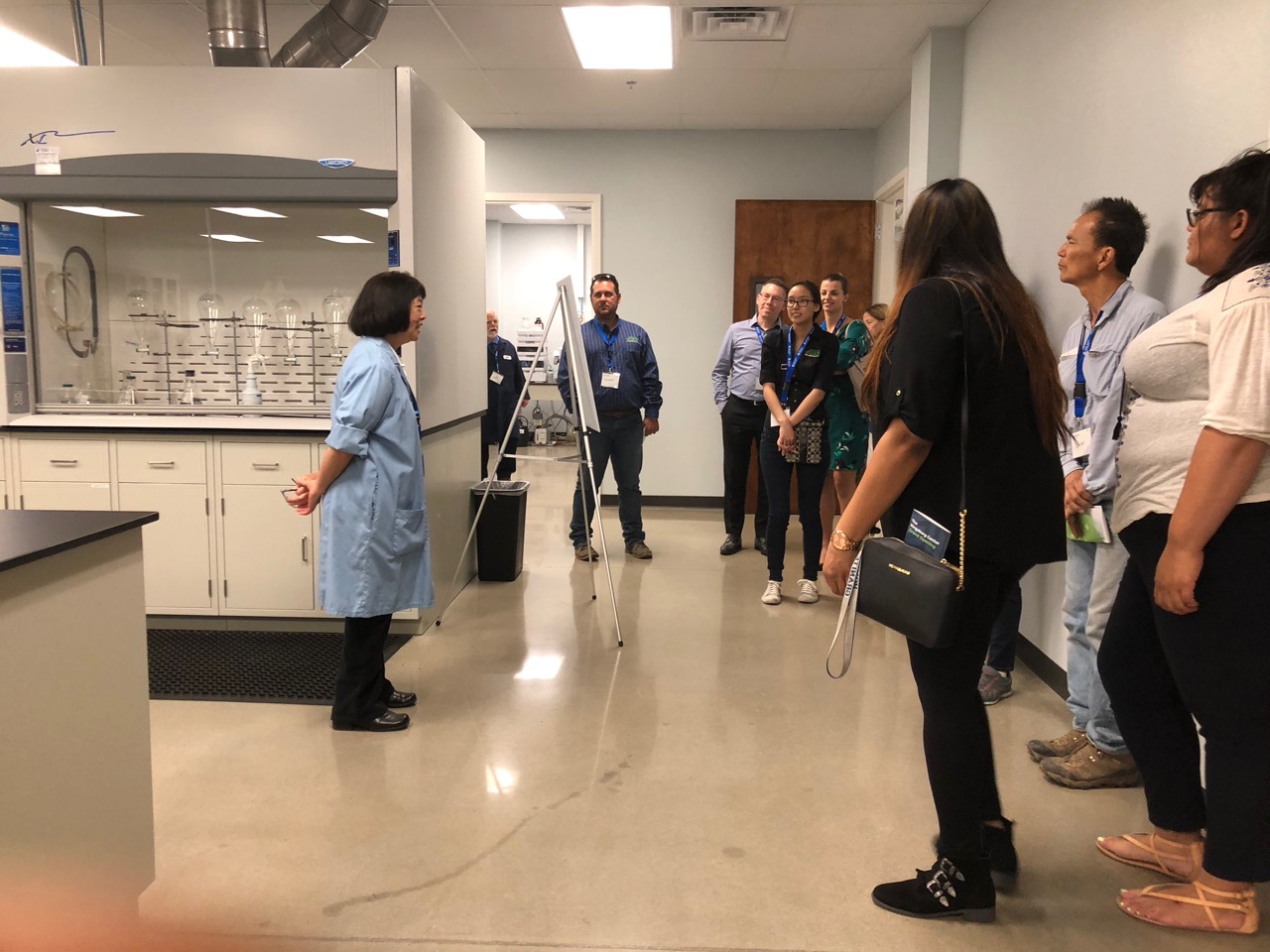
(Additional Photo is of the Open House at the new lab in Kingsburg.)
2021-05-12T11:05:11-07:00June 22nd, 2018|

UC Davis Student Maureen Page Speaks for the Bees

Maureen Page to Spread Flowers for Bees

By Jessica Theisman, Associate Editor
Maureen Page pollination

Maureen Page

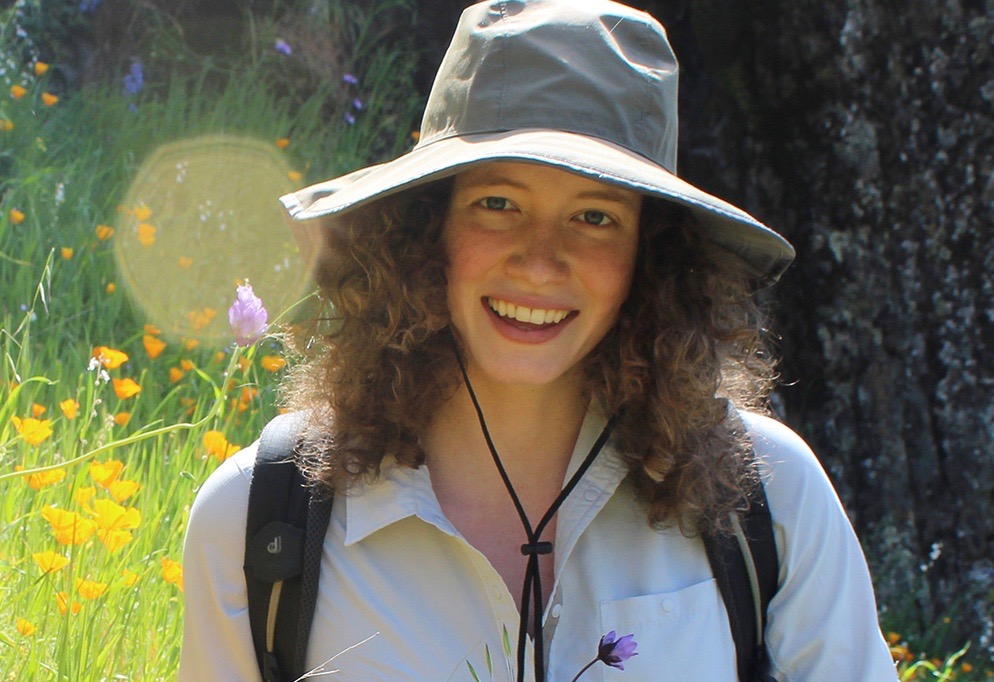
California Ag Today recently spoke with doctoral student Maureen Page of the Neal William’s lab at UC Davis, Department of Entomology and Nematology. She is the recipient of a prestigious three-year fellowship for promoting food security by optimizing wildflower planting. She supports the wild and bee management. We asked her about the flowers that she plans on planting to help those bees.

“I do believe that in general, flowers are really important for bees. Planting flowers are generally good for them,” she said.

Although planting is good for the bees, there are some precautions that need to be made.

“Some flowers can be somewhat toxic to bees. Some do not actually provide bees with pollen and nectar resources,” Page said.

There are many ornamental plants that are bred to not have much pollen so that people do not sneeze as much.

“On top of that, if you are planting non-native species that are really weedy, it may be great for the bees, but might not be great for other plant species,” Page said.

2021-05-12T11:05:11-07:00June 21st, 2018|

Research Nets Going Over Citrus Trees To Prevent Huanglongbing Disease

Blocking Psyllids Carrying Disease is Key

By Jessica Theisman, Associate Editor

Beth Grafton-Cardwell is the director of the Lindcove Research Extension Center in Tulare County and research entomologist based out of the University of California, Riverside. She recently told California Ag Today that there is work being done on installing a net structure to protect trees from Asian Citrus Psyllids, which spread the deadly Huanglongbing disease. Texas A&M researchers are installing net structures on the edge of groves to block psyllids from coming into an orchard.

Psyllids have a preference for borders. These nets could have yellow sticky strips of material with an insecticide on it, so there would be an attract and kill process.

Beth Grafton-Cardwell

Other research is looking at netted structures that will completely enclose the citrus trees.

“Researchers are going to construct a completely enclosed net structure to grow the citrus trees in a block at Lindcove,” Grafton-Cardwell said. “We will study how well one can grow citrus under the screen so there could be the ultimate protection against pests and diseases.”

“The mother trees and increased trees have to be grown under the screen, but the field trees do not necessarily have to be,” she said.

Cold temperatures in the winter to protect the citrus from the psyllid.

“The cold temperatures hardened off the tissue, which makes it hard for the psyllid to find any place to lay eggs, and they probably cost some mortality to the psyllid,” Grafton-Cardwell explained.

Most outbreaks are in Southern California. Los Angeles, Orange County, and a few trees in Riverside.

“Prevention is working and there are fewer outbreaks in the Central Valley,” Grafton-Cardwell said.

Dr. Mark Hoddle and Dr. Kelsey Schall (both from UC Riverside) have been monitoring backyard situations. They are researching the release of beneficials such Tamarixia and other generalist predators like Syrphid flies.

“They have been reducing psyllids by about 70 percent in the backyards, and that’s really good news,” Grafton-Cardwell said.

2021-05-12T11:05:11-07:00June 15th, 2018|

Safe Food Alliance Helps Keep Food Safe

Standard is Parts Per Billion Today

By Patrick Cavanaugh, Editor

California Ag Today recently spoke with Mark Mariani, executive chairman of the Mariani Packing Company in Vacaville and outgoing chairman of the Safe Food Alliance, which recently opened a new laboratory in Kingsburg to provide further research into food safety.

Mark Mariani

“We’ve been members since 1946, and the fact that the produce industry is self-policing is very unique,” Mariani said.

“The reason why we enjoyed the DFA and now the SFA is the fact that we are very concerned about food safety and so we are in a very unique industry in the sense that we self-police ourselves and so this is not something new. We’ve been doing it for over 100 years,” he explained.

“It’s not the new trend, and so being part of the DFA and SFA gives us the opportunity to not only look at the way we do our practices in our manufacturing practices, but also it gives us an opportunity to look at how we test our products,” Mariani said. “And back in the day, we used to be happy with one part per million detections of something. Today, we’re insisting on one part per billion.”

2021-05-12T11:05:11-07:00June 14th, 2018|

California Table Grape Commission is Raisin the Bar for a Fruitful Industry

Research is Huge for the Commission

By Mikenzi Meyers, Associate Editor

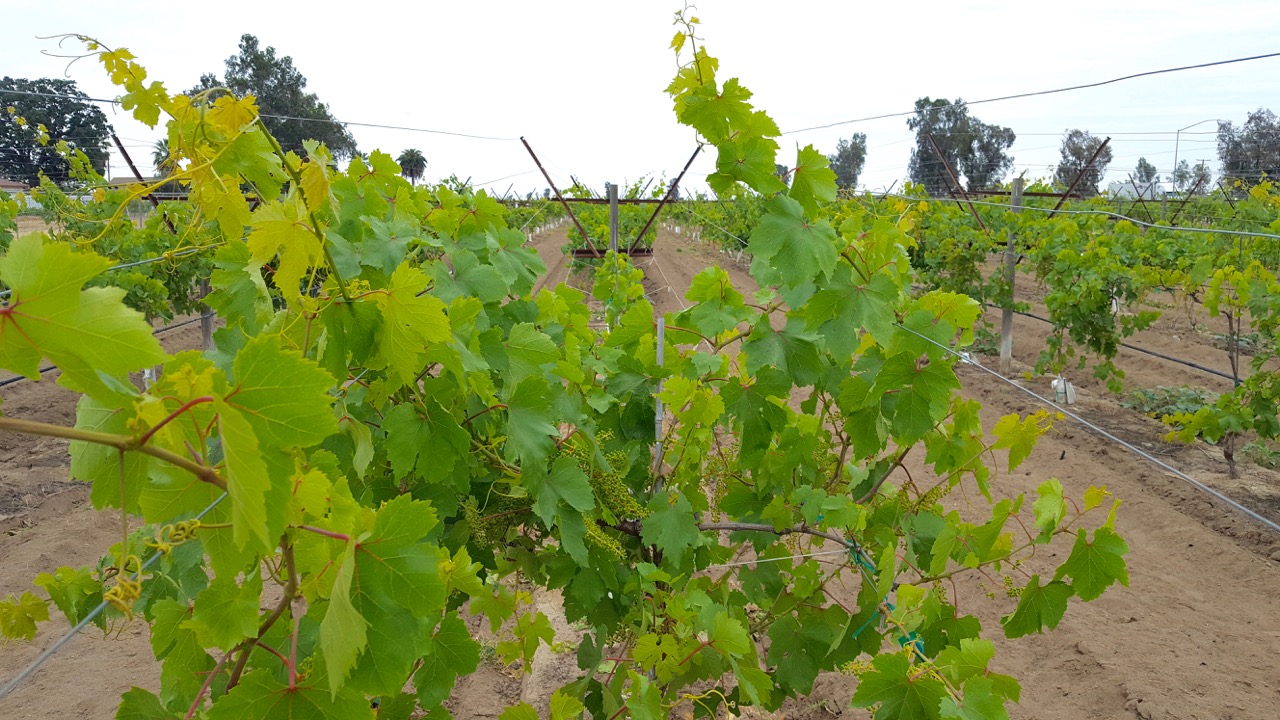
With grape season in full swing, there’s an abundance of fresh, local grapes in our grocery stores. While our farmers are hard at work, so is the California Table Grape Commission, and their president Kathleen Nave. They are not only making their presence known in the media but are constantly doing research to improve the industry as a whole.

The California Table Grape Commission has been doing viniculture research since 1972 and is funded by growers.

“The commission does a lot of research on ways in which to help growers grow more grapes more efficiently,” Nave said.

This is done by trying to figure out how to grow grapes with fewer inputs, an example being less water.

Nave also explained the research they do to find the benefits of eating grapes, saying, “We do a lot of health research on those 1,600 phytonutrients that are found in grapes to try to pin down the ways in which grapes are good for us, as it relates to various disease states.”

Kathleen Nave, California Table Grape Commission president

Kathleen Nave, California Table Grape Commission president

Although research is huge for the commission, Nave described their relationship with retailers in the U.S., Canada, and about 30 other countries as “the heart of the commission’s work.” This includes urging retailers to promote grapes by putting them on the shelf, offering multiple varieties, and carrying California grapes from May to January.

In addition, Nave talked about the major presence the commission is making in the media in order to reach consumers.

“We’re on The Food Network [on] television as well as The Cooking Channel, and then we do a lot on social media,” Nave said.

The commission is active on Facebook, Pinterest, and Instagram. In fact, Nave noted that their social media presence has quadrupled in the past two years.

Their goal is to showcase the beauty and versatility of California Grapes and make known the quality of work that the California table grape growers are doing every day.

2021-05-12T11:05:11-07:00June 13th, 2018|

The Need to Harmonize Maximum Residue Levels

Nearly All Produce Has Zero Residues of Crop Protection Products

By Mikenzi Meyers, Associate Editor

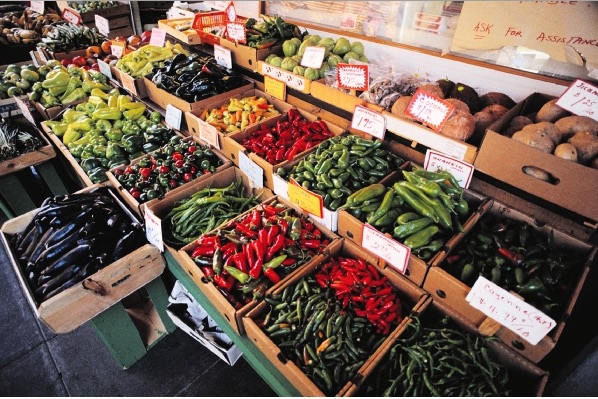
It can be tempting to grab a piece of produce right off the shelf and take a bite. We have the California Specialty Crops Council and the MRL Workshop to thank for this! MRL stands for the Maximum Residue Level on any agricultural produce.

Now, the words “residue level on produce” may be alarming, but it is important to note that we are talking about parts per billion that are far below the unhealthy level. In fact, nearly all produce has zero residues!

maximum residue level

Gary Van Sickle, Specialty Crops Council

The MRL Workshop is an event that has been held for the past 12 years in San Francisco, where experts from around the world come together to discuss new findings and challenges.

Gary Van Sickle, executive director of the California Specialty Crops Council, explained that a significant issue within the industry is the lack of harmonization amongst the countries.

“You’ve gone from a situation where many countries that used to use the Codex Food Safety Standard are now moving forward with setting their own, and every one of these standards is a little different,” Van Sickle said. “This creates problems for agriculture producers trying to export produce to countries with their standard.”

The MRL Workshop helps to identify these problems and recognize how to start solving them. According to Van Sickle, the keys are transparency and regulations that are reasonable.

When considering the number of specialty crops California exports across the world, the importance of this workshop becomes more and more evident.

2018-06-12T16:41:06-07:00June 12th, 2018|

Mariani Packing Co. Puts Food Safety Top Priority

Mariani Served as Chair of the Safe Food Alliance

By Patrick Cavanaugh, Editor

The Mariani Packing Company is one of the largest specialty crop growers and handlers in the state, packing many different types of fruit on a massive scale. California Ag Today recently spoke with Mark Mariani, executive chairman of the Mariani packing company in Vacaville and the outgoing chairman of the Safe Food Alliance (SFA), an organization specializing in food safety among growers, packers, and processers to maintain high standards of food safety and prevent consumer illness.

“Our four major specialty crops areas is that we’re the second largest cranberry growers (with operations back east) and packers, (with operations back east), and we also grow and pack mangoes out of Mexico, Mariani said. “And we are probably the third-largest raisin grower/packer in California. We also repack prunes for the world market.”

Mariani said that the products that they bring in from Mexico are held to the same standard as produce grown inside the United States. Consumers always look back at the supplier when it comes to food safety, so they ensure that standards meet or exceed the U.S. standards.

Mariani reflected on his part in the Safe Food Alliance organization.

“It’s an exciting time for DFA (which still stands as an entity as it’s being morphed into the Safe Food Alliance) because of the growth and the fact that it is offering so many more services to our members. We recognize that for us to move forward as an industry, we have to be better than anyone else and especially foreign competition,” he said. “And you do that because you can create trust, and I think there’s a solid brand with SFA ,if you’ve been approved and a member … that you are operating within the SFA conditions.”

As the former chairman of SFA, Mariani enjoyed working with passionate people.

“The individuals in the DFA and SFA are passionate people that want to do and exceed the expectations or their members. And most importantly, you want to provide safe food for consumers,” Mariani said.

The new Chair of Safe Food Alliance is Dane Lance, President and CEO of Sunsweet Growers, the world’s largest and most famous brand of dried tree fruits including prunes, apricots, and mangos.

2018-06-06T16:17:06-07:00June 6th, 2018|

UC Davis Pollination Ecologist Wins 3-Year Fellowship

Fellowship Comes From the Department of Defense

By Patrick Cavanaugh, Editor

Maureen Page Awarded Fellowship to Optimize Wildflower Plantings

Doctoral student Maureen Page of the Neal Williams lab at the UC Davis Department of Entomology and Nematology is the recipient of a prestigious three-year fellowship, a National Defense Science and Engineering Graduate Fellowship for her research proposal: Promoting Food Security by Optimizing Wildflower Plantings to Support Wild and Managed Bees.

Page, a pollination ecologists, was one of 69 awardees selected from more than 3,600 applicants. The Department of Defense funds her fellowship.

“Most people probably are aware that both managed honeybees and many of the wild native species that we have in California as well as in the U.S. have major stressors that are contributing to declines in their populations,” Page said.

And of course, the bee populations suffer when there’s a lack of floral resources to pollinate. “Especially when crops are not in bloom and bees need pollen and nectar to survive. And so without enough resources, it can have dramatic declines in bee populations,” she said.

Page explained that bees are critically important to our food supply. “It’s estimated that about a third of the food supply directly benefits from insect pollination. Many of those crops are entirely dependent on insect pollination,” she said. “Without bees and other insects, those particular crops wouldn’t even be able to set fruit and many others, which while not wholly dependent on insect pollination benefit very much from insect pollination, which means more production and lower prices so that more people can afford healthy, nutritious food.”

2021-05-12T11:05:11-07:00May 25th, 2018|

Importance of Recall Insurance

Brokers Can help Growers Minimize Losses

By Jessica Theisman, Associate Editor

California Ag Today recently met with Caitlin McGrath, the national product recall and contamination risk consultant with Lockton Insurance Brokers. Insurance is needed for California growers in case of recalls and contaminations. Lockton feels the most important part of finding the right recall insurance is the consulting element.

Caitlin McGrath, Lockton Insurance Brokers

“Now, what I think is the most important part of insurance coverage is the consulting element,” McGrath said.

These are consulting services that are available if you are a recall or contamination insurance purchaser that allows you access to specialists during and before incidents. One of the struggles that McGrath is noticing is that the quality assurance folks she speaks to are not insurance buyers.

“They are the ones finding out the information about all these services that are available, and it’s not always getting down into the field,” she said.

Preparation in the case of recalls or contamination is important.

“Fan Favorite, as I call them, do a lot of really great work on behalf of a lot of our clients,” McGrath said.

Some of that work can be Hazard Analysis Critical Control Point (HACCP) training and mock recalls. Financial costs are rising due to the increasing number of recalls.

“We believe that that’s the effect of [the Federal Information Security Management Act or] FISMA. They are getting larger in financial cost, and that has to do with the amount that is being recalled and the implications in terms of publicity,” McGrath said.

Recall plans need to cover all of the elements, not just mock recalls.

“The internal message is just as important and knowing who is going to handle what within an organization. Planning and practicing that is really critical to help mitigate if there is a problem,” McGrath explained.

“Having directives around the use of social media as an employee of an organization is very important, but just one department not talking to another is going to have a huge part in this,” she said.

Buying product contamination insurance is expensive, but necessary. Since McGrath started, the number of brokers has nearly tripled.

“I think that not having insurance is now the outlier, so I think the majority of folks are still buying,” she said.

2018-05-23T16:37:56-07:00May 23rd, 2018|

Conventional or Organic Strawberries — All Safe to Eat

Strawberry Grower Says At PPB, Anything Can be Found

By Patrick Cavanaugh, Editor

David Peck is a longtime strawberry grower in Santa Maria. He objects to the Environmental Working Group’s (EWG) Dirty Dozen list, which had strawberries at the top of their list.

David Peck, COO and Farmer of Manzanita Berry Farms in Santa Maria

“If you take the data that the EWG is presenting, you can say, yeah, okay, that’s fair,” Peck said.

“Based on what they are presenting, they can find detectable amounts of whatever at however many parts per billion. I’ll buy that; but they’d have no perspective on the types of residues and what that means regarding human health, human safety, and human risk,” noted Peck, who grows both conventional and organic strawberries.

Peck said that even organic strawberries would have detectable amounts of residues.

“I tell people that I grow organic strawberries and that I do not put on the crop protection materials that the EWG is talking about,” he explained.

“At parts per billion (PPB), you can find dozens of carcinogens at minute levels. Where did they come from? Well, they are everywhere in such small quantities that no one should worry about it,” Peck said.

Peck said that the decision for consumers is not organic versus conventional, but to eat more strawberries and other fruits and vegetables.

“I say eating California produce in general is so much healthier than avoiding California fresh fruits and vegetables,” he said.

The Alliance for Food and Farming works hard to bring the truth to the EWG’s Dirty Dozen list. They report that all produce is healthy to eat and that consumers need to eat more every day. More Information at www.safefruitsandveggies.com

2021-05-12T11:05:11-07:00May 22nd, 2018|
Go to Top