Berry Industry Without Methyl Bromide

Berry Industry Must Now Work Smarter in Post Methyl Bromide Era

By Patrick Cavanaugh, Editor

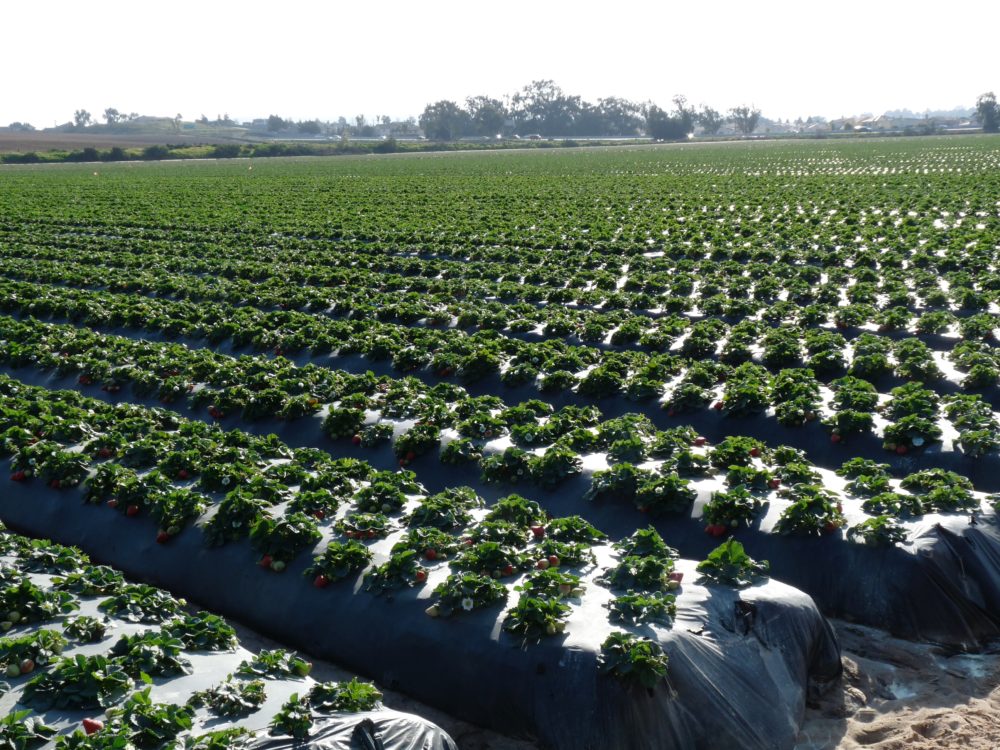
The strawberry fruit production industry, with the exception of plant nurseries, has reached the point where methyl bromide is no longer available under any circumstances, and new alternatives or strategies must be found to protect strawberries from serious diseases.

The University of California is focused on a holistic approach, which includes the tried-and-true method of integrated pest management in this post Methyl Bromide era.

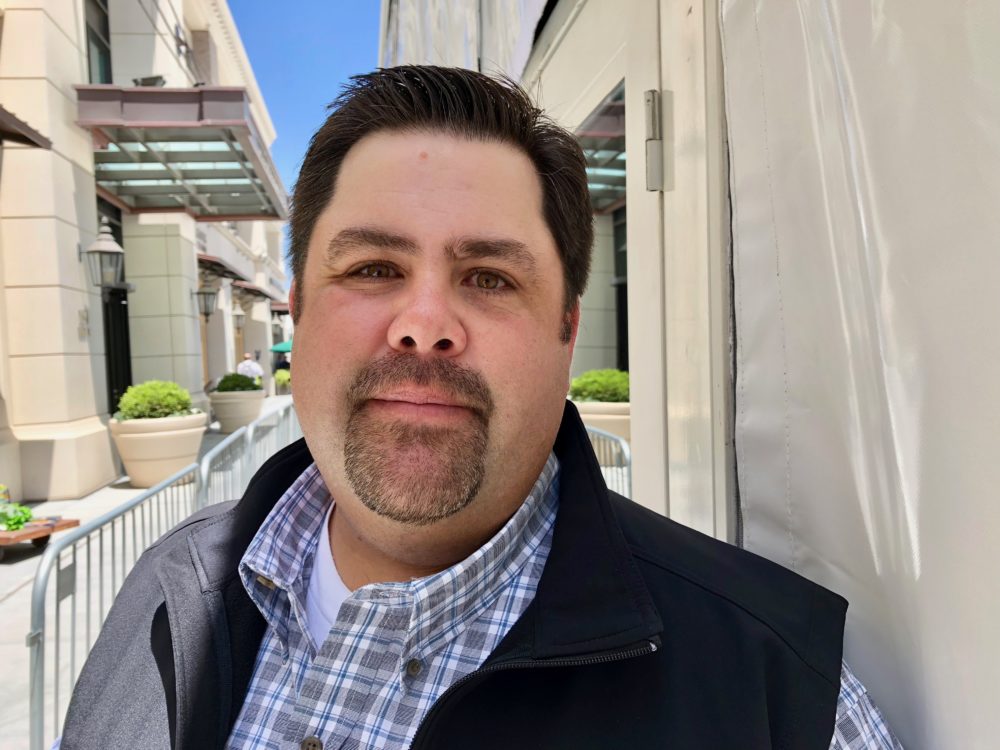
“None of the alternative fumigants are as good as methyl bromide,” said Mark Bolda, UC Cooperative Extension Farm Advisor for Santa Cruz County, who is working closely with growers on alternative methods. “So one area that we could focus on is different strategies at the time of planting. For example, strawberries have different chill times. You must add cold conditioning to give the plant more vigor.”

Mark Bolda

There are many questions. Could the colors of the plastic mulch that growers are using manage the temperatures of the soil? How about the amount of fertilizer that is being used?

“We need to start integrating these variables into the way we grow strawberries with the lack of fumigants that are as effective as methyl bromide,” Bolda explained. “We need to integrate all these things and others in order to grow berries with the lack of available fumigants that are as effective as methyl bromide.”

“It’s a little disappointing that here we are at zero-hour and we do not have this worked out,” he continued. “The University of California Cooperative Extension have had a number of meetings in my office, as well as other places where we get many people in the same room to try to figure out what we know and what we don’t know.”

“There’s a lot of smart people in the industry, and I know we can get on this and find solutions,” he said.
2021-05-12T11:05:06-07:00January 8th, 2019|

CDPR: 96% of Produce has No Residue Or Far Below EPA Levels

CDPR Releases New Residue Results

News Release

Recently, the California Department of Pesticide Regulation (CDPR) released its 2017 Pesticide Residues in Fresh Produce report. During its 2017 survey, CDPR found 96 percent of all samples had no detectable pesticide residues or residues were below levels allowed by the Environmental Protection Agency (EPA).

The CDPR report complements the recently released United States Department of Agriculture’s (USDA) Pesticide Data Program results which found 99% percent of the foods sampled had no detectable residues or residues were well below EPA tolerances. The Federal Food and Drug Administration (FDA) also conducts pesticide residue sampling.  FDA results mirrored the USDA’s.

The FDA, USDA and CDPR reports all concluded that these residue results should provide consumers with confidence about the safety of eating fruits and vegetables.

All three government reports garnered very little attention. However, this is reassuring food safety information that consumers should know. Instead, they often receive inaccurate assertions about residues carried by activist groups promoting one production method over another.

The Alliance for Food and Farming supports consumer choice by providing science-based facts to help them make the right shopping decisions for themselves and their families. Whether they choose organic or conventional produce, consumers should know that when it comes to residues, both production methods yield safe produce that can be eaten with confidence.


2021-05-12T11:05:06-07:00January 7th, 2019|

Mechanically Harvesting Broccoli

Saving Labor Cost in Broccoli Harvest

By Jessica Theisman, Associate Editor

Josh Ruiz and Monsanto Seeds have partnered up to harvest broccoli mechanically. Ruiz is vice president of AG operations with Church Brothers Farms in Salinas.

“They brought us a genetic variety of broccoli where the head does sit up higher. When it comes to broccoli, all varieties have their heads mature at different rates,” Ruiz explained.

That being said, the fields must be harvested multiple times as the crop matures. With these new genetics, you can get it all done in one sweep.

“I want it to be as simple for my people because I want them to be happy. Cutting once and moving on is what makes them happy,” Ruiz said.

There are a bunch of growers around California, Arizona and in Mexico; they want to get that ground back and use it one more time before the season’s over.

“This gives them about a month’s worth of time back in their hands, which, in the world we live in, is huge,” Ruiz said.

Ruiz said he is going to continue to develop mechanical harvesting for other crops.

“Iceberg and Romaine are the next two big projects,” he explained.

Iceberg is known to be the “holy grail.” Ruiz has a prototype in the works, and he’s willing to work with anyone who is willing to partner.

“The Broccoli Project, the last five years, has overwhelmed my team and me, but we are ready for the next challenge,” he said

“My day to day is focused on not only running the AG operations for Church Brothers, but I spend a lot of my day focused on innovation and how can we do things better, quicker, faster, cheaper,” he continued.

Ruiz is passionate about automation and innovation. He is currently working with lettuce, romaine, broccoli, cauliflower, spring mix, spinach, and kale.

He said his interest in mechanical harvesting is mostly based out of labor issues, but it goes further from there.

“I see this as the future. I’m not the computer guy, and I’m not the engineer, but I love that stuff, and I want to go find out how to make it possible for me to learn,” he said.

Approximately five years ago, Ruiz began his relations with Monsanto with the Broccoli Project.

“We just unveiled our brand new version of our machine, and I have no doubt in my mind that it’s going to be out there in the field. You’ll see it going down the Salinas Valley from here on out.”

2021-05-12T11:05:07-07:00January 3rd, 2019|

Strawberry Commission Oversees Valuable Crop

Strawberries in California

By Jessica Theisman, Associate Editor

Strawberries are California’s sixth most valuable crop which makes strawberry research a valuable tool for California farmers.  Mercy Olmsted is senior manager of production research and education at the California Strawberry Commission. Growers in the California Strawberry Commission have invested over $28 million into research. These include areas such as diseases, insects, and weeds—all in an effort to help solve production challenges and boost economic gains.

“We are a commission that’s funded by the growers, and so we do research that meets their research priorities,” Olmsted said.

So far, $13 million has been invested in research to explore alternatives to methyl bromide. The commission says that strawberry farmers continue to invest in researching fumigant alternatives.

“We also work with researchers. We have a robust grant program, and we work with those researchers in order to assist them in their field trials,” Olmsted explained.

Some of their researchers are in house, and others are from the USDA and university researchers.

“We develop training programs for our growers because we work for the growers. We can contact them as often as we need to, and we are able to see how things and research priorities might change in the industry,” Olmsted said. “There are a number of facilities and a board that helps direct research priorities and any necessary changes.”

For more information on strawberry research being done by the California Strawberry Commission visit calstrawberry.com.

2021-05-12T11:05:07-07:00January 2nd, 2019|

2017 Produce Samples Survey Show Safeness For Consumers

Tests Show Low or No Pesticide Levels in Most Fruits and Vegetables in California

By Charlotte Fadipe, California DPR

Once again, tests showed that the vast majority of fresh produce collected by the California Department of Pesticide Regulation (DPR) met national pesticide residue standards. During its 2017 survey, DPR found 96 percent of all samples had no detectable pesticide residues or were below levels allowed by the U.S. EPA.

The findings are included in DPR’s just released 2017 Pesticide Residues in Fresh Produce report.

“DPR carries out an extensive sampling of pesticides on fresh produce, and once again it shows that California consumers can be confident about eating fresh fruits and vegetables,” said Brian Leahy, Director of DPR. “California growers and farmers are adept at following our comprehensive rules to ensure produce is grown to the highest pesticide standards.”

Brian Leahy

The 2017 report is based on a year-round collection of 3,695 samples of produce from 28 different countries, including those labeled as “organic.” DPR scientists sampled produce from various grocery stores, farmers’ markets, food distribution centers, and other outlets throughout California. The produce is tested for more than 400 types of pesticides using state-of-the-art equipment operated by the California Department of Food and Agriculture.

The U.S. Environmental Protection Agency (U.S. EPA) sets levels for the maximum amounts of pesticide residue that can be present on fruits and vegetables, called a “tolerance.” It is a violation if any residue exceeds the tolerance for the specific fruit or vegetable, or if a pesticide is detected for which no tolerance has been established.

California Specific Results

More than a third of the country’s fruits and vegetables are grown in California, according to the California Department of Food and Agriculture (CDFA). In 2017 DPR found:

-About 25 percent of all produce samples tested were labeled as Californian-grown,

-About 95 percent of these samples had no residues on them or were within the legal levels,

-About 5 percent of California samples had illegal residues, including kale and snow peas. These are pesticide residues in excess of the established tolerance or had illegal traces of pesticides that were not approved for that commodity. However, none of those residues were at a level that would pose a health risk to consumers.

Other highlights from the 2017 report include:

-41 percent of all produce samples had no detectable residues at all,

-55 percent had residues detected within the legal level.

-4 percent of all the samples had pesticide residues in excess of the established tolerance or had illegal traces of pesticides that were not approved for that commodity.

2021-05-12T11:01:51-07:00January 1st, 2019|

Reducing Food Waste Should Be Top of Mind

“No Taste for Waste” Initiative Starts a Big Conversation

By Mikenzi Meyers, Associate Editor

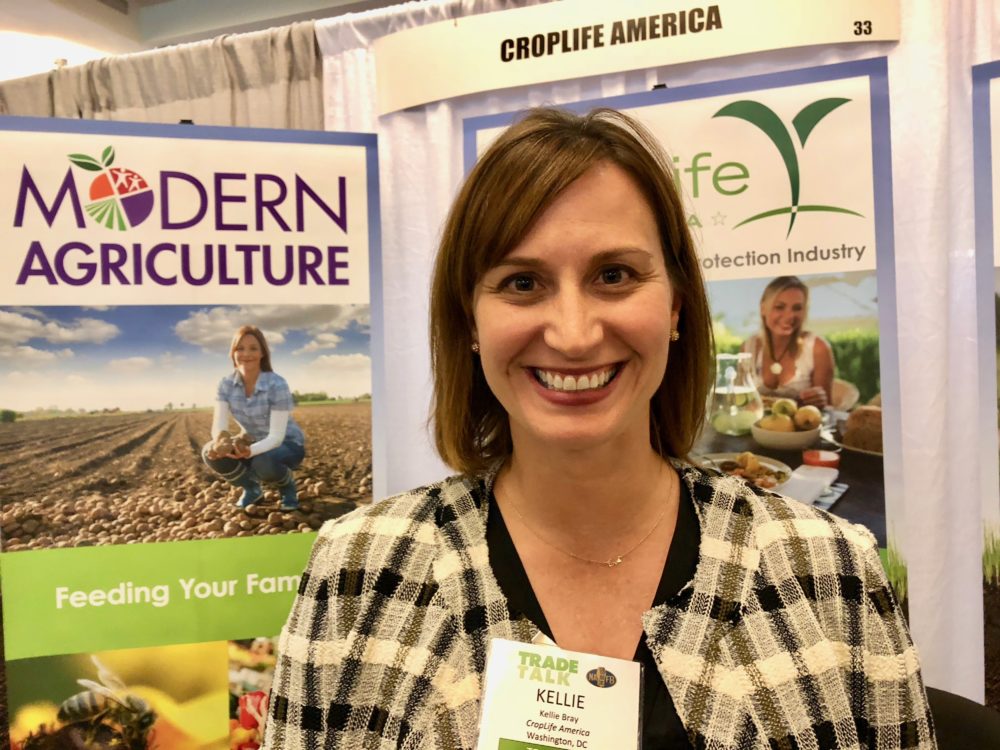
As we end 2018 and head to 2019, it’s a good idea to think about reducing food waste. CropLife America, a national trade organization that represents manufacturers, formulators, and distributors of pesticides, is working to minimize the amount of food Americans throw away every day. Kellie Bray, Senior Director of Government Affairs for CropLife, encourages Americans to start the conversation of food waste.

“This is a conversation that is so important not only to growers and producers but to consumers and the people who are really cognizant of food issues. Not only making sure that they save money and food in their own homes but making sure too that people who need food have it,” Bray urged.

In order to set this conversation into motion, CropLife, along with the American Farm Bureau and Meredith Corporation, have partnered on an initiative called, “No Taste for Waste.” The initiative has worked to create a “bookazine” that was available in grocery stores and even your local Target.

“It’s a combination of recipes, farmer’s stories, and tips and tricks on how to maximize the food you have now, so nothing goes to waste,” Bray explained.

Get the Facts on Food Waste

  1. The amount of food wasted in the United States equates to more than 1,250 calories per day, per person, annually.
  2. Food waste is responsible for at least 2.6 percent of all U.S. greenhouse gas emissions.
  3. The number one contributor to all landfill content is food waste, contributing around 21 percent each year.
  4. Each year, between 125 and 160 billion pounds of food are left uneaten in the United States.
  5. Between 21 to 33 percent of agricultural water use is accounted for by food waste.
  6. Cropland of uneaten food accounts for between 18 to 28 percent of U.S. total cropland, which is more than the entire state of New Mexico.
  7. Households are responsible for the largest portion of all food waste. At 238 pounds of food per person, that equals 76 billion pounds!
  8. Many farmers cut back on food waste by using unsold produce as feed for livestock or compost in the soil.

For more information on how to prevent food waste, visit: notasteforwaste.org

2018-12-31T14:46:10-08:00December 31st, 2018|

#GiveACrop Campaign Helps Consumers Understand Crop Protection

#GiveACrop: Simple Message About Crop Protection Tools

By Patrick Cavanaugh, Editor

Sarah Macedo is the communications manager for CropLife America, a trade association that assists and advocates for their members, based in Washington D.C. They are the manufacturers, formulators, and distributors that manufacture organic and non-organic pesticides,

Macedo explained the #GiveACrop campaign, which puts a positive message for the need for crop protection products in agriculture.

“Go to GiveACrop.org, take a look at those memes along with myths and facts. We just want to talk about things in a realistic person-to-person way and not get too into this science, but just kind of talk about why pesticides are necessary,” Macedo said.

“Regarding the Give a Crop videos, we have heard from both farmer friends, adversaries, and consumers. We had a lot of the FFA kids who absolutely love them, which is great since that is our target audience; we do know that they are sharing that with their friends who are in the on-ag space,” she noted.

We don’t have a lot of money behind it, so we have been promoting it on social media, and we’ve gotten great pickup even from folks who normally aren’t the friendliest in the ag space. They’ll watch one, and they’ll have posted and saying, ‘we may not necessarily agree, but these are funny and to the point,’” Macedo explained

Again, Crop Life America is a trade association representing the manufacturers, formulators, and distributors of organic and non-organic pesticides.

“We include government affairs, science and regulatory communications experts, and those from the legal profession who help our members, and our members And we advocate on their behalf to make sure that no regulations are going unchecked, that everything is based on sound science and getting the information out about the benefits of pesticides and why they’re used and about American farming in general,” Macedo said.

2021-05-12T11:05:07-07:00December 17th, 2018|

Jeff Mitchell: Conservation No-Till Is One Option For Water Conservation

Jeff Mitchell Has Devoted Career to Conservation No-Till

By Patrick Cavanaugh, Editor

Jeff Mitchell is a Cropping Systems Specialist at UC Davis, based at the Kearney Agricultural Research and Extension Center in Parlier. He has devoted 19 years to improving nitrogen and water use efficiencies in food, feed, fuel and fiber in no-till cropping systems.

Mitchell’s passion helped found Conservation Agriculture Systems Innovation Center (CASI) in 1998. CASI operates under the auspices of the University of California Division of Agriculture & Natural Resources.

His no-till research focuses on soil quality management and potential roles of cover crops and compost in intensive row crop production systems, and the use of cover crop mulches as a means of conserving soil water, suppressing weeds and increasing organic matter in no-till production systems.

He often cites a book called Plowman’s Folly by Edward H. Faulkner, published following the ruinous Dust Bowl. Faulkner dropped an agricultural bombshell when he blamed the then universally used moldboard plow for disastrous pillage of the soil.

This book is the 11th all-time cited, read, or acknowledged a piece of work related to the soil in the history of scientific literature.

“When it was written in 1943, it caused great arguments. The government got involved with the USDA trying to defend the science of the day,” Mitchell said.

The reason the book was so controversial is that it proved that there had been no scientific reason for plowing.

“He was getting in people’s faces by saying, ‘This might not be the way to do it,’ ” Mitchell said. “Faulkner’s stance was embroiling people.”

Mitchell’s work centers on conservation, no-till production of vegetable and cotton crops. The idea is to plant in the crops’ residue, which builds up a rather thick layer of mulch on the bed—leading to reduced water and nitrogen, as well as minimizing weeds.

Mitchell cited several growers in the Midwest and in California that are successfully practicing conservation no-till agriculture. And there is much more recent attention on soils with the Healthy Soils Program (HSP)—stemming from the California Healthy Soils Initiative, a collaboration of state agencies and departments to promote the development of healthy soils on California’s farmlands and ranch lands.

Jeff Mitchell describing the no-till soil that he has been working with for 19 years.

The HSP has two components: the HSP Incentives Program and the HSP Demonstration Projects. The HSP Incentives Program provides financial assistance for the implementation of conservation management that improves soil health, sequester carbon and reduce greenhouse gas (GHG) emissions. The HSP Demonstration Projects showcase California farmers’ and ranchers’ implementation of HSP practices.

“The principles that we are pursuing are allowing growers to keep excellent yields and maybe increase sometimes, cut out some inputs like fertilizers to save money, and to do it with less—less disturbance and fewer operations,” Mitchell explained. “None of this is new. It was 90 years ago when the Natural Resources Conservation Service established the principles of good soil management

  1. Healthy soil holds more water (by binding it to organic matter), and loses less water to runoff and evaporation.
  2.  Organic matter builds as tillage declines and plants and residue cover the soil. Organic matter holds 18 to 20 times its weight in water and recycles nutrients for plants to use.
  3. One percent of organic matter in the top six inches of soil would hold approximately 27,000 gallons of water per acre!
  4. Most farmers can increase their soil organic matter in three to 10 years if they are motivated about adopting conservation practices to achieve this goal.

“In 2013, a group of 30 farmers came up with a similar kind of a list,” Mitchell said. “They brainstormed on what would be good soil management, and they came up [with] feed the soil organic matter, reduced disturbance, increased diversity—the same as the NRCS list.”

Mitchell cited a newspaper article published in 1931. “People were finding benefits of cover crops in San Joaquin Valley farming systems. Now with the Healthy Soils Initiative, farmers are trying these techniques and evaluating it. There’s a lot of activity that is going on at many different sites in the state.”

Mitchell’s work at the West Side Research and Extension Center in Five Points on the conservation no-till approach has been with scientific protocol and replicated over 19 years.

“Initially, we would have several systems. In the no-till system, rotations of cotton, transplanted tomato, and a forage crops would grow back to back in a no-till system,” he explained. “Each crop would be planted in the residue of the previous crop. Over the years, the no-till plots have grey residue from last year plantings.”

A cover crop has been planted in a no-till field of cotton that followed tomatoes.

“Cover crops can also be part of the no-till system, which over the last 18 years have added 34 tons of biomass, which includes 13 tons of carbon per acre to the system, which is a good thing,” Mitchell said. “It adds fuel to the soil biology, but it’s not perfect.”

“My supposition would be that growing cover crops is more completed than people think. I have been at meetings where growers say: ‘are you kidding, I’m not going to grow cover crops because I do not have the water,’” Mitchell noted.

He said he understands the situation in not having enough water. But he explained, “In the winter time, yes there will be evaporation from the soil service every day. Radiation is beating down, and there will be evaporation.”

Evaporation in the cover crop field could be more nuanced. Maybe because the soil surface is shaded out, which would cool the soil, there may not be that much evaporation. The cover crops may increase infiltration of water in the ground, instead of it ponding on the soil surface.

“Yes, there will be some inevitable use of water by growing vegetation in the field in the winter, but it could be less than we think,” Mitchell said.

Mitchell then showed two large aluminum pans of soil. One showed soil dug up in an open field that has been tilled. The other container is soil with crop residue from the non-tilled plots.

He takes a handful of each and drops them into two individual gallon jars within an open metal grid with a few inches of water. This what Mitchell sees every time he does this. The large jar with tilled soil breaks up rapidly with soil particles dropping to the bottom. Within the no-tilled soil jar, the chunk of soil is very stable, with no soil particles breaking off.

“One thing that we are not doing now is looking at the potential benefits of these no-till systems and practices for conserving water and making better use of water that has been achieved in other areas of the world such as South America and the Great Plains and other regions of the United States. They do not have irrigation systems that California has; they have to wait for rainfall.”

“When we do the no-tilled system with lots of residue from back-to-back crops, with cover crops and with no disturbances, you may be able to keep 4 to 5 inches of water in the soil each year compared to a tilled crop.

More information on the Conservation No-Till system can be found here.

2021-05-12T11:05:07-07:00December 10th, 2018|

Farm Bill Deal a Big Win for U.S. Citrus Growers

Agreement Provides $25 Million for ACP and HLB

News Release

Recently, leading farm bill negotiators in the House and Senate announced that they have reached an “agreement in principle” signaling that a final deal will be made before the end of the year.

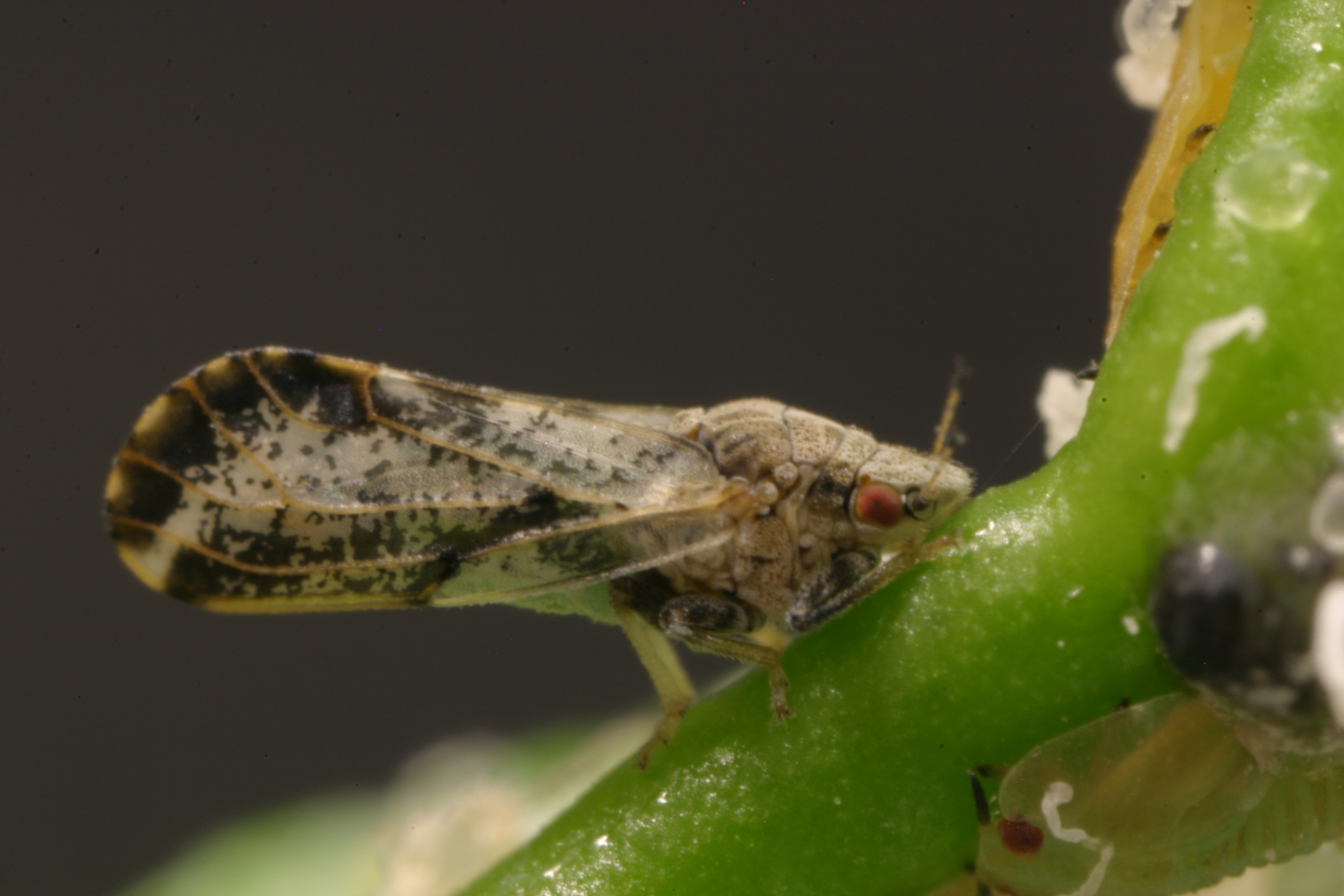
Included in the initial agreement is language providing $25 million per year for 5 years for research specific to the invasive insect Asian citrus psyllid and deadly plant disease Huanglongbing (HLB).

The Emergency Citrus Disease Research and Development Trust Fund will build upon the program created in the Specialty Crop Research Initiative (SCRI) title in the 2014 Farm Bill, which dedicated research funding for citrus.

“The trust fund language is a significant win for U.S. citrus growers,” California Citrus Mutual President Joel Nelsen said. “It’s critical for the future of our industry and the domestic citrus market that we continue to invest in research aimed to find a solution for HLB.”

The Farm Bill funding specific to HLB research complements the $40 million per year program funded by California citrus growers to stop the spread of HLB, which has been detected in over 900 backyard citrus trees in Southern California. In recent years, the state of California has dedicated funds to augment ACP and HLB control efforts in urban areas, including the rearing and release of millions of beneficial insects in backyard citrus trees.

Negotiators have also agreed to maintain funding for the USDA Animal and Plant Health Inspection Service’s (APHIS) Plant Pest and Disease Management and Disaster Prevention Program and the National Clean Plant Network (NCPN). Additionally, funding will continue for the Technical Assistance for Specialty Crops (TASC) program, which helps growers overcome artificial trade barriers.

“On behalf of the California citrus industry, I want to thank the lead farm bill negotiators in both houses for their commitment to passing a Farm Bill that includes this vital funding for the U.S. citrus industry and specialty crops,” Nelsen said.

2021-05-12T11:05:07-07:00November 29th, 2018|

It’s Past Time to Manage California Forests

Reducing Catastrophic Devastation with Preventive Forest Management

By Patrick Cavanaugh, Editor

In light of the deadly Paradise fire in northern California, along with the other devastating fires in the state over the last 10 years, California Ag Today spoke with Secretary of Agriculture Sonny Perdue and Secretary of the Interior Ryan Zinke about the state’s forests.

Perdue believes that significant losses could have been averted.

“The issue really right now is what are we going to do about it? These are called disasters. Because of the loss of life, wildland fires have been greater than hurricanes this year,” Perdue said. “We’ve had two significant hurricanes, but the death toll is surpassing that. And the interesting thing in this disaster: these are disasters that we can do some things about, and we need to be about doing things … that we can do, but we need the authority to do that.”

Zinke said that officials need to act on good forest management.

“We talked about active forest management for a long time, but you know, talking’s over,” Zinke said. “It’s now time to act.”

Zinke noted common sense forest principles that need to be addressed at once.

“One is to remove the dead and dying trees; to thin and do prescribed burns late in the season rather than midseason,” Zinke explained. “This is fixable. The president’s right, and this is not just one administration—this goes back years of failure to manage our public lands, and it is absolutely a situation that can be mitigated, but we need to act.

Ryan Zinke, Secretary of the Interior

“It is unsustainable and unacceptable that we have the devastation, the loss of life, but we need to prioritize getting back to an active management system. There are other countries that prevent the devastation,” Zinke said. “I spent a lot of time in Germany, which does not have the scale of fire that we experience. There are models of active forest management that are effective, and this is the time to act.”

But Zinke explained that good forest management in California has a big problem: radical environmentalists.

“Take a look at who’s suing. Every time there is a thinning project, who’s suing. Everyone should recognize that the density of dead and dying trees is higher. The density of trees are higher and there are active forest management principles that we should use to mitigate these devastating forest fires,” Zinke said. “However, when there is lawsuit after lawsuit by, yes, the radical environmental groups that would rather burn down the entire forest than cut a single tree or thin the forest. And it’s easy to find who is suing and who has promulgated these destructive policies.”

Zinke said that he does not want to point fingers just at the environmentalists, though.

“There’s a lot of variables: the season’s getting longer, the temperatures are getting hotter. We’ve had historic drought conditions in California, which has lead to dead and dying trees from beetle kill. There is a high density of trees, with enormous underbrush and those things can be mitigated, but we have to get to work,” he explained.

Perdue challenges the radical environmentalists’ desire for an untouched, pristine forest.

“I think that’s been the theory from well-meaning environmentalist over the years: is that a forest that you did nothing to was pristine,” Perdue said. “We know that’s not to be the case. It gets undergrowth. It gets where you don’t have good recreational activity, poor hiking, poor access or wildlife growth and access, water quality, all those kind of things. It’s not pristine, and that’s the issue that we’re trying to bring up. A well managed, well-groomed forest is always better for all of those kinds of issues.”

Sonny Perdue, Secretary of Agriculture

A well-managed forest provides economy and jobs for rural communities as needed, but wildlife, the recreational aspect, the hiking, the water quality, all those also improve with well-managed forests.

“I think some environmentalists are coming around to that to that way of thinking, I think even some environmentalists realize they’ve overreached and [are] keeping management out of these forests, but we need more to come along, and we need the lawsuits to stop,” Perdue said.

Zinke said public land is for the benefit and the enjoyment of all people and not special interest groups.

“And what we’re seeing in the last decade [is] that special interest groups are really exercising their very tight agenda. The result has been a buildup of fuels coupled with droughts, and with increased density of dead and dying trees, as well as beetle kill. And so the condition of our forest as we look at them today, are not healthy—and they are a threat to populations like, like Paradise, and we can do better,” Zinke explained.

“I think the solution is looking at models that are effective, using best science, best practices, and certainly having more authority or we don’t have to go through an entire Environmental Impact Report (EIS) to cut a single tree,” Zinke said.

And that’s exactly what Zinke had to do when he was a congressman in Montana.

“[As] a former congressman, I sponsored the bill to allow a power company to remove vegetation in a prescribed easement. And it took an act of Congress to move the bill through. But is still gave 60 days for a notification before the power company could remove what was called an imminent danger tree. This is a tree that’s going to fall on the power lines, no doubt … it has a potential of starting a forest fire, but it still took 60 days of notification for a power company to have the authority to remove a single tree in a prescribed easement, he said.

Zinke noted that there are a number of legislative fixes, and some of them can be in the Farm Bill.

“We need more authority to have category exclusions, to do the right thing and take a common sense approach so we don’t have to go through year after year of these 100,000-acre-plus fires that are enormously destructive,” Zinke said.

The massive fires put our firefighters and our communities at risk.

“I do think that America is waking up, and sees that we can manage these forest using best practices, and best science,” Zinke said.

“We should be able to manage our forests. And when nature alone takes this course without management .. it has consequences, and those consequences, unfortunately, have led to entire communities being destroyed and a tremendous amount of loss of life. We can do better and we should,” Zinke explained.

2021-05-12T11:05:07-07:00November 28th, 2018|
Go to Top