Navel Orangeworm Pressure

Joel Siegel: Beware of Navel Orangeworm Over Next Few Weeks

By Patrick Cavanaugh, Associate Editor

Joel Siegel, research entomologist with USDA Agricultural Research Service (ARS) in the Parlier office in Fresno County, is worried about Navel Orangeworm (NOW) pressure on almonds, pistachios and walnuts this season, “because we have this pattern of hotter winters, warmer springs. And, there is more than enough degree-day accumulation for an extra generation of NOW, compared to what people were dealing with four years ago. And with that, there’s the potential—if you are not on top of things—for it get out of hand.”

Those higher temperatures, he says, are what the worms desire, “Temperature—you can think of it as fuel—fuel for the fire. So the faster the generation time, the more they can start overlapping and possibly resulting in an extra generation, prolonged pressure, and at the tail-end, more NOW going into the next season as well. So you have this cycle that keeps on increasing,” says Siegel.

In describing the different monitoring and spray strategies for the each nut crop, Siegel says, “Well, with pistachios, hull split is not as predictable, so if you have hull integrity maintained, there is less NOW pressure because the nuts are not vulnerable. Navel Orangeworm seems to find pistachios once that hull begins to split. If hull break-down occurs earlier, you are dealing with more pressure.”

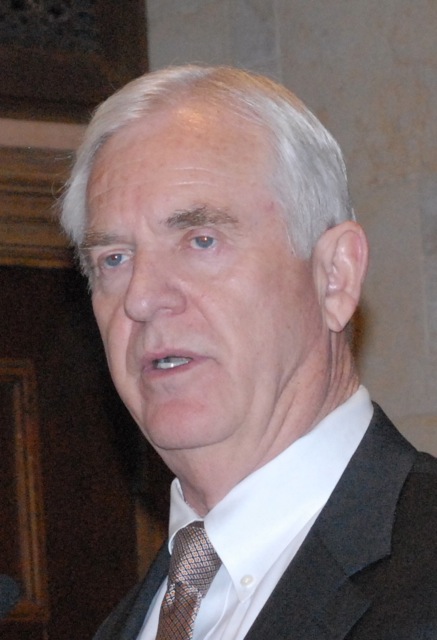
Joel Siegel

Joel Siegel, research entomologist with USDA ARS in the Parlier office, Fresno County

“On walnuts,” he explains, “people have been harvesting them later, going into September and October. So, if sun damage or anything else has damaged the hull in these late varieties, NOW will find these nuts as well. So, growers are experiencing higher pressure with late harvest walnuts.”

“NOW management timing is a bit more obvious for almonds,” Siegel explains. “That hull split spray is probably the most critical spray application, plus the new crop nuts are increasingly becoming more vulnerable to NOW. When that hull begins to open seems to be when this moth really notices the almonds.”

Siegel states, “One problem with almonds in particular, is that drought stress may cause prolonged hull-split that is not synchronous within an orchard. You’ll see NOW on the edges and the middle of the orchard, for example, just out of sync. So growers are having to apply an extra spray to treat all of their nuts the first time, and that is a relatively new phenomenon.”

“Second,” he says, “some people get burned in almonds, as they are used to the NOW pressure they encountered two to three years ago when they were not dealing with that extra generation. So they’ve only been applying this single spray; whereas, currently, many people need to do a hull-split spray followed by a post-hull-split spray.” And the way this season is progressing, growers may need to do this second spray over the next ten days.

“With  pistachios,” Siegel notes, “these NOW generations are building. And because of the high economic value of pistachios, people are doing a  second, or even a third shake. So if you have a scenario in which your crop is not synchronous in development, a lot of nuts become available late in the season, just when the NOW population is high as well. So that last 20% of the pistachio crop is where a great deal of damage is occurring.”

Navel Orangeworm does so much damage to the kernels that many processors are offering price premiums to growers for pistachios with  less than 1% damage. Siegel clarifies, “I’m assuming that is the goal of increased subsidies; to help offset either the cost of increased insecticide applications or to offset the cost of puffers for mating disruption.”

Siegel notes some unique NOW attributes, “They are very good at eating a lot of different things.  People don’t realize that although these different nut commodities—almonds, pistachios, and walnuts—have chemicals that help protect them from insects, this worm is very good at detoxifying or eliminating these protective chemicals. So, NOW is able to pressure many different crops and moldy fruit, so that any moldy mummies on the ground can serve as food for Navel Orangeworms. This is why sanitation is so critically important.”

Siegel says California tree nut growers are well-known for their high quality product, and this excellent reputation must be maintained. “Pistachios are a valuable crop,” Siegel says. “Growers must balance these advantages, talk with their processors, and look at how aggressive their pest management practices need to be.”

“The reality,” he continues, “is that a lot of people did quite well last year, and their damage was quite acceptable. So again, my advice is to stay the course; if you are happy with your results, continue to do the things that made you happy. If you got stung a little bit, consider adding sanitation or an additional spray.”

Finally, Siegel summarizes, “The California advantage is a quality nut crop that is high in demand. I assume that quality is never static; it always has to improve and respond to the market. As processors continue to pay premiums, they will expect nuts of a certain quality, and that will be the challenge for growers’ management strategies.”

(Featured Photo: Almond damaged by navel orangeworm larvae, UC ANR)
2016-05-31T19:28:15-07:00June 5th, 2015|

Henry Perea Honored

Ag Council Recognizes Assemblyman Henry Perea with Influential Legislator Award

During its annual Legislative Day held this week, Agricultural Council of California (Ag Council) recognized Assemblyman Henry T. Perea (D-Fresno) with the inaugural Influential Legislator Award.

“Assemblyman Perea personifies what is good in a political leader,” said Emily Rooney, President of Ag Council. “He has found ways to collaborate on issues that have allowed him to help his constituents, but have also been good policy for the entire state. And, even on issues where we may not agree, he always maintains an open door policy to Ag Council and its members.”

Since coming into office in 2010, Perea has tackled some of California’s toughest issues head-on, including water policy. His district represents the heart of agriculture in California, and as a moderate Democrat he’s been sensitive to not only how important the industry is to the economy, but also in providing employment to many of his constituents.

Ag Council Chairman, Brendon Flynn, a farmer with Sunsweet Growers and Assemblyman Henry T. Perea (D-Fresno)

Ag Council Chairman, Brendon Flynn, a farmer with Sunsweet Growers and Assemblyman Henry T. Perea (D-Fresno)

“Assemblyman Perea was a leading advocate for securing the $2.7 billion in funding for water storage in the 2014 water bond package. At the same time, he spoke out against the overly burdensome Sustainable Groundwater Management Act last year, demonstrating the he truly understands that a healthy ag economy is good for the entire state of California,” said Brendon Flynn, Chairman of Ag Council who presented the award to Perea.

Perea’s leadership has made impacts in several areas of agricultural policy. He is currently serving as the Assembly Ag Committee Chair, and has embraced that role by seeking to learn more about California’s number one industry. Assemblyman Perea has authored a bill to help fix some of the implementation issues with last year’s groundwater legislation. In 2013, he brought together a diverse coalition to pass Assembly Bill 8, which provides funds to help lower costs for farmers who choose cleaner burning vehicles.

“This award was created to recognize legislators who might go outside of traditional roles, whether they be Republican or Democrat, and do what is actually best for the state, its residents, and the future of agriculture,” added Rooney.

Assemblyman Perea received the Influential Legislator Award during the Ag Council Annual Legislative Day in Sacramento. This award will be given on an annual basis to legislators who embody that same collaborative approach to finding positive outcomes for agriculture and all of California.

2016-05-31T19:28:16-07:00May 29th, 2015|

A Call for Common Sense Water Management

California Water Management Dilemma

By Lawrence H. Easterling, Jr.

Larry Easterling

Larry Easterling makes a comment at a recent pistachio growers meeting.

We are witnessing the dismantling of the California water conveyance system that supplies drinking water for 25 million California residents and four million acres of prime farmland in the San Joaquin Valley.

Our water resources are being “Withheld” from the very people of this state who have shown what “Free Enterprise” can do not only for the well-being of all in California, but the entire nation. Unfortunately, several major environmental groups and complacent politicians are killing the freedoms that have been the bulwark of success in California. Let me explain.

Water is our most valuable renewable resource and Mother Nature gives it to California in copious amounts during most years. What we do with that water—water management—is critical to the future of the Golden State.

On average, 200.0 million acre-feet of water a year blankets our state. One acre-foot is equal to 325,851 gallons of water. Of that precipitation, 75% originates north of the Sacramento River. The other 25% falls in central and southern California.

The water that is not manageable by us is 120.0 million acre-feet. Some of it evaporates, but most of it settles into the ground, fills lakes, and what remains heads for the Pacific Ocean. The balance of the water is called “directable” surface water (80,000,000 acre-feet) and this is where we have the opportunity to put it to its best and proper use.

By 2005, according to the Department of Water Resources, 48% of that directable water went to the environment, 41% to agriculture and the remaining 11% to rural areas. This balance of such a precious resource seemed at the time to be equitable to all parties, thanks to the ingenuity of our forefathers in the 20th century. Their foresight gave us a water conveyance system second to none in the entire world.


California’s water conveyance system had four major objectives:

  1. To provide reliable water deliveries to 25 million people to avoid water shortages that would otherwise exist and continually plague two-thirds of the California population.
  2. To support four million acres in central California of what the National Geographic Magazine proclaimed to be the most productive farmland in the world.
  3. To reinforce our natural environment.
  4. To recharge our groundwater supplies.

Some distinctions should be made here as to how much directable water we are actually concerned about. At full capacity, the two California water conveyance systems—the State Water Project (SWP) and the federal Central Valley Project (CVP)—deliver water from northern California to southern and central California. Each system, the CVP and the SWP, has the capacity to each deliver 4.0 million acre-feet water each year. However, this water delivery capacity has never been tested. The record shows that in the years prior to 2005, the average total delivery COMBINED for both projects was 5.4 million acre-feet per year. The ultimate users of this water went to agriculture (60%) and the rural population (40%).

The volume of water available, on average, from the Sacramento River, including the San Joaquin River, is 30.3 million acre-feet. It is from this volume of water that the 5.4 million acre-feet are sent south.

In 2007, several environmental organizations led by Natural Resources Defense Council took the Department of Water Resources to court to compel the court to enforce the Endangered Species Act (ESA). The court ruling to enforce this law declared that the giant water export pumps that raise the water from the Delta into the California Aqueduct were cut back because it was suspect that the pumps were killing too many delta smelt, an endangered species.

Even in flood years restricted pumping has reduced the water flow to a fraction of the contracted normal flow. Henceforth, since 2007, our water deliveries to urban and agricultural areas have been severely compromised.

The enforcement of these laws is now negating the four major functions of the giant California water conveyance system outlined with the possible exception of the natural environment. Now mind you, this water comes from northern California where 75% of the rain in California falls, averaging over 50 inches a year. Central and southern California “average” less than 15 inches a year.

During the seven years from 2007 through 2014, average deliveries to farms have been reduced to less than one acre-foot per year. Most agricultural crops require 3 ½ acre-feet of water per year. Today, without recourse, these farms are left with barely enough water to keep their plants alive. As for the hardship visited upon 25 million consumers, the Metropolitan Water District (MWD) in southern California is a good example.

The MWD services 19 million accounts, and prior to 2007, was receiving 40% of its water from the SWP. That water source has now only been able to supply approximately 10% of their needs. Consequently, due to seeking other sources to replace their water losses, rate increases to their customers over the years 2007 to 2014 have doubled. On top of all these setbacks, Mother Nature now has shown us her own drought versus our manufactured water crisis. All the way through this synthetic drought, the average rate of precipitation at the source of our water in northern California has been 45 inches each year.

In order to survive, those of us who must have an adequate supply of water to sustain us have been forced to pump more groundwater and/or purchase water from farmers who idle farmland and transfer their water to areas severely threatened with water shortages. For some of those lucky enough to find water for sale, the cost of water has become a severe financial burden. Where farms in the Central Valley were, prior to 2007, paying just under $100 per acre-foot, today if a willing seller can be found, the price can range anywhere from $1,000 to over $2,000 per acre-foot. In many such cases, water costs can exceed all other cultural costs combined. Likewise, the aquifer has dropped every year since 2007 due to frantic attempts by farmers to supplement the critical loss of surface water.


WHAT MUST BE DONE:

The effects of water deprivation over an eight-year period by a man-made drought capped by one of nature’s real droughts, is wrecking havoc with the nation’s food supply. The state of California is now in the grips of the Law of Diminishing Returns and is incapable of averting a disaster due to environmental regulations. Consequently, this country’s NATIONAL SECURITY is being compromised. CONGRESS MUST ACT NOW before further damage is done. These actions need to be taken:

1. The Endangered Species Act (ESA) must be excluded from jurisdiction over the pumps, which move northern water to central and southern California. The pumps are presently operating at about 15% of their capacity. This measure should be permanent and under the management of the Department of Water Resources (DWR).

2. The Endangered Species Act needs to be revised in order to “protect all species”, including humans, from collateral damage due to methods employed to save one species that results in severe damage to other species. This would be implemented through a biological opinion that would INCLUDE a list of all species that would be adversely affected by the METHOD employed to protect one specific species. This measure would make right just one of the irregularities in this flawed law, which attracts litigation like bees to honey. The law does not need to be struck down, simply rewritten to safeguard “all” species, including human beings.

3. California’s magnificent water distribution and conveyance system has no peer in this world. It is a remarkable feat of engineering admired by those who have come from far and near to marvel at its accomplishment. Yet, by environmental fiat, it has been reduced to a token of its capabilities. “Directable” water in California originally ceded one-third of its 80,000,000 acre-feet to the environment.

Today, according to the DWR, the environment now takes, not one-third, but 50% of the direct able water, leaving the rest to urban and farming communities. This is not what the original framers envisioned, but under the DWR, its control has been gradually diluted by federal agencies such as the Environmental Protection Agency (EPA), and one of its extensions known as the STATE WATER RESOURCES CONTROL BOARD (SWRCB). THIS FIVE PERSON-BOARD IS STAFFED WITH ENVIRONMENTALISTS, such as their chairwoman, Felicia Marcos, a Governor Brown-appointee, whose professional background includes eight years with the EPA and five years with the radical Natural Resources Defense Council.

The influence of these federal agencies, backed by political power brokers’ lobbyists, has tilted the water distribution of surface water away from its original intended users. In essence, the environmentalists now control California’s surface water; and now, with the passage of the recent 7.5 billion dollar Water Bond, they will control our groundwater as well. If the water agencies do not perform with the desired results, the bottom-line is that final control will go to the SWRCB.

The ship of state now needs to be righted; it is drifting far off course. First of all, the EPA must be brought to heel. For a federal agency, it exerts far too much power. And, in so doing, has completely distorted California’s surface water delivery system. Next, the SWRCB must either be eliminated with FULL CONTROL restored to the Department of Water Resources, or completely reorganized as an ADVISORY BOARD to the DWR where ALL recipients of the surface water system would be represented. A ten-board membership might be in order, with a director and the nine remaining seats divided into three equal parts by experienced personnel in agriculture, city water management, and the environment, i.e., three persons from each classification and residents of northern, central and southern California.

4. Finally, one in every ten workers in California is either directly, or indirectly dependent upon the health of our vast agricultural industry.

It is time to step forward and reveal, with facts and figures, the house of cards that water management in this state has become. Likewise, those 25 million people in southern California, such as the MWD’s 19 million users who once got 40% of their water from the giant conveyance system, deserve to get that water back.

With years of a man-made drought compounded by a natural drought now in the eighth year, there is ample information available through various farm county records to quantify in lost dollars the cumulative effect of, (1) lost production due to forced fallowing of land, (2) water costs that are now ten times what they were prior to 2007, and (3) the heavy burden economically of converting hardworking farm labor to the welfare roles where some Central Valley towns are now approaching 50% unemployment. Combined, these costs will be in the billions of dollars, bloating further our California deficit.

The goal of society has always been to improve the human condition and for one generation to leave a better world for the next. The visionaries of the 20th century got it right. They delivered in spades to us, the beneficiaries, a modern miracle. It is a water conveyance system like none other to serve all the people of California. Where are those visionaries now? Rather than embrace the gifts of a reliable source of precious water, they proceed to dismantle the entire system. It is because of the system that California feeds the nation. This is not just a California crisis. It is one that will affect the entire nation. Look upon it as a national security threat and demand that our leaders do what is right for the vast majority of this country’s people.

 Lawrence H. Easterling, Jr. Administrator, Kettleman Pistachio Growers and Director, American Pistachio Growers


2016-08-03T21:05:15-07:00May 18th, 2015|

Top Ten Issues Facing Ag

The Top Ten Issues Facing Agriculture:

California Fresh Fruit Association’s Bedwell Lays Them Out

By Patrick Cavanaugh, California Ag Today

For the first time in nearly eight decades, the California Fresh Fruit Association met in San Diego to carry on all the traditions established over the previous 79 years by the organization originally known as the California Grape & Tree Fruit League.

“How does that feel?” said President Barry Bedwell as he addressed a big part of his membership. “For the most part, I think the feedback has been more than positive. As we explain the rationale behind the name change and why we have moved from a very dear moniker, if you will, for an association that has such a great history, I think it is altogether fitting and proper to recognize our position in the state of California,” said Bedwell.

The Association covers the state from Lake County in the North to the Coachella Valley in the South, and represents 13 commodities with a combined value of $2.5 billion.

“The new name transition has gone very well,” noted Bedwell. “And as we look at 2015, I think it is a ‘schizophrenic’ time for agriculture. On the one hand, as our chairman, David Jackson, pointed out, economically, things look very strong for most commodities.”

“However, here we are in a situation of increasing anxiety. If you look at the feedback every year on our top ten issues, you can see the concentration of issues that are not simply operational in scope. They may be historic in impact when talking about water availability and groundwater management, as we move forward,” said Bedwell. “The availability of water, along with the availability of labor, are simply game changers. They can change things overnight. And I think, inherently, farmers understand that and all of you in this room working together as a supply chain understand that.”

Bedwell then announced his traditional Top Ten Issues Affecting Ag and the association and discussed how they changed from the prior year:

#10  Workers’ Compensation costs.  We bought up our partnership with Zenith Insurance. It’s about how to run programs more efficiently to save you money, but we understand that when it comes to the issue of worker’s comp, it is the issue of the legislature changing the laws to benefit certain classes of participants that leads to higher costs that render our competitiveness more difficult.

#9 Invasive Pest Issues. Look no further than what’s happening with the citrus industry and their struggle agains HLB and the idea of the Citrus psyllid continually being found in new counties throughout the state. Pests for us on one hand are more associated with things like the European Grapevine Moth, where we have done a good job, made progress, and have a chance at eradication, but pests are always on our minds because we are only one quarantine away from not being able to ship our fruit, and we understand that.

#8 Water Quality. We hear so much about water availability, but creeping up into our mindset as well, is water quality because we know we have issues with salts and nitrates in the Valley. How does agriculture get involved with this? It continues to be an issue.

#7 Groundwater Management Legislation. We saw on our list—for the first—groundwater management legislation. This is potentially a game changer. We just had a meeting with some of you in Visalia with the California Water Foundation. They are trying to explain the timeframe for this new law, and quite frankly, the more you learn about it, the more you have to be concerned about any potential outcome other than the scope of agriculture in the state of California.

Because what they are saying in an almost commonsense contradiction is that this has nothing to do with your water rights. Those don’t change, but we may limit the amount of water you can use. That is a tough one to figure out at times, but that is potentially where we are headed in the fourth year of the drought. As you hear the vernacular in Sacramento, the mindset begins to change from one of, ‘Maybe we’ll get rain this year,’ to ‘Maybe we are in the fourth year of a ten-year drought.’ So all of the sudden, the mindset begins to change to more management of water. This is a major concern.

#6 Labor Costs. Knowing and trying to educate legislators about the fact that seventy to perhaps eighty percent of our variable costs as farmers is tied up with labor because we deal with the most labor-intense costs possible with our 13 commodities. I don’t look at any as being machine harvested or machine pruned. So, every time there’s a good-will gesture of, ‘Boy, we should move that minimum wage up,’ we try to explain to people we don’t pay minimum wage. Wages are higher; but incrementally, all of our sectors move up, whether you are a tractor driver or an irrigator, and that has a major impact on our ability to compete on a world-wide basis. And you start to see the labor influence spilling into Baja, California.

As you read recently, workers there are demonstrating because they are making about $8/day, and we are probably more about $12/hour for seasonal labor. But we still have to compete with those instances, so labor is always going to be a concern. We always talk about labor laws and regulations.

#5 Agriculture Labor Relations Act. A year ago at this time, we talked about a case involving one of our members, Gerawan, and the United Farm Workers (UFW), who won an election back in 1990, disappeared for 22 years, then showed up again last summer. The UFW said, “We are the certified representatives for the employees, we’re now here, we want our contract.” The catch was that the employees said: “We don’t know anything about you; we don’t know why we should pay you three percent of our wages for dues.”

That situation resulted in a hearing beginning on September 29th. At that time, the hearing was in front of an administrative law judge in Fresno, and was scheduled to go for ten weeks. Those ten weeks finished up about two weeks ago—after 23 weeks had past. That’s incredible, to think, we have heard it cost as high as 7 million dollars to have that administrative hearing, all paid by California taxpayers.

This is not really how the law was intended to benefit the workers. So, as we move forward, we are always going to see efforts by organized labor to change the law to change the scale for their benefit. We saw it last year with SB 25, which really tried to create a perpetual mandatory mediation situation.

We have to continually push back on these bills. The most effective way to do that is to communicate the voices of those impacted, and in this case it is the employees. And so we have tried very hard to create a relationship with the members on the Agricultural Labor Relations Board, and a couple of weeks ago when we were in Sacramento, we had dinner with two of the three board members. And I know the chairman spent most of the time speaking with Harold McClarty, president of HMC Farms, so I know we are in good shape. It is really about relationships and that is what we continue to work on.

#4 Healthcare Mandates. What is happening with the Affordable Care Act, and how is impacting you?

We saw some very practical instances last year where many of our members who use farm-labor contractors were approached. And the labor contractors said, “Well, because of the Affordable Care Act, I’m going to have to raise my rates from $0.70 to $1.10/hour. But under closer examination, we said: “Well—hold it. What percent of your workforce really has to be covered under the Act?” In many cases we found that it certainly wasn’t 100 percent; it was sometimes closer to 10 percent. So we are trying to help administer the understanding of that Act for the best benefit of our members.

#3 The Continuing Need for Immigration Reform. It hasn’t gone away. I am so pleased to have Tom Stenzel, president of the United Fresh Produce Association, here with us today, along with his Board chairman Ron Carkoski, because we work very closely on these national issues with Tom and Ron. And our voice is still there. Our level of frustration has grown because as we entered this legislative session in Congress, guess what? What did we hear most about? E-Verify; the Legal Workforce Act; and the concern that we have documented workers. We don’t disagree with that. We think that’s a great idea, but you don’t put the cart in front of the horse; you don’t do E-Verify before you create a system for a legal workforce. That’s a very simple message we are trying to get to the leaders in Congress, and Tom and Ron do an absolutely fantastic job in helping to get that message across.

#2 Food Safety. Last July, I received a phone call from one of our members on a Saturday. It was hard to gauge the impact at the time, because that member said, “I want to let you know that we had four peaches show up in Australia, and there was an indication of Listeria.” Now in Australia, there is technically a tolerance for Listeria, and these were such low levels of Listeria, that that shipment was released.

It went on its way with no issues. But under further examination, Listeria was discovered in the plant. As the U.S. and FDA have no tolerance for Listeria and as U.S. law requires, there was a recall. This was not a small recall. It was a period from June 1st to, I think, July 17th. That is a huge amount of product.

During that time, there were no confirmed illnesses. That doesn’t mean there weren’t claims, because once you start a recall and information goes out to the public, there will be plenty of claims. But from an association point-of-view, how do we react and plan for the future with regard to food safety? Because all of the sudden, the perception of tree fruit in this instance, and peaches and nectarines, in particular, being a low-risk commodity, has changed.

Is it really a low-risk commodity? Absolutely, it is a low-risk commodity. But are we immune? Absolutely not. We found out that we have food safety issues, like so many other fresh produce commodities. We had to communicate the right way not only to the segment of our members who were involved. Many of them were, quite frankly, in a state of denial, saying, “This shouldn’t be happening.” Well it happened.

But I want to applaud the industry, and especially our leadership Association, who said, “We have to do the right thing. We have to communicate our concern. We have to be positive about this.” They not only moved forward with our membership aspect, but  they also created the partnership with the Center for Produce Safety in Davis to develop the best possible practices as we move ahead.

Food safety was further complicated late in the year because of the apple recall. Now those were candied apples, they had caramel on them. But as you can see, the fact is the Listeria found was attributable to the apples, not the coating. Again, we had an industry that thought, quite rightfully, they were low-risk. And once again, we are learning we are not immune. As we move ahead, food safety is going to be a very important component of our work as an Association.

We have created a food safety sub-committee, chaired by George Nicolate.

#1 Can anybody guess? Water. From our perspective, there are three general areas of water we have to focus on. Number one, the Water Bond, and what happened last summer. It is a very good success story, in that we were able, with the help of individuals in the legislature, to maximize the amount of dollars in that bond for above-ground storage. But in Sacramento today, there are challenges and perceptions regarding dams. People have mindsets that unfortunately go to the extreme and in many case, dams is one of those.

I can guarantee that through the efforts of people who were involved in our Association and through the Agricultural President’s Council, we were able to move up what was first a $2 billion proposal, then $2.5, then $2.7, with a commitment for a subsequent legislation on Cross-Valley conveyance in Kern County.

This was a major accomplishment, but as accomplishments go, unless you follow-through, you’re never going to realize the results. And I think George Soares, attorney with Kahn, Soares, and Conway in Sacramento, said it best when he said, “As these things happen, amnesia sets in with people very quickly. And all the sudden the people with whom you were discussing above-ground storage with will start to say, ‘Well, you know the bond says it doesn’t have to be above-ground storage; maybe we could do local projects, regional projects, or maybe we can do underground banking.’”

Our message has been very clear, “No, the deal that was made was on two above-ground storage units, and the fact is that these will be decided by water commissioners. There are public benefit formulas, and those projects should be at the top. And until they are disqualified, they should be the first two that are qualified.”

As we were up in Sacramento a couple weeks ago, I think there was frustration among our participants as we heard the governor’s point person on water start to demonstrate that amnesia right in front of us. And that was a concern.

Number one, we have to push the true intent of the water bond to the finish line.

Number two, we have to have input into the groundwater management regulations a process that will require regulations sustainable management agencies for local water agencies. This is a very complicated issue. It’s very difficult to talk about what sustainability is. When they set baselines to talk about the ability to use groundwater, it is vital that we have the opportunity to give our input to stress the importance of sustainability and to emphasize that human health also involves vibrant farms and the employment of individuals. We have to have those concepts melded together.

Lastly we have the long-term issues of water conveyance in the state. If we are going to remain the agricultural giant that we are with the, I believe, all time record in 2014, we are going to have to find a more efficient way to move water, whether is that is the governor’s BDC plan, which doesn’t appear to be gaining traction, or not. But longer-term, members have said, “We are not against moving excess water South. We have to make sure the health of the Delta is maintained. We have to respect environmental laws, but we have to respect the impact of agriculture on our quality of life. So, water is at the forefront.

So, how’s the association doing? Very well. Financially we are on strong terms, I feel very good about our name change and our voluntary leadership moving ahead. I think we can take confidence in looking ahead at the future for this Association.

In summary, I just want to reiterate my thanks for being able to work for production agriculture. It is frustrating at times. It’s always difficult. Working with people who sometimes don’t understand, … it reminds me of the saying that I read in the paper yesterday and need to share with you. It is by Mark Twain, who said, “You never want to get into an argument with a stupid person, they will simply drag you down to their level, and then beat you with experience.”

Many times, in the world of public policy, that’s what we’re are dealing with at times. But we tend to look at it as an opportunity to educate as well as advocate. Those are two separate things, you have to be good at both of them, and I think our leadership does a very good job with them.

Bedwell gave special thanks to this year’s Chairman David Jackson and his wife Gale. He also reached out to thank his staff for the great job they are doing back at the office and in the field.

For more information, go to: California Fresh Fruit Association.

2016-05-31T19:30:24-07:00May 14th, 2015|

Bee Loss Update

Below Average Winter Bee Loss for U.S. Honey Bees

Edited by Patrick Cavanaugh, CalAgToday

There are still questions about how best to measure colony losses over winter months, during the spring through fall period, and on an annual basis. The USDA winter survey has been conducted only since 2006 and is based on beekeeper self-reporting. Since the survey’s inception, winter losses have averaged approximately 30 percent. Prior to the introduction of the parasitic Varroa Mite and other pests and disorders in the mid-1980s, losses in cold northern states  were typically the 0-15% range. Since then, colony losses over winter have been much higher. In warm southern states, honey bees seldom need to cluster, so they can continue brood rearing and foraging for most of the year. Therefore, it is important to define what is meant by winter, and these distinctions further complicate winter loss determination and calculation.

The latest report from the USDA is good news for all who care about the health of honey bee colonies. For the second year in a row, winter losses of U.S. honey bee colonies were well below the historic 30 percent average. More importantly, the long-term trend of overwintering losses continues to show improvement due to greater awareness of factors affecting honey bee health, particularly the varroa mite, and better pest management, including extensive use of the highly effective Varroacide, Apivar.

This report follows shortly after the USDA released its annual Honey Report, which showed that the number of U.S. honey bee colonies grew to 2.74 million in 2014, the highest level in many years, continuing a 10-year trend of steady growth.

Summer losses are expected and common, however, because of Varroa, other disorders, queen issues, and pesticide residues in hives, especially extremely high residues of bee-protecting Varroacides, beekeepers do face a challenge to keep these losses to a minimum. It is apparent that in recent years, beekeepers are doing a much better job of managing honey bees and the problems they face because colony numbers in the U.S. continue to grow. Some states, have seen substantial increases in colony numbers. Florida, for example has more than doubled the number of colonies since 2006.

Feed-a-Bee

Feed a Bee, Bayer CropScience

Even with this good news about overwintering trends, we must continue to focus on the challenges facing bee health. Bayer CropScience is developing new solutions to the problems caused by the invasive Varroa mite and is working to tackle another major issue facing pollinators today – lack of forage – through the Feed a Bee initiative. And we recently announced our Healthy Hives 2020 research collaboration with honey bee experts to identify tangible actions to help improve the health of honey bee colonies over the next five years. Although there is much work yet to do, this report validates the efforts of many stakeholders who are working to protect bees and promote sustainable agriculture.

Useful Links: Feed a Bee, Bee Health, Varroacides, Healthy Hives 2020

2016-05-31T19:30:25-07:00May 14th, 2015|

Sustainable Farming: Let’s Focus on a Farm’s Performance, Not its Size

In case you missed it, we are posting the article, “Let’s Focus on a Farm’s Performance, Not its Size,” with permission, from Environmental Defense Fund’s Growing Returns blog.

By  | BIO
Lettuce

Credit: Flickr user Dwight Sipler

What comes to mind when you think of a “family farm?” You’re probably picturing a bucolic spread of less than 100 acres, with a red barn, farmer in overalls, and cows grazing a big pasture. What about the phrase “corporate farm” or “?” Do you see a giant, impersonal and industrial-looking operation?

Unfortunately, these common (mis)perceptions are regularly promoted in everything from TV ads to online chats. But the reality is that “big” does not equate to “bad,” and “small” doesn’t necessarily mean “good” when it comes to sustainable farming. In fact, it’s the wrong debate altogether.

What really matters is performance, not size.

Today is National Agriculture Day, celebrated annually on March 18, and this year’s theme is sustaining future generations. If we’re going to meet the needs of a rapidly growing population, we’re going to need large and small farms alike. And no matter their size, they’ll need to minimize their impacts on the natural systems that sustain us all.

Addressing the myth

It’s a myth that large farms can’t be sustainable, just as it’s a myth that all family farms are small and better for the environment.

Take Christine Hamilton, for example, whose family farm produces corn, soybeans, winter wheat and cattle across 14,000 acres in South Dakota. For years she’s been participating in USDA conservation programs, using no-till practices, planting trees to limit erosion, and utilizing variable rate technologies to improve the environment and her yields.

There are also places like Fair Oaks Farms, which milks over 500 cows … an hour. To make their large operation more sustainable, Fair Oaks pumps methane from its livestock to an on-site natural gas station that compresses it into fuel for the farm’s fleet of 40 milk trucks.

Many small-farm operations implement sustainable practices as well. A perfect example is Full Belly Farms, a 400-acre organic farm in Northern California that won last year’s prestigious Leopold Conservation Award. But I’ve visited small farms where livestock roam freely into streams, soil erosion destroys riverbanks, and nutrient management plans are nonexistent.

Sharing responsibility4.1.1

In the U.S., agriculture already occupies 51 percent of our land, uses 80 percent of the [Nation’s consumptive*] water, and is responsible for 8 percent of our greenhouse gas emissions. And in the coming decades U.S. farms will be responsible for producing even more food. In order to make agriculture a plus for the environment, farm practices will need to change.

Of course, we have to keep in mind the context here. Mid-size and large-scale family farms account for 8 percent of U.S. farms but 60 percent of the value of production, so in order to bring sustainable agriculture to scale, they will have to do the bulk of the work. But small farms have a much higher share of production for specific commodities in the U.S. – they account for 56 percent of domestic poultry production, for example – so we’ll need their leadership, too.

Regardless of size, all farms need to:

  • Minimize the loss of nutrients and soil to air and water through nutrient optimization strategies such as conservation tillage.
  • Use water as efficiently as possible.
  • Improve soil health through strategies such as cover crops.
  • Avoid plowing up ecologically important lands.
  • Fence livestock out of streams and implement management plans to maintain healthy grazing lands and avoid overgrazing
  • Use strategically placed filters to capture excess nutrients.

It’s time we shift the public debate and get everyone on board the sustainability train. Arguing about a farm’s size won’t deliver environmental benefits. In the end, it’s all about performance.

_______________________________________

*“California Ag Today added Nation’s consumptive” from the original USDA text and offers the following definitions:

Consumptive water use” is a use of water that removes the water from the system so that it cannot be recovered for reuse by some other entity. Consumptive uses may be beneficial or non‐beneficial. A beneficial consumptive use would be crop evapotranspiration.

(Source: Agricultural Water Use in California: A 2011 Update 3 © Center for Irrigation Technology November 2011)

Evapotranspiration (ET) is the amount of water transpired by plants, retained in plant tissues, and evaporated from plant tissues and surrounding soil surfaces.

(Sources: (1) California Water Plan Update 2009 Glossary. Department of Water Resources. Resources Agency. State of California; (2) Agricultural Water Use in California: A 2011 Update 3 © Center for Irrigation Technology November 2011)

If the basis for the discussion is water consumptively used by only agricultural, municipal & industrial users, then agriculture’s share would be estimated in the range of 80 percent of the total. However, if the percentage is based on dedicated water, which includes environmental uses, then agriculture’s share is more in the range of 40 percent.

(Sources: (1) California Water Plan Update 2009 Glossary. Department of Water Resources. Resources Agency. State of California; (2) Agricultural Water Use in California: A 2011 Update 3 © Center for Irrigation Technology November 2011)

Dedicated water – as defined by the California Department of Water Resources (DWR) is “water distributed among urban and agricultural uses, used for protecting and restoring the environment, or storage in surface water and groundwater reservoirs. In any year, some of the dedicated supply includes water that is used multiple times (reuse) and water held in storage from previous years. This is about 40 to 50 percent of the total annual water supply received from precipitation and imported from Colorado, Oregon, and Mexico.”

Context: Water Portfolio”1 (Source: Agricultural Water Use in California: A 2011 Update 3 © Center for Irrigation Technology November 2011)

Dedicated water includes water flowing in the Wild and Scenic Rivers. Many partially used or unrestricted rivers could have been significantly diverted for use by municipal & industrial and/or agriculture. However, these waters have been dedicated by law to the environment. Other examples of dedicated water are the 800,000 acre‐feet/year reallocated back to the environment by the Central Valley Project Improvement Act (CVPIA) and the 647,000 AF/year reallocated back for Trinity River restoration of that river’s fishery.

(Sources: (1) Record of Decision. Trinity River Mainstem Fishery Restoration. Final Environmental Impact Statement/Environmental Impact Report. U.S. Department of the Interior. December 2000; (2) Westlands Water District vs. U.S. Department of Interior. Case Nos. 03‐15194, 03‐15289, 03‐15291 and 03‐15737. Argued and Submitted Feb. 9, 2004 ‐ July 13, 2004, United States Court of Appeals, Ninth Circuit)

_______________________________________

The Environmental Defense Fund (EDF) works directly with businesses, government and communities to create lasting solutions to the most serious environmental problems. EDF’s Growing Returns Blog posts news about the organization’s goal of meeting growing demands for food in ways that improve the environment.

2016-05-31T19:30:26-07:00March 21st, 2015|

SOUTH SAN JOAQUIN IRRIGATION DISTRICT IN CRITICAL DROUGHT EMERGENCY

SSJID Begins Season Conserving Water for 2016

by Laurie Greene, CalAgToday reporter

As the Stanislaus River watershed enters its fourth year of consecutive drought conditions,  South San Joaquin Irrigation District (SSJID)‘s water supply may not last through the end of the 2016 irrigation season. Therefore, with the season starting on March 15, the SSJID Board of Directors unanimously adopted a drought conservation program on March 10th to reduce the quantity of water used for the purpose of conserving the water supply for the 2015 and 2016 irrigation seasons. The District adopted a strict water allotment of 36” because studies have shown that more than half of its irrigators use less than 36”.  Irrigators must determine how and when to use their allotment.

Along with the 36” limit, allotment transfers will be allowed. The general rule will be that growers can increase or decrease their water supply by transferring all or a part of the 36” allotment between land parcels, with some exceptions. A District application form will be required for transfers, and the deadline for applications will be May 10. Parcels in a single transfer agreement will not need to have the same owners. Only parcels located in the District territory are eligible for the water transfer program. Transfer agreements will be for one year only and will be irrevocable.

The Board has also established a 10-day rotation schedule.

Agricultural water deliveries will be cut off once their allotment is used. SSJID’s online bill payment and consumption history service, available on the SSJID website, will update usage daily; however, the information will be three days old. Season-to-date usage will be shown on each customer’s monthly bill.

Basically, New Melones Reservoir, the source of SSJID’s water supply, is running out of water. The troubling pattern of long, warm dry spells between rain events in the upper watershed is continuing with the result of very little runoff into New Melones Reservoir when it does rain, as the ground and vegetation is so dry that it is soaking up all available moisture. Precipitation in the upper watershed has been 60% of normal since October 1, and has worsened: January was the driest January in history, and no snow fell below 8,500 feet of elevation in February. As the snowpack declines, the New Melones is expected to decline to “dead pool” in September.

The State Water Resources Control Board (SWB) has issued an advisory that Curtailment Orders for Junior Water Rights holders are possible, given the bleak storage levels in all of the reservoirs, including New Melones. There is not enough water in New Melones to meet the Bureau of Reclamation’s regulatory needs and the District’s hard cap of 225,000 acre-feet this year. Any additional inflow or any conservation saved from this year’s total of 225,000 acre-feet, potentially as much as 39,000 acre-feet, will count toward 2016 water needs, so stringent conservation measures in the District will be so important during 2015. Every drop of water saved this year may be needed in 2016.

The District understands this will be a serious hardship for many and will offer irrigator assistance. For more information, call SSJID at (209) 249-4600.

(Sources, South San Joaquin Irrigation District; SSJID caps water deliveries for first time, by John Holland, Fresno Bee; Water Education Foundation)

2016-05-31T19:30:27-07:00March 11th, 2015|

USDA Awards Grants to Support Schools Serving Healthier Meals and Snacks

Agriculture Secretary Tom Vilsack announced that the U.S. Department of Agriculture (USDA) will be awarding over $30 million in grants to help schools prepare healthy meals for their children. Twenty-five million dollars in grants will help schools purchase needed equipment to make preparing and serving healthier meals easier and more efficient, and up to $5.5 million will provide additional training for school food service professionals.

“Schools are successfully serving more nutritious meals to America’s students, and healthier meals mean healthier kids. We’re working to do everything we can to support schools as they work to provide kids the nutrition they need to learn and develop into healthy adults,” said Vilsack. “These grants will help schools obtain better equipment and additional training for their hardworking school food service professionals. With doctors, parents, teachers and schools all working together, we can make sure we’re giving our kids the healthy start in life they deserve.”

Since 2009, USDA has provided $185 million in kitchen equipment funding to states and schools participating in the National School Lunch (NSLP) and School Breakfast (SBP) Programs. USDA provides the funding to states, which then competitively award grants to school districts in order to purchase necessary equipment, giving priority to high-need schools where 50 percent or more of the enrolled students are eligible for free or reduced price meals.

The school equipment grants announced today are another example of how USDA is supporting schools as they implement the new meal standards resulting from the Healthy, Hunger-Free Kids Act of 2010. USDA works closely with schools to address implementation challenges, and provides funding, training and technical assistance to overcome barriers.

To further assist school food workers USDA is also announcing the availability of up to $5.5 million in Team Nutrition training grants for FY2015. These grants are only open to state agencies administering the NSLP, SBP, the Summer Food Service Program, or Child and Adult Care Food Programs. Through a competitive grants process, Team Nutrition training grants will be funded for the period of September 30, 2015 – September 30, 2017. State agencies may apply for up to $350,000. To apply for the grants, state agencies should visit www.grants.gov.

These competitive grants focus on the implementation of Smarter Lunchrooms – an innovative strategy using behavioral economics to encourage healthy eating in the cafeteria – as well as the healthier meal standards, HealthierUS School Challenge, USDA Foods, nutrition education, and wellness activities in schools and child care institutions. These funds may be also used to assist the state agency in providing training and technical assistance to school staff in creating Smarter Lunchrooms.

The Team Nutrition Training grants are two-year grants that have been awarded to state agencies on an annual basis since the inception of the program in 1995. They serve as key delivery systems for supporting the implementation of USDA’s nutrition requirements for meals served in schools and child care centers.

USDA’s Food and Nutrition Service administers America’s nutrition assistance programs including the National School Lunch and School Breakfast programs, the Child and Adult Care Food Program, the Summer Food Service Program, Supplemental Nutrition Assistance Program, and the Special Supplemental Nutrition Program for Women, Infants, and Children (WIC). Together these programs make up the federal nutrition safety net.

2016-05-31T19:30:28-07:00March 10th, 2015|

CalAgX Training Set to Begin in April

10th Annual CalAgX Training Seminar


The California Centers for International Trade Development (CITD) at State Center Community College District has announced the launch of their 10th annual California Agricultural Export (CalAgX) training seminar. A comprehensive export training program, CalAgX was designed to give California agribusiness leaders the tools to market their specialty crops in the food industry.

“CalAgX can provide businesses with the skills they need to become an international phenomenon,” said CITD Director Alicia Rios. “Not only do the sessions provide real life case studies and examples, the sessions are taught by some of the most esteemed professionals in the export industry.”

Held over a span of six weeks at three different locations, CalAgX is an all-inclusive export training program covering topics such as export logistics, terms of sale, legal and cultural aspects of the exporting industry, export payments and finance and credit insurance. CalAgX participants are well prepared to bring their specialty crops to the global market.

This year, CalAgX is set to take place in Clovis, Salinas and Sacramento. Companies that participate should be at least one year old and have less than two years’ worth of export experience.

For more information about CalAgX and registration opportunities, click here: http://fresnocitd.org/services/calagx/.

2016-09-20T13:19:49-07:00March 2nd, 2015|

American Pistachio Growers Celebrate World Pistachio Day with Good News

Just a week after the Dietary Guidelines Advisory Committee released its report to the Secretary of Health and Human Services and the Secretary of the U.S. Department of Agriculture (USDA), American Pistachio Growers, the trade association representing more than 625 pistachio grower members in California, Arizona and New Mexico is celebrating the good news today – on World Pistachio Day.

People who eat tree nuts on a daily basis, including pistachios, are making healthy choices, according to the report. The recommended guidelines emphasize a diet higher in plant-based foods including vegetables, fruits, whole grains, nuts and seafood to lower the risk of chronic diseases, particularly those associated with obesity. These recommendations are consistent with the findings of numerous science-based studies on the role of tree nuts, including pistachios, in preventing obesity and providing other health benefits. The report provides the scientific evidence for the next edition of the Dietary Guidelines for Americans, which are expected to be published by the end of 2015.

About two-thirds of U.S. adults are overweight or obese and about half of adults have one or more preventable chronic diseases. Poor dietary and physical activity patterns are associated with these conditions. Pistachios have been shown to play a positive role in weight management, blood sugar management, heart health and as a post exercise snack.

“It’s no wonder that more than 1/3 of Americans are obese. We’re eating too much salt, saturated fat, refined grains and added sugar resulting in excess weight, unhealthy blood sugar levels and deficiencies in calcium, fiber, folate, magnesium, potassium and vitamins A, D, E, and C,” says Cheryl Forberg, Nutrition Ambassador to American Pistachio Growers.

Forberg continues, “Thankfully, the new guidelines suggest more whole foods: vegetables, fruits, whole grains, dairy, nuts, such as pistachios, and seeds to offset our nutrient needs and promote healthier weights and blood sugar levels.” One of the nation’s leading advisors on health and nutrition, Cheryl is a New York Times bestselling author, James Beard award-winning chef and the nutritionist for NBC’s “The Biggest Loser.”

Pistachios a Source of Important Shortfall Nutrients

Pistachios can help consumers meet a minimum of shortfall nutrients identified by the Dietary Guidelines Advisory Committee while limiting overconsumption of sodium and saturated fatty acids. These nutrients include vitamins A, D & C, folate, calcium, magnesium, fiber, potassium, and iron for adolescent and premenopausal women. Of these, calcium, vitamin D, fiber, potassium and iron are considered of public health concern.

A 1-ounce 160 calorie serving of pistachios provides:

  • 290 mg potassium (8% Daily Value)
  • 3 g total fiber (12 % Daily Value) making pistachios a “good” source of fiber
  • 6% Daily Value of iron
  • 8% Daily Value for magnesium

In addition, unsalted pistachios are a sodium-free food. Pistachios provide 13 g of total fat primarily monounsaturated fatty acids (7 g) and polyunsaturated fatty acids (4 g) with about 1.5 g saturated fatty acids.

Three USDA-Recognized Healthy Diet Patterns Include Nuts

The Committee encouraged consumers to adopt dietary patterns low in saturated fat, added sugars and sodium. These include Healthy U.S.-Style, Healthy Vegetarian and Healthy Mediterranean diets. Such patterns are:

  • Rich in vegetables, fruits, whole grains, seafood, legumes, and nuts such as pistachios
  • Moderate in low- and non-fat dairy products
  • Lower in red and processed meat
  • Low in sugar sweetened foods and beverages and refined grains


About American Pistachio Growers

            American Pistachio Growers (APG) is a non-profit voluntary agricultural trade association representing more than 625 grower members in California, Arizona and New Mexico. APG is governed by a democratically-elected board of directors and is funded by growers and independent processors with the shared goal of increasing global awareness of nutritious American-grown pistachios. For more information, visit AmericanPistachios.org.

2016-05-31T19:30:29-07:00February 26th, 2015|
Go to Top