Steve Koike on Resistant Cultivars

The Search for Resistant Cultivars

By Emily McKay Johnson, Associate Editor

In the second part of our series with Steve Koike, plant pathology farm advisor for UC Division of Agriculture and Natural Resources, Cooperative Extension in Monterey County, the focus is on the critically needed research on resistant cultivars. Koike, who has focused his research since 1989 primarily on the understanding of disease systems and the investigation of new methods of disease control, said, “The role or the need for resistant cultivars is tremendous.”

“Some good case studies of resistant cultivar research address soil-born problems on lettuce,” Koike explained. “For example, Fusarium wilt and Verticillium wilt on lettuce could be managed lightly; but in order to overcome those diseases, resistant lettuce varieties need to be in place.”

Steve Koike, UC Cooperative Extension, Monterey County.

Steve Koike, UC Cooperative Extension, Monterey County.

“First discovered in 1995 on the Central Coast,” said Koike, “Verticillium wilt has the potential to infect and damage numerous different crops. And although Fusarium wilt was typically unseen in the San Joaquin Valley, it has recently begun to appear on the Central Coast.”

Continued improvement of management techniques upon discovering initial disease symptoms is necessary, according to Koike. “Symptoms of the disease usually appear on the lower leaves of plants, around the edges, and the areas between the veins can turn a yellowish-brown.”

“Strawberries currently have three really important disease pressures state-wide: Verticillium wilt, Macrophomina (charcoal rot) and Fusarium wilt,” Koike commented. “Even the fumigation tools we have are not cleaning them up 100 percent, so we have problems.”

“We will continue to have problems,” Koike elaborated, “until there are truly resistant strawberry varieties to those pathogens. Plant breeders understand that IPM management of these diseases is so dependent on developing resistant varieties,” he said, “but we’re not there yet. We do not yet have truly resistant lettuce or strawberry varieties out in the field,” Koike said.

_______________________________

Koike and his fellow researchers discovered a new race of the downey mildew pathogen in spinach that has been designated race 16. While there are some varieties that are supposedly resistant to race 16, Koike noted that there is still more research to be done.

To read the first part of our series on Downey Mildew, click here.

 

2021-05-12T11:05:54-07:00June 27th, 2016|

Call for Action to Oppose Overtime Bill AB 1066

Overtime Bill AB 1066 Needs Immediate Opposition

By Laurie Greene, Editor

California Assembly Bill (AB) 1066 to change overtime requirements for agricultural workers is returning as a “gut and amend”* measure scheduled for a hearing in the Senate Labor and Industrial Relations Committee on June 29, 2016. Emily Rooney, president of the Agricultural Council of California (Ag Council), is urging the agricultural industry to tell the State Senate TODAY how this bill would hurt farmworker wages.

California Senate SealCalifornia already requires agricultural employers to provide overtime pay to farmworkers after they work 10 hours in one day and 60 hours in one week, which recognizes the flexibility that farmers and employees need given the variable nature of farming and seasonal labor. Authored by Assemblywoman Lorena Gonzalez (D-San Diego), AB 1066, phases in a new overtime wage law requiring California farmers to pay agricultural workers overtime after eight hours in one day or 40 hours in one week by the year 2022.

Rooney says AB 1066 adds an unnecessary regulatory burden on the agricultural industry, and, combined with the recently passed $15 minimum wage law, makes it difficult for farmers in the state to remain competitive. “We do need six democrats to vote with us to oppose the bill, which will be a challenge,” said Rooney. “The Senate is left of center, at least compared to the Assembly, but we are working very hard to secure those votes and just hope that the bill doesn’t get back to the Assembly.”

Rooney said the Assembly killed a similar bill earlier this month. “It is very disappointing that the bill has been repackaged and presented to the Senate as a gut and amend bill, AB 1066,” she said. “The new bill was basically reintroduced less than two weeks after we defeated it in the Assembly.”

agricultural-council-of-california-logo140Rooney stressed the importance that the Senate not approve AB 1066, because should the Senate approve it, the bill would go back to the Assembly because both houses are needed to pass the bill. “And while the earlier bill failed in the Assembly, we are not sure that it would fail again,” she said.

There are Assembly legislators who voted against it before, who are willing to vote against it again, said Rooney, “but the timing of it is really unfortunate. We expect that while the legislators are on summer recess in July, they may have time to build up support for the bill. It’s the end of session, and we have a number of challenges to defeat the bill; but we are hopeful that if the California Senate does not defeat it, the Assembly will,” said Rooney.


Rooney suggested those who oppose AB 1066 go to the post, “Oppose Gut & Amend Legislation to Change Ag Overtime Wage Requirements” on the Ag Council Action Center webpage“to easily send an opposition letter to their state legislator.


*GUT AND AMEND, according to the California State Legislature Glossary of Legislative Terms describes when amendments to a bill remove the current contents in their entirety and replace them with different provisions.


Featured Photo:   Emily Rooney, president Agricultural Council of California


2016-07-05T17:41:30-07:00June 27th, 2016|

Postharvest Short Course Focused on Taste and Quality

UC Davis Postharvest Course Covers Food Loss, Produce Handling

By Lauren Dutra, Associate Editor

The 38th annual Postharvest Technology of Horticultural Crops Short Course concluded TODAY, June 24 at UC Davis. Presented by Beth Mitcham, director of the Postharvest Technology Center, the course focused on postharvest produce quality and safety.

Beth Mitcham, Director of the Postharvest Technology Center at UC Davis.

Beth Mitcham, Director of the Postharvest Technology Center at UC Davis.

“This class provided a really broad overview of all the topics that are relevant for postharvest handling of produce, including fruits, vegetables, nuts, and also ornamentals,” said Mitcham. “We cover the crops that are grown in California, but because our audience includes a lot of people from around the world who want to learn the basics about postharvest handling, we also cover a few crops that aren’t grown in California for commercial purposes. Furthermore,”she noted, “we also address some of the latest technologies that are available for maintaining excellent quality,”

Maintaining a good cold chain throughout the entire shipping line is critical, according to Mitcham. “We talk a lot about temperature,” she elaborated. “In fact, we tell students the three most important things about postharvest biology and technology are: temperature, temperature and temperature. We discussed many other technologies during the week, but they are secondary to good temperature management,” she noted.

Mitcham also mentioned food waste and how to control it. “So much effort goes into growing the crop, which includes harvesting at the prime of ripeness and getting it in the pre-cooler, on the trucks and to the market. But, people buy it, put it in their refrigerator and then don’t eat it. It goes bad and they waste it. It does happen,” said Mitcham. “Our goal is to try to make the product as hearty as possible while retaining really good flavor so it can last in your refrigerator as long as possible but also so people want to eat it, so hopefully it doesn’t sit in there and degrade.”
UCD Postharvest Technology Center

In reducing postharvest losses, Mitcham commented on the dissonance between addressing postharvest flavor and consumer satisfaction, “In some ways they are two opposite ends of the spectrum; some of the things we do to reduce losses are counter to delivering good flavor to consumers,” she said. “We really need to do both, and that was a big part of our message this week.”

Also at the event, the California Leafy Green Marketing Agreement (LGMA) discussed food safety principles, and Trevor Suslow, a UC Davis Plant Pathologist with the Postharvest Technology Center, discussed good agricultural practices (GAP) for food safety.

2021-05-12T11:05:54-07:00June 24th, 2016|

New IPM Work on Brown Stink Bug

New IPM Approach to Brown Stink Bug In Desert Cotton

By Patrick Cavanaugh, Farm News Director

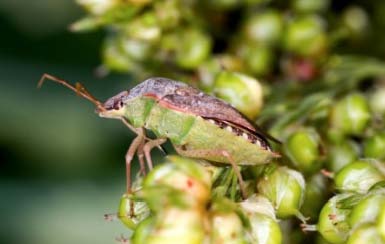
This year, the UC Division of Agriculture and Natural Resources, Cooperative Extension, Riverside County began an Integrated Pest Management (IPM) program to control Euschistus servus, or brown stink bug, a problem in Southern California’s cotton production areas.

Vonny Barlow

Vonny Barlow, a UC Cooperative Extension farm advisor in Riverside County

Vonny Barlow, a UC Cooperative Extension farm advisor in Riverside County began evaluating brown stink bug in cotton last year, and he received additional funding this year from a National Institute of Food and Agriculture (NIFA) grant administered through North Carolina State University, to continue his research this year. Barlow just hired two interns to work with brown stink bug in the Palo Verde Valley in Southern California.

The pest was known to exist in Arizona for about eleven years, but was not a critical issue until about three years ago, when it moved into California. California cotton growers had to spend a lot of money to spray to manage the insect, and it just wasn’t economically feasible.

“In many areas in the south, the brown stink bug pierces into the cotton boll with its proboscis-like mouthpart—a stiff, short straw,” said Barlow. “Once the cotton boll is pierced, the brown stink bug tries to feed on the cotton seed. The problem is the puncture allows bacteria to enter and boll rot to set in. Boll rot is the issue because it lowers yield quality; without boll rot, the brown stink bug is much more of a manageable pest.”

Spraying is not the answer to control the bug, according to Barlow. “We are going to look at an area-wide pest management approach by just essentially surveying the pest control advisers (PCAs) and growers about cropping that is near or even some miles away from cotton,” he said. “Where is the brown stink bug showing up? When did it show up? Is it moving? When are you going to harvest? Is it moving into the cotton? That way, we can give the cotton growers a better idea of when they should start management practices for brown stink bug, instead of just routinely calendar-spraying every two weeks.”

“We hope to predict when brown stink bug will move into cotton. Farmers who just harvested wheat should expect it will come into your field within the week. Start scouting; it is another very good IPM tactic to reduce sprays and to better manage pests,” said Barlow.

Featured image: Brown Stink Bug (Source: Brown Stink Bug (Source: “Chemical Efficacy Trial using Select Insecticides against Brown stink bug, Euschistus servus on Commercially Planted Cotton” by Vonny Barlow, University of California, Agricultural and Natural Resources, Riverside County, April 2016 issue of “Postings from the Palo Verde” newsletter)

2021-05-12T11:05:54-07:00June 23rd, 2016|

AgTech—The New Frontier for Farming

AgTech: Bringing Agriculture and Technology Together for Success

by Emily McKay Johnson, Associate Editor

Aaron Magenheim, an innovative leader in the AgTech movement, helps startups and investment companies understand production farming in California to bridge the disconnect between farmers and evolving technology. Enabling farmers to be on the cutting edge of technology has been key to the success of his company, Ag Tech Insight (ATI).

Aaron Magenheim, AgTech Insight founder

Aaron Magenheim, AgTech Insight founder

Magenheim grew up in a family agricultural irrigation business on the Central Coast, Signature Irrigation, and has supported growers his whole life. Four years ago he started Signature AgTech, a stand-alone agriculture technology company, which sells, installs and supports various technologies for growers on the Central Coast and in the Salinas Valley.

The turning point occurred when, according to Magenheim, “I started spending a lot more time in Silicon Valley, and about two years ago I saw a huge disconnect among bright people with great ideas, a lot of money coming into the market and the knowledge that many farmers have absolutely no clue there are solutions 50-100 miles away.”

“That’s when I started AgTech Insight,” Magenheim continued. “I had no clue what we were going to do with it. We have evolved through a number of different situations and built a great team. We started doing meet-ups about a year and a half ago, and we have done nine or ten of them now.”

“We’re at the point now where we are getting collaboration from the city of Salinas and other Monterey Bay economic entities coming together to work with us to build meet-ups and more activity in the area.”

Helping Growers Understand

“As we’ve talked with growers and helped them understand what technology can do to them,” Magenheim explained, “we have also raised money for some companies through grower funding to develop technology and installed in the field. Through that process, we have found growers are really interested in working with and helping early-stage companies. But the value proposition has changed; growers used to have a good value proposition to help an early stage company because they would get use for two or three years of a new technology in their operation before someone else did and profit from that.”

“We’re starting the AgTech Grower’s Alliance (ATGA) —a next generation, ag industry-backed ecosystem to advance the development of AgTech businesses,” Magenheim detailed. “From prototype to market expansion, ATGA, a catalyst for the adoption of technology in agriculture, is basically putting a fund together to allow growers to invest in early stage companies before they’ve put a million dollars into their product, and develop their idea from concept to a scalable point that attracts Silicon Valley [investment],” Magenheim said.

ATGA is growing, even outside of California. “We’re stamping out a satellite in the Turlock area,” Magenheim stated, “and I’m heading to Chicago tomorrow to meet with groups of growers to establish another satellite in that area. This can happen in a lot of different regions—bringing the technology together. It’s really a community effort bringing the growers together,” he said.

Field-level actions

Magenheim wants to track equipment and improve collection of in-field data. “I want to be able to go to a field and see when it was disced, when it was listed, when it was watered, when it was planted, when we should harvest, and what that projected harvest is going to be,” he elaborated. “We have a lot of companies working on software and big data and Internet of Things (IOT) and that’s great; but if you can’t get that information from the field, and you don’t have a place to pull the data from, then it doesn’t exist. We really concentrate on a lot of field-level actions.”

“People are coming from schools such as California State University, Monterey Bay (CSUMB) and Hartnell College in Salinas, and from all over the country at this point,” Magenheim said, “whether they are educators or students trying to understand where their opportunities are. Growers come to our events to learn and understand where technology is going and how their operations can benefit. Then you have a lot of technology people. We get people from Silicon Valley and from Western Growers Center for Innovation & Technology coming down to hear what the growers are talking about and looking for.”

_______________

Over the past 45 years, Ag Tech Insight (ATI) team members have been integrating the best ideas and advancements available to the agriculture industry, including designing, building, and implementing new tractor equipment; revolutionizing row crop irrigation by incorporating drip tape in Salinas Valley; and starting drip tape recycling programs and hydrostatic harvesting. AgTech has brought dozens of new software solutions to the market, from multiple GPS asset tracking systems to world-leading data collection and remote management. Recently AgTech diversified and significantly improved current monitoring and control systems for some of the largest names in the agricultural industry.

2021-05-12T11:05:55-07:00June 22nd, 2016|

Downey Mildew Continues to Challenge Leafy Greens

Downey Mildew Continues to Threaten Lettuce and Spinach

By Patrick Cavanaugh, Farm Director

One of the many facets that makes California Agriculture so successful is the hard-working group of farm advisors who assist growers with a multitude of plant and pest issues. Steve Koike, plant pathology farm advisor for UC Division of Agriculture and Natural Resources, Cooperative Extension in Monterey County, noted, “It has been a fairly typical year, and I wouldn’t say any particular new disease has been noteworthy, which is good for the growers.”

Steve Koike, farm advisor of UC ANR Cooperative Extension, Monterey County.

Steve Koike, farm advisor of UC ANR Cooperative Extension, Monterey County.

Koike, whose research focuses primarily on understanding disease systems, identifying new diseases and examining new methods of disease control, said growers “don’t like to see new diseases come out of our work. The main concern, downey mildew, continues to be challenging for both lettuce and spinach growers.”

“We started in the early spring with heavy mildew on both lettuce and spinach crops,” explained Koike, “and it’s remained pretty heavy on lettuce throughout the spring and early summer here. Spinach downey mildew goes up and down, which is not unusual.” he said. “We had some heavy mildew weeks for spinach growers, then we didn’t hear anything, then we heard that it had died down, and then ten days ago there was another surge. It’s one of those things that is hard to predict because it is variable.”

Since starting his farm advising position in 1989, Koike has been involved in educational programs and applied research in vegetable, fruit and ornamental crop diseases. Because downey mildew can overwinter in perennial crops, its continued occurrence is not too surprising.

“Earlier this year, Jim Correll, my cooperator at University of Arkansas, other leaders in the industry and I finally did confirm race 16, a new biotype of downey mildew. A few years ago, it was only race 12; it is moving target,” he noted.

“Although we have confirmed Race 16 on spinach, we are a little concerned because there are reports of disease on some race 16-resistant varieties.” Koike said.

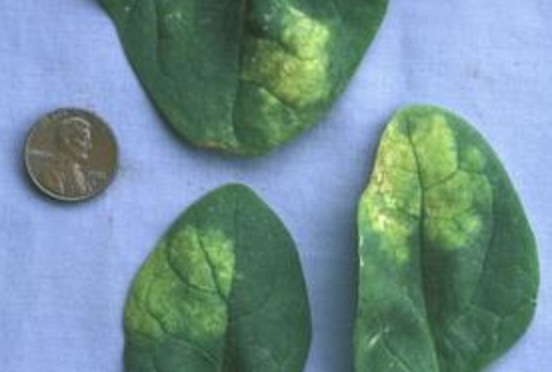
Featured image: Downey Mildew (Source: UCANR Cooperative Extension, Tehama County)

2021-05-12T11:05:55-07:00June 22nd, 2016|

VIDEO: Other Stressors, Not Pumps, Leading to Delta Smelt Decline

VIDEO: Wasted Freshwater in Failed Attempt to Save Delta Smelt and Salmon

By Laurie Greene, Editor

Other Stressors, Not Pumps, Leading to Delta Smelt Decline,” a video produced by Western Growers, explains why the communities, business, and farmland in the Central Valley and southward still experience regulatory water cutbacks that are extreme in some cases, while 3 billion gallons of extra freshwater flow out to sea in the failing effort to save the Delta Smelt from extinction.Western Growers logo

The VIDEO addresses this loss of freshwater unused by California residents and businesses still suffering from both drought conditions and environmental water cutbacks and that could have gone into water storage.

Decline in California Fish Population and Delta Smelt, Salmon

Western Growers accuses government agencies in charge of managing California’s water of restricting the Delta pumps far beyond what is required by the law. “As a result,” the association said, “billions of gallons of El Niño water have been flushed out to sea. Shutting down the pumps has not helped the Delta smelt and salmon recover, and government regulators are ignoring other stressors such as predation, invasive species and wastewater discharges.”

Delta Smelt Troll 2016

Delta Smelt Troll, Survey 6, 2016: “There were no Delta Smelt collected.”

______________________

Western Growers, founded in 1926, is a trade association of California, Arizona and Colorado farmers who grow, pack and ship almost 50% of our nation’s produce. Their mission is to enhance members’ competitiveness and profitability by providing products and services with agriculture in mind. Services include Affordable Care Act (ACA) compliant health benefits for farmworkers, cost-saving and environmentally-focused logistics, food safety initiatives and advocacy for members. 

They ask, “If you enjoy fruits, vegetables and nuts, support our members and the produce industry.”

Featured Photo: Delta smelt by metric ruler (Source: USFWS)

2021-05-12T11:05:55-07:00June 10th, 2016|

Drone Technology Benefits Agriculture

Drone Technology Useful for Calif. Ranchers and Growers

by Laurie Greene, Editor

Fifth-generation Parkfield rancher in southern Monterey County and 2016 Vice President of the National Cattlemen’s Beef AssociationKevin Kester, was introduced to the viability of potentially beneficial uses of owning and using a drone on his ranch for agricultural purposes.

Yamaha Drone

As owner and operator of Bear Valley Ranch & Vineyards, the family’s cattle and winegrape operations, Kester anticipated the biggest benefits of drone ownership would be the capability to check on cattle and ensure their safety from a bird’s eye view, and to determine water levels in reservoirs—a task that in the past could be completed only on foot or by vehicle. Cattle safety is especially important for ranchers, according to Kester, as the cattle industry has been experiencing stagnation in production.

Kester said having a drone would also helpful for security issues. He wants to detect human intrusion on his land, a problem that he experienced recently. “There have been some hunter-related trespass issues and people coming onto the ranch,” he said. “We’ve actually had cattle and horses shot.”

Kester, who is also a member of the California Association of Winegrape Growers, Paso Robles Wine Country Alliance and the Central Coast Vineyard Team, will purchase a commercial drone package and believes this modern technology will give not only cattlemen, but growers in California, a new way of assessing safety, production and maintenance.

2021-05-12T11:05:56-07:00June 9th, 2016|

BREAKING NEWS: First ACP Found In Monterey County

First ACP Found In Monterey County

By Patrick Cavanaugh, Farm News Director

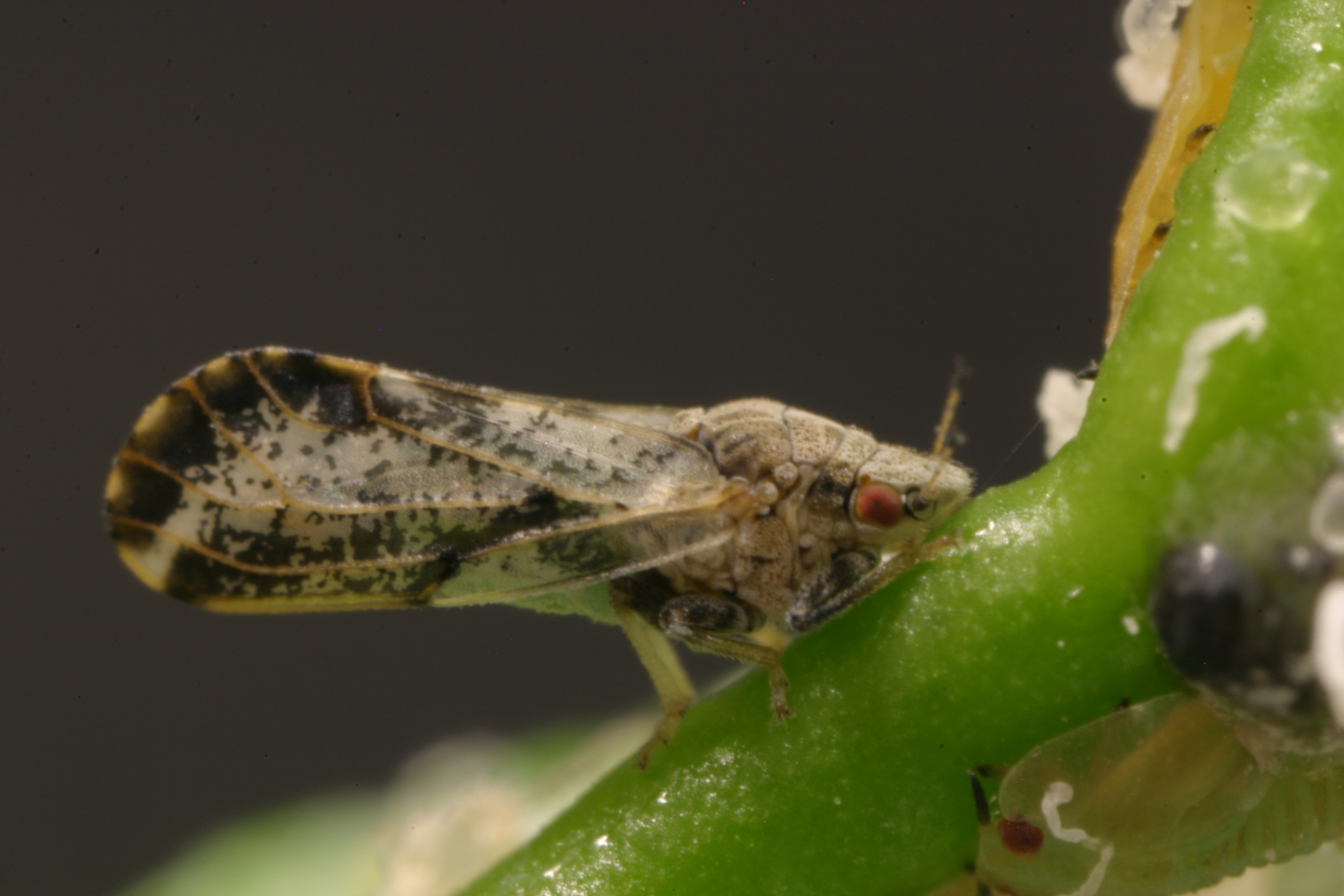
An Asian Citrus Psyllid (ACP) has been found in Monterey County, thus expanding the ACP Quarantine in the state. This is breaking news as the ACP vectors or has the ability to carry a fatal citrus bacterial disease known as Huanlongbing (HLB) or citrus greening.

Save our citrus from citrus greening

Save our citrus

“It was in a residential area of northeast Salinas,” said Bob Roach, assistant ag commissioner for Monterey County, “and it’s not really unexpected because, with the exception of Santa Cruz County, we are surrounded by other counties where ACP have been identified on the sticky traps.”

This ACP find was in a residential yard, just north of Salinas. “The most likely cause,” said Roach commented, “When you find it in a residential area, the likely source of the introduction is when people move plants around” from other regions where the psyllid is present.

The California Department of Food and Agriculture (CDFA) will begin the trapping next week,” Roach explained. “They flood the area with traps and then take care of the treatments.” CDFA will coordinate spray programs within 800 meters from the find. “They’re all set up for that,” said Roach.

Featured Image: Adult ACP (Source:  The Citrus Pest & Disease Prevention Program)

2021-05-12T11:03:01-07:00June 9th, 2016|

Dry Weather Affecting Cattle Ranchers

Cattle Ranchers Hit Hard in the South Valley, Move to Greener Pastures

by Emily McKay Johnson, Associate Editor


Josh Davy, a University of California, Division of Agriculture and Natural Resources, Cooperative Extension livestock, range and natural resources advisor in Tehama County reported good news for the cattle industry despite dry weather conditions around the state.

Josh Davy, UCCE Tehama County

Josh Davy, UCCE Tehama County livestock, range and natural resources advisor (Source: UCCE Tehama)

Heading into last fall, the feed year started off relatively dry, according to Davy; however the end-of-season crops produced a better forage than the year before. Though prices slid for the cattle farmer, Davy said optimisticly, “We’re happier on our range conditions—as compared to the previous years that we’ve had—by a long shot.” he said.  

The drought that plagues California still directly impacts cattle ranges, and ranchers are not quite out of trouble. Davy had to resort to feed supplementation through the month of December. “We didn’t have to supplement as much as in the previous few years,” he said, “but we definitely did this fall.” Fortunately the winter months were short and the spring rainfall produced good growth—good assurances that will help Davy and his team make it through next year.

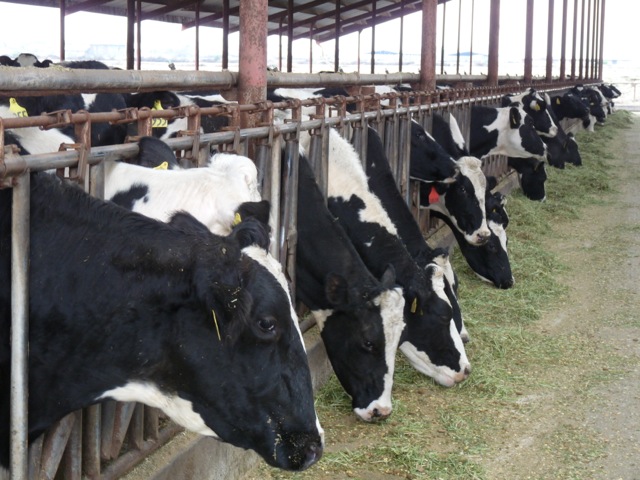
Cattle-on-I5Davy has fortunately sidestepped hardship with a tinge of luck, but it hasn’t been as easy for ranchers in the south of the state. When cattle lack enough sustenance, a domino effect is felt all across the state of California; a lactating cow may not produce enough milk to feed her calves.

The cows like lush grass, a rarity in the Central and South Valley summer months. Winter options for cattle are either winter range ground or mountain meadow ground where greenery is still prevalent. Some ranchers haul their cattle to summer pasture feedlots to graze, while some prefer Oregon instead.

“We’re dried off here to where you might find a swell with a little rye grass in it that’s still green,”Davy said regarding the disappearance of lush land, “but pretty much everything else, the oats and all that stuff, they’re done here.”

Looking forward, Josh Davy is hoping irrigation water will sustain not only the beef cattle, but the pastures as well, to keep the herds stationary and munching on green grass.


2021-05-12T11:17:13-07:00June 8th, 2016|
Go to Top