Almond Board of California Announces 2022 Election Results

By Rick Kushman, Media Relations Manager, Almond Board of California

The Almond Board of California recently announced the Board of Directors election results, and the names of the following nominees have been submitted to the U.S. Secretary of Agriculture for selection to terms of office beginning Aug. 1, 2022:

Grower Position One, Member (1-year term):
Paul Ewing, Los Banos

Grower Position One, Alternate:
Katie Staack-Dorsett, Waterford

Grower Position Two, Member (3-year term):
Brandon Rebiero, Modesto

Grower Position Two, Alternate:
To be determined

Handler Position Three, Member (1-year term):
Darren Rigg, Le Grand

Handler Position Three, Alternate:
Chad DeRose, McFarland

Cooperative Handler Position One, Member (3-year term):
Mel Machado, Modesto

Cooperative Handler Position One, Alternate:
Mark Jansen, Sacramento

The ABC board is made up of five handler and five grower representatives. It sets policy and recommends budgets in major areas, including marketing, production research, public relations and advertising, nutrition research, statistical reporting, quality control and food safety.

About California Almonds:
California almonds make life better by what we grow and how we grow. The Almond Board of California promotes natural, wholesome and quality almonds through leadership in strategic market development, innovative research, and accelerated adoption of industry best practices on behalf of the more than 7,600 almond farmers and processors in California, most of whom are multi-generational family operations. Established in 1950 and based in Modesto, California, ABC is a non-profit organization that administers a grower-enacted Federal Marketing Order under the supervision of the U.S. Department of Agriculture. For more information on the Almond Board of California or almonds, visit Almonds.com or check out California Almonds on Facebook, Twitter, Pinterest, Instagram and the California Almonds blog.
2022-06-02T13:03:30-07:00June 2nd, 2022|

California Farmers’ Tequila Dreams

By Debra Kahn, Politico

How bad is California’s drought? Bad enough to make farmers turn to tequila.

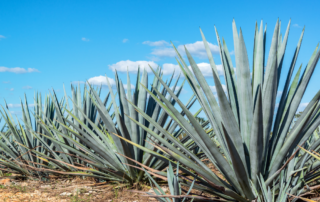
About 40 farmers and distillers gathered last week at an inaugural agave symposium at the University of California, Davis, to explore the prospects of growing agave in California and making alcohol from it.

Stuart Woolf, who grows almonds, pistachios and tomatoes, has a 1.5-acre test plot of about 900 agave plants at his farm on the southwest side of the Central Valley.

“Can we grow a bigger plant, with more sugar, with drip irrigation just using a little water?” he’s asking. “More distilled spirits per acre than they can in Mexico?”

Agave isn’t an ideal crop — like grapevines and nut trees, it takes several years to mature to the point where it can be harvested. And unlike grapes and nuts, once it’s harvested, that’s it — you have to plant a new one if you want more.

But it uses far less water than those crops. In Mexico it often isn’t irrigated at all. Early estimates are that agave in California can thrive on less than 1.5 inches of water per acre per year, compared with 48 inches for almonds. It could be a good crop for areas that are being taken out of production due to water shortages.

“That’s kind of the excitement, is here’s a crop that generally doesn’t need much water,” said UC Davis grape-growing, wine and chemical engineering professor Ron Runnebaum, who organized the one-day event. “We just need to understand if we can do something similar in California, considering our different growing conditions.”

It’s a sign of the times. The latest drought is entering its third year, right on the heels of another one that ended in 2016.

Southern Central Valley farmers are by now accustomed to receiving little to no water from the system of canals and reservoirs that was built to supply 3 million acres of farmland, but the shortages are spreading further north than usual, affecting rice as well as tree and row crops.

“I think that when we look back at 2021 and 2022, we will determine that it was the two-year period that broke our water supply system, exposing all its shortcomings,” said Jeffrey Mount, a senior fellow at the Public Policy Institute of California’s Water Policy Center.

Endangered-species rules that the Trump administration approved to make it easier for farmers to pump more water during wet periods are still in effect, but it’s been too dry for them to apply. Last year’s infrastructure law has billions of dollars for Western water projects, but the biggest storage proposals have been stuck on the drawing board for decades. California farmers are also facing looming restrictions on groundwater pumping that could force half a million acres of irrigated land out of production.

All those factors are driving interest in drought-tolerant crops like agave, particularly as a way to get some value out of the land that’s already being fallowed due to water shortages.

“This is all about adaptation at some level,” Woolf said. “I’m not going to bet on the state to adapt and figure out our problems. I’d rather be making my own decisions on figuring out how to do it.”

To be sure: This is all very nascent. Woolf estimates there are only about 40 acres of agave in California, and only 10 of them old enough for harvesting. Don’t bet on agave just yet.

“I’m rooting for chickpeas myself,” said UC Davis agricultural economist Dan Sumner. “I like them, and they don’t use a lot of water and they have lots of attributes, but they’re not going to be the next pistachio, which is a billion-dollar crop. I suspect agave’s not going to be the next billion-dollar crop, either, but I could be wrong.”

2022-06-01T09:54:26-07:00June 1st, 2022|

Friends of Dixon May Fair Award $11,000 in College Ag Scholarships

By Kathy Keatley Garvey, UC Davis Department of Entomology and Nematology

The Friends of the Dixon May Fair has awarded $11,000 in college scholarships to five Solano County youths majoring in an agricultural-related field. They represent the cities of Vacaville, Fairfield, Dixon and Rio Vista.

Carrie Hamel of Dixon, scholarship chair of the Friends of the Fair, announced the recipients at a recent ceremony at the newly named Friends Plaza by the Leber Stage, Dixon fairgrounds. Since 2000, the Friends have awarded a total of $233,250 to Solano County students majoring in an ag-related field in a California university or community college, she said.

Sam Esperson, a member of the Rio Vista High School Class of 2022, received the top award, the $3000 Ester Armstrong scholarship. He plans to major in agricultural systems management or agricultural engineering at California Polytechnic State University (Cal Poly), San Luis Obispo.

The $2500 JoAnn Giannoni Scholarship went to Molly Feins, a 2021 graduate of Vacaville High School and a student at Cal Poly. She plans to become an animal geneticist.

Clairese Wright, a member of the Rodriguez High School Class of 2022, Fairfield, received a $2000 scholarship. She will major in environmental engineering at UCLA.

Natalie Victorine, a 2021 graduate of Dixon High School and a Cal Poly student majoring in agricultural business, received a $2000 scholarship.

In the two-year community college category, Jared Tanaka, a 2020 Dixon High School graduate and a student at Modesto Junior College, won the $1500 Jack Hopkins Scholarship. Tanaka plans to become an artificial insemination technician.

The Friends, an all-volunteer organization and the fundraising arm of the Dixon May Fair, raise funds by selling beverages. They use the proceeds for building and grounds improvements, exhibitor awards (including belt buckles and trophies), and college scholarships.

Sam Esperson
Esperson, the Rio Vista student body president, maintains a 4.2 grade point average. The son of a farmer and active in 4-H and FFA, he attributes the Rio Vista FFA with sparking his passion for pursuing a career in agriculture. “In FFA I learned about the global and technological importance of agriculture and its contribution to our well-being,” he wrote in his essay. “Although FFA was primarily the reason I wanted to become involved in agriculture, I also saw the impact of agriculture throughout the COVID-19 pandemic. I realized that most things I have in my life are related to agriculture in one way or another. I want to help provide.” He cited the FFA moto, “Learning to Do, Doing to Learn, Earning to Live and Living to Serve.”
He attended the 2019 FFA National Convention and the FFA Student Leadership Conference. In athletics, he was named to the Academic All-League Team in three sports: baseball, cross-country and basketball.

Molly Feins
Feins, who is finishing her first year at Cal Poly, is active in the Young Cattlemen’s Association and the Los Lecheros Dairy Club. “I also was able to join a dairy calving enterprise where I would go to the Cal Poly dairy once a week to do chores and process calves born that day,” she wrote in her essay. She plans to pursue a career in animal genetics and reproductive technology, “I want to manipulate the genes of production animals to create the highest quality products,” she wrote. “My involvement in FFA and showing lambs has convinced me to pursue my desired career focusing on sheep production. The sheep industry is underdeveloped with genetic breeding.”

Clairese Wright
Wright, active in the Solano County 4-H program for 13 years, has served as a Solano County 4-H All-Star Ambassador and president of the Suisun Valley 4-H Club, the largest club in the county with 75 members. In her essay, she cited the 4-H motto, “to make the best better.” Much of her 4-activities have focused on the impact of detrimental effects of pollution. For her emerald Star 4-H Award, she completed a project titled “Don’t Make Pollution Be the Solution.” Her project’s main point “was to explain the global problem and offer simple steps—reduce, reuse and recycle—we can all take on a local level to keep litter out of our waterways. On a higher level, I also wanted the students to see that no matter what their ae or how big the program, their actions count, and that they have the ability to make a difference in the future of our world. Wright hopes to work for a company that develops technology to remove litter “from our planet’s waterways.”

Jared Tanaka
Tanaka, active in 4-H and FA, wrote that he “developed passions for the many aspects of the agriculture industry” as a result of his experiences,” which include developing and maintaining a cattle herd. “I have now spent a decade and a half developing a purebred shorthorn herd from which I can raise calves for freezer beef to market locally, grow out heifers as replacements for other youth or ranches, and simply bask in the joy of having cows.” Tanaka aspires to manage at least 30 cows in his herd. He concluded this essay by quoting the FFA creed “…exert an influence in my home and community which will stand solid for my part in that inspiring task.”

The annual deadline to apply for the Friends of the Fair scholarships is 5 p.m., March 1. Applicants must be a Solano County high school graduate with plans to major in agricultural-related field at a California college. More information on the scholarship application rules is available on the Friends of the Fair Facebook site at facebook.com/FriendsoftheDixonMayFair. Applications must be on Friends of the Fair forms and include a personal essay and letters of support. They are to be mailed to the Friends of the Fair, P.O. Box 242, Dixon, Calif.

Applicants are scored on personal, civic and academic experience; academic standing; personal commitment and established goals; leadership potential; civic accomplishments; chosen field in the areas of agriculture, said Hamel. Most applicants have experience in 4-H, FFA or Grange, criteria desired but not mandated.

The scholarship committee, chaired by Hamel, also includes Tootie Huffman, Kathy Keatley Garvey and Linda Molina of Vacaville, and Marty Scrivens of Dixon. Huffman serves as treasurer of the all-volunteer Friends of the Fair, and Scrivens as secretary.

The Friends’ Plaza was dedicated May 5 in honor of legendary volunteer Donnie Huffman of Vacaville, founding president of the Friends; some 18 founding members; and seasonal volunteers. A photo of Huffman, who is battling terminal cancer, appears on the temporary banner. It will soon to be replaced with a bronze plaque.

2022-05-27T11:51:48-07:00May 27th, 2022|

Statement by Mike Wade, Executive Director of the California Farm Water Coalition on the State Water Board Emergency Water Conservation Regulation

By California Farm Water Coalition

“Today’s State Water Board emergency water conservation regulation continues to demonstrate how serious this year’s drought is. Water conservation measures are reaching farther and farther into our communities and now go beyond the water supply cuts felt by California farms and rural communities earlier this year.

“The taps that deliver surface water to the farms that grow the local food we buy at grocery stores were effectively turned off in March and April. Almost half of the irrigated farmland in California has had its surface water supply reduced by 50% or more.

“We live in an increasingly unstable world, but politicians and regulators are not doing the work needed to guard our safe, affordable, domestic food supply during these uncertain times. Failing to act will not only worsen rising food costs, they may permanently disrupt the food systems that many now take for granted.

“California farms produce over half of the country’s fruits, nuts, and vegetables. California foods aren’t just in the produce aisle, but also in the ready-made foods and ingredients we eat every single day. That can’t happen without water and we cannot simply move California production to other states. A safe, affordable, domestic food supply is a national security issue, just like energy. The government must make it a priority.

“Water supply shortages affect families throughout the state and the nation that depend on California farms for the safe, fresh, and locally-produced farm products we all buy at the grocery store.”

2022-05-27T11:16:12-07:00May 25th, 2022|

California Dairy Innovation Center Offers Opportunities For Cheese Education

2022 Dairy Short Course Programs and Conference Schedule Released

By California Milk Advisory Board

The California Dairy Innovation Center announced the latest list of short courses which will be offered this year in collaboration with the Pacific Coast Coalition and industry instructors. Dates for an inaugural Dairy Products, Processing, and Packaging Innovation Conference were also announced.

The Frozen Desserts Innovation short course will be held on June 28th and 29th at the Dairy Innovation Institute, Cal Poly San Luis Obispo with a focus on capturing consumer trends: sugar-free, lactose-free and high protein. The short course features both lectures, demonstrations and actual ice cream manufacture in the Cal Poly pilot plant and creamery. In addition, a sales and marketing educational segment will provide practical guidance to entrepreneurs, and established brands alike. Registration is open at: https://dairy.calpoly.edu/short-course-symposia

The Advanced Unit Operations short course will take place September 27-29. Designed for those working in dairy plants, this course delivers both theoretical and practical understanding and knowledge of pasteurization, separation, condensation, filtration systems, drying, as well as principles of food safety. Program and registration will open June 1.

The California Dairy Innovation Center, in collaboration with Cal Poly, The Dairy Business Innovation Initiative, Pacific Coast Alliance, and Fresno State will hold a first ever conference on Dairy Products Processing and Packaging Innovation in Shell Beach, Calif, October 12th-14th. Featuring both national and international speakers, the conference focuses on consumer-driven innovation and the latest technological advances. Program outline and registration is open at: https://dairy.calpoly.edu/short-course-symposia

California is the nation’s leading milk producer, and produces more butter, ice cream and nonfat dry milk than any other state. California is the second-largest producer of cheese and yogurt. California milk and dairy foods can be identified by the Real California Milk seal, which certifies they are made with milk from the state’s dairy farm families.

# # #

About the California Dairy Innovation Center
The California Dairy Innovation Center (CDIC) coordinates pre-competitive research and educational training in collaboration with industry, check-off programs, and research/academic institutions in support of a common set of innovation and productivity goals. The CDIC is guided by a Steering Committee that includes California Dairies Inc., California Dairy Research Foundation, California Milk Advisory Board, Cal Poly San Luis Obispo, Dairy Management Inc., Fresno State University, Hilmar Cheese, Leprino Foods, and UC Davis.

About Real California Milk/California Milk Advisory Board
The California Milk Advisory Board (CMAB), an instrumentality of the California Department of Food and Agriculture, is funded by the state’s dairy farm families who lead the nation in sustainable dairy farming practices. With a vision to nourish the world with the wholesome goodness of Real California Milk, the CMAB’s programs focus on increasing demand for California’s sustainable dairy products in the state, across the U.S. and around the world through advertising, public relations, research, and retail and foodservice promotional programs. For more information and to connect with the CMAB, visit RealCaliforniaMilk.com, Facebook, YouTube, Twitter, Instagram and Pinterest.

2022-05-20T08:38:10-07:00May 20th, 2022|

Port Delays Worsen as Harvest of New Crops Approaches

By Ching Lee,  AgAlert

As ongoing port congestion and persistent shipping obstacles continue to block movement of California agricultural goods, farmers and exporters face bulging warehouses and dwindling cash flow that threaten to sink some businesses.

Tree nuts, fresh produce, dairy products and other California farm commodities struggle to find rides on vessels and containers in which to ship them, with ocean carriers rushing to set sail empty rather than hauling agricultural exports.

“We have 50 loads packed and ready to ship, that customers would take tomorrow, that we can’t get on the ship,” said Bill Carriere, a Glenn County walnut grower and handler.

Agricultural exporters say their shipping problems—which trace to pandemic-related supply-chain disruptions that started in 2020—have only gotten worse. More shipping companies have notified them that they won’t stop at the Port of Oakland to pick up containerized farm products, which account for 60% of total exports through the port. The companies opt instead to return ships directly to Asia following long delays in the ports of Los Angeles and Long Beach.

Only one ocean carrier—Mediterranean Shipping Co.—so far has committed to servicing the Port of Oakland, said Roger Isom, president and CEO of the Western Agricultural Processors Association and California Cotton Ginners and Growers Association.

The Northern California port saw 67,910 empty containers leave its shores during the first two months of this year. That’s compared to 37,263 empties during the same time in 2020, according to a letter that agricultural groups, including the California Farm Bureau, sent to the Biden administration last week. The letter further noted that three out of four containers at U.S. ports return to Asia empty.

Because ships continue to bypass the Oakland port, exporters say the opening in March of a new “pop-up” yard for pickup of empty containers has offered limited relief. The temporary hub, located offsite of the port, allows shippers to stage export loads while avoiding busy marine terminals where most empty containers are stored.

As of last week, there were more than 500 containers in the yard, said port spokesman Robert Bernardo. The port saw 83 ships stopping in Oakland in March, compared to 93 a year ago. Reduced vessel arrivals were due in part to a COVID-related port shutdown in Shanghai, the port said.

Though the port has enough empty containers to cover current demand, Bernardo said supplies remain “in constant flux.” He said he expects inventory to tighten as imports from China begin to resume.

Aside from dealing with a shortage of containers, agricultural shippers say they struggle to secure bookings, which often get canceled or “rolled,” meaning the cargo wasn’t loaded onto the scheduled vessel, usually because there’s no room.

To read more, click here.

2022-05-04T12:14:43-07:00May 4th, 2022|

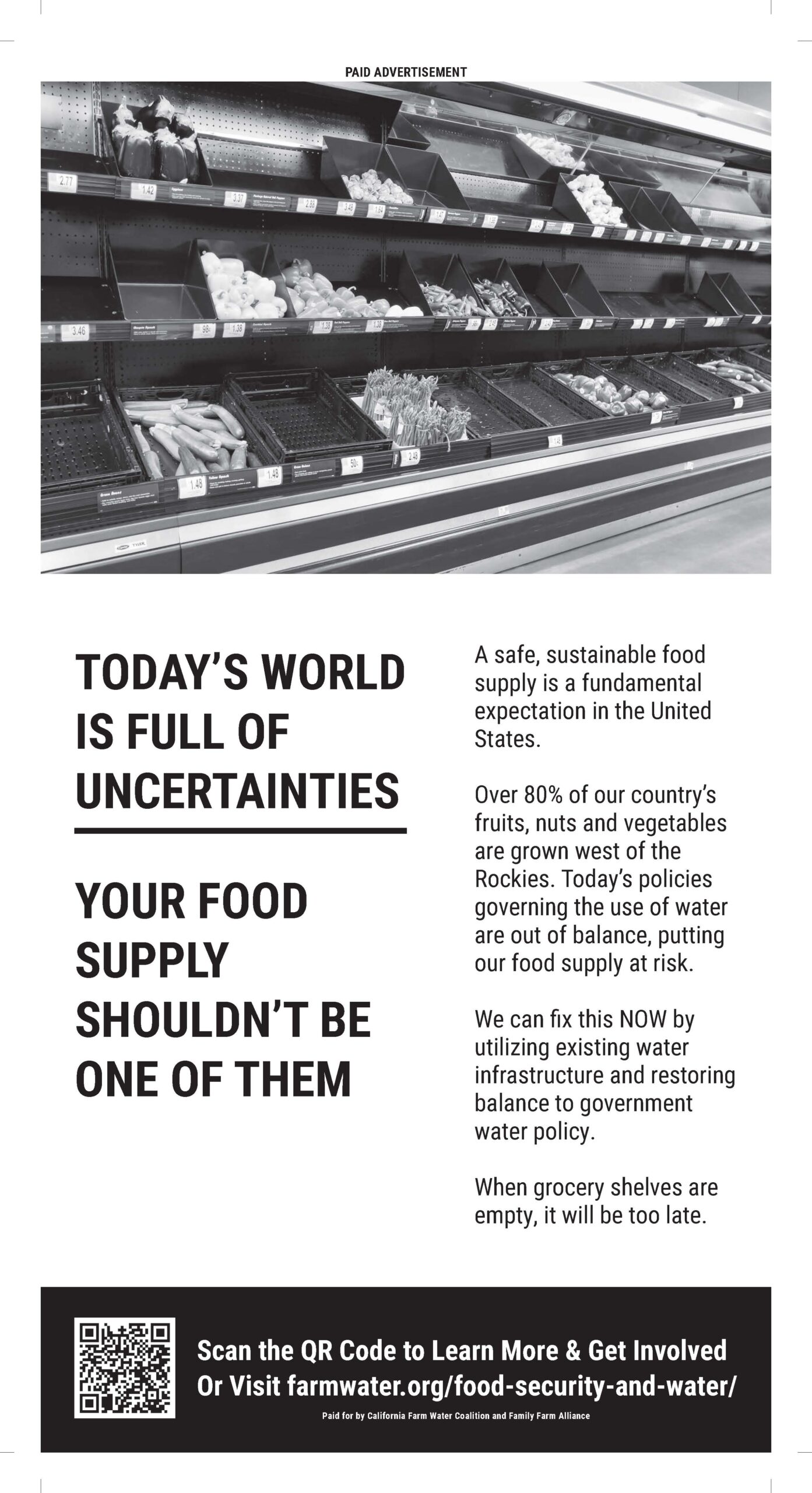
Today’s World is Full of Uncertainties. Your Food Supply Shouldn’t be One of Them

By Mike Wade, California Farm Water Coalition

The war in Ukraine and all the global unrest it is causing has focused American’s attention on just how uncertain a world we inhabit.

Inflation was already wreaking havoc on family budgets and now gas prices are also skyrocketing.

Which is exactly why our government should be doing everything it can to reduce reliance on foreign sources for our basic needs, especially food.

Unfortunately, that is the exact opposite of what is happening.

Through out-of-balance regulatory policies and a failure to prioritize western farming, our government is putting our safe, affordable, domestic food supply at risk.

Over 80% of our country’s fruits, nuts and vegetables are grown west of the Rockies and simply cannot be moved elsewhere. Without that supply, Americans will see shortages at the store, even higher prices, be forced to rely more heavily on increasingly unstable foreign sources, or all of these at the same time.

Learn More

When you make a salad, have fruit for breakfast, eat a hamburger with cheese, or put tomato sauce and garlic on a pizza, odds are that at least some of those products came from California.

But without a reliable water supply, that farmland simply cannot produce what our country needs.

It doesn’t have to be this way.

In some western states, the government is holding on to existing water supply, rather than release it to farms to grow food. In California, we must move more quickly to build and repair infrastructure that will help us store more water in wet years for use in dry ones like this one. And in general, water policy has become unbalanced in ways that penalize the farms trying to produce our food supply.

California farmers are doing their part and have reduced water use by double digits since 1980. Throughout the West, farms are also important in the battle against climate change because crop production helps remove carbon dioxide from the air. If things continue the way they are, our government is essentially creating deserts instead of food production, which will only perpetuate the cycles of drought and wildfires we’d like to avoid.

Food price increases in 2022 are now expected to exceed those observed in 2020 and 2021. Without changes in water policy, it will continue to get worse.

It has never been more important that U.S. consumers insist on domestically grown food in our stores.

2022-04-21T15:58:13-07:00April 21st, 2022|

Governor Newsom Signs Executive Order in Response to Western Drought

By Kahn, Soares & Conway, LLP

As California endures the driest first three months of a year in the state’s recorded history, and simultaneously enters a third year of drought, Governor Gavin Newsom signed an Executive Order (Order) to strengthen conservation efforts. According to the Administration’s press release, the Order calls “on local water suppliers to move to Level 2 of their Water Shortage Contingency Plans, which require locally-appropriate actions that will conserve water across all sectors and directing the State Water Resources Control Board to consider a ban on the watering of decorative grass at businesses and institutions.”

The Governor is “encouraging suppliers, where appropriate, to consider going above and beyond the Level 2 of their water shortage contingency plans, activating more ambitious measures [and]… has ordered state agencies to submit funding proposals to support the state’s short- and long-term drought response, including emergency assistance to communities and households facing drought-related water shortages, facilitating groundwater recharge and wastewater recycling, improvements in water use efficiency, protecting fish and wildlife, and minimizing drought-related economic disruption.”

Today’s Order also includes the following provisions:

  • Ensuring Vulnerable Communities Have Drinking Water
  • Cuts red tape so communities that need access to emergency hauled or bottled water can get it immediately.
  • Safeguarding Groundwater Supplies
  • Requires local permitting authorities to coordinate with Groundwater Sustainability Agencies to ensure new proposed wells do not compromise existing wells or infrastructure, as 85 percent of public water systems rely heavily on groundwater during drought.
  • Streamlines permitting for groundwater recharge projects that help to refill aquifers when rains come.
  • Protecting Vulnerable Fish And Wildlife
  • Expedites state agency approvals for necessary actions to protect fish and wildlife where drought conditions threaten their health and survival.
  • Preventing Illegal Water Diversions
  • Directs the Water Board to expand site inspections in order to determine whether illegal diversions are occurring.

For more information on the state’s response to the drought, click here. For any questions, please reach out to Louie Brown at lbrown@kscsacramento.com.

2022-03-29T13:28:27-07:00March 29th, 2022|

Humiston Touts USDA Climate-Smart Programs Before House Agriculture Committee

Testimony highlights UC ANR’s role in advancing prosperity, sustainability and climate resilience

By Pam Kan-Rice, UCANR

Glenda Humiston, Ph.D., University of California vice president of agriculture and natural resources, director of the Agricultural Experiment Station and director of the Cooperative Extension Service, testified before the U.S. House of Representatives Committee on Agriculture at today’s (March 16) hearing “A 2022 Review of the Farm Bill: The Role of USDA Programs in Addressing Climate Change.

A recording of the hearing can be viewed at https://youtu.be/2_GQI6b6CCs. Congressman Jimmy Panetta, who represents California’s Central Coast, introduces Humiston at the 16-minute mark of the recording. She begins speaking at the 40:38 mark.

In Washington, D.C., Humiston delivered the following prepared statement:

Good morning, Chairman [David] Scott, Ranking Member [GT] Thompson, and Members of the Committee, my name is Glenda Humiston, and I serve as the Vice President of Agriculture and Natural Resources (ANR) for the University of California (UC) system. I am honored to have this opportunity to discuss the importance of agricultural research, and other USDA programs, as you begin work on the next Farm Bill.

With UC ANR serving as a vital partner, California continues to be the nation’s top agricultural state. For more than a century, California’s $50 billion agricultural sector has depended on UC ANR, in partnership with our UC campuses, for the stream of new technologies and research breakthroughs needed to stay competitive and be responsible stewards of the land. We are proud to be part of the Land Grant partnership that was developed between states and the federal government with the 1862 Morrill Act, 1887 Hatch Act and the 1914 Smith-Lever Act. That enterprise has, for over 130 years, advanced scientific knowledge in all aspects of food production, and improved production capacity, profitability, and safety of the nation’s food system.

With over 71,000 farms producing 400 different commodities, California is an agricultural behemoth and the sole provider of many high-demand farm products while also exporting roughly a third of its agricultural production each year. Beyond on-farm production, California’s working landscapes include farmland, ranches, forests, wetlands, mines, water bodies and other natural resource lands, both private and public, that are vital sources of ecosystem services. These services are ways that the natural world provides biological necessities, such as clean water, nutritious food, and a livable climate, as well as indirect economic benefits, such as jobs and revenue created along food value chains. More broadly, they encompass intangible goods that contribute to human well-being, such as recreation, aesthetic inspiration, and cultural connection.

Ensuring that those ecosystem services are functioning and remain available to utilize is an ever-growing challenge. There can be no doubt that extreme climate events are changing California’s landscape – fires, floods, drought, more invasive pests are already affecting agriculture. For example, unseasonably warm weather now causes many fruit and nut trees to bloom before the last frost, causing great economic losses. In the coming decades, the changing climate is likely to further decrease the supply of water, increase the risk of wildfires, and threaten coastal development and ecosystems.

To combat such future perils, we must harness the ability of our agricultural and other working landscapes to adapt, to mitigate and where possible, to become a solution to climate change. According to the National Academy of Sciences, U.S. soils and forests have the potential to sequester about 500 million metric tons of carbon dioxide annually. Emerging markets for carbon credits and government incentive programs could generate tens of billions of dollars per year in new investment for working farm and forest lands within the next several years.

Within this framework, USDA programs are critical to our efforts to support carbon sequestration, improved water management, healthy soils, forest restoration, hazardous fuels management, and wood products innovation, among other provisions that support natural climate solutions. USDA’s new Partnerships for Climate-Smart Commodities is a great example of how targeted funding for pilot projects can create market opportunities for commodities produced using climate-smart practices.

As we pursue those climate-smart practices, it is critical that we make full use of existing programs and leverage collaborations among them wherever possible. Supporting partnerships between government agencies with academia and the private sector will enable production of multiple benefits from various actions. As part of this we need to utilize voluntary, market and incentive-based programs to the greatest extent possible and maintain a focus on science-based outcomes. In many situations, transformative innovation is needed – moving beyond just improving existing methods and processes to totally re-thinking how our systems are designed to deliver policy and programs.

UC ANR supports California farmers and ranchers to be resilient to extreme weather events with data-driven tools, methods, and technologies. For example, we are developing drought, heat, and pest-tolerant crop varieties that allow farmers to remain economically viable while also being resilient to extreme weather. Finding new crops suitable for California soils and ecosystems not only improves the productivity of the farm but can have co-benefits such as improving water-holding capacity of the soil, increasing native pollinator habitat, and boosting local economies by increasing value-added products.

We are also pushing our research system to expand collaborative efforts between experts in soil sciences, plant pathology, biochemistry, and other sciences with technology experts in robotics, sensors, artificial intelligence, materials, supply chain logistics, and energy systems to solve today’s complex problems in agriculture. Much like the biomedical revolution, it is the integration of multiple disciplines into a single project that can lead to transformative innovation that improves productivity, food safety, and ecosystem services while also giving rise to new businesses. Great examples of such transdisciplinary research and development include:

  • An initiative to place solar panels over irrigation canals to reduce evaporation of precious irrigation water supplies for farmers while also producing electricity.
  • Implementing healthy soil practices, like cover crops and no-till, to enhance capture of rain and improve groundwater recharge.
  • Programs for farmers to install dairy digesters to convert potentially harmful greenhouse gases into valuable biofuels.

To develop the science, new technologies and better farming practices that are desperately needed, increased funding for agriculture and food-related research and extension is necessary as are new investment in agricultural research facilities. Public funding for agricultural research in the U.S. has declined in real dollars over the past few decades while deferred maintenance of research facilities greatly hampers scientists’ work. Greater investments will help ensure farmers and ranchers have access to the scientifically rigorous tools and information they need to build climate resilience, mitigate environmental impacts, and increase the productivity of their land.

Other exciting opportunities can be found in forest health efforts that convert excessive fuel loads – biomass – into valuable bioproducts while reducing risk from catastrophic wildfires. California’s wildfire crisis continued its destructive march in 2020, each year worse than the one before. Working closely with regional economic development organizations and our California Economic Summit partners, UC ANR is a key partner in developing and implementing recommendations to improve forest health, reduce wildfire risk, incentivize innovation in new and innovative wood products industries and build capacity for manufacturing to enhance forest and environmental health and resilient rural communities. Examples of this work include:

  • Organizing controlled burn associations with local communities and other forest treatment practices such as a software program, Match.Graze, that improves use of grazing.
  • Partnering with the Inland Empire Economic Partnership and the southern California commercial ports to convert biomass into hydrogen and other liquid biofuels to replace diesel in trucks – the largest source of air pollution in that region.
  • Educating homeowners on landscaping, defensible space, and fire-wise plants to improve home-hardening, reduce risk from fire and conserve water.
  • UC Engineering research on materials science is developing new advanced wood products and data to demonstrate the multiple values of construction with such products.
  • Teaming up with community colleges to provide workforce training in forest professions.

The US needs robust funding for wildfire prevention, research, recovery, and extension. Cooperative Extension academics are lead experts in forestry and wildfire research and they provide critical resources to inform strategic fuels management, enhance community wildfire planning, and build community fire adaptation and resiliency. USDA’s Climate Hubs should be expanded so that they can regularly engage stakeholders and prioritize vital research amongst more partners. The U.S. Forest Service’s work on bioproducts is extremely valuable as is their willingness to enter into long-term stewardship agreements with state and local partners.

In California, we are very excited to be working with the Governor and the state legislature to secure a $185 million investment in UC to build new capacity in climate-focused research, innovation, and workforce development. For example, with this funding we would establish Regional Workforce Hubs that will provide on-the-job training opportunities for university and community college students as well as well as leverage the professional learning and career certification infrastructure of the UC Extension programs to offer a portfolio of training opportunities, tools, and resources for college-prep and non-degree seeking individuals.

Just as these programs allow us to implement climate smart agriculture and healthy forests’ initiatives, they also support regional economic development and job creation. Rural Development, the Agricultural Marketing Service and many other USDA programs are important partners as we build climate solutions through more efficient regional food systems, improved supply chains, workforce training, manufacturing of BioPreferred products, and food security initiatives.

If we are to promote resilience and help rural economies better adapt to climate change, we need to harness all programs throughout the U.S. Department of Agriculture. That means having senior USDA leadership coordinating climate issues across the entire agency and robustly serving as USDA’s climate representative at all interagency climate-related meetings. For example, USDA must collaborate with federal entities like the Federal Communications Commission to support improvements to broadband access, which is critical for climate-smart precision technologies and rural economies. Similarly, just as USDA has partnered with the National Science Foundation on research initiatives and jointly funding competitive grants, it needs to build closer partnerships with programs like Commerce’s Economic Development Agency and Treasury’s Community Financial Development Institutions to ensure that access to capital, effective economic development planning and infrastructure investments are targeted appropriately and delivered well.

One important way to help ensure wise distribution of program dollars to give the current definition of “rural” serious examination and re-engineering; as it stands now, far too many communities are improperly denied USDA resources due to the antiquated definitions of rural and metropolitan. Strongly encouraging more cross-agency proposals throughout USDA and enhanced support for public-private partnerships would remove barriers and hurdles for industry and communities alike.

The current mix of federal and state capacity funds is generally leveraged many-fold by federal competitive grants, grants from private industry, and other types of unrestricted gifts and awards to faculty conducting research at the nation’s land-grant universities. Competitive funding processes can elicit new ideas and speed up certain research projects; however, they also encourage a shift from programmatic research towards shorter-term project research. Failure to invest in a well-balanced mix of capacity and competitive funds for food and agriculture research could have very negative consequences for decades to come – consequences that would take significant time to reverse.

It takes at least seven to 15 years of research and development to develop a new crop variety – longer for trees/vines. Deploying and/or adapting new agricultural technologies can be even longer. For example, when UC Davis engineer, Coby Lorenzen, designed a machine to automate the harvest of tomatoes in the 1960s, it also required agronomist, Jack Hanna, to develop a less-delicate variety of tomato that ripened uniformly and could be easily plucked from the plant, essential qualities that made machine harvesting feasible. Federal funding that recognizes these realities as well as improvements in technology transfer and support for commercialization is vital.

Faculty and staff at land-grant universities across the nation recognize that their work takes place on behalf of a greater good, a broader goal, and a common vision that is much bigger than their individual achievements. Members of this House Committee on Agriculture can be confident that every dollar of federal investment authorized by the Farm Bill and expended at land-grant universities is guaranteed to be leveraged further, and to spawn innovation and discovery that will be translated into solutions to improve the lives of U.S. citizens. I thank you for this opportunity to provide testimony.

2022-03-17T10:44:04-07:00March 17th, 2022|

New Report Finds Over 35,000 Local Jobs Rely on Westlands Water District Agricultural Production

Water Restrictions Have Wide Reaching, Negative Impacts on Farms, Local Communities, and the Nation

By Westlands Water District

A new analysis highlights the significant, positive economic impact that agricultural production within the Westlands Water District has on the State of California and the country as a whole. The Economic Impact of Westlands Water District (Study), conducted by Michael A. Shires, Ph.D., outlines the far-reaching consequences of inadequate and unreliable water supplies on economies and communities.

The Study analyzes the economic impacts of the agricultural activities occurring within Westlands Water District. The Study also investigates how challenges such as water supply restrictions, climate change, inflation, supply chain disruption, and the COVID-19 pandemic can seriously threaten the quantity and quality of food available to the people of this nation. Taken together, these challenges underscore the important role that California’s agricultural production plays in national security and why protecting America’s domestic food production is essential.

According to the Study, on an annual basis, agricultural production within Westlands Water District is responsible for generating over $4.7 billion in economic activity and supporting over 35,000 jobs across the regional economy. These jobs produce the wages, tax revenue, and consumer spending that drive economic activity throughout the state.

“The farms within Westlands Water District are significant suppliers of fresh produce and other agricultural products both to the nation and the world. Activities in Westlands directly and indirectly employ and support tens of thousands of households and creates billions of dollars of economic value,” said Dr. Shires. “While there are a range of complex, modern policy and economic crises that may influence the level of that production, there is no real domestic alternative for production of these critical agricultural products.”

The farms in Westlands and the associated share of the country’s food supply, are at risk. While farms in Westlands continue to produce billions in economic activity, support communities in the San Joaquin Valley, and employ thousands of farmworkers and growers, we recognize that this production – and the livelihoods of those behind it – is highly dependent on water availability,” said Tom Birmingham, General Manager of the Westlands Water District.

When farmers do not have adequate water supplies, they are forced to make difficult decisions. They fallow otherwise highly productive land, and, in some instances, abandon planted acres because they lack water to continue irrigating their fields. Those decisions have widespread impacts. The Study found a “striking” correlation between “poverty levels in [Fresno and Kings] counties…with the shortfalls in water deliveries from the [Central Valley Project] to the Westlands Water District.” Poverty rates in these two counties are directly related to the water supply available to farmers in the District – when the District receives little to no water, more people in those counties suffer from poverty, and when the District receives a higher water allocation, the counties’ economic stability improves.

Further, with no domestic alternative for the agricultural contributions of the region, the economic impacts and negative implications of an inadequate water supply extend well beyond the local community. “At a time where instability around the globe has had significant impacts on the entire continent’s access to core crops like wheat, corn, and sunflower oil – on top of rising inflation and fuel costs – protecting the Nation’s domestic agricultural production capacity is fundamental to the security of the United States,” said Tom Birmingham.

“The bottom line is that much of the food in your pantry, refrigerator, and on your dinner table continues to be available because farms in California continue to provide some 80 percent of the nation’s supply of fresh fruits, vegetables, grains, and nuts. If this domestic production is curtailed, it will make the nation dependent on foreign sources which are, in turn, much more subject to supply chain, transportation, and quality problems,” Dr. Shires said. “If water supplies continue to be uncertain and volatile, there will be irreparable harm to already disadvantaged communities in the region and the acreage available to continue growing this produce will be significantly constrained.”

To read the entire report, visit: wwd.ca.gov/news-and-reports/economic-impact/

2022-03-16T10:50:59-07:00March 16th, 2022|
Go to Top