National Dairy Crisis Continues—Part 2

National Dairy Crisis—A Way Forward, Part 2

By Laurie Greene, Editor

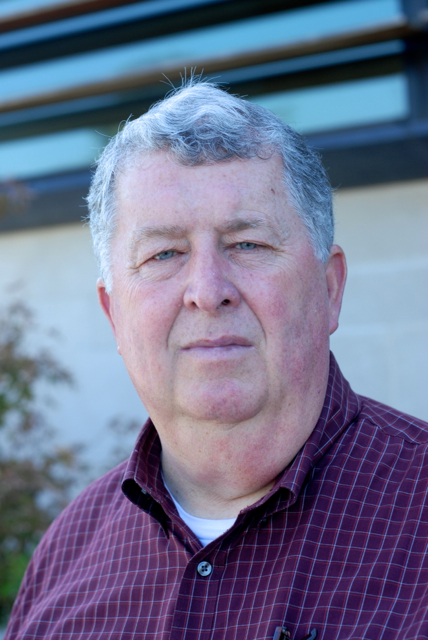
In our continuing coverage of the national dairy crisis marked by high inventories and below-production costs-prices, industry proponents are considering ‘market responsive’ ways to help with inventories, such as donating to the Feeding America organization or to other food banks. Tom Van Nortwick, owner and publisher of Fresno-based Agribusiness Publications, which has published a dairy magazine for 35 years, has been closely involved with hundreds of dairy producers from 2009 through June 2014 in the organization and establishment of the National Dairy Producers Organization. This nationwide organization focuses on keeping dairies profitable especially when market conditions squash dairy pricing.

Van Nortwick, who believes donating excess milk would be relatively easy and painless for the dairy industry, commented, “We are not going to specially package it; it is going to be what it is and where it is. It is then their responsibility to deal with it after that. The milk has already been processed and stored, and it’s waiting to be sold.”

In picking up all these excess dairy products, food banks such as Feeding America would dramatically reduce inventories. Van Nortwick explained, “We have found in studying these inventory levels, that when inventory gets to a certain level, it starts to impact the value of what someone is willing to pay me—a dairy producer—for the milk that I am pulling out of our cow today. And so we are recommending to our dairy producers that it might take literally 15 cents to impact the price of milk today which is currently $5 under the price of production and $7-$10 away from profitability.”

“The idea,” he continued, “is to have producers put up 15 cents per hundredweight into a savings account, which, when needed, would buy up excess inventory on the finished product side—the milk, cheese, milk powder and butter markets. Producers would then donate the purchased product to churches, food banks and Feeding America.

Tom Van Nortwick further expounded, “What if you invest $1 and get a $10 return? What if you invested 15 cents and got a $10 return? Is that a great plan? That is a great plan. The ‘investment’ is actually buying up [excess] inventory from the inventory [of processors and manufacturers] so it is no longer there. Because all of that is tracked, everybody knows how much there is and where it is. So if you are watching the market, you know if you should be buying more cheese, or making more cheese, or more powder. GM doesn’t make more cars than the dealers can sell; otherwise GM shuts the plant down. Everybody screams and hollers, but guess what? They know if they are going to survive, they have got to back off and not make more cars until the dealers, the selling organizations, pick up the slack.”

Van Nortwick says the dairy industry needs to focus more on the milk after it leaves the farm, “It is vitally important that we in the dairy producers sector start paying attention to what is going on with the milk, and the products being manufactured from milk after it leaves the farm. We are doing a wonderful job in how we produce it, the care and keeping of the animals, the sustainability of the environment, the recycling of the waste material; all of that we do better than anybody else in the world.”

“Do we need to be ever watchful?” he asked. “We have a new program called, ‘Picture Perfect’ in the industry, especially agriculture. All of agriculture needs to be ‘Picture Perfect.’ Do you know why? ‘Because everyone has a camera. Everyone’s got their own video recorder and anything can be seen anytime and filmed anytime. And a picture taken can go viral tomorrow, or tonight—even while we are asleep. So, we have to be picture perfect. We already do that.

He implored, “I want to say to dairy producers across the country, ‘You win. You make the most. You make the best. But that is not what we need right now in order to be sustainable. We need you to pay attention to your milk and what happens with your milk after it leaves the farm.”

______________________________

Links:

National Dairy Producers Organization

Feeding America


2021-05-12T11:17:14-07:00February 25th, 2016|

USDA, Microsoft Innovation Challenge Winners

Open Data from USDA, Microsoft Cloud Technology Strengthen Food Supply Through “Innovation Challenge” Winners


Agriculture Secretary Tom Vilsack and Microsoft officials announced the winners of the USDA, Microsoft Innovation Challenge late last month in which contestants used USDA agriculture production open data to develop online tools that can help make the American food supply more resilient in the face of climate change.

“In yet another example of how public and private resources can be leveraged together to address significant global concerns, the winners of the USDA-Microsoft Innovation Challenge have used open government data to create an impressive array of innovative tools to help food producers and our communities prepare for the impacts of climate change and ensure our nation’s ability to provide plentiful, affordable food,” said Agriculture Secretary Tom Vilsack. “For more than 100 years, USDA has compiled data on the farm economy, production, and the health of crops around the country, and it is exciting to see such modern, useful tools spring from these information sources.”

The Challenge was created in support of the President’s Climate Data Initiative, which aims to harness climate data in ways that will increase the resilience of America’s food system. USDA provided contestants with more than 100 years of crop and climate data through Microsoft Azure, Microsoft’s cloud computing platform.

“Combining the advantages of cloud computing resources with the government’s desire to provide open access to public data is likely to transform scientific research and business innovation,” said Dr. Daron G. Green, deputy managing director of Microsoft Research. “Microsoft’s partnership with the USDA evidences how public-private partnership can stimulate new applications, explore novel scenarios and, in this case, work towards a more resilient and sustainable food production.”

A total of $63,000 in cash and prizes were awarded, with winners selected from more than 346 registrants and 33 submissions from around the world.

The award recipients and their projects, are:FarmPlenty


  • Grand Prize, Open Source Application Award, and Best Visualization in Time or Space Award recipient: Farm Plenty, submitted by George Lee of San Francisco, Calif. This application allows farmers to analyze USDA data about crops grown within five kilometers of their farms to make informed decisions about their own crop choices.


  • Second Prize and Open Source Application Award recipient: Green Pastures, submitted by Khyati Majmudar of Mumbai, India. This comprehensive dashboard interface allows a farmer to visualize production, economic, livestock, and commodity data from NASS, ERS, ARMS, and other sources at scales from national to local, including information on farmers’ markets.


  • Third Prize recipient: What’s Local, submitted by Benjamin Wellington of Landscape Metrics LLC in Brooklyn, N.Y. This tool analyzes the resources that are required to produce agricultural outputs by using data from the Census of Agriculture in a way that allows urban population centers to connect with farmers in their area.


  • Honorable Mention: Open Source Application Award, and Best Student-Made Award recipient: Farm Profit Calculator, submitted by Fernando Napier and Matt Pedersen of Lincoln, Neb. Farmers can use this mobile phone application to compare their input costs (fertilizer, seed, fuel, etc.) to regional averages, and find financial efficiencies where their costs are above the norm.croptrends


  • Honorable Mention recipient: Croptrends, submitted by Chaiyawut Lertvichaivoravit and Ta Chiraphadhanakul of Thousand Eyes in San Francisco. This useful tool can be used for viewing spatial and temporal trends in crop production and yield by county for the entire United States by using NASS data.


  • Popular Choice Award recipient: VAIS, submitted by Ken Moini of Thallo Tech in Nashville, Tenn. This tool uses NASS data for the entire United States to provide a unique approach to visualizing crowd-sourced pricing data.


  • Large Organization Recognition Award recipient: Farmed, submitted by Bryan Tower of Applied Technical Systems in Silverdale, Wash. This tool allows farmers to view crop conditions in their area by using VegScape data from NASS combined with local weather data.


USDA is an active founding member of the Global Data Partnership through the memberships of both the U.S. Government Open Data and the Global Open Data for Agriculture and Nutrition (GODAN) initiatives. USDA is helping pave the way for coordinating global efforts to make agriculture and nutrition data open. USDA’s Open Data Catalog is the authoritative source of publicly available USDA data.

Since 2009, USDA has invested in and advanced innovative and transformative initiatives to solve societal challenges and ensure the long-term viability of agriculture. USDA’s integrated research, education, and extension programs, supporting the best and brightest scientists and extension personnel, have resulted user-inspired, groundbreaking discoveries that are combating childhood obesity, improving and sustaining rural economic growth, addressing water availability issues, increasing food production, finding new sources of energy, mitigating climate variability, and ensuring food safety. To learn more about USDA’s impact on agricultural science, visit www.usda.gov/results.

2016-05-31T19:24:13-07:00February 2nd, 2016|

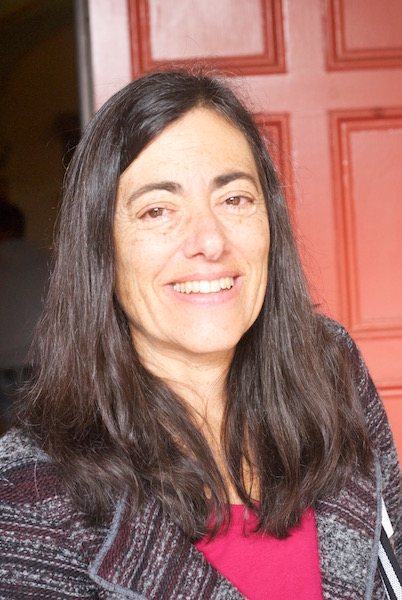
UC’s Karen Klonsky Retires

Karen Klonsky Retires, Gets Major Credit for CA Agricultural Cost and Return Studies

By Patrick Cavanaugh, Deputy Editor and Laurie Greene, Editor


This is an exclusive interview with Karen Klonsky, UC Davis Cooperative Extension specialist emeritus, in the UC Davis Department of Agricultural and Resource Economics. Her expertise has been farm management and production, sustainable agriculture and organic agriculture.

CAT: Congratulations on your recent retirement!UCANR 100 years logo

Klonsky: Thanks Patrick. I retired on July 1, 2015, after 34 years. I started at UC Davis in ’81, straight from graduate school.

CAT: What has been your primary research interest?

Klonsky: My primary research areas are sustainable and organic agriculture. I have approached these subjects from several dimensions, including the economic feasibility of alternative farming practices, the size and growth of organic production in California, and factors influencing the adoption of alternative farming systems.

CAT: Wow, what a great career! I understand your interest in alternative farming systems began with your dissertation work comparing alfalfa systems with integrated pest management.

Klonsky: I studied agricultural economics in graduate school and started working with a professor in my department who had a joint appointment in agricultural economics and entomology. And I just became very interested in that research area.

I worked with entomologists and researchers on a computer model of plants and alfalfa weevils, and their interaction, plus a management component. I studied the plant and bug components, then did the management part and imposed it on top and asked, ‘If you did this, how many bugs would die?’ The plant model showed how much the alfalfa would grow, and at what point you could cut the alfalfa and achieve the desired yield. I never actually did any fieldwork.”

CAT: Since 1983, you not only directed ongoing Cost and Return Studies, but the development of an entire archived library of Cost and Return Studies for the UC Davis Department of Agricultural and Resource Economics. You recently completed studies on pistachios and walnuts, right?

Klonsky: Yes, both “Sample Costs to Establish and Produce English Walnuts In the Sacramento Valley, Micro sprinkler irrigated” and “Sample Costs to Establish and Produce Pistachios In the San Joaquin Valley-South, Low-Volume Irrigation.”

Our library contains studies about field, tree and vine crops and animal commodities. But since I retired, Dan Sumner, director, University of California Agricultural Issues Center and Frank H. Buck, Jr. Distinguished Professor for the Department of Agricultural and Resource Economics has taken that over and I continue to be peripherally involved.

CAT: These cost studies have been recognized worldwide.ARE Cost and Return Studies

Klonsky: Yes, and it has been very gratifying work. We decided to put them online routinely, and we have had a million downloads per year. Around 2005, Pete Livingston, my staff research associate, got the idea of scanning in the older studies. All of the newer studies were in electronic file format, so posting was easy. However, most of the older studies were paper copies, so we got a grant to scan and add them to our new online archive.

CAT: What was the most interesting thing about doing those cost studies?

Klonsky: I loved doing those studies. I really learned a lot because all cost studies are done directly with farmers we met through county farm advisors. I really got to know what farmers were thinking about and what their options were.

CAT: So those were real costs, not university costs?

Klonsky: Those were not university costs. The farmers tell us what equipment they will use, and then we calculate the cost of using their equipment—the fuel used to operate the equipment and the repair costs—with an agriculture-engineering program.

CAT: Do you have a math background?

Klonsky: Yes, I got my bachelor’s at the University of Michigan in mathematics. It was very helpful.

CAT: And you also earned your Ph.D. at the University of Michigan?

Klonsky: Yes.

CAT: So did you grow up in Michigan?

Klonsky: No, I grew up in New York.

CAT: And you just had an interest in going to Michigan State University?

Klonsky: Well, I had an interest in agriculture because I had an uncle who farmed corn and vegetables in upstate New York. We would go up there and I thought it was the most wonderful thing in the world.

CAT: What were some of the highlights of your career?

Klonsky: For many, many years, I was involved in the long-term on-campus sustainable agriculture research on land that is now on Russell Ranch, but it started as Sustainable Ag Farming Systems. We looked at four different farming systems, organic, low input, high-input, and we did a lot of analyses with cover crops and rotations. It was great to work on that project.

CAT: And you worked with USDA on the trends of organic farms?

Klonsky: And then I worked quite a bit with Department of Food and Agriculture on using the registration data for their organic farmers to compile statistics about how many farmers they had, what they grew, and the number of acres they planted with each crop. They had this database, which started in 1992 I believe, but they weren’t using it. Now the most recent registration analysis is available for 2012.

CAT: Just to try to get more data on the organic movement and organic growth?

Klonsky: Yes, because there was no data at all about it. Now NASS (National Agriculture Statistics Service) conducts a nationwide Organic Census, in addition to the regular Census of Agriculture.

CAT: I understand you served as an editor of the Journal of American Society of Farm Managers and Rural Appraisers (ASFMRA). What did that entail?ASFMRA

Klonsky: Yes. I did that for many years. ASFMRA is a national organization. The Journal of the ASFMRA comes out annually. As editor, I corresponded with the authors, assigned reviewers, and ultimately, accepted or rejected submissions, like any journal.

CAT: Did you travel a lot with your work and presentations?

Klonsky: You know, not so much, I went to Spain one time and France once for work. But I did travel around domestically to symposiums and conferences to speak on the economics of growing a lot of different crops, including many presentations at the EcoFarm Conference.

CAT: You worked and collaborated with some really interesting people.

Klonsky: Most of my important collaborations were conducting trials with people in other disciplines. For instance, at Russell Ranch, I was the only economist involved in the collaboration with plant pathologists and pomologists who ran trials to discover fumigation alternatives in the preplanting of trees.

Then I worked with people at UC Santa Cruz on alternatives for strawberry fumigation. Most of my work has been interdisciplinary.

CAT: California farming in general is huge, diverse industry. We produce 60% of the fruits and vegetables, and nearly 100 percent of the nut crops that people across the country consume. Any comments on that and on how valiant and resilient farmers are to get through year after year, particularly lately with the drought and the lack of water deliveries?

Klonsky: When I first started, there was a land price bubble, and there were a lot of bankruptcies because people had these land payments they just couldn’t pay.

It was kind of like the mortgage crisis that housing saw in 2008, agriculture saw in the early 80s.

CAT: So as you have been editor for the Journal of the American Society of Farm Managers and Rural Appraisers, you see land values going up and that keeps agriculture strong—the high land values, right?

Klonsky: Well, but it keeps it expensive. So now there is more and more leasing of land. As farmers retire from permanent crops, they have an orchard, but they don’t really want to sell it, so they lease it.

CAT: There you go. Keep it somehow in the family.

Klonsky: Yes, they try to keep ownership in the family. Or what we see also are these development leases where a young farmer can’t afford to buy the land, so they lease the land, but they pay for the trees to be planted.

CAT: So you are still coming to your office at UC Davis?

Klonsky: I am officially retired, but we have what we call a ‘partial recall’ where you can do things if you have funding. I have a project along with Rachel Goodhue, Professor, UC Davis Department of Agricultural and Resource Economics, with the California Department of Food and Agriculture, funded through the California Department of Pesticide Regulation. The Department of Pesticide Regulations is required by law to do an economic analysis of all proposed new regulations. So that is what I am working on.

CAT: Give me a couple of examples. VOC regulations?

Klonsky: Yeah, we do VOC.

CAT: Are you looking at sustainable groundwater legislation?

Klonsky: No, just pesticide regulation. It is funded by the Mill tax on pesticides.

CAT: Did you work with a lot of graduate students at UC Davis?UC Davis Graduate Studies

Klonsky: Oh yeah, I worked with a lot of graduate students coming through. One of them was on different ways of pesticide management on eucalyptus trees. I said I went to Spain. On that trip, I spoke about growing eucalyptus for firewood.

CAT: That was an economic study, wasn’t it?

Klonsky: Yes it was. They grow it not for firewood, but for paper. But that never really caught on here.

CAT: Are you bullish on agriculture? Do you think Ag is going to continue thriving in California?

Klonsky: Oh, sure. Oh, sure. But I think that the water situation is definitely real, and I think agriculture already has definitely made tremendous strides in irrigation systems, especially the subsurface irrigation in vegetables, in particular processing tomatoes, which I worked on.

CAT: That was a huge improvement in growing tomatoes. And people didn’t think it was going to work, but it turned out to be fantastic.

Klonsky: Yeah, a really win-win on that one. And orchards are getting more efficient. If you look at the water per pound of crop produced, you see major improvements with water efficiency.

CAT: Absolutely. Of course, most plants transpire most of the water they take up through the roots, up through the leaves and the stomata cells. By the way, do you have any interesting stories regarding your career?

Klonsky: It’s not the highlight, but the weirdest thing of my career is I got an email from somebody in Ministry of Agriculture and Fisheries from the United Arab Emirates. They wanted me to give a live presentation about Cooperative Extension in California and how it’s organized.

So I had to go to this office building in downtown Sacramento at 10:00 at night because of the time difference. I went into a conference room that had a special kind of projector so I could see them and they could see me. And on the monitor I see all these men walked in—they were all men—and half of them were in Western dress and half of them were wearing a Sheik-like headdress, with a band that sits on top and holds it on.

That was crazy, just being downtown after everybody is gone and the whole building was dark and quiet, except the one room that I was in.

CAT: How long was the presentation?

Klonsky: Gosh, maybe an hour.

CAT: You needed to do some research for that presentation?

Klonsky: Yeah, I had to do some research, I had to think about Cooperative Extension in a different way—the big picture. 

CAT: Keep up the good work, and I hope you are enjoying retirement.

Klonsky: Yeah, I come in two days a week, so it is nice to see everybody. I still get a lot of emails, which I need to answer.

2016-08-18T13:54:40-07:00January 26th, 2016|

Agriculture Among GEELA Recipients

Agriculture Among 2015 GEELA Recipients Honored

Twelve California organizations received the state’s highest environmental honor, the Governor’s Environmental and Economic Leadership Award (GEELA), in a ceremony last evening in California Environmental Protection Agency headquarters, Sacramento. Established in 1993, GEELA is awarded to individuals, companies and organizations that use sustainable business practices to conserve energy, reduce waste or prevent pollution while contributing to their local economy.

“This year’s GEELA recipients made extraordinary gains in sustainability, waste reduction and conservation,” said Secretary for Environmental Protection Matthew Rodriquez. “The winners also demonstrated their environmental achievements resulted in greater efficiency and economic benefits that spread beyond their organizations.”

The 2015 GEELA winners are:

Prather Ranch (Shasta County) for minimizing waste from animal food products and creating conservation easements to protect endangered species.

Sonoma County Winegrape Commission (Sonoma County) for advancing the goal to make Sonoma County the first fully sustainable wine region in the country by 2019.

Clean Water Action and Clean Water Fund (Alameda County) for its “ReThink Disposable” source reduction program that has helped 100 businesses and institutions reduce single-use disposable food and beverage packaging products by an average of 70 percent.

Sacramento Water Forum (Sacramento County) for its unprecedented effort to manage water temperature in real-time to protect incubating .. As a result of the partnership with U.S. Bureau of Reclamation, 95 percent of the brood survived.

San Diego County Regional Airport Authority (San Diego County) for annual enhancements of its waste reduction programs, including expanding food composting to all concessions, and recycling of air conditioner condensation.

Solana Center for Environmental Innovation (San Diego County) for its “Organics Marketplace” waste diversion program that has kept more than 16,000 tons of organic waste out of regional landfills, resulting in $20 million a year in savings.

Metropolitan Water District of Southern California (Los Angeles County) for water conservation education programs for pre-K through college level, used by more than 300 schools.

South San Francisco Scavenger Company and Blue Line Transfer, Inc. (San Mateo County) for the dry fermentation anaerobic digestion facility that is first in the nation to create a closed loop renewable fueling station from the processing of organics.

Stanford University for a new 70 percent more efficient energy system.

Orange County Department of Education and Orange County Waste & Recycling for “Project Zero Waste,” a K-12 education program at 200 schools. 

REV for peer-based community learning to help organizations adopt a mindset of sustainability and improve efficiency.

City of Anaheim for the Anaheim Regional Transportation Intermodal Center, the world’s first LEED Platinum designed transit station.

The finalists were chosen by a panel of judges that included the Governor’s Office and the secretaries of the California Environmental Protection Agency; the Natural Resources Agency; the Department of Food and Agriculture; the State Transportation Agency; the Business, Consumer Services and Housing Agency; the Labor and Workforce Development Agency; and the Health and Human Services Agency.  

For more information on the GEELA program and this year’s award recipients, please visit www.calepa.ca.gov/Awards/GEELA/.

###

2016-05-31T19:24:15-07:00January 21st, 2016|

USDA Official Talks TPP in CA

USDA Official Talks TPP in California

By Brian German, Associate Editor


United States Department of Agriculture (USDA) Under Secretary for Farm and Foreign Agricultural Services Michael Scuse held a roundtable at the California Farm Bureau Office in Sacramento with California ag leaders in December to discuss the proposed Trans-Pacific Partnership (TPP) trade agreement. “The reason we came out here now is the Trans-Pacific Partnership is finalized and the text has been released. We wanted to meet with the representatives of the different commodity groups to get their take on the agreement,” said Scuse. “It was a very good, interesting meeting,” he noted.

While not all industries are behind the TPP, Scuse said, “Agriculture, as a whole, is very supportive of the TPP. There were a couple of concerns about sanitary and phytosanitary issues and about how other countries may address those going forward.  California ag leaders asked us to put together a fact sheet on these phytosanitary issues, labor, and other topics, so they have some talking points to converse with their constituents as well as their representatives in Congress.”

To make this trade agreement law, Scuse explained, “We are hoping Congress will take this up as soon as they possibly can. Every day we delay getting approval on TPP from Congress puts our producers at a disadvantage. The sooner we get this approved, the better it will be for all our farmers and ranchers across the United States,” he noted.

For California, the leading agricultural state, shipping more than $23 billion worth of food and agricultural products in 2014, time is expensive.

______________________________

Links:

USDA Farm and Foreign Agricultural Services helps to keep America’s farmers and ranchers in business as they face the uncertainties of weather and markets. They deliver commodity, credit, conservation, disaster, and emergency assistance programs that help improve the stability and strength of the agricultural economy.

Trans-Pacific Partnership (TPP) trade agreement, “Economy, Water, Trade and Labor were Big Topics at 32nd Agribusiness Conference.”

California Farm Bureau Federation

2021-05-12T11:05:59-07:00January 4th, 2016|

Henry Gonzales, Ventura County Ag Commissioner

Ventura County Ag Commissioner Henry Gonzales Started as Fieldworker

By Patrick Cavanaugh, Deputy Editor

California Ag Today interviewed Henry Gonzales, Ventura County Ag Commissioner, who has served in that post for 7 years. His unique story begins with his birth in Fresno and his work in the California fields at an early age.

Gonzales: My parents were migrant farmworkers, and back in the day, there was no day care for us, so they took us to the fields with them. I like to think I my career started in agriculture when I was old enough to pick up a plum and put it in their basket. We worked a lot in the Fresno area, but also in the San Jose area and Imperial County, following the crops as most migrant farmers do.

CalAgToday: You started working as a child, and what happened next? Did you and your family continue as a farmworkers?

Gonzales: We continued farm working for many years. We used to live in farm labor camps, whenever they were available. Sometimes we stayed with relatives or anywhere we could find. There were times when the only places we could find were the trees in the orchard, so sometimes we stayed there.

CalAgToday: So, when you were 13, you went off on your own?

Gonzales: Yes, when I was 13, I did what I thought I should do—work under my own social security card. I started working in the fields around Salinas. I was actually in the same lettuce harvesting crew with my grandfather who was 69 at the time.

CalAgToday: Well, Henry, walk me through it. How many years did you work with your grandfather?

Gonzales: I worked every summer and weekends since I was 13 through high school in the fields around Salinas.

This painting was done by Henry Gonzales's mother depicting his early work in the fields

This painting was done by Henry Gonzales’s mother depicting his early work in the fields.


CalAgToday: Tell me about high school.

Gonzales: I felt very strongly about completing high school because I know my parents did not. But you may find it interesting that when I was working in the fields around Salinas, I was a card-carrying member of the United Farm Workers (UFW).

CalAgToday: So the UFW recruited you early, or were you a supporter?

Gonzales: Well, it was a closed-shop situation; if you worked in that company, you were a member. So I believe I am the only ag commissioner who was once a card-carrying member of the UFW.

CalAgToday: And why is that significant to you, Henry?

Gonzales: As you know, in agriculture, farmworkers are, almost literally, the backbone of the industry. They are the ones doing all the heavy lifting. So, having that background really provides me with a broader perspective because I can understand farming from the ground level up. Coupled with my Bachelor of Science degree in agricultural science, my field work experience has given me a well-rounded background for agriculture.

I started working for the Monterey County Ag Commissioner’s office over 30 years ago. All Ag Commissioners start at the bottom of the organization, so I began as an agricultural inspector-biologist and worked my way up to deputy, chief deputy, and then seven years ago, I became Ag Commissioner here in Ventura County.

CalAgToday: So suddenly a job became available in Ventura County?

Gonzales: That was kind of interesting. I was in Monterey County with a great job, a great boss, and I could do pretty much what I wanted. But I got a call from Ventura County inviting me to apply for their ag commissioner position. I checked with my wife, and she said ‘Sure, why not? Try it!’ I did, and as they say, the rest is history.

I applied and got the position. I was reappointed here three years ago, and I am hoping to do at least one more term after my current term is over. I think all my years working for the Monterey County Ag Commissioner’s office, my degree in Ag Science, and my master’s in public administration, coupled with my childhood years working in the field really gives me a broad background in agriculture, especially as it exists in Ventura County and in the state of California.

CalAgToday: How did you have time to get a masters degree in public administration?

Gonzales: Well, while I was working for Monterey County, I spent a lot of sleepless nights and weekends in order to earn that degree from Golden Gate University’s satellite office in Monterey.

CalAgToday: When you look back, you have come so far from your beginnings as a farmworker, and you have seen so much. How do you put all of that together?

Gonzales: My experience has provided me with the broadest perspective, so when I deal with a challenging issue, I can see it from all vantage points, and that is very helpful to me in doing my job.


2021-05-12T11:06:00-07:00December 30th, 2015|

Ruthann Anderson, CAPCA’s New CEO

Ruthann Anderson, CAPCA’s New CEO, Talks Leadership

By Brian German, Associate Editor

On January 1, Ruthann Anderson will become the new President and CEO for the California Association of Pest Control Advisers (CAPCA), based in Sacramento.

Anderson told CaliforniaAgToday.com, “I’ve been with CAPCA for several years, and I have grown up here in the Valley. I’m a big proponent of agriculture and what we do, and the whole idea of how our PCAs fit into the bigger picture of agriculture.”

PCAs assist growers in pest, disease and weed control—all threats to ag production. PCAs recommend control products that will either prevent issues or control them outright. Anderson explained, “We like to call them our plant doctors. And really they are so vital, not only on advising our growers, but also in making sure we protect California’s agriculture, we maintain the yields that we need, and we continue to move forward as the global leader in producing and feeding the world,” noted Anderson.

Anderson said she is excited about what 2016 will bring to CAPCA members, “We are excited to launch new projects, including the Leadership Institute for our PCAs to really showcase their professionalism as well as their ability to be leaders here in agriculture.”

Anderson noted the CAPCA Leadership Program is a legacy plan started by former long-term CEO, Terry Stark. “Terry drafted the program, and we are just building on it and making it even better,” said Anderson.

CAPCA represents about 3500 members throughout California.

______________________________

Link:

California Association of Pest Control Advisers (CAPCA)

2021-05-12T11:06:00-07:00December 28th, 2015|

Plea for Farmers to Engage with Consumers on Social Media

Joe Del Bosque’s Plea for Farmers to Engage with Consumers on Social Media 

By Charmayne Hefley, Associate Editor

[embedvideo id=”VoA5UkJBw6I” website=”youtube”]


While many farmers toil in the fields, consumers expend their energies on social media in the growing disconnect between farms and food. Joe Del Bosque, owner of Del Bosque Farms, Inc., and Fresno Chamber of Commerce’s 2015 Agriculturalist of the Year, is one of the many farmers who has begun to appreciate the importance for farmers to engage with consumers on social media accounts. “Initially, I got involved to reach out to my customers,” Del Bosque said, “and make a connection so people would know who their farmer was and where their food came from. It’s invaluable because people really want to know not only where their food comes from and from whom, they want to know how they grow it. They too want to make a connection, and it’s up to us farmers to reach out to them because they won’t know how to find us.”

The use of social media over the last decade has increased tenfold with 65 percent of adults now actively using social media accounts according to “Social Media Usage: 2005-2015,” an October 2015 Pew Research Center study by Andrew Perrin. “So, if every farmer could reach out to two or three or 500 people,” explained Del Bosque, “we could reach a lot of people out there.”

For members of the agriculture industry looking to get involved in social media, Del Bosque advises they consider Facebook and Twitter first as they are probably the easiest two. “With Twitter, if you open up an account, you can start following a few people who are active. You could even retweet what they say out to your audience. That would be an easy way to get started.”

A July 2013 article on BufferSocial titled, “10 Surprising Social Media Statistics that will make you Rethink Your Strategy,” by Belle Beth Cooper, revealed that Twitter’s fastest growing demographic was the 55-64 year age bracket, jumping 79 percent from 2012-2013. On Facebook the fastest growing demographic in 2013 was the 45-54 year age bracket, up 46 percent from 2012-2013. Cooper recommended reaching adults 18-34 via YouTube, which reaches more adults in that age range than any cable network.

____________________

To learn the ropes on social media, please view previous issues of The Golden Agricast:

October eNewsletter

November eNewsletter

Consider a free subscription here: The Golden Agricast- A Monthly eNewsletter.

____________________

Links:

Cooper, Belle Beth, “10 Surprising Social Media Statistics that will make you Rethink Your Strategy,” BufferSocial, July 2013.

Del Bosque Farms, Inc.

Perrin, Andrew, “fa,” Pew Research Center, October 2015.

2016-05-31T19:27:01-07:00December 21st, 2015|

Farm Credit Centennial Celebration

Nominate an Ag Leader for Farm Credit Centennial Celebration

By Charmayne Hefley, Associate Editor

[embedvideo id=”8AJjeypoQMU” website=”youtube”]


Farm Credit, which provides loans, leases and financial services to farmers, ranchers and rural businesses in America, is commemorating its Centennial Celebration. Megan Fairchild Anderson, director of communications for AgriBank, one of four banks in the Farm Credit System, said the Farm Credit Centennial Celebration is dedicated to the leaders in agriculture who will carry us into the next hundred years of agriculture.

“We’re really proud of Farm Credit’s century of supporting rural communities in agriculture,” Anderson said. “We’re taking this opportunity to think about the next 100 years in agriculture—what is going to happen, what’s going to shape the next hundred years, and specifically who is going to shape it. “We’re really looking for the best and brightest in agriculture. Farm Credit’s new program, Fresh Perspectives, will celebrate members of local agriculture communities: the agriculture teachers, the FFA leaders or the farmer down the road who’s doing something really innovative on his farm.”

“Anyone can nominate folks in their community on our website FarmCredit100.com through Dec. 18, 2015.” Of the 300 nominations Fresh Perspectives has received to date, only 29 are from California. “And I know that there are more than 29 folks in California who really fit the bill for the best and brightest in agriculture,” Anderson said. “We will choose the top 10 finalists who are shaping that future,” Anderson explained, “and award $10,000 to each recipient to continue their work in their agricultural communities.”

“When you go to FarmCredit100.com,” Anderson said, “click on Fresh Perspectives, review the posted rules, input and submit the requested information, and then you’re done. It shouldn’t take more than fifteen minutes; it’s that easy.”

2016-05-31T19:27:02-07:00December 1st, 2015|

“The Other Drought”

“The Other Drought” in America’s #1 Agricultural State

By Charmayne Hefley, Associate Editor

California’s agriculture industry is experiencing a severe drought in terms of water shortage; however, this is not the only devastating drought in the state. Harold McClarty, owner of HMC Farms, told California Ag Today a secondary drought—“The Other Drought”—is plaguing California:  the loss of the family farmer.

McClarty explained, “I’ve taken a very liberal definition of the word ‘drought’ and tried to talk about the loss of the small farmer and the culture and values that are instilled in you when you grow up on a small farm. We’re going to lose the next generation [of family farmers] because of the consolidation of these farms.”

HMC Farms,1887 (Source: HMC Farms)

HMC Farms,1887 (Source: HMC Farms)

McClarty, whose company, HMC Farms, a grower, packer, and shipper of tree fruit and table grapes in the San Joaquin Valley, began in 1887 as a small 40-acre family farm, said his farm’s growth is representative of the progressive loss of the family farmer. When HMC Farms officially became an established company in 1987, 100 years after its establishment, he cofounder Mike Jensen began to purchase the property of family farmers who chose to leave the business when their children rejected farming to pursue careers in law, medicine and other fields.

McClarty admitted, “I’m obviously part of the problem, but this is the environment that I live and work in—that enables me to exist.” McClarty said in agriculture you’ve got to be able to do and keep up with all of the factors that go into farming. Unfortunately, the increasing work, pressures and regulations facing small family farms are overwhelming.

McClarty concluded, “the risks are so great, small farmers can’t do it anymore. They can’t keep up, and it’s just not worth it with today’s farm values.”

Of note, HMC Farms was named by the National Restaurant Association (NRA) as one of 18 Food and Beverage Product Innovation Award winners in 2012 for Grape Escape, the company’s washed and ready-to-eat de-stemmed grapes packed in single-serve two-ounce or three-ounce bags. Featuring an 18-day shelf life with no preservatives or additives, Grape Escape “meets the challenge of profitably serving healthy fresh fruit snacks year round,” according to a 2012 NRA news release.

2016-05-31T19:27:03-07:00November 19th, 2015|
Go to Top