New FFA State Stars Honored

Halley Lauchland Wins FFA Star State Degree in Agriscience Award

By Charmayne Hefley, Assistant Editor

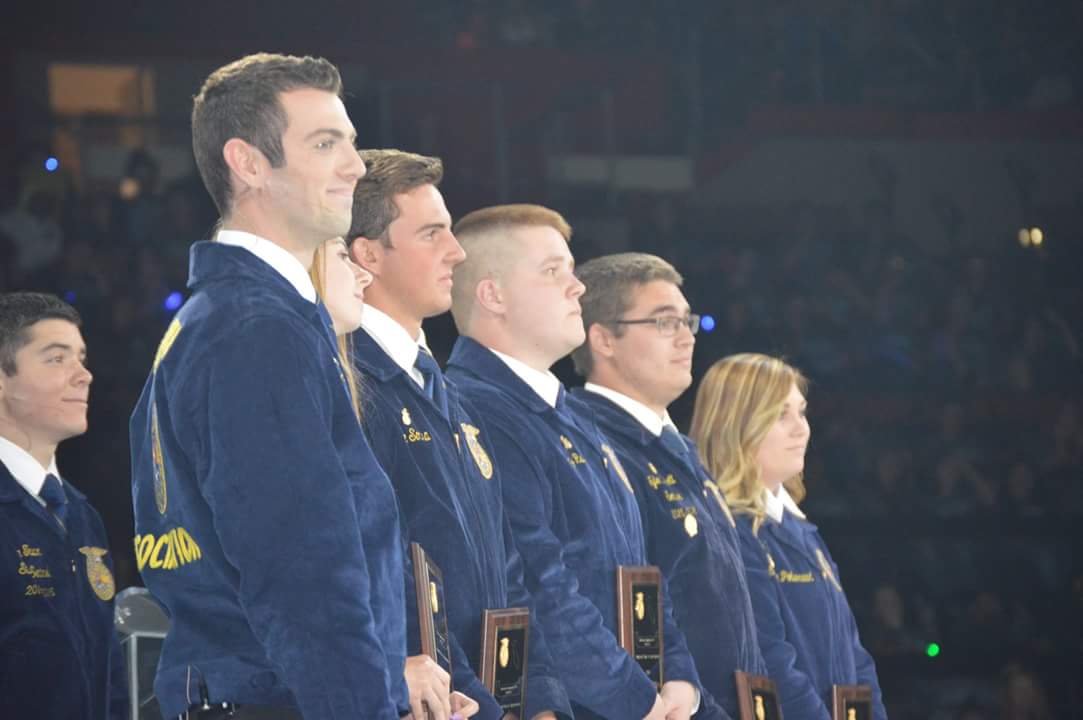
During the opening session of the 88th California Future Farmers of America (FFA) State Convention in Fresno last Saturday night, four California FFA members were honored with the top Star Awards during an onstage ceremony. As reported by the California FFA Association in a press release, each of them excelled in one of four areas:

Andrea Thomas from the Colusa FFA chapter was named the California Star Farmer state winner in recognition of proven leadership skills for an aspiring young farmer. Thomas raises and maintains hogs, cattle and hay.

Halley Lauchland, 2016 FFA Star State Degree in Agribusiness Award winner

Halley Lauchland, 2016 FFA Star State Degree in Agriscience Award winner (Photo Credit: California FFA)

Nitin Gupta from the Tulare FFA chapter was named the California Star in Agribusiness state winner, the highest achievement for a person pursuing a career in agribusiness. Gupta started the business Simple Sand three years ago in which he collects, markets and distributes sand from his family’s ranch to local businesses.

Paul Barcellos, also from the Tulare FFA chapter, was named the California Star in Agricultural Placement state winner, the highest recognition in the state for a young person excelling in job placement in the agricultural industry. Barcellos works alongside his dad at Cain Trucking as a Foreman in the Composting and Air Pollution Control Operations in recycling agriculture products and preventing air pollution.

Halley Lauchland, a high school junior from the Lodi FFA chapter received the 2016 FFA Star State Degree in Agriscience Award, the highest achievement for a person pursuing a career in agriscience.

“My project was cane pruning for the control of Eutypa Dieback in winegrapes,” A fifth-generation winegrape grower, Lauchland told CalAgToday, “The disease is commonly found in cabernet franc finds.”

Lauchland conducted her research in part to help her family’s 18-year-old vines with the Eutypa Dieback disease,  which she defined as “a fungal spore that enters the vine through pruning wounds. This will eventually kill the vine, causing the farmer to have to replant, which costs a lot of money and isn’t efficient.”

Lauchland tested cane pruning versus the commonly-used method of spur pruning to keep the disease at bay. “We tested two rows and found [cane pruning] was a more efficient way to do it, and it was going to save us more money in the long-run.” Spotting her research catching on in local vineyards, Lauchland said  “It seems people are going to the cane prune.”

Lauchland’s research was published in the Lodi District Grape Growers Association Update last year as, “Lodi High School Student to Compete in State FFA Agriscience Fair with Eutypa Dieback Research Project.” Lauchland stated, “That helped put out the word, what this [method] does and how it helps farmers.”

Overjoyed to have been selected to win the Star in Agriscience award, Lauchland said, “Words can’t really describe how I feel right now.”

The California Future Farmers of America (FFA) State Convention was sponsored by PG&E and the J.G. Boswell Foundation, as a special project of the California FFA Foundation.
2021-05-12T11:00:55-07:00April 27th, 2016|

Tree Nut Theft Alert

Roger Isom Warns: Take Precautions to Thwart Tree Nut Theft

By Patrick Cavanaugh, Deputy Editor


Roger A. IsomWestern Agricultural Processors Association (WAPA) president and CEO, told CalAgToday, “Tree nut theft is still a serious issue this year, as it was last year. Folks behind the thefts have not been caught. We’ve had over 30 thefts in the last 6 months.”

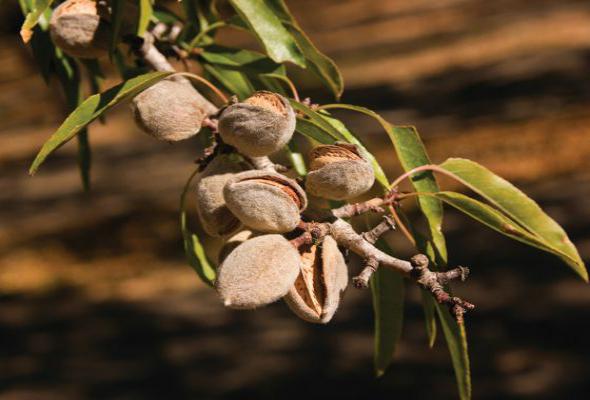
There is good news. “We’ve had numerous attempts thwarted,” Isom commented, “because folks have started to implement some of the procedures that we talked about at our emergency Tree Nut Cargo Theft Summit back in December.” Following the successful Summit, nut theft legislation sponsored by the WAPA passed out of the Assembly Agriculture Committee unanimously. According to WAPA, AB 2805 (Olsen) would form a statewide California Agriculture Cargo Theft Crime Prevention Task Force with combined law enforcement services and support activities to fight agricultural cargo theft. Among the loads of tree nuts stolen was a load of almonds reportedly stolen during the Summit.”

Roger Isom, president and CEO, Western Processors Association

Roger Isom, president and CEO, Western Processors Association (source: LinkedIn)

Isom explained, “We brought experts in cargo theft from across the country to the training seminar held in mid-April in Modesto to make sure all members understood: What has happened? How are the thefts occurring? What have we learned from those thefts and the investigations? What can people do to prevent these thefts from happening at their locations?”

“What we’ve learned, for sure,” he explained, “is that if you do not implement the procedures, you will be hit. Following the December meeting, we’ve had companies hit by cargo theft; the [companies] that implemented the practices we talked about prevented thefts from occurring; those that did not have lost truckloads of tree nuts.”

Isom understands it is time consuming to follow the recommendations, and there is some cost associated with it. “You have to take the time to take pictures of the drivers,” he elaborated. “You have to fingerprint the drivers. You’ve got to make calls. You’ve got to make sure these truckloads of shipments have been placed at least 24 hours in advance. If there are driver changes, you cannot allow that. It takes some serious steps to prevent [theft].”

“We had one a few weeks ago,” Isom explained, “where they switched drivers and trucks—literally the day of [transport]. It ended up being OK, but the alarms went off. The next time it could be an actual fictitious pickup.”

Tracking a stolen truckload is difficult. Isom reported, “Typically they do get the license plate number. Prior to these thefts, they might have just asked the driver for the license plate number and taken his word for it. Maybe they would go to the extent of taking a picture of [the plate], but what if it is what they call a “cold plate”, a stolen plate?”

“In at least one of the thefts,” said Isom, “the license plates had been switched. The thieves literally stole somebody’s license plates off a pickup truck and put them on the truckload of nuts. Had someone in charge been educated on license plate numbers—just normal [information]—they may have easily discovered the plates were not valid; they were not applicable for a truck-tractor-trailer setup.

Isom remarked the thieves are clever. “Most occur on a Friday or just prior to a holiday,” he stated. “In some cases, the theft might not be discovered for 3 or 4 days. The damage depends on the value of the nuts at the time,” Isom said, “and are we talking about finished product? Has it been processed? Seasoned? But you’re talking a stolen value of at least $100k-$150k. That’s what makes it so attractive and why cargo theft is on the increase across the country.”

Furthermore, Isom stated, “We’ve been told by law enforcement that Los Angeles (LA) is now the highest cargo theft location in the world. It has increased dramatically in the last couple of years, and more so this past year. We did not see theft in tree nuts until recently. We had the occasional theft out-in-the-field or maybe at the huller—someone picks up a couple of trailers and tries to get rid of them—but not to this level, not this brazen, and not with finished product.

Cargo Theft Interdiction Program (CTIP) with the California Highway Patrol

Cargo Theft Interdiction Program (CTIP) with the California Highway Patrol

“Now it’s over 30 loads!” he said. “We’ve had almonds taken from 4 or 5 different locations; we’ve had walnuts; we’ve had pistachios from several different locations; and we’ve had cashews stolen. We didn’t even know there were cashews here in California, but they are imported and processed here in Fresno, and there have been multiple loads stolen.”

“Nobody is immune to it,” Isom commented. “Tree nuts are the preferred product right now compared to other cargo thefts—TVs, tires, or tablets. Tree nuts have no serial numbers; thieves can turn and burn them faster than you-know-what. The other attractive part about the tree nuts is you can also store them for while. You can hit the farmers’ markets just a little bit at a time. It’s easy.”

“This is not the common criminal,” Isom surmised. “This is something sophisticated. Look how they have hacked into the U.S. Department of Commerce (DOC) database to get this information. Look how shipping papers have been modified; they put their phone numbers on them, and it looks legitimate. We’ve had trucking companies’ identities stolen. They’re using their forms, their information, their drivers’ names, but it is somebody else doing this.”

“And trust me,” Isom added; “it’s not the guys just right along California State Highway 99 (‘the 99’), they’ll go to the smallest processor off the beaten path. They fool people with what looks like very legitimate paperwork. This isn’t something that somebody took a sharpie to; these look like legitimate shipping papers.”

Isom and WAPA are engaged with “all the law enforcement, not just the local county sheriffs, including the Cargo Theft Interdiction Program (CTIP) with the California Highway Patrol. We’ve got the U.S. Department of Justice, Federal Bureau of Investigation (FBI) involved now. There are a lot of people on it, but, because of the value, it’s so attractive that we’ve got to make everybody is aware of this.”

“This is a new type of theft facing our industry,” warned Isom, ” and you have to do your due diligence. It takes somebody taking some time, and it is going to slow down shipments. There’s no doubt about it; you have to be prepared and aware.”

Through the use of fictitious pickup, even if the drivers are caught, Isom explained it’s not a felony anymore due to changes in California laws. “If you hold the driver at gunpoint,” he said, “and you basically carjack the truck; that’s a felony. So they’re basically saying that legally, the processor or handler voluntarily gave up the load. So it is not a felony; it’s a misdemeanor. So guys aren’t doing any state prison time. They’re doing a couple of weeks in county jail. With all the overcrowding, Boom, they’re gone; let them go.”

“Quite frankly,” Isom relayed, “the majority of the trucks end up in LA, so that’s where law enforcement finds the trucks. And that’s where they say the theft ‘happened.’ You can’t get the LA district attorney to prosecute these cases because they are too busy with murderers, rapists, and other—what they consider more serious—crimes than your voluntarily giving up a load, in their opinion. Even though some of these loads are worth half a million dollars.”

“But now we have the FBI involved,” Isom affirmed. “Thieves are now stealing on interstate highways; these are now federal crimes. There is certainly more teeth in federal law. When we catch these guys, they’ll be in federal prison, doing some serious time.”

(Featured Photo Source: USDA-NRCS)

2016-05-31T19:24:05-07:00April 26th, 2016|

Bee Health Fugitives

Bee Health: Varroa Mite Is Public Enemy No. 1

By Laurie Greene, Editor

The varroa mite is “Public Enemy No. 1” for bees, according to Becky Langer, the North American Bee Care manager for Bayer CropScience. “It’s the giant tick that’s attaching to [bees],” said Langer, “transmitting viruses and bacteria. This mite has to be constantly managed and we’ve seen very high levels. When our bee experts were out visiting with people last fall, people were reporting very high levels of mites. So we anticipate high [bee] losses coming out of this winter because of the cyclic effect of the mite.” Langer explained. “It really re-emphasizes the necessity of controlling that mite—all the time—and staying on top of it.

Bayer Bee Health's Feed a Bee Program

Bayer Bee Health’s Feed a Bee Program

Commenting on other “Most Wanted Criminals” against bee health, Langer discussed recent research findings that well-fed bees are better able to defend themselves against the notorious nosema, a fungi-related parasite. “They actually found higher counts of nosema in those bees, but the well-fed bees could manage the nosema populationas opposed to not-well-fed bees.”

“That of course ties into Bayer Bee Care Program‘s Feed a Bee Program and its forage and nutrition initiative,” commented Langer. Launched last year to address the lack of food and habitat for bees Feed a Bee worked with more than 250,000 people and 75 partners to plant 65 million flowers and thousands of acres of forage across the country. “We’ve got to be feeding these bees better,” Langer reinforced.

According to their website, this year, Feed a Bee kicks off the spring with the launch of a new song and video for children of all ages. Other ways people can become involved with the program to help these hardworking insects are: request a free packet of wildflower seeds, for a limited time while supplies last; commit to growing pollinator-attractant plants of your own; and locate Feed a Bee plantings in your own communities on the interactive partner map. You can also tweet a emoji and #FeedABee to have Bayer plant on your “bee-half.” 

Langer commented on crop protection products—”the usual suspects”—by stressing the importance for growers to follow labels.  “If that’s the case and they are used properly and in the proper settings, there is no long-term effect on colony health,” she said. “Really, where we see colony health problems correlates well with the varroa mite and with forage and habitat issues.”

Among the Feed a Bee Program collaborators in California are: Wilbur-Ellis, San Francisco, CABee Happy Apiaries, Vacaville, CA; Carmel Valley Ranch & Golf Course; PROJECT APIS M.; and Vitamin Bee.

__________________________________________

Resources:

Fleming, James C.; Daniel R. Schmehl; James D. Ellis,Characterizing the Impact of Commercial Pollen Substitute Diets on the Level of Nosema spp. in Honey Bees (Apis mellifera L.),” PLOS ONE [an international, peer-reviewed, open-access, online publication], July 30, 2015.

2021-05-12T11:05:56-07:00April 25th, 2016|

California Women for Agriculture Anew

California Women for Agriculture Rebrands After Forty Years

By Charmayne Hefley, Associate Editor


Founded in 1975 in Coachella Valley to promote and develop the interest of women in a strong agriculture industry in California, California Women for Agriculture (CWA) marks its 41st year with a rebranding. Jeanette Lombardo, president of CWA, said, “The theme for this year is Innovate, Activate and Motivate. We are really taking a look at everything we do, and trying to change it for the better,” she said.

Lombardo said there are currently 20 chapters with 2000-plus members across the state. Guided by five principle objectives, CWA aims to speak on behalf of agriculture in an intelligent, informative, direct and truthful manner; to keep members informed about pertinent legislative activities; to collaborate in support of agricultural issues and challenges; to improve the public image of farmers; and to develop a rapport with consumers, educators, and governmental & business leaders in communities throughout the State.

The wonderful thing about our organization is the age range,” Lombardo said, “from very young to very old. And the older ladies are wiser ladies, as I like to say; they provide mentoring capabilities to the younger folks who are coming in. And the younger folks are seeking leadership, personal growth, and network and industry knowledge,” Lombardo said.

Likewise, Lombardo said, young CWA members have been reverse-mentoring mentors on matters such as social media, “It is a wonderful thing and my goal is to have chapters in every county,” she noted.

2016-05-31T19:24:06-07:00April 22nd, 2016|

Winegrape Quality In SJV

Nat DiBuduo: Valley Winegrape Growers Must Produce Quality

By Laurie Greene, Editor

Nat DiBuduo, president of Fresno-based Allied Grape Growers believes there are good opportunities for Central San Joaquin Valley winegrape growers. “I think the San Joaquin Valley [winegrape growing industry] will survive because growers are working at producing winegrapes at a higher quality and at a higher price,” said DiBuduo.

“Overall, I think the industry is doing well,” stated DiBuduo, “and we just have to work with our San Joaquin Valley growers to produce a better quality grape. It’s like a chicken and an egg; they’ve got to be able to get paid for that better quality. And of course, growers need a solid contract with a good price to make it worthwhile,” he noted.Allied Grape Growers logo

DiBuduo noted that the Bureau of Reclamation’s initial announcement at the beginning of this month that federal water users will receive merely a five percent water allocation, fortunately, does not affect many of his grower-members. “Most Allied growers are not Westside growers; but they will be severely affected by the groundwater regulations soon to be in place.”

DiBuduo explained the Sustainable Groundwater Management Act is predicted to create major issues for production agriculture. “Oh yes, we’ve got guys who have sold their property because they didn’t have enough groundwater,” he said.

2016-05-31T19:24:06-07:00April 21st, 2016|

ALRB Discharges Farmworker Vote, Part 2 Exclusive Interview with Attorney Raimondo

Anthony Raimondo, “Let the People Vote!”


In an exclusive interview with Fresno attorney Anthony Raimondo, California Ag Today’s Patrick Cavanaugh discussed the significance to farmworkers of yesterday’s Agricultural Labor Relations Board (ALRB) decision to “set aside” Gerawan farmworker votes from the ALRB-sanctioned November 2013 election to decertify the UFW. Raimondo is the attorney for the UFW union decertification petitioner, Silvia Lopez, an employee of Gerawan Farming, a Fresno County diversified tree fruit operation.

California Ag Today: The central California agricultural industry is flabbergasted this week following the California Agricultural Labor Relations Board’s decision to set asideand not countthe ballots of 2,600 Gerawan farmworkers cast in 2013. What is your take on this decision?

Anthony Raimondo, Fresno County-based attorney

Anthony Raimondo, Fresno County-based attorney

Raimondo: It is unfair because from the outset, we have argued all along that this entire process has been unfair and has denied the workers their “day in court” and their due process. From the first day that Silvia Lopez walked into the ALRB office in Visalia, the greatest opposition to her filing for an election has been the ALRB itself.

We had a judge who couldn’t stay awake for the hearing. We have board members who are—shall we say at the least—biased. In the case of ALRB board member, Genevieve Shiroma, we have a person whose entire career is intertwined with the UFW’s primary paid lobbyist. There’s no way these folks can be objective in a case that has this kind of stakes in the UFW.

And this case is all about money. If they can get a contract with Gerawan, the UFW will essentially double its revenue and double its membership overnight.

California Ag Today: What is at stake for the UFW?

Raimondo: There is a clear reason why the State would end up spending $10 million on this case: They want to silence these workers and save the UFW. There is no union organizing in the field; the UFW has abandoned organizing. They’re not out there getting the workers to support and join the union.

They’re in the courtroom and in the back halls of Sacramento, making deals to take control of these workers’ future, whether the workers want it or not.

Ag LawCalifornia Ag Today: In denying the ballot votes to be counted, the ALRB said it was unfair that the employer—Gerawan in this case—gave the workers a pay raise without permission of the state government or the UFW.

Raimondo: But even with this illegitimate process, the only thing that the Board actually found was that the employer violated the law—not the workers.

So the Board is going to punish the employees by destroying their ballots, like some sort of third-world dictator. What control does the farmworker have over what the company does? What can the workers do to protect their right to vote if their right to vote can be thwarted by what a third party—the company—does?

The workers’ right to vote shouldn’t be in the hands of the company, or of the union, or of anybody else. The California Constitution says that when people cast votes in our state, those votes must be counted. That’s apparently true, unless you’re a farmworker.

California Ag Today: And the agricultural industry is asking, “How can the State of California and the state ALRB get away with this?”

Raimondo: It’s appalling what they’ve done here. It really is appalling. They’ve decided that the best way to control the behavior of an employer is to punish the workers who have no control over that employer.

You know there’s no reason that, if they believe that that election was tainted, they can’t run another election. I’ve spoken to Silvia, and Silvia’s not afraid of letting the people vote. I wonder if the UFW is as brave.

Let the people vote.

California Ag Today: Is the ALRB and the UFW requesting a new vote?

Raimondo: No, they want the farmworkers to stand off to the side and be quiet while the UFW makes the deal through political moves to take their money.

California Ag Today: What’s next?

Raimondo: We are planning, on Silvia’s behalf, to file briefs in the ongoing mandatory arbitration case that is sitting before the California Supreme Court. The UFW has a brief due and the Court has not yet set a hearing date.

We’re hoping that the Supreme Court will be kind enough to give us the opportunity to speak in that case, as the Court of Appeal did. So that case still provides us with a very real chance to vindicate the workers’ rights.

In the election case that was just decided, we are planning on filing a petition for reconsideration with the Board. We think that they need to think twice before they destroy people’s ballots.

California Ag Today: The ballots have not been destroyed at this point, right?

Raimondo: We don’t know. That’s a question only the ALRB can answer.

From my view, I would hope that they were not rushing to have a bonfire today.

I would think that because these votes are precious and irreplaceable, the Board would show the restraint to withhold taking any action on the ballots until the parties have had the opportunity to pursue the various legal options that we have to challenge this decision and make sure they are doing the right thing.

_______________

Resources:

ALRB Decision and Order Case No. 2013-RD-003-VIS, 39 ALRB No. 20, April 15, 2016)

Agricultural Labor Relations Act Employee Questions & Answers ELECTIONS

Petitioner Silvia Lopez’s Petition to Disqualify Board Member Shiroma, ALRB Case No. 2013-RD-003-VIS (39 ALRB No. 20)

California LABOR CODE SECTION 1140-1140.4

Pick Justice

2016-05-31T19:24:06-07:00April 19th, 2016|

ALRB Discharges Farmworker Vote, Part 1

ALRB Abolishes Gerawan Farmworker Vote

By Laurie Greene, Editor

The Ninth Amendment to the Constitution of the United States pays tribute to “unenumerated” rights of citizens—rights not specifiedsuch as the right to travel, to vote, to keep personal matters private and to make important decisions about one’s health care or body, as upheld by the Supreme Court over the years. Likewise, the cherished American legal notion of “No taxation without representation,” generally attributed to James Otis embraces “actual representation” over “virtual representation.”

Yet, Court documents issued on Friday, April 15, 2016, by the Agricultural Labor Relations Board (ALRB) upheld the September 17, 2015 decision by Mark R. Soble, Administrative Law Judge, ALRB, to set aside farmworkers’ ballots in a 2013 election to decertify mandated representation by the United Farm Workers of America (UFW).

The following paraphrased issues were among ALRB findings:

Gerawan Farming committed unfair labor practices under California Labor Code section 1153 by providing unlawful assistance to the decertification effort against the UFW, directly soliciting grievances and granting employees a wage increase.

-Petitioner Silvia Lopez, a Gerawan farmworker, solicited and received an unlawful donation from an association of which Gerawan was a member.

The ALRB concluded these unlawful actions (a) make it impossible to know if the signatures collected represent the workers’ true sentiments and (b) created an environment, which would have made it impossible for true employee free choice when it came time to vote.

“As a result of the employer’s unlawful support and assistance,” Judge Soble, in September 2015, called for “setting aside the decertification election and dismissing the decertification petition. Given that the unlawful conduct tainted the entire decertification process, any election results would not sufficiently reflect the unrestrained free expression of the bargaining unit members.”

Thus, the UFW, voted in by Gerawan farmworkers in a runoff election in 1990, certified by the ALRB in 1992, never reached a contract to represent the farmworkers in wage negotiations with their employer, and did not collect dues from or provide services for the farmworkers, reportedly among the highest paid in the industry, effectively abandoned the Gerawan farmworkers. 

When the California State Legislature amended the Agricultural Labor Relations Act in 2002 and 2011 to allow and to accelerate the process for imposed mandatory mediation and conciliation for a union contract, UFW offered a new contract proposalafter having abandoned the Gerawan farmworkers from 1995 and 2012.

Despite a lower court’s rejection of the so-called mandatory mediation and conciliation provision, the ALRB appears to have been successful in forcing UFW representation and mandatory dues collection on current Gerawan employees, after 25 years of ineffective UFW involvement that encompassed about 18 years of no involvement whatsoever—and certainly without counting their votes.

Click here to read, “ALRB DISCHARGES FARMWORKER VOTE, PART 2 – EXCLUSIVE INTERVIEW WITH ATTORNEY RAIMONDO: LET THE PEOPLE VOTE!”

2016-05-31T19:24:06-07:00April 19th, 2016|

AB-1513 Tough on Piece-Rate

Challenge to Farmworker Piece-Rate Pay May Actually Depress Wages

By Brian German, Associate Editor

Assembly Bill No. 1513 requires employees who are paid on a piece-rate basis to be compensated separately for rest and recovery breaks, and to be paid an hourly wage for non-productive time under the employer’s control, according to Anthony Raimondo, a Fresno-based attorney who has represented farmers and farm labor contractors since 2001.

Raimondo contends that while the bill was designed with the best intentions, its application may be detrimental to farmworkers. “The State of California believes that if piece-rate workers are not paid additional hourly wages for their ten minute breaks, they are being cheated,” Raimondo explained, “even though, every single day, every worker in California on a-piece rate basis always makes above minimum wage for the hours they work on that day.”CA Legislature

Raimondo, who has assisted employers with strategic planning and labor relations and who regularly defends wage claims before the California Labor Commission, elaborated on why farmworkers prefer piece-rate compensation. “You won’t see a day in our fields where a worker on piece-rate’s total earnings total less than what he would have made hourly on a minimum wage. That is why the unintended consequences of these laws will be to depress worker’s wages,” said Raimondo.

“It is why workers demand piece-rate from us; they don’t want hourly wages. Because we work in market-based commodities, the more the employer can tie earnings to production, the higher the wages that employer can deliver to the worker. They are both benefitting from an economic bargain that generates revenue through the ranch for both the employer and the employee. When compensation is tied to production, everybody makes more money,” he noted.

2016-05-31T19:24:06-07:00April 19th, 2016|

Costa: Westside Water Cut Unconscionable

Jim Costa: Water Allocation is Immoral

By Patrick Cavanaugh, Deputy Editor

Jim Costa, Congressman for the 16th Congressional District of California that covers all of Merced County and parts of Fresno and Madera Counties and includes vast areas of agricultural land, is not happy with the water situation in California. Costa stated, “To be sure, we are still in a water crisis even though we have had some good [wet] months.”

“Sadly those good months have seen too much of that water going out to sea—as opposed to getting into the San Luis Reservoir and providing water for our Valley—whether for the East side or the Westside. It is a fight that I have been engaged in for years, but most recently, I have been trying to ensure that we are pumping at the maximum levels even under the flawed biological opinions that we are having to contend with.”

Costa explained that while the pumps have been turned up over the past month, sometimes to the maximum level, “the San Luis Reservoir is only 51% full, and now we are are still looking at a 5 percent water allocation for Federal water users.  This has been avoidable, and it is unconscionable and immoral. Let me repeat that, it has been avoidable, and it is immoral and unconscionable that we, in fact, are in this predicament. It is largely because we have failed to take advantage of the El Niño months of December and January.”

Assessing our winter water losses,Costa remarked, “Since January 1st, we estimate that we have lost over 440,000 acre-feet of water. This freshwater440,000 acre-feetwould make a big difference to our Valley, which has been water-starved from a combination of 4 years of drought, plus the flawed biological operations of the Federal and State Water Projects. So, we have to fix this broken water system, bottom line.”

2016-05-31T19:24:06-07:00April 15th, 2016|

Dirty Dozen…Really?

Dirty Dozen Does Disservice


Following the April 12, 2016 release of the Environmental Working Group’s (EWG) annual Dirty Dozen list, Teresa Thorne, a spokesperson with the Watsonville-based Alliance For Food and Farming, a non-profit organization which exists to deliver credible information to consumers about the safety of fruits and vegetables, conversed with California Ag Today’s Patrick Cavanaugh, farm news director and deputy editor,

California Ag Today: Let’s talk a little about the Dirty Dozen list that the EWG just published for 2016.

Thorne: They’ve been doing this for 20 years now, and it is concerning to us because they’re putting out misinformation about the safety of conventionally grown produce. We know that the products on this list are among the most popular among families, especially children. EWG targets them, and their efforts really scare moms and consumers away from conventionally grown. It makes no sense to us; I mean, both organic and conventionally grown are very safe. We should all be consuming more every day for better health. That’s really the message for consumers. This list—all it does is serve to confuse people.

California Ag Today: It’s all a big scare tactic to try to get everybody to think that only organic food is safe, right?

Thorne: We strongly believe that organic food is very safe, but we maintain the same for conventional. And it’s interesting also too, because in a recent study that really focused on Manhattan, the researchers found—and we did blog about this—that organic was not as available as they had previously thought. So, what happens to the mom who wants to buy strawberries for her child’s lunch, but only conventional strawberries are available? Now she’s scared because of what EWG has stated in really inflammatory language this year—over the top. Now what is she supposed to do? Her store doesn’t carry organic strawberries. Availability is very much an issue, as well accessibility and affordability. Conventionally grown still is the most accessible and affordable [produce]. So, to scare people away from that really does a disservice to consumers.

California Ag Today: Yes, and food safety experts from the USDA and California Department of Pesticide Regulation (DPR), a department of the California Environmental Protection Agency (EPA), agree that any small risk from the trace [below legal thresholds set by the EPA] levels of pesticides found in fresh produce should not keep you from the health benefits of a diet rich in fruits and vegetables. DPR tracks food for pesticide residues, and they find 99 percent of all the fruits and vegetables grown in California—whether they’re organic or conventional—are safe to eat and we should be eating more of them.

Thorne: Absolutely, and that’s what’s also interesting; EWG—and we’ve called them on this in the past and they still have not changed—does not link, in their report, directly to USDA studies. They state over and over that they base their results on this USDA Agricultural Marketing pesticide data program (USDA PDP), but they don’t link to it. In what world do you not link to a study that, you basically state, you base your entire Dirty Dozen list upon? We find that quite odd.

We think the reason they don’t link is this simple: People will see that the USDA clearly states that residues do not pose a food safety concern. And that is in direct contrast to what [the EWG is] saying.

California Ag Today: Of course, if we wash the fruits and vegetables we eat, it helps. We should always wash produce to get the dirt off and talk about food safety in our own kitchens.

SafeFruitsandVeggies logoThorne: That’s right. Conventional and organic alike, wash them before you eat them. It’s a healthful habit that everybody should follow for various reasons. And the U.S. Food and Drug Administration (FDA) clearly states that you can reduce or eliminate any residues that may be present on fruits and vegetables, simply by washing.

California Ag Today: One last question, Teresa. You’ve been terrific. The EWG has been losing some strength in their message over the years because the media is getting sharper and better at challenging the contradictions in their reports. We’ve got the Alliance for Food and Farming’s new SafeFruitsAndVeggies website now, and you guys are reaching out to the media, saying “Let’s be reasonable; let’s look at this from a scientific point of view, not an emotional point of view.” Do you want to comment on that? While they’re not being picked up as much anymore, they keep trying, now with strawberries at the top of the list, right?Strawberries1

Thorne: Yes, we think they’re using the tactic of putting another kid-popular fruit to re-spark interest. In fact, we predicted it in a blog a few weeks ago, in which we said interest from the media is declining because more reporters and bloggers are actually reading the USDA PDP report, seeing what it says. So, we actually predicted in our blog that they would do something like this. Our number one prediction was they would have a new number one on their list, and it would, of course, be a kid-popular fruit.

So, it will be interesting to see. We’re still early on in the process to see if they have had any success with that, but we believe that that was a tactic [EWG] tried to employ to revive very lagging media coverage on this list. They used to enjoy widespread media coverage back in the day.

__________________________

Resources:

Setting Tolerances for Pesticide Residues in FoodsUnited States EPA

Pesticide info: What You Should Know About Pesticides, “Pesticides and Food: How We Test for Safety,” California Department of Pesticide Regulation

The Pesticide Data Program: Helping Monitor the Safety of America’s Food SupplyUSDA Agricultural Marketing Service (AMS)

Pesticide Residue Calculator, Alliance for Food and Farming

2021-05-12T11:03:02-07:00April 14th, 2016|
Go to Top