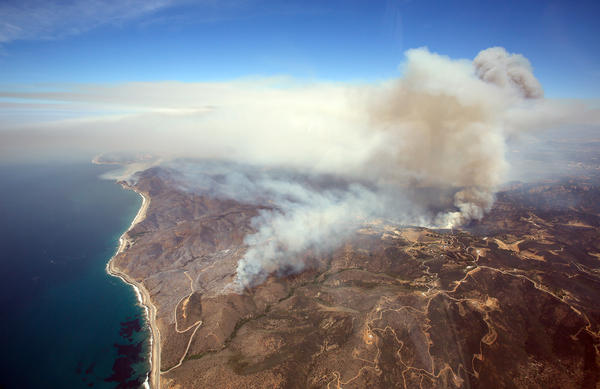
Forest Fire Smoke Challenges Ag Employees

Outdoor Ag Employees Need Protection from Smoke and Heat

Farmers Work Hard to Provide Protection

By Mike Stephens with the Ag Information Network

California’s hot  growing season and an ongoing drought feeding out of control wildfires pose challenges for farm employers. The 700,000 acre and counting Dixie Fire and the devastating Caldor Fire have conspired to funnel smoke in agricultural production areas just as summer temperatures have soared into triple digits.

These conditions invoke two regulations that farm employers, perhaps preoccupied with COVID-19 mandates imposed by our state government may have lost sight of. They must follow regulations designed to protect employees from the dangers of excessive heat and wildfire smoke.

No California farm employer should be surprised that Cal/OSHA compliance officers are actively enforcing a standard that should be at top of mind when temperatures routinely exceed 90 degrees.

The Cal/OSHA smoke standard requires remedies when employees are exposed to air quality of 151 or greater on the air quality index for the presence of PM2.5 for more than one hour. They must move work into environments with filtered air if possible. Or, if feasible, employers must reschedule work to a time of better air quality or provide employees with approved particulate respirators under voluntary use rules.

The voluntary use requirements mean it is not necessary to fit test and medically evaluate employees who choose to use a provided N95 respirator.

However, employers must train employees using information provided and the hazards of wildfire smoke and encourage employees to use employer provided respirators when the AQI exceeds 150.

2021-10-04T19:10:15-07:00October 4th, 2021|

Raw Milk Recall!


CDFA ANNOUNCES RECALL OF RAW COW MILK PRODUCED AT VALLEY MILK SIMPLY BOTTLED OF STANISLAUS COUNTY


Raw cow milk produced and packaged by Valley Milk Simply Bottled of Stanislaus County is the subject of a statewide recall and quarantine order announced by California State Veterinarian Dr. Annette Jones.  The quarantine order came following the confirmed detection of the bacteria Campylobacter jejuni in the farm’s packaged raw whole cow milk sampled and tested by the California Department of Food and Agriculture.

The raw cow milk is distributed in one-gallon (128 oz) and half-gallon (64 oz) plastic jugs with brown colored bottle caps and labeled as “Valley Milk Simply Bottled Raw Milk” or “DESI MILK Raw Milk”. The recall order applies to products marked on the container with expiration code dates of SEP 26 2021 through OCT 03 2021.

Consumers are strongly urged to dispose of any product remaining in their refrigerators, and retailers are to pull the product immediately from their shelves.  Products from the firm marked with other expiration code dates or with bottle caps of a different color than brown are not subject to the recall order.

CDFA found the campylobacter bacteria in a routine sample collected at the Valley Milk Simply Bottled production and packaging facility.  No illnesses have been reported.

Symptoms of campylobacteriosis include diarrhea, abdominal cramps, and fever.  Most people with camplylobacteriosis recover completely.  Illness usually occurs 2 to 5 days after exposure to campylobacter and lasts about a week.  The illness is usually mild and some people with campylobacteriosis have no symptoms at all.  However, in some persons with compromised immune systems, it can cause a serious, life-threatening infection.  A small percentage of people may have joint pain and swelling after infection.  In addition, a rare disease called Guillian-Barre syndrome that causes weakness and paralysis can occur several weeks after the initial illness.

2021-09-22T13:02:21-07:00September 22nd, 2021|

State Allocates $15 Million for Pollinators

Villapudua Leads Critical Investment Opportunity for Agriculture Community

California Assemblymember Carlos Villapudua (D-Stockton) celebrated the Assembly’s approval of $15 million recently to support our state’s pollinator habitats.

“Our agriculture community, and thus the world’s food supply, is greatly impacted by the wellbeing of our pollinating populations,” said Assemblymember Villapudua. “By prioritizing investments to support these pollinators and their habitats, we take the needed steps to care for and strengthen our agricultural output and further sustain California’s economy. These funds have never been more important as we navigate the difficult challenges our changing climate has presented for the Central Valley and will work to advance our biodiversity, climate resilience, and sustainable agriculture goals. I want to thank the Legislature and our Governor for recognizing this need and taking action to fund enhancements for these habitats.”

Our pollinators are responsible for bringing us one-third of every bite of food we take. Their pollinating activities help sustain our ecosystems and facilitate the reproduction of many flowering plants the produce fruits, vegetables, nuts, oils, fibers, and raw materials, and helps draw down carbon into plant material and soils to reduce erosion, suppress invasive weeds, and allow native plants and species to thrive.

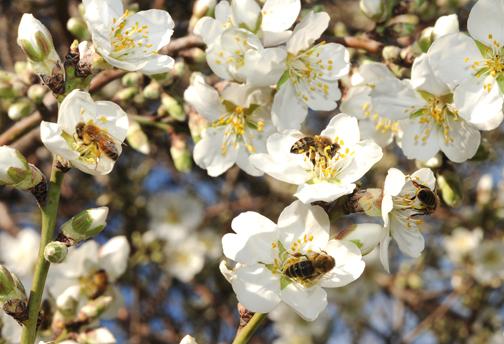
“California almond farmers know that every almond exists because a honey bee visited an almond blossom. Honey bees and other pollinators need a varied and nutritious diet. State funding will help growers implement those important conservation practices that benefit honey bees as they forage for pollen and nectar in the orchard,” said Almond Alliance President, Elaine Trevino. “The Almond Alliance is pleased that the State Legislature has approved funding for this important activity. We thank Assemblymember Villapudua for his leadership on AB 391, which highlighted the need for funds to accelerate the adoption of conservation practices designed to integrate pollinator habitat and forage on working lands.”

The co-beneficial opportunity to expand pollinator habitats on working lands progress California towards our goals of conserving 30 percent of habitat biodiversity, enhancing our climate resilience, and bolstering our food supply.

2021-09-15T19:24:39-07:00September 15th, 2021|

Ag-Tech Needs to Collaborate

Agtech Companies Need to Integrate and Collaborate

By Tim Hammerich with the Ag Information Network 

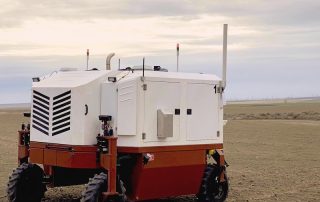
As technology for the farm has developed, new problems have emerged. Two big ones for autonomous farming, said Carbon Robotics CEO Paul Mikesell, are too many separate applications that don’t integrate, and no way for companies to interact with each other on the farm level.

“We have this sort of field readiness for autonomy problem that I think we’re going to have to work together to overcome so that we can have a cooperative environment. Airplanes do this with a system called ADS-B where they talk to each other. We need to have some way for these different companies to work together so that they don’t bump into each other, and so that they can schedule around each other. And it’s not even just the autonomous stuff, but it’s things like where are the center pivots and what direction are they going? And things like that,” said Mikesell.

Mikesell noted at an even more fundamental level, all of ag-tech needs better ways to integrate with each other so that farmers don’t have to reinvent the wheel every time they want to add a new tool.

“What I think would be bad for everybody is if all of these companies went out and had their own independent walled garden platform. And then as a farmer, you don’t have any, the ability to jump from one to the other or aggregate the data together.” explained Mikesell. “As a farmer, you want to be able to see all that stuff together, and if everybody’s doing this separate and there’s not an open platform, we’re going to wind up in a spot that just makes things worse. You know, like why do you have so many apps on your phone, right? It’s because well everything tries to keep itself separate.”

Carbon Robotics is one ag-tech company seeking collaboration in these areas.


2021-09-07T20:56:15-07:00September 7th, 2021|

Field Bindweed And Tomatoes

Field Bindweed Yield Impacts on Processing Tomatoes May be Less Than Expected

By Scott Stoddard,  County Director and UCANR Farm Advisor, Merced County

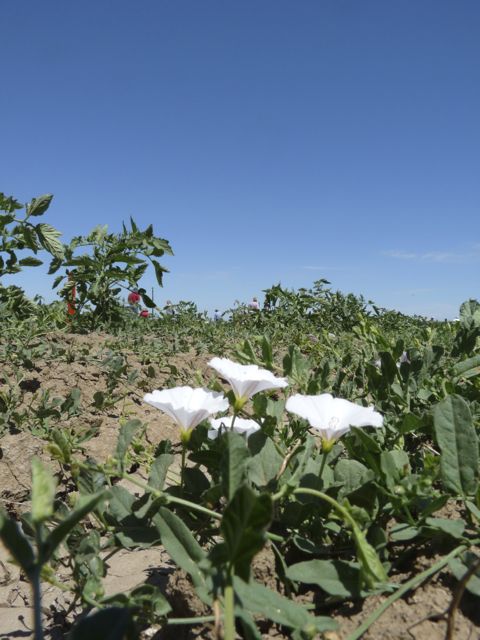
Field bindweed (Convolvulsus arvensis) is considered by many tomato growers to be the most problematic of all weeds in California production areas. Indeed, field bindweed and the closely related morningglory weeds were ranked the 8th most troublesome weeds in North America in a recent survey by the Weed Science Society of America (Van Wychen, 2019).

The rapid adoption of drip irrigation and the economic necessity of maintaining the beds and replanting with only minimal tillage for multiple seasons in processing tomatoes has created a system where field bindweed has become more prevalent. Field bindweed is extremely difficult to control because it propagates from seed and vegetatively from buds formed in the roots. Seedlings can be controlled with tillage when very young, but they become perennial very rapidly. Chemical control of seedlings is possible, but established plants are much more difficult to control.

Established plants often have a large root system relative to the amount of top growth, and thus are extremely tolerant of post emergence herbicides such as carfentrazone (Shark), glufosinate (Rely), and glyphosate (Roundup).

Bindweed is a headache not only for its persistent and pernicious growth habit and ability to reduce tomato yields, but also because it can physically stop a processing tomato harvester in the field. Vigorously growing vines can become entangled around the shaker and conveyor belts, requiring the equipment operator to shut down and manually clear out the foliage.

Several years ago, myself and other UC researchers conducted herbicide trials evaluating field bindweed control — with marginal success. In a given year and location, most of the registered herbicides in tomatoes gave only temporary suppression – about 40 – 80% bindweed control at 8 weeks after transplanting. Best results were observed where herbicides were stacked: trifluralin (Treflan) pre-plant incorporated followed by rimsulfuron (Matrix) post. Glyphosate helped in situations where the bindweed emerged early and could be applied before transplanting.

2021-09-01T21:02:16-07:00September 1st, 2021|

Robotics vs Machinery


Robotics Companies Trying To Go Mainstream on Farms


By Tim Hammerich, with the Ag Information Network

Robotics companies are betting the farm on automation being adopted by agricultural producers. But in order for robots to be adopted by farmers, the perception needs to change from looking at them as simply another piece of farm machinery. Something that operates completely on its own, says Burro founder Charlie Andersen, needs to be evaluated differently than equipment that you have to operate.

“You look at a used tractor, that’s 80 horsepower, and it will sell for like 20 grand. Right? And I think that farmers in their heads, as they’re looking at these systems, they have a narrative of like, ‘here’s the piece of hardware that I used to buy’. And you’ve got these smaller devices or different shape devices. You’re not really buying a piece of hardware. You’re buying a thing that does a task on its own. People are really, really expensive and they’re oftentimes are much more expensive than the equipment that is doing a lot of the mechanized work. I think there’s a shifting perception in terms of autonomous systems versus what’s out there today,” said Anderson

Andersen’s company Burro offers a people-scale autonomous cart that transports hand picked produce during harvest.

“Like, you know, if you look at an ATV. An ATV in our case sells like eight grand, and we’re selling a product that’s roughly double that in the first year, but it’s worth that much more because it is driving itself. It’s not just a piece of hardware,” Anderson said.

This is one key challenge ag robotics companies need to overcome for more widespread adoption of this technology.

2021-08-31T20:34:52-07:00August 31st, 2021|

Goats Welcomed Young Students

‘I wish this was my school’: Young Students Get Hands-on at Elkus Ranch

By Pam Kan-Rice UCANR  Assistant Director, News and Information Outreach

Curious goats milled around the masked elementary school students who were raking out the livestock stalls. After a year of social distancing due to COVID-19 precautions, the goats were enthralled by the youngsters who visited UC Agriculture and Natural Resources’ Elkus Ranch Environmental Education Center in San Mateo County.

“The animals were missing kids, they’re used to getting more loving,” said Beth Loof, 4-H youth community educator at Elkus Ranch. “Goats are really social. They get distressed when they are alone.”

Tucked behind the rolling green hills of Half Moon Bay off state Route 1, Elkus Ranch is a working landscape that, in a normal year, hosts people from all over the San Francisco Bay Area for field trips, conferences, community service projects, internships and summer camps.

During the pandemic, UC ANR has limited visitors to “social bubbles” of children and adults for outdoor education at the 125-acre ranch, which has implemented a variety of COVID protocols for the safety of visitors. During Adventure Days, young people spend four hours caring for animals, tending gardens, making a nature-themed craft project and hiking around the property.

“We would love to bring children from urban areas of the Bay Area to Elkus Ranch,” said Frank McPherson, director of UC Cooperative Extension for Alameda, Contra Costa, San Mateo and San Francisco counties. “So they can learn where food comes from, before it gets to the grocery store.”

On a sunny spring day, 11 students from Share Path Academy in San Mateo visited for Adventure Day, as their first field trip of the year.

“Coming here and having the hands-on learning, being able to hold objects, touch objects, interact with things, it’s all part of learning,” said Erin McCoy, a Share Path Academy teacher. “In science, you can talk about certain things in classes, but when you come out here and you actually apply it to what they’re doing and it’s tactile for them, at this age, it’s really important.”

The group – composed of McCoy, nine fifth-graders, a fourth-grader, a sixth-grader and a couple of parents – spent the day outdoors petting the donkeys, goats, chickens, rabbits and sheep and learning about the animals that live at Elkus Ranch.

“I think it’s been a great opportunity for our children to be outdoors and to enjoy nature, to reconnect with the environment – animals, plants, just the outdoors,” said parent Christina Cabrera. “It’s great for the children and the adults accompanying them.”

Inside the barn, Loof invited the students to sit on straw bales – not the hay bales, which are food for the livestock. She showed the students how wool that is sheared from sheep’s coats is spun into yarn. First, they carded the wool. “You’re going to card it like this. It’s like brushing your hair, but it has a little resistance so it can be a workout,” Loof said, cautioning the students wearing shorts to be careful not to brush their skin with the sharp, wire teeth of the tool. “Get all the fibers nice and flat, lined up, going one way. Fibers are what we call all the strands of wool.”

“This place is awesome.”


After twisting the wool by hand into yarn, the students fashioned the natural-colored fuzzy strands into bracelets.

“We love Elkus,” said McCoy, whose son has attended summer camp at the ranch. “This place is awesome.”

Taking a break for lunch, the group walked down the dirt path from the barn past the livestock pens to wash their hands, then sat at primary-colored picnic tables to eat next to a garden.

After lunch, the students exercised their creativity with buckets of clay to mold into animals or roll out and cut with cookie cutters.

In the chicken coop, Loof, who is one of four community educators who work at Elkus Ranch, shared animal science facts such as, “Eggs are viable for two weeks after the hen sits on them in the nest.” She also told funny stories such as how Dora, the white bantam, escaped the coop and ate all the chard in the garden.

“I wish this was my school,” said one student as he held an egg-laying chicken.

The visit ended with a garden tour and a game of hide and seek among the raised beds of onions, squash and other vegetables.

“Being outdoors is an important counterbalance to being on a computer,” said Cabrera, who is also a San Mateo High School wellness counselor. “It’s a great addition to what we’re doing. Just to be with animals.”

Elkus Ranch is still offering Adventure Days for children; the cost is $425 for 10 people. Small groups are also invited for 90-minute visits.

“If all goes well, we plan to offer a three-day mini-camp on Monday through Wednesday of Thanksgiving week,” said Leslie Jensen, Elkus Ranch coordinator.

For more information about Elkus Ranch activities, visit ucanr.edu/adventure or contact Jensen at LKJensen@ucanr.edu.


UC Agriculture and Natural Resources brings the power of UC to all 58 California counties. Through research and Cooperative Extension in agriculture, natural resources, nutrition, economic and youth development, our mission is to improve the lives of all Californians. Learn more at ucanr.edu and support our work at donate.ucanr.edu.


2021-08-25T20:41:30-07:00August 25th, 2021|

2021 CALIFORNIA FIG HARVEST UNDERWAY

Demand for California Figs Continues to Rise

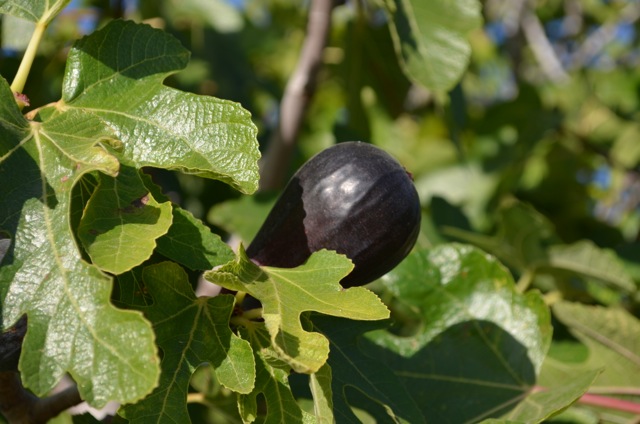
According to the California Fresh Fig Growers Association, California’s Fresh Fig season started in May and will continue through November. This year’s first crop was plump and plentiful though rainfall was sparce. Subsequent crops are expected to be just as beautiful and delicious. Sustainable farming practices ensure trees are healthy and producing delicious fruit even through drought years.

“California’s dedicated fig farmers have been good stewards of the land for generations which means we can all look forward to terrific fruit again this year,” says Karla Stockli, Chief Executive Office of the California Fresh Fig Growers Association. “The health of our California Fig trees is a year-round priority, which is why we can confidently deliver fresh figs seasonally and dried figs year round.”

In California, there are five primary varieties of fresh figs:


  • Mission. Purple and black skin with deep earthy flavor.
  • Kadota. Creamy amber skin with a light flavor.
  • Brown Turkey. Light purple to black skin with robust flavor.
  • Sierra. Light-colored skin with a fresh, sweet flavor.
  • Tiger. Light yellow color with unique dark green stripes and a bright red-purple interior fruit with fruity, raspberry, citrus flavor.


The California Fig industry has seen a rise in the popularity of both fresh and dried figs. Ever since Firmenich, a global flavor and fragrance company, designated 2018 “The Year of the Fig” crediting a growth in the number of products containing figs and fig flavors worldwide, growth in figs and fig flavored products have continued to rise due to its unique flavor and nutrition benefits.


Stockli adds, “Figs are an ancient fruit with a modern appeal. New generations are discovering the wonderful flavor of figs while reaping significant nutrition benefits. Seeking out California Figs ensures they’re always enjoying the highest quality in the world.”


Worldwide demand for California Figs can also be credited to the California Fig industry’s marketing efforts. The industry, which produces an average of 10 million pounds of fresh figs and 8,000 tons of dried figs annually, is small compared to many California agriculture industries. The California Fig industry relies heavily on government grants to maintain a robust marketing plan domestically and globally.


“We are grateful for Specialty Crop Block Grant Program (SCBGP) and Market Access Program (MAP) funds and continue to see huge value,” says Kevin Herman, third-generation fig grower and president of the California Fresh Fig Growers Association. “We are planting more trees and testing new varieties because of our marketing efforts and increase in demand. It’s an exciting time for the industry!”


In recent years, just to name a few efforts, the California Fig industry has produced its own cookbook, partnered with celebrity chef Robert Del Grande and celebrity fitness trainer Valerie Waters, developed new branding and digital assets, relaunched Facebook, Instagram, Pinterest, Twitter and YouTube channels, funded new research, and enlisted blogger and dietitian influencers to develop recipes, post content, and conduct media on the industry’s behalf.


To announce this year’s fresh fig season domestically, the industry commissioned a consumer survey through OnePoll to demonstrate the popularity of fresh figs in social media. Results will be released with a custom infographic in early August. California Fresh Figs will also be featured in a digital advertising campaign targeting key markets and in a nationally distributed lifestyle TV segment airing August 5 on “Daytime” and August 14 on “The Lifestyle List.” The industry will round out its fresh marketing efforts in 2021 with deliveries to media and nutrition influencers across the country.


Canada is the California Fig industry’s #1 export market, with nearly 50% of the fresh crop crossing over the border annually. Recent marketing efforts have primarily focused on digital communications with an emphasis on social media advertising. 2021 marketing efforts include an advertorial in LCBO’s popular digital and print publication Food & Drink magazine, recipe development, new photography and graphics, influencer outreach, social media advertising, and a partnership with The Feedfeed, a food and drink discovery platform, to host an Instagram Live featuring a demonstration on how to create a California Figs Charcuterie.


For more information, visit californiafigs.com.

2021-08-12T20:30:03-07:00August 12th, 2021|

Plumas Livestock Show Goes Forward Despite Dixie Fire

Plumas-Sierra Youth Look for Bids on Livestock August 15

By Pam Kan-Rice UCANR  Assistant Director, News and Information Outreach

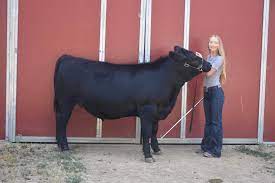
Due to the Dixie Fire, the traditional Plumas County Fair was canceled; however, volunteers are working hard to make the Plumas-Sierra Junior Livestock Show happen. 4-H and FFA youth will show their prize-winning livestock this weekend at the Sierraville Roping Grounds. The showing of animals is scheduled to take place on Aug. 13 and 14 with the Junior Livestock Auction on Sunday, Aug. 15.

“We really hope junior livestock supporters in the region and beyond will raise their hands often this year to support the youth livestock producers of Plumas and Sierra counties,” said Megan Neer, Plumas-Sierra Junior Livestock Auction chairman.

“The kids have overcome the challenges of COVID and now face another year of canceled county fair due to the Dixie Fire,” Neer said. “Many of our youth have been directly impacted by the fire evacuations and some even have lost homes to the catastrophic fire. We are really looking to the community and beyond to support our youth during this difficult time.”

Profiles of participating youth can be viewed on the Plumas-Sierra Junior Livestock Auction Facebook page by clicking on “Photos.” Interested buyers can participate in the livestock sale on Sunday, Aug. 15, and help reward the young people for their hard work in raising steers, lambs, swine, goats, rabbits, turkeys and other animals.

On the Plumas-Sierra Junior Livestock Auction website there is an option to donate to the Dixie Fire Relief Fund. There will be opportunities on sale day to support the 4-H members who were affected by the fire. In addition, there is an option for add-ons to support a child separate from buying an animal – for both 4-H and FFA members – that are in the sale.

“We would like to thank volunteers and sponsors for coming together on such short notice to host the livestock show event for my fellow 4-H and FFA exhibitors as well as myself,” said Kristin Roberti, Sierra Valley 4-H president, who has a steer entered in the event. “I will be joining over 100 other youth exhibiting livestock at the event this year, including a number of friends who have been impacted by the ongoing Dixie Fire and the Beckwourth Fire last month.”

2021-08-12T17:06:19-07:00August 12th, 2021|

Western Growers: Supports Garamendi-Johnson Bill On Shipping Reforms

Ocean Shipping reform Act of 2021 Gets Western Growers Support


By Tracey Chow  Western Growers Government Affairs Specialist


On Tuesday August 10, U.S. House Representatives John Garamendi (CA) and Dusty Johnson (SD) introduced the Ocean Shipping Reform Act of 2021. In order to support the competitiveness of U.S. businesses that are reliant on maritime shipping transport, the bipartisan bill aims to crack down on unreasonable practices by container shipping lines, bolster U.S. enforcement against bad actors, and improve transparency for exporters.

Western Growers President and CEO Dave Puglia issued the following statement:

“Western Growers strongly supports the efforts of Reps. Garamendi and Johnson to ensure fair shipping practices and standards for our agricultural exports. At a time when our farmers are still pressing to regain lost overseas markets after years of trade upheaval, the ongoing West Coast port crisis and skyrocketing shipping costs are diminishing their opportunity do to so. The Ocean Shipping Reform Act of 2021 provides much needed oversight and transparency into maritime shipping practices, which have increasingly become too unpredictable or costly for our exporters to remain globally competitive. As this legislation moves forward, we continue to encourage other federal and state officials to remain engaged on this crisis and explore other immediate relief measures for the supply chain.”

The bill will, among other provisions:

  • State that carriers (e.g. container shipping lines) may not unreasonably decline export cargo if it can be loaded safely, can arrive timely to be loaded, and is destined to a location to which the carrier is already scheduled.
  • Require carriers to provide notice of cargo availability, container return locations, and adequate notice of dates when the export container must arrive at the terminal.
  • Require carriers to provide the shipper with specific information to justify any imposed demurrage-detention charges, provide a reasonable dispute resolution process, and certify compliance with existing federal regulation.
  • Require carriers, under defined conditions, to accept export cargo bookings.

An Ongoing Crisis

Since the fall of 2020, U.S. agricultural exporters have faced extreme challenges getting their products onto ships and out to foreign buyers, including record-breaking congestion and delays at ports, shipping lines’ persistent failure to provide accurate notice of arrival/departure and cargo loading times, excessive financial penalties and other fees, and skyrocketing freight rate costs. Unfortunately, this situation remains fluid with no clear end in sight; based on current projections, we may not see a return to normal until early 2022, all but guaranteeing tough months ahead for those commodities whose peak shipping seasons fall between September and March.

Western Growers Action

Foreign markets are critical to our members, especially those that produce tree nuts and citrus. Earlier this year, Western Growers supported an industry letter that urged the U.S. Department of Transportation to consider its existing powers and determine how it can assist with the transportation needs of U.S. ag exporters in overcoming the current challenges in shipping goods and products. With its allies and the Agricultural Transportation Coalition, WG also pressed the U.S. House Committee on Transportation and Infrastructure to hold a hearing examining this ongoing crisis. It was ultimately held on June 15, marking the first time in many years the committee had looked closely at this issue, and with several Members of Congress calling for stronger action on behalf of U.S. ag exporters. A recording of the hearing can be viewed here.

We continue to press for action from the Administration, as well as state and local officials, to engage the marine transport supply chain – particularly the shipping lines and terminals – to find solutions and relief.

2021-08-11T19:16:31-07:00August 11th, 2021|
Go to Top