
It Is California Cantaloupe Week!

California Cantaloupe Week Begins in Fresno County

By Lauren Dutra, NAFB Summer Intern


Established by the Fresno County Board of Supervisors for this week, Monday July 25 through Sunday, July 31,“California Cantaloupe Week,” recognizes Fresno County as the lead canteloupe-producing county in California, which currently produces 75% of all cantaloupes sold in the United States.

Steve Patricio, president and CEO of Westside Produce, a grower, packer and shipper in Firebaugh said, “The quality has been absolutely outstanding this year, with some of the highest sugar results we’ve seen in recent years.” Patricio has also observed great demand in the marketplace as well.  At this point, it’s time to eat those beautiful California cantaloupes,” he noted.

Tri Westside ProducePacked with nutrition, “Cantaloupes are one of the most outstanding things we can eat for our health,” Patricio affirmed. “That daily dose of cantaloupe can do wonders for a healthy lifestyle.”

The California Cantaloupe industry has been on the forefront of the food safety movement throughout the world, “You can be assured that every cantaloupe grown, packed and shipped from California meets the highest standard of food safety anywhere in the world,” Patricio stated.

The California Cantaloupe Advisory Board (CCAB) requires all California cantaloupe growers, packing operations, and cooling facilities undergo mandatory announced and unannounced government food safety audits. The audits are based on a set of food safety standards developed from 20 years of university research along with input from government, food safety and farming experts. CCAB food safety systems allow for science-based standards to be updated as new information or science becomes available.
You can review all of the safety checkpoints here.

2021-05-12T11:05:51-07:00July 27th, 2016|

Mathesius is New UC Soil Scientist

Mathesius is New Agronomy Farm Advisor in Sutter-Yuba, Colusa Counties

By Patrick Cavanaugh, Farm News Director


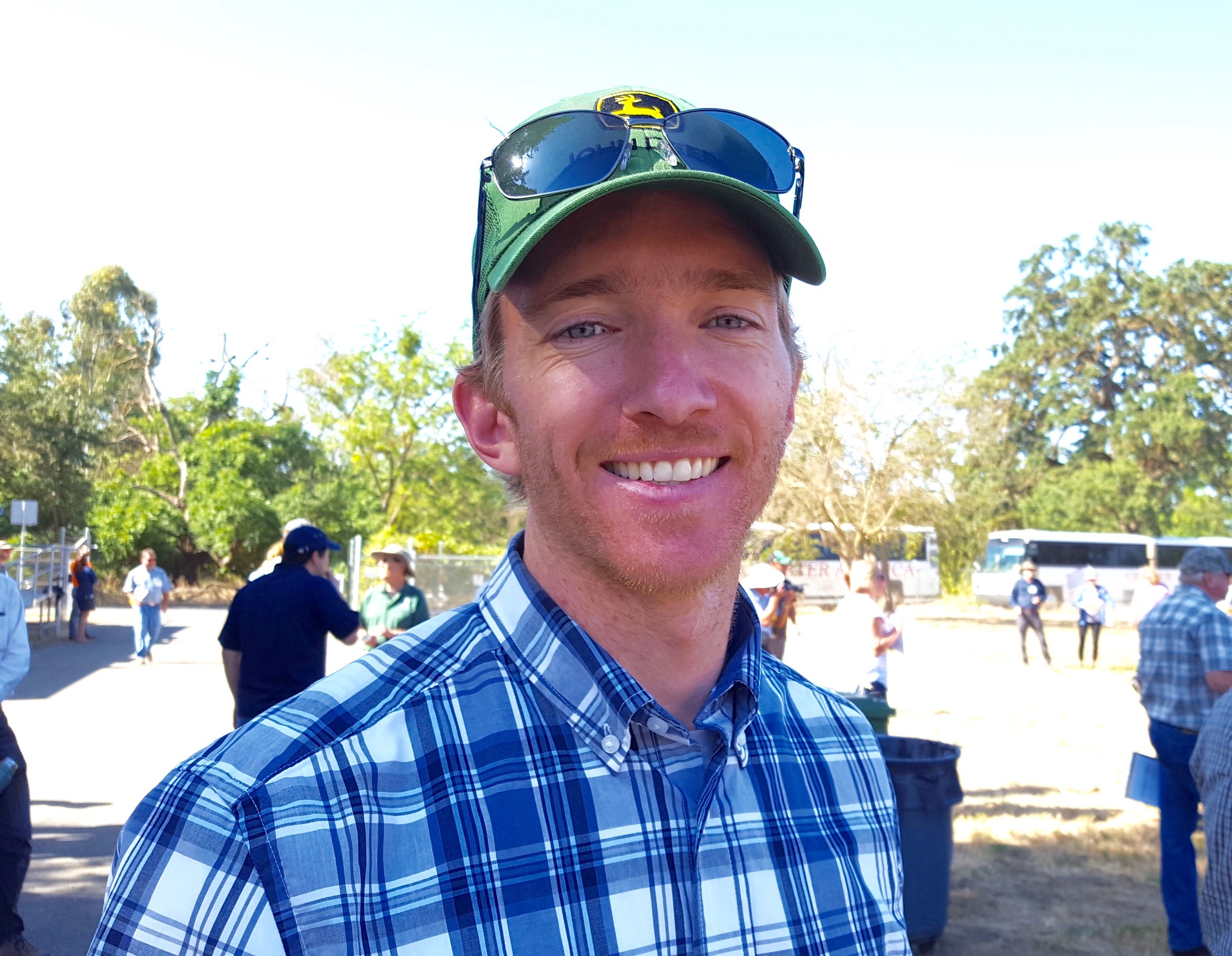
Konrad Mathesius is the new Agronomy farm advisor at the UC Division of Agriculture and Natural Resources Cooperative Extension, Sutter-Yuba, Colusa Counties. Mathesius first explained his unusual last name. “It means ‘mathematics’ in Latin. I guess we had accountants in our family lineage back there somewhere,” he said.

Mathesius completed his undergrad degree in political science at Utah State, followed by two master’s degrees at UC Davis in Soils and Biogeochemistry; and in International Agricultural Development (IAD)—a graduate group within the Department of Plant Sciences. “The IAD is flexible in its curriculum, which allowed me to take many plant- and soil- specific courses. I took the opportunity at IAD to specialize in soils,” he said.

California Safflower Field

California Safflower Field

“Through the years, we have learned a lot through the pioneers of soil science and it’s an exciting field because there is still a lot to learn,” said Mathesius. “And everything that comes out of soil science, in one way or another, is applicable to life on the planet.”

“Soils also tell a story, and that’s one thing I really enjoy about it. It’s especially evident in California because there is a remarkable combination of parent material that has created an abundance of different soils in the state,” noted Mathesius. “And it’s very relevant to agriculture, ecology, and environmental science. Differences in soils create a stark contrast in how crops grow and how they need to be managed,” he said.

Mathesius is responsible for the agronomic crops grown in his region, including dry beans, oilseeds such as safflower and sunflower, fresh market corn and silage corn, and small grains such as barley, wheat, and rye.

“I’m a soil scientist by trade, but ultimately I am a UC Cooperative Extension Farm Advisor and available to growers to figure out what their crop issues are—which include pests, diseases and soil fertility,” noted Mathesius. “I am a resource, and the UC system has many other resources and personnel who can thoughtfully consider solutions to crop problems.”

2021-05-12T11:05:51-07:00July 26th, 2016|

Breaking News: Cal Poly Opens New Greenhouse and Insect Rearing Facility

New Greenhouse Facility Opens to Save Citrus from Psyllids that Vector HLB

Facility to Rear Tamarixia Radiata, Natural ACP Predator

By Patrick Cavanaugh, Farm News Director


Scores of citrus industry leaders, citrus growers, scientists and CDFA officials attended the ribbon cutting event TODAY at the opening of a new greenhouse on the Cal Poly Pomona campus to rear Tamarixia radiata, a tiny parasitic wasp imported from Pakistan because it is an Asian Citrus Psyllid (ACP) nymph predator. ACP, in turn, is a serious nonnative citrus pest that can vector Huanglongbing (HLB)—a deadly citrus disease also known as Citrus Greening—that has devastated the powerhouse citrus Screenshot 2016-07-25 12.24.41.png

industry in Florida, threatens to ruin additional citrus economies, and is the biggest threat the California citrus industry has ever faced.

According to the United States Department of Agriculture Animal and Plant Health Inspection Service (USDA-APHIS), infected citrus trees “produce fruits that are green, misshapen and bitter, unsuitable for sale as fresh fruit or for juice. Most infected trees die within a few years.” ACPs have been detected in Alabama, American Samoa, Arizona, California, Florida, Georgia, Guam, Hawaii, Louisiana, Mississippi, Northern Mariana Islands, Puerto Rico, South Carolina, Texas and the U.S. Virgin Islands. Of those locations, the HLB disease has been detected in California, Florida, Georgia, Louisiana, Puerto Rico, South Carolina, Texas and the U.S. Virgin Islands.

ENTER:  Tamarixia radiata

Use of the ACP predator, Tamarixia radiata as a biological control for ACP was discovered by Mark Hoddle, biological control specialist and principal investigator, UC Riverside ( UCR), Department of Entomology. The first release of Tamarixia was in December 2011 after USDA-APHIS cleared the natural enemy for release from the Quarantine Facility at UCR.

Mark Hoddle UC Riverside Department of Entomology

Mark Hoddle UC Riverside Department of Entomology

“Tamarixia can kill ACP nymphs in two different ways,” explained Nick Hill, a Tulare County citrus producer and Citrus Pest & Disease Prevention Program (CPDPC) chair.  “The first is parasitism. In this instance, a female parasitoid lays an egg underneath a fourth or fifth instar—the larger and final developmental stage of the ACP nymph before becoming an adult—nymphs that are most preferred by Tamarixia for parasitism. When the egg hatches, the Tamarixia larva begins to feed on the under-surface of the ACP nymph. Eventually the larva completely excavates the body cavity of the ACP nymph and pupates inside the empty shell of its host.”

Hill explained the first releases of the tiny and harmless wasp will occur this fall in urban areas, “to help control ACP so that we do not have to do mitigations such as spraying in those areas. We hope to get to a point where we no longer need to go into people’s yards and ask if we can treat the trees.”

“The issue,” commented Valerie Melano, professor and chair, Cal Poly Pomona Plant Sciences and interim chair, Cal Poly Agribusiness & Food Industry Management/Agricultural Science, “is that we need to come up with the best possible ways to raise enough wasps for big releases to prey on ACP. We will have CDFA employees working in this green house, as well as student workers who have participated in our research program all along,” noted Melano.

Nick Hill, CPDPC chair

Nick Hill, a Tulare County citrus producer and Citrus Pest & Disease Prevention Program (CPDPC) chair.

Hill added, “The idea is to get enough Tamarixia out there so they start reproducing themselves and they become self sufficient. This is tough to accomplish, but researchers think if they can get big numbers of the wasp into the urban areas, they can put a big dent in lowering the populations of ACP.”

Cal Poly Pomona Greenhouse

The new Cal Poly 5,040-square-foot research greenhouse, built in collaboration with Citrus Research Board and constructed through a $400,000 grant from the Citrus Pest & Disease Prevention Program, will house the second Tamarixia production program in California. CDFA’s Mount Roubideaux facility in Riverside houses current production. Both facilities will support the CPDPC biological control program that oversees releases in urban areas with high ACP populations.

The new greenhouse should produce a 1-ACP Research Greenhouse1.5 million wasps. “It’s a very nice facility,” said Hill. “We are trying to boost the biological control program to produce four million Tamarixia a year.”

California Quarantine

The California Department of Food and Agriculture (CDFA) operates an extensive monitoring program to track the distribution of the insect and disease in both residential areas and commercial citrus groves. Results have determined quarantine zones, guided releases of biological control agents, and prioritized areas for a residential chemical control program. Nearly all of southern California is under quarantine for ACP, due to the fact that more than 15 residential trees have been discovered to be in infected with HLB.

The ACP quarantine in California includes parts of the following counties:  Fresno, Kern, Kings, Madera, Monterey, San Benito, San Joaquin, San Luis Obispo, San Mateo, Santa Clara, and Stanislaus; and the following entire counties: Imperial, Los Angeles, Orange, Riverside, San Bernardino, San Diego, Santa Barbara, Tulare County, and Ventura.

Asian Citrus Psyllid Cooperative Program California, Arizona, Baja California, and Sonora (USDA-APHIS)

Asian Citrus Psyllid Cooperative Program
California, Arizona, Baja California, and Sonora (USDA-APHIS). Visit our Citrus Diseases page to identify a plant infected by citrus greening, citrus canker, citrus black spot and sweet orange scab. If you detect an infected plant, report it  immediately.

2021-05-12T11:05:51-07:00July 25th, 2016|

Celebrate National Ice Cream Month!

Celebrate National Ice Cream Month with California Ice Cream and Flavors!

By Lauren Dutra, NAFB Summer Intern and Assistant Editor

Jennifer Giambroni, director of communications, California Milk Advisory Board

Jennifer Giambroni, director of communications, California Milk Advisory Board

First established in 1984 by Ronald Reagan, the 40th President of the United States, National Ice Cream Month was scheduled for the month of July, with the third Sunday of the month designated as National Ice Cream Day.

Jennifer Giambroni, director of communications, California Milk Advisory Board, explained why Californians, in particular, have so much to celebrate during National Ice Cream Month. “As the number one ice cream state,” she said, “we produce 126 million gallons of ice cream a year.”

Thats a lot of scoops!

California also leads the nation in milk production, and 99 percent of dairies in the state are family-owned. Including milk production on farms and milk processing, the California dairy industry, supports about 190,000 jobs in the California economy and contributed about $21 billion in economic value added in 2014, according to “Contributions of the California Dairy Industry to the California Economy,” by the University of California Agricultural Issues Center (May 14, 2015). 

Blueberry Ice Cream Float

Blueberry Ice Cream Float (Source: California Milk Advisory Board, Kristina Vanni Blogger, 2012)

Ice cream, being both timeless and innovative, has evolved in flavors and varieties over the years, according to Giambroni, while still holding true to the traditional treat you grew up with as a kid. “Ice cream is an important category that represents a lot of the milk produced on California’s more than 1,400 family dairy farms and carry the Real California Milk seal,” she noted.

“We’re seeing adult-friendly milkshakes with the addition of spirits, ice cream sandwiches made with more than cookies, and sundaes with everything from balsamic vinegar reductions to red bean paste,” Giambroni elaborated. Other new ice cream trends include hyper-indulgent flavor combinations, including nuts and fruits grown in California, and “better for you” versions with probiotics, varying levels of fat and sugar, added calcium, lactose-free, and different kinds of oils. “We’re loving the olive oil and walnut oil ice creams for their subtle flavors,” Giambroni noted.


Approximately 12 pounds of Real California Milk are used to make just one gallon of California ice cream.


Watermelon Chill Ice Cream (California Milk Advisory Board)

Watermelon Chill Ice Cream (California Milk Advisory Board)

The California Milk Advisory Board works with bloggers on how to incorporate ice cream into events for children of all ages:

TomKat Studio – DIY Ice cream Sandwich Bar

Hostess with the Mostess – Healthy Milkshake Bar

Hostess with the Mostess – How to Set Up a Cocktail Milkshake Bar

Hostess with the Mostess – Kids Sundae Party


Check it out:

Ice Cream Sandwich (California Milk Advisory Board)

Ice Cream Sandwich (California Milk Advisory Board)

Rick’s Ice CreamBlue Moon-A fruit loops tasting ice cream with super-secret natural ingredients

McConnell’s Boysenberry Rosé Milk JamCentral Coast, grass-fed milk & cream and cane sugar, slowly-simmered to a thick, rich and decadent milk jam – then churned into house-made, boysenberry & rosé wine preserves. 

Breyer’s Strawberry Ice Cream-packed with sun-ripened California strawberries picked at the peak of happiness!

Gilroy Garlic Festival Garlic Ice Cream-July 29-31, 2016

The Orange Works‘ Orange Ice Cream and Chili Mango Ice Cream

Where Is the Best Ice Cream in California? (PBS, 2014)

2016-07-23T17:33:15-07:00July 22nd, 2016|

Poultry Industry Doing Well, for Now

Poultry Industry Shines, Like a Canary in a Coal Mine

By Patrick Cavanaugh, Farm News Director


Bill Mattos, president of the California Poultry Federation, based in Modesto, reported the state’s poultry industry is doing well despite new regulations and wage increases. “First of all,” he explained, “it looks like chicken has taken over as the [category of] highest meat consumption now in the United States. It’s getting more and more popular, so that’s good,” Mattos noted.

“Also, the best thing is the industry seems to be weathering the Highly Pathogenic Avian Flu (HPAI) A (H5N1) storm,” he continued. “In California, we’re doing our due diligence with biosecurity. We don’t have any Avian Influenza. We’ll knock on wood for that.”

California Poultry Federation logo“The industry is also enjoying lower feed costs. That’s 60% of our cost, so that’s good news,” he added.

And, poultry industry employees have job security. “It doesn’t look like there will be fewer employees in the industry over the next few years, and we’d like to have more,” he said.

Notwithstanding the good news, challenges loom on the near horizon. “The Air Quality and Water Quality Control Boards are regulating a lot of different industries,” Mattos observed. “They’re starting to look at the poultry industry now that they have completed the dairy rules. We’re very concerned about those issues, so we are trying to work with the boards to explain to them what we do and how our business runs,” noted Mattos.

The updated minimum wage requirement may hurt the California poultry industry, another big concern of Mattos. “We supply half the chicken consumed in California. The other half comes from out of state. Without the same minimum wage requirements, we’re going to be at a disadvantage. We’re looking into the different possibilities—what we can do—to offset that.”

“You will be seeing some new things coming out from the poultry industry as we look at the ramifications of the new minimum wage,” explained Mattos. “We can’t compete with that. They are going to be taking a lot more percentage away from us, which may cost us some jobs if we don’t work this out.”

“With the minimum wage hike, California lawmakers are trying to appease workers. But it really affects businesses. Ours happen to be mostly in the Central Valley, which is the hardest-pressed area for unemployment. It isn’t a good place to have to follow wage requirements like you’re seeing in San Francisco and Los Angeles. It frankly makes no sense in the Central Valley,” said Mattos.

2021-05-12T11:17:13-07:00July 21st, 2016|

BREAKING NEWS: ACP QUARANTINES IN MERCED AND MONTEREY COUNTIES

ASIAN CITRUS PSYLLID (ACP) QUARANTINES IN MERCED AND MONTEREY COUNTIES

Quarantines are now in place in both Merced and Monterey Counties due to recent Asian citrus psyllid (ACP) detections.  One ACP was detected near the City of Merced in Merced County and two ACP in one trap within the City of Salinas in Monterey County.

The quarantine zone in Merced County measures 123 square miles, bordered on the north by Kenney Avenue; on the south by W Dickenson Ferry Road; on the west by Shaffer Road; and on the east by

SaveOurCitrus

SAVE OUR CITRUS app is a free USDA iPhone to report and identify the four leading citrus diseases: citrus greening, citrus canker, citrus black spot and sweet orange scab. Report your symptoms, upload a photo and citrus experts will respond. ACP

E Yosemite Avenue. Monterey County’s quarantine measures 111 square miles and is bordered on the north by Pesante Road; on the south by the Salinas River; on the west by Castroville Road; and on the east by Gabilan Creek. The quarantine maps for both Merced and Monterey Counties are available online at: www.cdfa.ca.gov/go/acp-maps. Please check this link for future quarantine expansions in these counties, should they occur. Quarantines in new counties will be announced separately.

The quarantine prohibits the movement of citrus and curry leaf tree nursery stock, including all plant parts except fruit, out of the quarantine area and requires that all citrus fruit be cleaned of leaves and stems prior to moving out of the quarantine area.  An exception may be made for nursery stock and budwood grown in USDA-approved structures which are designed to keep ACP and other insects out.  Residents with backyard citrus trees in the quarantine area are asked not to transport or send citrus fruit or leaves, potted citrus trees, or curry leaves from the quarantine area.

ACP county-wide quarantines are now in place in Imperial, Los Angeles, Orange, Riverside, San Bernardino, San Diego, Santa Barbara, Tulare and Ventura Counties, with portions of Alameda, Fresno, Kern, Kings, Madera, Merced, Monterey, San Benito, San Francisco, San Joaquin, San Luis Obispo, San Mateo, Santa Clara, and Stanislaus counties also under quarantine.

The ACP is an invasive species of grave concern because it can carry the disease huanglongbing (HLB), also known as citrus greening.  All citrus and closely related species, such as curry leaf trees, are susceptible hosts for both the insect and disease.  There is no cure for HLB and once a tree becomes infected, the diseased tree will decline in health and produce bitter, misshaped fruit until it dies.  In California, HLB has only been detected on residential properties in Los Angeles County.  This plant disease does not affect human health.
Residents in the area who think they may have seen ACP or symptoms of HLB on their trees are urged to call CDFA’s Pest Hotline at 1-800-491-1899 or your local agricultural commissioner’s office (Merced County (209) 385-7431; Monterey County (831) 759-7325).  For more information on the ACP and HLB, please visit: www.cdfa.ca.gov/go/acp.

2021-05-12T11:05:52-07:00July 14th, 2016|

Jasieniuk on Weed Evolution

Tracking Herbicide Resistance in Weed Evolution  

By Emily McKay Johnson, Associate Editor


Marie Jasieniuk, professor and weed scientist at UC Davis College of Agricultural and Environmental Sciences, discussed her groundbreaking research, “I work on the population genetics and evolution of agricultural weeds and invasive plants,” she said. “We use molecular tools to look at the origins and spread of weeds. We also use molecular tools and genetic studies to understand the evolution of herbicide resistance in weeds,” Jasieniuk added, “to be able to propose management approaches that reduce the likelihood of further evolution and spread of resistant weeds.”

UC Davis Annual Weed Day 2016

UC Davis Annual Weed Day 2016

Jasieniuk and her team identify the origins of invasive plants, and determine how they were introduced. “We study how they were introduced, how they have spread and whether they have been introduced multiple times. Again, if we understand how they’re spreading, we can do something to try to stop the spread,” she said.

Italian rye grass, a weed Jasieniuk is currently studying, is problematic because it is resistant to Roundup, a popularly used weed and grass killer by growers. “UC ANR Cooperative Extension specialist, now emeritus, Tom Lanini, and I sampled over 100 locations of Italian rye grass and tested them for resistance to Roundup ten years ago,” she said about the project, funded by USDA. “Last year, we re-sampled all of those sites, and we’re re-testing to see if there’s been an increase or a decrease or no change in resistance to glyphosate, to Roundup,” she said.

Roundup isn’t the only weed and grass killer available on the market. “We’re looking at resistance to three other herbicides,” she said. Working with growers to determine the most efficacious weed treatments that also reduce the likelihood of wood resistance to herbicides,” Jasieniuk explained, “We interview growers about their herbicide use, non-chemical approaches, and integrated management techniques to identify management practices that correlate highly with low or no resistance,” she explained.

Resistance management is found to be more effective with a rotation of various herbicides. “What you want to do is rotate different types of herbicides with different modes of action,” Jasieniuk said. “Perhaps do tank mixes and incorporate non-chemical approaches as well,” she added.

Eliminating weeds can be as simple as disking and digging them out with a shovel when there are only a few. “I think, in many cases, this would have done a lot to prevent new weeds from coming in and certainly resistant weeds from spreading,” she noted.

2021-05-12T11:05:53-07:00July 11th, 2016|

BREAKING NEWS: California Water Authorities Sue U.S. Bureau of Reclamation

The following is a joint statement by Jason Peltier, executive director of the San Luis & Delta-Mendota Water Authority and Tom Birmingham, general manager of the Westlands Water District on today’s filing of a lawsuit to compel the U.S. Department of the Interior, Bureau of Reclamation to reassess its Endangered Species Act (ESA)-related actions.

U.S. Bureau of Reclamation Fails to Consider the Environmental Impacts of Biological Opinions Which Have Been Devastating Communities

FRESNO, CA-TODAY the San Luis & Delta-Mendota Water Authority (SLDMWA) and Westlands Water District (WWD) filed a lawsuit in federal court to compel the U.S. Bureau of Reclamation (“Reclamation”) to examine the effectiveness of the existing measures intended to protect endangered species, the environmental impacts of those measures, and whether there are alternatives to those measures that would better protect both endangered fish species and California’s vital water supplies.

San Luis & Delta-Mendota Water Authority The existing measures, adopted in 2008 and 2009, are based on biological opinions issued under the Endangered Species Act.  The measures are responsible for the largest redistribution of Central Valley Project and State Water Project (water supplies away from urban and agricultural uses and have jeopardized the water supply for waterfowl and wildlife refuges.  Since 2008 and 2009, the farms, families, cities and wildlife that depend upon Central Valley Project and State Water Project water supplies have suffered substantial environmental and socio-economic harm from the reduced water deliveries caused by the existing measures, with little apparent benefit for fish.

Reclamation adopted the existing measures without any review under the National Environmental Policy Act (NEPA).  Federal courts, including the United States Court of Appeals for the Ninth Circuit, held this action violated NEPA, and Reclamation was ordered to perform environmental review.  The Ninth Circuit Court of Appeals wrote:

It is beyond dispute that Reclamation’s implementation of the Biological Opinions (BiOp) has important effects on human interaction with the natural environment.  We know that millions of people and vast areas of some of America’s most productive farmland will be impacted by Reclamation’s actions.  Those impacts were not the focus of the BiOp….  We recognize that the preparation of an Environmental Impact Assessment (EIS) will not alter Reclamation’s obligations under the ESA.  But the EIS may well inform Reclamation of the overall costs – including the human costs – of furthering the ESA.

The court-ordered review provided Reclamation a rare opportunity to reexamine the necessity for and the benefits of the existing measures, as well as the resulting impacts on the environment and water supplies, potential alternative measures, and new information and studies developed since 2008 and 2009.  It provided Reclamation an opportunity to make a new and better-informed choice.

Unfortunately, Reclamation neglected to take advantage of that opportunity. In November 2015 Reclamation completed an EIS that did not examine whether the measures are necessary or effective for protecting endangered fish populations.  Instead of analyzing the existing measures, Reclamation accepted them as the status quo.U.S. Bureau of Reclamation

The EIS did not identify any mitigation for the water supply lost to these measures, despite current modeling that estimated how the existing measures would reduce the annual water delivery capabilities of the Central Valley Project and State Water Project. Loss was estimated to be over 1 million acre-feet on a long-term average and in spite of years of harm caused by implementing the measures.

Nor did the EIS try to identify alternatives that could lessen these impacts.  Reclamation attempted to minimize the impacts of lost surface water supply by unreasonably assuming the lost supply would be made up from increased pumping of already stressed groundwater supplies.  In its Record of Decision issued January 11, 2016 Reclamation announced that it would continue on with the existing measures, and provide no mitigation.

It is inexplicable that Reclamation would pass up the opportunity to reassess the existing measures and make a much more careful and robust analysis than what is found in the EIS.  NEPA requires no less.

The lawsuit filed today seeks to compel Reclamation to do the right thing and perform the analysis it should have.  If successful, the lawsuit may ultimately result in measures that actually help fish, and identify mitigation activities or alternatives that lessen or avoid water supply impacts that millions of Californians in the Central Valley Project and the State Water Project depend on.

Many of those affected reside in disadvantaged communities and are already struggling to pay for a water supply made scarce by layers of other, yet equally ill-advised bureaucratic regulations.  California’s water supply is too precious for Reclamation not to make the best informed decision it can.

2021-05-12T11:00:52-07:00July 8th, 2016|

Duarte Nursery Loses Battle Against Army Corps Of Engineers

Ruling in Favor of Army Corps is Game Changer for Agriculture

By Patrick Cavanaugh, Farm News Director and Laurie Greene, Editor


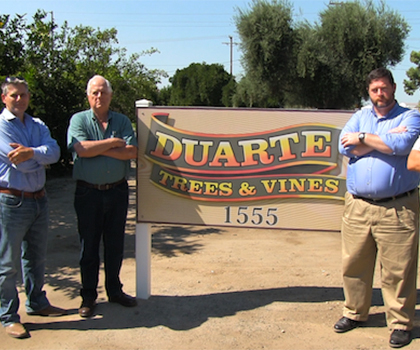
Startling California family farmer, John Duarte, president of Duarte Nursery, Inc., his attorneys, and others who have also kept a close watch on the case, Duarte was dealt a serious blow recently in the biggest fight of his life—the right to farm his own property. This legal outcome may portend a game changer for American agriculture as a whole.


Background

Duarte Nursery and the U.S. Army Corps of Engineers (Army Corps) have been engaged in a long legal dispute over private property rights since the family purchased a 450-acre agricultural property in Tehama County in 2012 and planted wheat that fall.

As reported in, “Duarte Farmland Under Siege,” (California Ag Today, March 11, 2016), John Duarte recalled, “The property is in some slightly rolling grasslands, and has some minor wetlands on it, vernal pools, vernal swales. Like most grasslands, wheat areas and wheat plantings, we had a local contractor go out and plow the field for us, 4-7 inches deep, and we flew on some wheat seed for a winter wheat crop in 2012.”

The U.S. Army Corp of Engineers accused the farm of “deep ripping” the property (three feet deep), “which we were not,” Duarte said. Legal action ensued with the Army Corps issuing a cease and desist notice in early 2013, according to Duarte, without evidence or basis for their accusation. Duarte Nursery attorneys, under the Freedom of Information Act, requested evidence of deep ripping, the assumption that apparently warranted a cease and desist notice.

Without responding, according to Duarte, the Army Corps sustained the cease-and-desist notice without a hearing and without evidence. “They obstructed our farming operations indefinitely,” Duarte said in March 2016.


Current Scenario

Duarte’s attorneys are now scrambling to prepare and file appeals to Eastern District Federal Court Judge Kimberly Muller’s June 10 ruling that by plowing his land to grow wheat, Duarte could pollute vernal pools on his land, violating the Clean Water Act.

Pacific Legal FoundationOn behalf of Duarte Nursery, Pacific Legal Foundation attorneys have moved for reconsideration or certification for immediate appeal on several Clean Water Act issues. “We expect a decision from the court any day on this motion, which will determine whether Duarte Nursery can immediately address the trial court’s legal errors in the appellate court, or will have to go through a trial first on whether the government is entitled to a penalty.” (Source: “Duarte Nursery seeks immediate appeals in Clean Water Act case,” Tony Francois, Pacific Legal Foundation, June 30, 2016)


Reaction to the Ruling

California Farm Bureau Federation and Pacific Legal Foundation attorneys had great confidence that Duarte would be vindicated in the action brought by the Army Corps several years ago. “They are just astounded,” Duarte said. “I thought we might have to go to trial on some of our issues, but I did not think we would lose our issues and have the judge rule against us on the other side,” he said.

Duarte clarified, “We are talking about farming activity that only occurred on rolling land—land with dismal vernal pools and flails.” Duarte noted there is no controversy as to whether this tillage was four to six inches deep. “Both sides agreed this is four to six inch deep tillage. Both sides agree that this property had farmed wheat before,” he said.


Legal Implications

“The Army Corps’ position is they don’t know how long is too long, but at some point if you haven’t farmed wheat, you lose your ability to continue farming wheat,” Duarte continued. “As it is a rangeland, you cannot plow your ground without a permit from the Army Corps, which they’re not going to grant because there are wetlands,” he said.

John Duarte, president of Duarte Nursery.

John Duarte, president of Duarte Nursery.

“All of the Food Security Act protections for farming—our ability to idle ground and then bring it back into production—to ensure available food production resources—are gone,” Duarte said. “This is a very extreme ruling. It’s extreme of the law in a lot of different ways. It’s a game changer for agriculture. We’re meeting with Paul Wenger, the president of the California Farm Bureau and seeing what they want to do. I think it’s on a lot of folks’ radar,” said Duarte.

“According to the Clean Water Rule definition of “Waters of the United States” (WOTUS), everything is a wetland and farmers are not exempt,” Duarte stated. “Any tillage that the Army Corps, by their own standards, does not deem to be an ongoing agricultural operation, farmers have liability. Their settlement discussions were in the $5 million to $6 million range, and we’re talking about shallow tillage through vernal pools that covered maybe fourteen or sixteen acres over this property. We can show that those vernal pools are completely intact,” noted Duarte.

Duarte noted that consultants have been at the land to inspect the vernal pool wetlands that concern the Army Corps of Engineers, and have confirmed that all the biology has been restored. “It’s all wetland plants across the vernal pools. They’re not topographically damaged,” said Duarte. “We didn’t re-contour them, we didn’t till them, we didn’t grade them, we didn’t deep rip them such that the restrictive layers of soil no longer perched water—none of that,” he emphasized.


A Game Changer for Ag

“Every property owner should be concerned,” Duarte warned. “Basically, what they’re saying is if wheat is profitable for a window of time because of whatever market or geopolitical reasons, you can farm wheat. If you stop farming wheat for a decade because it’s not profitable, or because you have a lease with a cattleman who’s paying you decent money, or you just don’t have the capital to plant wheat, or you just don’t want to plant wheat, then you will lose the right to farm it in the future. You cannot adjust your farming enterprises to the markets or to your business plans or you will lose your right to farm.”

Duarte believes that the ultimate goal of the Army Corps of Engineers is to be able to tell you what you can and can’t do with your land on any given day. “They want simple control over how you use your property and discretion over what property is put into permanent habitat and what property remains rangeland. They do not believe that private landowners have any inherent right to farm their property to meet market demands.”

As for the ruling, Duarte said he plans to appeal it. “This ruling is in many ways right in the face of several completions that have come down in court last week,” he said. “A lot of this ruling hinges on the opinion in Rapanos v. United States, where senior Associate Justice of the Supreme Court of the United States Anthony Kennedy said wetlands either have to be navigable waters of the United States or tributaries or related.

As summarized in, “The Practical Application of the Significant Nexus Test: The Final Waters of the US Rule,” (by Lowell M. Rothschild, National Law Review, June 8, 2015):

The significant nexus test requires a determination of whether the water in question – alone or in aggregation with other similarly situated waters in the region – significantly affects the chemical, physical or biological integrity of a traditionally navigable or interstate water or the territorial sea (with “significant” meaning “more than speculative or insubstantial.”). The “region” is the watershed that drains to the nearest traditionally navigable or interstate water or the territorial sea, and waters are “similarly situated” when they function alike and are sufficiently close to function together in affecting downstream waters.
supreme court building

“That was one judge, who had none of the other eight judges agreeing with him,” said Duarte. Nevertheless, Duarte said Justice Kennedy was not correct. “We had four judges that said navigable is navigable. If the Clean Water Act says it exempts, it defines what jurisdictional waters are navigable waters in the United States, and then it defines what jurisdictional waters are. If you look in the Clean Water Act, it says that plowing shall never result in a discharge into waters of the United States,”  said Duarte.

“The language in the exclusion of the Clean Water Act is very clear. What this case tells us is that no regulatory legislation can be created with language that is durable to give private parties any protection with the government,” Duarte explained. “There’s no language clear enough that over time will be undermined by agency rule making and judges that give American public any protection against the government.”

“I don’t know how we will solve problems legislatively in the future,” he remarked. “I don’t know that any responsible Congress can pass a law that restricts activity, no matter what the protections,” Duarte said, clearly frustrated. “The Clean Water Act’s protections are incredibly clear. It is not badly worded. The protections are in there. The protections are careful; they’re clearly articulated; they’re very strong, and they’re completely obliterated,” he said.

Duarte is disappointed and has a long way to go in the appeals process. “All I can say is: Warning to all farmers across the land—this is what can happen. We’re just not strong enough, nor is it right for us to carry this entire thing; my family has already spent $1.5 million defending this case, and it’s likely to go to $2 million. We are going to be looking for help.”

___________________

2016-07-23T17:16:17-07:00July 7th, 2016|

Brexit Affects U.S. Agricultural Trade

Joel Nelsen’s Commentary on Washington D.C. Meetings, Brexit and U.S. Agricultural Trade

By Lauren Dutra, Associate Editor

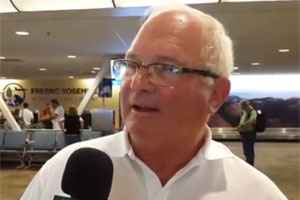
Joel Nelsen, president of California Citrus Mutual based in Exeter, Calif., spoke about his advocacy for growers and the impact Brexit has on U.S. agricultural trade as he arrived at the Fresno Yosemite International Airport from Washington, D.C. last week. Brexit is an abbreviation of “British exit,” which refers to the June 23, 2016 referendum by British voters to exit the European Union (EU), according to Investopedia.

Nelsen explained, “There were two missions I was on while I was in Washington. One had to do with a proposal to allow lemon imports from Argentina. We’re definitely opposed to it because of pests and diseases, and a lack of transparency in that country over the last one to two decades.”

“We have a comment period,” Nelsen continued, “but we have asked for an extension on that comment period because of the scope of the rule and the economic impact, and we haven’t heard a word on that,” he said. “We met with our colleagues and friends in Washington, D.C.  Senator Feinstein, Senator Boxer and a couple of House Office Committees have agreed to make a phone call to the Secretary of Agriculture and get a determination on that,” he said.

SaveOurCitrus

@SaveOurCitrus is a free USDA iPhone app to report and identify the four leading citrus diseases: citrus greening, citrus canker, citrus black spot and sweet orange scab. Report your symptoms to SaveOurCitrus.org and upload a photo, and citrus experts will respond.

The second purpose of Nelson’s trip was to discuss trade and the impact on the U.S. economy due to the recent Brexit, as Nelsen is chairman of the Fresh Fruit and Vegetable Agricultural Technical Advisory Committee (ATAC), a national trade committee that offers information and advice about agricultural products and trade issues to the USDA Secretary of Agriculture and the U.S. Trade Representative. “People from across the country came, and we talked about trade subjects, such as the Trans-Pacific Partnership (TPP) agreement and Britain’s separating itself from the EU,” said Nelsen. “It’s obvious that this upset everybody; Ambassador Michael Froman, United States Trade Representative (USTR) who advises the president on international trade and investment issues, said, “I know what I don’t know, and I don’t know a lot right now.”

Nelson explained, “We think [Brexit] will slow down the fresh fruit and vegetable sector, as well as the passage of the Transatlantic Trade and Investment Partnership (T-TIP). According to the USDA Foreign Agricultural Service, since the U.S. market share of agricultural products and food imported by the EU—the world’s largest importer in the category—is shrinking despite continued growth of the EU market, T-TIP negotiations offer a major opportunity to address unjustified tariff and non-tariff trade barriers to U.S. exports.

“Quite frankly,” Nelsen summarized, “we’re less than excited about [T-TIP] because it didn’t address the inherent problem that we have from competition: fresh fruit and vegetable producers in the EU get a direct subsidy and growers in the United States do not.”

___________________________

Some additional members of the ATAC for Trade in Fruits and Vegetables include:

  • Julie Adams, Almond Board of California
  • James R. Cranney, Jr., California Citrus Quality Council
  • Robert Guenther, United Fresh Produce Association
  • Richard Hudgins,
    California Canning Peach Association
  • Randy Hudson, National Pecan Growers Council
  • Marcy L. Martin, California Fresh Fruit Association
  • Matthew McInerney, Western Growers
  • Ken Melban, California Avocado Commission
  • Mike Montna, California Tomato Growers Association
  • Jim A. Zion,
    Meridian Growers, LLC
2021-05-12T11:03:00-07:00July 6th, 2016|
Go to Top