Appellations Beyond Napa . . .

Grower Andy Beckstoffer on Lake and Mendocino County Appellations

By Charmayne Hefly, Associate Editor

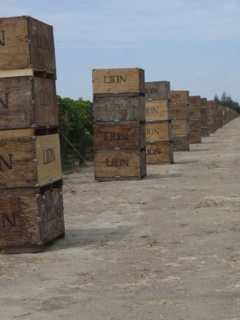
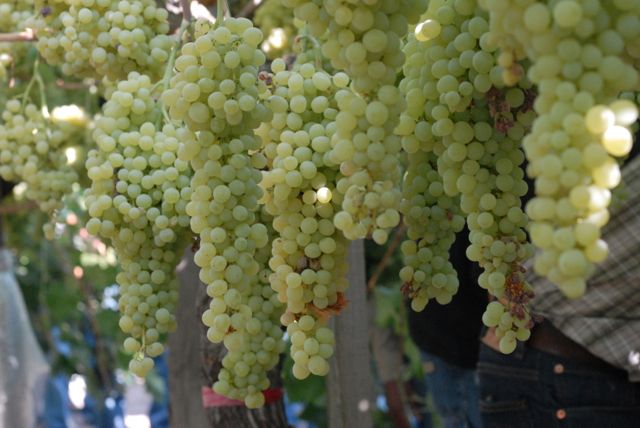
When people discuss California wine, they most commonly associate it as having been grown and produced in Napa. However, Napa isn’t the only northern county to grow grapes that become iconic California wines.Lake County Winegrape Commission

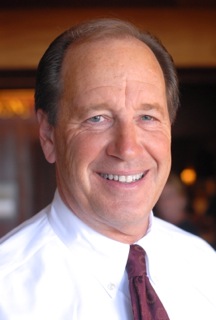
Andy Beckstoffer, owner of Rutherford-based Beckstoffer Vineyards, owns more than 3,000 acres of premium winegrapes. He began his own vineyard in the 1970s in Mendocino and Napa counties before expanding into Lake County as well.

Beckstoffer said that Lake and Mendocino counties were some of the most promising new wine districts in the new world of wine. He ought to know; the California Association of Winegrape Growers named Beckstoffer 2015 Grower of the Year last month.

“Mendocino County has consistently produced some of the best Chardonnay for years,” Beckstoffer said. “We started back in the 1970s, and they continue to do it in the Red Hills of Lake County. The appellation, Red Hills Lake County AVAis where we’re producing Cabernet at a reasonable price–North Coast Cabernet. It’s really the most promising new wine district in the new world of wine because it is encompassed by the vast North Coast AVA,” Beckstoffer said, “and the quality has been proven to be excellent.”

The North Coast AVA encompasses smaller appellations in six counties north of San Francisco: Lake, Marin, Mendocino, Napa, Sonoma, and Solano. Lake County AVAs


2016-05-31T19:28:07-07:00August 14th, 2015|

SCOTUS Raisin Reserve Decision

Grower Reflects on SCOTUS Raisin Reserve Decision

By Charmayne Hefley, Associate Editor

The Supreme Court of the United States (SCOTUS) recently decided that California raisins held in reserve during heavy crop years belong to the government (under the Fresno-based Raisin Administrative Committee (RAC), a federal marketing order), and the government should pay growers for these raisins. Directly overseen by the United States Department of Agriculture (USDA), the RAC, created in 1949, is led by 47 growers and a public member.

Monte Schutz, a Fresno County raisin grower, as well as chairman of the executive committee of the RAC, said the recent decision by SCOTUS doesn’t make any sense. “The biggest problem I had with the decision is when Justice Roberts stated very clearly that the government took ownership of the raisins, and that was just not true—growers maintained ownership throughout,” Schutz noted. “And the committee, which is made up of growers and handlers, had complete control over when they sold the raisins and for how much. So I think they were mistaken that the government took control; while the government oversees our federal marketing order, we as a committee had control.”

Explaining how he thinks the Supreme Court got it wrong, Schutz said, “Personally I think it may have been the USDA lawyers who just didn’t explain it. The system is a little complicated, and I wasn’t in the courtroom, but I’m afraid they did not explain it properly. How they could conclude the government owned the raisins–is just completely wrong.”

“For the last five years, we haven’t used the reserve program at all because we are in a better balance right now than we were 13 years ago. At that time, the reserve was a tool to take care of the excess supply. We haven’t had to use it for the last five years, and we don’t intend on using it any time in the future. Although I would still like to keep that tool available, unfortunately, the Supreme Court has taken it away from us,” Schutz said.

“Now when we need to put the raisins in reserve, we have to consider, I assume, that the grower has to be compensated for them. But I do not know how the government can tell you at what price; the market dictates the price. That was the problem back then; the market was in a tough situation due to the oversupply, so we had to take less for those reserve raisins,” Schutz said. “Those raisin growers were paid less, but raisin prices did not spiral downward and the industry was kept in balance.”

“Without the reserve program, the raisin price would have crashed, ending in a bigger disaster than what occurred.”

The Supreme Court reached its decision at the end of a long fight by raisin grower Marvin Horne, who held that he did not have to give his raisins to the reserve without fair compensation.

2016-05-31T19:28:07-07:00August 12th, 2015|

European Farmland Under Pressure

European Farmland under Pressure Due to Regulation and Diversion

By Laurie Greene, Editor

Jose Gomez Carrasco, executive sales manager for AGQ Labs and Technological Services based in Oxnard, is in charge of covering a large area that includes the U.S., Mexico and Central America. Noting global concern regarding how farmland is being used, particularly European farmland, Carrasco said, “There’s a growing population of around 150,000 or 170,000 new mouths every day to feed.” Carrasco said agricultural production on land designated for agricultural use in every country, worldwide, is being diverted to bio-ethanol, or bio-mass, or different renewable energy use, so the availability of agricultural products for food is diminishing.

Carrasco stated this progression needs to be moving in the opposite direction, “especially because there are other issues that are making production more challenging, such as water scarcity, soil erosion and the use and price of agro-chemicals, inputs and fertilizers, all of which are being controlled and monitored more and more.”

“The regulation of crop protection materials is intended to help everyone in the food supply chain,” he continued, “all the way from the grower to the consumer; however, sometimes these regulations can be quite burdensome.”

“In some cases regulations are not for the benefit of all,” Carrasco explained; “just for some. So in markets such as the European Union where the [maximum threshold] number of molecules registered has diminished from 1,000 to 300 or 400 in the last decade, we’re finding a lot of this regulation comes from Germany.” Carrasco said they are leaving a lot of farmers with no agro-chemicals in their arsenal, especially in Spain, Portugal, and Greece, all in southern Europe.

2016-05-31T19:28:07-07:00August 11th, 2015|

“My Job Depends on Ag” is Growing

Steve Malanca on the Future of “My Job Depends on Ag”

By Charmayne Hefley, Associate Editor

Three months ago, a grassroots effort to spread the word of agriculturalists began in the form of the movement, My Job Depends on Ag. The organization held its first meeting this week at Harris Ranch in Coalinga with 50 members in attendance to discuss the future of the group.

Steve Malanca, co-founder of the movement, said his hope for the organization is to educate the consumer, as well as to unite the ag community. Malanca also sells agriculture equipment for AGCO.

“We really feel that educating the non-ag community about who we are and where our food comes from is very important,” Malanca said.

“We want to unite the ag community so that we all are represented together,” Malanca continued. “We want to encompass everybody—the organic farmer, the commercial farmer, the trucking company, the logging industry. But everybody that’s involved in ag we want them to know that we all have a stake in this, and if we can all come together and be as one, I think that we’ll be able to hopefully give a message to the general public that we have a need for people knowing where their food comes from.”

Malanca hopes to host a My Job Depends on Ag Festival in the future. The group is considering Los Banos as a location for the potential festival due to its accessibility with an airport, several hotels and a nearby fairgrounds for the event.

“We’re considering a festival in order to bring everybody together,” Malanca said, “and we’re considering combining the Salinas Valley growers with the San Joaquin Valley growers in a town for example like Los Banos.”

“We want to, perhaps, have ag tours around the city of Los Banos,” Malanca suggested, “and have buses available for people who aren’t familiar with ag to take a ride and come see what kind of crops are grown and how they’re done.”

“An historical pavilion would be nice to show people the history of agriculture, and California—not just central California, but the entire state,” Malanca stated, “and we’d bring in some big time entertainment and food, of course. And we’d have a way for everybody to be proud of what they do and to show people where their food comes from.”

Malanca said he hoped the group’s decal could be an icon that symbolized the importance of agriculture.

“We’re grateful for the response we’ve had with our decals,” Malanca said. “We hope that little decal being shown on people’s vehicles and equipment will be a sign or a vision for people to see where they’re food comes from and know that we are a huge community and that we are good people. Ag is good, and ag is where you’re food comes from.”

2016-05-31T19:28:08-07:00August 7th, 2015|

Senate Water Bill Hopeful

Senate Water Bill Introduction is a Glimmer of Hope for Water Agencies

FRESNO, CA – Last week’s introduction of Senator Dianne Feinstein’s legislation, the California Emergency Drought Relief Act of 2015, is welcome news for the people of the State of California and the Central Valley enduring another devastatingly dry year. Once again, multiple Central Valley water agencies joined together to express their unified voice in support of an expeditious passage of this Senate water bill. This bill comes on the heels of the introduction and passage by the House of Representatives of H.R. 2898, the Western Water and American Food Security Act of 2015.

 “We are encouraged by Senator Feinstein’s actions with the introduction of this legislation. There is no time to lose as the damaging effects of the drought continue to wreak havoc on local communities, businesses, farms and farmworkers in the San Joaquin Valley and other regions of the State. Immediate solutions are needed, and the District looks forward to working with Members of both the House and Senate to find a reasonable solution that will benefit our great State.”

–Don Peracchi, Chairman of the Board, Westlands Water District


“The South Valley Water Association thanks Senator Feinstein for introducing the California Emergency Drought Relief Act of 2015 and encourages the balance of the Senate to make quick work in passing the bill immediately upon return from the August recess. This is a further important step to get legislation that will help those many farms and communities in California who are going without water. We look forward to the members of Congress resolving key differences between the California Emergency Drought Relief Act and H.R. 2898, the Western Water and American Food Security Act of 2015, and finding real water supply solutions. The members of the South Valley Water Association stand ready to assist in any way we can.”

–Dan Vink, Executive Director, South Valley Water Association


“The San Joaquin River Exchange Contractors Water Authority thanks Senator Feinstein for the introduction of the California Emergency Drought Relief Act of 2015. We realize this is another important step to passing a bill out of the Senate later this year that provides a meaningful legislative solution to the long-standing water supply shortages that is crippling the state. We are optimistic that members of Congress and the Senate can resolve the key differences in this bill, and the previously passed House Bill H.R. 2898, the Western Water and American Food Security Act of 2015. The Authority looks forward to working with our legislative leaders to pass legislation that benefits all of California.”

–Steve Chedester, Executive Director, San Joaquin River Exchange Contractors Water Authority


“There is no more important issue facing the Valley than the drought. It is a statewide crisis with the most direct and severe impacts in the Valley. The Kern County Water Agency appreciates Senator Feinstein’s and Senator Boxer’s efforts to help reduce the drought’s terrible impacts by introducing a bill in the Senate that can improve water supplies for farms and cities. We are anxious for the House and Senate to start working on a compromise between Congressman Valadao’s bill and the bill in the Senate, and we encourage the Senate to take swift action on the Feinstein/Boxer bill so that process can begin.”

–Ted R. Page, Board President, Kern County Water Agency


“No area of the State, and perhaps the nation, has suffered more disproportionately the harmful stress of chronic water supply shortages. The San Luis & Delta-Mendota Water Authority is appreciative of the effort of Senators Feinstein and Boxer on the recently introduced California Emergency Drought Relief Act of 2015 bill in the Senate. This bill is not only important to the San Joaquin Valley, but it is also vital for the entire state of California. We encourage the Senate to act swiftly, and encourage both the House and Senate legislators to begin work immediately on a meaningful compromise bill to ensure that long-awaited and much-needed relief is realized.”

–Dan Nelson, Executive Director, San Luis & Delta-Mendota Water Authority


 “Friant Water Authority welcomes the introduction of Senate Bill 1894, the California Emergency Drought Relief Act of 2015, and we thank Senator Feinstein and her staff for all their efforts in bringing this bill forward. The immediate task is to pass Senate legislation so that work can begin to craft a compromise with the House-passed legislation. Our farms and communities have suffered more under these water cutbacks than any other area in the nation. Our people are desperate for solutions that will provide real water for our area. This bill is a critically important step in the process of developing compromise legislation that can be signed into law by the President this year. As the bill advances, Friant looks forward to working with our representatives on both sides of the aisle to achieve drought legislation that will provide real relief for the 2016 water year and beyond.”

–Eric Borba, Chair, Friant Water Authority

2016-05-31T19:28:08-07:00August 6th, 2015|

Farmer Mac Admires California Farmers

Farmer Mac Knows the Strength of California Farmers

By Patrick Cavanaugh, Deputy Editor

Curt Covington, senior vice president, agricultural finance for the Federal Agricultural Mortgage Corporation or ‘Farmer Mac,’ knows a lot about the California farmer, and the Central San Joaquin Valley farmer in particular. Covington said, “This grower has experienced “an ‘us’ versus ‘them’ mentality for a number of years.”

“The voting block in this state resides in Los Angeles and the Bay Area. There has been, particularly over the past ten years, this view that the American farmer–the California Farmer particularly given the drought–has not been a good steward of resources. The facts have proved otherwise. And despite everything that has been thrown at us by the uninformed consumer in Los Angeles and San Francisco, Central California farmers continue to thrive, and will find their way out of this problem. I am convinced of that,” said Covington.

Covington also has a lot of respect for the farmers’ management strategies in all parts of their businesses and lives. “Farmers are price takers; they do not set the price for their commodities. This forces them to be good managers of their expenses, good managers of their balance sheet, good managers of their assets and good managers of their labor,” Covington said.

“And no where else in this country, in my opinion, do you have a group of farmers who have dealt with more problems and come out on top than the California farmer. It is not only an honor, but a pleasure to work with many of them. They are just an incredible group of people,” Covington said.

2016-05-31T19:28:08-07:00August 6th, 2015|

#AgLaw: Safe and Accurate Food Labeling – GMOs

2016-05-31T19:28:08-07:00August 5th, 2015|

#AgLaw: Rural Broadband Initiative Act

H.R.3152 – Rural Broadband Initiative Act

Status:
Introduced by Rep. Richard M. Nolan [D-MN-8], the Rural Broadband Initiative Act has been referred to the House Committee on Agriculture and to the Committee on Energy and Commerce for a period to be subsequently determined by the Speaker.rural-broadband-initiative-act

Description:

This bill aims to amend the Rural Electrification Act of 1936 which helped (a) bring electricity and telephone service to rural America and (b) remove major barriers to the development of our rural economies.

According to the Federal Communications Commission, 53 percent of rural Americans lack access to service delivering broadband speeds of 25 Mbps for downloads and 3 Mbps for uploads. The current lack of affordable broadband presents a similar barrier to the development of our rural economy, and high-speed broadband access helps rural communities compete and grow in our digital economy. H.R. 3152 aims to establish an Office of Rural Broadband Initiatives in the Department of Agriculture, and for other purposes, and to provide necessary funds for universal and affordable broadband access to the United States of America with a focus on underserved rural communities.


2016-05-31T19:28:08-07:00August 5th, 2015|

Alliance Against Food and Farmer Disparagement

The Alliance for Food and Farming Counters Food and Farmer Disparagement

By Patrick Cavanaugh, Laurie Greene and Courtney Steward, CaliforniaAgToday

Experts around the world agree that eating more fruits and vegetables is the best thing we can do to reduce disease, prevent obesity, and improve our health. But sometimes consumers need to know more about organic and conventional fruits and vegetables so they can make the right shopping choices for themselves and their families.

The Alliance for Food and Farming (AFF), based in Watsonville, is a non-profit organization comprised of both organic and conventional farmers that delivers credible information to consumers about the safety of organic and conventional fruits and vegetables.

According to Teresa Thorne, with AFF, “Many organizations such as Friends of the Earth (FOE), and the Environmental Working Group (EWG) are at odds with AFF for providing science-based and peer-reviewed information to consumers so they can make good shopping choices for their families.”

Friends of the Earth logo“Whether consumers purchase organic or conventional produce, both are safe,” Thorne said. “Health experts say simply that we should be eating more. Decades of nutrition science and health experts everywhere support the recommendation to eat more organic and conventional produce every day for better health. So, it is a little puzzling why FOE and some of the other activist groups would be concerned about that message. But, apparently they are.”

“So, what we are trying to do,” explained Thorne “is present accurate and more balanced information for consumers. Our Board of Directors, nearly 7 years ago, established that calling our healthy and safe produce “dirty” or “toxic” has to stop. We are not going to allow the disparagement of these nutritious products and the disparagement of the farmers who are working hard every single day to provide these healthy products to consumers, to stand.”

Thorne said, “So, AFF got in gear to stop it, largely by going toe-to-toe with the EWG’s so-called ‘Dirty Dozen’ list—one of the main vehicles of product disparagement. Not long ago, when the EWG published the list, nearly all newspapers, television networks and cable channels gave it widespread media coverage in major media markets and publications.”

AFF has achieved some success by introducing peer-reviewed science from experts into consumer media, with the credible message that both organic and conventional produce are safe, healthful, and people should eat more of them every day. “Just in the course of the last six years of the campaign,” said Thorne, “we’ve seen coverage of the EWR list diminish to the extent that in 2015, only one daily newspaper in Ohio covered the story. So their message is mostly limited to blogs for those who are very friendly to their message.”

ewg logo


Aside from the “Dirty Dozen” list, the EWG website does support the same scientific research as the Alliance:

Should we eat more fruits and vegetables?

…The health benefits of a diet rich in fruits and vegetables outweigh the risks of pesticide exposure. Eating conventionally grown produce is far better than skipping fruits and vegetables. And with EWG’s Shopper’s Guide™, consumers don’t have to choose between pesticides and healthy diets.

Do all these pesticides mean I shouldn’t eat fruits and vegetables?

No, eat your fruits and vegetables! The health benefits of a diet rich in fruits and vegetables outweigh the risks of pesticide exposure. Use EWG’s Shopper’s Guide™ to reduce your exposures as much as possible, but eating conventionally grown produce is better than not eating fruits and vegetables at all.

Shouldn’t I try to buy everything organic?

EWG recommends buying organic whenever possible.

…However, we know that organics are not accessible or affordable for everyone, so we created the Shopper’s Guide™ to help consumers make the healthiest choices given their circumstances.

…EWG always recommends eating fruits and vegetables, even conventionally grown, over processed foods and other less healthy alternatives.

SafeFruitsandVeggies logo

AFF claims on its website:

We have an obesity epidemic and current media and internet reporting is increasing fears consumers have about eating fruits and vegetables and is lowering the faith people have in the government regulations implemented to protect them.  It is inaccurate to suggest that organic is the only safe choice when it comes to selecting safe fruits and vegetables; because there is no scientific consensus to substantiate this claim.

-See more at the Alliance’s website, SafeFruitsandVeggies.com.

Thorne believes the Alliance’s success has lead to another activist group, Friends of the Earth (FOE), taking them on. Thorne said FOE is trying to discredit the Alliance by calling it a “front group”.

In its “Spinning Food” report, published in June 2015, the FOE reports:CFBF logo

While the Alliance presents itself as a science-based resource on the safety of organic and conventional produce, its funding comes from trade groups for industrially grown apples, citrus, pears and grapes, among other industry groups.

The “leading corporate Board Members or Donors” of the Alliance are listed as:

-California Farm Bureau Federation

-Western Growers

-Produce Marketing Association

Western Growers logo


Wikipedia defines a front organization as “any entity set up by and controlled by another organization, such as intelligence agencies, organized crime groups, banned organizations, religious or political groups, advocacy groups, or corporations. Front organizations can act for the parent group without the actions being attributed to the parent group.”

Thorne stated, “We’re not a front group. We are who we are—very transparent. The entire tax return is posted on the “About Us” section of the AFF website, as well as:

Who is Behind the Alliance for Food and Farming?   andPMA Logo    How is the Alliance for Food and Farming funded?

“But they never attack the scientific content we present,” stated Thorne, “and that really underscores our science is good and solid. They only try to discredit the organization itself with those unfounded ‘front group’ allegations.”

2016-05-31T19:28:08-07:00July 31st, 2015|

New APG Ambassadors Shine!

American Pistachio Growers Introduces New Ambassadors 

By Patrick Cavanaugh, Deputy Editor, California Ag Today

American Pistachio Growers (APG) held its annual summer luncheon late last week in Visalia, shared the organization’s marketing plans with a large crowd of growers, and introduced the newest APG ambassadors.

Richard Matoian, executive director of APG, framed the meeting, “We’re voting on our budget for the upcoming year, so it is a good opportunity to tell our growers what we are doing on their behalf to promote and to help sell pistachios.”

From Left, Sanya Jones, Cheryl Forberg and Judy Hirigoyen, APG

From Left, Sanya Jones, Cheryl Forberg and Judy Hirigoyen, APG

Bree Morse, recently crowned Miss California and now serving as an ambassador for American Pistachio Growers, effused, “We have so many once-in-a-lifetime opportunities being here today at the annual luncheon. It’s neat today because I get to meet and interact with the people in the industry, APG staff and the growers themselves, who are behind what I’m representing. We have amazing opportunities; I get to go to China in December to be Ambassador of American Pistachios abroad, and I’m just really excited to be the face of pistachios.”

Another great APG Ambassador introduced at the lunch was Sanya Jones, the recent Season 16 Biggest Loser television show runner-up, who lost 144 pounds. And guess what? Jones considers pistachios an important part of her success, “Well the funny thing is, I always loved pistachios. I would always get them for my dad as a kid and we would sit in front of the tv and eat them mindlessly.” Anecdotally, Jones shared that pistachios was the one food that her dad would put his teeth in to eat!

“But once I got to the ranch,” Jones continued, “Cheryl Forberg, chef and nutritionist for the tv show, got them on the menu for us. Pistachios are nice when you are a food-addict or a bulk-eater because they make you slow down. I can’t just inhale them; I have to slow down and crack them open. Plus, they are so nutritionally wonderful and keep me fuller longer.”

Who can argue with success?

Featured Photo: Bree Morse, Miss California

2016-05-31T19:28:09-07:00July 30th, 2015|
Go to Top