1st in a Series on Mental Health on the Farm

Part 1 Mental Health on the Farm

Listening for Negative Thoughts

Resources are provided at the end of this post.

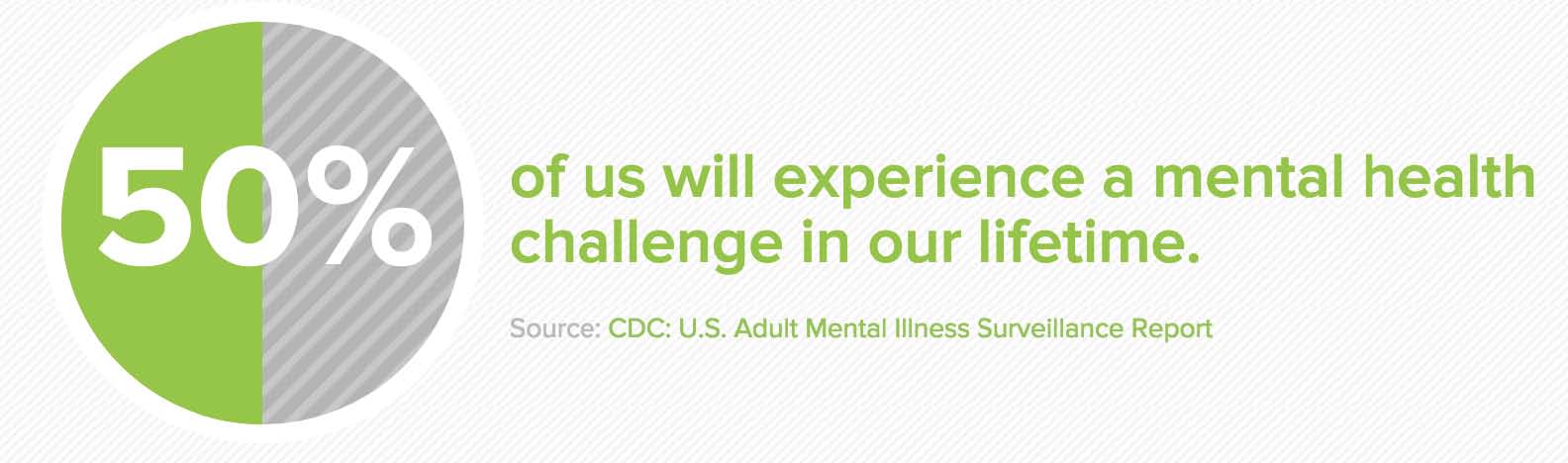
California Ag Today Editor Laurie Greene extensively interviewed Karen MarklandDivision Manager for the Fresno County Department of Behavioral Health’s Planning, Prevention and Supportive Services about the mental health needs of those in the agricultural industry who may be emotionally suffering due to the severe drought and environmental water restrictions impacting their livelihoods.

Editor: I have observed that depressed people may say something that implies they are having suicidal ideation, but it is just so easy in our society to tell them, “Oh you’ll snap out of it.” In other words, we tend to dismiss these statements. What do you want to say to listeners on how to respond to someone who says something hopeless? What opportunity does this present to the person who hears someone utter something desperate?

Markland: It is so easy, I say it to myself sometimes, “I want to die; I don’t want to go on.” Those are really important messages, though, for people to pick up on. I really feel it is always important to respond genuinely and supportively. Our statewide California Stigma & Discrimination Reduction Program suggests we go back and say something like, “Each mind matters, and you matter.”

Each Mind MattersThis is an opportunity to have that dialogue; yet often, people will look at me like, “What?” But we all have those moments and we all feel that way at times. Tell people there are resources and support systems. Become familiar with them—whether they are family, clergy, a neighbor, a teacher, County services, a hotline. Likewise, let someone else know when you are not having the best of days.

Editor: It seems as if the general population believes that these issues are not medical issues, that they are within someone’s control, and that perhaps someone is weak or has a bad attitude and they need to change their thinking. What would you like to say to people who don’t recognize that mental illness is a medical illness?

Markland: So, there is a lot of dialogue about ‘What is mental illness?’ versus ‘What is mental health?’ ‘What is mental wellness?’ Clearly, mental illness is a diagnosable medical condition. There are categories in which an individual may have a serious mental illness and these include diagnoses like schizophrenia, bipolar disorder.

These are serious, long-term illnesses, but there is a whole other spectrum of mental illness such as postpartum depression, anxiety disorders, and depressive disorders, which show signs and symptoms that people are functioning outside of their wellness. These are also medical conditions—medical conditions that can be treated in a variety of ways.

Editor: Of course medication is one option. Are there other options?

Markland: Sometimes it is medication; sometimes it is holistic healing; sometimes it is having a positive self-attitude and making sure you get the sleep and the nutritious diet, exercise and more that you need. So it is truly a diagnosable medical condition that can be treated in a multitude of ways, and what we are seeing right now in mental health is a strong recovery movement. People live, grow and recover from mental illness.

Mental HealthThe Fresno Department of Behavioral Health is dedicated to supporting the wellness of individuals, families, and communities in Fresno County who are affected by, or at risk of, mental illness and/or substance use disorders through cultivation of strengths toward promoting recovery in the least restrictive environment.County of Fresno Logo

The Fresno Department of Behavioral Health provides mental health and substance abuse services to adults within the County of Fresno. The programs within our department focus on delivering the highest quality of service. There are over 300 professionals and staff dedicated to providing services in both metropolitan and rural areas. The diversity of our staff has helped us create a department that is sensitive to cultural differences and attempts to bridge the language barriers with our consumers. 


2016-05-31T19:27:10-07:00September 22nd, 2015|

Heat Streak and Leafy Greens

Frank Ratto on Heat Streak and Leafy Greens

By Charmayne Hefley, Associate Editor


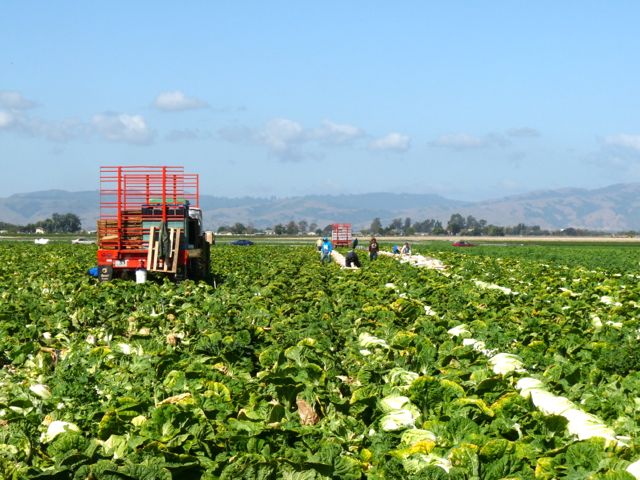
With a high spike in temperatures in the Central Valley, growers of leafy green vegetables are concerned about the quality of their products. Frank Ratto, vice president of marketing for Ratto Bros., a diversified century-old vegetable operation based in Stanislaus County, said that although the heat streak can cause internal burns in leafy green vegetables, he is confident that, with proper management, their leafy greens will be all right.

“The summer leafy green vegetable supply is always pretty good,” Ratto said, “so prices are very stable going into the fall. But, two or three days of a heat wave like the one we’re having right now can cause tremendous damage and escalate the price of our products. That may happen and we could be a victim or we could be a beneficiary.”

Given the heat wave, Ratto said Napa cabbage growers, in particular, are facing some difficulties. “Napa cabbage does not like heat,” he said, “because it will suffer from a lot of internal burns. Many coastal growers are having issues with it, so demand is tight and supplies are very low.”Ratto Bros Logo

Regarding vegetable prices, Ratto said that the price of cilantro was as high as $50 per box for the last three weeks, “but now it’s coming down to the $25 zone. Mexico had some supply issues, but it looks like they’re catching up, and supplies are improving, and the price is going down.”

Other leafy greens such as leaf lettuces, according to Ratto, are in good supply and quality right now.

Ratto said Ratto Bros. has expanded their organic products to include red and La Cinato kale; red, green, and rainbow Swiss chard; leaks; and collard and mustard greens,” among others.

“We’re trying to expand our organic offerings as more people look for organics in the store,” Ratto continued. “As growers, we know that both conventional and organics are healthy and nutritious—and we don’t really see a difference—but we give the consumer what they want. As long as everybody gets healthy, nutritious food, that’s all we care about.”

2016-05-31T19:27:10-07:00September 21st, 2015|

Exclusive Interview with ALRB Chairman Bill Gould

ALRB Chairman Bill Gould Defends ALRB’s Actions

By Patrick Cavanaugh, Deputy Editor

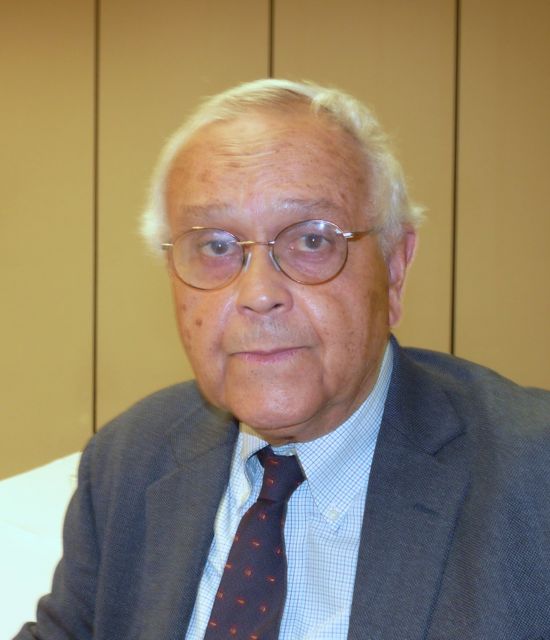
California Ag Today exclusively interviewed William B. Gould IV, member and chairman of the California Agricultural Labor Relations Board (ALRB), and previously chairman of the National Labor Relations Board. ALRB Chairman Bill Gould described his extensive experience in labor law, “I have been practicing in labor law both on the union and employer side. I’ve arbitrated labor disputes for 50 years as an impartial arbitrator, and I’ve been in academics, teaching law, and of course in government service as well.”

Chairman Gould defined the Board’s role, “The ALRB is a quasi-judicial neutral agency that was established to interpret and administer the Agricultural Labor Relations Act of 1975. It deals with the cases in front of it the best it can and tries to promote rulemaking to implement the objectives of the statute.

When pressed to address a widely held belief that the ALRB is biased in favor of the United Farm Workers (UFW), particularly against Gerawan Family Farms, a Fresno County tree fruit operation which for several years has witnessed a majority of its farmworkers attempt to fight mandatory-mediation-imposed UFW representation and fees, Chairman Gould replied, “The ALRB is a government agency that is concerned with enforcing and administering labor laws. I think when you get in the business of interpreting law and finding facts, sometimes people don’t always agree, and that has happened in a number of cases. A lot of people don’t understand that the statute is written fundamentally to protect the rights of workers to engage in freedom of association and in concert under conditions they consider unfair. The Act also protects employees from retaliation for these freedoms. We are an impartial agency that attempts to take into account the interests of all parties; but fundamentally, we have to find all the facts before us and make decisions and determinations.”

ALRBWhen asked if, in general, farmers were taking care of their workers, Gould answered, “I’m not in a position to say whether farmers are taking care of their farmworkers. That’s really a broader mission than the one that the legislation has given to us. We are concerned with whether, in particular cases, violations of the statute have occurred, and in remedying those violations.”

“And while farmers would agree that farmworkers should have the right to speak up when something is wrong without any retaliation,” Gould elaborated, “bosses are not forced to correct any wrong or to change things. And the boss is not obliged under our statute to do anything about wages, health or safety concerns. We are concerned with giving workers the ability to speak up and engage in concerted activity with protection against employer retaliation.”

On September 17, ALRB administrative judge Mark Soble ruled to prohibit Gerawan employees from learning the outcome of ballots cast in 2013 to decertify the UFW union, angering the agricultural industry and the Gerawan farmworkers, in particular. Gould said, “I can’t make any comments about that matter at all.”

Recently the ALRB hosted three hearings in the state to learn how to better educate farmworkers about their labor rights and to establish legal access to communicate directly with them during work hours at their work sites. Prompted to explain this ALRB request to access private farm property, during production hours, Gould replied, “The problem is the difficulty in reaching those with lack of legal status and who live in the shadow of the law and are afraid to protest. As the most recent witness testified, this population is sometimes cut off by language barriers and might not know the content of the law.”

“Putting aside language and documented status,” Gould continued, “many workers don’t know some very basic aspects of the National Labor Relations Act because of the inability of the Board under the Act to communicate with those workers. So what we are looking at is our ability to communicate the content of the law and the procedures we employ more effectively than in the past.”

When asked about other forms of outreach, such as hanging educational posters in different languages that workers understand, Gould said, “These indigenous languages are something that only academics read. I don’t think that many of the farmers are academics.”

Chairman Gould explained the ALRB could reach workers who speak these ancient languages by “having lawyers on private property describe the content of our statutes and our procedures and perhaps show videos that would explain the rules in their own language.”

ALRB Bio

Appointed in March 2014 as a member and chairman of the Agricultural Labor Relations Board, William B. Gould IV has been Charles A. Beardsley professor of law, emeritus at Stanford Law School since 2002, where he has held multiple positions since 1972, including professor of law. He was chairman of the National Labor Relations Board from 1994 to 1998. Mr. Gould was a visiting professor of law at Harvard Law School from 1971 to 1972, professor of law at Wayne State University Law School from 1968 to 1972, and a lawyer at Battle Fowler Stokes and Kheel from 1965 to 1968. He was an attorney-advisor for the National Labor Relations Board from 1963 to 1965 and assistant general counsel for the United Automobile Workers from 1961 to 1962. Mr. Gould is a member of the National Academy of Arbitrators. He earned a Bachelor of Laws degree from Cornell Law School.

Mr. Gould’s term expires January 1, 2017 (Pursuant to Labor Code § 1141(b).)

2016-05-31T19:27:10-07:00September 21st, 2015|

CALIFORNIA WINE is a Brand

Amy Hoopes on How California Wine is a Brand

By Laurie Greene, Editor

The creation of Californian wines led to the realization of a new flavor profile; California Wine is a brand.

Amy Hoopes, chief marketing officer and executive vice president of global sales for Wente Family Estates in Livermore, Calif., said when Californian winemakers developed a new flavor style for wines, they hit home with the youthful American consumer palate. “I think the taste profile for California wines for a long time has been a product that offered more,” Hoopes said.

“It was more fruit forward,” Hoopes explained. “It was bigger. It was bolder. It appealed to the young American palate which had previously had access only to high-end European wines and a confusing French classification, which at that point caused a lot of anxiety,” she noted.

Hoopes said the California brand was able to build upon a flavor profile that matched the grapes grown in the state, “to make styles of wines that just clicked. Consumers say, ‘Wow I feel confident now. This is comfortable. I know what it is; I understand where this is going.’”

“I believe having that kind of focus again is the renewal we’re looking for in the California brand—to reconnect with what more means and to make sure that we’re consistently delivering that taste experience to increase the value behind the brand.”

Founded 130 years ago, Wente Vineyards is the country’s oldest, continuously operated family-owned winery.

2016-05-31T19:27:10-07:00September 19th, 2015|

Fighting ACP in California

Fighting ACP In California to Stay Well Ahead of HLB

By Patrick Cavanaugh, Deputy Editor

With more than 275,000 acres of citrus trees in California, keeping the Asian Citrus Psyllid (ACP) out of groves is a serious concern. Bob Blakely, vice president of California Citrus Mutual, based in Exeter, talked to California Ag Today about how growers are fighting ACP in California.

“We’ve been very proactive, ever since the first psyllid was found here back in 2008. We already had an action plan in place when that psyllid was found. We have engaged with and educated the public and the media, and we have very good cooperation with the state’s citizens,” Blakely said.

Tamarixia radiata (female)

Tamarixia radiata (female); Mark Lewis, UC Riverside Center for Invasive Species Research

Blakely noted the industry is using a variety of methods, “We are usually able to go in and treat urban areas in Southern California, where ACP is now endemic, with crop protection materials. If we determine we cannot control it with pesticides, we implement a new biological program by releasing the parasitoid Tamarixia (a tiny non-native wasp) in residential areas. The new wasp is becoming well-established, and we are hoping the species will help manage ACP populations.”

“We hope to prevent ACP from creating the type of damage seen in Florida, where the citrus industry has been reduced by 50%,” said Blakely. “We are way ahead of the game here in California. We have managed to slow ACP spread in commercial areas in order stay ahead of the spread of the HLB disease the bug carries. We hope a reasonable cure can be found so we can prevent the kind of devastation we are witnessing in some other states.”

2016-05-31T19:27:10-07:00September 18th, 2015|

ACP Devastates Florida Citrus

ACP Devastates Florida Citrus Industry; California Continues Vigilance

By Patrick Cavanaugh, Deputy Editor


California Citrus growers must not underestimate the potential damage from Asian Citrus Psyllid (ACP), according to Bob Blakely, vice president, California Citrus Mutual, based in Exeter.

Given multiple ACP detections in California this year, Blakely used Florida’s ACP catastrophe as an example of how devastating the pests can be. “We are challenged here in California with ACP,” Blakely began, “which vectors the fatal disease known Honglongbing, (HLB), also known as citrus greening. But, it is nothing like what they are dealing with in Florida, since HLB [the disease itself] was discovered there less than ten years ago. “Florida’s citrus acreage, which measured just under 1 million acres prior to the calamities they’ve been facing,” said Blakely, “has been reduced by almost 50%.”

Bob Blakely, VP, California Citrus Mutual

Bob Blakely, VP, California Citrus Mutual

While occurrences of Citrus Canker Disease as well as urbanization also contributed to the reduction in acreage, Blakely stated, “the big killer, citrus greening, is mostly responsible for the reduction of citrus acreage to the lowest level in decades.”

Because Florida has become so infested with ACP and HLB, reestablishing the industry there will take some time. “They are replanting and trying to replant healthy trees,” Blakely explained, “but they know those trees are short-lived compared to trees in California. We have hundred year-old groves. Florida farmers are just hoping to raise those trees and get a few years of production out of them before HLB re-infects them and they must be replaced again,” said Blakely.

2016-05-31T19:27:10-07:00September 16th, 2015|

Farmers Willing to Adapt

Farmers Willing to Adapt Farming Practices for Regulators

By Laurie Greene, Editor


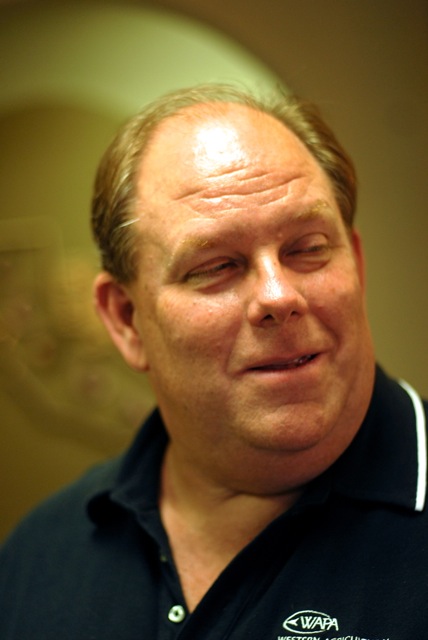
With increased scrutiny of the agriculture industry’s use of resources, growers must be proactive about their farming practices, and according to Roger Isom, president and ceo of Western Agricultural Processors Association, farmers are willing to adapt.

Isom noted how receptive growers are to improving their farming techniques. “One of the best examples I have for conservation management practices addresses air quality. Air quality regulators say we’ve got to put water on the back of tillage disks to suppress dust and to schedule no-farming days,” he said. “Wait a minute,” he added, “let’s get in a room and talk about what you want to do! You want to lower emissions? Well, farmers can combine practices and thereby lower emissions and save fuel and labor. And, we’ll do it!”

Isom said farmers appreciate incentive programs. “If I can get some money to help pay for it,” said Isom, “I’ll do it much sooner. There is nobody out there who doesn’t want a new tractor or truck to meet the mandated specifications; but if you provide some help, they will do it much sooner.”

“Growers and consumers each want the same things—a healthy environment and good produce,” he said. “You just have to sit down together and find solutions. The last thing we want is a food recall. Again, if we sit down in a room with scientists and the U.S. Food and Drug Administration, and develop agricultural guidance specific to each crop, farmers will be more amenable to adapt recommendations into practice,” Isom said.

2016-05-31T19:27:10-07:00September 16th, 2015|

Citrus Growers Determined to Succeed

Frustrated Citrus Growers Are Determined to Succeed

By Patrick Cavanaugh, Deputy Editor

While farmers have been dealing with some tough times, Bob Blakely, vice president of California Citrus Mutual is optimistic about future generations of citrus growers, “Perceptions and attitudes are really all over the board; we’ve got growers who are really frustrated and ready to throw it in. But most growers are staying in, thinking they can still makeSaveOurCitrus it in the citrus industry.”

“California growers are known for their tenacity in the face of challenges,” Blakely commented.  “It’s exciting to see young farmers come on, even though they continue to fight the regulatory battles and higher farming costs. But these young guys have the same determination the prior generation had when they started. So, I am optimistic about the future of the citrus industry in California.”

One of the major threats to citrus is the Asian Citrus Psyllid (ACP) and its potential to spread the disease Huanglongbing (HLB), as it has in Florida and Texas. “We are very concerned about the recent HLB finds. Here again, they have been discovered in residential areas, which is no iPhone Save Our Citrus Appsurprise to us. That is typically where diseases first show up. At the present time, the ACP are contained. We are starting to delimit that area, and residents are very cooperative in allowing those trees to be removed.”

Download the Save Our Citrus App

There is now an iPhone app to help California residents identify signs of the Asian citrus psyllid and HLB, and easily report findings to agriculture officials. Download the free app in the iTunes store.

2016-05-31T19:28:04-07:00September 11th, 2015|

Chew on This Tour

Kyle Olguin and Sarah Weber on Chew On This Tour


By Charmayne Hefley, Associate Editor

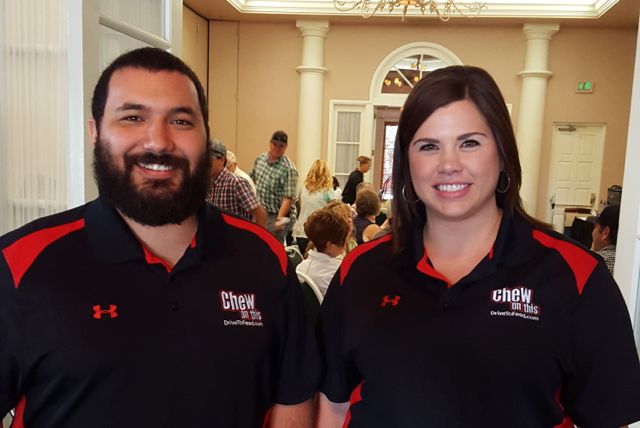
To counter the abounding misconceptions surrounding agriculture, companies are fighting back through education. Kyle Olguin, assistant operations manager for Nutra Blend LLC, a company that specializes in manufacturing nutrients for the feed industry, said that Nutra Blend began a program called “Chew On This Tour” to educate consumers about common farming misconceptions.

For the tour, Olguin said, “we drive trucks around the country, trucks turned into movie theatres, and educate people on where their food comes from, the misconceptions about farming, what we [farmers] do in America, and how we have one of the safest food supplies in the world.”

Olguin said that the perception of agriculture among the masses is that Ag is unnecessary because of the existence of grocery stores.

“We are constantly being attacked by non-ag promoting groups that agriculture is bad,” Olguin said, “and now the perception is out there that agriculture doesn’t really provide anything good or that agriculture doesn’t really need to exist. We have grocery stores, and the general public does not understand the link between agriculture and farmers and those grocery stores.”

“So we decided to start a campaign, and we kicked it off in Oregon driving this truck around the U.S. and showing people one simple video.” Olguin said, “We ask people questions, like: How many eggs does a chicken lay? How many pounds of bacon do you get from one cow?”

Sarah Weber, a sales representative for Nutra Blend, said the next step for the program was to raise money for backpack programs linked with food banks.

“The second movement is ‘Drive to Feed Kids’,” Weber said, “a nonprofit program with our suppliers and vendors to work with our customers, in their own communities, to raise money for student backpack programs that are linked in with the food banks.”

Weber said, “Our third stage in this movement is the ‘Ivy League Farmer’,” Weber said, “which is a movie that has been produced and will air on network TV pending this fall. It is a reflection on a dairy farm and the positive influence the farm has on the community. It is a way for us to reach out to the public with an emotionally positive connection to educate them.”


2016-05-31T19:28:06-07:00August 24th, 2015|

2015 Drought Costs Ag Nearly Two Billion!

DROUGHT COSTS CALIFORNIA AGRICULTURE $1.84B AND 10,100 JOBS IN 2015

The drought is tightening its grip on California agriculture, squeezing about 30 percent more workers and cropland out of production than in 2014, according to the latest drought impact report by the UC Davis Center for Watershed Sciences.

In 2015, the drought costs to the state’s agricultural economy will reach about $1.84 billion and 10,100 seasonal jobs, the report estimated, with the Central Valley hardest hit.

The analysis also forecasts how the industry will fare if the drought persists through 2017.

‘NOT A FREE LUNCH’

Currently, the industry overall remains robust. The agricultural economy continues to grow in this fourth year of severe drought, thanks mostly to the state’s vast but declining reserves of groundwater, which will offset about 70 percent of the surface water shortage this year, the researchers said.

California is the world’s richest food-producing region. Continued strong global demand and prices for many of its fruits, nuts and vegetables has helped sustain the farm economy along with intrastate water transfers and shifts in growing locations.

“We’re getting by remarkably well this year — much better than many had predicted — but it’s not a free lunch,” said lead author Richard Howitt, a UC Davis professor emeritus of agricultural and resource economics.

The heavy reliance on groundwater comes at ever-increasing energy costs as farmers pump deeper and drill more wells. Some of the heavy pumping is in basins already in severe overdraft — where groundwater use greatly exceeds replenishment of aquifers — inviting further land subsidence, water quality problems and diminishing reserves needed for future droughts.

Further, several small rural communities continue to suffer from high unemployment and drying up of domestic wells because of the drought, particularly in the Tulare Basin.

“If a drought of this intensity persists beyond 2015, California’s agricultural production and employment will continue to erode,” said co-author Josue Medellin-Azuara, a water economist with the UC Davis Center for Watershed Sciences.

MAJOR CONCLUSIONS

The UC Davis team used computer models and the latest estimates of surface water availability from state and federal water projects and local water districts. They forecast several drought-related impacts in the state’s major agricultural regions for the current growing season, including:

  • The direct costs of drought to agriculture will be $1.84 billion for 2015. The total impact to all economic sectors is an estimated $2.74 billion, compared with $2.2 billion in 2014. The state’s farmers and ranchers currently receive more than $46 billion annually in gross revenues, a small fraction of California’s $1.9 trillion-a-year economy.
  • The loss of about 10,100 seasonal jobs directly related to farm production, compared with the researchers’ 2014 drought estimate of 7,500 jobs. When considering the spillover effects of the farm losses on all other economic sectors, the employment impact of the 2015 drought more than doubles to 21,000 lost jobs.
  • Surface water shortages will reach nearly 8.7 million acre-feet, which will be offset mostly by increased groundwater pumping of 6 million acre-feet.
  • Net water shortages of 2.7 million acre-feet will cause roughly 542,000 acres to be idled — 114,000 more acres than the researchers’ 2014 drought estimate. Most idled land is in the Tulare Basin.

The effects of continued drought through 2017 (assuming continued 2014 water supplies) will likely be 6 percent worse than in 2015, with the net water shortage increasing to 2.9 million acre-feet a year. Gradual decline in groundwater pumping capacity and water elevations will add to the incremental costs of a prolonged drought.

GROUNDWATER LAWS COULD HELP

The scientists noted that new state groundwater laws requiring local agencies to attain sustainable yields could eventually reverse the depletion of underground reserves.

“The transition will cause some increased fallowing of cropland or longer crop rotations but will help preserve California’s ability to support more profitable permanent and vegetable crops during drought,” said co-author Jay Lund, director of the UC Davis Center for Watershed Sciences.

The report was primarily funded by the California Department of Food and Agriculture.

Other authors on the report include Daniel Sumner, a UC Davis professor of agricultural and resource economics and director of the UC Agricultural Issues Center, and Duncan MacEwan of the ERA Economics consulting firm in Davis.

2016-05-31T19:28:07-07:00August 18th, 2015|
Go to Top