Young Dairy Owner Plans to Thrive in Future

Nevin Lemos Prefers Jersey Cows

By Patrick Cavanaugh, Editor

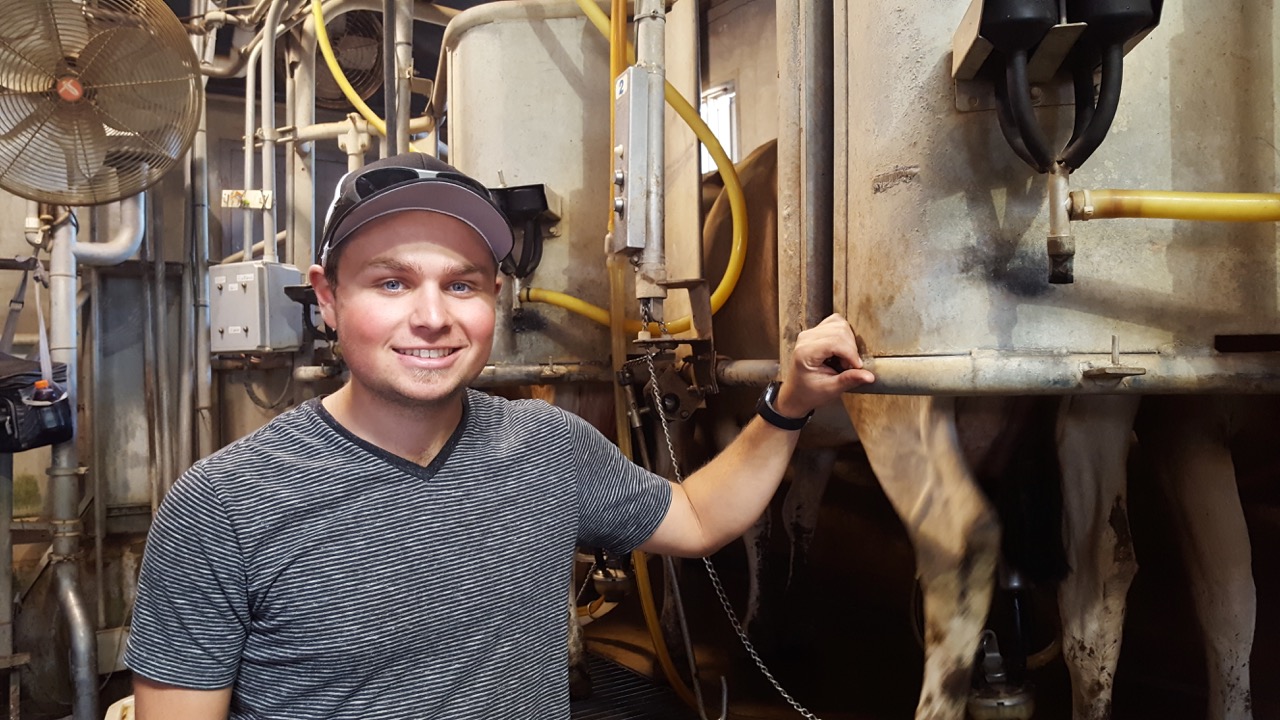
Nevin Lemos could be the youngest person to own a dairy in California. The 21–year-old owns Lemos Jerseys in Stanislaus County.

Lemos is a fourth-generation dairyman east of Modesto in the community of Lockwood. He grew up on his family’s dairy, and now he’s on his own. His family’s dairy is Lockwood III dairy, which is about five miles from his dairy.

“I’m 21 years old, and I decided to start my own. I wanted to expand the business, and get a little bigger so we can all stay in business, be competitive,” Lemos said.

“We have a plan someday to consolidate the two, and this was our way to grow.”

“It’s my baby here, my business, my passion here,” Lemos explained.

He thinks that it’s a good time to get into the dairy business.

“I’ve had some dairyman that I look up to, and they gave me some advice that even though the milk price is down, this is the best time to get started,” he said.

“That’s if you can … weather through some of the bad times because it’s a long-term investment. This is not a business that you get into for a short while, so if you can buy the cattle at a reasonable price and keep that input down, you’re in pretty good shape,” Lemos said.

His operation is 400 Jersey cow dairy with a double six-herringbone parlor.

“You know, my parents have the Holsteins. I’ve grown up around the Holsteins all my life. I showed Holsteins in 4-H growing up and love the Holstein breed but decided to go with the jerseys for a few reasons. One is they’re high in fat and protein components. I ship to Hilmar Cheese, so there’s good incentive there to get a premium off the fat and protein. Also with the reproduction, the Jerseys breed back so well.”

Lemos said he gets a 30% pregnancy rate.

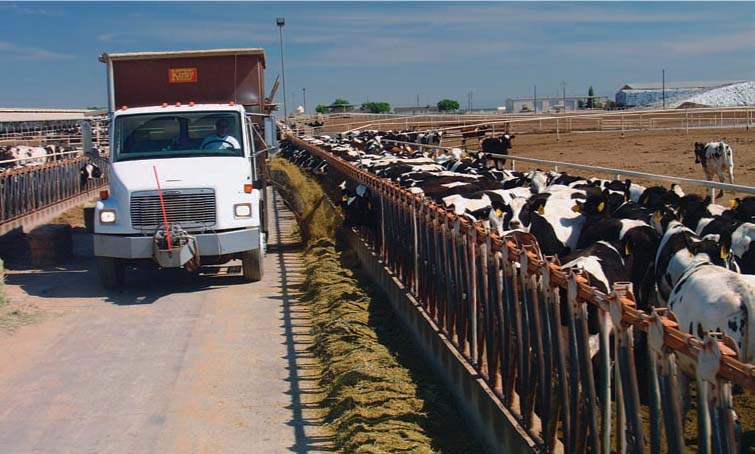
A lot of the dairy cow feed is grown around the dairy operation.

“My landlord farms the 50 acres with the dairy. And I purchase the feed from them,” Lemos said. “Of course, that’s one of the significant inputs into the dairy. Feed is a bit of a high right now with exports. I put all my corn silage in Ag-Bags … to minimize my shrink, and that’s been going pretty well.

Lemos said in June, he can say he’s been going after it and his dairy for one year, and he knows he’s going to keep on going.

“I will most definitely keep going. Just getting started is the most challenging part, especially in a year like this year. I’m breaking even … if not slightly in the black. But I look forward to seeing what it does in years to come,” Lemos said.

Just building the herd and establishing it, Lemos is going to sit on some money for a little while before he starts to see it again.

Still, he said of operating his own dairy at 21 years old, “It’s the dream, my passion, it’s really what I love, and I would not have it any other way.”
2021-05-12T11:17:09-07:00April 24th, 2018|

Trade Must be Fair for America

Ray Starling, Special Assistant to Trump, on Trade

By Patrick Cavanaugh, Editor

Ray Starling is Special Assistant to President Trump for Agriculture Trade and Food Assistance. He was the keynote speaker at the 2018 Citrus Showcase hosted by California Citrus Mutual.

He spoke about addressing imbalance in trade.

Ray Starling, left, with Joel Nelsen of California Citrus Mutual.

“The thing that the president wants to do is to address some of the imbalance that we have. We go out and negotiate these agreements,” Starling said. “We say that we’re all agreeing to the rules of the road and then all of a sudden in the middle of trading, when we will have almonds on a boat or we’ll have pork on a boat or have fruit on a boat and all of a sudden, we find out the rules have changed. That is not the kind of trade we’re talking about. We want to sort of fix those inequities, if you will.”

NAFTA also needs to be looked at closely.

“There are a number of chapters in the agreement and a lot of the things that we need to fix on agriculture, we have worked out,” Starling explained. “Some of those are things that are never going to make the news. They are agreements and understandings about maximum residue levels of pesticides. Their understanding about what is the tolerance of foreign matter in material that we may be shipping to Mexico or Canada.”

“But on the big issues for ag that we’ve still got to make progress on: One of those is with Canada, and it deals with the dairy issues,” Starling said. “They supposedly have a supply management system where they limit the amount that they produce in the country to get a higher price, but yet a lot of their products still ends up on the international market, so our point is if you’re going to have a supply management system, it’d be great if you actually manage your supply and then didn’t dump that product out on the world market to compete with American product out there.”

Enforcement is also a concern, noted Starling.

“I wouldn’t say that it has to be a sequential process like that. I mean, we’re always going to look for new agreements and new opportunities, but I think that often when we look at the way we’re resolving disagreements about trade, it’s a very long process,” he said.

“It takes years to go to the WTO and to get a successful outcome, and we’ve gotten many successful outcomes at the WTO, which some would argue is actually a sign that that system is not that successful because notwithstanding the fact that we keep winning there, we keep having to go there to get these solutions,” Starling explained.

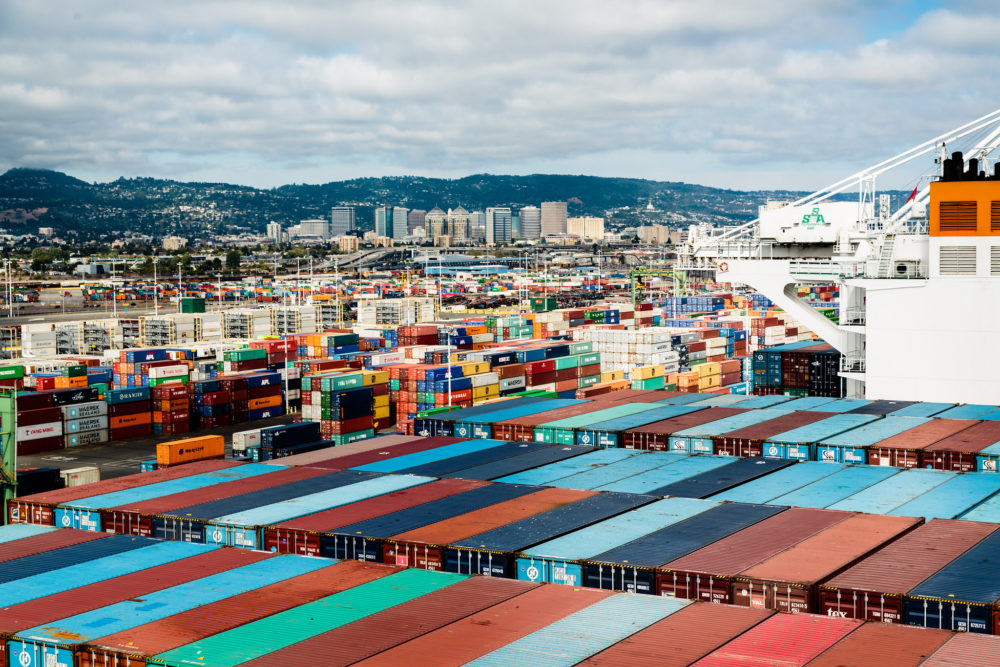
Photo Credit: Port of Oakland

2018-03-17T12:35:22-07:00March 16th, 2018|

Real California Dairy Stories Told

California Milk Advisory Board Rolls Out New Social Media Series

By Aiden Glaspey, Editorial Intern

The California Milk Advisory Board, based in Tracy, recently released a new social media series called Real California Dairy Stories. California Ag Today spoke to Jennifer Giambroni, the director of communications with the California Milk Advisory Board, about the project.

“It’s a series of short, analyzed videos with our dairy families because when we talk to consumers, it’s really sharing the story, not just about the food, but about the families. So it’s all about returning to real. Real foods from real families, kissed by the California sun.”

Giambroni said the dairy food story is easy to tell.

“Obviously everyone loves dairy products. They love dairy foods. But we really want to get to know the farmers behind the seal. Why do you care if you buy that Real California Milk product? It’s because you’re supporting actual dairy families.”

“So Real California Dairy Stories goes into the field with our California Dairy Families, and just tells little ‘moment in time’ stories. We just launched this on our social media platforms. They’re all on our YouTube channel at Real California Milk,” Giambroni said.

And another place to view those unique videos is at the RealCaliforniaMilk.com website.

2017-09-02T23:11:57-07:00September 1st, 2017|

Caution Advised on USDA Proposal

California Dairies Cautious On USDA Proposal

By Jessica Theisman, Associate Editor

California Ag Today met recently with Kevin Abernathy, the general manager for Milk Producers Council. Milk Producer’s Council is an advocacy organization trying to make sure the dairies in California are being treated correctly. The MPC has been working for a long time to ensure that the California dairies are well taken care of. Especially when it comes to the USDA proposal to add the California dairy industry into the Federal Milk Marketing Order (FMMO).

Kevin Abernathy, Manager of Milk Producers Council

“MPC has been an advocacy group on behalf of California dairy families since 1949. This FMMO process is something we have been akin to since the start of it,” Abernathy said. “It was the early leadership of MPC that started the process of adding  twenty-some odd years ago. Then the work evolved into work done by Sye Vanderdusson, Jeffery Vandenheuvel and Rob Vandenheuvel, with their growth management plans, which lead to the Holstein plan, which got evolved into the Foundation For The Future plan, which ultimately ended up where we’re at today.”

It is said that CDFA still has the upper hand in the situation concerning quotas and pay. The MPC is taking a look into these concerns.

“If this was something that was announced by CDFA because we have the experience in working in the California system, it is easy for us to calculate and the compute the outcomes. … So that is the process that we are going through right now and understanding how this thing works,” Abernathy said.


2021-05-12T11:17:10-07:00March 20th, 2017|

Celebrating California Agriculture . . . on World Vegan Day!

Celebrate World Vegan Day!

Peterangelo Vallis, executive director of the Fresno-based San Joaquin Valley Wine Growers Association, has an insightful viewpoint on California agriculture. That’s why California Ag Today considers him to be our Ambassador of Agriculture, and we’re glad he’s on our team.

In Celebration of World Vegan Day, Peterangelo Vallis addressed the need for California farmers to think about and engage with all the people who eat fruits and vegetables, including vegans*, environmentalists and fringe groups:

Yellow Bell Peppers, world vegan day

Well, vegans and environmentalists eat more fruits and vegetables than anybody. Guess what we make?

Look, I love a juicy steak, the same as most people. But frankly, most of my plate is vegetables. If somebody is buying something, they’re buying vegetables, and they want fresh vegetables. Vegans can get those in California, because they’re close enough to us. Let’s face it, these are highly perishable items and they’re going out there. Yet, we tend to vilify the same people that are paying our bills by buying our stuff.

Criticizing vegans is crazy. You don’t see Louis Vuitton making fun of middle-aged women. It’s just not what happens because they want you to buy more bags.

Big Vegetable Bin, world vegan day

Everybody eats fruits and vegetables. If they don’t, they should, and vegans are just an extra boon to California Agriculture. Look, people eat fruits, vegetables, milk, cheese, meat, everything. Without people eating, we don’t have jobs. The more population growth, the more people who need to eat. These are our customers.

We do a terrific job of turning [vegans] off to us. Look, we should be their favorite people and favorite sub-set of the population. We help keep them alive and healthy, and with shiny hair and good skin, because they’re eating all of our ridiculously safe and clean foods that you really can’t get anywhere else in the hemisphere.


*According to the Loma Linda University School of Public Health, Department of Nutrition’s, “The Vegetarian Food Pyramid,” Vegetarian is a broad term meaning a diet that excludes meat, fish and poultry. Vegans are vegetarians who do not consume any dairy products, eggs or animal flesh.

2016-11-01T14:00:37-07:00November 1st, 2016|

Keeping the California Dairy Industry Afloat

The Necessity of Keeping the California Dairy Industry Competitive


By Brian German, Associate Broadcaster


Anthony Raimondo, an attorney with 15 years of experience working with farmers and farm labor contractors, is concerned the California government is placing the state’s agricultural industry at an economic disadvantage compared to other states. Raimondo used the California dairy industry as a prime example in which arbitrary in-state legislation is giving other states an advantage.
dairy cows


“The state government tells the dairy farmer how much they get to charge for milk,” explained Raimondo. “They have now raised minimum wage and overtime, with AB-1066 becoming law, but they do not tie any of that [added cost] to the milk price. Farmers will lose money,” he said.


“The California dairy industry is still fighting to be a part of the USDA’s Federal Milk Marketing Order (FMMO),” Raimondo continued. “But until that happens, the added costs are causing many California dairymen to weigh their options.”


Increasing government regulation is making it difficult for California dairies to compete with other states, Wisconsin in particular. Raimondo elaborated, “For many years, Wisconsin’s milk production was on the decline and California’s milk production was on the rise; that trend has now reversed. Wisconsin is now on the rise again and California is on the decline because our dairies can’t make it with the level of regulation and the level of cost,” he said.


“Some dairies have reduced hours to keep costs low,” said Raimondo. “Other dairies are closing either because they are going out of business or because they are moving to places like Idaho and Texas where the milk price is better and the cost profile is more favorable.”


The move to a FMMO would help even the playing field for California dairies. Raimondo warned there is a lot at stake if nothing is done to lower milk production costs in the number one Ag state. “We are going to lose a segment of agriculture that is 100% family farms. Family farming is one of those things that is precious to our state, and it can’t be brought back once it’s gone,” Raimondo said.

2021-05-12T11:17:12-07:00September 16th, 2016|

Tulare County Ag is Down But Strong

Tulare County Annual Crop Report is Down But Still Strong


By Patrick Cavanaugh, Farm News Director


The numbers are in for the 2015 Tulare County Annual Crop and Livestock Report.  Marilyn Kinoshita, Agricultural Commissioner/Sealer of Tulare County, reported, “We had an overall value of $6.9 billion, compared to last year, which was more than $8 billion,” which means the County led the nation in total crop value and dairy production, despite a decrease of nearly 14% in one year.

Tulare County’s top ten crops [crop value] in 2015 were:

  1. Milk
  2. Cattle & Calves
  3. Oranges- Navels & Valencias
  4. Grapes
  5. Almonds Meats & Hulls
  6. Tangerines – Fresh
  7. Corn – Grain & Silage
  8. Silage – Small Grain
  9. Pistachio Nuts
  10. Walnuts

Kinoshita explained, “Dairy is our number one industry here. Our milk production was off a little bit. We have fewer dairies in business now because of the low milk prices. Anytime your fresh market milk is off, that’s going to affect our overall value. A good 2/3 of that billion-dollar decrease came from the dairy industry. The price was low the entire year, as opposed to the year before.”

Marilyn Kinoshita, agricultural commissioner, Tulare County

Marilyn Kinoshita, Tulare County Ag Commissioner


Thus far, the reported 2015 county crop reports in the Central Valley are down this year. “Fresno County, for instance, was down 6.5% off its record $7 billion in 2014,” Kinoshita said.


“It has a lot to do with low water deliveries in Fresno and Tulare Counties,” she continued. “The smaller the water deliveries, the more efficient those growers have to be with that water. Anytime you’re pumping water out of the ground, it’s terribly expensive,” she noted.


“Some of our growers have had to decide, ‘All right, I’ve got this much water; I’m going to keep those blocks alive and I’m going to push an older block that isn’t producing as well.’ The returns aren’t as good as some of the newer plantings,” said Kinoshita.


Despite all of that, Kinoshita said agriculture does sit at the head of the table in Tulare County. “Yes, and we need a successful Ag industry to thrive here,” she said.


To view a video of the interview, click HERE.


Tricia Stever Blattler, executive director of the Tulare County Farm Bureau, noted the crop report demonstrates the strength of the agricultural industry. “I think every year when this crop report comes out, it is always a testament to the resiliency of this industry. This industry takes hard knocks, gets knocked down, then steps right back up to the plate and keeps swinging,” Blattler said. “The agricultural sector has a lot of outside challenges that impact the number that we see reported every year.”


Tricia Stever Blattler

Tricia Stever Blattler, executive director , Tulare County Farm Bureau

Blattler acknowledged the crop value numbers do not reflect net revenue for growers. “It’s always really important for our listeners to know that the crop value is a gross revenue number. When our Ag Commissioner steps to the microphone and speaks to our Board of Supervisors about this report each year, she’s reflecting values that are attributed to all of the gross revenue, and it’s not only the field value,” Blattler said.


“That gross number reported each year also represents our packing houses, our milk processing facilities—the creameries, the butter plants—the packing shedsall those other parts of our industry that [create] value in our industry,” said Blattler.


Blattler noted up or down, it’s all about the resiliency of farmers. “The industry has its years that are really blockbuster and it has its years when it falls back and we see a reduction acreage. We see reductions in surface water deliveries. The drought is still certainly playing a significant role in the numbers we’re seeing,” she explained.


With regard to surface water, Tulare County is in a bit of a unique position. “As an Eastside county, some of our water deliveries are not as subject to the situation that the Westside is in. In the same sense, we have some significant cutbacks that have been attributed to the San Joaquin River’s restoration and the biological opinions in the Delta—all have had an impact on the Central San Joaquin Valley [water] deliveries regardless of whether you’re Eastside or Westside.


“Also, as the exchange contractors either take greater deliveries of water or give up water, that also impacts the amount available to Eastside growers here in Tulare County,” she said.


In summary, 2015 Tulare Crop Report covers more than 120 different commodities, 45 of which have a gross value in excess of $1 million. Although individual commodities may experience difficulties from year to year, Tulare County continues to produce high quality crops that provide food and fiber to more than 90 countries worldwide.


Featured photo: Tulare County 2015 Crop Report

2021-05-12T11:17:12-07:00August 31st, 2016|

Fresno County Agricultural Value Declines in 2015

Fresno County Agricultural Value Declines in 2015

Drought, Lower Commodity Prices and Production Issues Drive Report Down

The Fresno County Department of Agriculture’s 2015 Crop and Livestock Report was presented to the Fresno County Board of Supervisors TODAY.  Overall, agricultural production in Fresno County totaled $6.61 billion, showing a 6.55 percent decrease from 2014’s $7.04 billion.

“The strength of Fresno County’s agricultural industry is based upon the diversity of crops produced.  This year’s report covers nearly 400 commodities, of which, 62 exceed $1 million in value,” said Fresno County Agricultural Commissioner/Sealer of Weights and Measures Les Wright“The lack of a reliable water supply continues to fallow productive land,” Wright continued.

Les Wright Fresno County Ag Commissioner

Les Wright, Fresno County Ag Commissioner

The annual crop report provides a chance to examine changes and trends in crop acreage and yields.  Amounts in the report reflect the gross income values only (income before expenses) and does not reflect net return to producers.

According to the released figures, an increase was seen in vegetable crops (4.95% = $59,025,000). Decreases occurred in field crops (41.99% = $134,995,000), seed crops (30.80% = $10,437,000), fruit and nut crops (6.6% = $229,551,000), nursery products (25.65% = $16,088,000), livestock and poultry (9.44% = $118,769,000), livestock and poultry products (31.38% = $199,769,000), apiary (2.39% = $1,735,000) and industrial crops (54.38% = $3,992,000). 

“Every day, millions throughout the world are eating food that originated in Fresno County,” said FCFB CEO Ryan Jacobsen. “The magnitude of this industry does not occur by happenstance. Generation upon generation of agricultural infrastructure has been built to feed an unbelievably productive, wholesome and affordable food supply.

Ryan Jacobsen

Ryan Jacobsen, CEO Fresno County Farm Bureau

“I continue to remind all—eaters; elected officials; local residents who benefit from a healthy, vibrant farm economy; and those whose jobs depend upon agriculture—that we must not take what we have for granted,” continued Jacobsen.  “By not addressing our challenges head-on, whether it be water supply reductions, labor issues, governmental red-tape, etc., we are allowing our economy, our food and our people to wilt away. The direction of the Valley’s agricultural industry explicitly determines the direction of the Valley as a whole.”

One popular component of the report is review of the county’s “Top 10 Crops,” which offers a quick glimpse of the diversity of products grown here. In 2015, these crops accounted for three-fourths of the report’s value.  Added to this year’s list were mandarins (9) and oranges (10).  Mandarin demand continues to push acreage upwards.  Dropping out of the Top 10 was pistachios and cotton.  Pistachio production was significantly reduced last year due to the “blanking” issue that left many shells without nuts, and cotton acreage continues to be depressed due to reduced water supplies and fallowed land.

For a copy of the full crop report, contact FCFB at 559-237-0263 or info@fcfb.org. 
Fresno County Crops 2015
Fresno County Farm Bureau is the county’s largest agricultural advocacy and educational organization, representing members on water, labor, air quality, land use, and major agricultural related issues. Fresno County produces more than 400 commercial crops annually, totaling $6.61 billion in gross production value in 2015.  For Fresno County agricultural information, visit www.fcfb.org.
2021-05-12T11:05:49-07:00August 9th, 2016|

Celebrate National Ice Cream Month!

Celebrate National Ice Cream Month with California Ice Cream and Flavors!

By Lauren Dutra, NAFB Summer Intern and Assistant Editor

Jennifer Giambroni, director of communications, California Milk Advisory Board

Jennifer Giambroni, director of communications, California Milk Advisory Board

First established in 1984 by Ronald Reagan, the 40th President of the United States, National Ice Cream Month was scheduled for the month of July, with the third Sunday of the month designated as National Ice Cream Day.

Jennifer Giambroni, director of communications, California Milk Advisory Board, explained why Californians, in particular, have so much to celebrate during National Ice Cream Month. “As the number one ice cream state,” she said, “we produce 126 million gallons of ice cream a year.”

Thats a lot of scoops!

California also leads the nation in milk production, and 99 percent of dairies in the state are family-owned. Including milk production on farms and milk processing, the California dairy industry, supports about 190,000 jobs in the California economy and contributed about $21 billion in economic value added in 2014, according to “Contributions of the California Dairy Industry to the California Economy,” by the University of California Agricultural Issues Center (May 14, 2015). 

Blueberry Ice Cream Float

Blueberry Ice Cream Float (Source: California Milk Advisory Board, Kristina Vanni Blogger, 2012)

Ice cream, being both timeless and innovative, has evolved in flavors and varieties over the years, according to Giambroni, while still holding true to the traditional treat you grew up with as a kid. “Ice cream is an important category that represents a lot of the milk produced on California’s more than 1,400 family dairy farms and carry the Real California Milk seal,” she noted.

“We’re seeing adult-friendly milkshakes with the addition of spirits, ice cream sandwiches made with more than cookies, and sundaes with everything from balsamic vinegar reductions to red bean paste,” Giambroni elaborated. Other new ice cream trends include hyper-indulgent flavor combinations, including nuts and fruits grown in California, and “better for you” versions with probiotics, varying levels of fat and sugar, added calcium, lactose-free, and different kinds of oils. “We’re loving the olive oil and walnut oil ice creams for their subtle flavors,” Giambroni noted.


Approximately 12 pounds of Real California Milk are used to make just one gallon of California ice cream.


Watermelon Chill Ice Cream (California Milk Advisory Board)

Watermelon Chill Ice Cream (California Milk Advisory Board)

The California Milk Advisory Board works with bloggers on how to incorporate ice cream into events for children of all ages:

TomKat Studio – DIY Ice cream Sandwich Bar

Hostess with the Mostess – Healthy Milkshake Bar

Hostess with the Mostess – How to Set Up a Cocktail Milkshake Bar

Hostess with the Mostess – Kids Sundae Party


Check it out:

Ice Cream Sandwich (California Milk Advisory Board)

Ice Cream Sandwich (California Milk Advisory Board)

Rick’s Ice CreamBlue Moon-A fruit loops tasting ice cream with super-secret natural ingredients

McConnell’s Boysenberry Rosé Milk JamCentral Coast, grass-fed milk & cream and cane sugar, slowly-simmered to a thick, rich and decadent milk jam – then churned into house-made, boysenberry & rosé wine preserves. 

Breyer’s Strawberry Ice Cream-packed with sun-ripened California strawberries picked at the peak of happiness!

Gilroy Garlic Festival Garlic Ice Cream-July 29-31, 2016

The Orange Works‘ Orange Ice Cream and Chili Mango Ice Cream

Where Is the Best Ice Cream in California? (PBS, 2014)

2016-07-23T17:33:15-07:00July 22nd, 2016|

Hope Yet For California Dairy Industry

Proposed Federal Marketing Order Would Benefit California Dairy Farmers

By Brian German, Associate Editor

Chandler Goule, senior vice president of programs for the National Farmers Union

Chandler Goule, senior vice president of programs for the National Farmers Union

California gets hit the hardest when milk prices drop and it is the last state to recover from depressed dairy prices. The California dairy industry eagerly awaits a decision from the USDA regarding the move to a Federal Milk Marketing Order (FMMO). Chandler Goule, senior vice president of programs for the National Farmers Union, believes the state will gain from moving to FMMO.

“I think it will definitely be a win for the dairy industry,” said Goule, “and for our dairymen out there.” Goule anticipates increased participation in the margin revenue program that was incorporated into the FMMO.

Should the USDA hand down a positive determination, the move to a federal order would require a 2/3 majority vote from California dairy producers. “With California being so far from the corn and grain belt, even though you all produce a lot of food in California, it’s not necessarily feed additives for livestock,” Goule remarked.

Unfortunately, the FMMO has a much better chance of being voted in during a time when milk prices are low, according to Goule, as high milk prices may lessen voter turnout and sense of urgency.

“I’m definitely not advocating for low milk prices whatsoever,” Goule said. “We want high milk prices out there. The sooner we can get this vote done, the better off California will be, and the better off your milk prices will be. Then we can start working on this as a nation rather than 48 states—and California by itself.”

2021-05-12T11:17:13-07:00June 20th, 2016|
Go to Top