Seeking a Better Understanding Regarding Cannabis Production

Survey Helps UC  Understand Cannabis Production Challenges in State

By Patrick Cavanaugh, Editor

Results from a UC Cooperative Extension survey of registered and unregistered marijuana (cannabis) growers in California will help researchers, policy makers and the public better understand growing practices since cannabis sales, possession and cultivation first became legal for recreational use.

“This survey is a starting point from which UC scientists could build research and extension programs, if possible in the future,” said lead author Houston Wilson, UCCE specialist with UC Riverside. A report on the survey results was published in the July-December 2019 issue of California Agriculture journal, the research publication of UC Agriculture and Natural Resources.

Houston Wilson, UC Riverside Entomologist

The idea of the online survey, during the summer of 2018, was to characterize broadly the production practices that were being employed,” said Wilson

Wilson noted that since he is an entomologist, there were certainly questions about pest management, so the survey was more broad. “It included questions about style of production, plant density, harvest frequency, water use, diseases, and even labor and licensing,” Wilson said.

The survey was conducted by a collaborative group of scientists. Project co-authors were UC Berkeley visiting scholar Hekia Bodwitch, Nature Conservancy senior scientist Jennifer Carah, UCCE biocontrol specialist Kent Daane, UCCE natural resources specialist Christy Getz, UCCE climate and water specialist Theodore Grantham and UCCE land use science specialist Van Butsic. Daane, Getz, Grantham and Van Butsic are affiliated with UC Berkeley.

The survey went to numerous growers via large grower organizations that are present in California. There were more than 100 respondents, and the researchers were able to use that data to characterize some of the production practices.

“As an entomologist, I was interested in the pest management aspects, and we got a kind of array of different insects that growers are dealing with and how they’re dealing with it,” said Wilson.

UC is Restricted To Help Cannabis Growers

The big limitation that’s on the university right now is it’s ability to actually physically visit farms, and talk to growers, and collect insects and sample plant materials. It’s not legal for research institution because of the federal support that the university receives. “So a remote online survey, was the best approach that we found to do this, at least at this stage,” said Wilson.

We’ve shown the data to the grower groups that we’re in contact with, and for the most part they’ve agreed that that it matches what they’re seeing. “We don’t think it’s a really skewed dataset, but we certainly need more detail in each of those areas of emphasis,” said Wilson. “What I’d like to do now is figure out a way to actually collect insects from some of these cannabis operations to confirm or deny the pest species that were indicated by the survey.”

One way to do that is find some opportunities with grower collaborators to have them collect the insects themselves and then bring that back to researchers. “We’re allowed to handle the insects, but we certainly can’t have any plant material on campus right now,” Wilson said.

“Like any cropping system you’re going to have insect problems. Generally speaking, cannabis production takes place indoor and outdoor, and those are in and of themselves going to have different pest complexes and different management options available to them,” noted Wilson. “But again, this similarly applies to other crops that are grown in or outdoors. So there’s kind of gray literature or white literature, whatever you want to call it, about cannabis production and pest management in particular.”

There is cannabis production information in books and online forums that have been published by non-university personnel. “There’s some good information, and there’s a lot of misinformation. However many of these growers have a lot of experience as they they’ve been growing, in some of these areas, for over 40 years,” Wilson said.

Ironically, cannabis is seen as new crop for university researchers, as if it’s a new type of apple. “So in that regard, we’re just trying to characterize how the crop is produced, and find out what are some of the basic agronomic features of it, what are the pest pressures, and how would you manage that,” said Wilson.

“The fact that it’s been this underground production model for so long is that when we come into the situation, and in my interactions with growers to date, I immediately acknowledge that I understand that they have a lot of experience with this crop. And I think these growers have a lot of knowledge about agronomic features, including the entomology aspects of it,” said Wilson.

As for the future UC work in the cannabis world—it’s to be determined.It certainly a secondary if not tertiary objective for me, he said.I work in perennial orchards and vineyard, so cannabis is very much outside what I am focused on, he said.But there was an opportunity to do a survey and so we did it.

The article in the UC California Agriculture journal is comprehensive look at who is doing what in the state right now with cannabis production. “Our production survey was certainly front and center in there as a background piece. And there were other articles that were getting into a specific issue with labor, or licensing, or other areas. Water use is a huge issue, as it is with any crop in California,” said Wilson.

Wilson noted that if cannabis were to become legal at the federal level, you might envision a future where UC creates a position that includes cannabis or is even specifically focused on that in terms of agronomic issues.

Highlights of Survey Findings

  • Growing outdoors in open air with sunlight was the most common practice (41%). Twenty-five percent of growers combined outdoor and greenhouse production. Just 10% said they grow the crop entirely within greenhouses.
  • Total yield per plant varied by growing location. Outdoor crops yielded on average 2.51 pounds per plant (about 40 ounces per plant), greenhouse crops yielded about 10 ounces per plant, while plants grown indoors with artificial light averaged about 3 ounces per plant.
  • The average growing season for outdoor growers was 190 days and they harvested one crop per year.
  • In the fall of 2017, the average cannabis sales price was $853 per pound for flowers and $78 per pound for leaves and other non-flower parts.
  • The respondents reported using no synthetic pesticides in their cultivation of the crop, suggesting reliance on organic pesticides, biologicals and biocontrol.
  • Most growers reported that groundwater was their primary water source for irrigation. Of those, 97% of the water extraction happened from June to October. Many growers said adding water storage was either cost prohibitive or limited by regulatory constraints.
  • Growers reported using more than 30 different soil amendments and foliar nutrient sprays. The most common was organic fertilizer, followed by composts and various animal manures and meals, compost tea and worm castings.
  • Growers are dealing with 14 different insect pests, 13 diseases and nine vertebrate pests, including gophers, mice, rats, deer and wild boars.
  • Powdery mildew was the most commonly reported disease, and mites, thrips and aphids were the most commonly reported insect pests.
  • Growers who hired laborers for harvest paid a per-pound piece rate from $50 to $200. The growers who hired seasonal hourly workers offered a starting pay of $15 to $20 per hour.
2021-05-12T11:01:46-07:00October 7th, 2019|

Table Grape Commission Adds Montalvo

California Table Grape Commission Adds Maria Montalvo as New Marketing Director

Maria Montalvo is the new marketing director of retail and foodservice promotion for the California Table Grape Commission. Montalvo’s responsibilities include leading the in-store promotion initiatives and communication strategies needed to help move California table grapes through the U.S. and Canadian markets.

“We are very excited Maria has joined the team,” said Kathleen Nave, president of the commission. “Maria’s background and experience in promotion and sales, and her extensive work promoting products in the Hispanic community will be key to the development of retail promotional campaigns in the seasons to come.”

Maria Montalvo

Montalvo has 15 years of experience in marketing, promotion, and sales. Maria joins the commission from Sinclair Systems International where she served as the global marketing manager. According to Nave, Montalvo will primarily focus on developing retail promotion and communication strategies to drive California table grape sales. Montalvo will be part of a four-member retail team and will manage numerous retail accounts.

Montalvo is a California native, born and raised in the San Joaquin Valley. She is a graduate of Fresno State University, with a Bachelor of Science degree in business administration with a focus in international business.

2019-10-04T14:24:56-07:00October 4th, 2019|

New HLB Research Lab Opening For Citrus

Citrus industry, UC Riverside Celebrate Opening of New Research Lab 

 By Alyssa Houtby, CA Citrus Mutual Director of Government Relations
Recently, leaders from the California citrus industry and the University of California, Riverside gathered to celebrate the grand opening of a Biosafety Level-3 Lab that will be used by researchers to identify a cure for the devastating citrus plant disease Huanglongbing, or HLB.
The state-of-the-art lab is the product of a partnership between the State’s citrus growers and UC Riverside aimed to protect California citrus trees from the deadly citrus plant disease Huanglongbing, or HLB.
“HLB is the single greatest threat to the future of the California citrus industry,” says CCRF Board Chairman and General Manager Booth Ranches LLC, Dave Smith. “The Biosafety Level-3 Lab is a testament to the industry’s proactive and optimistic spirit. In a matter of months, the citrus industry raised over $8 million to fund the construction of this facility and now, together with our partners at UC Riverside, we are one step closer to finding a cure for HLB.”

Located just 2-miles off campus on Marlborough Avenue, the lab will allow researchers to conduct work with plant pathogens that previously couldn’t be done in Southern California.

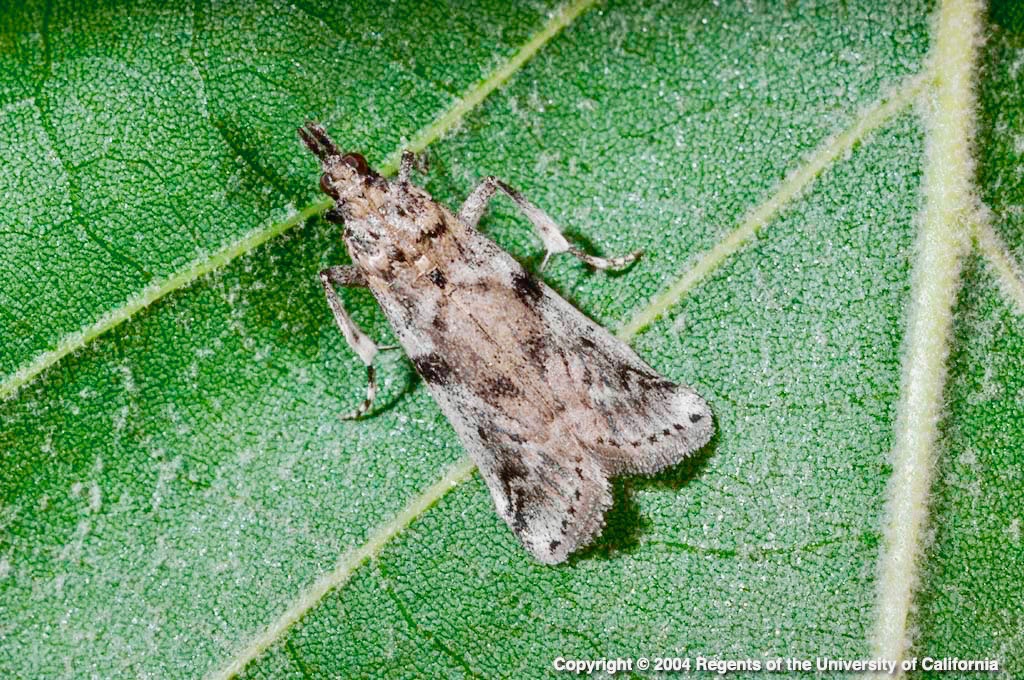
ACP UC IPM

ACP (Source: ACP UC IPM)

Construction of the $8 million lab began in 2016 and was entirely funded by the California Citrus Research Foundation through donations by citrus growers and packers.
The grand opening was marked by a ribbon-cutting ceremony and Citrus Industry Appreciation Luncheon at which several university, government, and citrus industry leaders spoke about the significance of the lab to the future of the California citrus industry.
The disease, spread by an invasive insect called Asian citrus psyllid, has been detected in over 1,500 backyard citrus trees in Los Angeles, Orange, and Riverside Counties. Citrus growers are proactively working to keep the disease out of commercial citrus groves until research finds a cure.
Casey Creamer, President of the non-profit grower advocacy group, California Citrus Mutual outlined the scope of the challenge and the extensive effort by citrus growers, federal, state, and local governments, and homeowners to protect all citrus trees.
“California is the largest citrus-producing region in the world that has not been ravaged by HLB. For over a decade, growers have worked proactively to protect the state’s $3.3 billion citrus industry and the millions of citrus trees in backyards. The construction of this lab and the partnership with UC Riverside is a significant milestone in the fight to save California citrus,” said Creamer.
Also represented at the event was the industry-funded Citrus Research Board (CRB). “The industry has invested millions of dollars over the past 10 years into research on Asian citrus psyllid and HLB,” said CRB Chairman Dan Dreyer. “However, research is useless without partners. I’m confident that the partnership between the Citrus Research Foundation, UC Riverside, California Citrus Mutual, and the Citrus Research Board will deliver actual solutions to the industry’s greatest challenge.”
UC Riverside has a long history of collaboration with the citrus industry and is home to the Citrus Variety Collection, the Citrus Clonal Protection Program, and the Citrus Experiment Station which was founded in 1907. 
“We are proud to continue the tradition of collaboration and partnership with the citrus industry as we work together to find solutions to HLB,” said UCR Chancellor Kim Wilcox. “Citrus is an iconic part of California’s history, and the Biosafety Level-3 Lab is a natural extension of the mission of UC Riverside to enrich the state’s economic, social, cultural, and environmental future.”
 
The event was emceed by the Citrus Research Foundation Executive Director Joel Nelsen who praised the industry for its foresight and investment in research. “For over 10 years, citrus growers have partnered with government, homeowners, and the University to prevent HLB from taking hold. The construction of the Biosafety Level-3 Lab and our partnership with UC Riverside is an investment in the future of California citrus. I’m confident now more than ever that our future is bright.”
The collaboration between citrus growers and UCR drew praise by a number of local elected officials as well as State and Federal representatives in attendance.
“Not only does this lab pay homage to Riverside’s rich history in citrus cultivation and research dating back to the establishment of the Citrus Experiment Station in 1907, it builds upon that history to push us to the forefront of research critical to the survival and success of citrus cultivation in the state and nation,” stated Senator Richard D. Roth. “Thank you to UC Riverside, the California Citrus Research Foundation, and others in the industry for your partnership in this critical investment!”
Congressman Ken Calvert, unable to attend the event in person, said in a prepared statement, “The threat Huanglongbing poses to California’s commercial citrus industry cannot be overstated. The opening of the Biosafety Level-3 Laboratory for Huanglongbing Research at UC Riverside is welcome news and a critical step towards protecting our citrus from this devastating disease. All of our citrus stakeholders, including the federal government, must continue to provide the research resources necessary to end this existential threat.”
Four researchers have been approved to begin work in the Biosafety Level-3 Lab. The Citrus Research Foundation and UC Riverside will oversee the current projects as well as the selection of future projects.
2021-05-12T11:05:01-07:00October 3rd, 2019|

Trump Tarriffs Outrage Farmers In Midwest and South

Farmers From Iowa, to Alabama, to Wisconsin, Outraged Over Trump Trade War Continue to Make Headlines 

Alabama GOP SENATE CANDIDATE TAKES ON TRUMP TARIFFS:

After talking with Alabama farmers, Tommy Tuberville, a prominent GOP Senate candidate in that state yesterday offered this assessment of how President Trump’s tariffs have impacted farmers:
“You know, there’s no bigger supporter of President Trump, even though he’s putting a noose around their neck a little bit in terms of choking them out and keeping that price down,” Tuberville said on The Matt Murphy radio show on Alabama station 99.5. “And they’re not making the money. And I just hope that we get this thing over with because they’re great people.” (The Hill)
 – MCCONNELL SAYS FARMERS HURTING:
Earlier this week, Senate Majority Leader Mitch McConnell frankly discussed how farmers are being hurt:
“It’s been very tough on American agriculture … I hope we can get a conclusion to this sometime soon because rural America really needs it.” (Business Insider)
– U.S. AG SECRETARY SAYS SMALL DAIRY FARMERS MAY NOT SURVIVE 

U.S. Ag Secretary Sonny Perdue told reporters following an appearance at the World Dairy Expo in Madison, Wisconsin yesterday that dairy farmers will continue to struggle. Dairy farmers face numerous problems, including the trade war.

“In America, the big get bigger and the small go out,” Perdue said. “I don’t think in America we, for any small business, we have a guaranteed income or guaranteed profitability.” Perdue’s visit comes as Wisconsin dairy farmers are wrestling with a host of problems, including declining milk prices, rising suicide rates, the transition to larger farms with hundreds or thousands of animals and Trump’s international trade wars.  (Associated Press

These politicians are hearing the calls of real American farmers who are increasingly speaking out about their discontent with the administration’s tariffs. Recent examples include:
IN IOWA: Jolene Riessen, who grows corn, soybeans and alfalfa in Ida and Sac counties in Iowa:
“Something needed to be done with China. It always felt like we were being taken advantage of,” said. “But President Trump always talks about ‘The Art of The Deal.’ Well, it’s time to make the close. It’s time to get something done.” (Washington Post 10.2)
IN IOWA: Kelly Nieuwenhuis, Corn and soybean farmer in Primghar, IA:
“I supported Trump in the last election. Today, if the election were held, I don’t think I could vote for him,” said Kelly Nieuwenhuis, 60, a corn and soybean farmer in Primghar, about 40 miles east. “It’s definitely growing, the displeasure with the Trump administration.” (Washington Post 10.2)
More here – Farm-state fury creates pressure for Trump as trade, energy pain collide. Washington Post 10.2
IN PENNSYLVANIA: Rick Telesz, a soybean farmer in Lawrence County, Pennsylvania – WATCH –  Farmer who voted for Trump: I’m angry at him (CNN) Three experienced farmers in Pennsylvania voted for Trump in 2016, but as the trade war continues to cut their profits, the Telesz family says they can’t afford to vote for President Trump again.
ADDITIONAL EXAMPLES OF FARMER ANGER BOILING OVER:
“Farmers are encouraging Trump to “find some end to this trade war and do it sooner than later,’ Farm Bureau President Duvall told the FOX Business Network’s ‘Cavuto: Coast to Coast’ during the Farm Progress Show. ‘If you’re on the edge financially, this is a very difficult time and you got to have it done today,’ Duvall said. ‘If there’s more mitigation payments coming down the road to them, they might stretch it out a little bit.’ “
“American farmers have become collateral damage in a trade war that Mr. Trump began to help manufacturers and other companies that he believes have been hurt by China’s ‘unfair’ trade practices. More than a year into the trade dispute, sales of American soybeans, pork, wheat and other agricultural products to China have dried up as Beijing retaliates against Mr. Trump’s tariffs on Chinese imports.”
“Amid increasing tariffs and controversial biofuels policies, farmer support for President Donald Trump is waning. That’s according to a Farm Journal Pulse poll conducted this week.”
Dried up exports bring Minnesota farmers to breaking point (Minneapolis Star-Tribune Op-Ed -Tim Dufault, MN wheat and soy farmer) 9.4.19
“We are now over a year into the trade war. And while for most Americans the fallout is spread out and sometimes barely registered, the opposite is true for much of rural America. Exports are the lifeblood of American agriculture. When those exports slow or even stop, as they have over the past year, the ripple effects spread from the farm, to rural Main Streets, to entire regions of the country….Here in Minnesota we have reached the breaking point. If the President fails to listen to farmers now we should break with him.”
“Farmers’ discontent over President Donald Trump’s escalating trade war with China erupted into the open Wednesday as his agriculture secretary was confronted at a fair in rural Minnesota. Gary Wertish, president of the Minnesota Farmers Union, drew applause as he leveled criticism of the administration’s trade policy at a forum with Agriculture Secretary Sonny Perdue in front of thousands of farmers gathered in a metal barn for a panel discussion.”
“China’s exit piles on to a devastating year for farmers, who have struggled through record flooding and an extreme heat wave that destroyed crop yields, and trade war escalations that have lowered prices and profits this year. ‘It’s really, really getting bad out here,’ said Bob Kuylen, who’s farmed for 35 years in North Dakota. ‘Trump is ruining our markets. No one is buying our product no more, and we have no markets no more.’ “
“Well, it turns out Trump has no magic, and farmers know exactly what the president is doing to them. MSNBC on Monday interviewed Bob Kuylen, vice president of the North Dakota Farmers Union, who explained that his wheat farm, which depends on overseas markets, has lost $400,000 because of the administration’s withdrawal from the Trans-Pacific Partnership and subsequent trade wars.”
“In just 16 months Trump’s trade policies have caused long-term damage to the U.S. farm economy. In March 2018 my soybeans were selling for a local cash price of $10.50 per bushel. Now, the same soybeans are selling below the cost of production at $8.50. The president’s trade war lost my biggest and best soybean customer — China. President Trump said that ‘trade wars are easy to win.’ The hard truth is there is no win for agriculture just around the corner regardless of how many multibillion-dollar taxpayer bailouts are raided from the Treasury. Mr. President, I beg you to quit losing.’“
“Thom Peterson, Minnesota Commissioner of Agriculture says, ‘I think there is a lot of fatigue out there in trade that I can see it here in the faces of farmers when they looked at today again another announcement from China on soybeans, it’s just like oh it’s exhausting.’ Kevin Paap, Minnesota Farm Bureau president adds, ‘We want to make sure that he is tough on trade, but he needs to understand that this is having an effect on our bottom line. We’ve seen our prices down 25% in many cases and we cannot survive where we are.’
“Agriculture is in one hell of a bad situation right now. The government put us in this situation, and they need to help us get out of it,’ Vic Miller, a corn farmer from Fayette County, said in a statement.”
“Republican senators have been warning for months that farmers can’t take much more of this. Sen. Roy Blunt (Mo.) told Politico in May: ‘They can feel it. The farm community up ‘til now has really supported the president without flinching. But eventually you flinch.’
Now, farmers’ concerns are no longer a murmur. The National Farmers Union issued a statement about Trump’s trade war that sounded as if it could be coming from his political opponents.”
2019-10-02T15:04:33-07:00October 2nd, 2019|

Almond Board Schedules Market Facilitation Program Workshops

2019 Market Facilitation Program Workshops October 7 | October 11 | October 15 | October 16

USDA’s Market Facilitation Program (MFP) is continuing for the second year, providing almond growers with an opportunity to apply for direct payments to help alleviate the damage resulting from the global trade situation.

Unlike the 2018 program when payments were based on delivered pounds, the 2019 MFP program is based on bearing acreage. To learn more about the changes to the 2019 program, and how you can also apply for 2018 payments, the Almond Alliance of California and Almond Board of California are co-hosting workshops with local USDA Farm Service Agency offices.

Come learn about the program and how you can apply!

Chico, October 7, 2019 1:00 p.m. to 3:00 p.m. Manzanita Place at Chico Elks Lodge #423 1705 Manzanita Avenue Chico, CA 95926 RSVP: MFP-Chico@almondboard.com 209-343-3220 Seating is limited.

Fresno, October 11, 2019 9:30 to 11:30 a.m. Fresno County Farm Bureau 1274 W. Hedges Avenue, Fresno, CA 93728 RSVP: MFP-Fresno@almondboard.com 209-343-3220 Seating is limited.

Bakersfield October 15, 2019 9:30 to 11:30 a.m. UC Cooperative Extension Kern County 1031 S. Mt. Vernon Avenue, Bakersfield, CA 93307 RSVP: MFP-Bakersfield@almondboard.com 209-343-3220 Seating is limited.

Modesto, October 16, 2019 9:30 to 11:30 a.m. Almond Board Of California  1150 9th Street, Modesto CA 95354 (15th floor of Double Tree Hotel) RSVP MFP-Modesto@almondboard.com  209-343-3220 Seating is limited.

For more information contact Toni Arellano at 209.343.3220; tarellano@almondboard.com

2019-09-30T21:19:46-07:00October 2nd, 2019|

Raising Shasta Dam Hit’s Snag

Termination of Shasta Dam Raise CEQA Analysis

Westlands Water District terminated its preparation of an environmental impact report pursuant to the California Environmental Quality Act (CEQA). The District was preparing the environmental impact report to assess the effects of raising Shasta Dam, as proposed by the Bureau of Reclamation, including whether the Dam raise would adversely affect the free-flowing conditions of the McCloud River or its wild trout fishery.

Under federal law, if Reclamation determines to raise the Dam, local cost share partners would be responsible for at least half of the costs. The environmental impact report being prepared by the District would have provided the information necessary for the District to determine whether it could or would become a cost share partner. The District terminated the CEQA process because the Superior Court issued, at the request of the California Attorney General, a preliminary injunction that stopped the District from preparing the environmental review document until after the Court conducts a trial and issues a final decision in the case. The practical effect of the injunction is that the District would not likely be able to complete CEQA within the schedule Reclamation has for the project.

Tom Birmingham, the District’s general manager expressed his disappointment in this outcome: “no agency of the State has conducted a project-specific analysis of Reclamation’s proposal, to determine if enlargement of Shasta Dam would adversely affect aquatic resources – particularly those in the lower McCloud River. Westlands took the initiative to do that assessment, through the public process established by CEQA. It is unfortunate that, as a result of the actions of the Attorney General, Westlands was enjoined from completing that analysis.”  

2019-10-01T10:35:33-07:00October 1st, 2019|

USMCA Agreement is Backed By Many

Famers, Restaurants, Chefs Urge Passage of USMCA.

Farmers, restaurants and their customers will all benefit from improved trade among the United States, Canada and Mexico, according to a coalition of California agricultural groups, restaurants and chefs. In a letter sent today to the California congressional delegation, the coalition urged approval for the U.S.-Mexico-Canada Agreement (USMCA).

The USMCA would replace the North American Free Trade Agreement and enhance the movement of food products on the continent. The coalition letter says the new agreement would benefit California farmers by improving market access in Mexico and Canada, and would benefit restaurants by assuring availability of high-quality ingredients and affordable dining experiences made possible through trade with the neighboring countries.

“Restaurants and farmers need each other, and we all need the USMCA to assure the continued strength of the food chain,” California Farm Bureau Federation President Jamie Johansson said. “By helping California farmers and agricultural businesses, and by enhancing North American trade in food and farm products, the USMCA will keep agricultural products affordable for all of us who eat.”

Patrick Mulvaney, chef-owner of Mulvaney’s B&L in Sacramento, urged Congress to support what he called a “vital piece of legislation.”

“Our success in California food is directly related to the hard work and diligence of our farmers,” Mulvaney said. “The USMCA will ensure that their efforts will pay off, for their families, workforce and consumers.”

The California Farm Bureau Federation works to protect family farms and ranches on behalf of nearly 36,000 members statewide and as part of a nationwide network of nearly 5.6 million Farm Bureau members.


2019-09-25T21:55:09-07:00September 25th, 2019|

CDFA: New Website to Help Farmers/ Ranchers

Farmer Resource Portal is One-Stop-Shop For Help

The California Department of Food and Agriculture (CDFA) is pleased to announce the availability of the new Farmer Resource Portal designed to assist farmers and ranchers by increasing access to information to help farming operations. The portal is available here: https://www.cdfa.ca.gov/farmerresources/

This webpage is a “one-stop shop” for farmers and ranchers to find information about available grants and loans including programs that prioritize funding for socially disadvantaged farmers, beginning farmers, female farmers, veteran farmers, and urban farmers. Additionally, there is a list of quick links to information to help farmers and ranchers better understand CDFA regulations and policies.

According to CDFA secretary Karen Ross the information was already available, but she this portal makes it simple and easy to navigate, and it keeps all of the key information in one place.”

The Farmer Resource portal was developed under the tenets of Assembly Bill 1348 (Aguilar-Curry), the Farmer Equity Act of 2017. This law requires CDFA to ensure the inclusion of socially-disadvantaged farmers and ranchers in the development, adoption, implementation, and enforcement of food and agriculture laws, regulations, policies, and programs.

The Farmer Equity Act defines a socially-disadvantaged group as one composed of individuals that have been subjected to racial, ethnic, or gender prejudice because of their identity as members of a group without regard to their individual qualities.

There are a growing number of socially-disadvantaged farmers and ranchers in rural and urban areas, and CDFA’s Farmer Equity Advisor is working to ensure that these farmers have a voice in policies and programs that affect their livelihoods, as well as increased access to information and resources for their farm operations.

The webpage includes links to new Spanish-language CDFA social media handles, press releases in English and Spanish, and in the future will also have an interactive California map of technical assistance providers who can assist farmers, including assistance in various languages. This will be a valuable resource for farmers who need assistance in languages other than English.

This webpage is just one way that the Farmer Equity Act is being implemented at CDFA. In January 2020, CDFA will submit a report to the Governor and Legislature on efforts to serve socially disadvantaged farmers and ranchers and female farmers and ranchers in California.

2019-09-23T20:29:05-07:00September 24th, 2019|

Help APG Advocate for Funding to Fight NOW

American Pistachio Growers Asking Industry to Help Fund Phoenix Facility

American Pistachio Growers (APG) has been integrally involved in obtaining federally funding for the Center for Health Science & Technology Laboratory in Phoenix, AZ. The facility was originally commissioned by the cotton industry to raise sterile pink bollworm for area-wide releases in an effort to suppress the pest.

The program was even more successful than planned and the cotton industry was recently able to declare pink bollworm eradicated. Now that the facility has excess capacity, pistachio, almond, and walnut industry leaders have made a push to start breeding sterile navel orangeworm (NOW) for aerial release in California. Unfortunately, at the end of this Federal Fiscal Year, federal funding for the facility ends, and unless a new funding appropriation can be made by Congress, the facility will close.

Many pistachio growers have asked how they can help in APG’s efforts to obtain federal funding. With current efforts being focused on the U.S. Senate, growers are encouraged to write a letter to Senator Dianne Feinstein (CA) for her support. Sen. Feinstein sits on the Senate Appropriations Subcommittee on Agriculture, Rural Development, Food and Drug Administration, & Related Agencies, which is where APG is advocating for funding.
Here is a sample letter that can be used, or you can draft your own letter that incorporates the following talking points:

  • Navel Orangeworm (NOW) is an invasive and destructive pest harmful to tree nuts (almonds, pistachios, and walnuts).
  • As much as $800 million lost each year from lost product and consumer confidence.
  • NOW is a major vector for aflatoxin, which results in shipment rejections and food safety concerns, hurting our trade position in key markets.
  • Growers spend $150-$450 per acre every year to apply currently available tools to control NOW in orchards totaling more than $500 million annually.
  • Congress & USDA can co-invest with tree nut industries by appropriating $21 million to develop a sterile insect technology (SIT) pilot program for NOW.
  • The Center for Health Science & Technology Laboratory in Phoenix, AZ is perfectly set up to take on the pilot project, but will be shut down at the end of September unless adequate funding is provided.

Letters can be faxed to 202-228-3954, emailed to joe_petrzelka@feinstein.senate.gov or mailed to:
Sen. Dianne Feinstein
303 Senate Hart Office Building
Washington, D.C. 20510

2021-05-12T11:05:01-07:00September 20th, 2019|

UC President Janet Napolitano Steps Down


UC Vice President Glenda Humiston Statement on UC President Napolitano stepping down

By Pam Kan-Rice, UC ANR

Glenda Humiston, University of California vice president for agriculture and natural resources, issued the following statement on Wednesday:

Earlier today (Sept. 18), UC President Janet Napolitano announced that she will be stepping down as president of the University in August 2020. President Napolitano joined UC as the first woman to lead the university in 2013.

We are thankful for President Napolitano’s leadership and vision to address critical issues that affect California, the rest of the country and the world.

Recognizing the challenge of feeding a growing worldwide population, Napolitano launched the Global Food Initiative to inspire more collaboration and draw from the collective resources of all 10 UC campuses, UC Agriculture and Natural Resources and Lawrence Berkeley National Laboratory to develop solutions for food security, health and sustainability.

To address the threat of climate change, she created the Carbon Neutrality Initiative, which marshals resources from across the UC system to research and develop ways to reduce greenhouse gas emissions.

To attract and retain top-flight academics, she created the Presidential Match for Endowed Chairs to help UC campuses and UC ANR encourage donors to establish endowed chairs to fund research. The Presidential Match has enabled UC ANR to fill five endowed positions in UC Cooperative Extension, ensuring the scientists will have a dedicated source of funding for their ongoing agricultural research.

Finally, she emphasized the university’s commitment to diversity by taking actions to let immigrant and LGBTQ members of the UC community know they are welcome and supported.

The UC Board of Regents will soon appoint a search committee to start a national search for the next president of the University. Per policy, the search committee will include student, academic and alumni representatives who will seek input from the UC community and the public.

More information, including highlights of President Napolitano’s tenure at the University, can be found at https://www.universityofcalifornia.edu/press-room/university-california-president-janet-napolitano-announces-decision-step-down-next-year.


2019-09-23T20:31:15-07:00September 18th, 2019|
Go to Top