Almond Growers Concern About Trade Issues

Farmer Joe Del Bosque Checks In Regarding Almond Season


By Patrick Cavanaugh, Editor

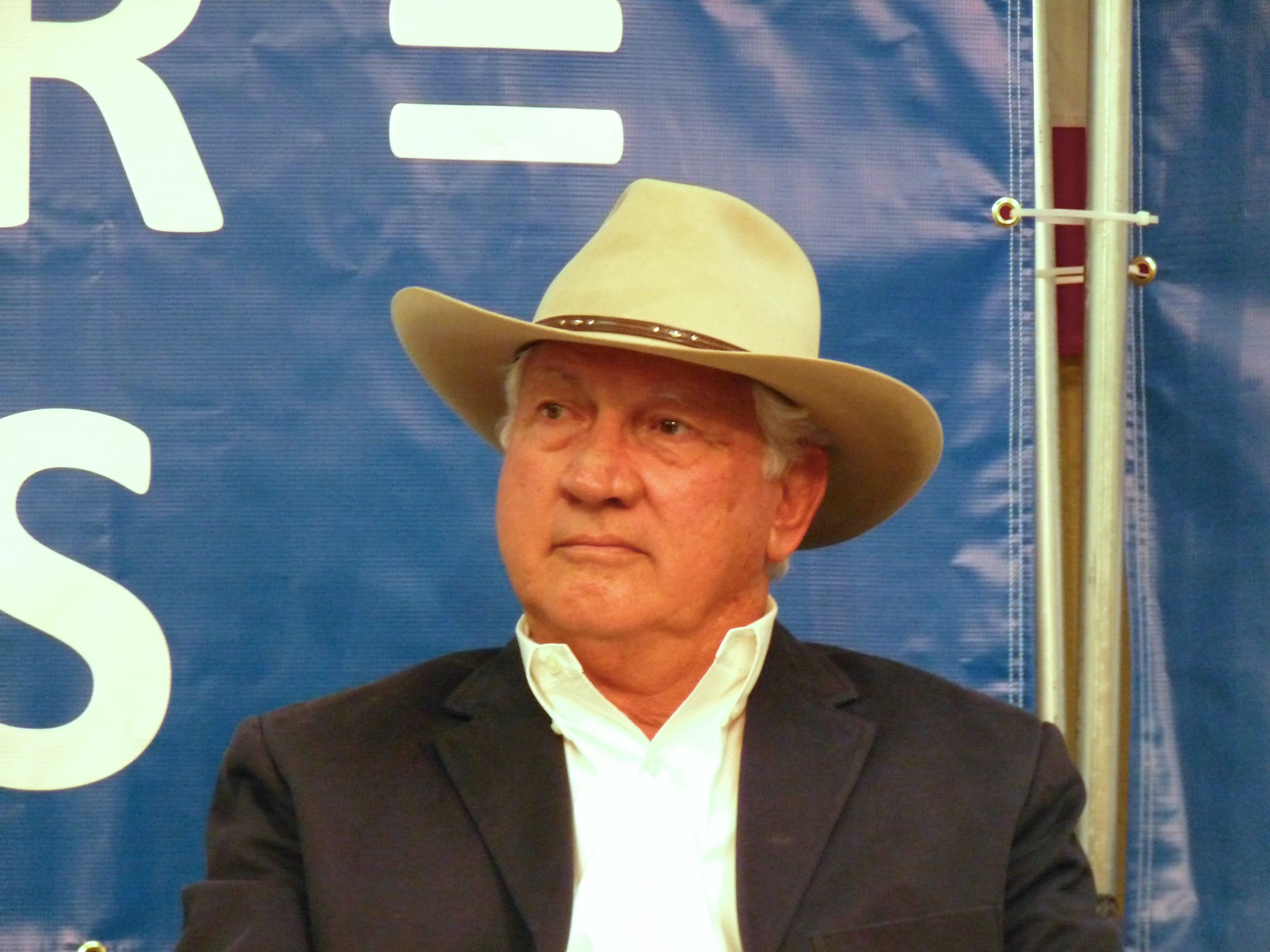
Joe Del Bosque is a diversified grower in Western Fresno and  Merced counties.

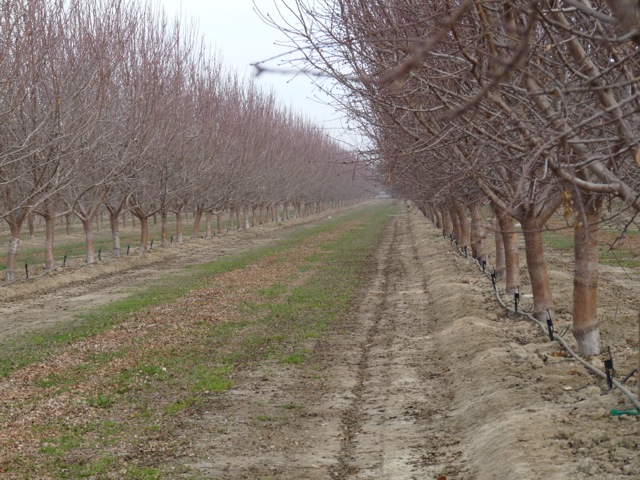
He noted the almond crop was light this season mostly due to a wet spring that fouled up pollination. “Yes, I think the crop was a little lighter than normal, particularly in some varieties. Some did okay. Some did pretty normal and some were lighter.” Del Bosque said.

And del Bosque said that pest pressure was not particularly heavy.

“The few reports that I’ve seen on worm damage didn’t look too bad. So I think we’re, we’re going to come out okay with pests this past season,” he noted.

And trade issues, particularly with China, continue to be a big concern.

“For almond growers that’s probably our major concerns aside from water. So we hope that they will certainly solve this trade issue so that trade flows more freely,” Del Bosque said.

“It’s not that we haven’t been able to sell our almonds, because we have been able to sell them, but there have probably been some restrictions in the trade and maybe that might have been reflected in the prices,” he said.

“Maybe we should be getting higher prices than we have if we didn’t have these, these trade issues looming over us. And I think the, the worst part about the trade issues is probably the uncertainty of how long we’re going to go with these tariffs,” Del Bosque noted.

2019-12-17T10:48:21-08:00December 23rd, 2019|

UnitedAg Association Helps Members


UnitedAg Helps with Healthcare For Its Members

News from the AgInformation Network

Health insurance is an expensive item for all business owners. Many agricultural companies also face challenges in having access to local health care in rural areas. UnitedAg is a trade association focused on bringing innovative solutions to healthcare in agriculture.

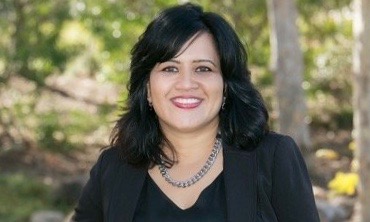
President and CEO Kirti Mutatkar said they are finding ways to make healthcare more affordable and accessible for their members.

Mutatkar…”In California, agriculture is an areas where there’s no access to even primary care and clinics and decent care. So yesterday we actually had our ribbon cutting in Selma, and that is actually one of the underserved regions in California. And the next one you opening is Turlock. And there’s one more opening in King City the first part of the next year.”

UnitedAg operates similarly to other health insurance providers but is only open to companies that make at least 50% of their revenues from agriculture. Their eight health and wellness centers are located around agricultural areas of California where they offer care at no cost to members.

Mutatkar says they think of themselves as representing the empathy side of agriculture. Members have access to their full PPO network so can likely keep existing providers. Learn more at UnitedAg.org.

2019-12-26T19:07:44-08:00December 23rd, 2019|

Act Now to Help Pass the USMCA

House to Take First Step Towards Full Ratification of USMCA

Provided by California Farm Bureau Federation

This Thursday, the House will take the first step towards full ratification of the renegotiated NAFTA known as the “US-Mexico-Canada Agreement” (USMCA). California agriculture exports $6.6 billion in goods to Canada and Mexico and supports more than 56,000 jobs.
 
Since NAFTA was implemented, U.S. agricultural exports to Canada and Mexico quadrupled from $8.9 billion in 1993 to $39 billion in 2017. After President Trump renegotiated NAFTA, the International Trade Commission determined that the USMCA would have a positive impact on the U.S. economy and a positive impact on U.S. agriculture. An additional $2.2 billion in exports is expected once this agreement is ratified.
 
Congress must pass USMCA to preserve the proven successes of NAFTA while enjoying greater access to dairy, chicken, and eggs. The agreement has positive updates for fruit exports, improvements in biotechnology, protected geographical indications, and strengthened sanitary/phytosanitary measures.
 
All in all, the USMCA is needed to bring more stability to the volatile trade market. Please reach out today to your U.S. Representative to urge their YES vote on this important agreement.

Click Here: ACT NOW for USMCA House Passage

2019-12-25T14:06:59-08:00December 18th, 2019|

Almond Farm of Future Coming

Almond Board Fueling Farm of the Future with $5.9 Million Research Investment

California almond farmers continue a long history of using research as the catalyst to evolve their practices, continuously challenging themselves to do more.

On Tuesday, Dec. 10th The Almond Board of California (ABC) today announced an investment of $5.9 million dollars in 85 independent research projects exploring next-generation farming practices. With this commitment, the California almond community has invested $89 million in research since 1973 to build a foundation of knowledge on responsible farming practices, food quality and safety and almonds’ impact on human health.


A tangible example of the almond community’s commitment to continuous improvement, the Almond Orchard 2025 Goals, launched in January 2019, will leverage this research as farmers strive to meet measurable objectives with the goal of growing almonds in better, safer and healthier ways. The Almond Orchard 2025 Goals Roadmap, released today, outlines the almond community’s sustainability journey in four goal areas, as well as the metrics that the industry’s progress will be measured against.

“The California almond community takes a long-term view of success based on respect for the land and local communities. Earlier this year, the California almond community set four ambitious goals aligning with our vision to make life better by what we grow and how we grow,” says Holly King, chair of the Almond Board of California. “The Almond Orchard 2025 Goals build on decades of progress, fueled by research. Fulfilling these commitments will require hard work, dedication and resources, including funding independent research to test new technologies and sharing the results as these approaches are proven.”

2019-12-12T20:39:14-08:00December 10th, 2019|

Understanding AB 5

AB 5 Independent Contractor Compliance:

Western United Dairies is Here to Help

WUD is now offering its members a discount for pooled resources aimed at assisting dairy families in transitioning their business to compliance with AB 5 promptly.

What’s the Issue? AB 5 was signed on September 18th, 2019 and clarified the rules surrounding independent contractors in California by codifying the “ABC Test” for compliance. Under AB 5, a contractor is presumed to be an employee of the contracting employer unless the employer can demonstrate that the worker meets all the three elements of the “ABC Test.” This affects owner operator truck drivers directly. In the dairy industry, many service providers such as independent breeders, hoof trimmers, and similar occupations may be affected.

The law becomes effective January 1, 2020.

Fortunately, there is another layer to AB 5 for relationships that fail the “ABC test.” There is a business to business exemption that creates the opportunity to preserve many historically independent business relationships.

 What’s the Solution? The solutions include creating a business-to-business contract via a LLC or an LLP, or corporation, including a business license if necessary. For more information on the parameters around creating a business to business contract, please take a look at page 3. WUD will now offer the formations of these contracts at an extreme discount as part of WUD membership.

There will be many variations to compliance. But there are solutions, except for those relationships that are truly exclusive, which will have to become employment relationships. For consultation on specific circumstances, please contact Western United Dairies.

2019-12-05T19:07:35-08:00December 10th, 2019|

Climate-Smart Team Announced for Farmers

UC Cooperative Extension Deploys Team of 10 to Help Farmers Practice Climate-Smart Agriculture

By Jeannette Warnert, UCANR Communications Specialist

Scientists are developing climate-smart farming practices, California is offering financial incentives to implement them, and now a group of 10 UC Cooperative Extension climate-smart educators are taking the program to the next level.

To help farmers apply for grants to improve soil quality and enhance irrigation systems, UC Agriculture and Natural Resources partnered with the California Department of Food and Agriculture to put climate smart educators in 10 California communities.  The educators are working closely with UCCE advisors to help farmers and ranchers improve soil health, irrigation practices and manure management.

The climate smart programs offered by CDFA and promoted by UC ANR educators are:

The educators provide hands-on assistance to farmers and ranchers through the complex application process, conduct field days with climate-smart farmers, establish demonstration plots to share the practices, and work with farmers who are voluntarily implementing climate-smart farming.

Most of the educators were hired in early 2019, just weeks before the application deadline. They are now gearing up for a second cycle of applications. The state funded 194 projects in 2018, and 217 in 2019.

Each of the educators has a passion for agriculture and the environment, shaped by their upbringing, experiences and education.

“I am interested in carrying out research that focuses on the adoption and economics of climate change best management practices. The practices should help farmers continue their business,” said Esther Mosase, climate-smart educator in San Diego County. “I’m interested in seeing policymakers making policies that have a farmer as a focal point. They have been here long, they have been tilling the land, they can also contribute in coming up with better solutions that reduce climate change.”

The state is providing incentives for farmers to improve soil health in order to moderate the conditions that are driving global climate change. Improving soil health increases its ability to store carbon and reduce greenhouse gas emissions. Side benefits include improved water infiltration, nutrient cycling and dust control.

Farmers can apply for three-year grants to implement new practices on their farm, such as reducing tillage, growing cover crops and applying compost. Conventional farm practices turn the earth, releasing the stored carbon back into the atmosphere.

UCCE’s 10 new climate-smart educators are:

Britta Baskerville
UC Cooperative Extension, Mendocino County
blbaskerville@ucanr.edu, (707) 463-4158

Baskerville started college as a theater major in Sacramento, then realized that wouldn’t result in a viable career. After suffering from an autoimmune disease tied to microbiome health, she began to understand the important role of the food and agricultural industries in public health. Baskerville earned a bachelor’s degree from UC Berkeley that combines sustainable agriculture with the sociological and ecological impacts of agriculture, natural resources conservation and public health.

Last summer, Baskerville served as a program coordinator in an adaptive agriculture learning environment, where she designed two practicum programs for adults. She is considering a career in the food industry.

Caddie Bergren
UC Cooperative Extension, Merced County
cmbergren@ucanr.edu, (209) 385-7403

Bergren grew up in a small fishing town on an island in Alaska. She earned a bachelor’s degree in earth systems at Stanford University in 2013, and then spent two and a half years in Paraguay as a Peace Corps volunteer. Bergren worked with a women’s garden cooperative and with subsistence farmers. She spent the last three years as a community organizer.

“I was so excited to find this job, which combines my interests in working directly with all kinds of people on the intersection of agriculture and climate change,” Bergren said. “I’ve especially enjoyed using my Spanish-language skills to work with traditionally underserved farmers in this area.”

Dana Brady
UC Cooperative Extension, Glenn County
dmbrady@ucanr.edu
, (530) 517-8187

Brady completed a bachelor’s degree in animal science at Chico State University in 2018. She was familiar with UC Cooperative Extension through school and had visited UCCE research sites.

Brady grew up in a farming and ranching family in rural Linden, southeast of Stockton.

“My earliest memory is of my grandfather’s farm, where he had an emu, donkey and llama,” she said. “I was in 4-H and FFA as long as I can remember.”

In addition to working directly with farmers on grant applications, Brady has been helping advisors in Glenn County on research projects and building relationships in the community through workshops and seminars.

“I am also very excited for an upcoming event at an elementary school farm day to present about Climate Smart Agriculture and presenting at some bigger events later this year with a few others in the cohort,” Brady said.

Samikshya (Sami) Budhathoki
UC Cooperative Extension, Fresno and Madera counties
sbudhathoki@ucanr.edu, (559) 241-7515

A native of Nepal, Budhathoki traveled to the United States in 2015 to attend college at Fresno State, where she graduated with a bachelor’s degree in plant science. During her studies, she completed a weed and salinity management project with professor Anil Shrestha. Budhathoki served as an intern in plant pathology with Bayer Crop Science.

She developed in interest in agriculture because of the industry’s importance to society and the world.

“Some people don’t get enough to eat even once a day. I wanted to join the effort to end world hunger and food insecurity,” Budhathoki said.

Budhathoke said she also is concerned about climate change and welcomes the opportunity to help farmers maintain a sustainable agriculture industry even in the face of climate change.

In the future, she plans to pursue graduate studies in climate change or water management.

Emily Lovell
UC Cooperative Extension, Yolo, Solano and Sacramento counties
ejlovell@ucanr.edu, (530) 405-9777

Lovell grew up in Sacramento and developed an interest in agriculture when she was overcoming a serious illness. She graduated from UC Davis in 2016 with a bachelor’s degree in sustainable agriculture and food systems.

“Originally, I didn’t want to make money in agriculture,” she said. “I wanted to live off the land. I believe farming is a political act and I wanted to help return power to the people through farming and land ownership.”

Lovell said she is interested in pursuing a graduate degree in an area that combines community resiliency through localized food systems and economics and, eventually, becoming a crop adviser.

Esther Mosase
San Diego County
enmosase@ucanr.edu, (858) 282-6737

Mosase has a master’s degree in agricultural engineering from Botswana College of Agriculture and a doctorate from South Dakota State University in civil engineering. Her master’s research focused on water resources, watershed modeling and management.

Raised in a farming family in Botswana, Mosase experienced the impact of climate change firsthand.

“I remember we had drought years, normal years and extremely wet years,” she said. “Twenty years ago, it was not uncommon for open water to freeze. But now we get mild winters and very hot summers. Rain-fed agriculture is now a risky enterprise compared to two decades ago.”

In addition to helping farmers with the climate-smart farming grant applications, Mosase is helping farmers cope with water quality concerns.

“For instance, one farmer wanted to improve the water quality at the edge of his avocado and citrus farm before it enters the stream. He also wanted to be helped with pools of standing water in the farm that usually affect the health of avocado trees,” Mosase said. “We advised him on what to do regarding the standing water, but for the edge of the field treatment, we decided to install bioreactors.”

Mosase will help collect field data on the bioreactors’ effectiveness and plans to publish the results.

Valerie Perez
UC Cooperative Extension, Santa Cruz County
valperez@ucanr.edu, (831) 763-8028

Perez earned a bachelor’s degree in agricultural business at California Polytechnic State University, San Luis Obispo in 2018. She accepted an internship with a large animal veterinarian, and found her passion, she said. In addition to working as a climate smart community educator, Perez is taking prerequisite courses for veterinary school. She hopes her career will lead to conducting research to benefit the meat industry.

“I’ve always been interested in ways to better agriculture and how our systems could improve, but it wasn’t until I received this job that my interest for climate-smart agriculture really peaked,” Perez said. “Agriculture is such an important industry, it is vital that we find ways to educate one another on how to better what we have been doing for so many years.”

Allison Rowe
UC Cooperative Extension, Ventura County
amrowe@ucanr.edu
, (805) 645-1464

Rowe has a bachelor’s degree in biology from Colorado College in Colorado Springs and a master’s degree from the Bren School of Environmental Science and Management at UC Santa Barbara. Her background and interests focus on the interface of land management and climate change.

“Everyone and everything is interwoven with our food system and yet so much of how we produce food accelerates climate change,” Rowe said. “I enjoy being at the interface of science and education, where the rubber meets the road. I wanted to find a role where I could work with people on the ground and implement solutions to climate change while contributing to resilient farming economies.”

She said it is encouraging to see that farmers and ranchers are interested in climate-smart agriculture and welcome the technical assistance.

Kristian Salgado
UC Cooperative Extension, Imperial County
kmsalgado@ucanr.edu, (442) 265-7700

Salgado attended San Diego State University, where she earned a bachelor’s degree in 2014 with a double major in psychology and environmental studies and minors in counseling and social change. She earned a master’s degree in social science at Humboldt State University in 2018.

“My background in agriculture is very broad ranging, from topics relating to public health concerns connected to agriculture production – pesticide drift and agricultural burning – to food insecurity in low-income communities,” Salgado said.

Salgado is a native of Calexico, a city located across the border from its sister city, Mexicali, Mexico. Her farming experience centers on urban agriculture.

“Growing food on non-agricultural land has allowed me to learn the technical/scientific processes that go into growing food,” she said.

Salgado plans to continue her education in a doctoral program in ethnic studies at UC San Diego, where she can focus on several overlapping areas of interest, including race studies, food justice, sustainable agriculture, climate change, environmental decision-making processes, and participatory action research methodology and practices.

Shulamit Shroder
UC Cooperative Extension, Kern County
sashroder@ucanr.edu, (661) 868-2168

Shroder attended college at the University of Maryland in College Park, earning bachelor’s degrees in environmental science and policy and in Spanish language, literature and cultures. She has worked in an agricultural research lab, in the gardens at the University of Maryland and in a nearby organic farm. After graduating in 2016, Shroder volunteered with the Peace Corps in Senegal, West Africa, where she trained farmers on gardening and agroforestry techniques and extended improved varieties of staple crops like beans, corn, millet and sorghum.

“While serving in Senegal, I saw firsthand the effects of desertification and erratic rainfall on the ability of the community to feed itself,” she said

Shroder intends to earn a master’s degree and continue to research and promote sustainable agriculture techniques.

2019-12-06T17:15:40-08:00December 5th, 2019|

Thanks to All Who Contributed to FFA Blue Jacket Campaign

FFA Blue Jacket Big Goal Hit!

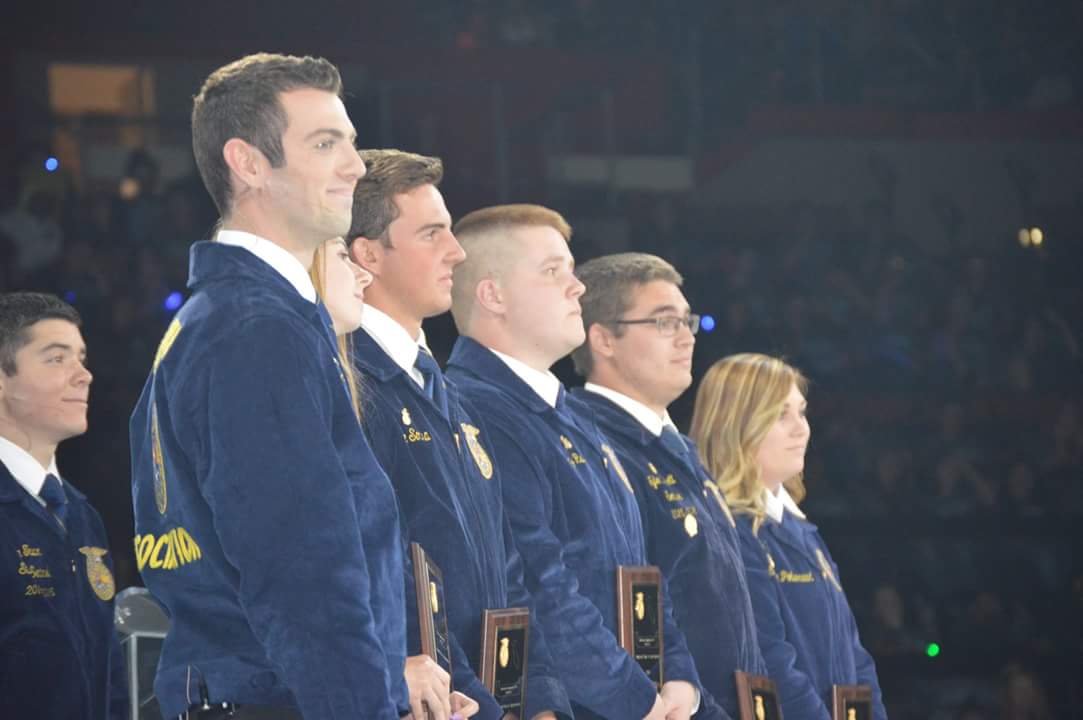
Thank you for joining the California FFA Foundation and Blue Diamond Growers on Giving Tuesday.

I am ecstatic to share, that we not only achieved our goal of 750 jackets, but we raised enough for 890 FFA jackets. That’s the equivalent of $66,750! 

Your support since 2016, has allowed for more than 2,535 FFA members to have a jacket of their very own. Thank you for joining the California FFA Foundation and Blue Diamond Growers in providing our members with the opportunity to own the FFA’s most recognized symbol, a blue corduroy jacket with their name stitched in Corn Gold. Thank you for gifting them with the experience to make their jacket reflective of the opportunities they will pursue as an FFA member.

Thank you for investing in the future of agriculture!

Katie Otto,

California FFA Foundation

2019-12-04T17:50:06-08:00December 4th, 2019|

Donations Needed For Displaced Animals From Kincaid Fire


Donations Help Fund Livestock Pens for Emergency Use Due to Kincaid Fire


To help house displaced farm animals during times of disaster, portable livestock pens have been deployed to seven fairgrounds around California. The pens, purchased through a partnership between the California Farm Bureau Federation’s charitable foundation and the California Department of Food and Agriculture, were formally dedicated during a ceremony today at the Yuba-Sutter Fairgrounds in Yuba City.

“During wildfires, floods and other emergencies, farmers and ranchers take great care to be sure their animals can be safely evacuated, often to nearby fairgrounds,” CFBF President Jamie Johansson said. “These portable livestock pens will make it easier for fairgrounds to fulfill their role as shelters during disasters.”

After the Camp Fire ravaged part of rural California last year, the California Bountiful Foundation—a charitable foundation established by CFBF—created a Farm and Rural Disaster Fund. Donations from 50 individuals and companies allowed the foundation to contribute $75,000 toward purchase of the portable livestock pens.

With additional funds from CDFA, a total of 280 pens were acquired. CDFA has distributed 40 pens apiece to fairgrounds in Anderson, Auburn, Lakeport, Merced, San Mateo, Ventura and Yuba City. Manufactured by Plymouth Industries of Nebraska, the panels to create the pens are stored on racks so they can be quickly mobilized and transported during a disaster.

“Already this fall, we’ve seen the pens used to help livestock during the Kincade Fire in Sonoma County,” Johansson said. “We also look forward to having them used for happier occasions, such as ongoing events at county fairgrounds around the state.”

For more information about the Farm and Rural Disaster Fund, see the CFBF website atwww.cfbf.com.  


2021-05-12T11:17:08-07:00December 4th, 2019|

Please Support California FFA Student’s Jacket Campaign


Blue Jacket Campaign to Help Many FFA Students

More than 46,000 California FFA members, or one out of every two students from the FFA chapter in your community cannot afford the prominent blue corduroy jacket. A contribution from you would also help fund crucial leadership events they will attend.

Future Farmers of America is a perfect way to teach our youth business, speaking, and technical skills. In addition, the value of hard work and entrepreneurship that are the building blocks of our country’s prosperity.FFA

FFA was a great way for FFA Students and millions of others to build strong connections, lifelong friendships, and a business network.

FFA is an ever-growing vocational agriculture organization that has over 92,000 members in California. The support we provide to our youth will provide them great opportunities to grow and succeed.

As industry leaders it is our responsibility to contribute and build a foundation for future generations.

Your contribution is critical in changing the outcome of Americas youth. Please support the FFA Foundation Board in backing our students. The cost of a jacket, tie or scarf is $75. Blue Diamond will match every jacket purchased before December 3rd 2019. If individual can purchase 150 jackets by December 3, 300 members will receive a new FFA jacket. Thanks Blue Diamond!

To donate, please go hear.
2019-11-29T18:07:11-08:00December 2nd, 2019|

Nutria Swamp Rats Need Control

$7 Million Legislation Announce to Battle Nutria Swamp Rats

By Patrick Cavanaugh, Editor

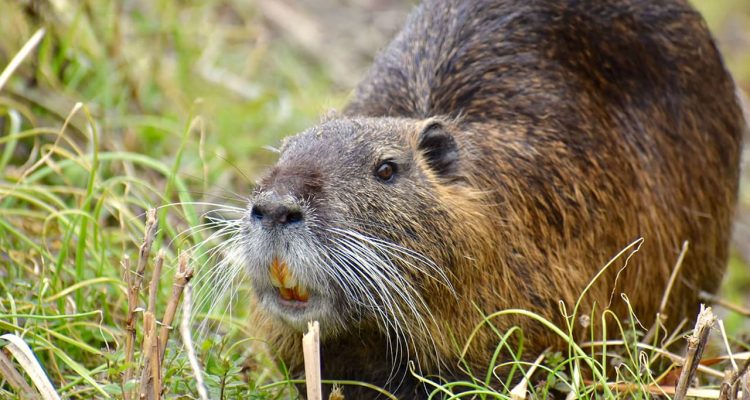
The nutria swamp rat, similar in size of the common beaver, with a very high reproduction rate, is capable of wide destruction to farm waterways. It has gotten so bad in California that Congressman Josh Harder of Modesto has introduced legislation in order to get funding in an attempt to eradicate the invasive pests.

Josh Harder

Congressman Harder

These swamp rats are taking over California. And for those who aren’t familiar with what a nutria is, it is a giant 40-pound rodent that causes flooding, divert water and eat through farm canals destroy the entire wetlands that the Central Valley relies on.

One of the challenges is that they grow exponentially and one female can have 200 offspring a year. “If we don’t nip this in the bud within a couple of years, they’re going to go from seeing one or two here and there to 250,000 of them in the next five years if we don’t nip it in the bud. So that’s why it’s so critical to get this done early,” noted Harder.

Harder is trying to invest $7 million to eradicate this while it is still early. “While we still have time, we’ve seen this nutria problem in two different states. In Louisiana, they did not nip this problem in the bud and now these nutrients are everywhere. You can’t go two yards without seeing one of these rodents in ag country. It’s really disruptive and they have destroyed a lot of the levies and a lot of the wetlands and, and wrecked-havoc on farms all over Louisiana,” Harder explained.

“On the other hand, Maryland has had an eradication program that has been quite successful, now there are no nutria left in that state. What my bill is trying to do is take that Maryland program and extend it into California because we know it works,” he said.

Controlling nutria is done mostly by trapping right now. But what Maryland has done is they catch one, they sterilize it, and then they throw it back into the population. That female then sniffs out all of its mates and then once we have identified the entire den, all the nutrias are eradicated, with an air gun dart, in a humanly way.  “It’s actually a pretty clever program to make sure that you’re getting every single last one because the issue here is because of that exponential reproduction and growth rate, If we don’t get every animal, it’s never going to end. We have to make sure we’re getting down to zero,” Harder said.

And while nutria is similar looking to beavers, beavers do not have 200 offspring a year. Beavers create their own dams. They’re living their peaceful life, but beavers aren’t out there destroying almonds. They’re not out there destroying canals. So, they may look similar, but the nutria is an invasive species and because it grows so quickly, it’s much more important to make sure we’re rooting them out early.

Optimistic the Legislation Will Pass

“I’m very optimistic about it because we have a really strong precedent for this issue. This is a bipartisan issue supported by Republicans and Democrats. We can point to the federal program that has been successful in Maryland.

“And you know, the biggest thing I hear from folks is they say, why should we spend $7 million on this program? And I say, if we don’t spend $7 million today, our farmers are going to be spending hundreds of millions, if not billions,” said Harder, “Over time, because if you look at how much Louisiana is spending right now, they have no hope of eradication. This is a fiscally responsible measure because it’s going to prevent major problems and expenses.”

Nutrias were originally introduced to the United States as part of the fur trade in the late 1800s but were eradicated from California in the 1970s. The species was rediscovered in the Central Valley in 2017. There have been 531 nutrias removed from the Central Valley since this first sighting.

2021-05-12T11:01:45-07:00November 26th, 2019|
Go to Top