Ag Leadership That Make a Difference

Ag Leadership Applications for Class 51 Now Available

The Ag Leadership Program, operated by the California Agricultural Leadership Foundation (CALF), is considered to be one of the premier leadership development experiences in the United States. More than 1,300 men and women have participated in the program and are influential leaders and active volunteers in agriculture, communities, government, business and other areas.

The 17-month program includes approximately 55 days of formal program activities. Four partner universities—Cal Poly Pomona, Cal Poly San Luis Obispo, Fresno State and UC Davis—deliver comprehensive, diverse and high-impact curriculum designed to improve leadership skills. As a valuable extension to the monthly seminars, fellows participate in national and international travel seminars and receive individualized leadership development coaching.

CALF invests approximately $55,000 per fellow to participate in the Ag Leadership Program. The costs are underwritten by individual and industry donations. Candidates are strongly encouraged to talk with Ag Leadership alumni about the program and to attend a regional recruitment event.

Detailed program information and the phase one application are available at www.agleaders.org.

2020-01-08T10:41:57-08:00January 8th, 2020|

Improving Winegrape Quality Will Improve Prices For Growers

Improving Central SJV Winegrape Quality

By Tim Hammerich with the Ag Information Network

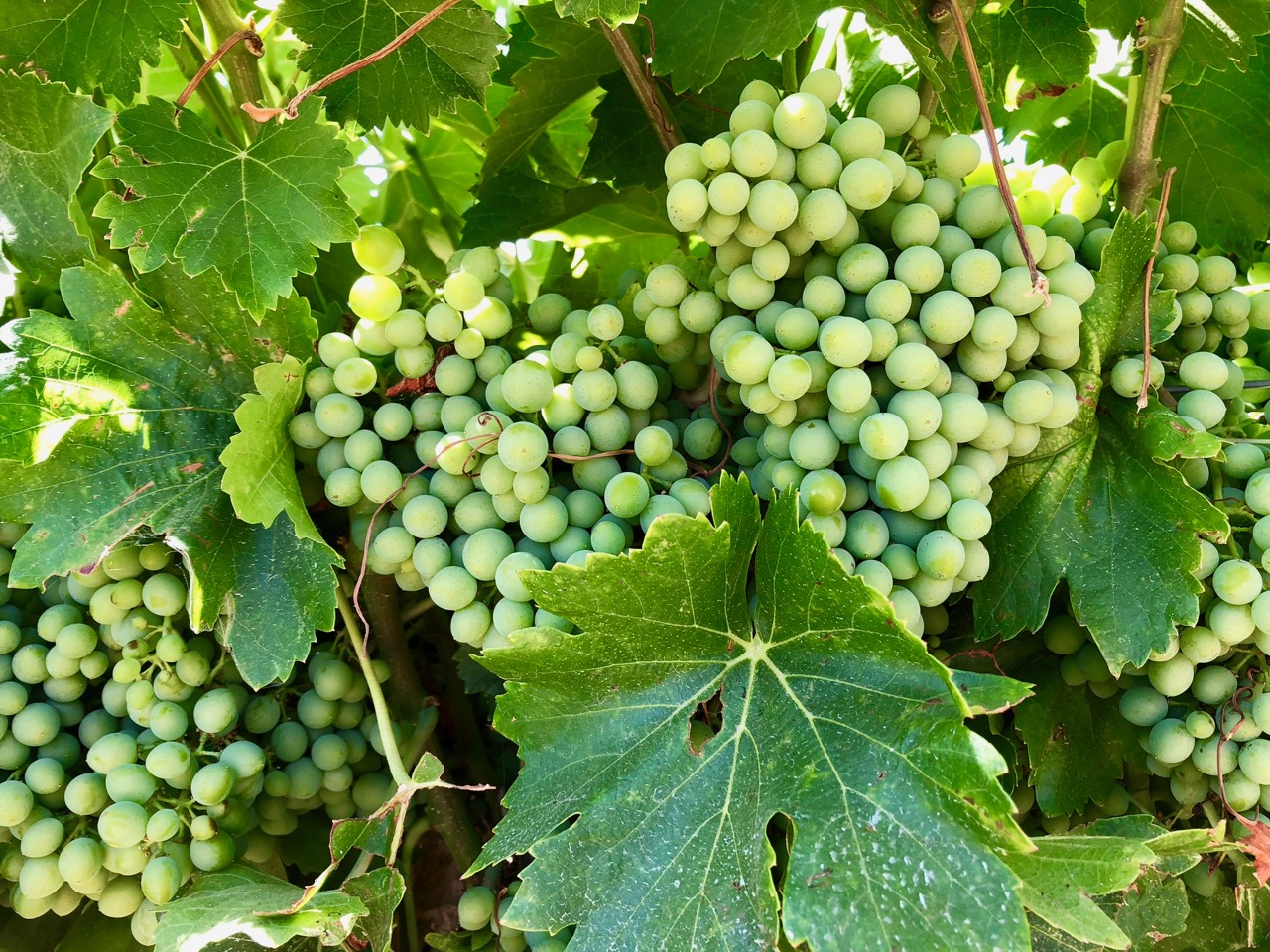
Frank Saviez has been growing  quality winegrapes in the Central Valley for more than 40 years. Looking ahead, though, he sees a future in which valley growers can command more of a premium for their grapes.

“The variety of grapes and the tonnages that are grown here are generally geared into the $5 to $10 bottle of wine. And when you analyze that and what the wineries want to pay for those varieties, it limits your ability to produce quality wine grapes,” said Saviez. “To do that you have to reduce the tonnage per acre to get a quality of grapes that you can make wine that would sell rather than $5 to $10, but $10 to $20.”

Saviez has worked with Fresno State and others to plant varieties that show promise for performing well under central valley conditions. He’s explored varieties such as albarino, chono, vermentino, shiraz, malbec, and teraldego. All with the goal of providing higher quality options to central valley growers in the future.

Saviez…”I have planted several varieties with the goal in mind to be in a position to influence the long term goals of grape growers in the central valley.”

Saviez hopes introducing new premium varieties will move prices up to the $400 – $600 per ton range seen in other areas.

2020-01-06T20:41:24-08:00January 8th, 2020|

Whole Orchard Recycling

Whole Almond Orchard Recyling is A Next Generation Farming Practice

By  Tim Hammerich with California Ag Today

The Almond Board of California recently announced their $5.9 million investment into next-generation farming practices. The Board is exploring some of these initiatives  as they offer insights into challenges faced by California growers.

Josette Lewis, Director of Agricultural Affairs for the Almond Board of California, says one area these investments have really paid off recently has been in something called whole orchard recycling.

“This is when an orchard gets to the end of its life and the trees are taken out. They’re chipped and deep-ripped into the soil, and then disced over to put that entire orchard biomass, which is a huge amount of woody material, down into the soil…

“We’ve been doing research for quite a number of years that shows that that can improve soil quality: things like water holding capacity, and soil organic matter. It does not seem to pose a particular problem for replant disease or soil-borne pathogens. But very importantly, that research this last year paid off in terms of the California Department of Food and Agriculture has decided to include whole orchard recycling in their healthy soils incentive program.”

Lewis says this incentive program will provide dollars to help growers with the costs of recycling their orchards, which also gives them this benefit of healthier soils long term.

2020-01-06T20:25:08-08:00January 7th, 2020|

San Bernardino County HLB Quarantine Boundaries May Expand


CDFA Proposes Expansion of HLB Quarantine Boundaries for San Bernardino County


Effective January 6, 2020, the Department is expanding the San Bernardino County Quarantine Boundary. A map of the proposed boundary can be found at https://www.cdfa.ca.gov/plant/hlb/regulation.html#maps.

Regulated articles and conditions for intrastate movement under the quarantine can be found at Title 3 California Code of Regulations (CCR) section 3439. Pursuant to Title 3 CCR section 3439 any interested party or local entity may appeal a quarantine area designation.

Additionally effective January 6, 2020, the Department is expanding the ACP Bulk Citrus Regional Quarantine Zone 6 boundary in the San Bernardino County, Montclair area to mirror the recent expansion of the HLB quarantine area. A map of the proposed boundary can be found at: www.cdfa.ca.gov/plant/go/acp-quarantine#maps

Regulated articles and conditions for intrastate movement under the quarantine can be found at Title 3 California Code of Regulations (CCR) section 3435. Pursuant to Title 3 CCR section 3435, any interested party or local entity may appeal a quarantine area designation.

Process to Appeal the Proposed Expanded/Changed Boundary

The appeal must be submitted to the Department in writing and supported by clear and convincing evidence. The appeal must be filed no later than ten (10) working days from the date of this notification. During the pending of the appeal, the designated Quarantine Boundary under appeal shall remain in effect.


Mail Appeals to:

CDFA – Pest Exclusion

1220 N Street

Sacramento, CA 95814

2021-05-12T11:00:35-07:00January 6th, 2020|

Almond Board Funds Big Projects For Future of Farming

One Big Project is Navel Orangeworm Control

By Tim Hammerich,  Ag Information Network

The Almond Board of California recently announced an investment of $5.9 million in 85 independent research projects exploring next-generation farming practices. We will be exploring some of these initiatives this week, as they offer insights into challenges faced by California growers.

Josette Lewis, Director of Agricultural Affairs for the Almond Board of California, says one area of focus is the almond producers largest pest.

“Some significant investments in the area of navel orangeworm that affects everything from farmer management in the orchard during the growing season to cost at the handler level to sort out nuts that have been damaged by insects to our exporters who may face questions around aflatoxin and checks at export markets that could be very costly if aflatoxin rates, which are often associated with navel orangeworm, are found,”said Lewis.

“We continue to invest in integrated pest management systems or navel orangeworm,”she said. “We’re very excited to validate the value proposition of use of mating disruption as a new tool. And then also this year made a historic investment in looking at the use of sterile insect technology for navel orangeworm, which would be a powerful new IPM tool.”

2021-05-12T11:05:01-07:00January 6th, 2020|

Chlorpyrifos Sales Will End in Feb.

Agreement Reached to End Sale of Chlorpyrifos in California by February 2020

The California Environmental Protection Agency announced today that virtually all use of the pesticide chlorpyrifos in California will end next year following an agreement between the Department of Pesticide Regulation (DPR) and pesticide manufacturers to withdraw their products.

“For years, environmental justice advocates have fought to get the harmful pesticide chlorpyrifos out of our communities,” said Governor Gavin Newsom. “Thanks to their tenacity and the work of countless others, this will now occur faster than originally envisioned. This is a big win for children, workers and public health in California.”

“The swift end to the sale of chlorpyrifos protects vulnerable communities by taking a harmful pesticide off the market,” said California Secretary for Environmental Protection Jared Blumenfeld. “This agreement avoids a protracted legal process while providing a clear timeline for California farmers as we look toward developing alternative pest management practices.”

Earlier this year, DPR announced it was acting to ban use of chlorpyrifos by canceling the pesticide’s product registrations. The decision follows mounting evidence, PDF that chlorpyrifos is associated with serious health effects in children and other sensitive populations at lower levels of exposure than previously understood, including impaired brain and neurological development.

At the same time, DPR and the California Department of Food and Agriculture (CDFA) have established a cross-sector working group to identify, evaluate and recommend safer, more sustainable pest management alternatives to chlorpyrifos. It will hold its first meeting this month and will hold three public workshops beginning in January.

The agreement with Dow AgroSciences and other companies means that use of chlorpyrifos will end sooner than anticipated had the companies pursued administrative hearings and potential appeals process, which could have taken up to two years. Under the settlement, the companies agreed that:

  • All sales of chlorpyrifos products to growers in California will end on Feb. 6, 2020.
  • Growers will no longer be allowed to possess or use chlorpyrifos products in California after Dec. 31, 2020.
  • Until then, all uses must comply with existing restrictions, including a ban on aerial spraying, quarter-mile buffer zones and limiting use to crop-pest combinations that lack alternatives. DPR will support aggressive enforcement of these restrictions.

To ensure consistency for growers and for enforcement purposes, DPR is applying the terms and deadlines in the settlements to seven other companies that are not part of the settlement agreement but are subject to DPR’s cancellation orders.

A few products that apply chlorpyrifos in granular form, representing less than one percent of agricultural use of chlorpyrifos, will be allowed to remain on the market. These products are not associated with detrimental health effects. DPR will continue to monitor for any exposures associated with these products.

The development of safe, more sustainable alternatives to chlorpyrifos is being supported through the current state budget, which appropriates more than $5 million in grant funding for the purpose.

  • DPR will award more than $2.1 million in grants to fund projects that identify, develop, and implement safer, practical, and sustainable pest management alternatives to chlorpyrifos.
  • CDFA will award approximately $2 million in grants to expand outreach about innovative, biologically integrated farming systems that reduce chemical insecticide inputs. Crops that have used chlorpyrifos will be a priority.
  • CDFA will also fund approximately $1.5 million in research to develop alternatives to chlorpyrifos that provide safer, more sustainable pest management solutions.

Quick facts:

  • Chlorpyrifos is used to control pests on a variety of crops, including alfalfa, almonds, citrus, cotton, grapes and walnuts. It has declined in use over the past decade as California growers have shifted to safer alternatives.
  • Use of the pesticide dropped more than 50 percent from two million pounds in 2005 to just over 900,000 pounds in 2017.
  • In 2015, DPR designated chlorpyrifos as a “restricted material” that requires a permit from the county agricultural commissioner for its application. In addition, application of chlorpyrifos must be recommended by a licensed pest control advisor and supervised by a licensed certified applicator.
  • Following DPR’s designation of chlorpyrifos as a toxic air contaminant in 2018, DPR recommended that county agricultural commissioners apply additional permit restrictions, including a ban on aerial spraying, quarter-mile buffer zones and limiting use to crop-pest combinations that lack alternatives.

###

2020-01-02T17:41:57-08:00January 3rd, 2020|

Senate Action Urged Regarding Ag Labor Crises

Agriculture Workforce Coalition Urges Senate Action on Ag Labor Crisis

Following on the heels of a government-mandated increase in farmers’ labor costs, the Agriculture Workforce Coalition (AWC), a diverse group of organizations representing the needs of agricultural employers across the country, today urged the U.S. Senate to take up legislation to solve the agricultural labor crisis by calling attention to the dire labor situation facing our nation’s agricultural producers.


The Adverse Effect Wage Rate (AEWR) is the required wage rate for farmers who use the H-2A program and the Department of Labor today mandated an increase that will average 6% across the nation.  The AWC told the Senate that the increase will make it difficult for some farms to continue operating, coming after a year of natural disasters, trade disruptions, low commodity prices and declining farm income.


In its letter, the AWC called on the Senate to take action to address critical agricultural labor issues.  The coalition urges the Senate to consider the impacts of the AEWR on U.S. farmers and is asking for an alternative that will ensure a level playing field for farmers and ranchers making them more competitive with foreign producers.


Farmers who use the H-2A program to procure legal workers from other countries must comply with a complicated and expensive application process to assure that domestic workers are not displaced, though few U.S. workers are willing to take jobs on farms. Farmers are also required to provide free certified housing and transportation to and from guest workers’ place of residence. The AEWR implemented today will immediately increase farmers’ labor costs by an average of 6% while revenues for agricultural goods continue to diminish due to an influx of cheaply produced imports flooding American markets.


Over the last five years the AEWR has increased nationwide by 17% on average while revenues for fruits and nuts have increased only 3% and vegetables and melons have seen no revenue increases. While American farmers are required to pay their H-2A employees more and more each year, the U.S. continues to import more and more produce from Mexico and Central and South America, where workers are paid a fraction of U.S. wage rates.

The Agriculture Workforce Coalition is asking the Senate for a legislative solution that ensures the competitiveness of America’s farmers and ranchers, stabilizes the current U.S. agricultural workforce and provides guest worker program access to year-round agriculture sectors such as dairy, livestock and mushrooms.

2020-01-02T12:02:12-08:00January 2nd, 2020|

Is investing in farmland in Your Goals for 2020?

FarmTogether Online Platform Can Help

By Tim Hammerich, Ag Information Network

FarmTogether is a California-based startup that allows investors to invest in farmland via their online platform. COO David Chan calls the platform a one-stop-shop for investing in and monitoring farmland investments.

Chan…”In addition to being able to make investments through the platform in a seamless and quick way. You’ll also be able to track the performance of your investments in our platform. So we’ll show you each year’s projected yields and actual yields for comparison. So you can judge and see how the property is performing. You’ll see expected distributions and actual distributions. So again, you can see how is this property performing compared to where we had it in underwriting. All tax information will be shared through the platform. So. We formed these as pass through entities, which issue K-1s. So your K-1 will go right into your platform and will be available for you for downloading…

” We’ve put in a lot of effort into creating a one stop shop to serve all of our investors’ needs from education and exploration and learning to investments and actually funding your opportunity that you’re interested in, to tracking those opportunities and receiving your distributions and receiving any relevant tax forms as well,” said Chan.

Chan noted the platform lists a range of U.S. farmland investment opportunities including both row crops and permanent crops. Investors may include individuals or institutions looking to broaden or diversify the agricultural holdings.


2019-12-30T12:18:13-08:00December 30th, 2019|

Increasing The Shelf Life of Walnuts

Can Walnut Shelf Life Be Increased?

By Patrick Cavanaugh, Editor

Abhi Kulkarni is Assistant Technical Director for the California Walnut board and Commission. Could an edible coating help increase the shelf life of walnuts?

“Traditionally we have faced some challenges in terms of shelf-life vis-a-vis other products. So one of the things we’re looking at is how can we extend shelf life through any edible coating of walnuts or through different technologies that can squeeze more shelf-life for the open market or industrial products,” said Kulkarni

Kulkarni said they’re getting some preliminary results, which look very promising.

“Especially the research we’re doing with Oregon State on the edible coating of walnuts. It does show some initial promise, but we’ll see how it goes,” he noted.

FSMA Inspections

We also ask Kulkarni about the Food Safety Modernization Act (FSMA) with inspectors coming to large farms for inspection. “Starting in 2020 someone on each farm must be trained to meet the Food Safety Modernization Act standards,” he said.

“It’s not that complicated. Basically what you need to do is each farm is required to have one person attend the FSMA training, which is a one day about eight hour training, and it’s the one time, so you don’t have to take it every year,” he said.

“We offered complimentary training for walnut growers for the past three years, and that program has lapse. However, the California Department of Food and Agriculture (CDFA) is offering a low cost training program, which is about $35 and growers can find information on their website to where they can sign up at their nearest training programs, Kulkarni explained.

Search for CDFA Produce Safety Program.

2019-12-26T20:34:53-08:00December 26th, 2019|

Ag Apprenticeship Programs Coming

Apprenticeship Programs Coming for Tree and Vine Growers

By Patrick Cavanaugh,  Editor

Coming soon…. apprenticeship training for tree nut and vineyard farmers. Elaine Swiedler is the apprenticeship program coordinator for the Center for Land-Based Learning based in Winters, California.

“We currently run the beginning farm and ranch management program, which was approved by the California Department of Apprenticeship Standards in January 2018 and right now we’ve worked with diversified growers up in the Yolo County, some in Sacramento County area, majority of people doing row crops, a couple of people farming orchards,” said Swiedler.

The program was developed to address kind of a real need for management in farming, whether it’s taking over for an owner or just filling in some middle layers and there’s definitely a real need and gap in the nut industries and also wine grapes. “We’ve learned from people that either would want to work with or just looking over the needs in the estate. Our goal is to serve the ag industry as a whole and also create viable pathways for incoming people,” she noted

Swiedler was at the recent Tree and Vine Expo in Turlock surveying growers.

“We wanted to find out what those labor needs are. And the Walnut Board and the Almond Board have both partnered with us in addition to the California association of wine grape growers,” Swiedler said. “Those three different organizations have helped us pilot the survey. So that’s the first step in understanding what the labor needs are of industry.”

2019-12-18T17:47:55-08:00December 24th, 2019|
Go to Top